Most visitors meet Izmir for about an hour, somewhere between the airport and a tour bus, and remember a big modern city they passed through on the way to Ephesus. That is a waste of one of Türkiye’s most liveable cities, and this izmir travel guide is written to fix it. Izmir rewards the traveller who stays. It has a bazaar quarter older than most European capitals’ shopping streets, a Roman market square excavated in the middle of a working neighbourhood, a castle hill with the whole bay laid out below it, and a waterfront promenade that the entire city treats as its front garden. Stay two or three nights and it stops being a transit point and becomes what it actually is – the natural base for the whole northern Aegean.
Understand the shape first and everything else falls into place. Izmir curves around the head of a long gulf, with the historic centre – Konak, the bazaar, the Agora – at the bay’s inner end, the port district of Alsancak just north of it, and Karsiyaka, whose name literally means “the opposite shore”, facing them across the water. Ferries stitch the two shores together all day. A castle-crowned hill, ancient Mount Pagos, rises directly behind the centre, and the modern city of several million people spreads around the bay in both directions. Almost everything a first-time visitor needs sits inside that compact inner curve, walkable or one short tram, metro or ferry ride apart.
The second thing to understand is that Izmir is a working city, not a resort. Nobody here is performing for tourists. The bazaar sells wedding dresses and wedding almonds to Izmir families, the ferries carry commuters with shopping bags, and the promenade fills at sunset with locals walking off dinner rather than visitors hunting for one. Travellers who want a themed old town with themed prices should read our Istanbul Travel Guide instead, or head inland to the fairy chimneys with the Cappadocia Travel Guide. Travellers who want a real Aegean metropolis with five thousand years of city underneath it – Smyrna was old when Rome was young – have come to the right place.
This izmir travel guide is organised the way a stay actually unfolds. First the in-town sights, district by district, in the order you would naturally walk them. Then the museums, with their current official status stated exactly as the ministry portal gives it. Then the day trips – Ephesus above all, but also Pergamon, the Cesme peninsula and Sirince – planned as logistics from a city base rather than as a catalogue. Transport, seasons, districts to sleep in and the city’s own food vocabulary follow, with an honest downsides section before the questions, because Izmir has a few and you should hear them from us rather than discover them yourself.
At a Glance
| Question | Short answer |
|---|---|
| Where is Izmir? | On Türkiye’s Aegean coast, curving around the head of the Gulf of Izmir |
| What is it, in one line? | Türkiye’s third-largest city and the Aegean’s working metropolis – ancient Smyrna under a modern port city |
| Airport | Adnan Menderes (ADB), south of the city, with its own Izban commuter-rail station |
| Main sights | Kemeralti bazaar, the Kordon promenade, Konak Square and Clock Tower, the Agora of Smyrna, Kadifekale castle, the Asansor lift |
| The signature journey | The city ferry across the bay to Karsiyaka – commuting as sightseeing |
| Best day trips | Ephesus via Selcuk by train, Pergamon to the north, the Cesme and Alacati peninsula, Sirince village |
| Best months | April to June and September to October; July and August are hot and hazy |
| How long to stay | Two full days for the city; three to four with Ephesus and one more day trip |
| Getting around | Metro, Izban commuter rail, two tram lines, city ferries and the Izmirim Kart for all of them |
| Museums | The Archaeology Museum and the Agora are listed open on the official muze.gov.tr portal; one famous old museum name no longer appears there – see the museum section |
| Food to learn | Boyoz for breakfast, gevrek not simit, the kumru sandwich, Aegean herb and olive-oil dishes |
The Kordon – A City That Faces Its Bay
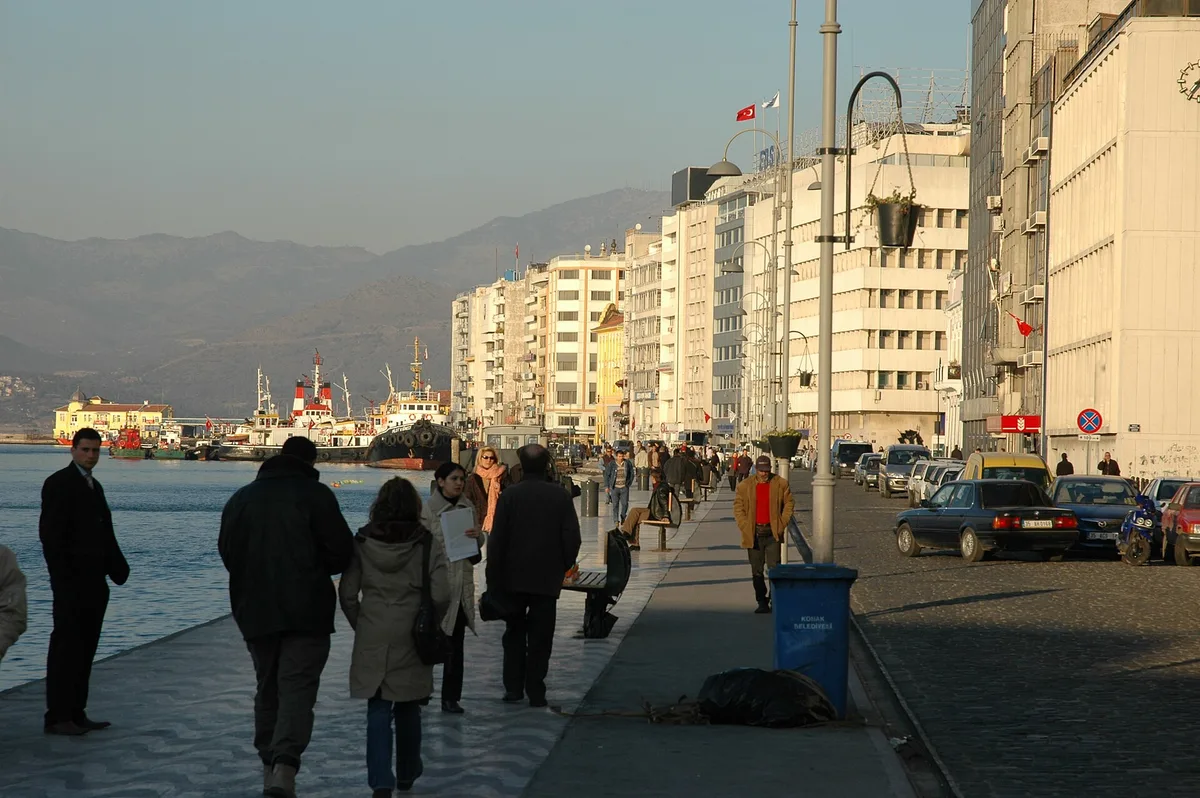
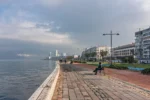
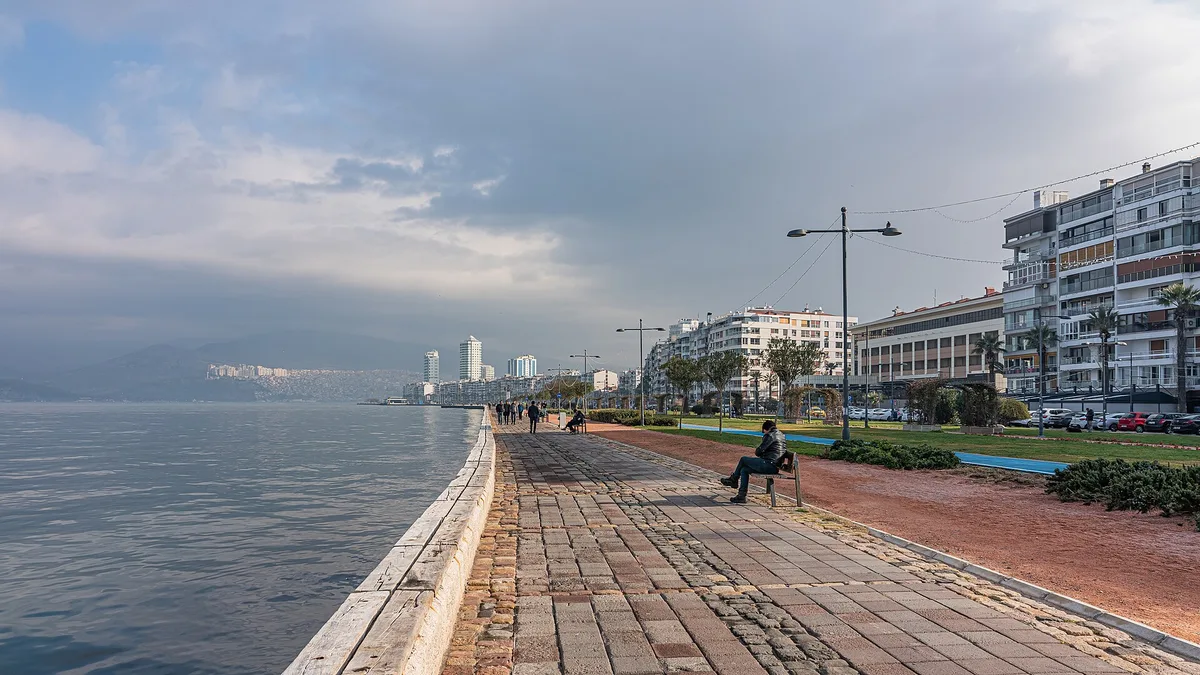
Every great waterfront city has one stretch of shore that explains it, and in Izmir that stretch is the Kordon. It runs from Pasaport, just north of Konak, through Alsancak and on toward the port – a broad band of pavement, lawns and cycle track pinned between the apartment blocks and the bay. There is no beach and no barrier; the city simply ends at the water, and for much of the day the Kordon is where Izmir goes to be Izmir. Office workers eat lunch on the grass, fishermen work the railings, students sprawl in circles, and by evening the whole shore becomes a slow-moving river of people walking off the day.
Plan around that rhythm rather than against it. The Kordon at noon in July is a handsome, empty frying pan; the Kordon from an hour before sunset is one of the great free shows in Turkish travel. The light comes in low off the water, the hills across the bay turn the colour of the gevrek crusts in the bakery windows, and the imbat – the reliable afternoon sea breeze that takes the edge off Aegean heat – makes the lawns genuinely pleasant. If your hotel is anywhere near the waterfront, the correct evening programme is embarrassingly simple: walk the Kordon, sit on the grass with everyone else, and let the ferries cross in front of the sunset.
Two practical notes complete the picture. First, the Kordon’s grand apartment blocks stand on land reclaimed from the bay in the nineteenth century, when Izmir – then Smyrna, one of the Ottoman Empire’s richest ports – built itself a European-style quay; the older Pasaport end, where the harbour tugs still moor, keeps something of that port atmosphere. Second, the shore is long, so treat it as a route as much as a place: Konak to Alsancak along the water is the single most useful walk in this izmir travel guide, passing the ferry piers, Konak Pier’s converted warehouse, the Republic Square statues and a solid kilometre of cafes as it goes.
Konak Square and the Clock Tower – The City’s Front Room
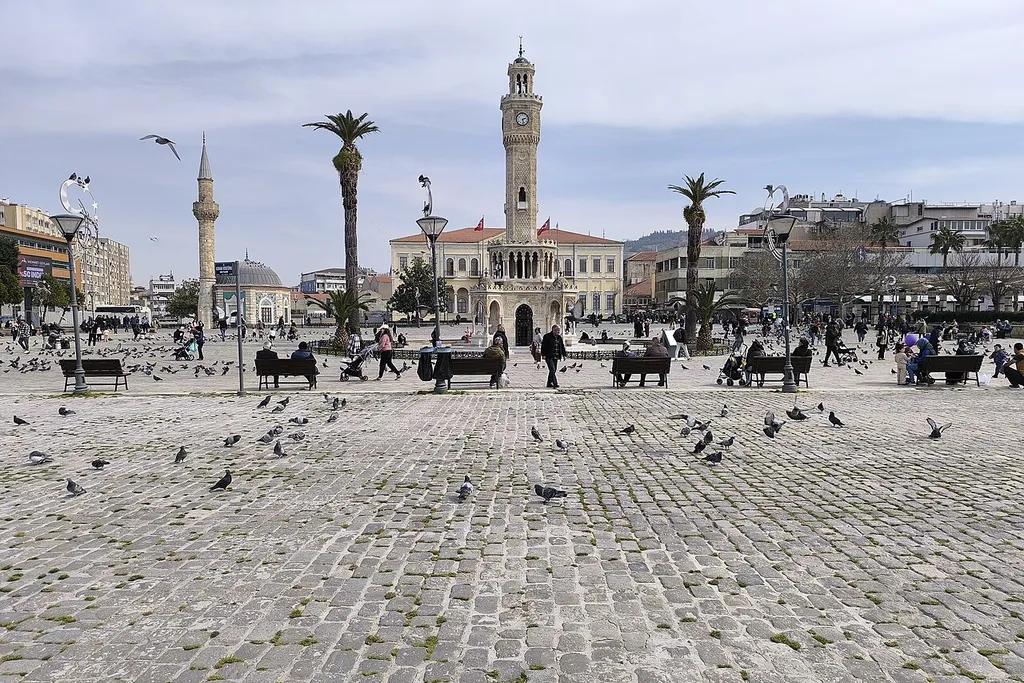
If the Kordon is Izmir’s front garden, Konak Square is its front room – the big open civic space where the historic centre meets the sea, and the natural starting point for a first morning. Everything here is a landmark of a different era standing shoulder to shoulder. The Clock Tower rises from the middle of the square, an elegant, richly carved marble tower built in 1901 for the twenty-fifth anniversary of Sultan Abdülhamid II’s accession to the throne, designed by the Levantine architect Raymond Charles Péré. It has become the symbol of the city the way far grander monuments have not: it is on the souvenirs, the ferry tickets and the municipality’s own letterhead.
A few steps away stands a complete contrast – the Konak Mosque, usually called the Yalı Mosque, a tiny, exquisite eighteenth-century prayer hall faced in Kütahya tiles, small enough that visitors regularly walk past it while photographing the tower. Between them the square does its daily business: pigeons in their hundreds, tea sellers, shoe-shine men, families photographing children against the tower, and the constant flow of people crossing between the metro station, the ferry pier and the bazaar streets behind. Across the square stand the Governor’s office and the City Hall, and at the water’s edge the Konak ferry pier and the first shots of the bay.
Use Konak as your compass point. The bazaar begins directly behind the square, the Agora is a short walk uphill from it, the metro and the Konak tram both stop here, and the ferries leave from the pier in front. A traveller who can find Konak Square can find anything in old Izmir, and the square repays ten unhurried minutes of simply standing in it before the sightseeing starts – it is the one place where the city’s Ottoman, Levantine, republican and thoroughly modern layers all show at once.
Kemeralti – The Bazaar Behind the Square
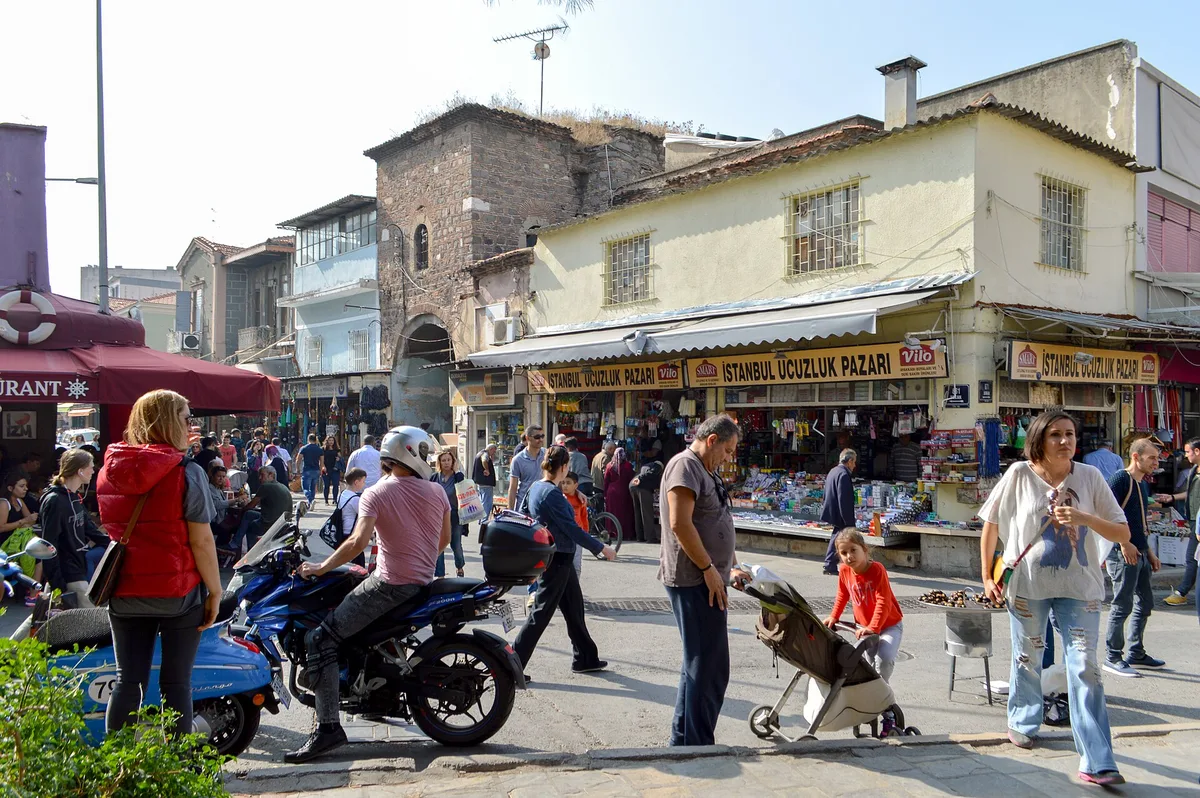
Walk a minute inland from Konak Square and the modern city falls away into Kemeralti, one of the great historic market quarters of the Mediterranean. This is not a restored tourist bazaar; it is the commercial heart Izmir has used since the seventeenth century, when the inner harbour silted up, the shoreline moved, and the city filled the shallows with streets of shops, workshops, mosques and hans – the courtyard inns where caravan merchants once stored goods and slept above them. The harbour has moved twice more since, but the bazaar never stopped working, and that continuity is exactly its charm.
The hans are the quarter’s treasures. The Kızlarağası Han, built in 1744, is the grandest survivor – a two-storey stone courtyard building whose shaded arcade now holds small shops and coffee houses, and whose roofline of chimneys and domes announces itself from several streets away. Sit in its courtyard with a coffee brewed over sand in the traditional way and you are sitting in the operating system of Ottoman trade. Around it, the main streets run in loose specialisations the way old bazaars always do: wedding clothes and fabrics here, gold and jewellery there, spices, dried fruit, leather, shoes, wedding almonds and sugared favours, hardware, and the famous pickles and syrups of the old market halls. The Hisar Mosque, finished in the last years of the sixteenth century and the quarter’s largest historic mosque, anchors one end of the maze with its blue-tiled interior.
Give Kemeralti time and treat getting lost as the method. The quarter rewards slow looping more than navigation: side alleys hold old synagogues from the city’s once-large Jewish community around Havra Sokağı, tiny workshops still cut and stitch above the shops, and the tea gardens tucked into converted hans make ideal rest stops between the Agora and the hill. Prices here are local prices, shopkeepers are busy rather than pushy, and the correct purchase is something Izmir actually buys – dried figs and sultanas from the region’s orchards, olive oil and olive-oil soap, or a wedding-almond favour you will never use and always keep. Any honest izmir travel guide should say plainly that Kemeralti alone justifies the trip for travellers who love markets; it is Istanbul’s bazaars’ equal in atmosphere, with a fraction of the hassle and none of the performance.
The Agora of Smyrna – Rome Under the Modern City
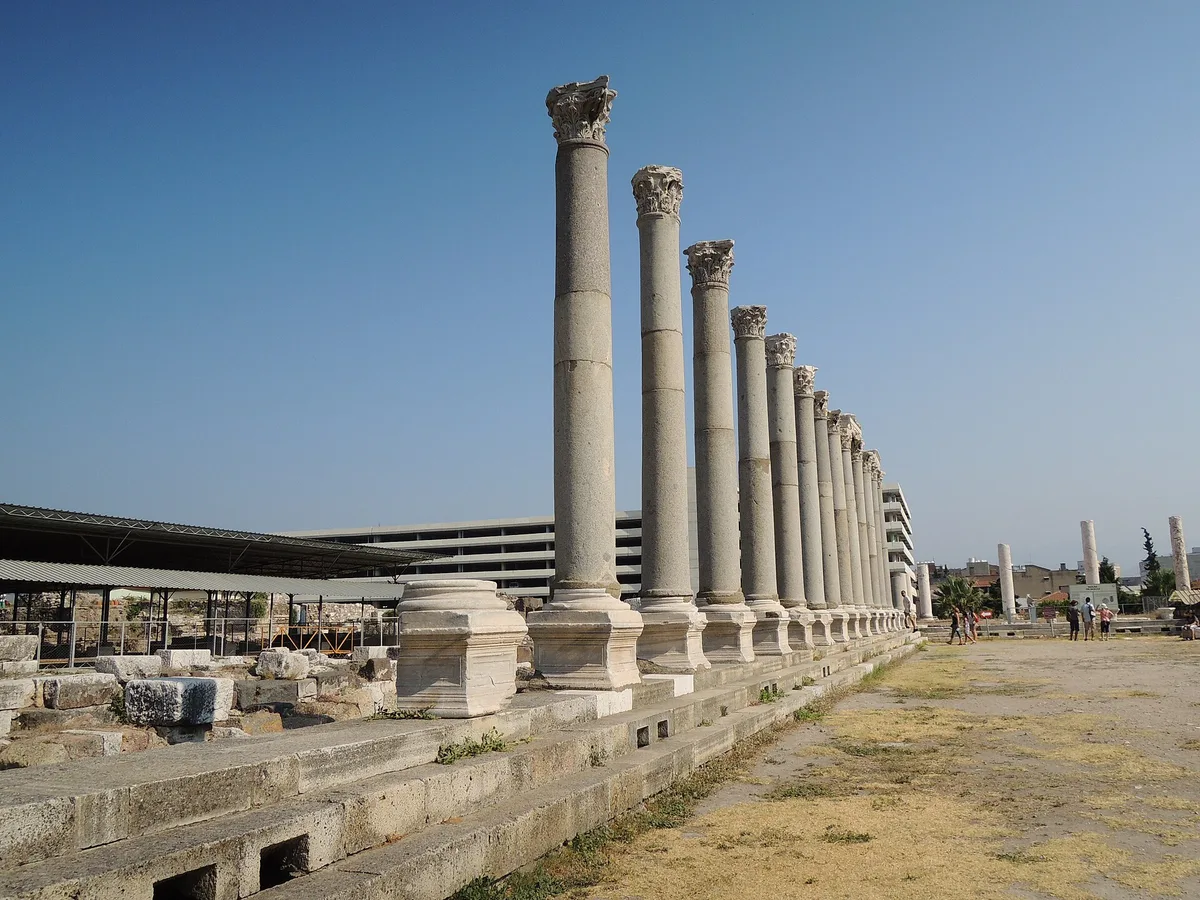
Ten minutes uphill from the bazaar, in the middle of an ordinary residential neighbourhood of apartment blocks and a multi-storey car park, an entire Roman city square sits open to the sky. The Agora of Smyrna was the commercial and civic heart of the Roman city – founded in the fourth century BC when Smyrna was refounded on the slopes of Mount Pagos, destroyed by the great earthquake of AD 178, and rebuilt with imperial funding under Marcus Aurelius. Excavations have been running since 1933 and continue today, which makes the site that rare thing: a major ancient monument still being uncovered in the middle of a living city, with scaffolding and sorting yards as part of the honest scenery.
What survives is genuinely impressive. The west colonnade’s Corinthian columns stand re-erected in a long, photogenic row, and beneath them runs the real wonder of the site – the vaulted basement of the basilica, a cool, echoing underworld of arches where the walls carry one of the ancient world’s richest hauls of Roman graffiti. Ordinary Smyrniots scratched ships, gladiators, wordplay, riddles, advertisements and declarations of love into the plaster nearly two thousand years ago, and reading about them in that dim vault brings Roman Izmir closer than any marble statue can. The official museum directory lists the Agora as an open archaeological site (checked 31 October 2026), and the Agora forms part of the “Historical Port City of Izmir”, which Türkiye placed on UNESCO’s Tentative List in 2020 – a candidate for full inscription, not yet a World Heritage Site, whatever looser guides may tell you.
Visit the Agora in the morning before the stone heats up, and pair it with the castle above: the Agora stood at the foot of the acropolis hill, and from its upper terraces Kadifekale’s walls are visible exactly where the ancient city’s planners put them. Then walk back down through the bazaar for lunch. That single half-day loop – square, bazaar, agora, castle – is the historical spine of this izmir travel guide, and it costs nothing but shoe leather and one site ticket.
Kadifekale – The Castle on Mount Pagos
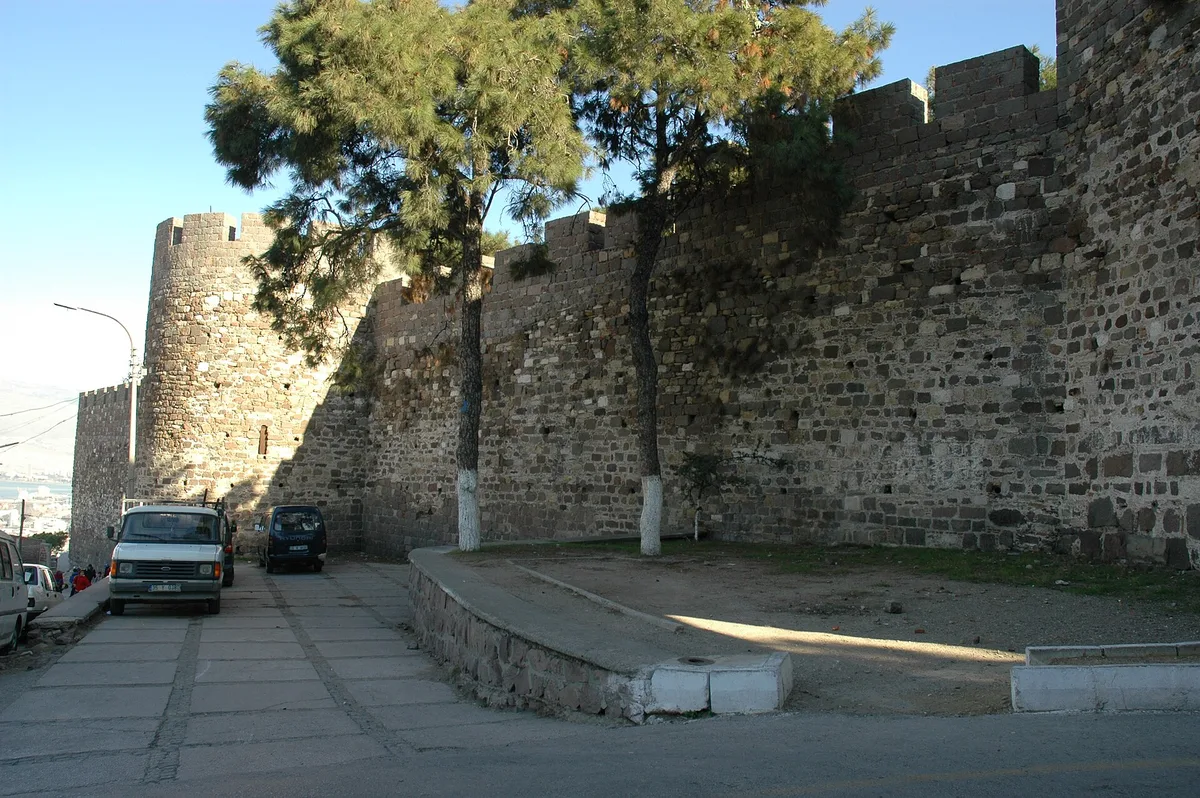
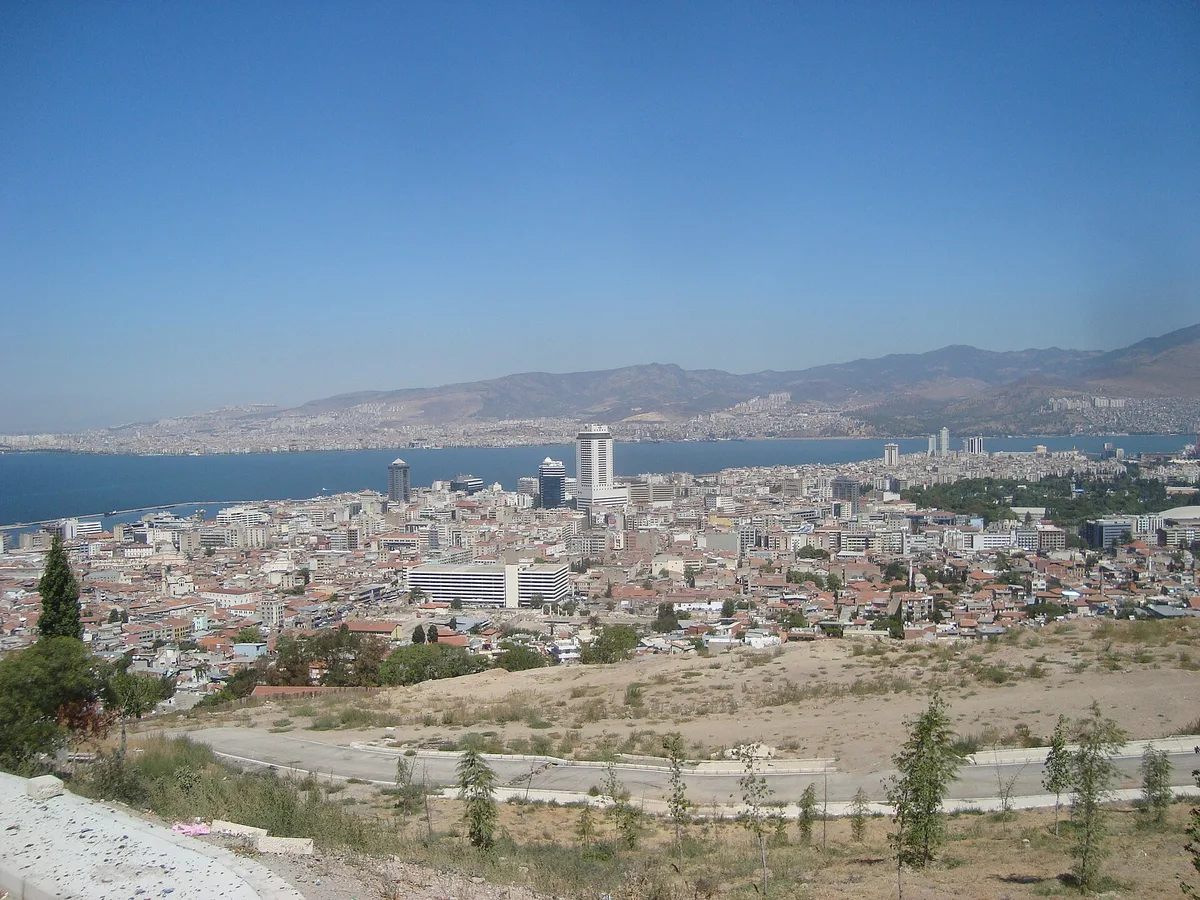
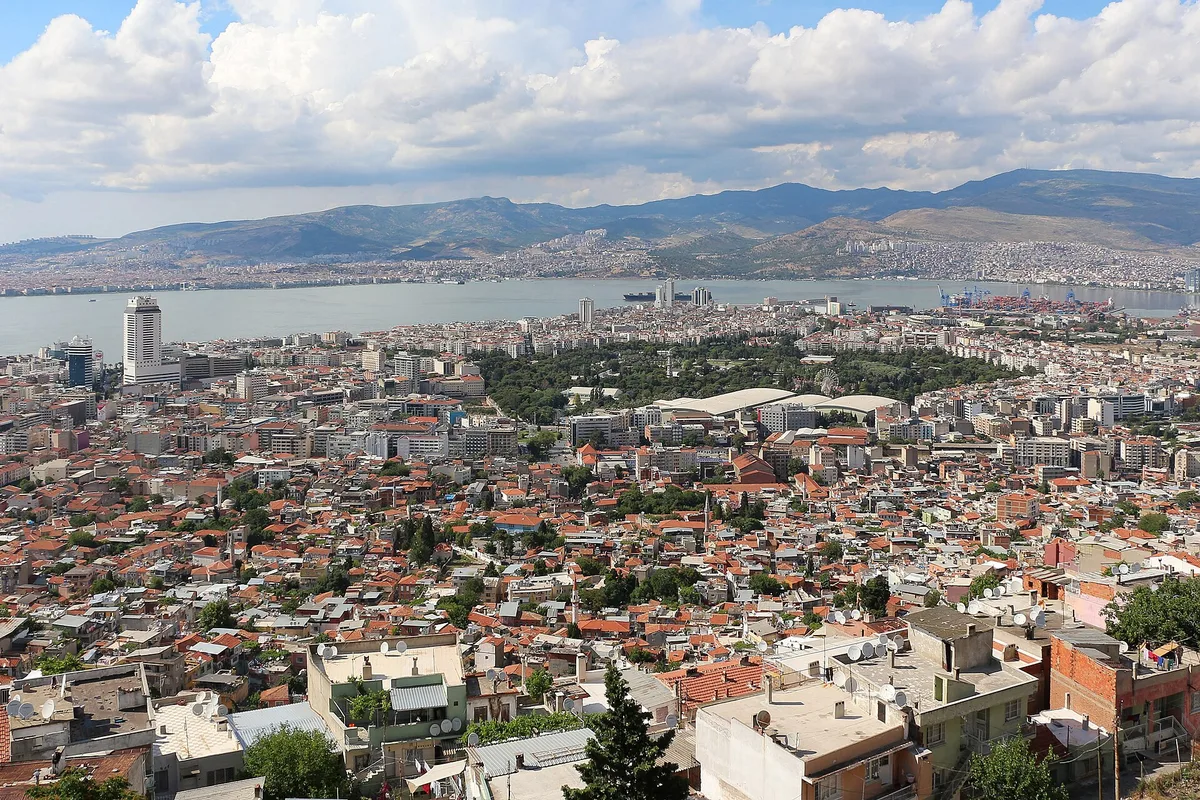
Every path in old Izmir eventually points uphill, to the castle. Kadifekale – “the velvet castle” – crowns Mount Pagos, the hill on which Hellenistic Smyrna was refounded under Alexander the Great’s successors after the older city at Bayraklı, across the bay, had had its day. The walls you see are mostly later work, Byzantine and medieval repairs over ancient foundations, but the position is the original one, chosen over two thousand years ago for exactly the reason you will go up: from the top, the entire geography of Izmir reads like a map. The bay curves away below, the port and Alsancak spread to the right, Karsiyaka faces you across the water, and on a clear day the view runs out to the gulf’s entrance.
Be honest with yourself about what the castle is. The interior is mostly open ground, walls and a great cistern rather than a furnished fortress, and travellers expecting an intact medieval castle with museums inside should adjust their expectations before the climb rather than after it. The sight is the view and the walls themselves, and on those terms it delivers fully – this is the one panorama that puts the Agora, the bazaar, the bay and both shores into a single frame, and it makes the rest of your sightseeing make sense.
Getting up is part of the planning. The hill is steep, the surrounding neighbourhoods are among the city’s poorer quarters, and the standard sensible approach is a taxi or a bus up and, if you like, a careful walk down through the old streets toward the Agora in daylight. Go in the morning or late afternoon for the light and the temperature, carry water, and treat Kadifekale as the punctuation mark at the end of the old-town story rather than a half-day expedition – an hour at the top is about right, and the descent through the bazaar streets to a Kemeralti lunch is one of the nicest sequences in the city.
The Asansor and Karatas – The Lift Between Two Streets
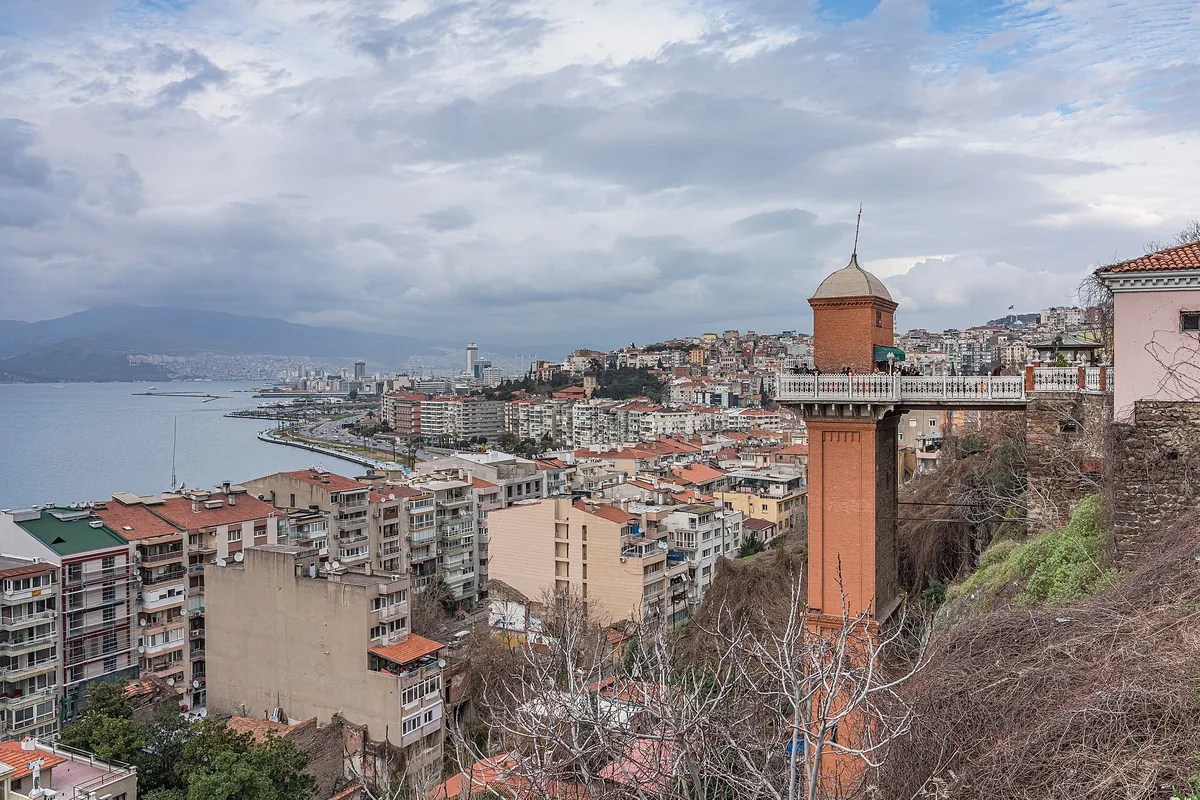
South of Konak, along the shore road toward the bay’s southern suburbs, the cliffs of the old Karatas quarter rise straight out of the flat waterfront – and in 1907 a wealthy merchant named Nesim Levi Bayraklıoğlu solved the cliff with one of the most charming pieces of municipal machinery in Türkiye. The Asansör – the word simply means “lift” – is a tall brick tower containing a public elevator that carries passengers between Mithatpaşa Street at sea level and Halil Rıfat Paşa Street on the heights above. What sounds like a piece of transport plumbing became, and remains, a beloved city landmark, its viewing balcony one of the classic free lookouts over the gulf.
Approach it the right way, from below. The lane that leads to the tower is named Dario Moreno Street, after the Izmir-born singer and actor who lived here and sang his love for the city; it is a pretty, plant-hung little street with cafes, and the walk up it builds the small ceremony the place deserves. Ride the lift – it is still a working piece of the city’s transport, used by residents carrying shopping – and step out onto the terrace for the panorama south across the bay toward İnciraltı and the gulf’s mouth. A restaurant and cafe occupy the top, so the visit can stretch into a coffee or a full sunset dinner above the water.
Karatas itself deserves the slower walk back. This was historically one of the city’s Jewish quarters, and its old houses, synagogue history and seafront streets give the southern end of the centre a different texture from Levantine Alsancak or commercial Konak. Combined with a Kordon walk south from Konak, the Asansör makes a natural half-day: bazaar in the morning, lift and terrace in the late afternoon, and the whole bay doing its evening colour change in front of you.
Alsancak – The Port District That Stays Up Late
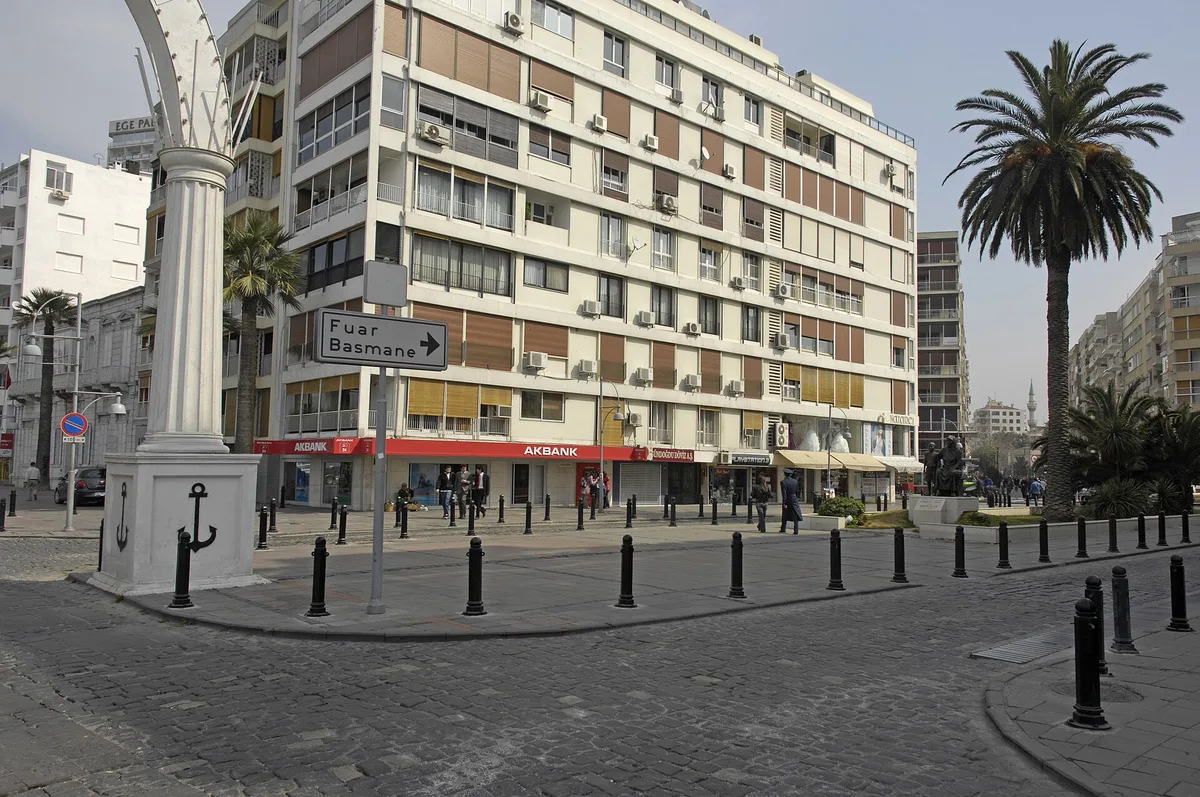
If Konak is Izmir’s past and front room, Alsancak is its present tense. The district wrapped around the port, immediately north of the Kordon’s middle, is where the city’s offices, consulates, smart shops and much of its nightlife concentrate – a grid of apartment-lined streets that stays busy from the first ferry to the last bar. It is also, for most visitors, the best base in the city, with the widest spread of hotels and the Kordon’s lawns as its front yard. Two sights anchor it culturally. The Atatürk Museum, in a grand waterfront mansion on the Kordon itself, occupies the house Atatürk used on his visits to the city, and it appears in the official museum directory for the province – a calm, formal counterpoint to the promenade outside its door. A few streets inland, the district’s churches and the old Levantine houses along its side streets recall the centuries when Smyrna’s European merchant families ran their trading houses from this shore.
Alsancak’s real content, though, is its daily and nightly life. Kıbrıs Şehitleri Avenue, the pedestrianised spine, runs inland from the pier through bookshops, cafes, patisseries and bars, busy at every hour; the side streets off it hold the meyhane taverns and fish restaurants where Izmir eats its Aegean dinner of olive-oil starters, grilled fish and rakı. Gündoğdu Square, the open space where the district meets the Kordon, hosts the city’s celebrations, concerts and New Year crowds, and the ferry pier at its edge makes the commute to Karsiyaka a two-minute decision rather than a plan.
Stay here if you can. The trade-off is honest: Alsancak’s streets can be loud at night near the bar blocks, and the port traffic gives the district an edge of diesel under the sea air. But for a first stay of two to four nights, nowhere else in the city puts the Kordon, the ferries, the bazaar (one tram stop or a pleasant walk away) and the best dinner streets in the same small radius – which is why this izmir travel guide keeps returning to it as the default answer.
Across the Water – The Ferries and Karsiyaka
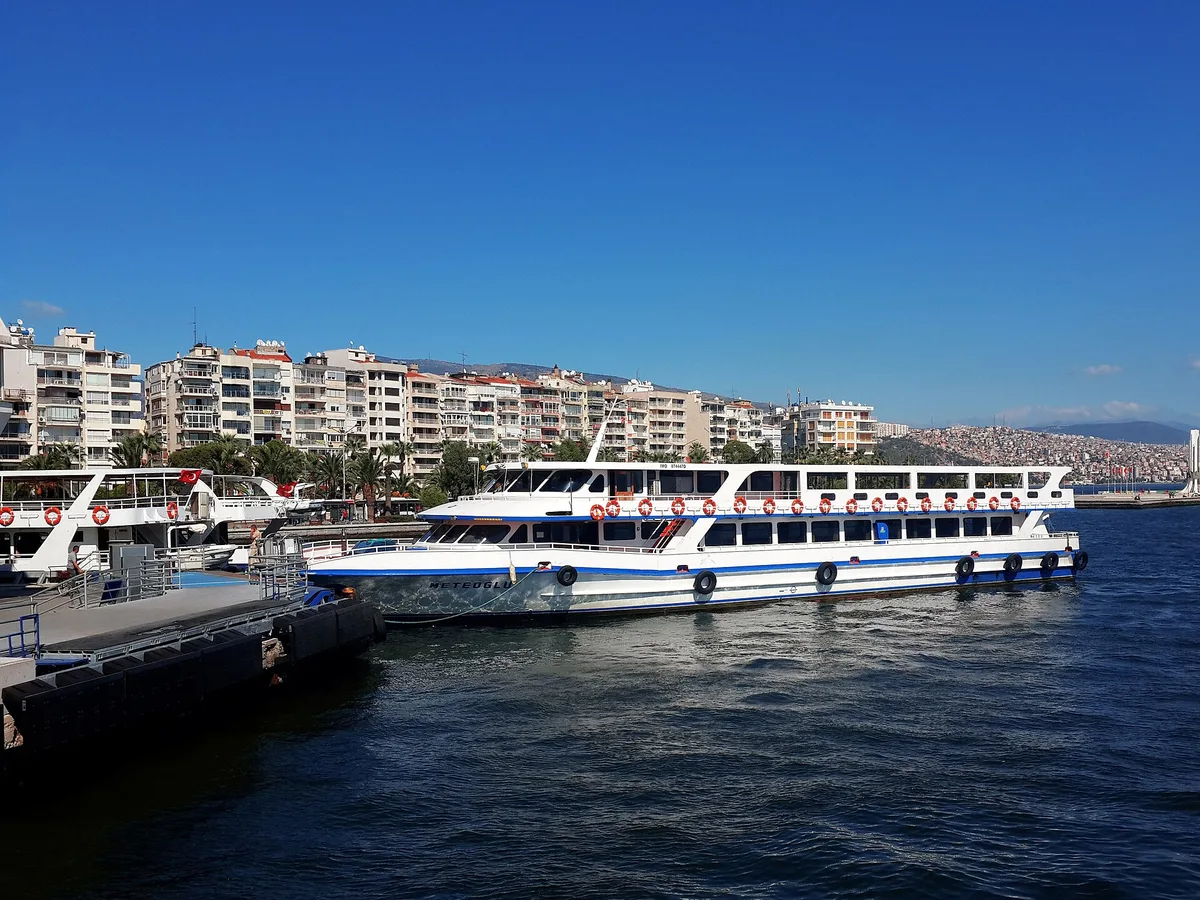
In most cities the transport highlight is a bridge or a famous metro line. In Izmir it is a boat. The municipal ferry fleet, run by İZDENİZ, crosses the bay all day between the piers of the old-city shore – Konak, Pasaport, Alsancak – and the northern shore at Karsiyaka and Bostanlı, and riding it is not a tourist excursion but the city’s own circulatory system. Commuters read the newspaper on the open deck with tea in hand, gulls pace the boat hoping for simit crumbs – gevrek crumbs, the crew would correct you – and the skyline of whichever shore you are leaving performs the slow pan that no viewpoint on land can match. For the price of a transit tap, it is the single best experience in this izmir travel guide, and you should ride it at least twice: once by day, once coming back across at sunset.
Karsiyaka, at the other end of the crossing, is worth the landing. Its name means “the opposite shore”, and it wears the identity proudly – Karsiyaka people consider themselves a breed apart from the Konak side, support their own fiercely loved football club, and have built their waterfront into a long, lively band of cafes, restaurants and promenading families. The ferry pier deposits you directly into the town’s main shopping street, with the market streets and the old Levantine-era mansions of the back lanes a short wander away, and the shore road runs on west toward Bostanlı’s sunset-facing cafes and Mavişehir’s modern towers. Nothing in Karsiyaka is a must-see sight in the checklist sense; the sight is the district itself, a prosperous, relaxed, thoroughly lived-in shore that shows you the Izmir its residents choose.
Practically, the northern shore solves a planning problem too. Karsiyaka and Bostanlı make a legitimate alternative base for travellers who prefer a quieter, more local stay and do not mind a short ferry or tram ride to the sights – and that ride, remember, is the best seat in the city. The Karşıyaka tram runs along the shore from Alaybey toward Mavişehir and Ataşehir, the İZBAN commuter line serves the district from inland, and the ferry handles the rest. Whichever side you sleep on, cross the water at least once just for the crossing.
Kulturpark – The Fairground in the Middle of Town
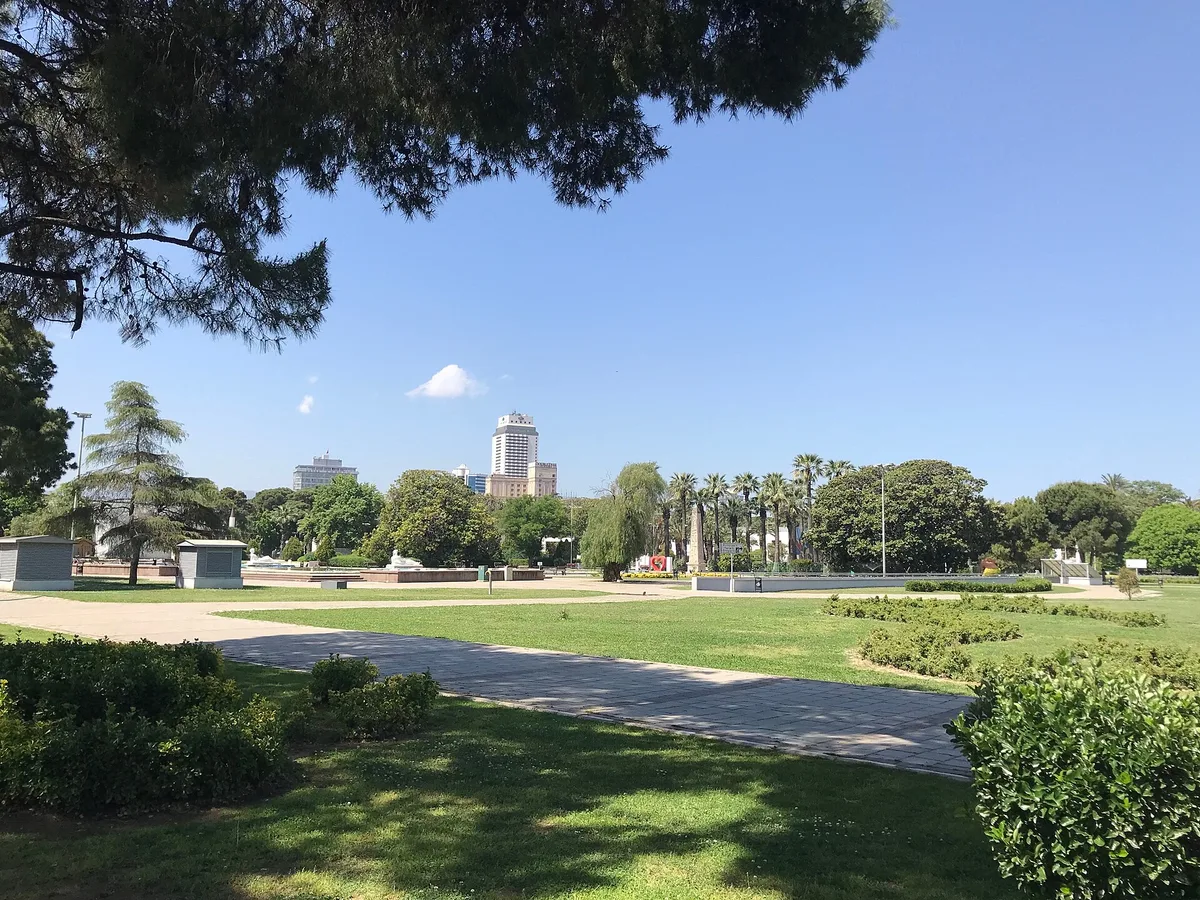
Behind Basmane station, the city opens into its green lung: Kültürpark, a large landscaped fairground park created in 1936 on ground that the great fire of 1922 had cleared. The fire, which destroyed much of the old waterfront city in the last days of the Greco-Turkish war, left a scar of empty land between Basmane and the shore, and the young Turkish Republic turned part of that scar into a statement – a permanent park and fairground that still hosts the İzmir International Fair, the country’s oldest trade fair, every late summer. For the rest of the year it is simply the centre’s big park: lawns, palms, a small lake, exhibition halls, an open-air theatre and generations of Izmir families taking the air.
Kültürpark matters to the visitor for two reasons. The first is atmosphere: it is the green pause between the bazaar’s intensity and the port district, and a picnic or a slow hour here recharges a sightseeing day better than any cafe. The second is museums – or rather, the museum question, which the next section handles properly. For decades the park’s pavilions housed Izmir’s Museum of History and Art, and older guidebooks and web pages still send travellers here for it. The city’s museum map has changed around the park, and the official listings now point elsewhere. Read the next section before you plan a museum day around any printed source, including paper guidebooks only a few years old.
The Museums – An Archaeology Museum, a Factory of Culture and One Vanished Name
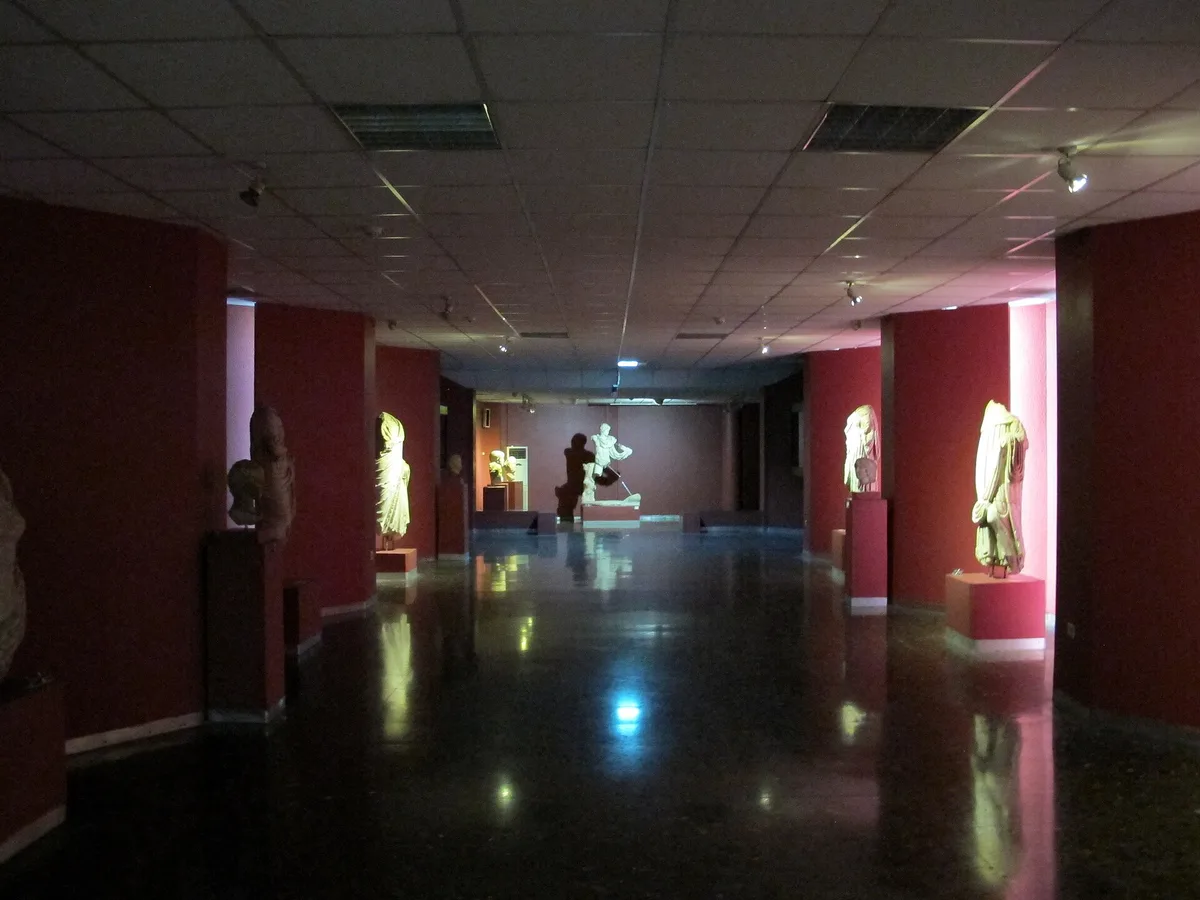
Izmir’s museum situation is the one place where printed guides will actively mislead you, so here is the position exactly as the official source gives it. On 31 October 2026 we checked the İzmir province directory of muze.gov.tr, the Turkish Ministry of Culture and Tourism’s museum portal, entry by entry. The İzmir Archaeological Museum is listed open, every day, in Bahribaba Park in Konak – the big state museum a short walk from Konak Square, holding the region’s finds from Old Smyrna at Bayraklı to the Aegean’s ancient cities, in a building it moved into in 1984 after earlier lives that began with a first museum opening in 1927. The same directory lists the Smyrna Agora archaeological site as open, and the Atatürk Museum on the Kordon. Plan around those with confidence.
The same directory holds a second, newer arrival that most guides have not caught up with: the İzmir Culture and Arts Factory, the vast late-nineteenth-century Alsancak tobacco factory restored as a cultural complex. Its official listing describes it as open to visitors and housing, inside one complex, an Archaeology and Ethnography Museum – archaeology on the ground and first floors, ethnography above – and the İzmir Painting and Sculpture Museum. For many visitors this will be the practical museum day of the future: one address, in Alsancak, covering both the ancient and the Ottoman-to-modern city.
And the vanished name: no entry called the İzmir Museum of History and Art appears anywhere in the current official İzmir directory, although generations of guidebooks place it in Kültürpark. This guide will not invent a reason or a reopening date – museum arrangements in Türkiye change, and the honest advice is the advice we follow ourselves: before planning around any Izmir museum beyond the Archaeology Museum, the Agora and the Factory, check the province list on muze.gov.tr in the week you travel. That two-minute check is worth more than any guidebook’s museum chapter, this one included – it is the same check this izmir travel guide ran, entry by entry, before writing this section.
Day Trips from Izmir – Ruins, a Steep Theatre and the Peninsula
Here is where Izmir defeats the resort towns. Sleeping in the city puts four genuinely different day trips within easy reach by train and bus. Each one below is planned from an Izmir base the way this izmir travel guide believes day trips should be planned – as logistics: how you get there, how the day flows, and what would make you choose it over the others. Ephesus is the essential one; the rest depend on your days and your appetites.
Ephesus and Selcuk – The Classic, Done by Train
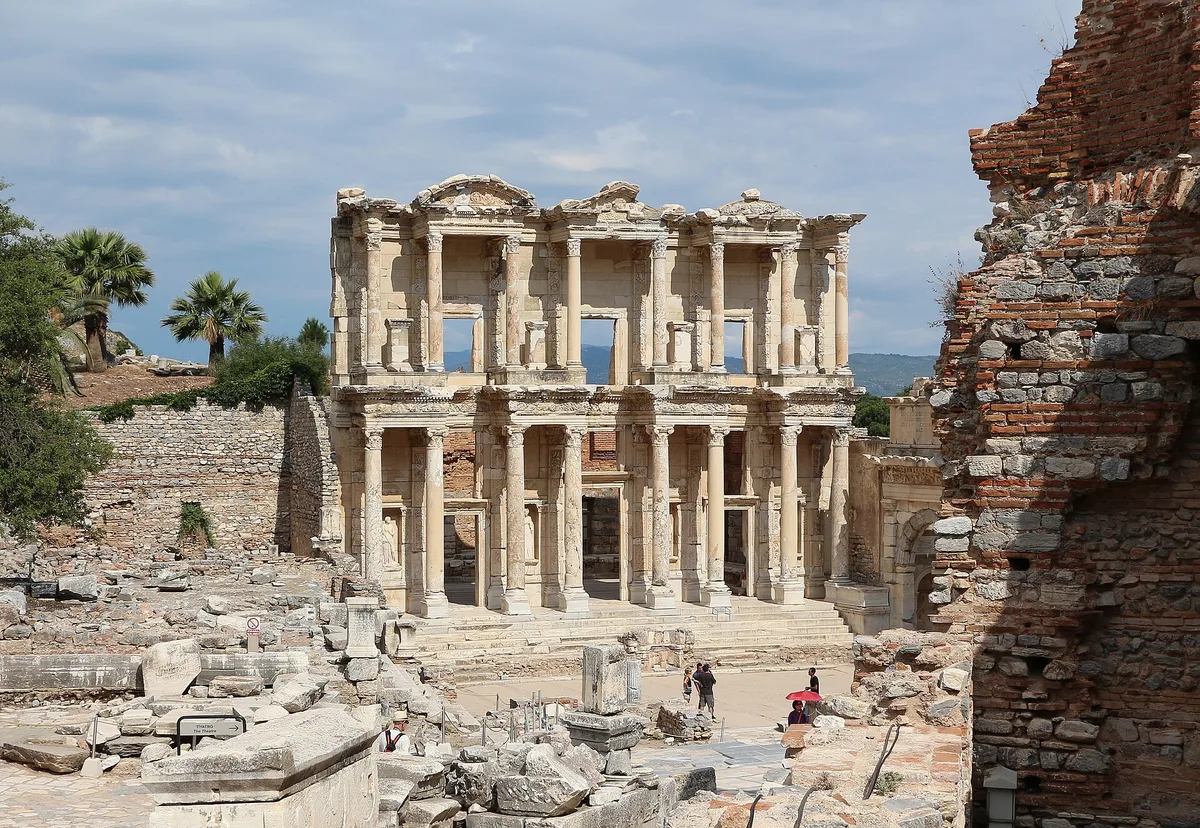
Ephesus needs no sales pitch from us: a marble Roman metropolis inscribed on UNESCO’s World Heritage List in 2015, with the Library of Celsus, the Great Theatre and a whole city’s worth of streets, temples and houses. What needs saying is how an Izmir base changes the visit. The İZBAN commuter railway runs from the city – and directly from the airport – south to Selçuk, the modern town beside the ruins, and regional trains from Basmane cover the same corridor. That turns Türkiye’s most visited ruin into a simple rail day: no tour bus, no hotel move, no cruise-ship schedule. From Selçuk station the site is a short local ride or a half-hour walk, and the town itself holds the excellent Ephesus Museum, where the finds from the ruins – including the famous many-breasted Artemis statues – are displayed, plus the basilica of St John and a castle on the hill above.
Sequence the day like a local would. Take an early train, walk the site from one gate to the other in the cool of the morning before the coach groups arrive, and keep the museum and the town for the hot middle of the day, when Selçuk’s cafes earn their keep. Add the House of the Virgin Mary on its wooded hill above the site if it matters to you – it is a short taxi hop from town – and be back on the Kordon for the sunset walk, dinner in Alsancak, and the peculiar satisfaction of having seen Ephesus and still sleeping in a real city. Do not let anyone sell you the idea that Ephesus requires staying in Selçuk or Kuşadası; from Izmir it is the easiest great ruin in the country to do independently.
Pergamon – The Steep Theatre in the North
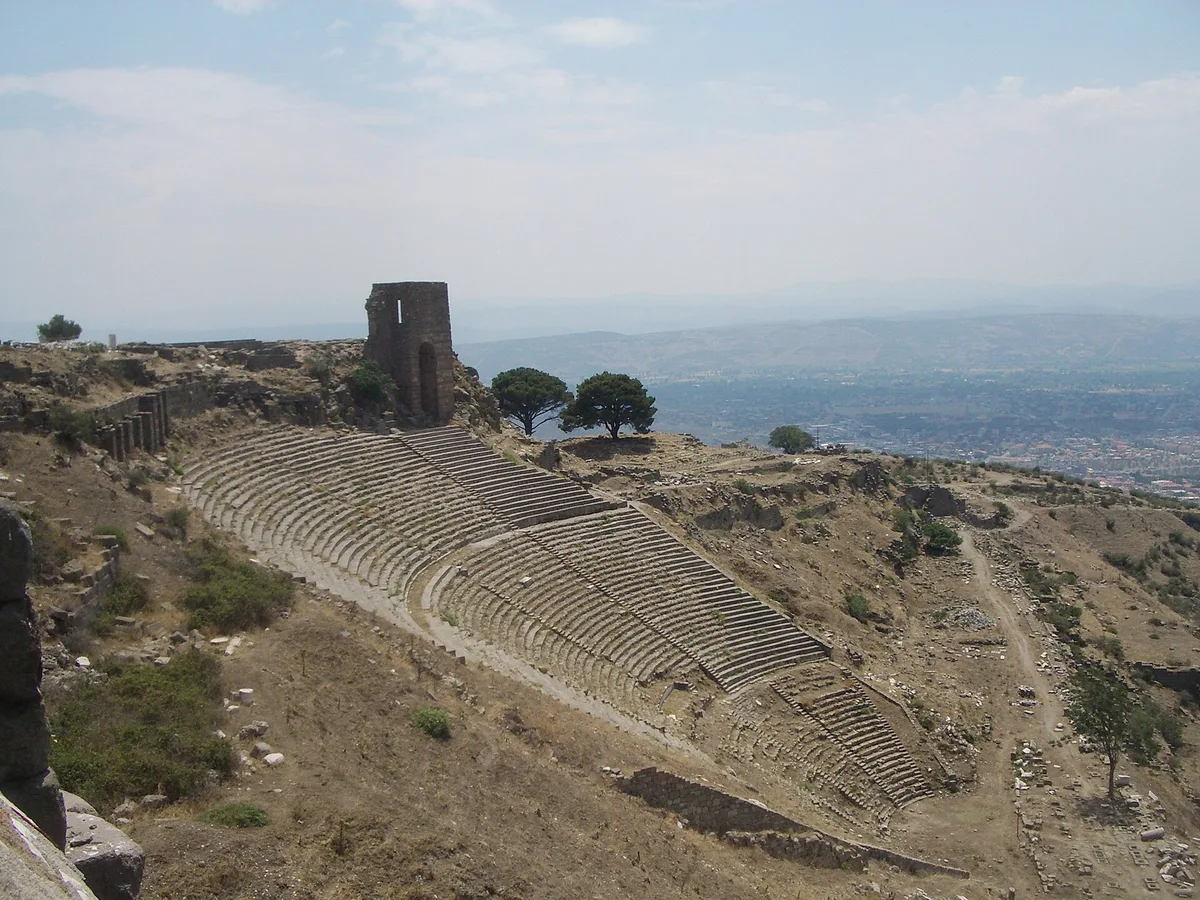
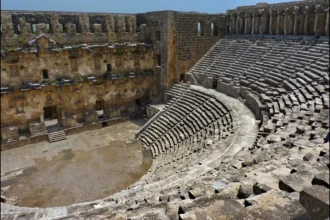
North of Izmir the day trip changes character completely. Pergamon, the Attalid kings’ capital above the modern town of Bergama, was inscribed by UNESCO in 2014 – and where Ephesus is a city laid out on the flat, Pergamon is a city poured down a hill. The acropolis stacks its temples, palaces, library site and altar terrace along a ridge, and its theatre is the famous set piece: a cavea cut into the slope at an angle so steep it makes visitors laugh out loud at the top and grip the stone at the bottom, with the whole Bergama plain spread out below like a relief map. It is one of the great sights of the ancient world and it draws a fraction of Ephesus’s crowds.
The logistics are one step more involved, which is exactly why it works as a second or third day trip rather than a first. İZBAN’s northern line runs toward Aliağa, from where local buses continue to Bergama; intercity buses from Izmir’s main bus terminal cover the route too. In Bergama, a cable car climbs to the acropolis from the town, and the day divides naturally between the hilltop, the Red Basilica – the vast brick Roman temple complex standing in the town itself – and the Asklepion, the ancient healing sanctuary on the plain, where Galen, antiquity’s most famous doctor after Hippocrates, trained and worked. Choose Pergamon over a second Ephesus-area day if you prefer your ruins dramatic, uncrowded and a little effortful, and give it a full day: the distances between its three sites are real.
Cesme and Alacati – The Peninsula Weekend
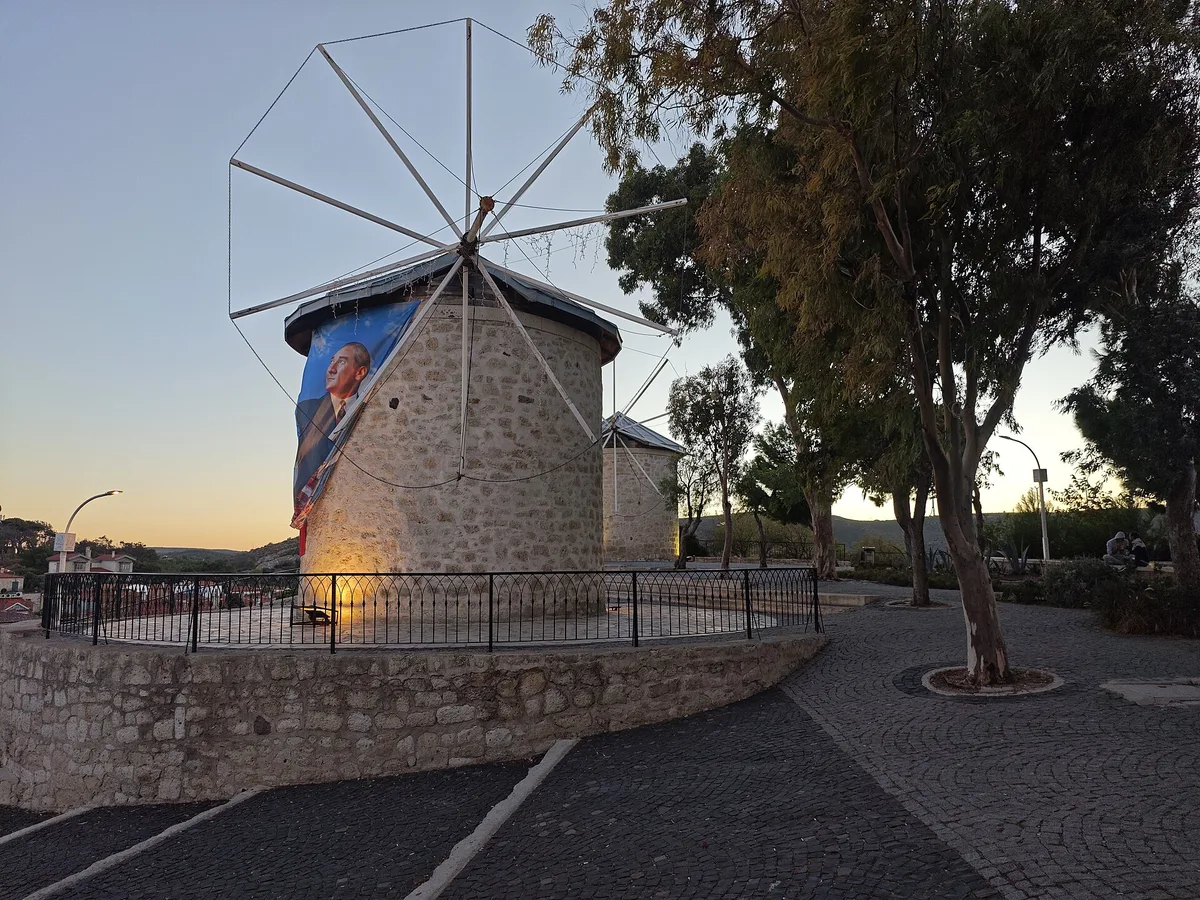
West of the city, the long Çeşme peninsula is where Izmir goes on holiday, and it makes the leisure day trip of the set. Intercity buses run from the main terminal and from Üçkuyular on the city’s west side out to Çeşme town at the tip, a harbour resort under a Genoese-era castle – the castle houses a small museum that appears in the official directory – with beaches and the marina along its shore. Halfway back along the peninsula’s south coast sits Alaçatı, the town of the moment: a Greek-village core of stone houses turned into boutique hotels, restaurants and design shops, landmark windmills on the hill above, and, on its southern bay, one of the Mediterranean’s most reliable windsurfing and kitesurfing grounds, where the wind blows so consistently that international competitions base themselves here.
Be clear-eyed about what the peninsula is and is not. In high summer it is expensive, fashionable and crowded with Istanbul’s weekend crowd; Alaçatı’s prettiest streets are also its priciest, and the beach clubs run on reservations and minimum spends. Out of season it is quieter, cheaper and arguably better – spring and autumn weekends are when Izmir families themselves go. As a day trip from the city it works best as a deliberate contrast: ruins and bazaars behind you, one day of Aegean resort life, and the city ferry waiting at the end of the bus ride home. Travellers staying longer can equally flip the arrangement and sleep a night or two in Alaçatı – but keep the Izmir base for the ruins either way.
Sirince – The Village Above Selcuk
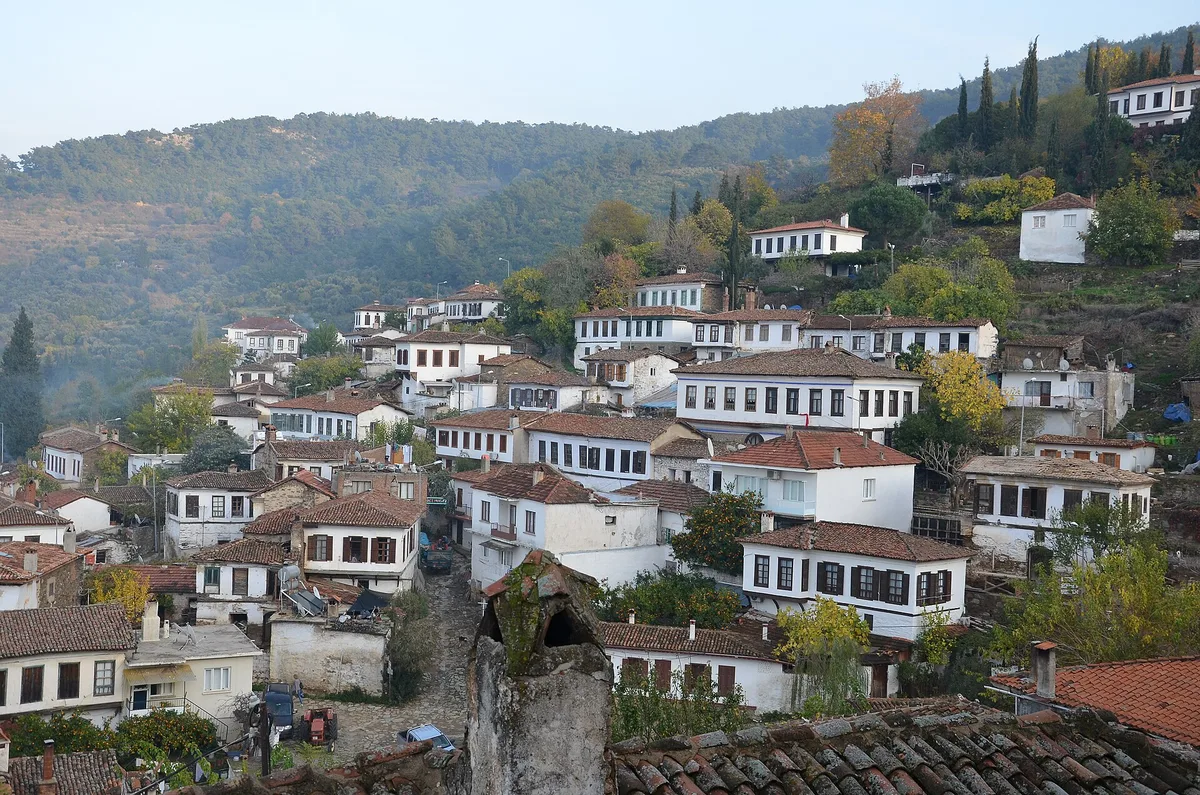
The fourth day trip is the smallest and the gentlest. Şirince climbs a green hillside a short drive above Selçuk – a village of whitewashed, red-roofed nineteenth-century houses, cobbled lanes, fruit wines, olive oil and market stalls, settled by Greeks until the population exchange of the 1920s and now preserved as one of the prettiest villages in the Aegean hills. It pairs with Ephesus in two ways: as the soft second half of a Selçuk day, once the marble has heated up and the crowds have peaked, or as the overnight alternative for travellers who want one night of village quiet inside an Izmir-based trip.
Manage expectations and Şirince charms completely. It is small, it is popular, and its main lanes are lined with stalls selling much of what every Aegean village sells – but walk two lanes up the hill and the village reasserts itself, all church towers, garden walls and views down the valley to the Selçuk plain. Come by local minibus from Selçuk, taste the fruit wines in a family cellar, eat a village lunch under the vines, and time the trip back so the train returns you to the city by evening. On a four-day stay, Ephesus plus Şirince, Pergamon, and one lazy peninsula day is the complete set this izmir travel guide would choose.
Getting to Izmir
Izmir’s airport is Adnan Menderes (ADB), in Gaziemir south of the city, and it is one of the easiest airport arrivals in Türkiye because the railway does the work. The airport has its own station on the İZBAN commuter line, whose trains run north through the suburbs into the city – change to the metro at Hilal or Halkapınar for Konak and the centre, or ride to Alsancak station for the port district. Airport shuttle buses run to the centre and Alsancak as well, and taxis wait outside arrivals; as everywhere in this guide, we describe the mechanisms and skip the fares, because fares change and the mechanism is what planning needs. Buy and load an İzmirim Kart on arrival and the whole network below becomes one system.
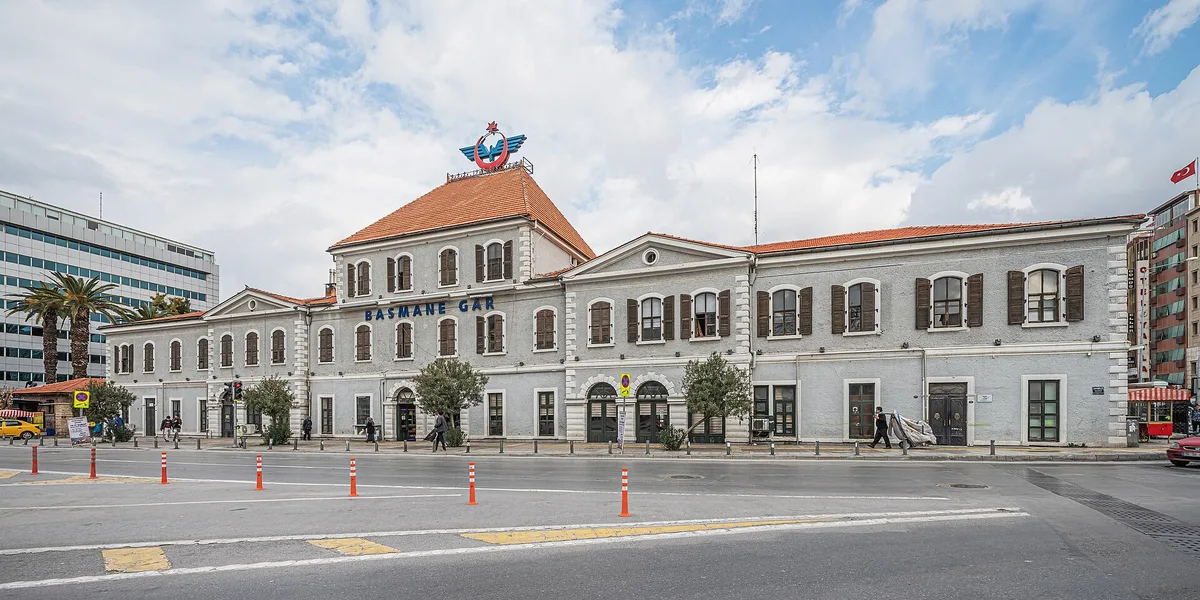
By rail, Izmir has two historic stations and a clear division of labour. Basmane, the handsome nineteenth-century terminus at the edge of Kültürpark, handles regional trains – south toward Selçuk and on to Denizli, the jumping-off point for Pamukkale – while Alsancak station serves İZBAN’s commuter network. Long-distance trains connect Izmir with Ankara and other Anatolian cities on slow, scenic timetables; they are a pleasure rather than a shortcut, and the traveller in a hurry flies. Intercity buses, as everywhere in Türkiye, are frequent, comfortable and cheap relative to their quality: the main bus terminal sits east of the centre in Bornova’s direction, with city buses and metro connections from the terminal area, and separate departures from Üçkuyular serve the Çeşme peninsula. However you arrive, the city’s compact inner bay means the final leg is always short.
Getting Around Izmir
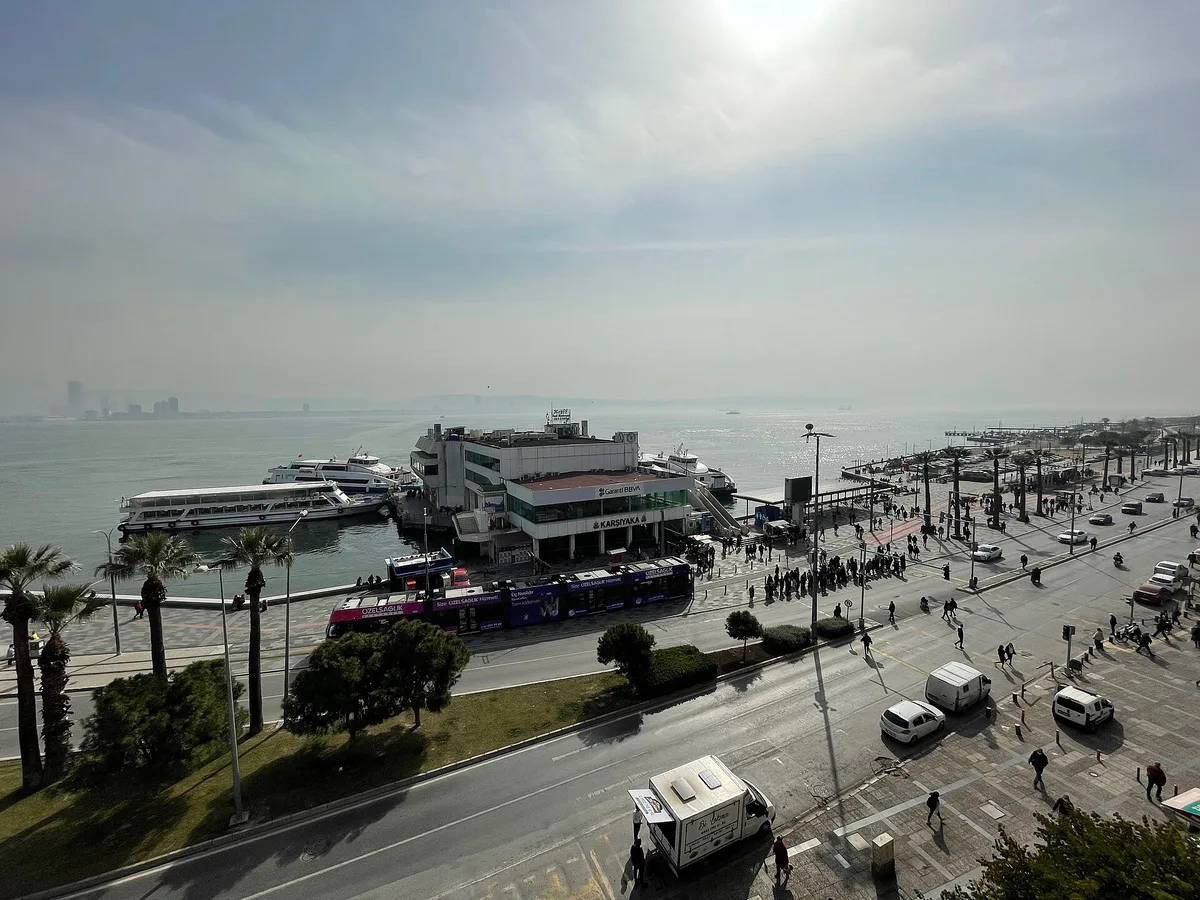
One card runs the city. The İzmirim Kart covers the metro, İZBAN, both tram lines, the buses and the İZDENİZ ferries, charged per tap with transfer logic built in, and it turns Izmir’s geography from a puzzle into a menu. The metro’s single line runs from Narlıdere in the west through Konak, Çankaya and Basmane, then northeast to Bornova and Evka 3 – the spine for the centre, the bus terminal side of town and the university districts. İZBAN, the commuter railway run jointly by the state railways and the municipality, is the long-distance arm: Aliağa in the north to Selçuk in the south, serving the airport, both shores’ suburbs and the Ephesus corridor on one line.
The trams are the sightseer’s friends. The Konak line runs along the waterfront and through the centre between Fahrettin Altay and Halkapınar, passing Konak Square and Alsancak at a pace made for watching the city go by, while the Karşıyaka line hugs the northern shore from Alaybey past the ferry pier toward Mavişehir. Between the trams and the ferries, a visitor can cross, circle and re-cross the inner bay all day without once needing a taxi – and should, because in Izmir the transport is half the sightseeing. Buses fill every remaining gap, including the climb to Kadifekale and the airport shuttles, and taxis are plentiful for the late-night or heavy-luggage legs; agree the meter is running and you will have no drama. Driving, finally, is the one mode we would skip: the centre’s traffic and parking will cost you the time the network saves.
When to Go to Izmir
Izmir’s Mediterranean climate gives it two golden windows and one famous furnace. Spring, from April into June, is the city’s best self: warm days, cool evenings, the bazaar at full energy, green hills behind Pergamon, and Ephesus walkable at midday. Autumn, from mid-September through October, runs it close – the sea is at its warmest, the peninsula quiets down, the light on the Kordon turns honey-coloured, and the day trips lose their queues. If you can choose freely, choose those windows; this izmir travel guide’s own pick for a first trip is late April or early October.
July and August are the months to understand rather than avoid blindly. The city gets properly hot – afternoons well into the thirties – and the heat haze sits on the bay, but the imbat breeze arrives most afternoons, the Çeşme peninsula is in full beach season, and the İzmir International Fair brings Kültürpark alive in late summer. The price is paid at the ruins: Ephesus at noon in August is a test of character, and every day trip in this guide should be re-timed to early starts and shaded middays. Winter, finally, is mild and mostly gentle, with rain spells rolling in off the Aegean; the bazaar, museums and food scene run all year, the Kordon belongs to the locals, and hotel supply is at its easiest. Only the peninsula sleeps – Alaçatı in January is a village again, which some travellers will count as a feature.
Where to Stay in Izmir – Districts, Not Just Hotels
Choose the district and the hotel takes care of itself, because Izmir’s neighbourhoods are distinct enough that the address matters more than the star count. Alsancak is the default answer for a first stay: the Kordon in front, the ferry pier in the middle, the bazaar a short tram ride south, the dinner streets in the evening, and the city’s widest range of hotels from international towers on the waterfront to small pensions in the side streets. The only caution is noise – pick a room away from the liveliest bar blocks if you sleep early, and let the concierge earn their keep on the question.
Konak suits the traveller who wants the old city at the door and value over views. Hotels cluster between the square, the metro and Kültürpark, the bazaar and Agora are walks rather than rides, and the big waterfront properties face the finest sunset in the city across the bay. Basmane, around the station and the park, is the budget quarter and an honest mixed bag: unbeatable prices and transport, streets that feel rougher at night than the rest of the centre, and a large refugee presence that has changed the neighbourhood’s character – many travellers stay happily and cheaply here, but first-timers who want an easy evening stroll should sleep a few hundred metres west and walk in for the trains.
Across the water, Karsiyaka and Bostanlı offer the local-life stay: apartment hotels and small properties along a shore of cafes and promenading families, with the ferry making Konak a commute rather than a journey – worth it for repeat visitors and anyone staying four nights or more. Bornova, the university district on the metro’s northeast end, has little reason to host a sightseer, and the Çeşme peninsula should be treated as its own trip rather than a base for Izmir: an hour or more separates Alaçatı’s stone streets from the Agora, and the peninsula’s prices buy charm, not convenience. Sleep in the city, day-trip out, and the whole of this izmir travel guide stays within easy reach.
What to Eat in Izmir – Boyoz, Gevrek and the Kumru
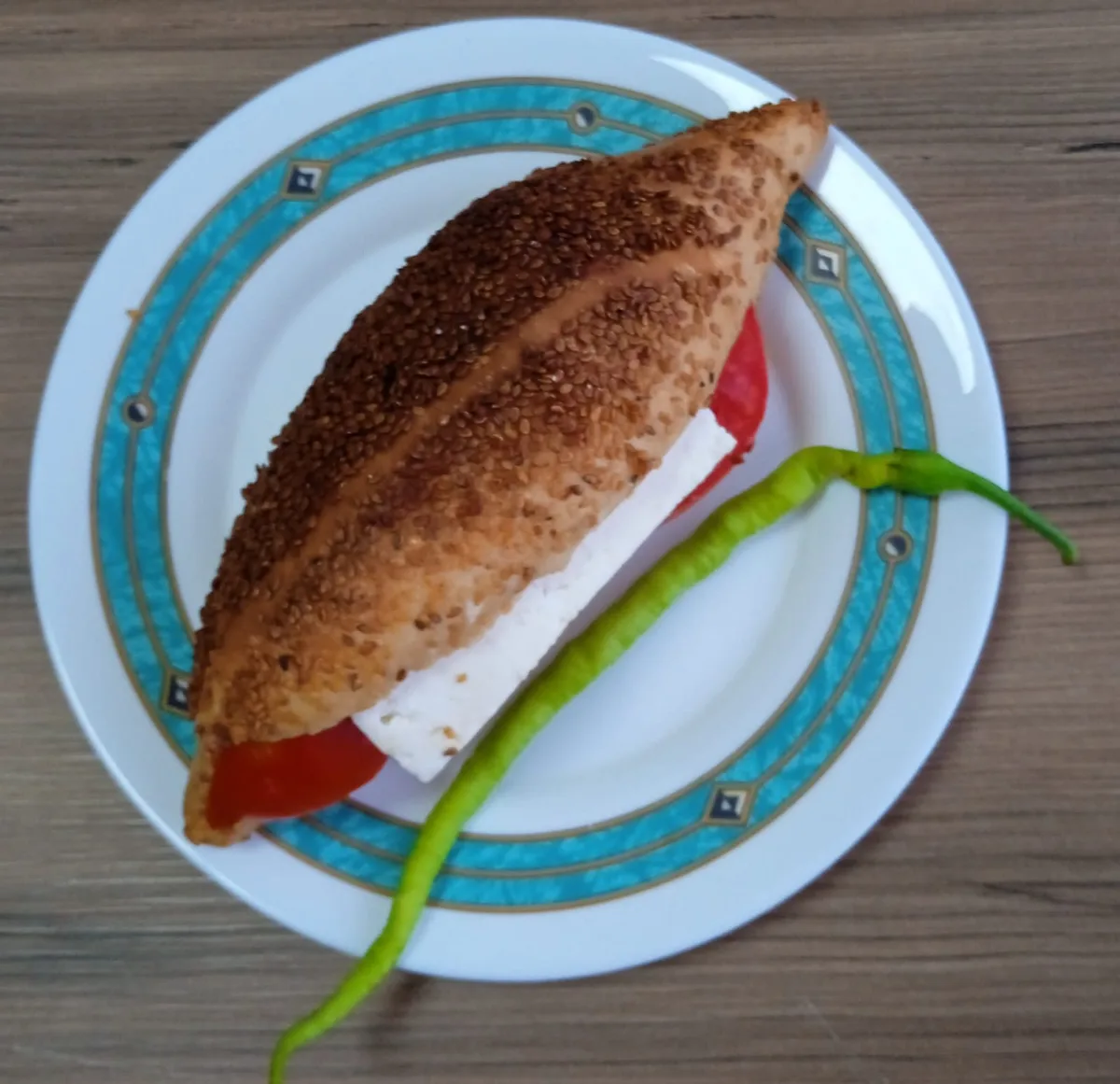
Izmir speaks its own food language, and learning three words of it will mark you out as a traveller who did the homework. Breakfast begins with boyoz: a round, flaky, oil-rich pastry that Sephardic Jews brought to the city centuries ago and Izmir adopted as its own, sold plain or filled with cheese, spinach or minced meat, and eaten the local way with a hard-baked egg and a glass of tea. Any bakery in the centre will start your day properly, and the boyoz at the mid-morning break, still warm, is one of the city’s small daily ceremonies.
The second word is gevrek. Ask for a simit in Izmir and you will be understood – and gently corrected, because the city’s sesame ring is not Istanbul’s. Gevrek is dipped in molasses before baking, which gives it a darker colour, a deeper flavour and a crunch that survives the whole ferry ride; it is sold by street vendors everywhere and feeds as many gulls as passengers on the Karsiyaka crossing. The third word is kumru: a toasted sandwich in a sesame roll, born in Çeşme and perfected across the city, loaded in its classic form with kaşar cheese, sucuk, salami and tomato and pressed until the cheese runs. It is Izmir’s answer to the burger, and a lunchtime kumru eaten on the Kordon grass is local life in a single meal.
Beyond the famous three, eat Aegean. This coast cooks vegetables the way other regions cook meat: artichokes in olive oil, şevketi bostan – the thistle-like herb that appears for a short spring season and inspires near-religious devotion – stuffed courgette flowers, wild herb dishes and salads built around the region’s olive oil. Midye dolma, mussels stuffed with spiced rice and eaten standing with a squeeze of lemon, are the street snack of the waterfront; lokma, syrup-soaked dough balls, are the sweet the city hands out from little carts on good days and sad ones alike. For dinner, the meyhane streets of Alsancak and the fish restaurants along both shores do the full Aegean sequence of cold starters, hot cheese-and-herb dishes, and the day’s fish – and the correct drink with it is the one the tables around you are drinking.
The Honest Downsides – What Every Izmir Travel Guide Should Admit
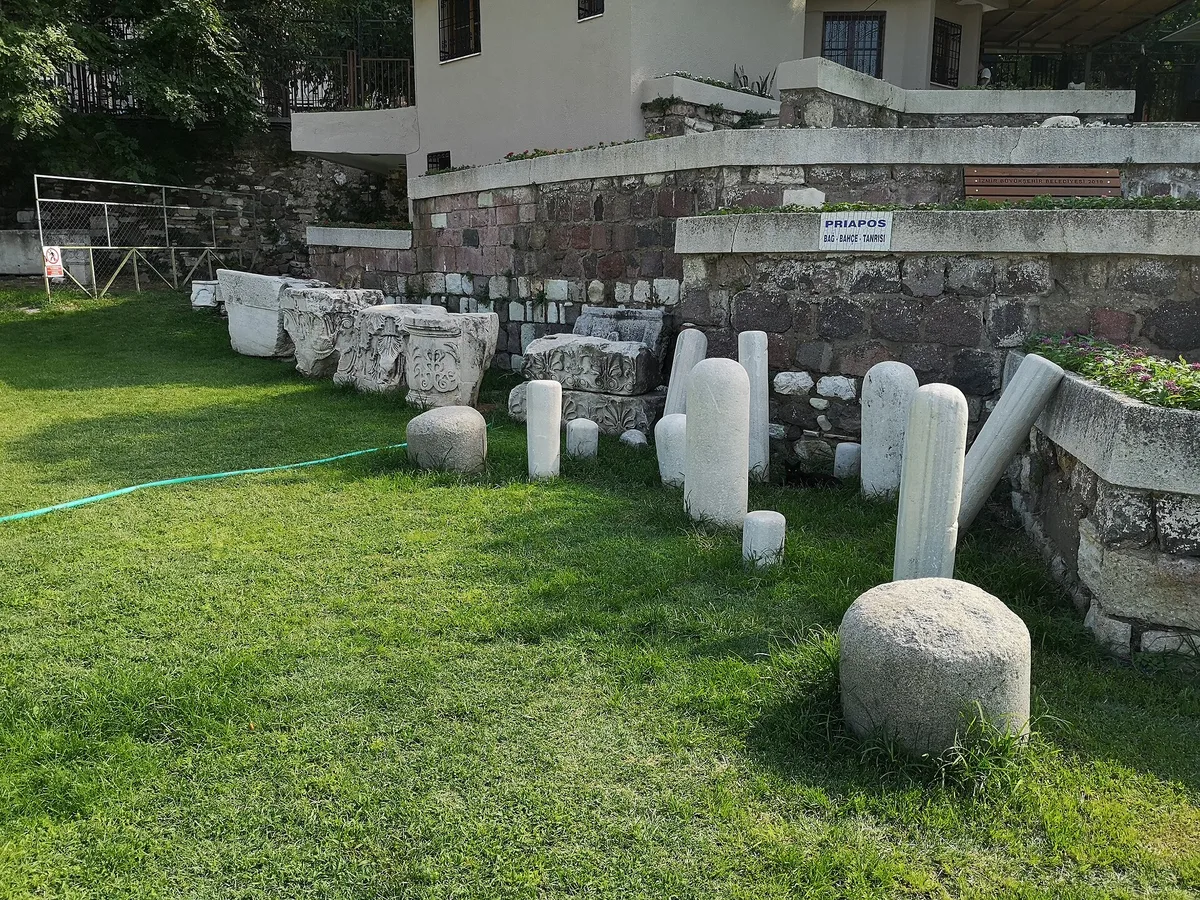
Izmir’s charms are real, and so are its frictions. First, set expectations about the old town skyline: the great fire of 1922 destroyed the historic waterfront quarters, so Izmir has no Sultanahmet-style old city of domes and minarets – its history is layered into a modern port city of apartment blocks, and travellers who arrive expecting a preserved Ottoman town will spend a day feeling cheated before the city wins them over on its own terms. Read the city’s history where it actually survives: the bazaar’s hans, the Agora’s vaults, the castle’s hill, the Levantine mansions, rather than in a picture-postcard old town that no longer exists.
Second, the famous sights need managing. The Agora is a live excavation, so parts of it are fenced, scaffolded or frankly scruffy, and its signage trails its archaeology. Kadifekale is a view with walls, set in one of the city’s poorer districts, and deserves the sensible approach described in its section rather than a carefree evening wander. The centre’s traffic is Mediterranean in the full sense – assertive driving, creative parking, jaywalking as civic custom – and Basmane’s streets after dark feel rough-edged in a way Alsancak’s do not. None of this is dangerous in the ordinary, big-city-caution sense, but a guide that skipped it would not be doing its job.
Third, the climate and the calendar bite in both directions. High summer is genuinely hot, the famous bay can carry a harbour edge on still days, and the 2020 earthquake – which struck off Samos and hit the Bayraklı district hard – means building safety and new construction are live local topics, not abstractions; book normal, well-reviewed city hotels and do not let it shadow the trip, but do not be surprised to see it discussed. None of these downsides outweighs the city. They are simply the terms on which a real metropolis, rather than a resort, offers itself – and Izmir on honest terms is worth several of the prettier, emptier places on the coast.
Izmir Travel Guide – Frequently Asked Questions
Is Izmir worth visiting, or just a stop on the way to Ephesus?
It is worth visiting in its own right. Give it two full days for the bazaar, the Agora, the castle, the Kordon and the ferry crossing, and it stops being a gateway and becomes the point of the trip – with Ephesus as its best day trip rather than its reason to exist.
How many days do I need in Izmir?
Two full days cover the city itself at a humane pace. Add one day for Ephesus and Şirince, another for Pergamon, and a fourth or fifth if the Çeşme peninsula appeals – three to four nights is the sweet spot this izmir travel guide recommends for a first stay.
How do I get from Izmir airport to the city centre?
The airport has its own İZBAN commuter-rail station: ride north and change to the metro at Hilal or Halkapınar for Konak, or continue to Alsancak station for the port district. Airport shuttle buses and taxis also run; load an İzmirim Kart at the airport and every option after arrival gets easier.
Can I visit Ephesus as a day trip from Izmir?
Yes – it is the classic Izmir day trip and the easiest way to see Ephesus independently. İZBAN trains run from the city and the airport to Selçuk, beside the ruins; go early, walk the site in the morning, and use Selçuk’s Ephesus Museum and Şirince village for the rest of the day.
Which district should I stay in?
Alsancak for most first-time visitors – waterfront, ferries, restaurants and the widest hotel choice. Konak for the old city and value, Karsiyaka across the bay for a quieter local stay, and Basmane only if budget outweighs evening atmosphere.
Is the Izmir Archaeology Museum open?
It is listed as open on the official museum portal, muze.gov.tr, in Bahribaba Park, Konak – as is the Agora of Smyrna archaeological site (both checked 31 October 2026). One caution: the old Museum of History and Art no longer appears in the official directory, so check the portal before planning around any museum you read about in an older guide.
What food is Izmir famous for?
Boyoz, the flaky Sephardic pastry eaten at breakfast with a baked egg; gevrek, the molasses-dipped sesame ring that is emphatically not a simit; and the kumru, the toasted sesame-roll sandwich from Çeşme. Add Aegean olive-oil and wild-herb dishes, stuffed mussels and lokma for the full vocabulary.
Is Izmir safe for tourists?
Izmir is one of Türkiye’s most relaxed big cities and feels easygoing by day and night in the central districts. Use ordinary big-city sense – watch bags in the bazaar crowds, use the meter in taxis, take a taxi up to Kadifekale rather than wandering the hill districts after dark – and problems are unlikely.
The Short Version – This Izmir Travel Guide on One Screen
Izmir is the Aegean’s great working city and the smartest base on Türkiye’s west coast: base yourself in Alsancak or Konak for two to four nights, and spend the first day on the historic spine – Konak Square and its 1901 Clock Tower, the Kemeralti bazaar and its hans, the Roman Agora of Smyrna and the castle of Kadifekale above it all. Ride the Asansör at Karatas for the sunset terrace, walk the Kordon in the evening with the whole city, and cross the bay by ferry to Karsiyaka at least twice. Check the museum listings on muze.gov.tr before you plan – the Archaeology Museum and the new Culture and Arts Factory are the current map, whatever older guides say. Then spend your remaining days outward: Ephesus by train to Selçuk with Şirince as its soft landing, Pergamon for the steepest theatre in the ancient world, and the Çeşme peninsula when the beach calls. Eat boyoz for breakfast, a gevrek on the ferry and a kumru on the Kordon grass, come in spring or autumn if you can, and let a real city – not a resort, not a ruin with hotels attached – show you how well the two combine.