Albania is the wrong country to visit with a single period in your head, because the history of albania has been a frontier story for almost every period there is. Stand in the amphitheatre at Durrës and you are sitting in a Roman arena that spent the Middle Ages as a chapel, the Ottoman centuries as a rubbish-filled hollow, and the twentieth century buried under houses, in a port city founded by Greeks on an Illyrian shore. Drive three hours south and you are in Greek colonies that became Roman towns, then Byzantine bishoprics, then Venetian outposts, then a looted ruin, then a UNESCO site.
Drive two hours north and the castles belonged to a man who held off an empire for twenty-five years and has been on the country’s money, its squares and its schoolbooks ever since. Albania’s past is not deep in the way Egypt’s is deep. It is dense — three thousand years of other people’s empires washing over one small, mountainous, stubborn coastline, and the coastline keeping something of every wave.
That layering is the whole point of this page. It is not a textbook, and where the evidence is debated — and Albania has more than its share of debates, starting with who the Illyrians actually became — it says so, plainly.
What it does is tell the country’s past in the order a traveller meets it, as one continuous story: the Illyrian tribes and the Greek cities planted among them, Rome and then Byzantium, the medieval principalities and Skanderbeg’s impossible resistance, four Ottoman centuries that built the old towns visitors now photograph, the awakening that invented a nation out of a language, the independence declared in 1912 and nearly strangled at birth, a king, an Italian invasion, a partisan war, and then the strangest chapter of all — forty years as Europe’s hermit state, sealed behind bunkers and barbed wire.
Each era ends, in effect, with an address: the place where that chapter is still standing, so the history stops being background and starts being something you can walk into. For routes, seasons and the practical planning, our Albania travel guide is the companion to this page — that guide for the trip, this page for the three thousand years underneath it.
One honest note on identity before the story starts, because it runs under everything that follows. Albanians call their country Shqipëria and themselves shqiptarë, and the Albanian language — an Indo-European language with no close living relatives — is the thread that runs unbroken through every regime change in this article. The popular claim that Albanians descend directly from the ancient Illyrians is exactly that: a claim, widely believed, argued by serious scholars on both sides, and impossible to prove or disprove from the surviving evidence, which is thin and mostly written by the Illyrians’ neighbours and enemies.
This page presents it the way the evidence allows — as the leading theory and a live debate, not as a bloodline certificate — and it treats the country’s other founding stories with the same respect and the same caution.
The History of Albania Timeline at a Glance
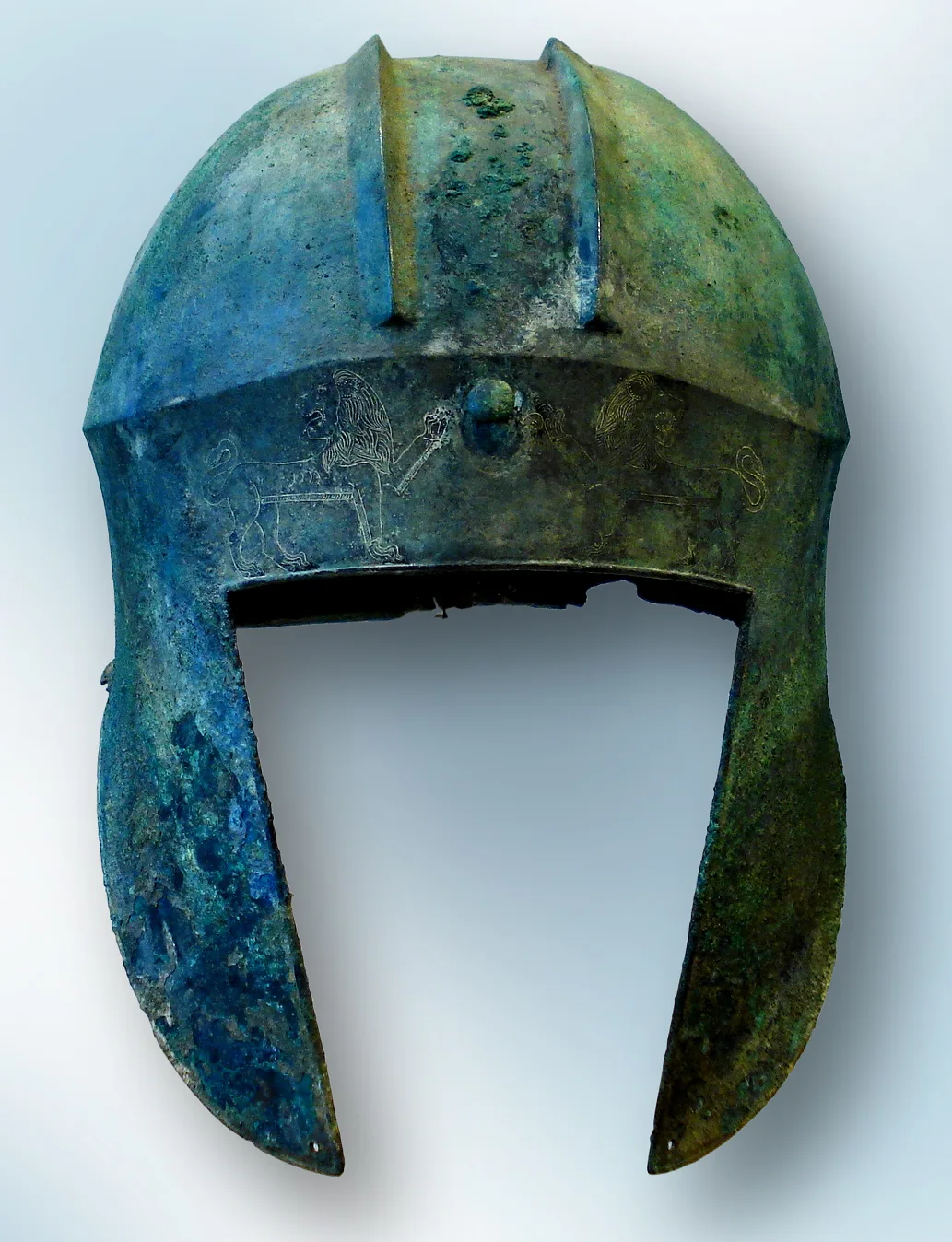
Here is the whole story on one screen before it is told properly. Thirteen eras, each with a place where it still stands. If you only remember one thing from this page, remember the shape of it — for most of three thousand years Albania was not a country at all but the western shore of somebody else’s: Greek colonists, Rome, Byzantium, Venice, the Ottomans. The Albania-shaped state is barely a century old, and much of what a traveller comes to see was built by the empires, or in defiance of them.
| Era | Dates | What happened | What you can still see |
|---|---|---|---|
| The Illyrians | By around 1000 BCE | Indo-European tribes and small kingdoms across the western Balkans | Hilltop cities at Byllis and Antigonea, Illyrian gear in Tirana’s museums |
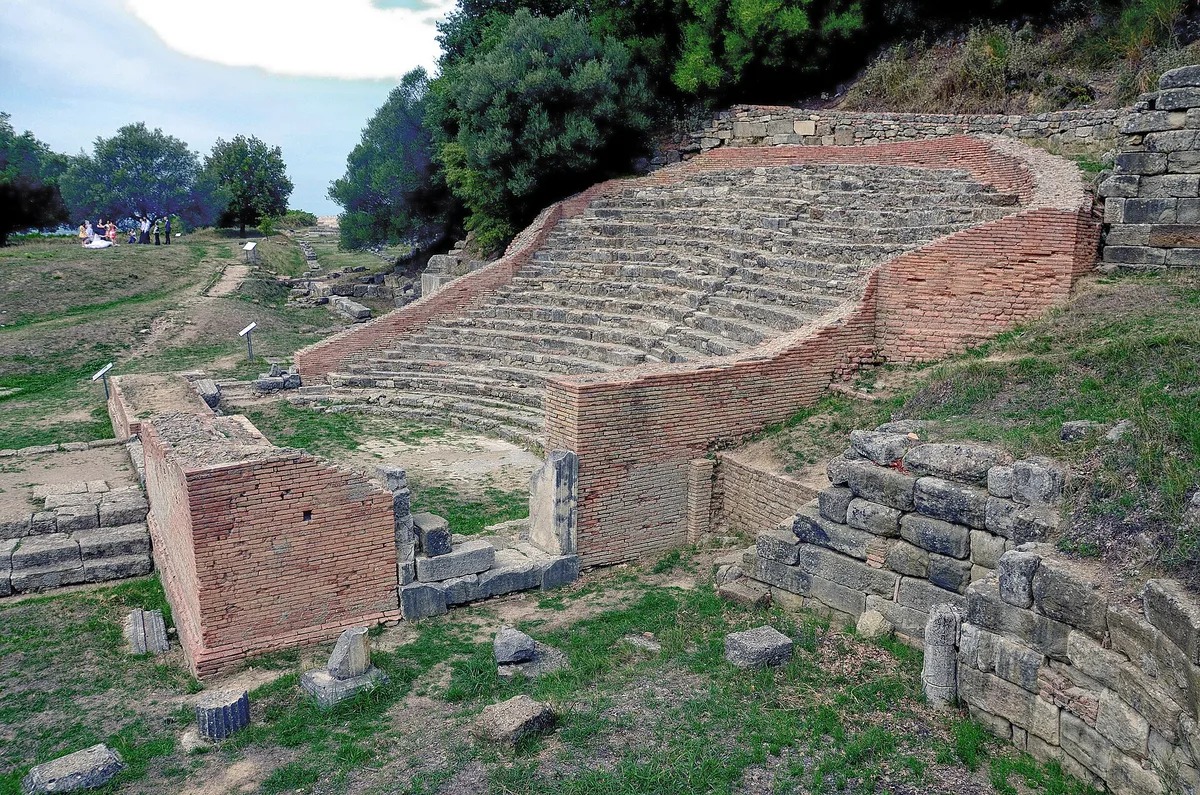
| The Greek colonies | From the 7th century BCE | Corinthian and Corcyraean settlers found Epidamnos, Apollonia and Buthrotum | Apollonia’s odeon, Butrint’s theatre and walls |
| Rome takes the coast | 229 BCE onwards | Rome defeats the Illyrian kings and absorbs the shore into the empire | Durrës amphitheatre, the line of the Via Egnatia |
| Byzantium and the invasions | 395 to the 1300s | The eastern empire holds the coast through Slav, Bulgar and Norman storms | Butrint’s baptistery, the basilicas of Byllis |
| The first Albanian states | Around 1190 to 1400s | The principality of Arbër, an Angevin kingdom, Venetian ports, Serbian emperors | Krujë’s castle hill, the memorial at Lezhë |
| Skanderbeg’s resistance | 1443 to 1479 | Gjergj Kastrioti unites the princes and holds the Ottomans off for a generation | Krujë Castle, the Skanderbeg Museum, Lezhë |
| The Ottoman centuries | 1479 to 1912 | Four centuries inside the empire; most Albanians gradually convert to Islam | Berat and Gjirokaster old towns, the Mesi Bridge |
| The Awakening | 1878 to 1912 | The Rilindja builds a nation from a language — schools, books, one alphabet | The first school at Korçë, now a museum |
| Independence and the Great War | 1912 to 1920 | Independence declared at Vlorë, borders drawn in London, the country occupied | Vlorë’s Independence Monument |
| Zog — republic, then kingdom | 1925 to 1939 | Ahmet Zogu makes himself president, then King Zog I, in Italy’s shadow | The royal villa above Durrës, Italian-era Tirana |
| Invasion and resistance | 1939 to 1944 | Fascist Italy invades, Germany follows, the partisans win the country | The Martyrs’ Cemetery and Mother Albania, Tirana |
| The communist era | 1944 to 1991 | Enver Hoxha seals the country — atheism by law, bunkers by the hundred thousand | Bunk’Art, the House of Leaves, bunkers on every beach |
| The republic reopens | 1991 to today | Collapse, pyramid schemes, recovery — NATO in 2009, EU talks under way | The Pyramid remade, the new national stadium |
Read the table downwards and you are also reading the map, because Albania’s eras are not spread evenly across it. The ancient story belongs to the coast and the southern hills, where the Greek cities and Roman roads ran. The medieval and resistance story belongs to the centre — Krujë, Lezhë, the castle towns of the mountains. The Ottoman story is written in the old towns of the centre and south, Berat and Gjirokaster above all. And the twentieth century belongs overwhelmingly to Tirana, a small Ottoman market town that became a capital in 1920 and then had a monarchy, a dictatorship and a chaotic rebirth imposed on it in quick succession.
A trip that follows the table in order runs the length of the country; a trip that crosses even three or four rows will start to show how the layers sit on each other.
The Illyrians and the Greek Colonies – Two Peoples on One Coast
The first names in the history of albania are tribal ones. By the early Iron Age, around 1000 BCE, the western Balkans were held by peoples the Greek and Roman writers lumped together as Illyrians — not one nation but a shifting patchwork of tribes and small kingdoms, the Taulantii around modern Durrës, the Ardiaei further north, the Chaonians and Molossians down in what is now the far south and Greek Epirus. They farmed valleys, herded in the mountains, traded with the Greek world, raided it when the chance came, and built their towns on defensible hilltops whose dry-stone walls still crown ridges all over the country.
What they did not do, in any quantity that survives, is write — almost everything known about them comes from Greek and Roman pens, which is the root of the modern argument about them. Albanian, the language, is plainly old and plainly Indo-European, and the Illyrian languages were too; whether the line between the two is direct descent, heavy mixture with Thracian and other Balkan tongues, or something in between is a question the evidence — a handful of names, glosses and inscriptions — cannot fully answer. Serious scholars hold each position. What can be said without hedging is that people were living in these hills, speaking something ancestral to the region’s later languages, for centuries before anyone wrote the word Albania.
Onto that coast, from the 7th century BCE, came the Greeks — not as conquerors at first but as colonists planting trading cities at the good harbours. Epidamnos, modern Durrës, was founded around 627 BCE by settlers from Corcyra and Corinth; a generation or two later, around 588 BCE, settlers from the same mother cities founded Apollonia further south, inland from the sea on the Aoos river, and Buthrotum — Butrint — grew up facing Corcyra across the strait. The colonies and the tribes needed each other and fought each other in roughly equal measure for three hundred years: Illyrian kings grew rich taxing and plundering the trade, Greek cities hired Illyrian soldiers, intermarried, borrowed gods.
Apollonia became a serious city, famous enough that a young Octavian — the future emperor Augustus — was studying there in 44 BCE when news came of Julius Caesar’s murder. The Illyrian kingdoms reached their own height in the 3rd century BCE under kings like Agron and his widow Teuta of the Ardiaei, whose sea-raiding finally provoked Rome, and under Gentius, the last Illyrian king, whose defeat in 168 BCE closes this chapter and opens the next.
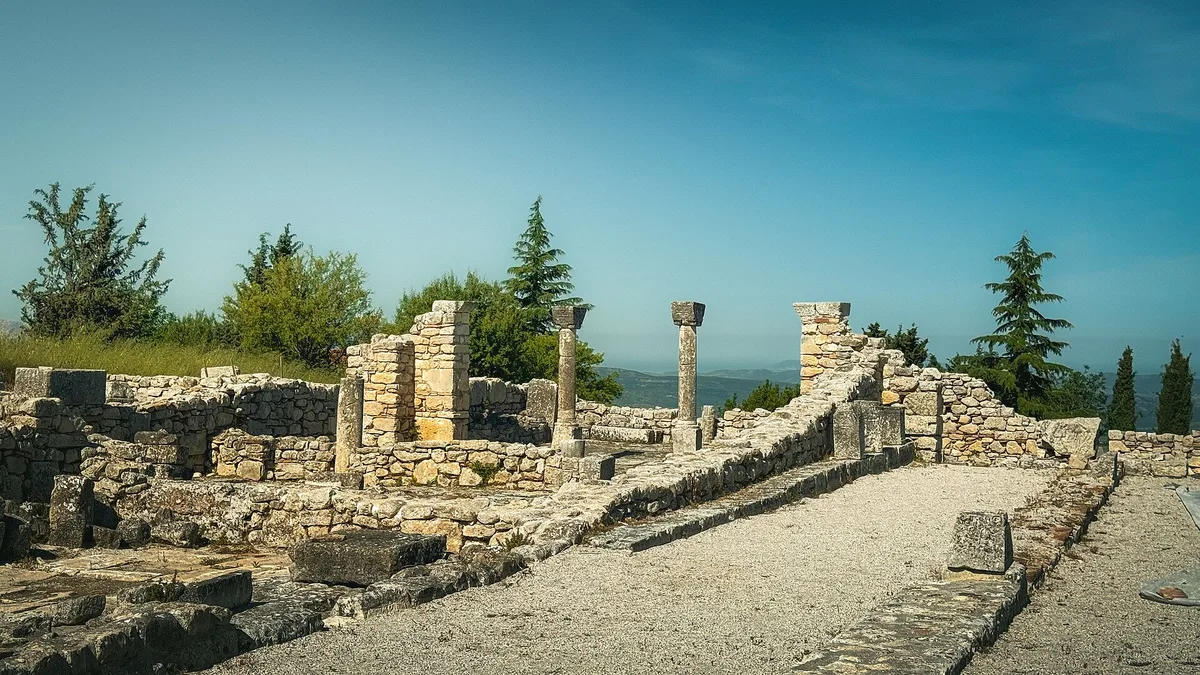
You read this era today in two registers. The Greek register is Apollonia itself — a serene archaeological park above the Myzeqe plain, where the elegant facade of the bouleuterion, the council house, the little odeon, a library’s remains and a long stoa stand in olive groves with almost no crowds, and the site museum sits inside a medieval monastery church that is itself a later layer of the story. The Illyrian register is the hilltop cities inland — Byllis above the Vjosa valley, its walls and streets spread over a ridge, and Antigonea in the Drino valley — places that began in the Illyrian world and were rebuilt in Greek style, which is precisely the mixture this whole era was.
Between the two, on a school trip or a museum afternoon, the National History Museum in Tirana holds the helmets, fibulae and weapons that give the tribes a material presence their missing literature denies them.
Rome and Byzantium – The Empire’s Western Shore
Rome came to this coast in stages, and stayed for six centuries. The Illyrian Wars of 229 to 219 BCE broke Teuta’s kingdom and made Rome the coast’s protector; Gentius’s defeat in 168 BCE made it the owner. Under the empire the shore became infrastructure. Dyrrachium — Durrës under its Roman name — was the western terminus of the Via Egnatia, the great military road Rome drove across the Balkans to Thessalonica and ultimately to Byzantium, and in 48 BCE the plain outside it hosted a battle between Caesar and Pompey for the Roman world.
Roman colonies and municipalities rose at Butrint, which Augustus refounded after Actium, and at Apollonia and Byllis; the amphitheatre at Durrës, raised in the early 2nd century CE in the age of Trajan and built to hold a crowd often estimated in the mid-teens of thousands, is the largest Roman survival in the country. Christianity arrived early along the road — tradition credits the apostles’ generation, and the record is firm by late antiquity — and when the empire divided in 395 CE, this coast fell to the eastern, Greek-speaking half: Byzantium.
For a thousand years after Rome fell in the west, Albania remained imperial territory, but an increasingly raided one — Goths, then Avars and Slavs who settled the interior in the 6th and 7th centuries, then Bulgars whose empire held much of the country in the 9th and 10th, then Normans who twice used Durrës as their bridgehead into the Balkans, in 1081 and again in the 1180s. Through all of it the coastal cities held on as Byzantine ports, and the religious frontier of 1054 — the schism between Rome and Constantinople — ran through the country, leaving the north gradually Catholic and the south Orthodox, a geography of faith that Albania still roughly keeps.
The era’s most eloquent survival is not a fortress but a floor. At Butrint, in the 6th century, the city’s Christians built a baptistery whose mosaic pavement — peacocks, vines, animals, a great central medallion — is among the finest in the Mediterranean, kept covered with sand for its protection and uncovered only periodically, so that seeing it is a matter of luck and timing. Byllis, which had become a bishop’s seat, accumulated basilicas — several churches on one hilltop, their mosaic floors and carved screens marking the moment an Illyrian tribal centre finished its long transformation into a Byzantine Christian city.
And at Durrës, the amphitheatre tells the whole era in cross-section: a pagan arena of the high empire, into whose arena a small Byzantine chapel was later built and decorated with mosaics of saints, in a city that by then answered to Constantinople. Go down into it, when it is open, and you stand in Rome and Byzantium at once, with modern Albania’s apartment blocks on the skyline above — arguably the single best cross-section in the history of albania, and the layering this article keeps promising, delivered literally in one hole in the ground.
The Medieval Centuries – Principalities, Invaders and the First Albanian States
Between Byzantium’s slow weakening and the Ottoman arrival, the country spent three centuries as a prize passed among players — and, for the first time, began to produce states of its own. The name itself surfaces here: Byzantine writers of the 11th century mention the Albanoi and a land called Arbanon, and around 1190 a local lord named Progon established the principality of Arbër around Krujë — conventionally counted as the first Albanian state, a small hill principality that his sons and successors held, with interruptions, into the mid-1200s. Around it the great powers rotated.
Charles of Anjou, the French king of Naples, seized the coast in 1272 and proclaimed a Regnum Albaniae, a Kingdom of Albania, with Durrës as its capital — the name on a crown a full six centuries before a state to match it. Venice, more patiently, bought and inherited the ports one by one — Durrës in 1392, then Shkodra, Lezhë and a string of smaller harbours — and held them as the maritime fringe of its trading empire. In the 1340s and 1350s the Serbian emperor Stefan Dušan overran almost the whole country on his way to an empire that died with him.
What endured from the chaos were the local lordships — the Thopia around Durrës, the Balsha in the north, the Kastrioti in the centre, a dozen families ruling valleys from castle towns — and one institution that outlasted every state: the Kanun, the customary law of the northern mountains, a detailed code of honour, hospitality, property and blood feud that governed highland life for centuries and was only written down, by the Franciscan Shtjefën Gjeçovi, in the early 20th century. Travellers still meet its most famous rule at any mountain guesthouse door — the house belongs to God and the guest — even where the feuds it also codified have mercifully faded.
The Ottoman Turks entered this patchwork in the 1380s, won the first great Balkan battles, and by the early 1430s held most of the country through garrisons and timar land grants — the pattern of four centuries set early. What they had not reckoned with, however, was a hostage.
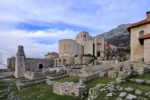
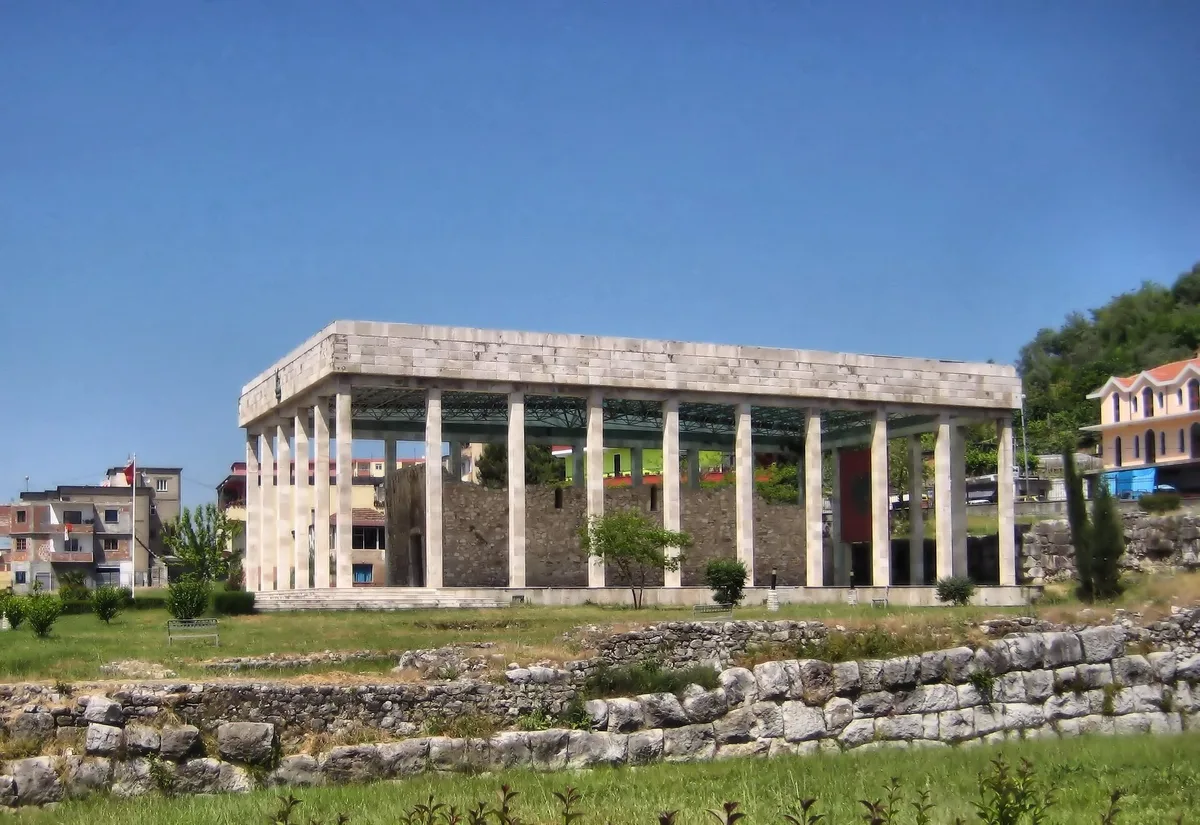
The medieval layer of Albania is best read at Krujë, where a castle on a long rock spine above the coastal plain served the Arbër princes, the Kastrioti family and then the hero of the next chapter; at Shkodra, whose Rozafa Castle — Venetian walls on Illyrian foundations above the lake — shows the frontier at the moment before it fell; and at Lezhë, an ordinary modern town holding two extraordinary medieval facts: in March 1444 its church hosted the meeting that united the Albanian princes against the Ottomans, and in 1468 the ruined church of St Nicholas received the body of the man who led them.
Skanderbeg – Twenty-Five Years Against an Empire
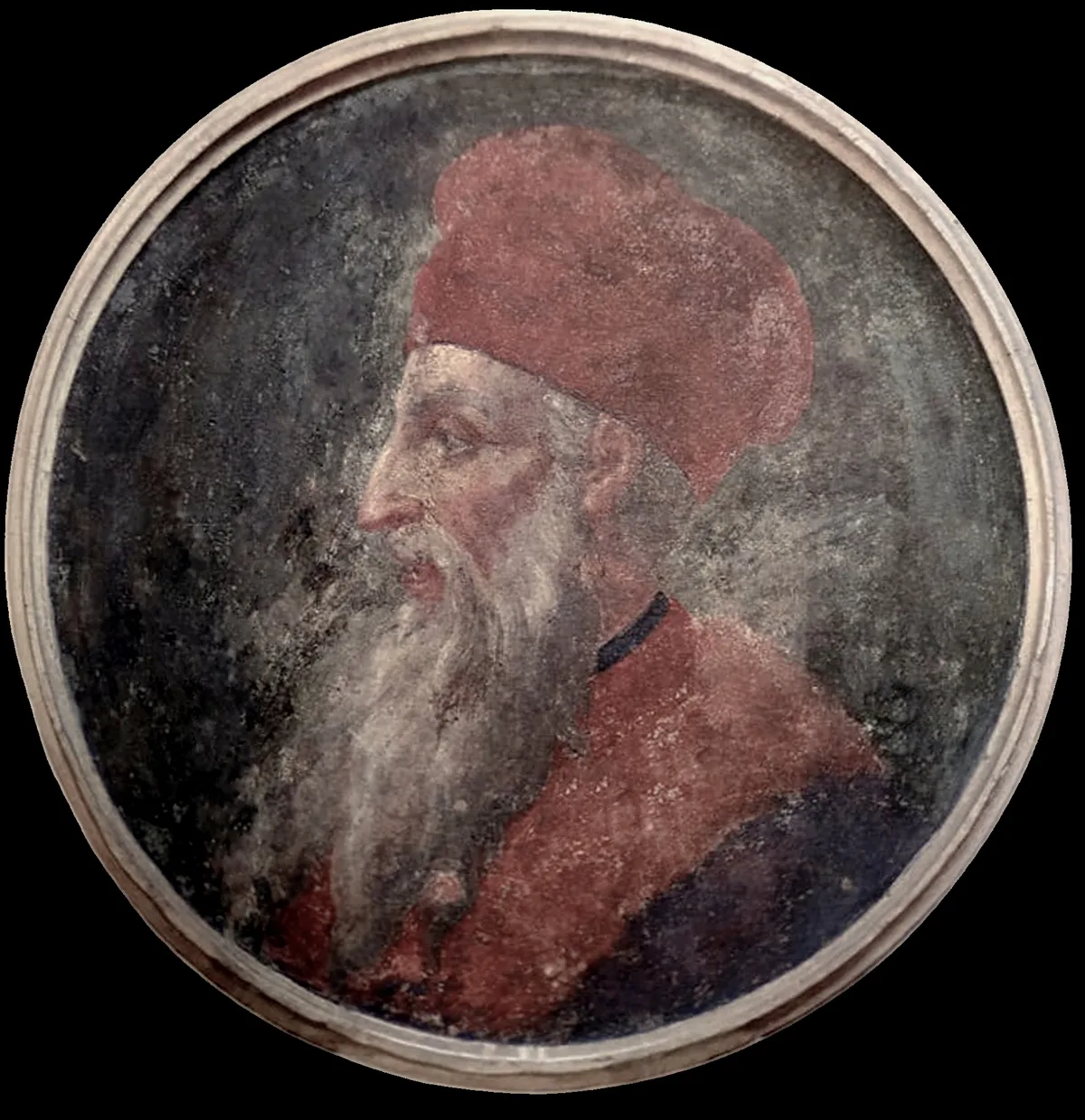
In November 1443, an Ottoman commander named Gjergj Kastrioti deserted in the middle of a battle at Niš, forged a firman ordering the surrender of Krujë, rode home, and on 28 November raised his family’s banner — a double-headed black eagle on red — over his ancestral castle. He had been taken from his family as a boy under the devşirme levy, raised and educated at the sultan’s court in Edirne, converted to Islam and given the name Iskender — Alexander — from which the world would know him as Skanderbeg. Few defections in the history of albania — or of Europe — have cost an empire more.
In March 1444 he gathered the Albanian princes at Lezhë, in Venetian territory, and forged the League of Lezhë, the first political union of the Albanian lordships; for the next twenty-five years, from the rock of Krujë and a string of mountain castles, he fought the Ottoman Empire to a standstill in Albania. His methods were those of a man who knew the enemy from inside — ambush, scorched earth, mountain warfare, winter marches — and his results were real: Ottoman armies were beaten in battle after battle, and two sultans came in person and failed.
Murad II besieged Krujë in 1450 and withdrew; Mehmed II, the conqueror of Constantinople, campaigned in 1466 and 1467 and took the plains but not the castle. Western Europe, which sent money, promises and one cancelled papal crusade, treated him as Christendom’s shield; the Pope called him an athlete of Christ. He died at Lezhë in January 1468, still undefeated in his mountains, and the resistance outlived him by a decade under his allies — Krujë, starved into surrender, fell in 1478, and Shkodra was ceded by treaty in 1479, closing the era.
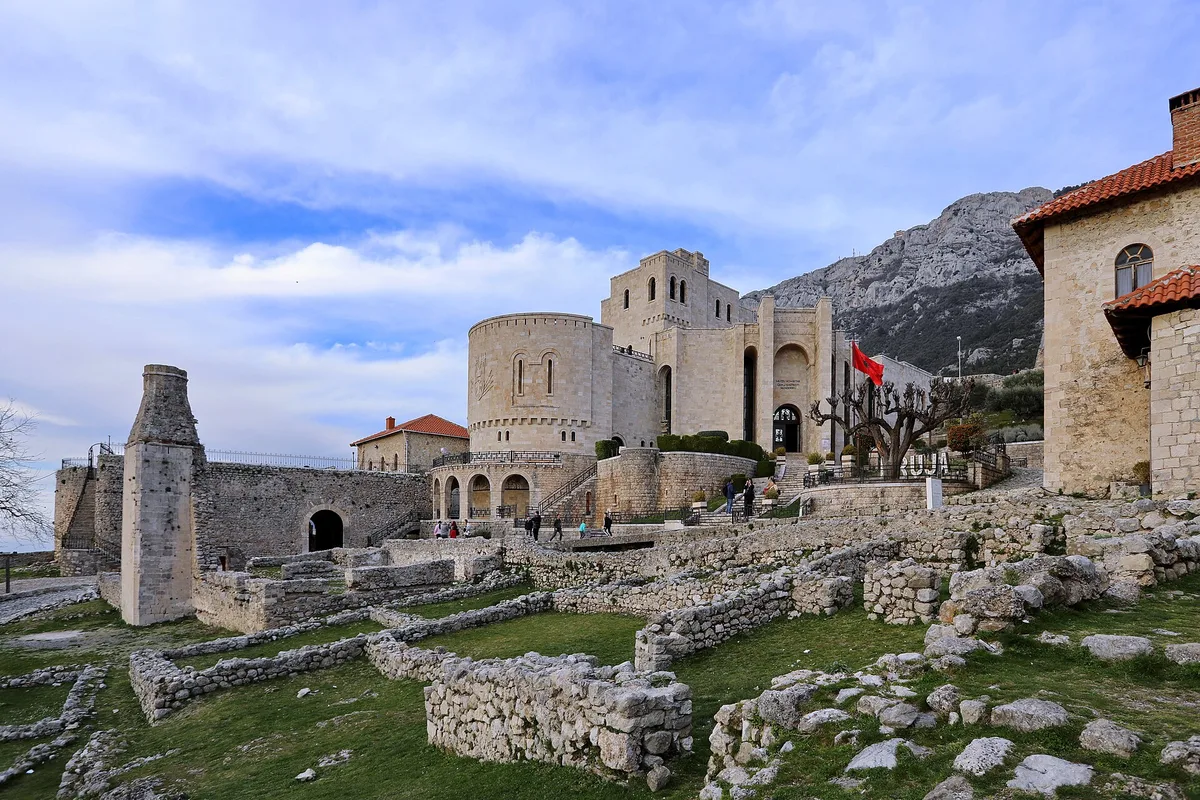
Albania has never let him go, and the traveller meets him constantly — the equestrian statue at the centre of Tirana’s Skanderbeg Square, the national museum’s pavilion of his arms and his (attributed) helmet and sword, the flag itself, which is his banner. Read honestly, though, the story needs two footnotes the statues omit. His Albania was a league of rival princes that repeatedly cracked — Venetians, Neapolitans and Albanian lords all fought him as well as the Turks — and his war was a Christian frontier war of its century, not a national liberation in the modern sense; the nation that claims him was imagined four hundred years later, by men who needed a founder and reached back for the best one available.
None of that shrinks the achievement. The place to feel it is Krujë itself: the castle ridge, the Skanderbeg Museum built into it (opened in 1982, in the full flood of the communist regime’s nationalism, which is its own layer of the story), the old bazaar below, and on a clear day a view from his walls across the plain to the Adriatic — the ground he had to hold, visible all at once.
The Ottoman Centuries – Four Hundred Years Inside an Empire
From 1479 to 1912 Albania was Ottoman, and the first task of an honest history is to make that mean something more than occupation. The conquest was brutal and resisted for decades — highland tribes kept effective independence in their valleys for most of the period, paying tribute and lip service and little else — but within the empire Albanians were not merely subjects. Over the centuries a majority of them converted to Islam, gradually and for reasons that mixed conviction, taxation, career and local circumstance; the result, unusual in Europe, was a Muslim-majority people that kept its language and customs, alongside Catholic highlands in the north and Orthodox communities in the south.
Albanians rose to the very top of the Ottoman state — the Köprülü family, for example, of Albanian origin, supplied a dynasty of grand viziers who effectively ran the empire in the late 17th century — and the empire’s most famous provincial strongman, Ali Pasha of Ioannina, the “Lion of Janina” who ruled the south from 1788 until the sultan destroyed him in 1822, was an Albanian from Tepelena who received Byron as a guest and built forts from the Ionian coast to his lakeside capital.
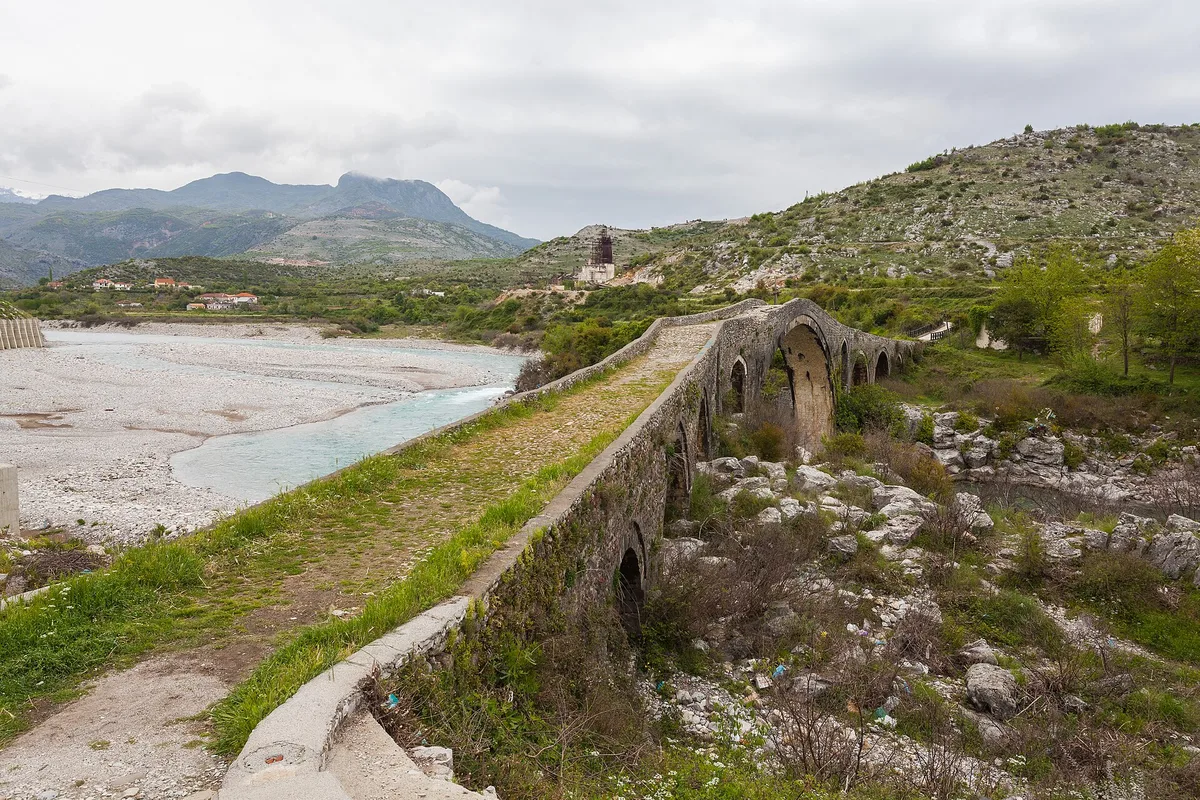
Ottoman rule, at ground level, meant the tax farmer and the timar, the hammam and the market, the long arcaded bridges over the rivers, the clock towers, the caravan routes from the ports to the interior — and, in the mountains, the Kanun and the blood feud and a freedom the plains did not have. It also meant that when Greek, Serbian and Bulgarian national movements rose in the 19th century with churches and states behind them, the Albanians — divided among three faiths and served by no Albanian state or church — started the race for nationhood last, and nearly too late.
What the traveller actually sees of these four centuries of the history of albania is, happily, some of the best of Albania. Berat is the showpiece: a castle quarter still inhabited inside its Byzantine and Ottoman walls, the white houses of Mangalem and Gorica stacked with their famously many windows on facing hillsides, mosques and churches sharing a skyline, the icons of the 16th-century master Onufri glowing red in the museum inside the castle’s cathedral.
Gjirokaster, in the Drino valley, is its sterner southern twin — a castle rebuilt under Ali Pasha over a grey stone old town of tower houses with slate roofs, where the bazaar’s lanes still follow their Ottoman lines; the two towns together are a UNESCO World Heritage Site, inscribed as rare surviving examples of Ottoman-period Balkan urban life, Gjirokaster in 2005 and Berat added in 2008.
Everywhere else the era survives in pieces: the Mesi Bridge’s long hump of arches over the Kir river near Shkodra, Ottoman clock towers and covered bazaars, the Et’hem Bey Mosque in Tirana with its frescoes of landscapes and waterfalls, painted in the decades around 1800 by a society already imagining a country it did not yet have.
The Awakening – A Language Learns to Be a Nation
The Albanian national awakening — the Rilindja, the rebirth — began as an emergency. In 1878 the Treaty of San Stefano, imposed after a Russo-Turkish war, proposed handing Albanian-inhabited territories to Montenegro, Serbia and Greece, and Albanian leaders responded by forming the League of Prizren to resist the partition of lands they now publicly called a single homeland. The Ottomans suppressed the League by 1881, but the idea it had armed itself with outlived it, and its weapon was not the rifle. It was the alphabet.
Albanians wrote their language in three scripts — Latin among Catholics, Greek among the Orthodox, Arabic among Muslims — and read, if they read at all, in other people’s languages; the Ottoman authorities banned Albanian-language schooling and printing for most of the century. The awakening’s heroes were therefore schoolmasters and publishers: Naum Veqilharxhi, who devised an Albanian alphabet in the 1840s; the Frashëri brothers of Frashër — Abdyl, the League’s political organiser, Naim, the national poet, and Sami, who wrote the movement’s manifesto and argued, scandalously, that Albanians of all three faiths were one people whose religion was Albanianism itself.
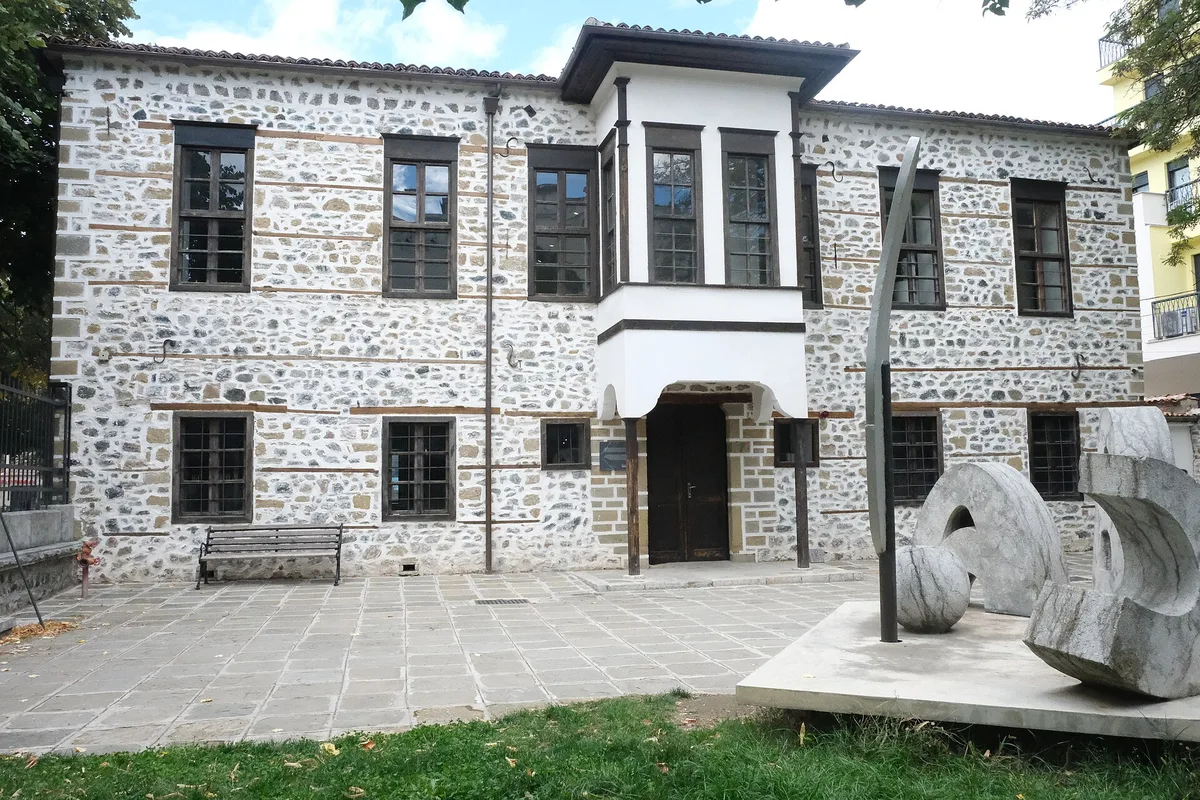
In 1887 the first secular school teaching in Albanian, the Mësonjëtorja, opened in Korçë — in a house lent for the purpose, under constant official suspicion, and followed within years by a girls’ school run by the Kyrias sisters. Books and newspapers printed in Bucharest, Sofia, Boston and Brussels were smuggled in like contraband, because for a nation without a state, print was the state.
The awakening’s decisive act came in November 1908, when delegates from across the Albanian world met at Monastir — modern Bitola, in North Macedonia — and agreed on a single Latin-based alphabet, the one Albanian uses today. It looks like a librarians’ quarrel and it was actually the founding act of the modern history of albania: from 1908 there was one Albanian written language, one literature to come, and one public that could read the same newspapers in Shkodra and Korçë, in Kosovo and in the emigrant cafes of Boston. The traveller meets this era modestly, which suits it.
The Mësonjëtorja’s house in Korçë is now the National Museum of Education, a small, moving museum of desks, primers and photographs; the National History Museum in Tirana gives the awakening a full pavilion; and everywhere in the country the result is simply visible — a language with no living relatives, written in its own Latin letters, on every sign, shopfront and school in the land, which for most of European history was an outcome nobody in power wanted.
Independence and the Great War – A State Declared, a Country Occupied
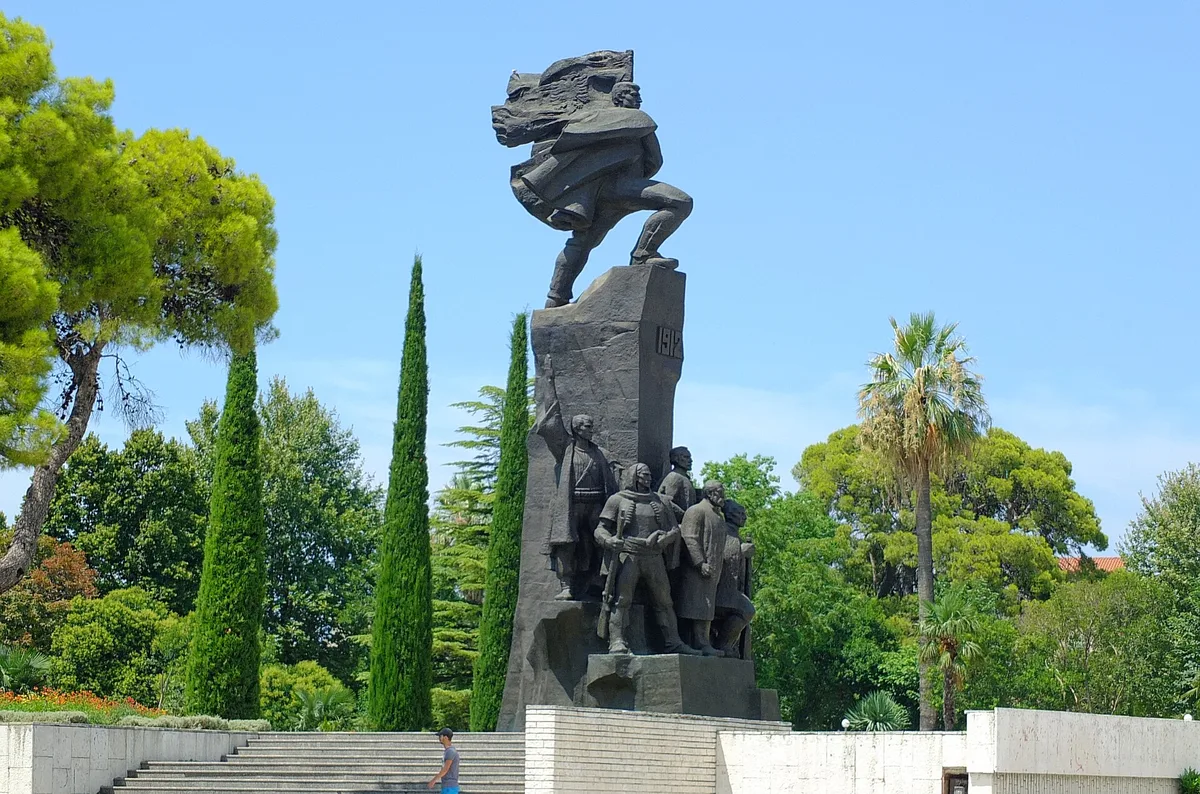
In the autumn of 1912 the First Balkan War tore the Ottoman Balkans apart, and Serbian, Montenegrin and Greek armies advanced into Albanian lands from three directions with annexation in mind. The awakening’s generation made its move in the last possible weeks. On 28 November 1912, in the port of Vlorë, an assembly led by Ismail Qemali — a former Ottoman statesman from the town itself — proclaimed Albania independent and raised the red flag with Skanderbeg’s double eagle, deliberately or happily on the same date, 28 November, on which Skanderbeg had raised it at Krujë in 1443. What the declaration created was a government; what it did not create, yet, was a country anyone agreed on.
The great powers, meanwhile, settled Albania’s fate at the Conference of London in 1913, recognising the state but drawing borders that left roughly half of all Albanian-inhabited territory — Kosovo above all, and wide districts in modern North Macedonia, Montenegro and Greece — outside it, a settlement whose consequences run to the present day. Into the truncated kingdom the powers imported a German prince, Wilhelm of Wied, who arrived in March 1914 and left that September as the state dissolved around him; then came the First World War, in which Albania, neutral and governmentless, was occupied in slices by nearly every army in the Balkans — Austro-Hungarian in the north, Italian on the coast, French, Serbian and Greek elsewhere — and used as a road and a larder by all of them.
The rescue, when it came, was Albanian. In January 1920 a national congress at Lushnjë formed a government and chose Tirana — a central, defensible market town of perhaps fifteen thousand people — as the capital, and that summer Albanian volunteers fought the Italian army around Vlorë and forced Italy to withdraw to the island of Sazan. In December 1920 Albania was admitted to the League of Nations, which is the moment the state of 1912 became internationally real.
At Vlorë today the traveller finds the Independence Monument, a towering bronze of the flag and the men of 1912, and the small museum and the house of the declaration nearby; at Lushnjë and in Tirana’s museums the congresses and the 1920 war get their due. But the most honest monument to this era is the map itself — anyone who drives Albania’s borders, or crosses to the Albanian-speaking towns beyond them, is travelling through the unfinished business of 1913.
King Zog – A Republic, Then a Crown
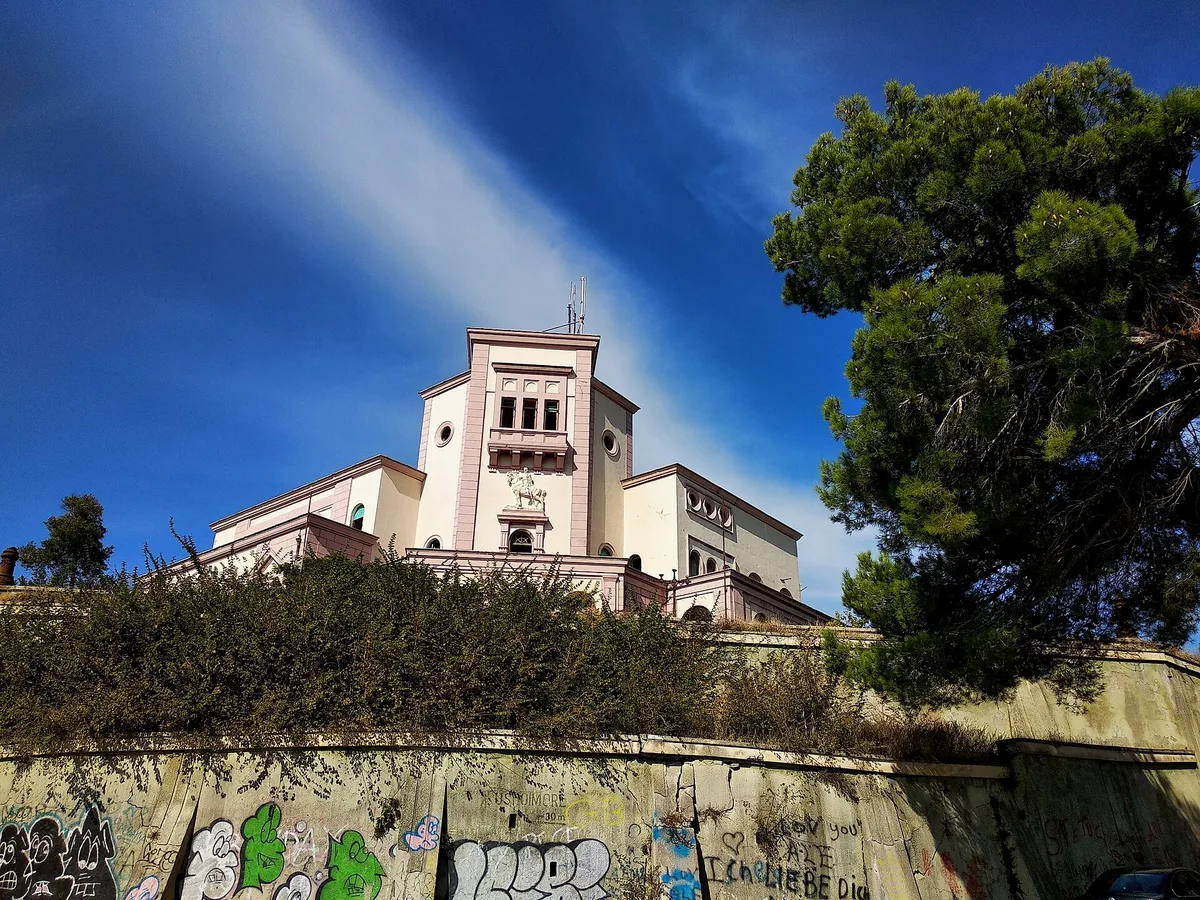
The man who organised the Albania of the 1920s was Ahmet Zogu, a chieftain’s son from the Mat valley who became prime minister at twenty-seven, was driven out by a revolution in June 1924, and returned that December at the head of an army stiffened by Yugoslav support and White Russian mercenaries. In January 1925 Albania became a republic with Zogu as its president; in September 1928, with the constituent assembly’s obedient vote, the republic became a kingdom and the president became Zog I, King of the Albanians — Europe’s only Muslim king, complete with a Napoleonic eagle on his helmet and a court modelled on everyone’s except his own country’s past. Fairness, however, requires the full picture.
Zog’s government built the beginnings of a modern state where none had functioned: a national currency and central bank, roads where there had been tracks, a gendarmerie trained by British officers, schools, a civil code, a capital city rising in boulevards. It also ran on one man’s caution and vanity — he survived, by the usual count, dozens of assassination attempts — and it was bought with Italian money. Treaties of friendship in 1926 and 1927 made Italy Albania’s protector in all but name; Italian loans, Italian officers, Italian companies and an Italian-run national bank followed, so that by the late 1930s the kingdom’s economy was a subsidiary of Rome’s, and its independence a courteous fiction that Mussolini would shortly cancel.
The traveller reads this era in Tirana’s bones. The wide boulevard running south from Skanderbeg Square — ministries in stripped, monumental Italianate stone, the university at its end — is the interwar capital, designed by Italian architects for Zog’s kingdom and completed under the occupation that replaced it. The royal palace, the Palace of the Brigades, survives at the boulevard’s edge, still official and unvisitable.
Zog himself is best met above Durrës, where his summer villa stands on the hill over the port, a handsome, decaying palace that has outlived the king (who fled on 7 April 1939 and never returned, dying in French exile in 1961), the communists who confiscated it, and the looters of 1997 who stripped it — and which still waits for the country to decide what to do with a king’s house.
Invasion and Resistance – Italy, Germany and the Partisans
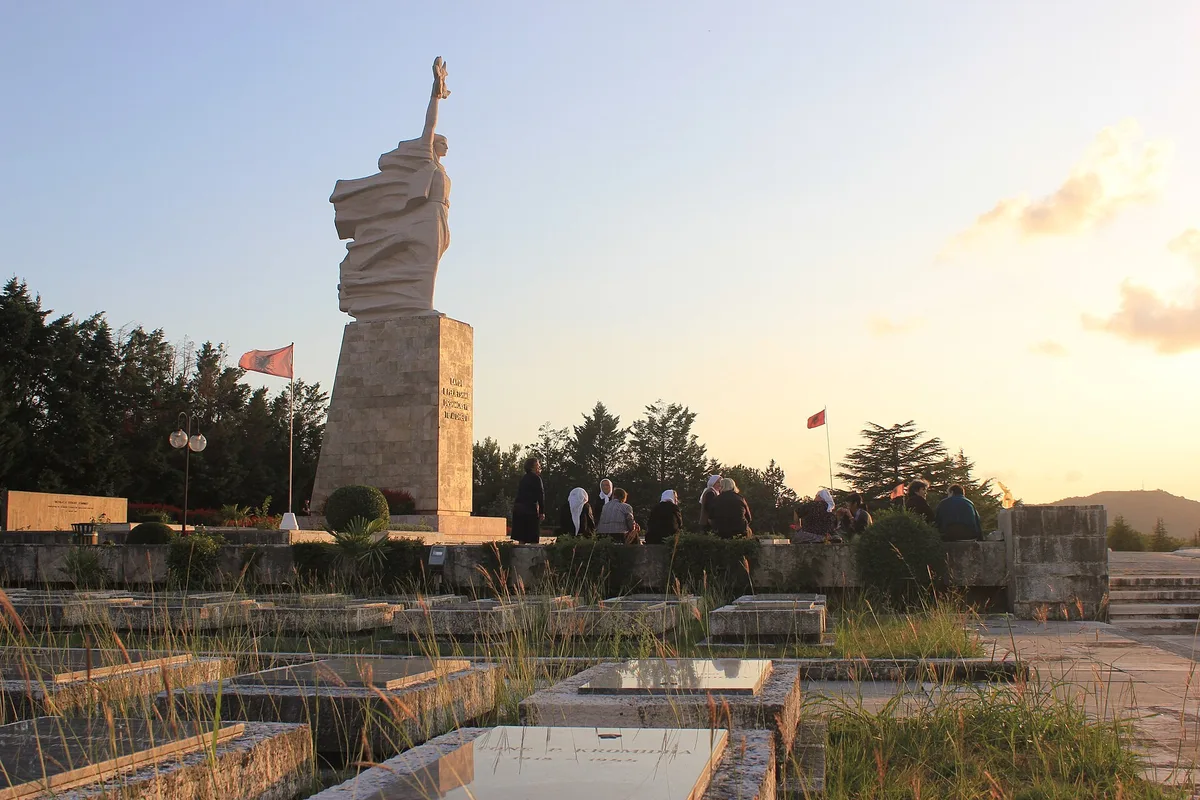
On Good Friday, 7 April 1939, Mussolini’s Italy invaded. The Albanian army, officered by Italians and ordered into confusion, offered fragments of resistance — the gendarme Mujo Ulqinaku died fighting at the Durrës mole and became the war’s first martyr-hero — and within days Zog had fled, the crown had been offered to Italy’s king, and Albania had become a province of the Italian empire in personal union. Italy used it as a springboard to attack Greece in October 1940, a campaign that collapsed into humiliation in the Albanian mountains and had to be rescued by Germany the following spring. Occupation bred resistance, and resistance bred a civil conflict inside the national one.
The Communist Party of Albania was founded in November 1941, with Yugoslav communist encouragement, under a schoolteacher from Gjirokaster named Enver Hoxha, and its National Liberation Movement grew into a partisan army that by 1944 numbered in the tens of thousands; against and alongside it stood the nationalist Balli Kombëtar, which sought an ethnic Albania and at points collaborated tactically with the occupiers, and smaller royalist factions. When Italy capitulated in September 1943, Germany occupied the country — treating it, unusually, as a nominally independent state under a regency — and through 1944 the partisans fought the Germans and their Albanian rivals simultaneously.
Tirana was liberated on 17 November 1944, and by 29 November, the date Albania keeps as Liberation Day, the last German columns had left Shkodra. The country had freed itself — the communists’ claim, endlessly repeated afterwards, was that no Allied soldier had liberated an Albanian town — and the price, in a population of about a million, is put by most accounts at some tens of thousands of dead, alongside a countryside stripped by three armies.
The war’s memory is monumental in the literal sense. Above Tirana stands the Martyrs’ Cemetery, where the twelve-metre figure of Mother Albania, raised in 1971, holds a laurel and a star over rows of partisan graves; every town has its lapidari, the concrete obelisks and sculptural memorials the regime planted on hillsides and road junctions, many now weathered, some restored, a few quietly removed. The traveller should take the older claim with the same care as the newer ones: the partisan victory was real, and so was the civil war inside it, and the victors wrote the plaques.
The museums of the next chapter — Bunk’Art and the House of Leaves — are where Albania now tells both halves of that sentence, and they make most sense visited in that order: the war first, then what the winners built.
The Communist Era – Hoxha’s Hermit State
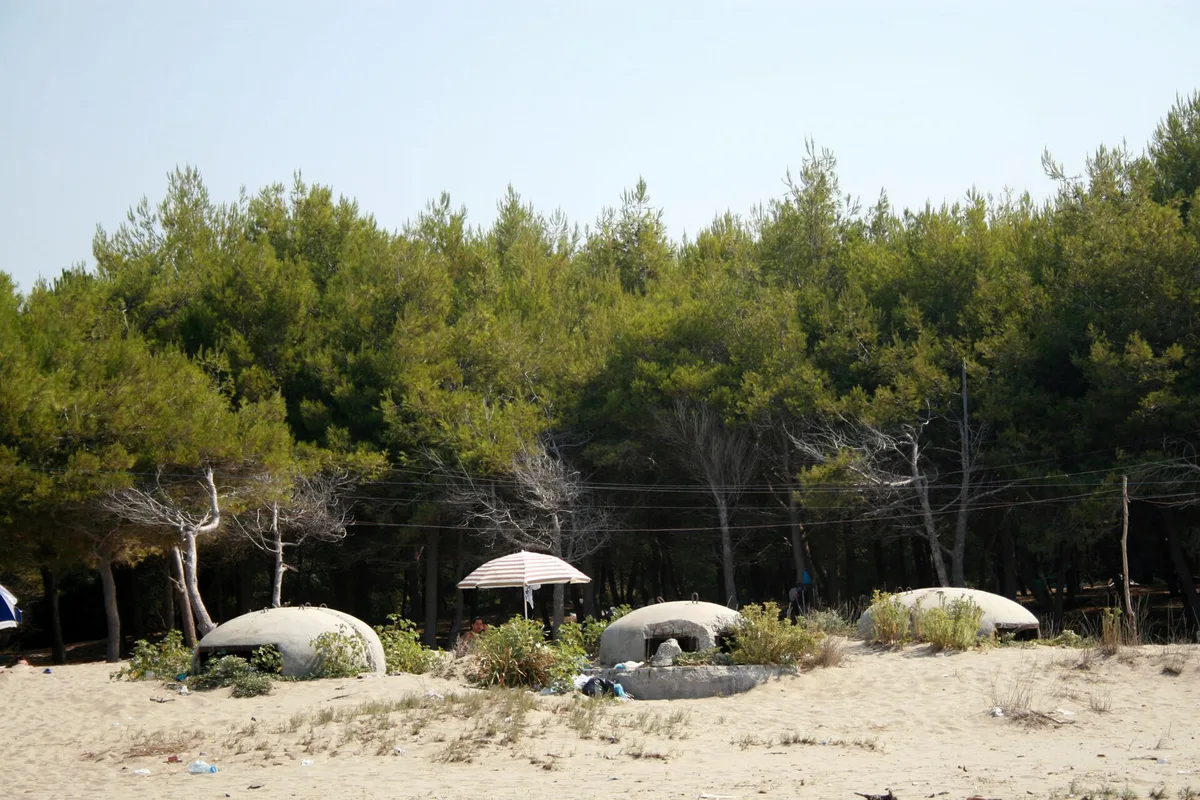
What the partisans built was the most complete dictatorship in Europe. The People’s Republic was proclaimed in January 1946 with Enver Hoxha at its head, and over the next four decades — Hoxha ruled until his death in April 1985, and his system outlived him by barely five years — Albania conducted an experiment in total control and total isolation that no other European state matched. The purges began with the wartime rivals and never really stopped; the secret police, the Sigurimi, watched everyone, and the regime’s camps and prisons, of which Spaç’s copper-mine labour camp in the northern mountains is the most notorious surviving ruin, consumed thousands.
Collectivisation took the land; the state took the shops, the presses, the schools and the mosques and churches. Foreign policy was a sequence of divorces, each leaving Albania more alone. First the patron was Yugoslavia, until the Tito–Stalin split of 1948 let Hoxha purge his pro-Yugoslav rivals and bind Albania to Moscow. Then the patron was the Soviet Union, until Khrushchev’s thaw made Stalin’s most faithful pupil break with Moscow in 1961 and walk out of the Warsaw Pact altogether by 1968. Then the patron was China, until Mao’s death and Beijing’s opening to America ended that alliance in 1978.
After 1978 Albania had no ally on earth — a country of under three million people proclaiming itself the world’s only truly socialist state, surrounded, in its leader’s teaching, by enemies on every side: imperialists to the west, revisionists to the east, and neighbours waiting for its land.
Two campaigns define the era in the history of albania for a traveller, because both are still visible. The first was against God. In 1967, in a cultural revolution modelled on China’s, the regime moved to abolish religion outright: mosques, churches, tekkes and monasteries were closed, demolished or converted to warehouses, gyms and cinemas — some two thousand religious buildings by the count most often cited — clergy were imprisoned or sent to labour, and Albania declared itself the world’s first atheist state; the 1976 constitution wrote it into law, and for more than two decades public worship simply did not exist in a country that had practised three faiths for centuries. The second campaign was the bunkers.
From the late 1960s, and above all in the main building phase of the later 1970s and early 1980s, the regime ringed the country with concrete firing positions against the invasion it prophesied — on the beaches, in the mountain passes, in fields, gardens and city streets. How many were built is one of Albania’s genuinely unresolvable numbers: the figure most often cited from the programme’s own records, used by the Bunk’Art museum itself, is 173,371 completed out of 221,143 planned, while popular retelling abroad runs to 750,000, a figure no document supports.
The honest summary is well over a hundred thousand, plausibly around 170,000 — one for roughly every sixteen Albanians alive at the time — at a cost in concrete, steel and money that a poor country could not afford, for a war that never came.
The era’s texture, for those who lived it, was shortage, queues, banned travel, banned cars in private hands, banned beards and banned books, radio and television jammed against the Italian stations visible across the strait; and its ending was correspondingly sudden. Hoxha died in April 1985 and was succeeded by Ramiz Alia, who loosened the screws too slowly to matter. In December 1990, students at the University of Tirana protested, the regime legalised opposition parties within days, and by the spring of 1992 Albania had held two multi-party elections and voted the communists out.
What the state left behind is now, remarkably, the country’s most distinctive sightseeing: Bunk’Art 1, the vast five-storey shelter built for the leadership near Mount Dajti, opened as a museum in 2014; Bunk’Art 2, the former interior-ministry bunker in the city centre; the House of Leaves, the Sigurimi’s surveillance headquarters, opened as a museum of the watching state in 2017; the great mosaic of The Albanians on the National History Museum, opened in 1981 as the regime’s self-portrait; and the bunkers themselves, tens of thousands of them still in place, painted, planted with flowers, used as sheds and cafes, ignored — the hermit state’s concrete mushrooms, slowly becoming folk art.
Collapse and the Hard Nineties – Pyramid Schemes and a Country Restarting
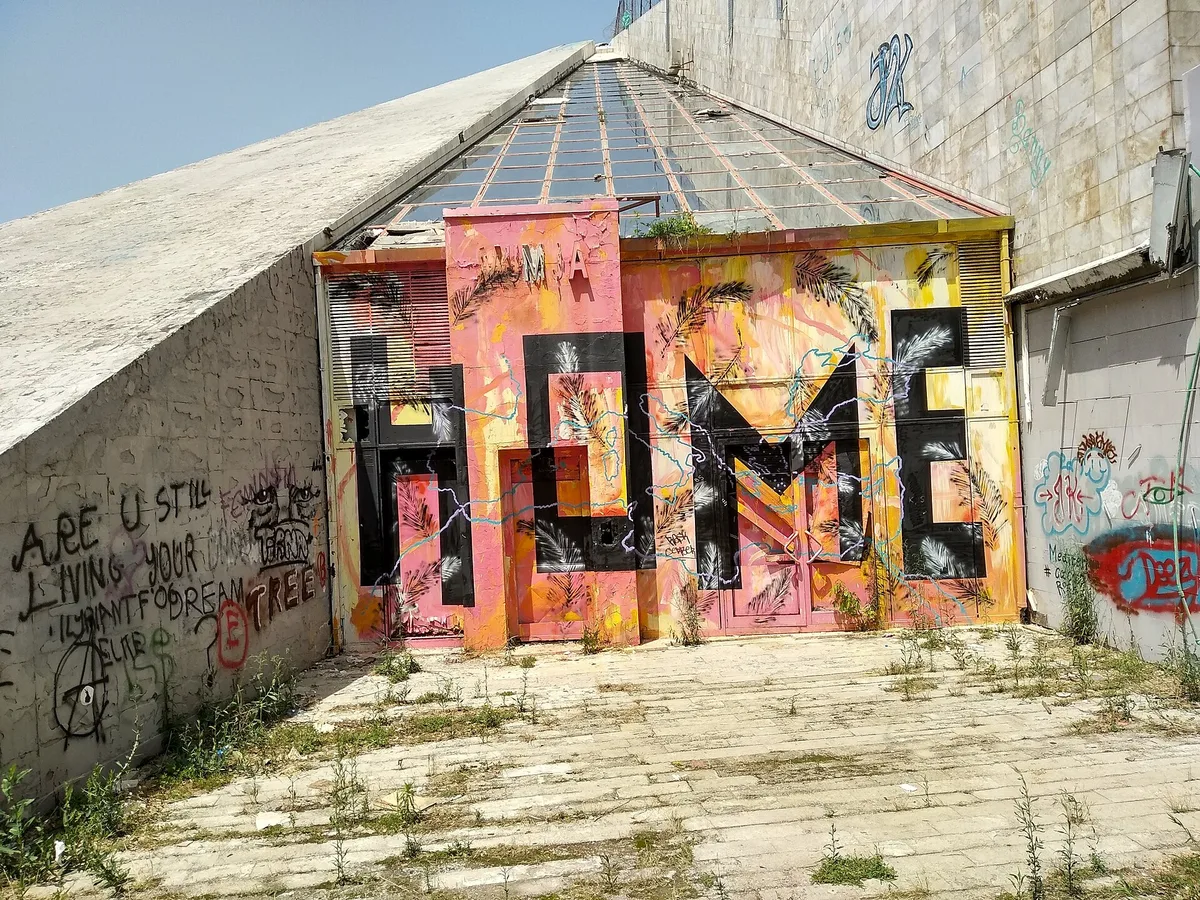
No European country fell further in the 1990s than the one that had furthest to fall. The first years of freedom were euphoric and threadbare: borders opened after half a century, and in 1990 and 1991 tens of thousands of Albanians voted with their feet — storming foreign embassies in Tirana, then crowding onto ships for Italy, most famously the Vlora, which reached Bari in August 1991 with some twenty thousand people on board. Emigration became the decade’s engine and its wound; hundreds of thousands left across the 1990s, to Greece and Italy above all, and their remittances kept the country that remained alive. Then came 1997.
In a country with no experience of banks or markets, pyramid investment schemes — some of them effectively the whole financial system — promised impossible returns and were joined by a large share of the population; when they collapsed at the turn of 1996 and 1997, the savings of hundreds of thousands of families vanished, with total losses often put at over a billion dollars, on the scale of half the country’s annual output. The south rose, armouries were looted and their weapons scattered across the country and into the region’s wars, government ceased south of Tirana, and the death toll of the unrest is commonly put at around two thousand.
An Italian-led multinational force, Operation Alba, stabilised the country enough for elections in mid-1997, which returned the Socialists to power; the looted state — including, in the chaos, the museum stores of Butrint, whose thefts helped put the site on UNESCO’s danger list from 1997 to 2005 — took years to reassemble. Two years later the decade ended with Albania’s finest modern hour: during the Kosovo war of 1999, one of Europe’s poorest countries took in hundreds of thousands of Kosovar Albanian refugees — estimates commonly run near 450,000 — and housed them in camps, schools and family homes until they could go back.
The decade’s monument is a pyramid of the literal kind. The Pyramid of Tirana, opened in 1988 as the Enver Hoxha Museum — designed by a team including the dictator’s daughter and son-in-law — was emptied of its cult in 1991 and spent thirty years as a conference centre, a nightclub, a broadcasting base during the Kosovo war, a climbing slope for teenagers and a decaying hulk that governments repeatedly planned to demolish and repeatedly spared.
Around it, the traveller finds the nineties’ other traces less in buildings than in facts on the ground: the diaspora’s money in every new house, the Italian on every older tongue, the bunkers repurposed, the lapidari fading, and a population whose median memory includes the sound of a state evaporating — which does much to explain the country’s present-day combination of entrepreneurial energy and institutional scepticism.
The Modern Republic – NATO Member, EU Candidate, Tourism Newcomer
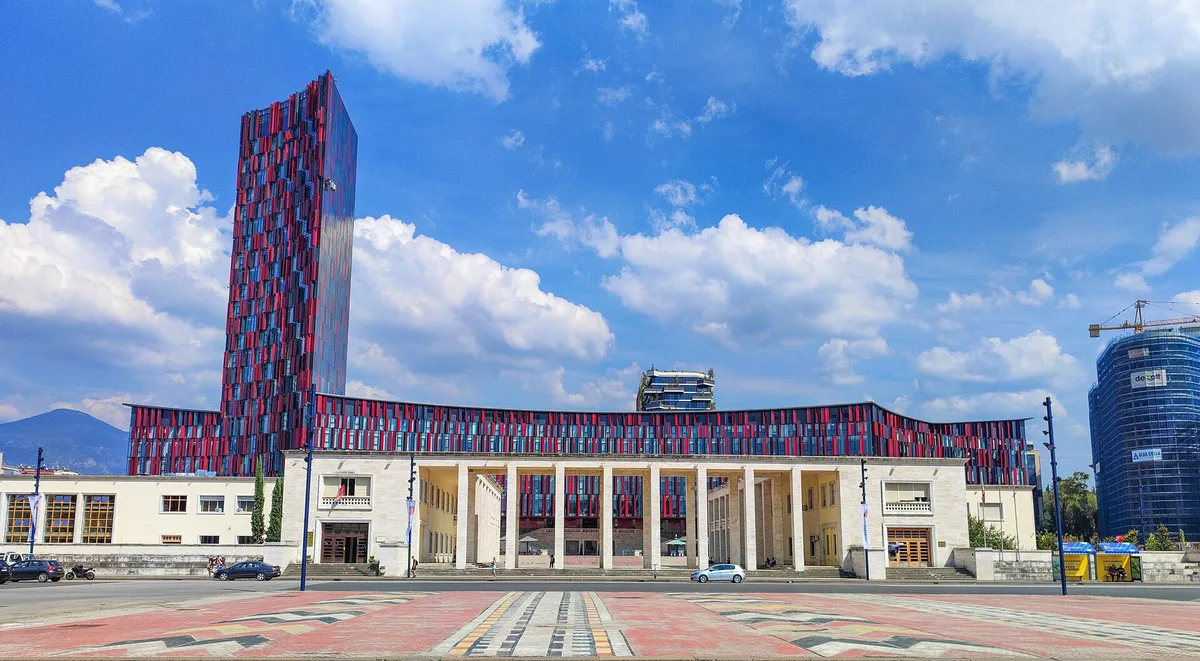
The Albania a traveller enters today is the product of the quarter-century since that floor. The state rebuilt itself in the 2000s — roads, above all, stitching the coast and the mountains together; the Rruga e Kombit motorway to Kosovo, opened in 2009, ended the north’s isolation — and anchored itself westward: Albania joined NATO on 1 April 2009, applied for European Union membership the same month, won visa-free travel to the Schengen area in 2010 and candidate status in June 2014.
The EU road has been slow and is not finished: accession negotiations formally opened in July 2022, all thirty-three negotiating chapters were opened by late 2025, and the first chapters have since been provisionally closed, with Tirana’s stated aim of finishing the talks by the end of 2027 and membership treated in Brussels as a question of when the reforms land, not a date anyone will guarantee. In parallel came the discovery of the country itself.
A coastline the communists had reserved for the permitted few, mountains crossed by shepherds’ paths, and old towns restored with European funds turned Albania, within a decade, from Europe’s blank spot into one of its fastest-growing destinations; annual foreign arrivals now run, on the border statistics, into the many millions — diaspora visits included — and the Riviera in August is a problem of success. The Pyramid, fittingly, came back: redesigned by the Dutch practice MVRDV and reopened in 2023 as a youth and technology centre, its slopes turned into public stairs, the dictator’s mausoleum-museum is now something Tirana’s teenagers climb to watch the sunset.
The modern layer is thinnest, and a traveller reads it in snapshots rather than sites: the Arena Kombëtare rising where the old Qemal Stafa stadium stood; Skanderbeg Square repaved in stone from every region of the country; the towers multiplying behind it; Butrint, Berat and Gjirokaster joined on the UNESCO list in 2019 by the Albanian shore of Lake Ohrid, extended from the North Macedonian inscription.
For the places that assemble the whole story in a single trip — the pillar itinerary that runs from Tirana through Berat and Gjirokaster to the coast — our Albania itinerary for 7 days follows roughly the same arc as this article, and the best places to visit in Albania rounds up the stops where the layers are thickest. The republic is young, its institutions are argued about daily, and its history has not finished happening — but that, after three thousand years of being somebody else’s shore, is rather the point.
Reading the History of Albania in Its Sites – Five Places, Five Eras
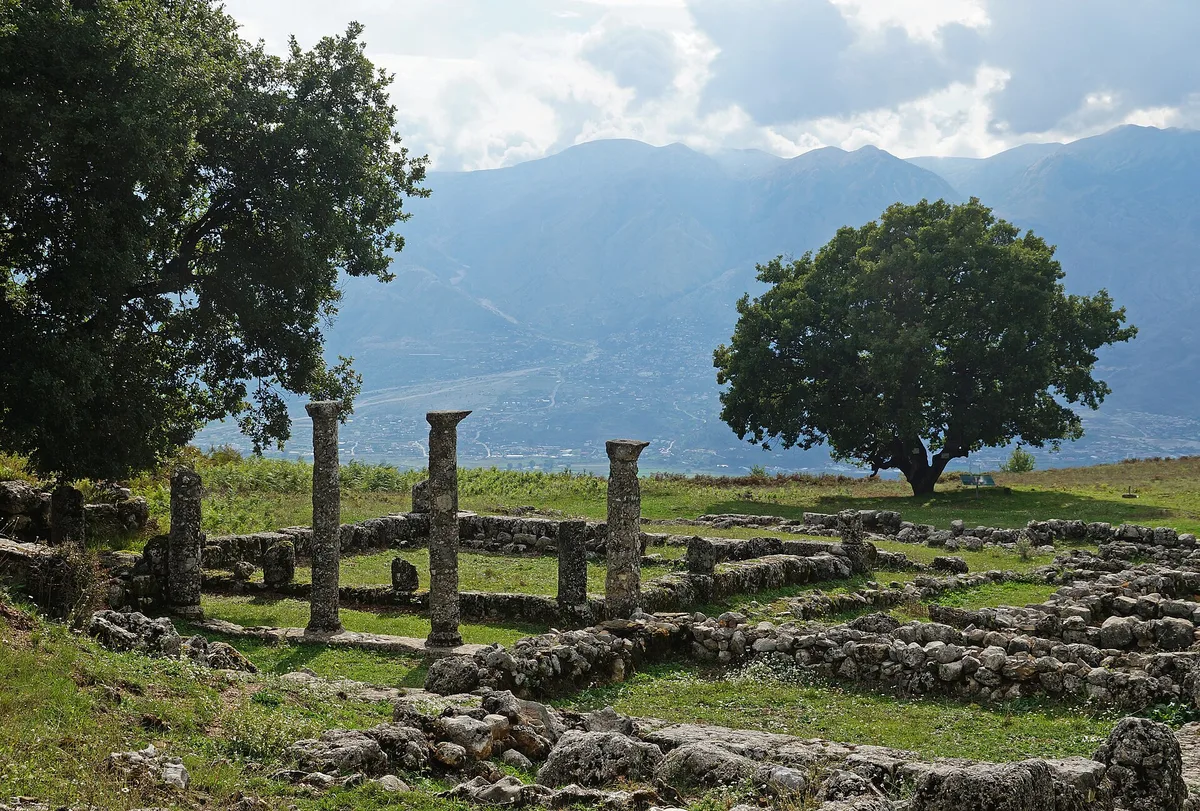
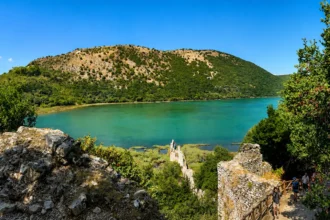
If the timeline table is this page in miniature, these five stops are the same story at walking pace — one place for each great layer, in the order the layers were laid down. Start deep, at Butrint, where a single wooded peninsula holds the whole ancient and medieval sequence in one afternoon’s walk: Greek sanctuary and theatre, Roman colony and baths, the Byzantine baptistery and basilicas, Venetian towers, Ali Pasha’s little castle on the channel — inscribed by UNESCO in 1992 under criterion (iii), and still, on a quiet morning, the most atmospheric acre in Albania.
Then come forward two thousand years at once to Krujë, for the medieval layer and the national myth in their shared birthplace: castle, Skanderbeg Museum, the bazaar’s cobbled lane, and the knowledge that the flag over the gate was first raised there in 1443. Take the Ottoman centuries at Berat (with Gjirokaster as its twin if your route runs south), reading the castle quarter, the Mangalem windows and Onufri’s icons as the empire’s domestic architecture rather than its conquest — the two towns’ joint UNESCO inscription, Gjirokaster in 2005 and Berat added in 2008 under criteria (iii) and (iv), says in official language what a sunset from the castle says better.
The fourth stop is not a town but a triangle of Tirana museums that together cover the era Albanians are still digesting: the National History Museum for the official narrative, mosaic and all; Bunk’Art for the siege state in its own bunker; and the House of Leaves for the watching that held it together. Visit them in that order and the communist chapter stops being an abstraction with a dictator’s name and becomes a system you have walked through.
And finish with the layer still wet: stand in the rebuilt Skanderbeg Square at dusk, with the repaved stones underfoot, Et’hem Bey’s little mosque at the corner, the interwar ministries down the boulevard, the Pyramid glowing behind them and towers rising over all of it, and you are standing in the modern republic’s self-portrait — every previous era in this article visible from one spot, none of them finished, all of them in use. That is the correct final image of Albania’s past, because in this country the past is not behind glass. It is underfoot, inhabited, argued over and open for climbing.
Questions Travellers Ask About the History of Albania
Are Albanians really descended from the Illyrians? Honestly — probably, partly, and unprovably. The geography fits, the Albanian language is an ancient Indo-European language that developed somewhere in the western Balkans, and no rival theory commands a consensus; but the Illyrians left almost no writing, the record between late antiquity and the first medieval mentions of Albanians is thin, and centuries of Slavic, Greek and other settlement are in the mixture too. Albania’s national narrative treats the descent as settled; scholarship treats it as the leading hypothesis — even Britannica’s country page hedges it the same way, describing Albanians as a people who “generally consider themselves” descendants of the Illyrians. A traveller does best to hold both facts at once — the belief is itself a real and important part of the country’s history, whatever the genetics eventually shows.
Who was Skanderbeg, and why is he on everything? Gjergj Kastrioti (1405–1468), a hostage-prince raised at the Ottoman court who defected in 1443, united the Albanian princes in the League of Lezhë and resisted the empire for twenty-five years, defeating armies led by two sultans. He became the national hero because the 19th-century awakening needed a founder who had united the country and faced east-to-west odds, and the communist regime then amplified him into the state’s founding symbol. The statue in Tirana’s main square, the museum at Krujë, the square in Pristina and his image on the 5,000-lekë note are all that story still at work.
Why are there so many bunkers, and how many are there really? They were built under Enver Hoxha, mostly from the late 1960s to the early 1980s, as firing positions for a people’s war against an invasion the regime constantly prophesied and which never came. The count repeated abroad — 750,000 — appears in no programme document; the figure drawn from the programme’s own records, and used by the Bunk’Art museum, is 173,371 built of 221,143 planned. Treat any exact number with suspicion and the honest version as “well over 100,000, probably around 170,000” — still one of the most extraordinary building programmes, per citizen, of the twentieth century.
Was Albania really an atheist state? Yes, by law and in practice. In 1967 the regime closed, demolished or converted the country’s mosques, churches and tekkes — some two thousand religious buildings by the most-cited count — imprisoned clergy, and banned religious practice; the 1976 constitution declared that the state recognised no religion. Public worship returned only in late 1990, months before the regime itself fell. The mosques and churches a traveller sees today are survivors, restorations, or post-1990 rebuilds, and the country’s modern reputation for easy interfaith coexistence is partly a reaction to having had all faiths banned at once.
How old is Albania, really — and why did the borders come out that way? As a state, it dates from the declaration at Vlorë on 28 November 1912, recognised — with borders drawn by the great powers at London in 1913 that excluded roughly half the Albanian-speaking population, including Kosovo. That settlement, made by empires for their own balance-of-power reasons, is the root of most of the region’s 20th-century grievances, and it is why Albanian history is also lived in Kosovo, North Macedonia and the diaspora. As a people and a language, the Albanians are far older than the state — which is precisely the tension this whole article runs on.
Which historic sites should a first trip prioritise? Butrint for the ancient-to-medieval stack, Krujë for Skanderbeg, Berat and Gjirokaster for the Ottoman centuries, and Tirana’s museum triangle — National History Museum, Bunk’Art, House of Leaves — for the communist era, with Apollonia as the connoisseur’s extra if the route passes Fier. That set touches every row of the timeline table except the Illyrian hill towns, and Byllis or Antigonea fills that gap from the Gjirokaster road. Everything else in the country layers onto those foundations.
The History of Albania – The Short Version
The shortest true summary of the history of albania is that for three thousand years it was the shore empires landed on, and for barely one century it has been a country. Illyrian tribes and Greek colonies shared its coast; Rome paved its road and Byzantium kept its ports through a millennium of invasions; Angevins, Venetians and Serbs passed its castles between them until a hostage-prince named Skanderbeg held the mountains against the Ottomans for twenty-five years and became, centuries later, the founder a nation invented for itself.
The Ottomans stayed four hundred years and built the old towns; the awakening answered them with an alphabet; independence in 1912 was recognised with half the nation left outside the fence; a king built boulevards on Italian credit until Italy collected in person; partisans freed the country and then their leader sealed it — atheist by law, bunkered by the hundred thousand, divorced from every ally on earth. It fell in 1991, fell further into the pyramid schemes of 1997, sheltered its Kosovar kin in 1999, and has spent the years since joining NATO, negotiating with the EU and being discovered, with some astonishment on all sides, by the rest of Europe.
So travel it in layers, because that is how it exists. Swim in the morning off a coast the Greeks colonised, and eat lunch in an Ottoman bazaar town. Stand in a Roman amphitheatre buried under a modern port, then in a bunker buried in a beach. Read the mosaic over the museum door and then walk into the museum and check its story against the one in the bunker across town. No single chapter explains Albania, and that is the point: the country is the chapters, stacked on one narrow, mountainous, beautiful shore — and for the first time in its long history, the pen writing the next one is in Albanian hands.