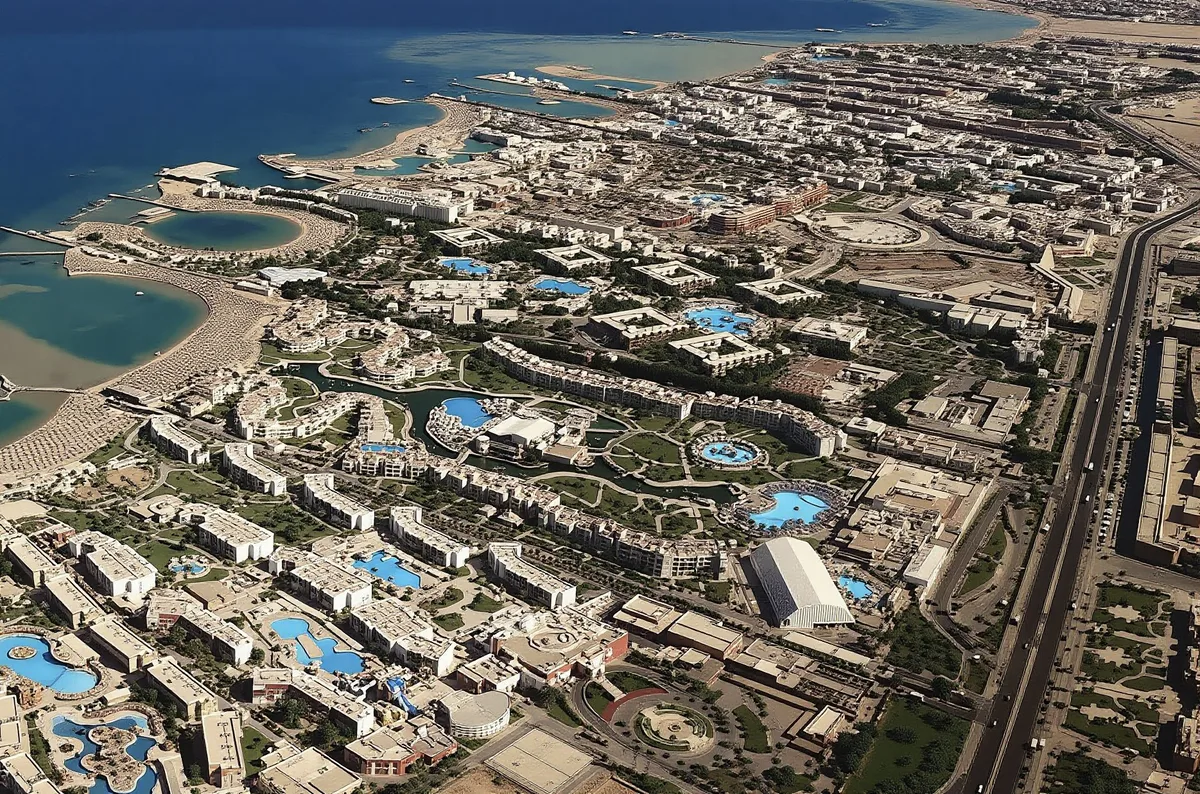
Hurghada is the Egypt you swim in. The famous Egypt — pyramids, temples, royal tombs — belongs to the Nile Valley, hours inland across the desert. That contrast is where any honest hurghada travel guide has to start, because Hurghada itself belongs to the Red Sea: a resort city strung along close to forty kilometres of coast on Egypt’s mainland shore, capital of the Red Sea Governorate, and built almost entirely around one asset, a warm, clear, coral-fringed sea that stays swimmable in the middle of winter.
People fly here direct from a dozen European cities, check into a walled resort with its own strip of beach, and spend a week moving between the pool, the buffet and a house reef. That version of Hurghada is real, and for a fly-and-flop holiday it works perfectly well. But it is not the whole place, and treating it as the whole place is how visitors end up bored by day four without understanding why.
Because behind the resort walls there is an actual town. There is Dahar, the old quarter of markets, workshops and apartment blocks where the city’s two hundred thousand residents live their lives. There is Sakkala, the busy commercial centre around Sheraton Road, where the dive shops, the marina, the fish restaurants and the town’s one great mosque cluster near the old harbour.
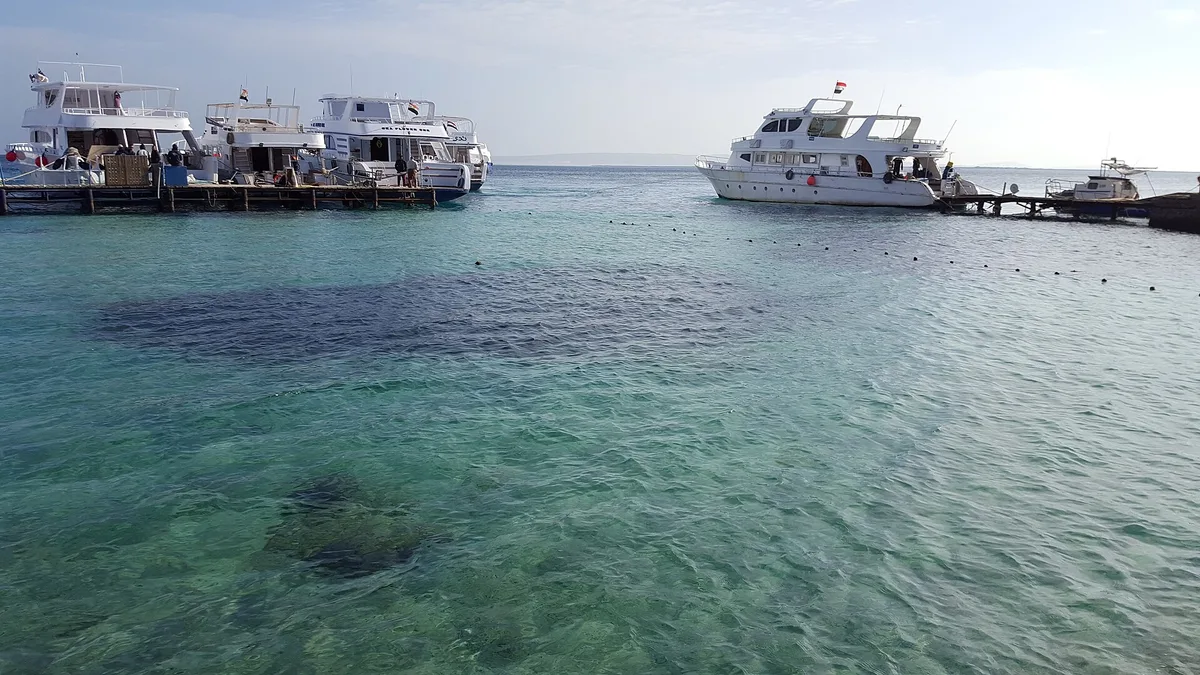
And there is the sea itself in its working forms — dive boats loading at dawn, snorkel fleets heading for the Giftun Islands, glass-bottom boats for people who want the reef without getting wet. Hurghada rewards the visitor who reads it as a coastline with a town attached, not as a single hotel with a country attached.
This guide is organised the way the coast is organised. It starts with the short, strange history — a fishing village named after a desert shrub that became one of the Mediterranean basin’s biggest resorts inside a generation — then maps the zones from Dahar down the El Mamsha promenade to the satellite resort towns of El Gouna, Sahl Hasheesh, Makadi Bay and Soma Bay.
The sea gets the space it deserves: snorkelling, diving, the island boat days, the beaches and how their access system actually works, and the desert safaris that run into the mountains behind. Practical sections cover day trips (Luxor above all, honestly costed in hours), getting here and around, when to go, and where to stay zone by zone.
If you are planning the country as a whole, our Egypt travel guide sets Hurghada against Cairo, Luxor and the Nile; this page is for the resort itself.
One honest note before the detail, because it shapes everything below. This article prints no prices — no hotel rates, no excursion fees, no taxi fares, no daily budgets. Hurghada’s prices are negotiated, seasonal and denominated in three currencies depending on who is asking, and the guides that print confident dollar tables are printing numbers that rot within the season. What this guide gives instead is the mechanism behind every cost: what drives it up, what drives it down, and how to make sure the figure you agree is the figure you pay. That is worth more on the ground than any table.
| Question | Short answer |
|---|---|
| What is it | Egypt’s biggest Red Sea resort city, on the mainland coast, capital of the Red Sea Governorate |
| The strip | One long coastal ribbon – Dahar (old town) and Sakkala (centre) in the middle, El Mamsha resort promenade running south, satellite resort towns north and south |
| Why come | Warm clear sea and coral reefs, winter sun, diving and snorkelling, desert backdrop, workable day trip to Luxor |
| Airport | Hurghada International (HRG), just inland from the southern strip – direct European flights plus domestic flights from Cairo |
| Visa | Mainland Egypt rules apply – the Sinai-only stamp arrangement does not cover Hurghada; arrange the standard tourist visa or e-visa for your nationality |
| Best months | October to November and March to April for the balance of warmth, sea temperature and bearable afternoons |
| How long | Three to five days covers the sea properly; add a day if Luxor is on the list |
From Fishing Village to Resort Coast
The name is the first clue that this resort is younger than it looks. Hurghada takes its name from the gharqad, a tough salt-tolerant shrub of the coastal desert — a fisherman’s landmark, not a pharaoh’s. There was no ancient city here.
The one antique footnote on this coast lies about twenty kilometres north, at Abu Sha’ar, where Rome built a small fort in the years around AD 309–311 that later became a Christian settlement before fading away. The pharaonic world passed this shore by almost entirely: its ports for the Red Sea trade and the incense road to Punt sat far to the south. Everything a visitor sees in Hurghada itself was built for fishing, oil or holidays, in that order.
The village came first. In the late nineteenth century, fishermen of the Ababda tribe — the Bedouin people of this stretch of coast and the Eastern Desert behind it — settled around the natural harbour at what is now Sakkala, living from the same reefs that tourists now photograph.
The settlement was formally established as a town in 1905. Oil changed its prospects without changing its size: petroleum was found in the area in 1913, and through the middle of the century Hurghada remained a small working port with an oilfield flavour, the kind of place where a recreational centre built under King Farouk could be handed over to the armed forces after the revolution without the wider world noticing. For most of the twentieth century, Egypt’s Red Sea coast was a frontier — beautiful, empty and militarily sensitive.
The transformation, when it came, took barely twenty years. From the 1980s onward, Egyptian and foreign investors began building resort hotels along the empty beaches south of the town, drawn by the same formula that had already worked in Sinai: guaranteed sun, a reef-rich sea, cheap land and direct charter flights from northern Europe. The strip grew southward along El Mamsha, then jumped the gaps to wholly new resort towns — El Gouna to the north, designed from scratch as a lagoon town, and Sahl Hasheesh, Makadi Bay and Soma Bay to the south.
The village’s harbour filled with dive boats instead of fishing smacks, though the fishing fleet never quite left, and the mosque, the fish market and the working port still anchor Sakkala in something real.
Hold that arc in mind and the modern town makes sense. Hurghada is not an old city with a tourist quarter; it is a tourist industry with a working town growing up inside it, and the friction between the two — the haggling, the walls, the two price systems — is the honest texture of the place. That is the job of the rest of this hurghada travel guide, starting with the map every visitor should carry in their head.
The Shape of the City – Dahar, Sakkala and El Mamsha
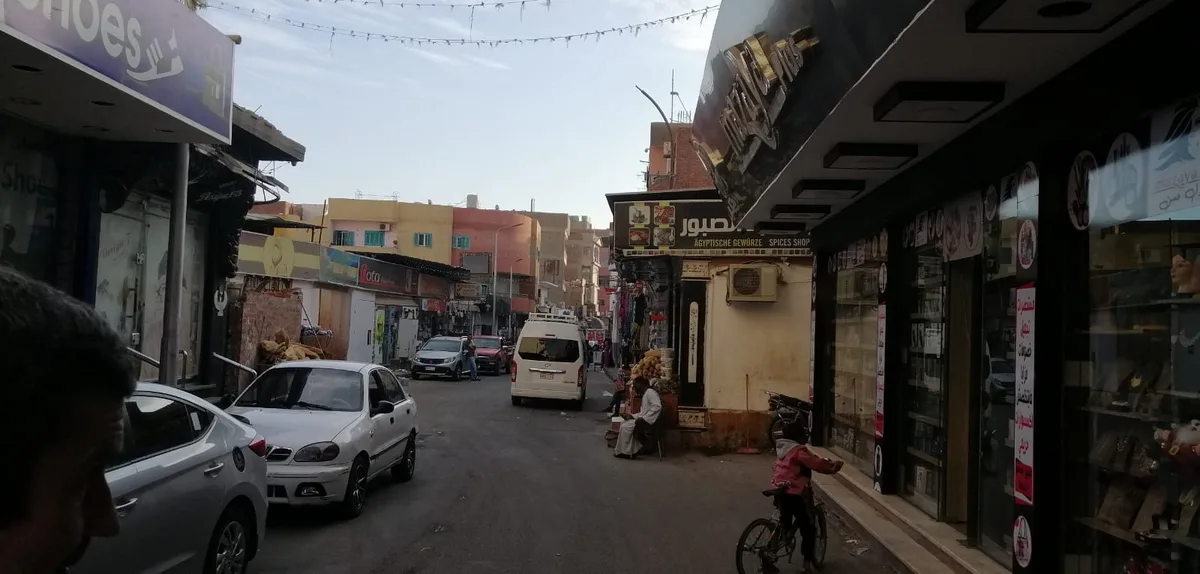
Hurghada is a line, not a circle. Almost everything in the city hangs off one coastal strip running north to south, and the single most useful thing a first-time visitor can learn is where along that line they are sleeping — because two hotels both sold as “Hurghada” can be forty minutes apart and offer entirely different holidays. From north to south, the line runs like this.
At the northern end of the city proper sits El Ahyaa, a newer, quieter district of mid-range resorts, apartment blocks and local housing, still developing and short on street life. South of it comes Dahar (also written El Dahar or Ad-Dahar), the old town and the city’s everyday heart: the traditional bazaar, produce markets, bakeries, workshops, the long-distance bus stations and the streets where Hurghada’s residents actually live. Dahar’s hotels are mostly small and budget-minded, its restaurants feed locals first, and its pavements are not arranged for promenading — which is exactly its value. A morning in Dahar’s market streets is the fastest way to remember that this is an Egyptian city and not a cruise ship that ran aground.
Next south is Sakkala, the centre in every practical sense. Around Sheraton Road and the old harbour you get the densest concentration of everything a visitor uses: the marina, the fish restaurants, dive centres loading boats at the jetties, pharmacies, exchange offices, cafes and the town’s mid-range hotels. Sakkala is the busiest, noisiest and most useful district in Hurghada — the one place where the resort and the town fully overlap.
South of Sakkala the city changes character again: the El Mamsha promenade, sometimes called Village Road, is a long, landscaped resort corridor of large hotels, malls and beach clubs running south past the airport toward Sahl Hasheesh. Street life thins out; the resorts get bigger, the gardens get greener and the sea is mostly reached through a hotel gate.
The practical consequences follow from the geography. Stay in Dahar or Sakkala and you can walk to dinner, dive shops and the marina, and take boats without a transfer bus. Stay on El Mamsha or beyond and you gain space, polish and a better beach, and you pay for it in taxis every time you want anything the resort does not sell. Neither choice is wrong — but they are different holidays wearing the same name, and the where-to-stay section near the end of this guide weighs them zone by zone.
The Neighbouring Resort Towns – El Gouna, Sahl Hasheesh, Makadi and Soma Bay
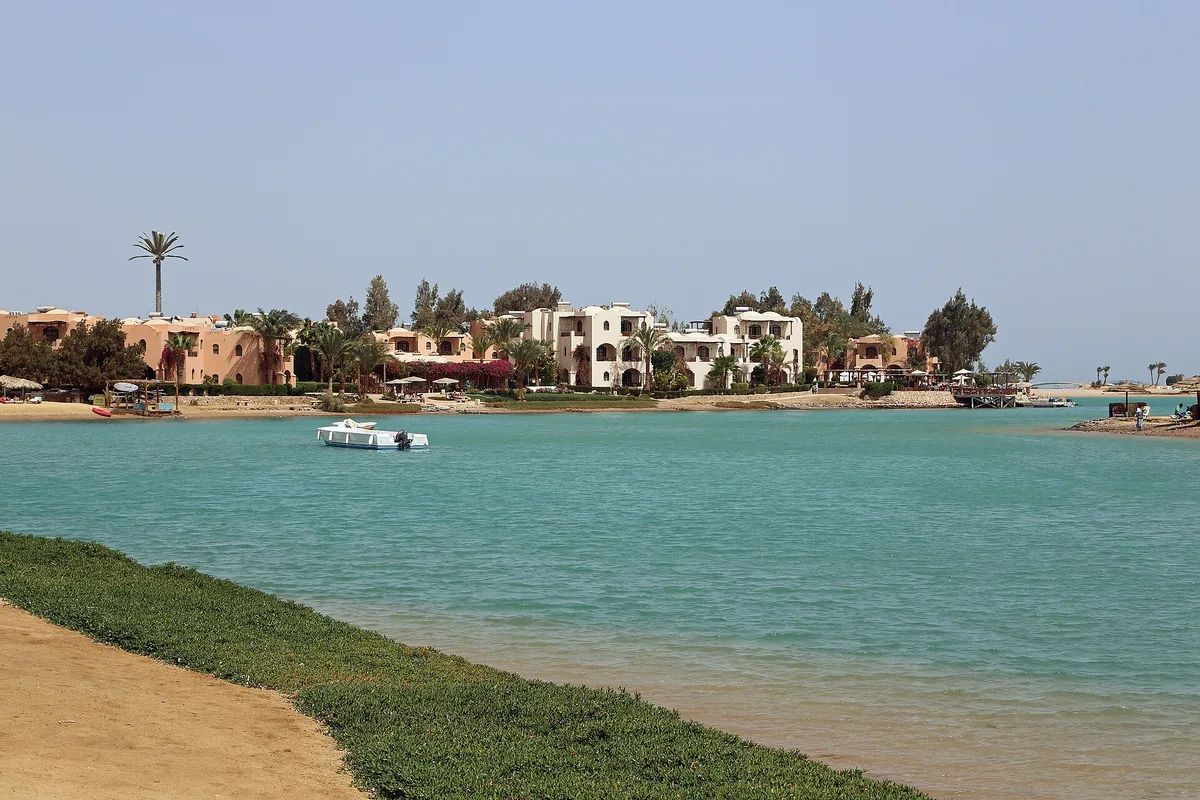
Beyond the city limits, the Hurghada holiday market spills into four satellite resorts, and tour operators sell all of them under the Hurghada name. Each has a distinct character, and choosing between them matters more than choosing between hotels inside them.
El Gouna, roughly twenty-five kilometres north of Hurghada, is the odd one out and the most interesting: a privately built resort town laid out across a web of lagoons and channels linked by bridges, with low-rise architecture in warm stone and Nubian-inspired domes, marinas, a downtown of restaurants and bars, and a long beachfront. It feels like a place rather than a strip — you can stroll, eat somewhere different every night and take a boat from its marinas. It suits independent travellers, couples, golfers and anyone who wants the Red Sea without the all-inclusive bubble, and its dining scene is the best on this coast.
South of the city, the satellites are resort enclaves rather than towns. Sahl Hasheesh, about eighteen kilometres down the coast, is the polished one: a master-planned bay with a long seafront promenade, upscale resorts and a sunken-city snorkelling feature built offshore. Makadi Bay, around thirty kilometres south, is quieter still — a crescent of large resorts around a bay with a good house reef, and almost nothing else; there is no local settlement, which devotees call peace and detractors call isolation. Soma Bay, furthest south at roughly forty-five kilometres on its own peninsula, is an upmarket enclave of resort hotels, a marina and some of the coast’s most reliable kitesurfing wind.
All three are sold on the strength of their house reefs, their space and their calm, and all three mean a taxi or an excursion bus for anything beyond the gate.
The shorthand: El Gouna if you want a town, Sahl Hasheesh if you want polish, Makadi if you want quiet with a reef, Soma Bay if you want wind and water sports — and Hurghada proper if you want the boats, the market and the mess of a real place alongside your beach.
Snorkelling – House Reefs, Islands and the Etiquette That Keeps Them Alive
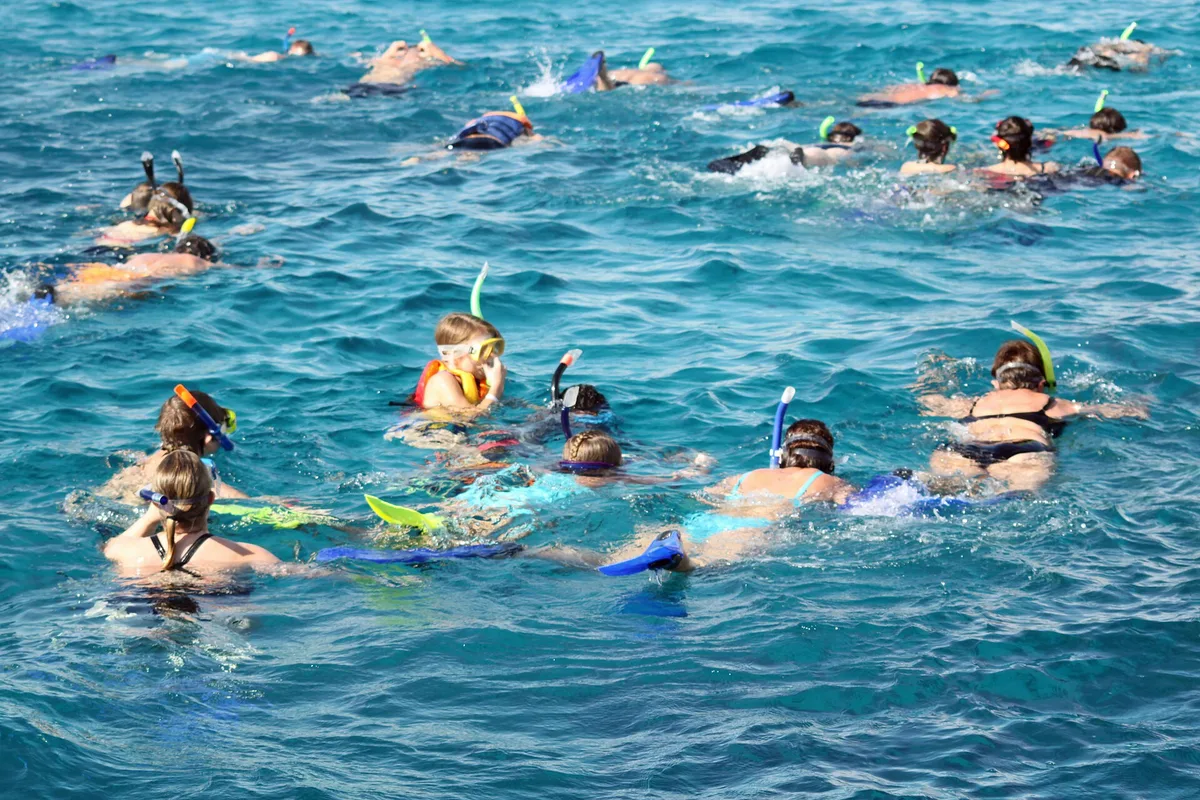
Snorkelling is Hurghada’s entry drug, and the town is organised to administer it daily. The Red Sea here holds the northern hemisphere’s richest coral system: hard-coral gardens in water that is usually gin-clear, patrolled by the full reef cast — clownfish in their anemones, blue-spotted rays on the sand, turtles grazing seagrass, morays in the crevices, and clouds of anthias flickering orange over the coral heads. You do not need to dive to see any of it. You need a mask, a calm day and a way of getting to a reef that has not been loved to death.
There are three ways in, and this hurghada travel guide rates them in the order most visitors use them. The first is the house reef: many resorts front a fringing reef reached from a jetty that carries you over the shallow flat to the drop-off, where the coral and the fish are.
Quality varies enormously — a jetty over a living reef wall is a gift; a roped swimming area over sand and rubble is a paddling pool with better marketing — and the where-to-stay section explains how to read a resort’s reef before you book. The second way is the day boat, covered properly in the Giftun section below: boats run to offshore reefs and islands where the coral is generally in better condition than the town shore.
The third is the guided snorkel trip to named sites such as Abu Ramada island, nicknamed the Aquarium for the density of its fish life, where a guide leads the group along the reef edge.
Etiquette is not decoration here; it is the difference between a reef that survives and one that does not. Never stand on coral — if you need to rest, float or return to the jetty steps. Never touch, chase or feed the animals. Feeding fish bread, for example, wrecks both their behaviour and their digestion, and a harassed turtle simply leaves. Keep fins up and away from the coral heads, wear a rash vest instead of relying on heavy sunscreen in the water, and take every scrap of plastic back to the boat.
Guides vary: the good ones brief all of this before anyone gets wet, enforce it in the water and use the fixed moorings provided by the local conservation association rather than dropping anchor on the reef. Choose those boats, even over cheaper ones — you are voting for the reef you came to see.
One comfort note for the nervous: you do not have to be a strong swimmer. Boats carry buoyancy vests, guides tow floats that beginners can hold, and the classic Hurghada snorkel day is deliberately built so that a nervous first-timer and a confident free-diver can share a boat and both come back happy.
Diving – Wrecks, Reefs and Learning to Breathe Underwater
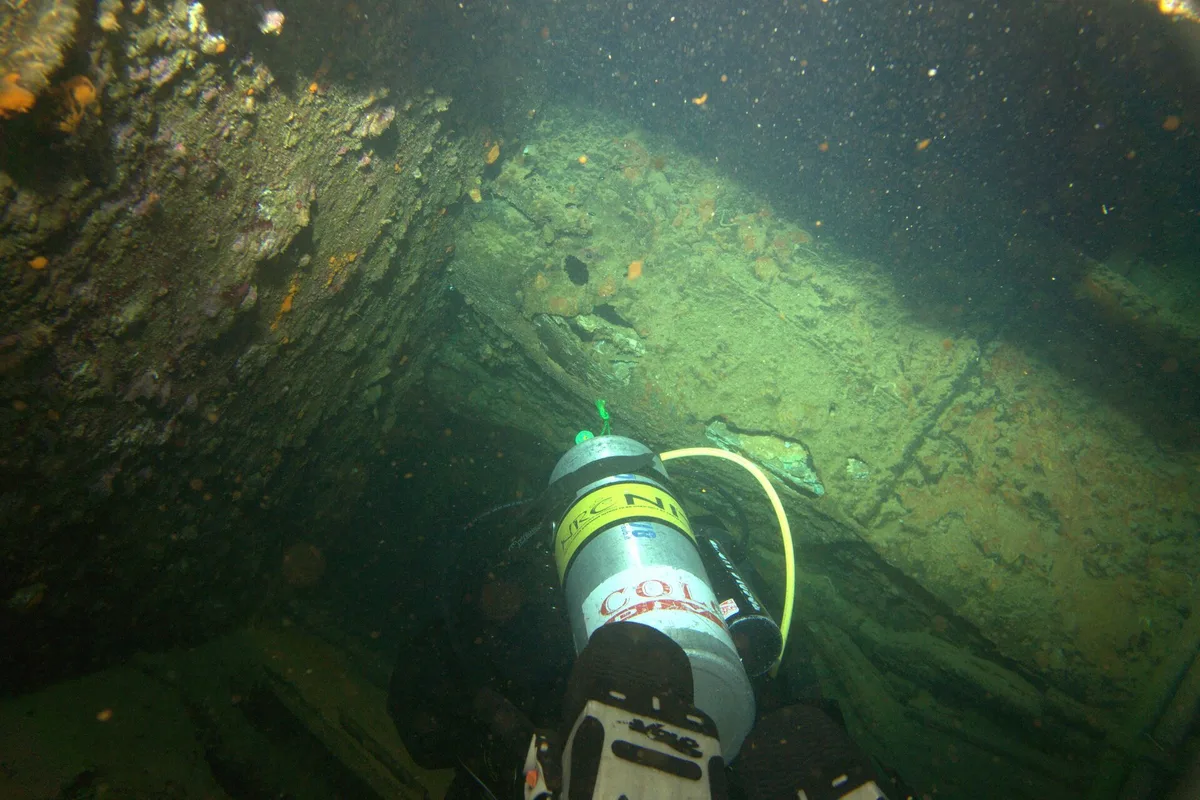
If snorkelling is the entry drug, diving is the habit Hurghada was built on. Through the 1980s and 1990s this was one of the world’s great learn-to-dive towns, and it remains one of the easiest and most forgiving places on earth to take a first breath underwater: warm water, gentle conditions, reefs starting just below the surface and a dense infrastructure of dive centres competing for your custom in Sakkala and the resort zones.
Most centres run the same daily rhythm — two dives from a day boat with lunch aboard — and most teach the standard international beginner courses in several languages. Prices are quoted per package and negotiated in a competitive market, which is precisely why this guide prints the mechanism rather than numbers: what you are buying is small groups, maintained equipment, a certified instructor and a boat that uses moorings, and those are the things to compare.
The diving itself divides into three kinds. Reef diving is the staple: sites like Fanadir, with its long reef and gentle drift, and the coral gardens around Abu Ramada offer walls, pinnacles and sand channels full of life at beginner-friendly depths.
Wreck diving is the signature, and the signature wreck sits almost in the harbour: the El Mina, an Egyptian warship sunk during the fighting around 1970, lying on its side in the bay, its hull now a scaffold for coral and a home to groupers, lionfish and glassfish — dived from Sakkala’s jetties as a natural second dive of the day. Further afield, longer boat trips reach the Rosalie Moeller, a British freighter sunk in the Second World War, a deeper and more serious dive for experienced divers when the weather allows.
And there is night diving, when the reefs change cast entirely — hunting lionfish, Spanish dancers on the sand, crustaceans out of their holes — offered by most centres to qualified divers.
Two honest cautions belong in the diving chapter of any hurghada travel guide. First, the near-town reefs carry the scars of forty years of intensive use: broken coral at the popular moorings, crowded sites in high season, and a general thinning that long-time divers remark on. The offshore sites are healthier, which is one more reason the boat matters.
Second, the sheer competitiveness of the market produces some operations that cut corners on group size, briefings and kit. Egypt has a regulator for diving and water sports and centres are required to be licensed — check for the licence, the instructor’s credentials and the oxygen kit on the boat before you pay, and treat any operation that will take an uncertified beginner beyond shallow training depths as one to walk away from. The good centres are genuinely good; Hurghada’s diving establishment is old, multilingual and mostly professional, and a first course here has started a great many diving lives.
Giftun Island, Mahmya and Days on Boats
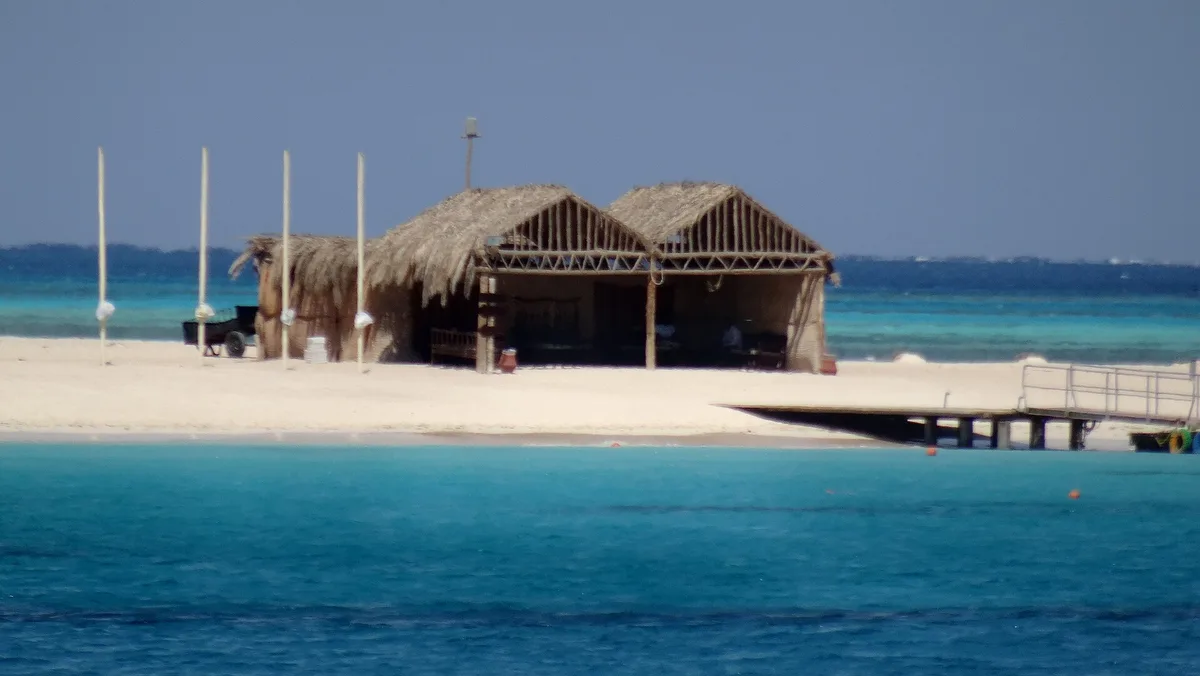
Ask a Hurghada holidaymaker to name their best day and most will describe the same one: a boat, an island, two snorkel stops and a long lunch on deck. The destination is usually the Giftun Islands, the low, pale islands visible from every Hurghada beach, protected as a national park and ringed by some of the most accessible coral in the northern Red Sea.
The classic trip runs a full day: hotel pick-up to a Sakkala or resort jetty in the morning, a sail of the better part of an hour, a guided snorkel stop on an offshore reef, then ashore on Big Giftun’s beach — a strip of white sand with thatched shelters, a beach restaurant and shallows the colour of bottled glass — and a second snorkel before the sail home in the late afternoon light.
Two names on the island cause mild confusion at the booking desk. Mahmya is the established beach operation on Big Giftun — a managed beach club with loungers, shade, a restaurant and a jetty, reached by its own boats. Orange Bay is a newer commercial beach on the same island system, built around shallow lagoons, swings in the water and photo spots. Both sell the same essentials — sand, shade, lunch, snorkelling off the beach or a nearby reef — and differ mainly in style and crowd.
Independent of which beach you land on, a national-park fee applies to the Giftun trips; reputable operators collect it transparently as part of the ticket, and it is one of the few costs in Hurghada that is fixed rather than negotiated. As everywhere here, compare what is included — park fee, equipment, lunch, hotel transfers — rather than the headline figure alone.
The boat menu does not end at Giftun. Glass-bottom boats work the reefs off Sakkala for visitors who want the coral without swimming, and semi-submersibles — boats with a viewing hull below the waterline — do the same job at greater length; both are the standard answer for non-swimmers, small children and anyone with a flight too soon after to dive.
Dolphin trips head north to the lagoon of Sha’ab el Erg, where spinner dolphins rest in sheltered water during the day; the honest operators brief passengers that sightings are likely but not guaranteed, keep their distance and limit time in the water, while the less honest ones crowd the pod with half a dozen boats. Choose the former, accept the dolphins’ terms, and the encounter — a pod drifting past below the boat, unconcerned — is the single most memorable thing Hurghada offers.
Sunset cruises and private charters fill out the list; the mechanism is the same throughout, a buyer’s market in which the boat, the crew and the briefing are worth more than the discount.
Beaches and Beach Clubs – How the Sand Actually Works
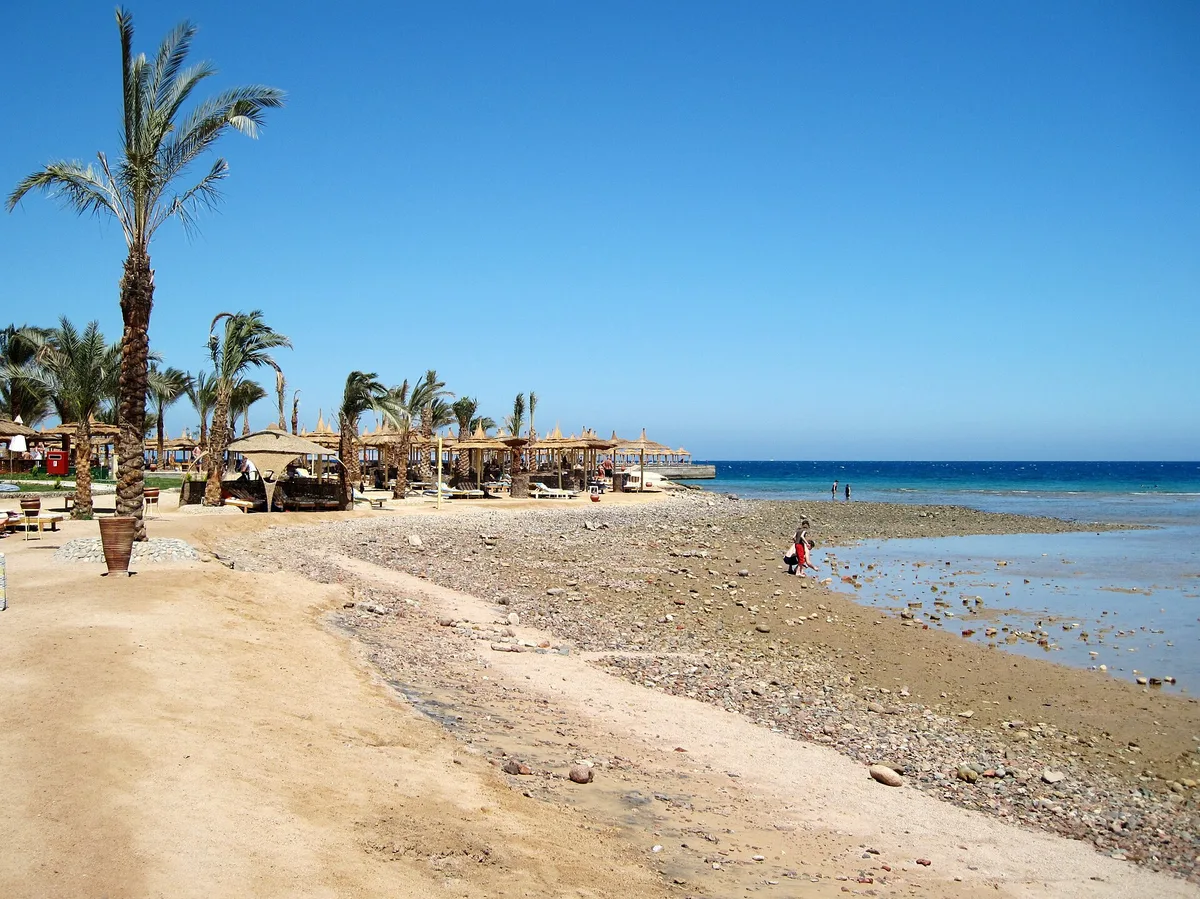
New arrivals often ask where Hurghada’s public beach is, and the honest answer is: that is not quite how it works here. The great majority of the usable beachfront is carved up between resorts, each holding its own fenced, staffed, lounger-lined strip, and the town’s beach life runs through gates and wristbands rather than along an open promenade. Understanding that system — not fighting it — is the key to a good beach week.
Resort guests use their own beach, and the important variables are not the ones in the brochure. What matters is the reef: whether the hotel has a jetty over the reef flat to the drop-off, whether the swimming area is sand or dead coral rubble, and whether the entry is a gentle sandy slope (ideal for children, usually poor for snorkelling) or a reef wall (the reverse).
Wind matters too — the prevailing breeze is from the north, and beaches differ in how exposed they feel on a blustery day. If you are not staying on the beach, the system has a front door: independent beach clubs along the Sakkala shore and the Mamsha strip sell day access with a lounger, shade and usually a bar and showers, and they range from backpacker-simple to deliberately glamorous.
They are the standard solution for Dahar and Sakkala hotel guests, for apartment renters, and for anyone who wants a beach day with a different view. Prices are posted or quoted at the gate and are part of Hurghada’s negotiable landscape in low season, fixed in high.
Two features of Hurghada beaches surprise first-timers. The first is the reef flat: at low tide many beaches reveal a broad, shallow shelf of rock and coral rubble before the water deepens — beautiful for rock-pooling children, hard on bare feet, and the reason reef shoes earn their space in the suitcase. Enter the water from the jetty where one exists, both for your feet and for the coral’s sake.
The second is the division of the day: mornings are calm and clear, the wind often freshens after midday, and the light on the water in the last hour before sunset is the strip at its best. That rhythm, once found, tends to organise the whole holiday, and much of the rest of this hurghada travel guide quietly assumes it.
The Desert Behind the Beach
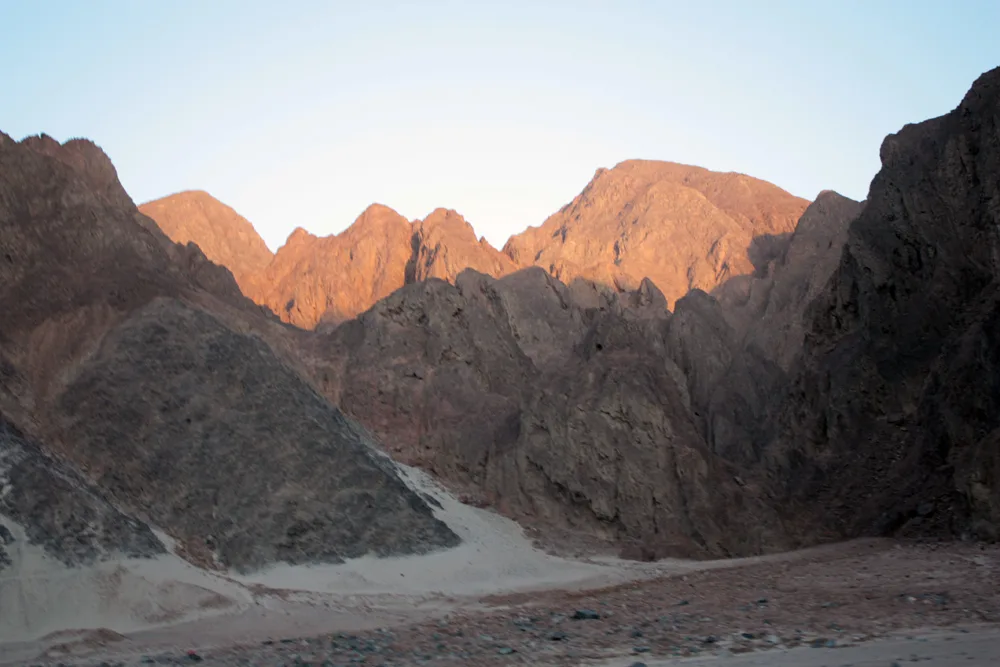
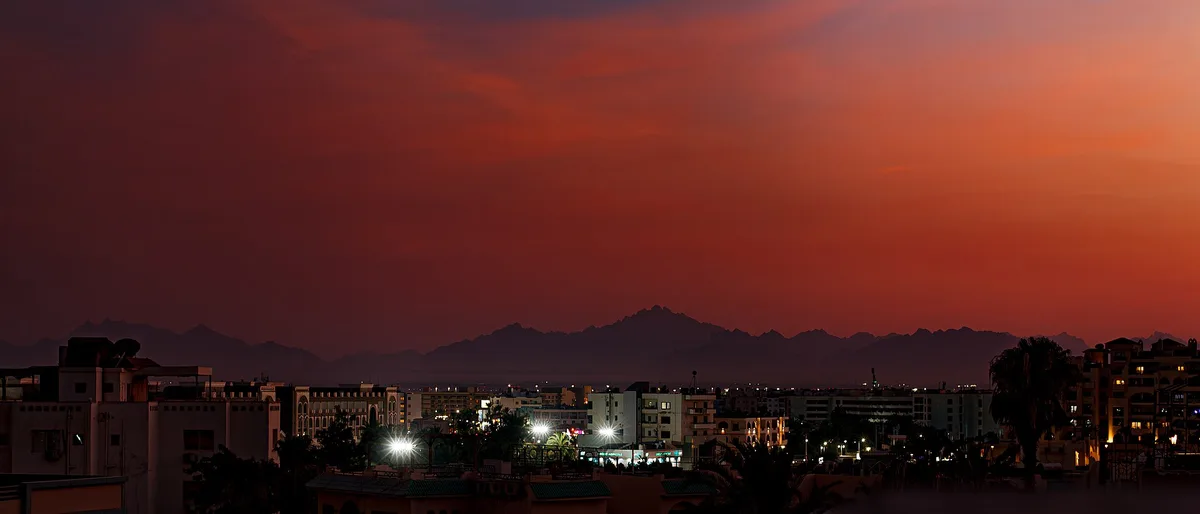
Turn your back on the sea anywhere in Hurghada and you are looking at the other half of the landscape: the Eastern Desert, rising within a few kilometres into the Red Sea Mountains, a bare range of ancient rock that runs the length of Egypt’s coast. It is not backdrop. For most of human history this desert was the point of the coast — crossed by the routes that linked the Nile Valley to the Red Sea ports, mined for gold and granite, and home to the Ababda Bedouin whose territory it remains. The resort strip simply turned its back on it, and the excursion industry has spent decades turning visitors around again.
The standard desert product is the afternoon safari, and its shape barely varies: out of the resort in a small convoy of jeeps or on quad bikes, a run over gravel plains and between hills to a Bedouin camp, a short camel ride, tea, bread baked in the sand oven, dinner as the light fails and a look at a sky that — this far from city light — delivers the Milky Way as a matter of course. Half-day and full-day versions exist, along with stargazing-focused evenings and longer jeep expeditions.
Quality varies with the operator’s care for both the desert and the passengers: the good versions keep groups small, stay on established tracks, brief honestly about the quad bikes (they are the biggest source of holiday injuries in the resort — follow the guide’s line, wear the helmet, and sit it out if it feels wrong) and treat the Bedouin hosts as people rather than scenery. The camp visit itself is a performance of Bedouin life rather than the thing itself, and it is more enjoyable taken as such, generously.
The desert also explains the town’s weather and its water, which is worth a thought between the pool and dinner. Hurghada sits in one of the driest inhabited landscapes on earth — measurable rain is a rare event, the resort’s greenery is an irrigation project, and the wind that freshens most afternoons is desert air on its way to the sea. Visitors who only do one non-beach excursion should make it this one: an hour inland, the noise of the strip is gone, the mountains change colour through the late afternoon, and the resort makes sense in its geography at last — a thin, watered, improbable line of green between the reef and the rocks.
Hurghada Travel Guide for Families – Aqua Parks, the Aquarium and a Museum of Pharaohs
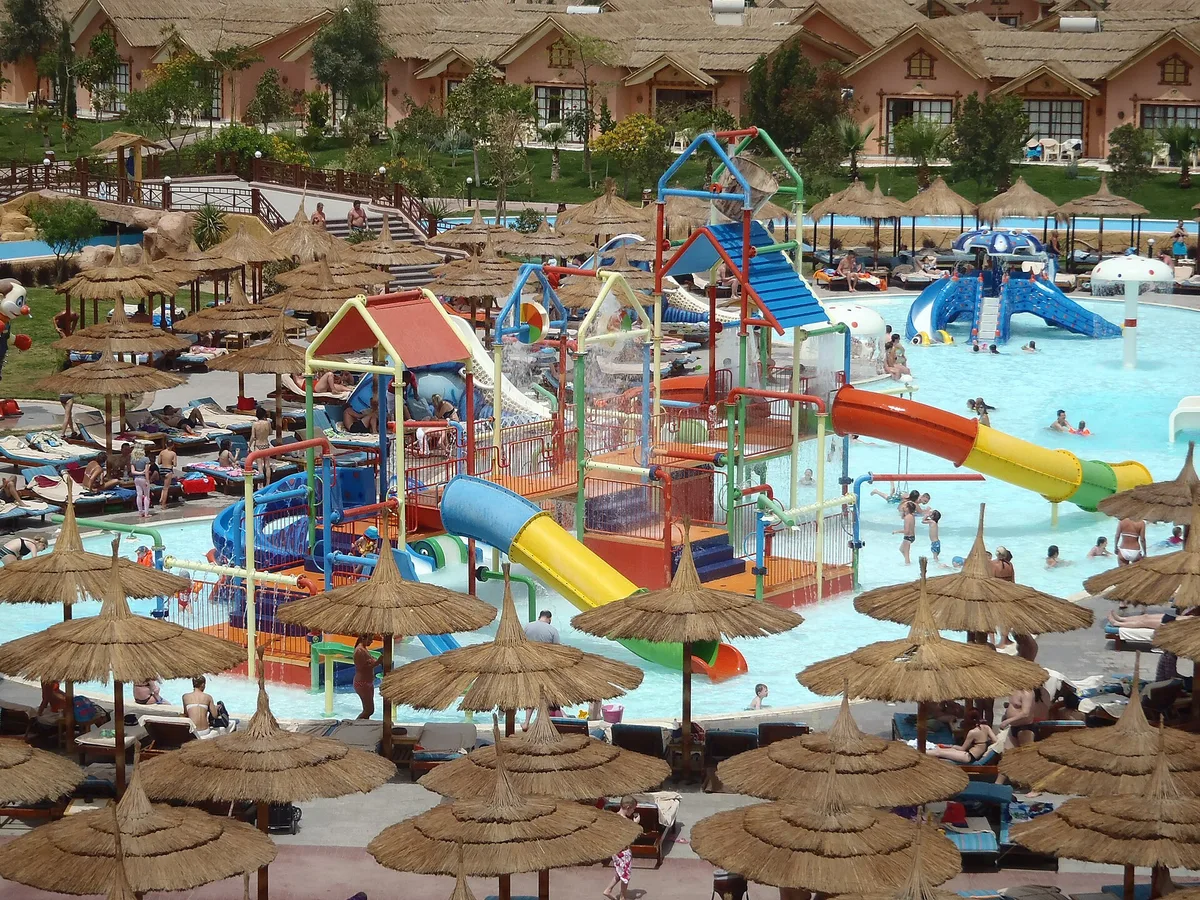
Hurghada is, quietly, one of the Mediterranean basin’s great family machines, and the reason is standing in the resort grounds: the aqua park. Several of the big Mamsha and Makadi resorts are built around water parks of slides, lazy rivers, wave pools and children’s splash castles, and the largest standalone name, the Jungle Aqua Park, operates as a resort in its own right with day access for non-residents.
For children under twelve the formula is close to unbeatable — slides all day, a sandy beach when the sea is required, and the reef as a first wildlife documentary when they are ready for a mask. Families booking on this logic should choose the resort by its water park first and its beach second, since the children will vote with their feet.
The town backs the resorts up with two indoor-to-shaded alternatives for the hottest hours or a rare dull day. The Hurghada Grand Aquarium, on the southern strip, is a large modern aquarium — billed as Egypt’s biggest — with the expected tunnel, tanks of Red Sea species, sharks and rays, and a small zoo element; as an introduction to what the children have been seeing through a mask, it does its job well.
More surprising is the Hurghada Museum, the first antiquities museum in the Red Sea Governorate, holding a collection of some two thousand pieces that run from pharaonic Egypt through the Coptic and Islamic periods. It is the one place in the resort where the country’s deep history stands in a gallery rather than on a day-trip poster, and an hour there gives older children (and their parents) the context that makes a Luxor trip land.
Practical family notes are mostly about the sun and the sea. The midday sun is genuinely fierce for small children even in winter — the resort rhythm of morning beach, shaded middle of the day and late-afternoon water exists for a reason. Reef shoes protect small feet on the flats, the buoyancy-vest system on snorkel boats works well for children who can swim a little, and most boat crews are practised and patient with nervous young snorkellers. Choose one boat day and one desert evening across a week, let the slides do the rest, and Hurghada is an easy family holiday to run.
The Marina, Al Mina Mosque and the Town After Dark
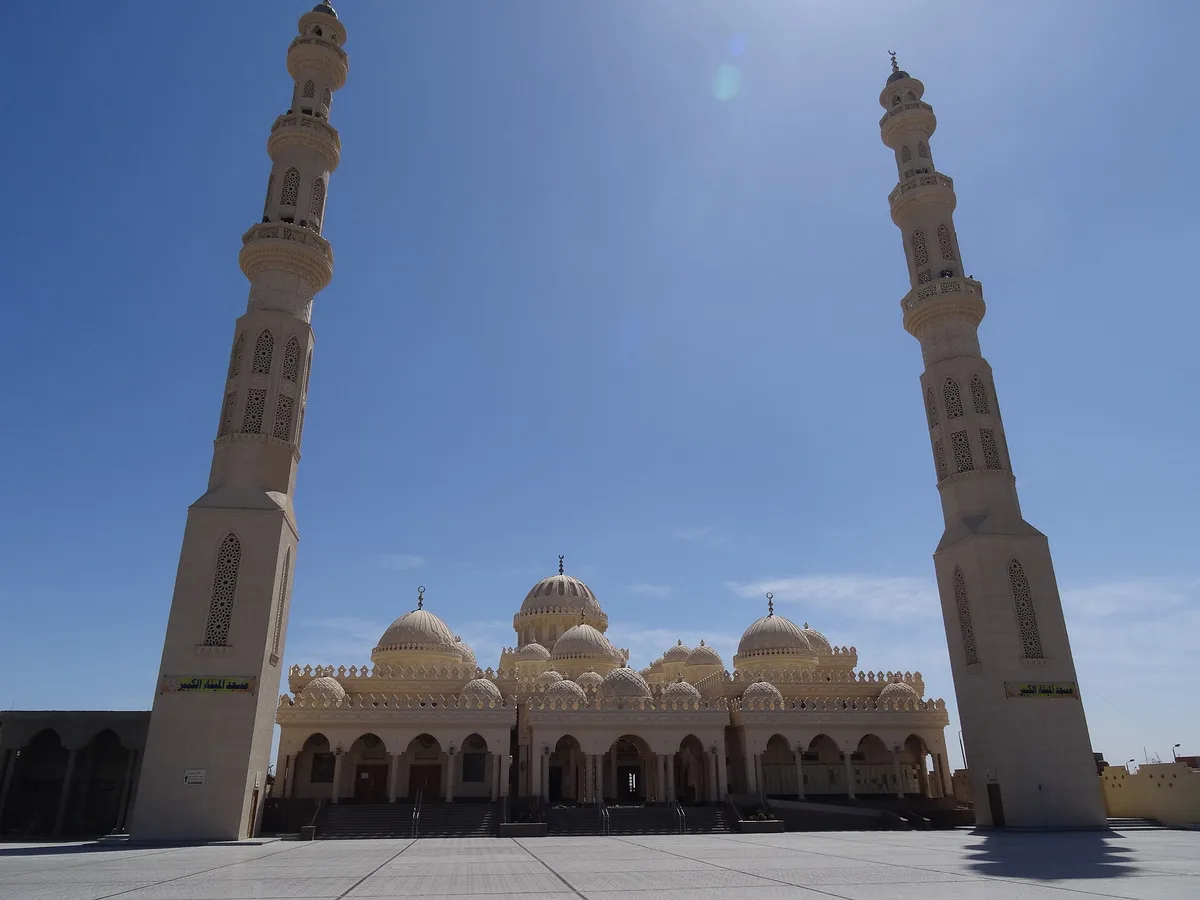
For its first decades Hurghada barely had a centre worth the name; what it has now is Sakkala’s harbour quarter, and one building gives it a skyline. The Al Mina Mosque — also written El Mina, and signed as the Grand Mosque of the port — is the largest mosque in the Red Sea Governorate, a white-marble building with carved domes and two minarets some forty metres tall standing over the fishing harbour.
It is a working mosque first and a sight second, and it is genuinely worth seeing: visitors dressed modestly are generally welcome to look inside outside prayer times, with coverings for women available at the door, and the courtyard in the late afternoon, with the boats below and the call to prayer over the harbour, is the most atmospheric spot in the town.
The fishing port and its fish market sit beside it — come in the morning for the catch coming in, and eat the same fish at lunch in the seafood restaurants that line this quarter, where the ordering system (choose your fish by weight, choose how it is cooked) is half the pleasure.
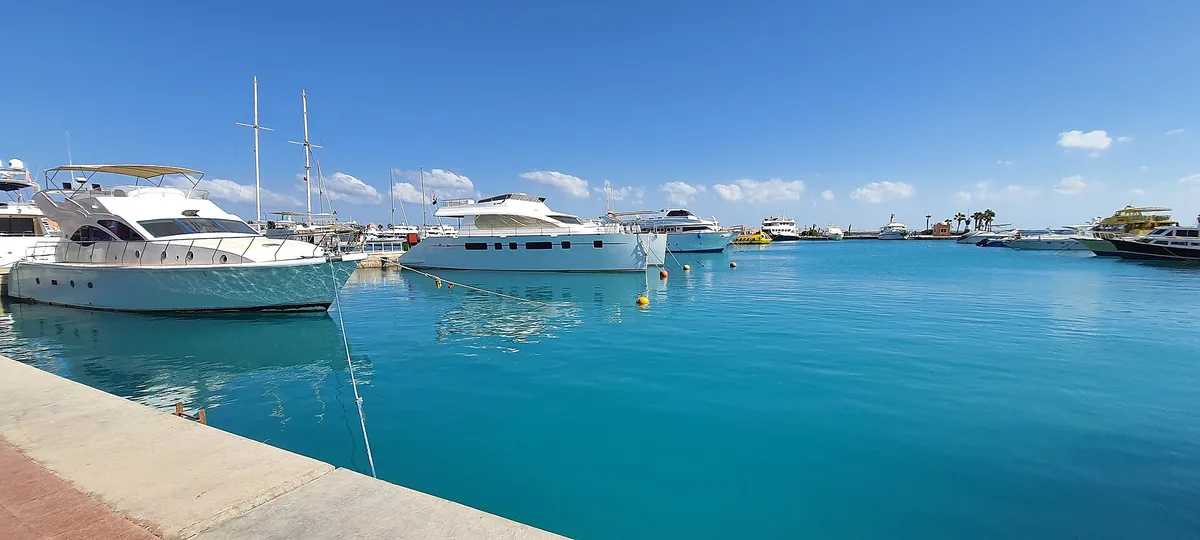
From the mosque it is a short walk to Hurghada Marina, the town’s polished evening room: a yacht marina with a promenade of restaurants, cafes and bars along the water, dive boats and excursion yachts moored in rows, and the whole resort turned out for the cool of the evening. It is unashamedly a tourist enclave, gated and tidy, and it is also the most pleasant place in Hurghada to eat by the water or take a drink after a boat day.
Sakkala’s Sheraton Road supplies the town’s louder nightlife — bars, clubs and late cafes — while Dahar after dark belongs to residents: tea houses, bakeries, market streets busy until late. In proportion, that is Hurghada’s night: a marina promenade, a strip of bars, a working town eating late, and most of the resort asleep early for the boats. Nobody comes here for Ibiza; the evenings are for fish, shisha smoke, sea air and tomorrow’s reef.
Day Trips – Luxor Above All, and Why It Hurts
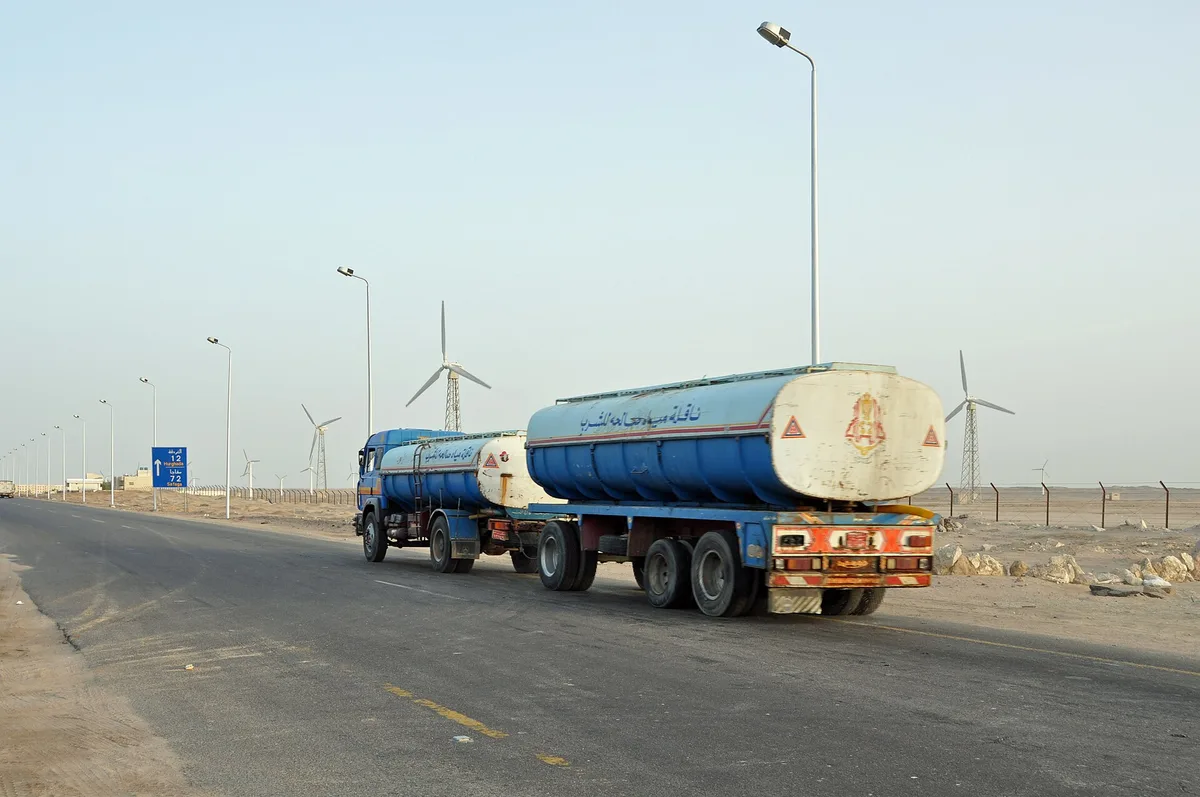
Every resort has one excursion that defines it, and Hurghada’s is Luxor. The temples of Karnak, the Valley of the Kings and the great mortuary temple of Hatshepsut sit on the far side of the Eastern Desert, reached by a road that runs south down the coast to Safaga and then turns inland, climbing through the mountains to Qena and the Nile Valley. It is the finest day trip in Egyptian resort tourism and also the most punishing, and this hurghada travel guide costs it honestly: rivals quote the drive at anything from three and a half to five hours each way depending on vehicle, stops and checkpoints on the desert road.
In practice that means a pick-up in the small hours, temples through the middle of the day, and a return late in the evening. You will see some of the greatest buildings on earth, and you will see them tired, in company, on a schedule.
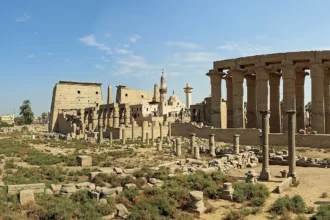
Taken forewarned, it is worth it — nothing on the coast competes with standing in Karnak’s hypostyle hall. The whole complex is inscribed as Ancient Thebes with its Necropolis on UNESCO’s World Heritage List, which is the authoritative place to read up on what the day actually holds. The standard organised day covers Karnak, the Valley of the Kings with entry to a selection of tombs, Hatshepsut’s temple and the Colossi of Memnon, with lunch and a guide; our Luxor Temple guide covers the city’s greatest single temple, which some itineraries include and others leave for the evening.
The honest alternatives deserve equal billing: staying a night or two in Luxor converts the whole experience from an endurance test into the highlight of the trip, and the resort pattern of flying or cruising the Nile between Luxor and Aswan before finishing with Hurghada beach days exists precisely because the geography rewards it. If the day trip is what you have, take the earliest departure, sleep on the morning drive, carry water and a hat for the Valley’s shadeless heat, and keep the next morning empty.
The second day trip runs the other way: Cairo by air. The flight is short, the day is long, and the standard pattern pairs the pyramids of Giza with the Egyptian Museum’s successor — our Grand Egyptian Museum guide covers the new museum at Giza in full. It is a feasible but expensive shape of day, and most visitors are better served giving Cairo its own nights.
Closer and quieter, some operators run trips north into the mountains to the Coptic monasteries of St Anthony and St Paul, among the oldest Christian monasteries in the world, hidden in wadis where the desert meets the sea hills — a long, silent, genuinely different day, with modest dress required. And the Red Sea’s southern towns make a gentler road day: the old port of El Quseir and the dive bays toward Marsa Alam for travellers who collect coastlines. Choose by what your trip lacks — temples, capital, silence or more sea — rather than by the brochure’s enthusiasm.
Getting to Hurghada and Getting Around
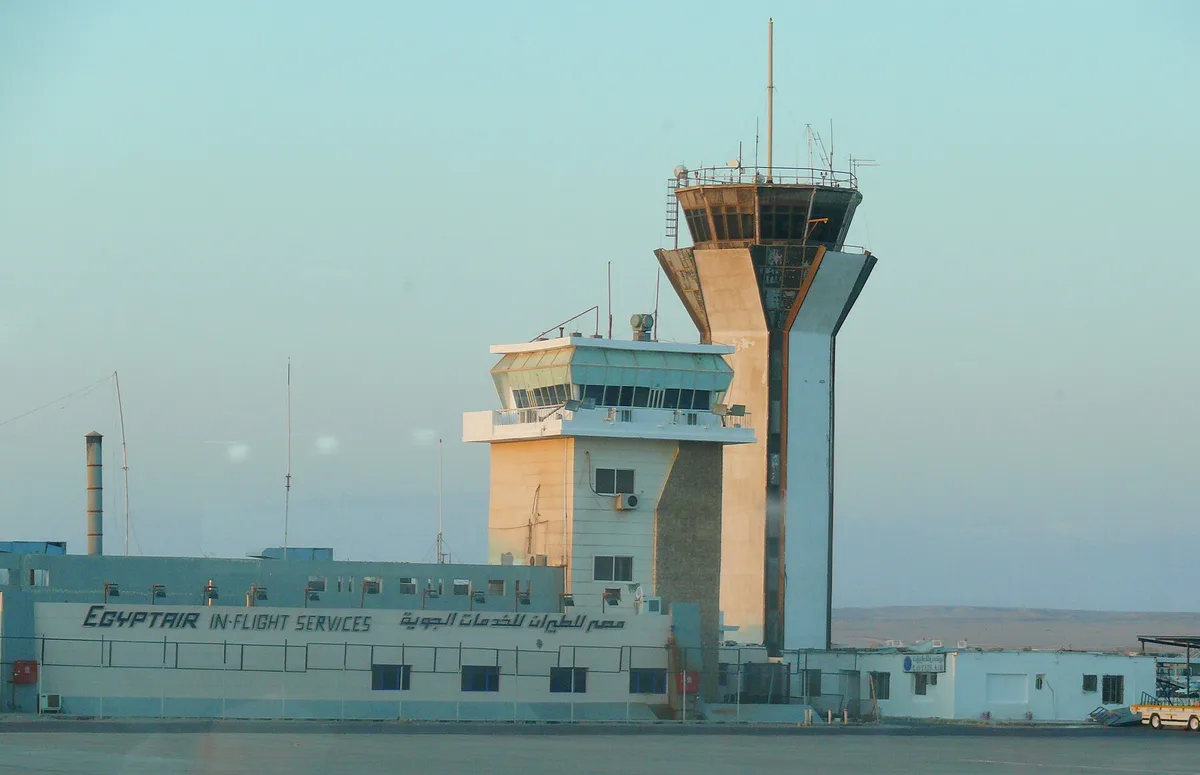
Most visitors arrive the easy way: Hurghada International Airport, set just inland from the El Mamsha strip, is Egypt’s second-busiest airport and one of its most connected, with direct flights from cities across Europe — many of them seasonal and charter-driven — alongside domestic services from Cairo of about an hour.
The landings are part of the show, descending over desert and reef-flat turquoise. Arrival mechanics are standard for mainland Egypt: the tourist visa formalities happen at the airport for most nationalities (visa on arrival or an e-visa arranged beforehand; the exact current rules for your passport are on the official e-visa portal, and they matter — Hurghada is mainland Egypt, so the stamp-free Sinai arrangement does not apply), followed by the gauntlet of transfer desks, taxi offers and SIM-card stalls.
Package travellers are met by their operator; independents should know that the airport taxi negotiation is the most theatrical in the town’s economy, and that pre-booked transfers or ride-hailing pickups remove the sport entirely.
The overland options matter for travellers combining Hurghada with the Nile. The road from Cairo runs some 455 kilometres via Ain Sokhna — five to six hours by car or intercity bus, scenic in its desert half and not a journey to schedule tightly against a flight. Long-distance buses leave from the stations in Dahar, with the big national operators running air-conditioned coaches to Cairo, Luxor and beyond; the Luxor road via Safaga and Qena is the same corridor the day trips use, and services along it are scheduled around the checkpoints and convoy habits of a desert highway. There is no railway anywhere near Hurghada; the train belongs to the Nile Valley half of the trip.
Inside the town, movement runs on three systems. Taxis are everywhere and mostly unmetered in practice — agree the fare before the door closes, keep small notes for the purpose, and treat the negotiation as the theatre it is. Ride-hailing apps operate in Hurghada and have quietly become the independent traveller’s best tool: a fixed price on the screen, a car that finds you, no performance required.
Local minibuses run the main coastal road for a small set fare and are how the town’s workforce commutes — usable for the confident, stopping where you flag them, and not designed for luggage or beach gear. Distances deceive in a forty-kilometre strip: Sakkala to the far Mamsha resorts is a proper drive, El Gouna is a trip of its own, and the resorts’ shuttle buses to Sakkala and the marina exist because of it. Plan the map first and the week organises itself.
When to Go – a Hurghada Travel Guide to Seasons, Wind and the Sea
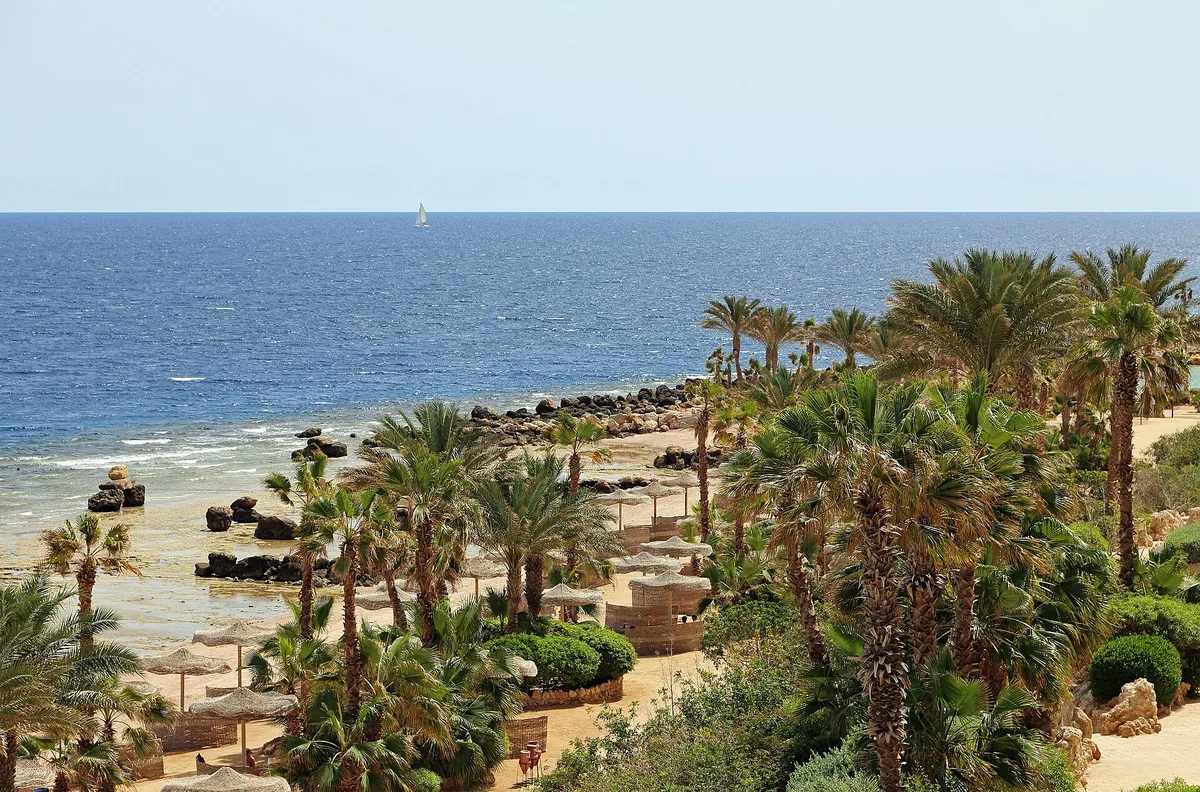
Hurghada’s climate is the simplest in this guide to summarise: it is a desert by the sea, and the sea does the moderating. Rain is a curiosity — a few millimetres in an average year — and sunshine is effectively guaranteed in every month. What changes with the seasons is the air, and the right season depends on whether you are coming mainly for the water, the temples or the sunbed.
The sea first, because it is the constant. Water temperatures sit in the low-to-mid twenties Celsius all year: coolest in February and March at around twenty-one degrees — swimmable for most people, with a thin wetsuit making long snorkels and dives comfortable — and warmest in August at around twenty-eight degrees, when a dive feels like a bath. The air swings much wider. Winter days, December to February, are mild and lovely, typically in the low twenties, with evenings cool enough for a jacket and the occasional windy spell; this is prime season for the Luxor day trip, for the desert and for travellers who wilt in heat.
Spring and autumn — March to May and September to November — are the sweet spot for the classic beach-and-reef holiday: hot days without the furnace, warm sea, long evenings. Summer, June to August, is genuinely hot, with afternoon highs in the high thirties, and the holiday reorganises itself around shade, water and the evening; divers and kitesurfers, who get reliable wind and the warmest sea, are summer’s happiest visitors, and resort prices reflect the fact that northern families will only travel then.
Wind deserves its own sentence, because it is Hurghada’s second climate. A northerly breeze freshens on many afternoons in every season, whitecaps the surface and can cost a snorkel boat its second stop; it is also what makes the coast a serious windsurfing and kitesurfing destination, with centres and flat-water lagoons in El Gouna and Soma Bay built around it.
Spring can add brief khamsin episodes — hot, dusty desert wind that hazes the sky for a day or two. None of this should put anyone off; it should shape the packing (a light jacket in winter, a rash vest and a hat all year) and the planning (reefs early in the day, Luxor in the cool months, slides and shade in August).
Where to Stay, Zone by Zone
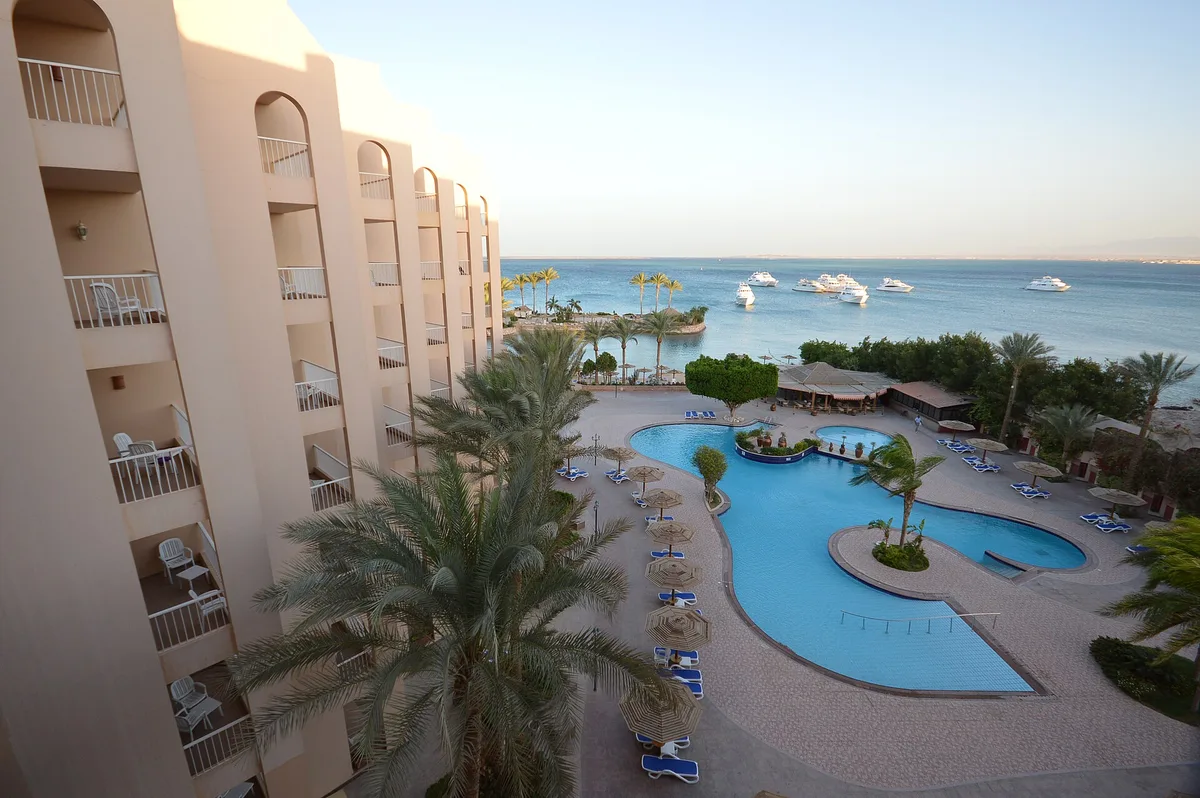
Forget star ratings for a moment. The first thing any hurghada travel guide should tell you is that in Hurghada the zone is the decision, and the hotel is the detail. The zones along the strip sell genuinely different holidays, and matching yourself to the right one matters more than any single property’s lobby.
Divers and independent travellers belong in and around Sakkala and Dahar. Sakkala puts the marina, the dive-boat jetties, the fish restaurants and the evening town at walking distance, in mid-range hotels and apartment blocks; Dahar, just north, is cheaper, more local and more workaday, with small hotels for travellers who spend their days on boats and their evenings in town.
What you give up is the resort beach — you will use beach clubs by day — and what you gain is Hurghada itself, plus the shortest transfers to the sea. Families belong on the El Mamsha strip and in Makadi Bay, where the big all-inclusive resorts concentrate: aqua parks behind the lobby, kids’ clubs, animation teams, wide sandy entries into the sea and everything inside the gate. Read the beach as carefully as the slides — a sandy entry suits small children, a jetty-and-reef beach suits snorkelling teenagers — and remember that a Mamsha resort means taxis for any evening outside.
Couples seeking quiet polish should look at the southern enclaves and El Gouna. Sahl Hasheesh offers the manicured version: big, calm resorts along a promenade, a house reef and room to breathe. Soma Bay trades distance for space, wind and an upmarket calm suited to kitesurfers, golfers and spa travellers. El Gouna is the choice for anyone who wants to eat out, stroll and feel they are somewhere: lagoons, marinas, restaurants and villas, at the price of a longer airport transfer and beaches that are pleasant rather than spectacular.
El Ahyaa, at the town’s northern edge, is the value play — newer mid-range resorts and apartments, quieter, with beach clubs filling the gaps — for long stays and budget-conscious repeat visitors who know the town already.
One mechanism rules them all, and it is the Egyptian resort system itself: the all-inclusive wristband. It is genuinely good value for families who will use it, and a gilded cage for travellers who will not — if you intend to eat in Sakkala’s fish restaurants, dive with a town centre and spend evenings at the marina, a small hotel on a breakfast basis will serve you better and cost you less in everything except buffet access. Decide which traveller you are before the zone, and the zone will choose itself.
The Honest Downsides – Hassle, Walls and a Reef Under Pressure
A hurghada travel guide that only sells is a brochure, so here is the other side of the ledger, plainly. Hurghada’s hassle is real and it is front-loaded: the airport taxi negotiation, the excursion sellers working the beach, the shopkeepers whose invitation to “just look” is the opening move of a long game, the perfume and papyrus detours that pad out cheap tours. It is rarely aggressive, however, and it is entirely manageable — a friendly, definite “la, shukran” (no, thank you), prices agreed before services start, excursions booked from operators you have chosen rather than voices that chose you — but it tires people, especially in a first week, and pretending otherwise would be brochure work.
The second downside is built into the walls. The all-inclusive system that makes Hurghada easy also isolates: it is entirely possible to spend a week here and meet no Egyptian who is not serving you, eat no food the town eats, and learn nothing of the place except its reef. The cure is available — Dahar’s market, a fish lunch by the port, a marina evening, a mosque courtyard at prayer time’s edge — but it requires walking out of the gate, and the gate is designed to make that feel unnecessary.
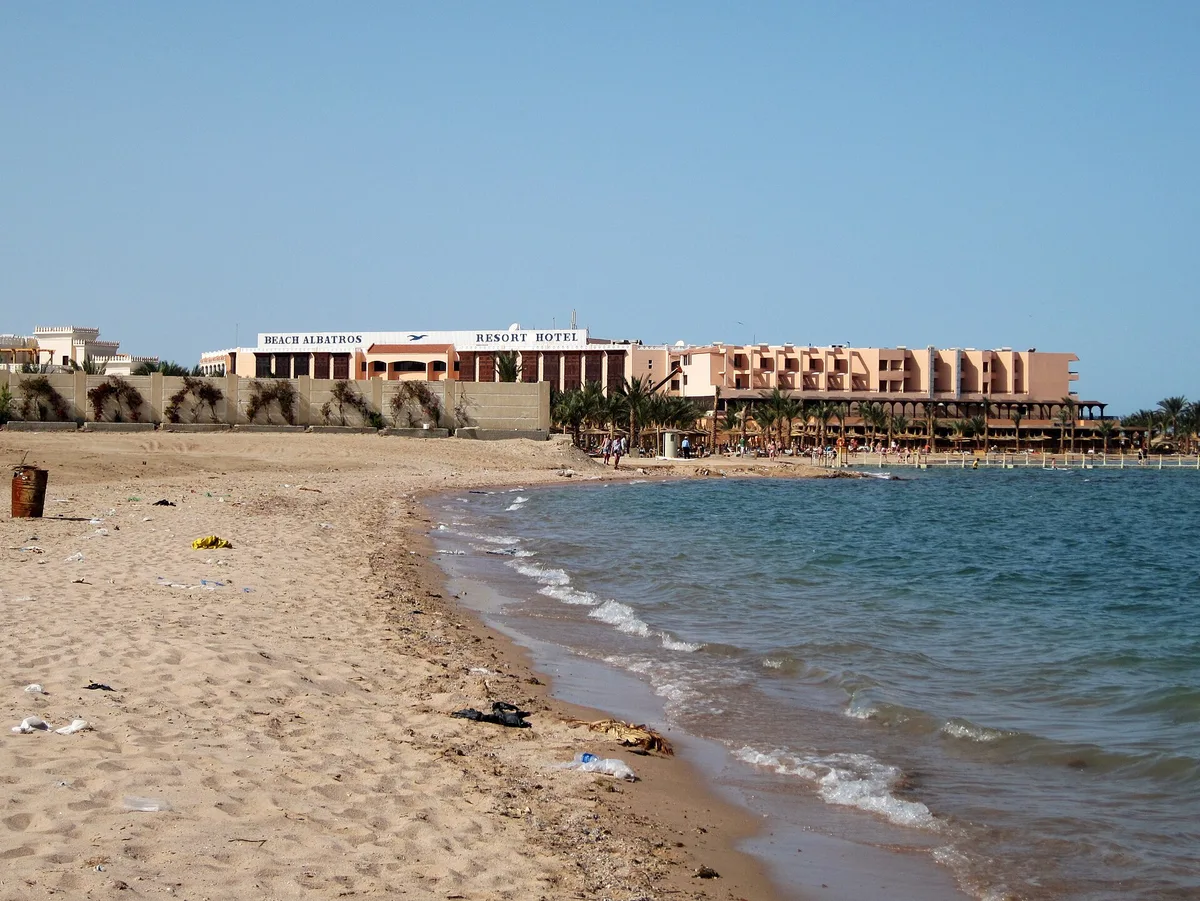
Third, the strip itself is uneven: stretches of half-finished construction, dusty vacant plots and tired properties sit between the polished resorts, and outside the gates the town’s relationship with litter is, as the photograph above shows, not the one in the brochures.
The last downside is the one that matters most, because it is the asset itself. Research on this coast has estimated that Hurghada’s reefs have lost around half of their coral cover over three decades of intensive tourism — anchor damage in the early years, construction sediment, sewage pressure, and now a warming sea. The reefs remain beautiful and worth travelling for; they are not what they were, and their future depends on exactly the behaviour the snorkelling section of this guide nagged about: moorings instead of anchors, fins off the coral, no feeding, no touching, reef-conscious operators chosen over cheap ones.
Travel here gently and the place has a chance of staying worth the flight. That is the honest deal at the heart of Hurghada, and it is a fair one.
Frequently Asked Questions
Is Hurghada safe for tourists? The resort operates with a visible security presence at the airport, at resort gates and along the strip, and millions of visitors a year holiday here without incident. Security conditions in any destination can change, so the sensible rule is the one used throughout this site’s Egypt coverage: check your own government’s current travel advice for the Red Sea resorts before you book and again before you travel, register your trip if your country offers it, and take the standard precautions with roads, water activities and valuables that you would take anywhere.
Do I need a visa for Hurghada? For most visitors, yes — a standard Egypt tourist visa, obtained on arrival at the airport or in advance through the official e-visa portal. The stamp-free entry arrangement that covers the Sinai resorts such as Sharm El Sheikh does not cover Hurghada, because Hurghada is on the mainland; arriving on a Sinai-only basis will not work here. Fees and eligibility change and differ by nationality, so confirm the current position on the official portal for your passport rather than relying on any figure printed in a guide — including this hurghada travel guide.
Can I drink the tap water? Treat it as no. Tap water in the resorts is fine for showers and teeth-brushing for most people, but drinking water should be bottled or filtered — resorts supply it abundantly — and salads and ice in established hotels and restaurants are generally handled with treated water. On boats, drink what the crew provides from sealed bottles.
Hurghada or Sharm El Sheikh? They are different offers. Sharm sits in Sinai, under the Sinai visa arrangement, with Ras Mohammed’s celebrated reefs on its doorstep and no realistic day trip to the Nile. Hurghada is mainland: the standard visa, slightly more workmanlike near-town reefs, a bigger and more varied town behind the resorts, and the Luxor day trip that Sharm cannot do. History travellers end up in Hurghada; pure reef devotees argue for Sharm; families split the difference on price and flight times.
How many days do I need in Hurghada? Three full days cover the essentials — a Giftun boat day, a snorkelling or diving day and a town-and-desert day. Four to five lets the holiday breathe, with the Luxor day trip added without the week becoming a programme. Beyond a week, most visitors are either divers, kitesurfers or happily resort-based, and the strip rewards all three.
When is the sea warm enough to swim? All year, with an asterisk. The sea never falls below roughly twenty-one degrees, which most northern visitors find perfectly swimmable in midwinter; for long snorkelling sessions between December and March, a short wetsuit or a hired one from the boat makes the difference between forty minutes and two hours. From April to November no one asks this question at all.
Can non-swimmers enjoy the reef? Yes — this is one of Hurghada’s genuine strengths. Glass-bottom boats and semi-submersibles run daily from Sakkala, buoyancy vests and towed floats make boat snorkelling accessible to the nervous, and the beaches’ sandy entries give paddlers their version of the same water. The reef is not reserved for the athletic here.
The Short Version of This Hurghada Travel Guide
Hurghada is a fishing village that became a forty-kilometre resort, and it works best when you holiday in both halves of that sentence: a boat day to Giftun Island’s white sand and reefs, a morning in Dahar’s market streets, fish by the port under Al Mina’s minarets, an evening on the marina promenade, and — if your trip can carry it — the long, tiring, unforgettable road day to Luxor. Choose the zone before the hotel, agree every price before the service starts, treat the reef as the borrowed treasure it is, and time the whole thing for spring or autumn if you can.
Do that, and the place delivers what it promises: warm clear water over living coral in the middle of the northern winter, a desert glowing behind the beach, and a town that is more interesting than its wristbands suggest. The pharaohs can wait a few days. The sea is here.