Morocco is the rare country where the transport is half the education. In a single week you can ride a double-decker high-speed train at speeds no British motorway allows, cross the High Atlas in a shared Mercedes older than you are, buy a coach ticket that is secretly also a train ticket, and finish the trip carrying your own bag down a lane in Fes that no vehicle wider than a donkey cart has ever entered. None of these systems is broken, and none of them works quite the way a first-time visitor expects. Each one has a logic, and the logic is learnable in advance — which is what this guide to getting around Morocco is for.
The shape of the country decides the shape of the systems. Morocco’s cities form a rough triangle on the map: Tangier at the northern tip, Marrakech at the southern inland corner, Fes at the eastern one, with Casablanca and Rabat along the Atlantic edge. A modern rail network covers that triangle’s main corridors superbly and then stops — there is no train to Essaouira, Agadir, Chefchaouen or the desert, and there never has been. Beyond the rails, two bookable coach networks and one gloriously informal shared-taxi system fill the map, and inside the cities a third layer of petit taxis, trams and buses takes over. A good Moroccan trip is nearly always a chain of two or three of these systems, chosen leg by leg.
This guide explains how each system actually works — how its seats are sold, where its vehicles leave from, what its unwritten rules are — and then applies them to the journeys people really make. It prints no fares and no timetables, deliberately. Moroccan fares move with season and booking window, and the current number for any journey lives in one trustworthy place, the operator’s own site or station. What does not change is the machinery, so the machinery is what you get. Our wider Morocco travel guide covers the planning shape of a first trip; this page is its transport companion.
Getting Around Morocco at a Glance
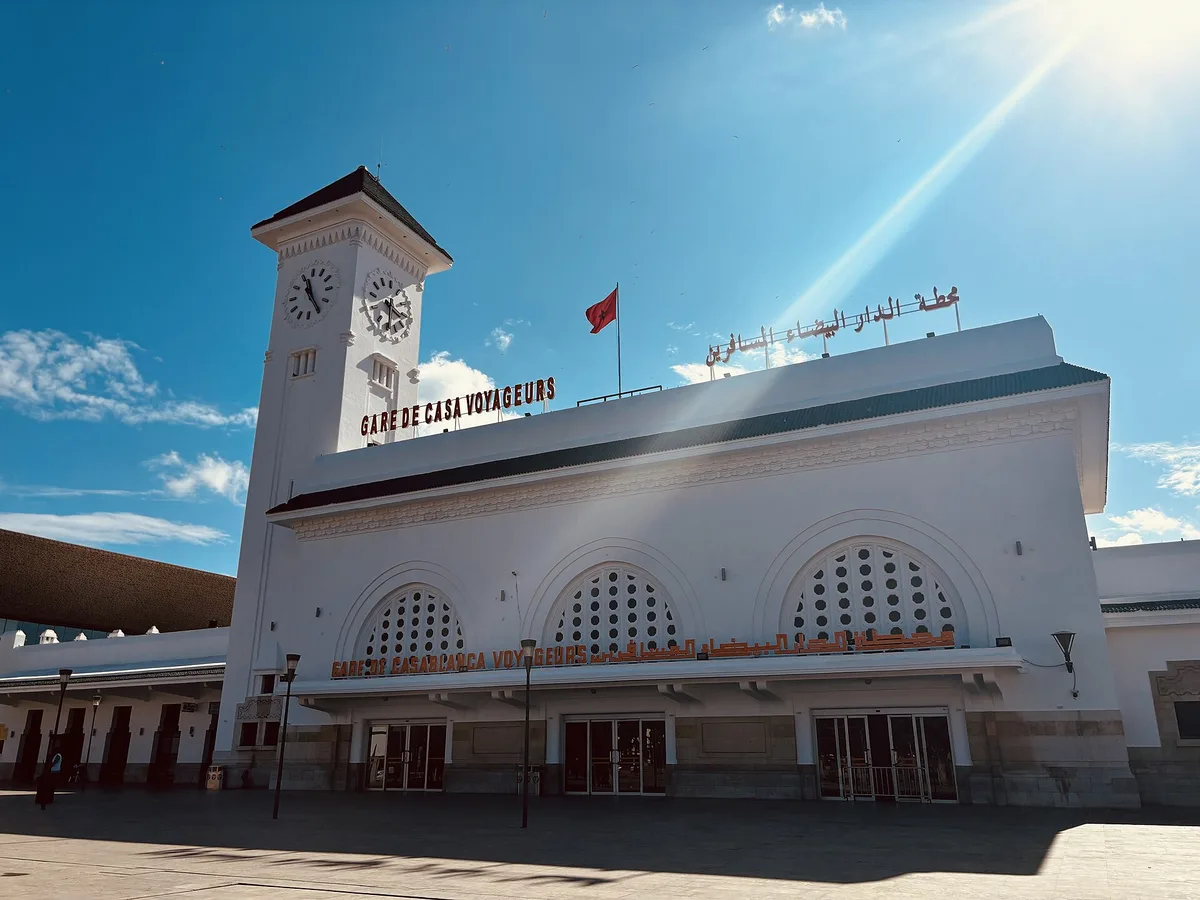
Here is the whole comparison on one screen. The sections after this table take each row in turn, and the route sections near the end apply it to the classic journeys. Read the “watch out for” column as seriously as the others — in Morocco the catch is rarely the vehicle itself; it is the boundary where one system ends and another has to begin.
| Option | Best for | How it works | Watch out for |
|---|---|---|---|
| Al Boraq high-speed train | Tangier, Kenitra, Rabat and Casablanca, fast and in comfort | Every seat reserved in advance, airline-style pricing that rewards early booking | One corridor only — it goes nowhere else, and the right station in Rabat is Agdal, not Ville |
| Classic ONCF trains | Marrakech, Fes, Meknes, Oujda and the Casablanca spine | First and second class, bought online or at the station | In second class on classic trains a ticket buys travel, not always a specific seat |
| CTM and Supratours coaches | Everywhere the rails miss — Essaouira, Agadir, Chefchaouen, the desert roads | Fixed departures, numbered seats, booked online or at their own stations | Hold luggage goes through a separate luggage counter — keep the receipt |
| Local buses | Short hops and small towns on a budget | Leave from the gare routière when reasonably full | Variable quality, tout pressure at the station doors, no meaningful timetable |
| Grand taxis | Intercity hops, mountain and rural routes, odd hours | Six seats sold one by one; the car leaves when full, or when you buy the empty seats | No timetable at all — your departure time is a negotiation between patience and money |
| Petit taxis | Inside one city, short hops, station-to-medina runs | Metered small cars, city limits only, maximum three passengers | The meter conversation happens before the car moves, not after |
| Trams and city buses | Casablanca and Rabat-Salé cross-city trips | Modern tram networks plus city bus fleets, prepaid tickets and cards | Trams serve two cities only; elsewhere the bus network needs local explanation |
| Rental car | The Atlas, the gorges, the desert fringe, travelling as a group | Your own clock on a good road network of toll motorways and national roads | Medina parking, checkpoint etiquette, and mountain passes that punish a rushed day |
| Domestic flights | Casablanca to the far south, Dakhla and Laayoune above all | A hub-and-spoke web centred on Casablanca | For most classic routes the train or coach is simpler door to door |
| Private driver | Desert tours and multi-stop days without driving yourself | A car and driver hired by the day or the journey, price agreed in advance | A driver is not a licensed guide — agree exactly what the day includes |
The pattern underneath the table is the real lesson. Morocco rewards mixing: the train where the train is superb, the coach where the rails run out, the shared taxi where neither reaches, and your feet for the last stretch that no wheel can do. Travellers who force one row onto every leg tend to have one bad day — the train that does not exist to the coast, the grand taxi waited on too long, the rental car parked uselessly outside a medina wall. The rest of this guide is about making the mix deliberate.
Trains – the Spine of the Country
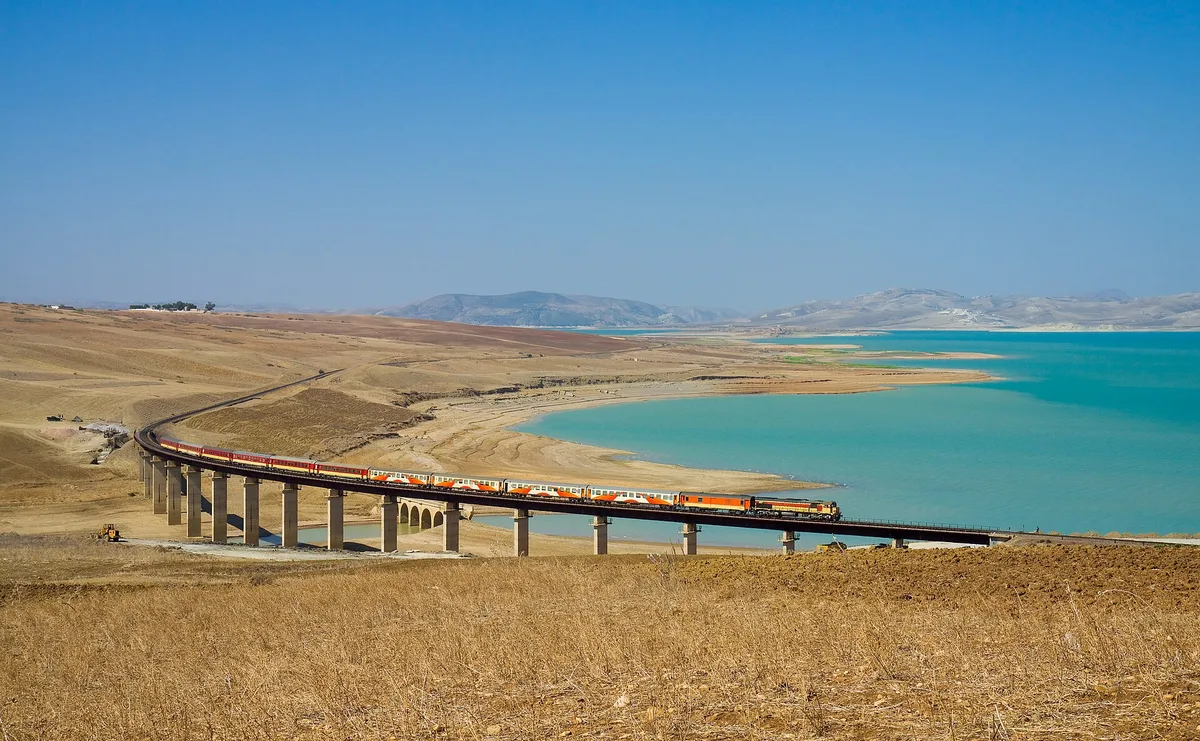
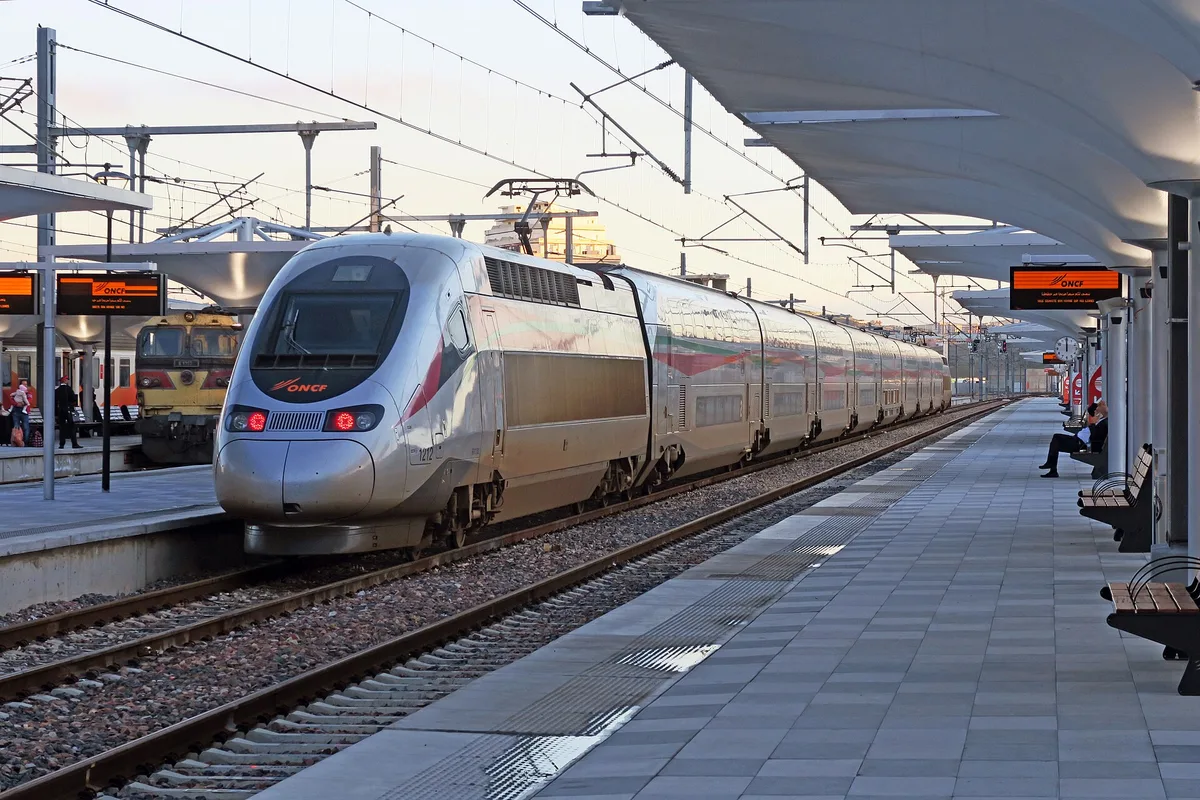
Morocco’s railway, run by the national operator ONCF, is the strongest single piece of transport infrastructure a visitor meets anywhere in North Africa. It is really two railways wearing one brand. The first is Al Boraq, the high-speed service that has run since 2018 between Tangier and Casablanca by way of Kenitra and Rabat — the first high-speed line on the African continent. The second is the classic network, branded Al Atlas on its long-distance services, which links Casablanca with Marrakech to the south and with Meknes, Fes and Oujda to the east, with branches to Safi, El Jadida, Khouribga and Nador. Between them, the trains cover the whole northern triangle and the Marrakech corridor, with a punctuality and calm that makes the train the default answer wherever it runs.
What the railway does not do is equally important. The rails never reach the Atlantic resorts south of Casablanca, the blue town in the Rif, the Atlas valleys or the Sahara fringe. Essaouira, Agadir, Chefchaouen, Ouarzazate and Merzouga are all road destinations. A high-speed extension south from Kenitra towards Marrakech is under construction as part of the country’s 2030 World Cup preparations, but it is not a service you can plan a trip around today. So the practical map is two-layered: rail for the corridors it owns, road for everything else, and the skill of getting around Morocco is knowing exactly where the handover points are.
Al Boraq – the High-Speed Corridor
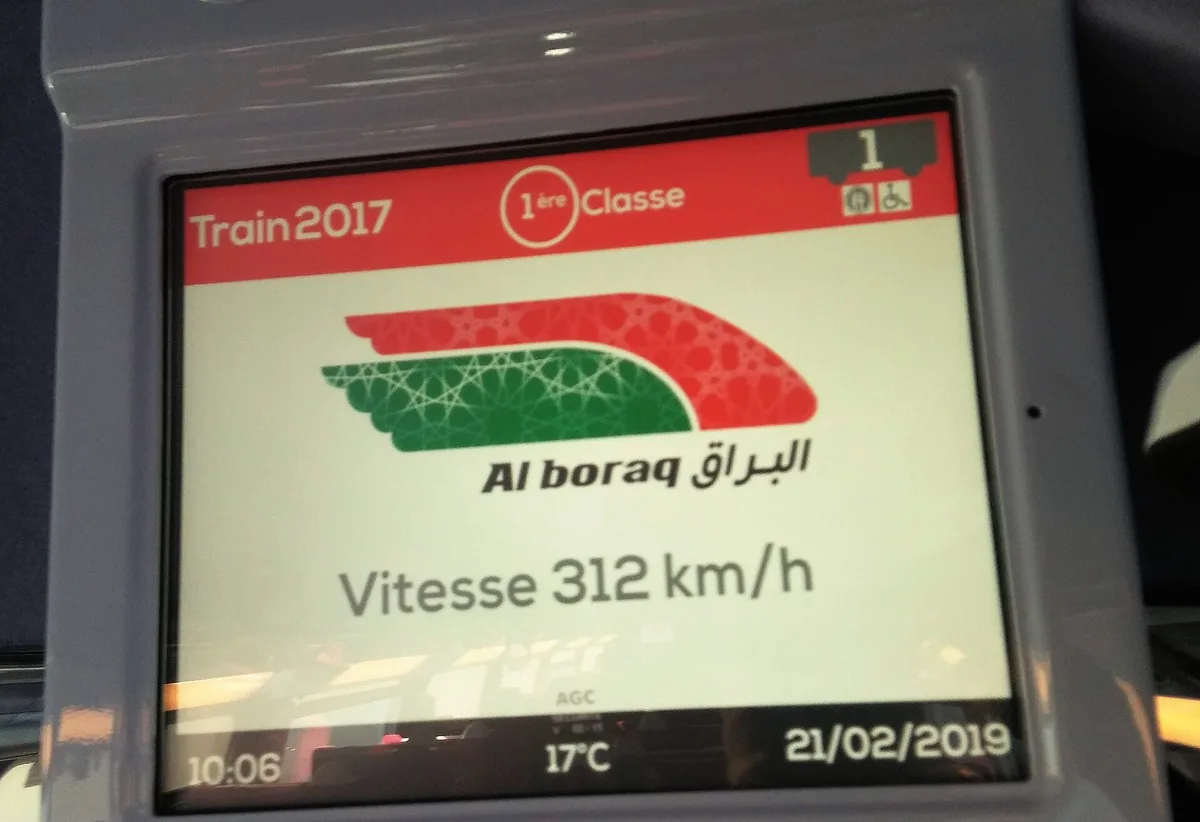
Al Boraq is the closest thing Moroccan transport has to a magic trick. The journey between Tangier and Casablanca that once filled the better part of a day by classic train now takes just over two hours end to end, with stops at Kenitra and Rabat. The speed lives on the purpose-built line between Tangier and Kenitra, where the double-decker trains run at up to 320 kilometres per hour; south of Kenitra they continue on upgraded classic track at conventional speeds. The trains are French-built duplex sets, two decks of airline-style seating, and the whole product — reservations, e-tickets, dynamic pricing — is modelled on European high-speed practice.
The stations are the detail that catches people. In Tangier the service uses Tanger Ville, the station by the port and medina. In Rabat it uses Rabat Agdal, the rebuilt station in the modern Agdal district — not Rabat Ville, the older station nearer the medina that classic trains use, and confusing the two is the single most common Al Boraq mistake. In Casablanca it uses Casa Voyageurs, the city’s main station. Kenitra’s station serves the northern corridor, and some travellers heading for Chefchaouen ride Al Boraq to Tangier and take the road from there. Frequency on the corridor is high by Moroccan standards, with departures through the day — but every seat is reserved, so “turn up” still means “buy first”, and on Fridays, Sundays and holiday eves the trains fill properly.
Pricing works like an airline, and understanding that is worth more than any fare figure. Al Boraq fares are flexible: the same seat costs less bought weeks ahead on a quiet midweek service and more bought on the day for a Friday-evening departure, and ONCF sells the cheaper inventory first. The mechanism to copy is simple — decide your corridor days early, book them as soon as your dates are fixed on the official ONCF Voyages site or app, and treat the classic trains, where pricing is far more static, as the flexible part of the plan. First class buys a wider seat in a two-plus-one layout and a quieter carriage; second class is two-plus-two and entirely civilised. Both are reserved, both are air-conditioned, and on a two-hour run the honest difference is elbow room rather than experience.
The Classic Network – Al Atlas and the Branches
The classic network is the railway most of Morocco actually uses, and for the visitor it owns two journeys above all. The first is Casablanca to Marrakech, the line south across the plains that delivers you to Marrakech’s handsome modern station in Gueliz in under three hours, ready for a petit taxi to the medina gates. The second is the eastern line from Casablanca through Rabat and Meknes to Fes and on to Oujda near the Algerian border — the way to the imperial cities, and the line our traveller most likely rides between Fes and the coast. Long-distance trains on these routes carry the Al Atlas name, run in first and second class, and include some of the most useful station geography in the country: Fes station sits in the ville nouvelle a short taxi ride from the medina gates, Meknes has two stations of which the smaller Al Amir Abdelkader is the handy one for the medina side, and Rabat Ville serves the capital’s classic trains while its high-speed sibling uses Agdal.
Around those two arteries sits a web of shorter services. Commuter-style trains, branded TNR, shuttle intensively between Casablanca, Rabat and Kenitra and out to Mohammed V Airport. Conventional trains also run north from Casablanca to Tangier on the classic line, west to El Jadida, and on the eastern branches towards Nador and the phosphate country around Khouribga. Night trains with couchettes have historically run on the longest eastern hauls; their current form is a detail to confirm on the ONCF site when you book, because the classic network’s sleeper and seasonal services change more often than its daytime spine.
The character of the classic trains differs from Al Boraq in one way that matters practically. They are sociable, compartment-based railways on the older routes — first class in six-seat compartments, second class in eights on the oldest stock, with newer open-plan carriages mixed through the fleet — and the journey is part of the sightseeing in a way the sealed speed of the high-speed line is not. Tea and coffee trolleys work the aisles, the windows frame the plains and the Middle Atlas foothills, and nobody is in a hurry. Take Al Boraq when the day is about arriving; take the classic line when the day can be about travelling.
Classes, Reservations and Buying the Ticket
The class system is simple to state and worth understanding precisely, because it decides whether you sit down. On Al Boraq, every ticket in both classes carries a reserved seat — your carriage and seat number are on the ticket, and the system is exact. On classic long-distance trains, first class also comes with an assigned seat, in a six-berth compartment or a two-plus-one open carriage depending on the stock. Second class on the classic network is the flexible product: comfortable enough, and on quiet services you simply take a seat, but the ticket has historically guaranteed travel rather than one specific seat, which means on the busiest departures — Friday afternoons, holiday eves, the Marrakech line in high season — second class can mean standing in the corridor until someone gets off. That single mechanism explains the advice every Moroccan traveller eventually gives: on a long classic leg, first class is not a luxury purchase, it is a seat guarantee, and its premium over second is the smallest money in the trip.
Buying is equally mechanical. ONCF sells through its Voyages website and app with e-tickets you show on a phone, through ticket machines and counters in stations, and through authorised travel agencies in the cities. Stations in Morocco are good places — the main ones are landmarks with staffed counters, and buying in person a day ahead for a classic train remains completely normal. The online system occasionally refuses foreign bank cards at the payment step; the station counter or a city agency is the standard workaround, not a crisis. Names and ID matter — carry the passport you booked with, because ticket checks on board are routine and the inspector’s tablet knows what the reservation says.
One last piece of train craft: luggage. Moroccan trains have no checked baggage system; what you can carry, you carry, into the racks at the carriage ends and the shelves above the seats. Big cases ride at the carriage ends, and keeping them in sight is your job — the quiet argument for packing a bag you can lift into an overhead rack yourself.
Coaches – the Network That Reaches Everywhere Else
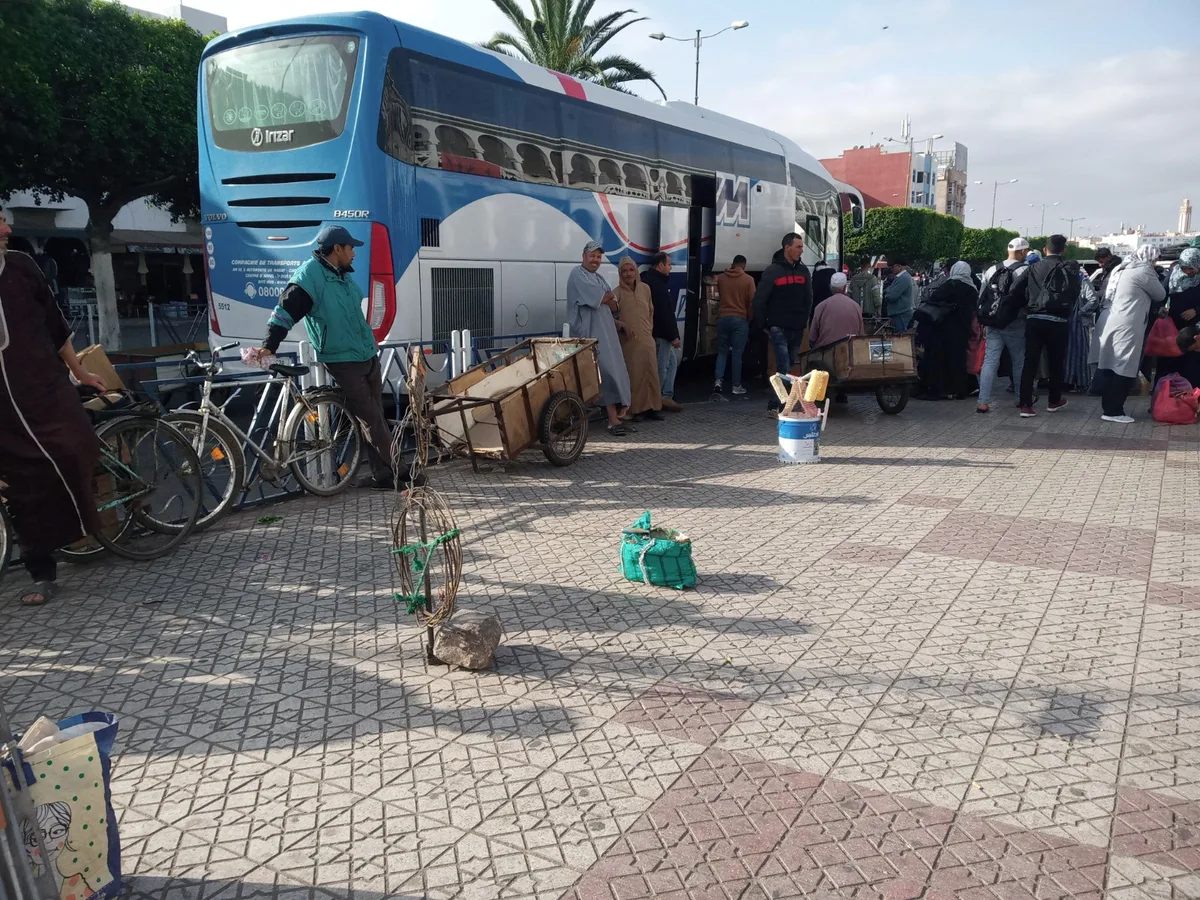
Where the railway stops, the coach takes over, and it takes over completely. Every destination the trains miss — Essaouira, Agadir, Chefchaouen, Ouarzazate, the long road south-east to Merzouga and the dunes — is coach country, and two national networks do the work. Between them, CTM and Supratours run modern air-conditioned coaches on fixed routes, sell numbered seats through real booking systems, and keep to their schedules. Underneath them sits a third layer of local bus companies that serve everything the big two do not, at lower prices and lower polish, from the town bus stations. Understanding which of the three layers a given journey belongs to is most of getting around Morocco by coach.
A coach journey also has a different rhythm from a train journey, and it is worth setting expectations before the first one. Coaches stop — at stations in the towns they pass, and at roadside cafés on the long hauls for tea, toilets and a leg-stretch — and on mountain roads they travel at the speed the bends allow, which over the High Atlas you should build into the day rather than resent. The reward is reach and scenery: the coach over the Tizi n’Tichka pass or down the coast to Essaouira shows you the country the railway never sees, through a big window, with your bag in the hold and nothing asked of you but patience.
CTM and Supratours – the Two Bookable Networks
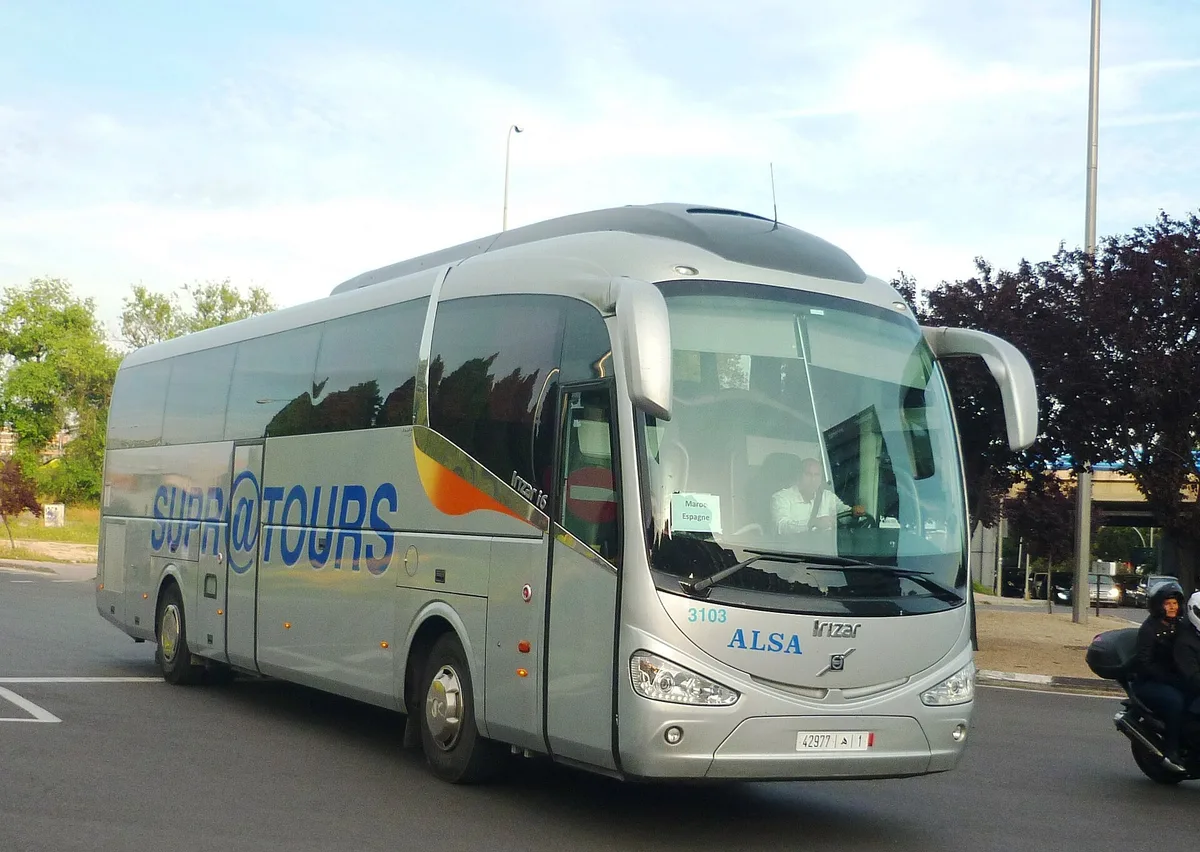
CTM — the Compagnie de Transports au Maroc, carrying passengers since 1919 — is the country’s largest coach operator and the default first check for any road journey. Its network is the widest in Morocco, its coaches run from its own stations in the big cities as well as from the general bus stations in smaller places, and its website and app sell e-tickets with seat selection in a way that will feel familiar to anyone who has booked a European coach. CTM is the only one of the two networks serving some destinations — Chefchaouen, reached from Fes or Tangier, is the classic example — and on shared routes it is often the more frequent. Its standard product is a reclining-seat, air-conditioned coach that Moroccans themselves choose for long hauls, with a roomier premium tier on some routes.
Supratours is the more interesting machine. It is the railway’s own coach company, ONCF’s road arm, and it exists to extend the trains to the places the trains cannot go. Its coaches are timed and ticketed as continuations of rail journeys: you can buy one through journey that is a train to Marrakech and then the Supratours coach for Essaouira or Agadir, with the connection built into the ticket. In Marrakech the Supratours terminal stands right by the railway station in Gueliz, which makes the handover a walk of a few minutes with your bag. Supratours is also the name on the great desert run, the coach from Marrakech over the Atlas to Ouarzazate and on towards Merzouga, and on the routes north where its buses meet Al Boraq’s passengers for Tetouan and Chefchaouen.
Choosing between them is mostly done for you by geography. Check both sites for your route, because coverage overlaps only in places; where both run, choose on departure time and station location rather than brand loyalty. Where a journey starts or ends with a train, Supratours’ through-ticket is usually the smoother purchase. Where it does not, CTM’s network depth usually wins. Either way, book ahead — a day or two in ordinary times, further ahead for Fridays, Sundays and the days around holidays — because the good departures on the famous routes, the morning coach to Essaouira above all, sell out in season.
Local Buses From the Gare Routière
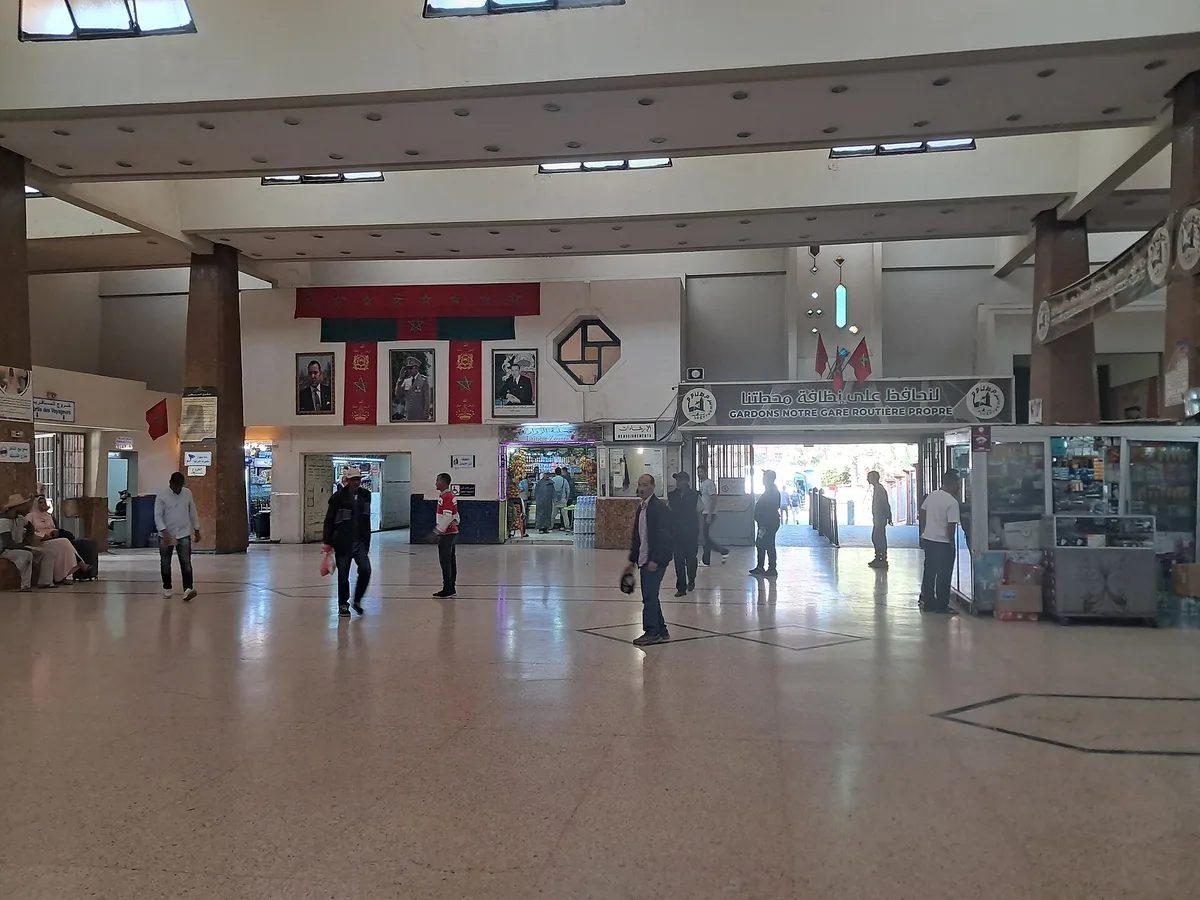
Every Moroccan town of any size has a gare routière, a central bus station, and inside it a second Morocco of smaller bus companies: family firms and regional operators with a booth, a destination board and a coach that leaves when the day says so. These are the cheapest wheels in the country — the market town forty minutes away, the village beyond the last CTM stop, the hop from a railhead to a kasbah town. The coaches vary from tidy to tired, the air-conditioning is a rumour on the oldest of them, and departure discipline runs on the leave-when-full principle.
The station itself is the skill. You will be met at the door by touts calling destinations; they are mostly harmless and mostly working for a real company, but the calm method is to walk past the noise to the booths inside, read the company boards for your town, and buy from the booth, where the price is the price and the ticket names your bus. Ask which bay, and be at the bay early, because boarding is a scrum in which a ticket is a claim rather than a seat number. Used on the right journeys — short, busy, daylight hops — the local bus layer is cheap, frequent and full of the country. Used on a long desert haul or a tight connection, it is false economy, and the two big networks exist precisely for those.
Luggage, Stations and the Small Print of Coach Travel
Coach luggage in Morocco runs on a ritual that surprises every first-timer exactly once. Big bags do not go straight into the hold. At the station you take them to the luggage counter — the bagages desk, separate from the ticket window — where each bag is weighed or eyeballed, tagged, and charged a small hold fee, and you are given a receipt. Keep the receipt: at the destination, bags come out of the hold against receipts. Hand luggage small enough for the rack above your seat travels free and should contain everything you would miss for a day, because the hold is not opened en route for anyone.
Stations deserve one paragraph of honest geography. CTM and Supratours use their own terminals in many cities, and those terminals are not always where you assume: CTM’s station and the gare routière can be different buildings in different districts, and the walk or taxi between the railway station and the coach terminal belongs in your plan, not in your surprises. Arrive with a margin — the companies ask you to be there well before departure, and they mean it most on the journeys that matter most. On board, the long coaches make comfort stops at roadside café-restaurants where everyone takes tea and the driver takes a proper rest; the coach leaves when the driver returns, so stay in sight of the vehicle.
Grand Taxis – the Shared Intercity System
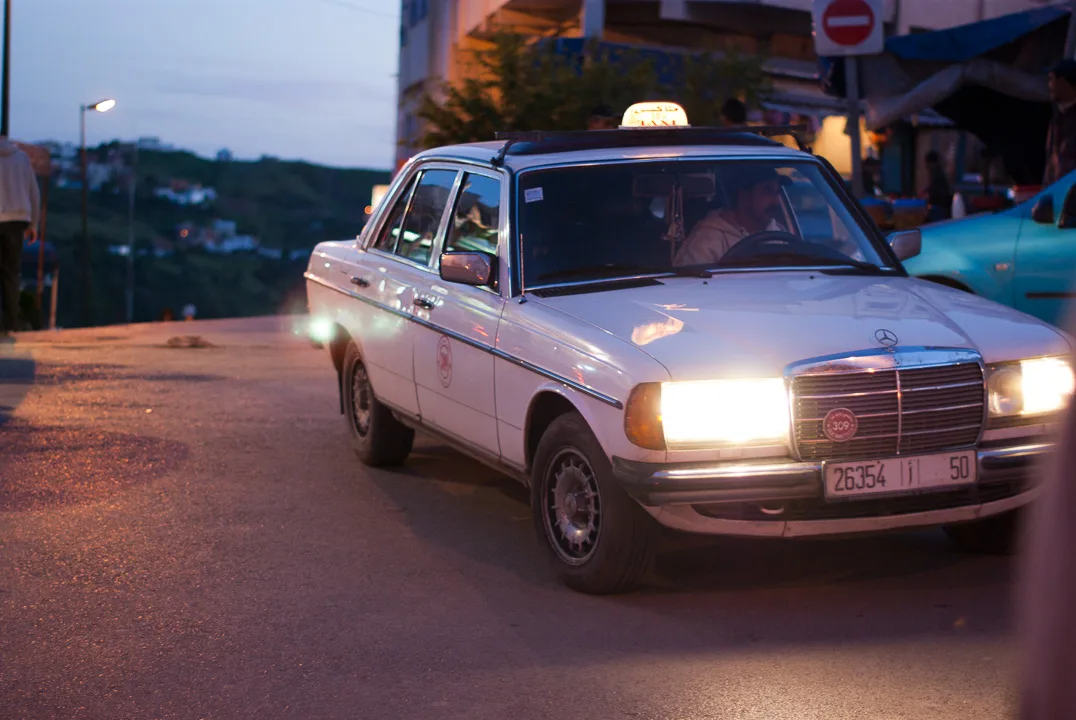
The grand taxi is the piece of getting around Morocco that visitors find strangest and Moroccans find most ordinary: a big car, traditionally a cream or white Mercedes saloon and increasingly a modern seven-seat MPV, that runs a fixed intercity route as shared public transport. It is not a taxi in the hail-it-and-go sense. It is a bus with six seats and no timetable, and once you understand that, every detail of how it behaves falls into place.
The car sells its seats one by one. Six passenger places are the classic load — four across the back seat and two in the front beside the driver in the old Mercedes layout — and each place has a set price for the route, known to everyone at the rank and not meaningfully negotiable, because on established routes the grand taxi is a regulated local service rather than a hustle. The car leaves when the last seat sells. On a busy route at nine in the morning that can mean five minutes; on a quiet route at two in the afternoon it can mean an hour of sitting in a slowly filling car while the driver drinks tea and calls your destination at passers-by.
Your time, in other words, is the currency the system runs on, and the exchange rate is published nowhere — it depends on the route, the hour and the day.
Which is why the system’s second mechanism matters as much as the first: you can buy time. Nothing obliges you to wait for strangers. Buy two seats for yourself and the wait shrinks and your elbow room doubles; buy all six and the car is yours, leaving now, on what Moroccans call a course — a private charter at six times the seat price, which for a group of three or four is often the cheapest private transport in the country. Solo travellers with a long ride ahead regularly buy the second front seat so the front becomes theirs alone. Drivers will quote you the whole-car figure without blinking if you ask for the car entier.
Finding your car is the practical art. Grand taxis work from fixed ranks, usually near the bus station or at known points on the edge of the medina, and each rank organises its cars by destination — the right method is to arrive, name your town, and let the rank’s informal dispatchers point you to the car currently filling for it. Confirm the per-seat price before you sit down, confirm whether you are paying for a seat or the car — the one question that prevents the system’s only classic misunderstanding — and expect to pay the driver in cash, commonly at the destination. Ranks are busiest from early morning to mid-afternoon; a route that fills in minutes at nine can be a long wait at five, and some thin rural routes effectively stop filling by evening. Where grand taxis beat the coach is frequency, speed and reach on short-to-medium hops: Tangier to Chefchaouen, the towns of the Middle Atlas, the run from a railhead to a nearby kasbah. Where the coach wins is the long haul — six-across seating is a young person’s game over five hours, and the coach’s booked seat and luggage hold are worth their money by hour three.
Inside the Cities – Petit Taxis, Trams and Buses
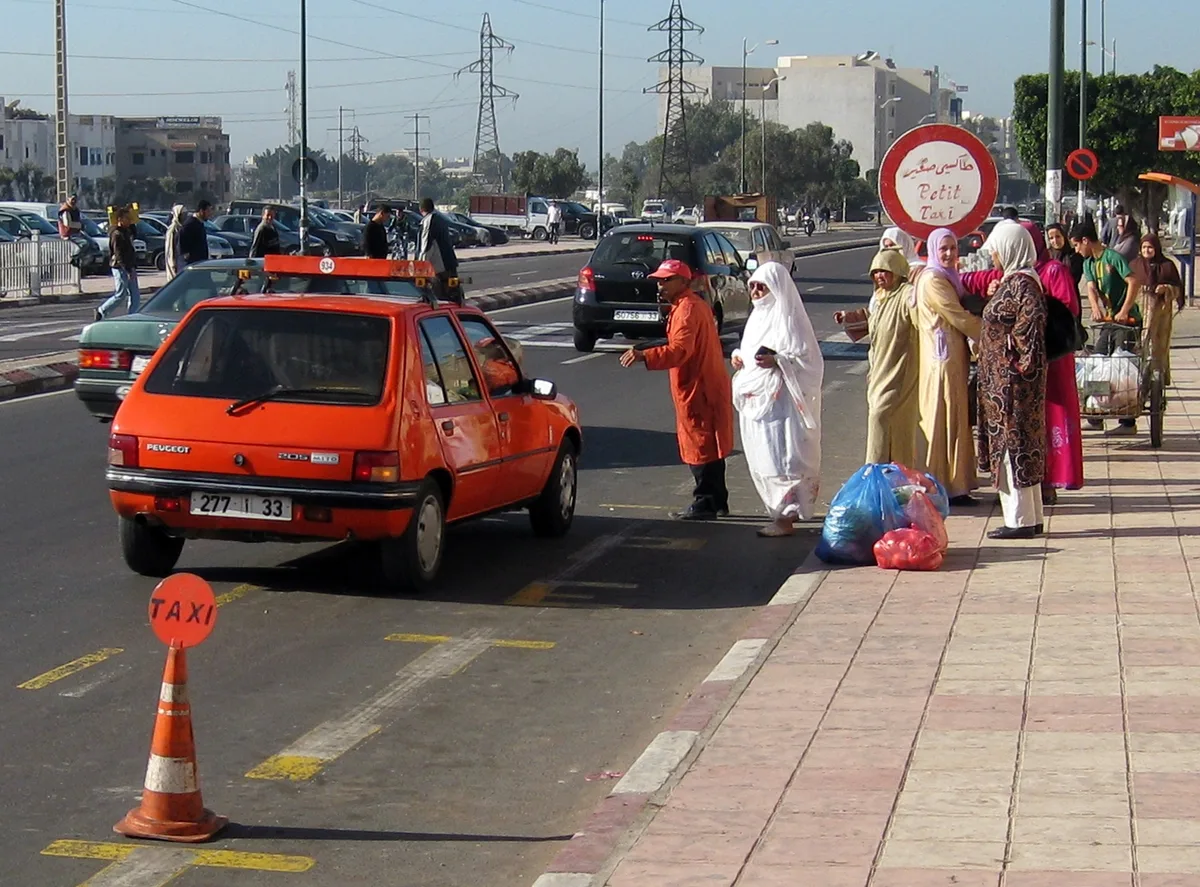
Moroccan cities run their own transport logic, and its first rule is a boundary. The petit taxi, the small city cab, is licensed for its city only: it will take you anywhere inside the municipal limits and it will not take you to the next town, the airport outside the boundary in some cities, or anywhere else beyond them, whatever you offer. For those journeys its big sibling the grand taxi, a coach or a pre-booked transfer takes over. Learn the boundary and the city layer of getting around Morocco makes sense; miss it and you will one day stand at a rank at midnight asking a driver to break the rule his licence is built on.
Petit Taxis and the Meter
The petit taxi is the unit of Moroccan city movement: small hatchbacks, plentiful everywhere, carrying a maximum of three passengers, and painted a single official colour per city — red in Casablanca, blue in Rabat, ochre-yellow in Marrakech, orange in Agadir, with every other city running its own shade. You hail them on the street or take them from the ranks that form at stations, hospitals and medina gates. By law they run on the meter — le compteur — and the honest protocol is the same one Moroccan passengers use: as you get in, name your destination and see the meter running, or agree the fare calmly before the car moves. Most rides in most cities are unremarkable metered trips. The rides that go wrong go wrong in the first ten seconds, in the space where a fare should have been settled, which is why the conversation happens at the kerb and not at the destination.
Three more mechanisms complete the picture. The meter carries a night tariff, so the same ride costs more after dark by regulation rather than by invention. Sharing is normal and legal: a petit taxi may stop for another passenger heading your way, and each party pays for its own ride — a surprise the first time, a shrug by the third. And at the medina gates the petit taxi hands you over to feet and porters — the next section’s subject. Where a petit taxi cannot be found — late at night, in the rain, in a suburb — the answer is the rank at the nearest station or hospital, or a call to one of the radio-taxi numbers your hotel will have.
Trams and City Buses
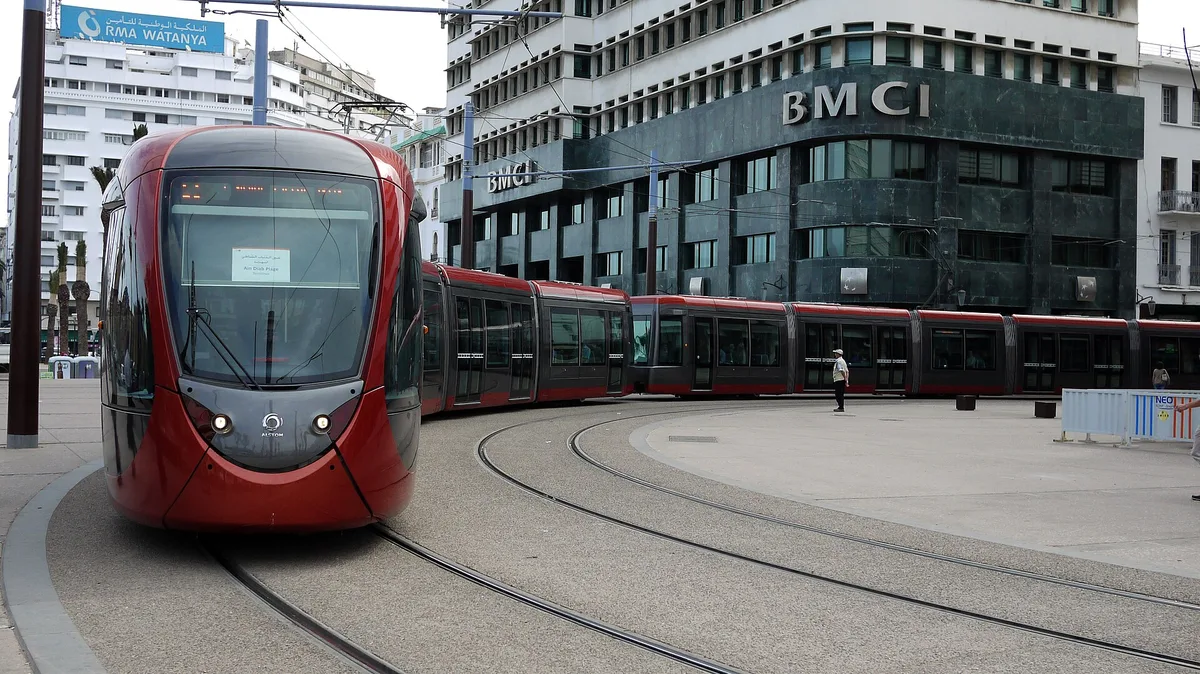
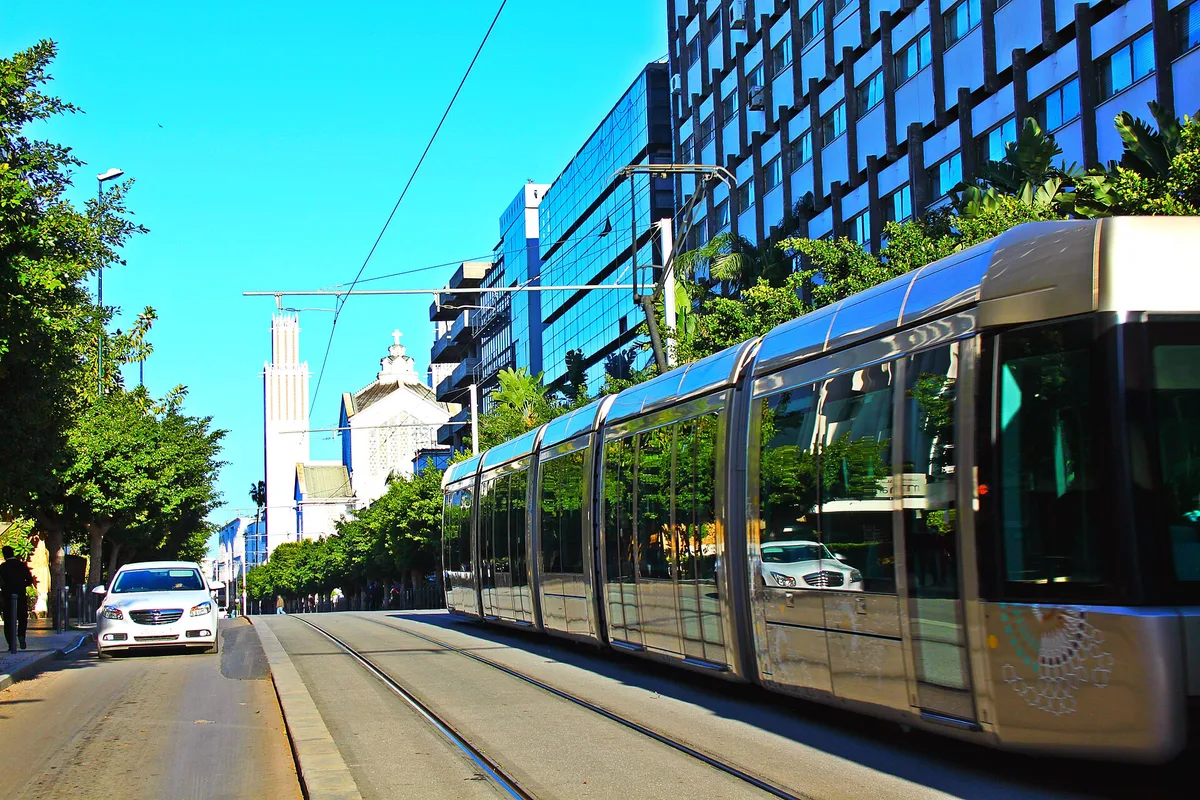
Two Moroccan cities have escaped the taxi’s logic altogether, and they are the two biggest. Casablanca’s tramway, opened in 2012 and since grown to four lines, crosses the whole sprawling city on reserved track, calling at both main railway stations — Casa Voyageurs for the trains, Casa Port for the old town — and it is the single most legible piece of transport in the country for a visitor, with tickets bought before boarding and trams in a steady stream all day. A busway rapid-transit service feeds the tram lines on the corridors the rails do not reach. Rabat and Salé share the older tramway, two lines across the Bou Regreg river between the capital and its twin city, which turns what used to be a taxi negotiation across the bridge into a short tram ride, and lands you within walking distance of both medinas.
City buses fill the rest of the map. Every large city runs a bus fleet under a concession operator — the Spanish group ALSA runs several of them — and in the big cities prepaid cards and phone-based ticketing are steadily replacing cash to the driver. The networks are real and heavily used, and they are also the one layer of Moroccan transport where a visitor genuinely benefits from a local’s ten-second explanation of which number goes where, because route information at stops is thin and in Arabic or French. For a cross-city journey in Casablanca or Rabat, take the tram. For everywhere else, the bus is the cheap local answer and the petit taxi is the easy visitor answer, and choosing between them per trip rather than per principle is the Moroccan way.
Ride-Hailing Apps – Useful, and Not the System
Ride-hailing exists in Morocco, and in the big cities it can be genuinely handy: apps summon a car to your pin, show the price before the ride, and remove the kerbside negotiation entirely, which at the end of a long travel day is worth a great deal. The most widely used names include inDrive, whose model of bidding on a suggested fare suits Moroccan habits, alongside Careem in some cities. What a visitor should understand is that the apps operate in unsettled regulatory territory, contested by the licensed taxi trade whose ranks and meters are the official system, and coverage thins quickly outside Casablanca, Rabat, Marrakech, Tangier and Agadir. Treat the apps as a supplement that sometimes works beautifully, keep the petit taxi as your default, and never build a plan — an airport dash, a station connection — that only works if an app does.
Driving Yourself – Car Hire and Moroccan Roads
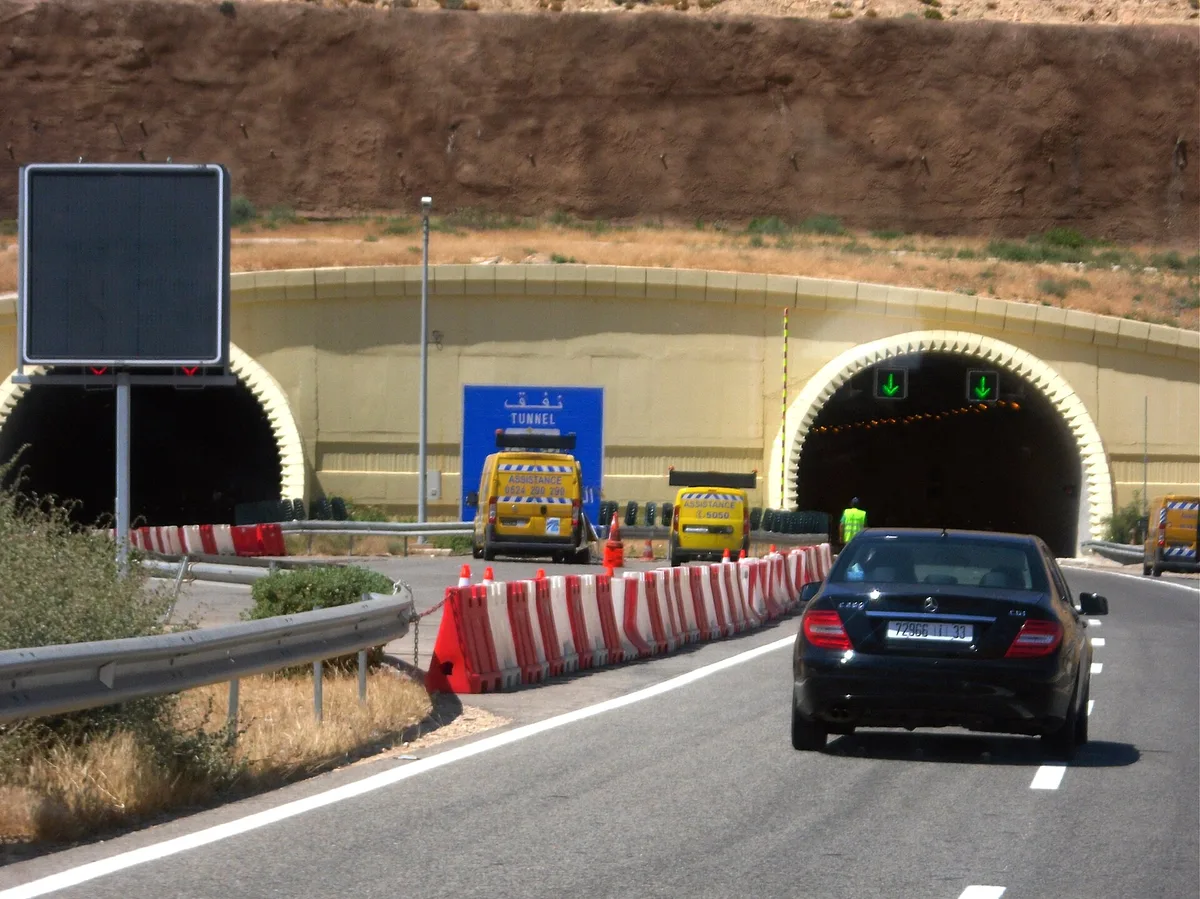
Getting around Morocco by car changes what kind of trip the country can be. It is the only option that makes the country a string of your own decisions — the gorge detour, the kasbah at the end of the side road, the extra night in the valley — and for the mountain, gorge and desert-fringe country where this guide’s other systems thin out, it is often not the luxurious choice but the only sensible one. Morocco drives on the right, the road signs carry French and Arabic, and the network has two clear tiers: a modern toll motorway system linking Tangier, Rabat, Casablanca, Marrakech, Agadir and east towards Fes and Oujda, and the national roads — the N-roads — that do everything else, from fine two-lane highways to the single winding carriageway over the great passes. The international brands and a crowd of local agencies hire cars at the airports and in every city, with one-way hires between the big centres a normal arrangement.
Renting – the Paperwork and the Car
The mechanics are the world’s mechanics with Moroccan seasoning. Bring your driving licence — most desks accept a full national licence from your home country, and an International Driving Permit alongside it is the document that ends questions before they start, at rental desks and checkpoints alike. Expect a credit-card deposit, and read the three numbers that matter before you sign: the insurance excess you would pay after damage, the mileage terms, and the one-way fee if you are dropping the car in a different city. Photograph the car thoroughly at pick-up, wheels, windscreen and bumpers included, because Atlas roads flick stones and the return inspection is won by whoever has pictures.
The car itself can be modest for almost everything in this guide. Every classic route — the motorway triangle, the Tizi n’Tichka crossing, the road to the desert fringe at Merzouga — is paved, and a normal saloon or small hatchback covers them all; a bigger car buys comfort on long days, not capability. Fuel is a non-problem on the main network, where the service stations of the big chains line the motorways and town edges, and a consideration only in the deep rural stretches, where the rule is the desert rule everywhere: fill up in the last real town. Pay at the pump in cash or card depending on the station, and expect an attendant to fill the tank for you — self-service is not the Moroccan way.
On the Road – Motorways, Checkpoints and Mountain Passes
The toll motorways are the easy tier: dual carriageways run by Autoroutes du Maroc, paid for at booths as you go — take the ticket, pay at the exit or the barrier, in cash or by card at the equipped lanes, or with the Jawaz electronic tag the regulars use — with service areas at civilised intervals and patrols on the network. Below them, the national roads carry the country’s real traffic: trucks, coaches, grand taxis, donkey carts on the rural stretches and the occasional herd, at a pace set by the slowest thing on the road rather than by the limit on the sign. Speed enforcement is real on both tiers — fixed and mobile radar is a fixture of Moroccan motoring — so the posted limits are worth treating as law rather than as local colour.
Checkpoints are the second fixture, and the one newcomers misread. At the entrances to towns and at intervals on the national roads, the police or the Gendarmerie Royale run control points; they are routine, they are for everyone, and the drill is simple — slow down, stop if waved in, smile, and have passport, licence and rental papers in reach rather than in the boot. Most rental cars are waved through after a glance. It is administration, not suspicion, and treating it as a thirty-second formality keeps it one.
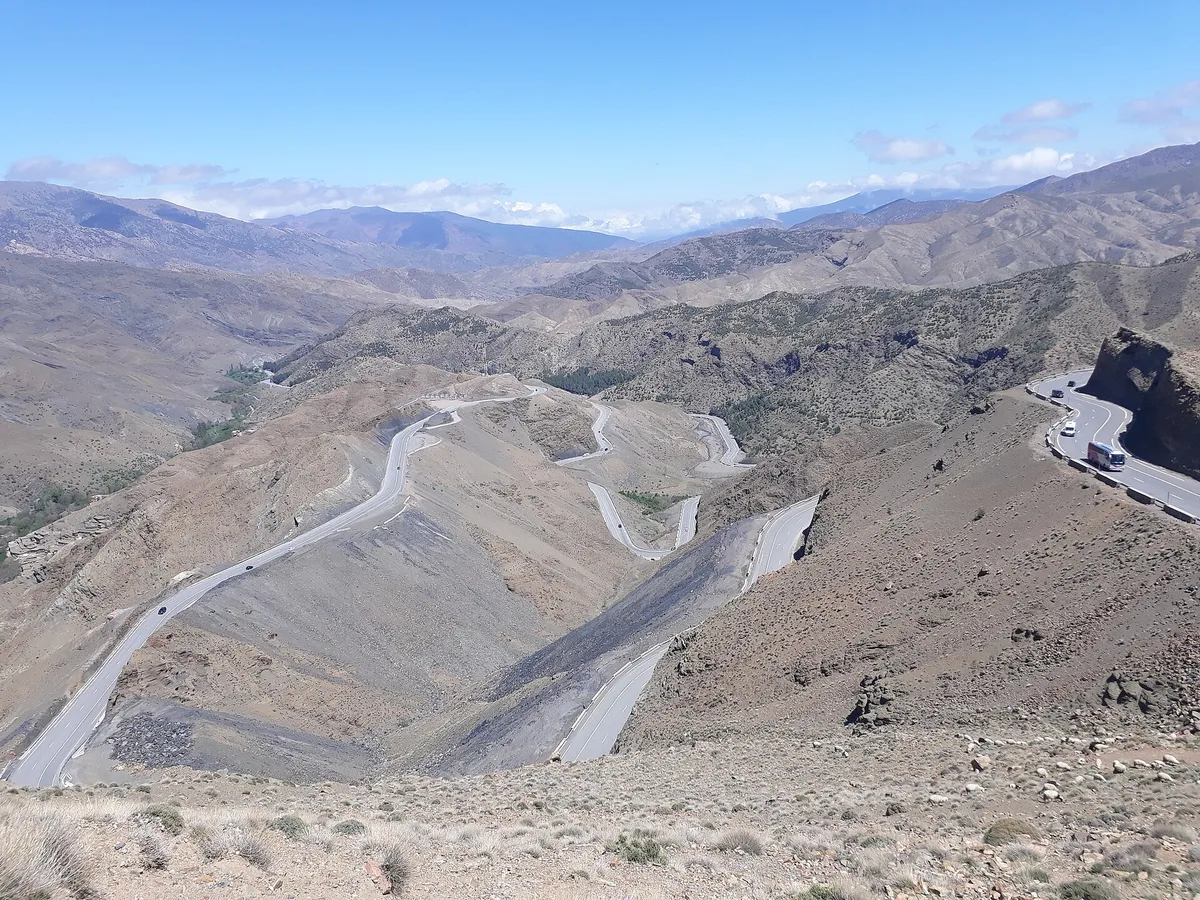
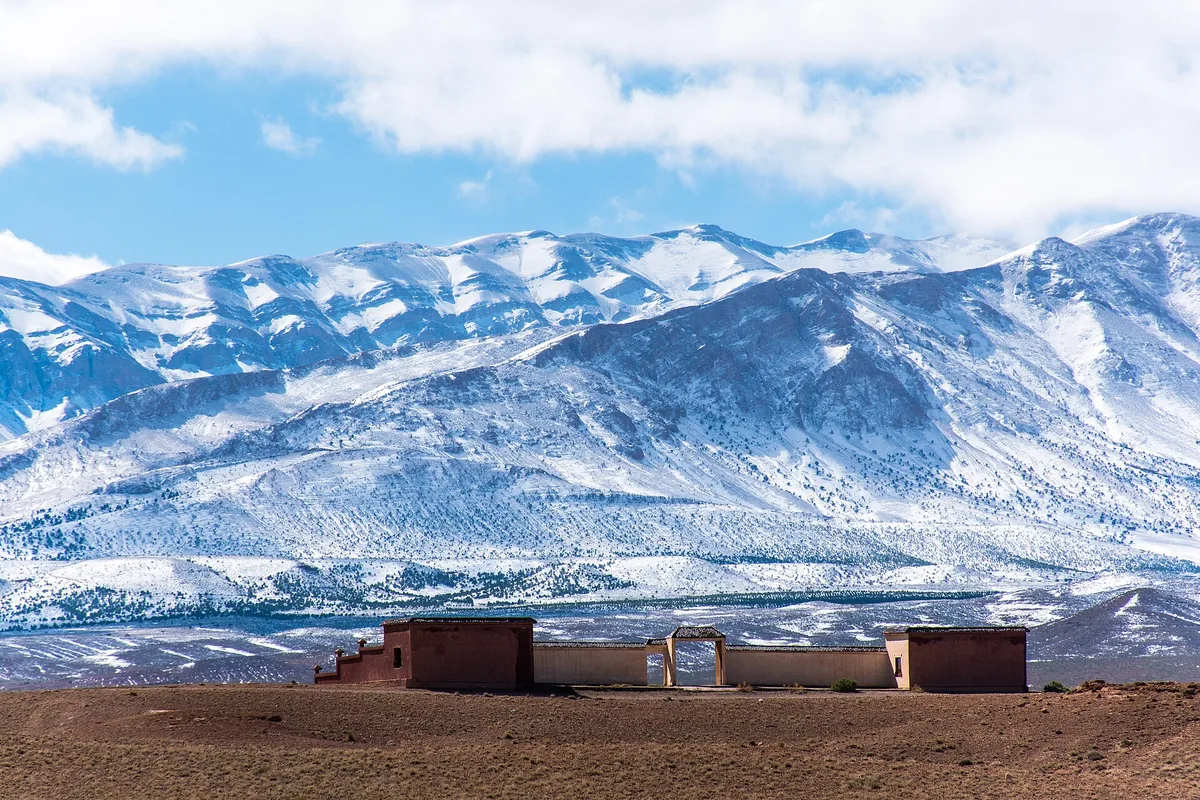
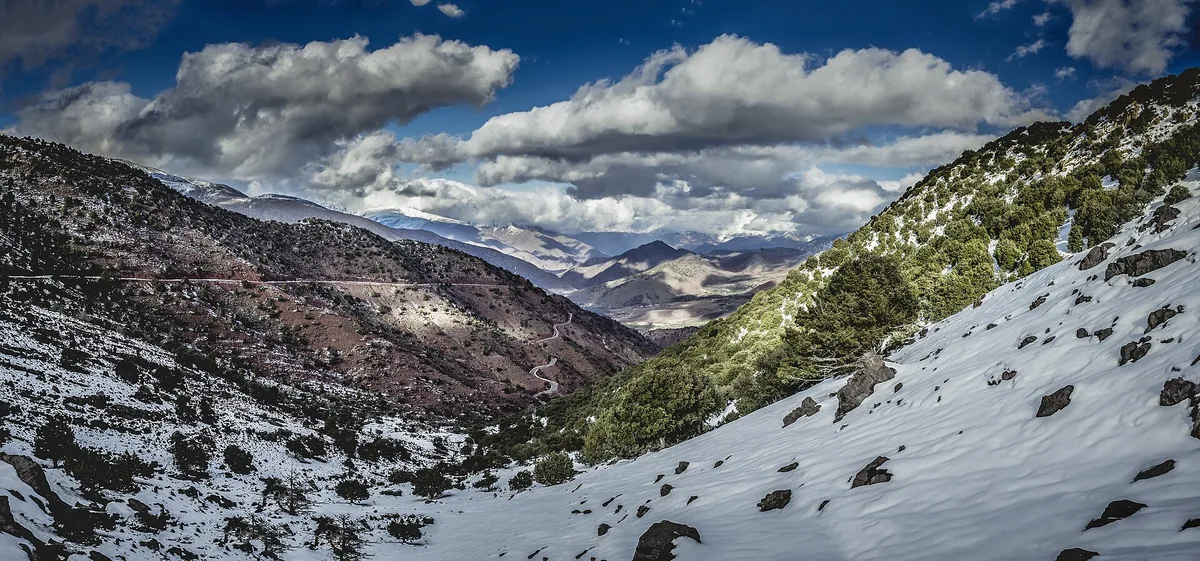
The passes are the third fixture and the honest heart of Moroccan driving. The Tizi n’Tichka, the N9’s crossing of the High Atlas between Marrakech and Ouarzazate at 2,260 metres, is a fully engineered modern road — and still a mountain pass, with switchbacks, slow trucks, weather that can close it in winter snow, and a driving time across it that no timetable survives. The Tizi n’Test to its west is narrower and slower, a connoisseur’s road rather than a through route. The rules for all of them are the same: cross in daylight, cross unhurried, check the conditions in winter before you commit, and never let a hotel check-in time bully you down a mountainside at dusk. Do that, and the passes are not the obstacle in a Moroccan road trip. They are the point of it.
Domestic Flights – When the Map Is Too Big
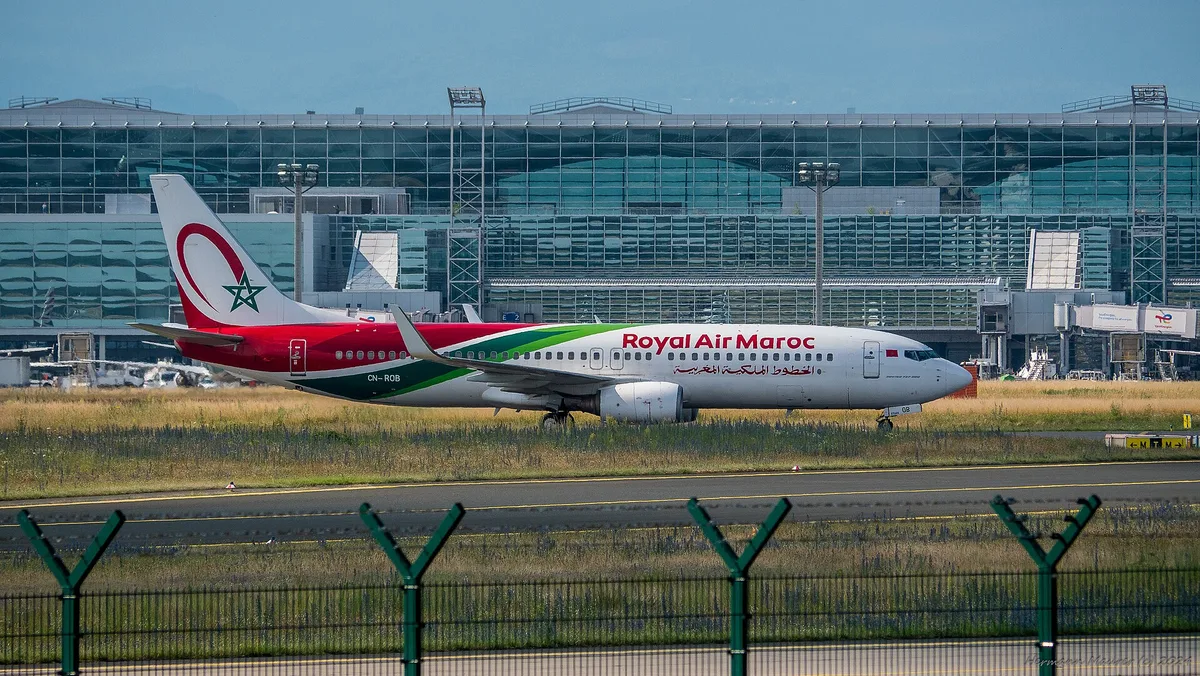
Morocco is bigger than the classic triangle suggests, and the proof is the far south. Dakhla, the kitesurfing outpost on its long Atlantic peninsula, sits at the end of a road journey measured in days rather than hours from Marrakech, and Laayoune and the deep south are expeditions of the same order. For those distances Morocco has a domestic air web, and it is shaped like a wheel: Royal Air Maroc and its regional operation centre on Casablanca, with spokes to Agadir, Marrakech, Tangier, Oujda and Fes and, most importantly, to the southern cities — Laayoune, Dakhla, Guelmim and the thinner services into the south-east. Air Arabia Maroc adds a second web of its own on some routes. Frequencies on the classic-city spokes are modest and on the southern spokes can be a handful of flights a week, which makes the timetable, checked on the airline’s own site, the whole ballgame: a flight that runs on your day collapses the map, and one that does not run until Thursday is not transport, it is a rumour.
The honest verdict for the journeys most visitors actually make is that the aeroplane is usually the third-best option. Between the triangle’s cities, the train beats it door to door once airport transfers and check-in are counted, and the coach beats it on price and scenery. The flight earns its place at the map’s edges: Casablanca to Dakhla above all, where the alternative is a very long road day or two, and on itineraries that use it as a hinge — fly to the far south, then travel back north overland through everything, driving each road once. Booked as part of an international Royal Air Maroc itinerary, the domestic leg sometimes prices kindly; booked alone at short notice on a thin route, it prices like the monopoly it nearly is. Check the airline’s site for your actual dates, and let the existence of a flight on your day make the decision.
Arriving by Air – Airports Into Cities
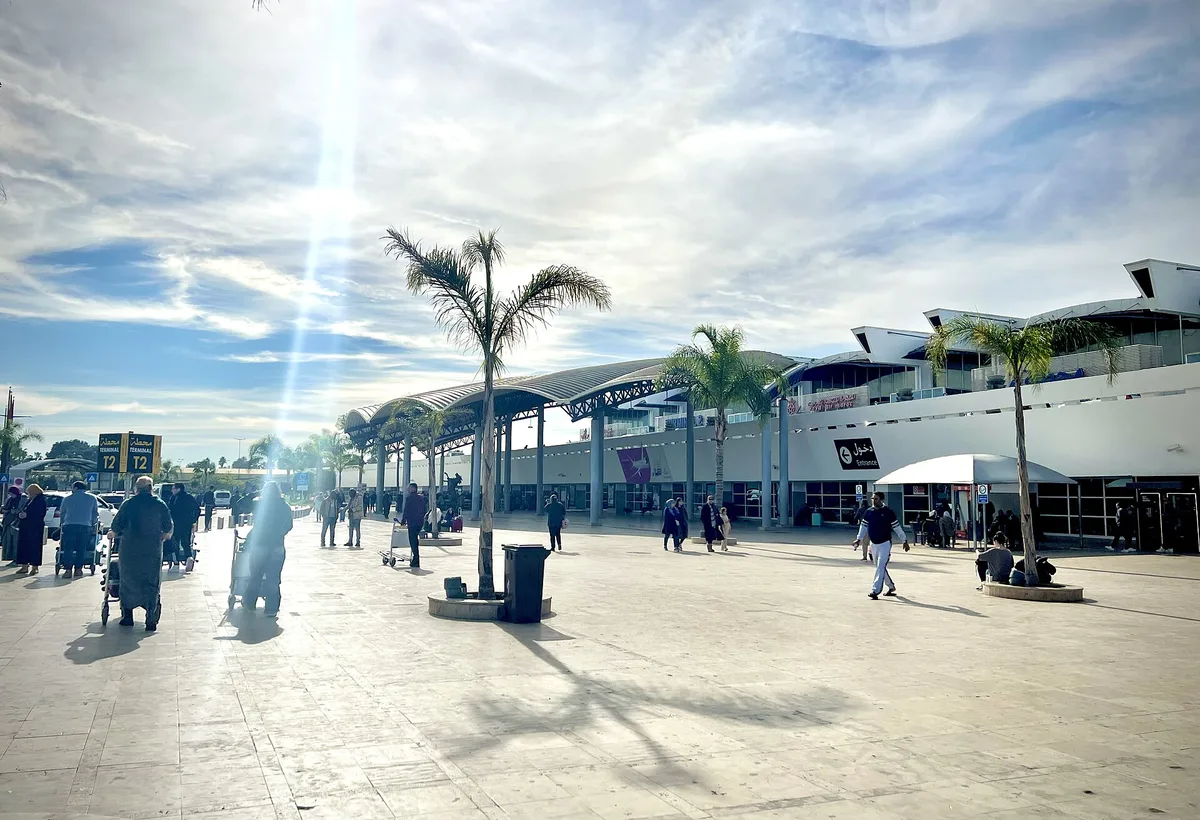
Morocco’s airports divide neatly into the one with a railway station and all the others. Mohammed V Airport, Casablanca’s gateway south of the city, has an ONCF station in the terminal, from which airport trains run into Casa Voyageurs — roughly three-quarters of an hour — with onward connections across the whole rail network, so a traveller bound for Rabat, Marrakech or Fes can be on the right train without ever entering Casablanca’s traffic. The only skill it asks is checking which Casablanca station your onward train uses, because the airport service feeds Voyageurs, and Casa Port across town is a tram ride away for the trains that start there. Taxis and pre-booked transfers wait outside for everyone else, at fares that should be agreed before the boot closes.
Everywhere else, the arrival is a road problem with local variations. Marrakech Menara, the airport most visitors use, sits close to the city, and its official answer is a dedicated airport bus — the number 19, run by the city’s bus operator — which loops between the terminal, the railway station, Guéliz and the edge of the medina near Jemaa el-Fnaa, and is the budget traveller’s friend. Beyond the bus: a taxi rank working to fares that you confirm before departure, the hotel or riad car that many medina properties will send to the gate nearest your lane, and the rental desks in arrivals if the car is starting here. Fes, Agadir and Tangier airports follow the same pattern at smaller scale — a bus or shuttle on the main corridor where one exists, taxis from the rank, and the medina handover at the end — with Tangier’s airport sitting far enough from the city that the transfer is a journey of its own and worth pre-booking after a late flight. The universal rules travel well: agree any unmetered fare before the car moves, keep small notes for the first taxi of the trip, and never let the airport run be your first drive in Morocco after dark.
The Last Stretch – Medina Streets, Porters and Carts
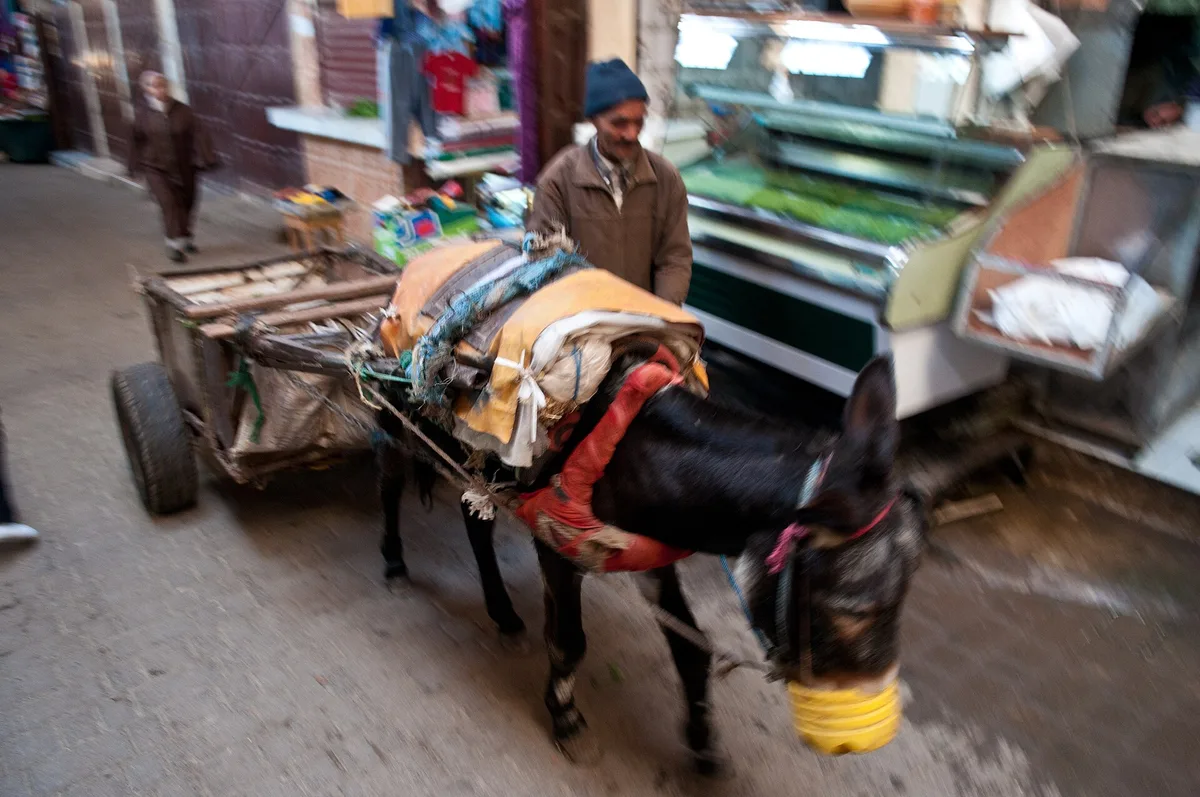
Every Moroccan journey, however modern its middle, ends the same way: on foot. The great medinas — Fes el Bali above all, but also the old quarters of Marrakech, Tetouan and the rest — are pedestrian cities by construction, their lanes built centuries before the car for people, pack animals and hand carts. No taxi, coach or rental car crosses that boundary. Your vehicle, whichever one the day has used, delivers you to a gate or a square at the medina’s edge, and from there getting around Morocco slows, delightfully or frustratingly depending on your luggage, to walking pace.
The medina moves its freight the way it always has. Porters with hand carts — the two-wheeled charrettes that wait at the gates and markets — carry everything from market produce to, for an agreed fee, a visitor’s suitcase, and in Fes the donkey and mule trains still work the lanes that carts cannot. For the traveller, the arrangement is simple and worth making deliberately: agree the price before the bag goes on the cart, walk with your porter rather than sending the bag ahead into the maze alone, and build the carry into your arrival plan from the start. Riads know this choreography well, and will send their own man to the gate to meet you if you tell them when and where you arrive — another reason the medina handover belongs in the booking conversation, not in the street.
Practicalities follow from the geography. Stay at the medina edge if wheels matter to your trip; stay deep inside if atmosphere does, and pack a bag you can carry or cart for ten minutes without resenting it. Learn your gate — medinas have many, and everyone navigates by gate names, so the gate nearest your lodging is the most useful address you own. And accept the walking itself as the transport: the medina is not an obstacle between the station and your bed. It is the destination, moving at the speed it was built for.
Putting It Together – Getting Around Morocco Route by Route
Everything above was about vehicles. This section is about journeys — the legs the classic Moroccan trip is actually made of, and which system genuinely fits each one. Our 7-day Morocco itinerary strings these legs into a route; what follows is the transport logic underneath it.
Marrakech to Fes – the Long Diagonal
The country’s signature journey offers every system in this guide a chance to argue its case. The direct classic train runs the long way round through Casablanca and Rabat, and takes around seven hours; it is also comfortable, sociable and delivers you to Fes station with nothing asked of you but a book — for most travellers, the right answer. The road alternative, motorway through Casablanca and Rabat, runs a little faster in a rental car or with a driver and lets you stop in the capital on the way, at the price of a full day of driving concentration. Coaches run the leg too, more slowly than either, and earn their place only when the train’s timing fails your day. Meanwhile the grand taxi has no business here at all — nobody sane crosses half of Morocco four-across in a shared Mercedes when a railway runs beside the road. Choose the train, in first class if the day is a Friday, and let the diagonal be a rest day in the middle of the trip.
Marrakech to the Desert – Over the Pass to Merzouga
The desert run is a road journey, wholly and unavoidably: Marrakech over the Tizi n’Tichka to Ouarzazate, then east along the valley roads through the Dades country to Erfoud, Rissani and the dunes at Merzouga — nine hours and more of road, which every sensible traveller breaks into two days. The Supratours coach is the independent traveller’s spine here, one through journey sold by the railway’s own company. The organised desert tour, usually three days in a shared minibus or a private car, is the same road with the stops, the camp and the camel walk bundled and the thinking outsourced. A rental car makes the run a genuine expedition with the gorges at your own pace; a grand taxi covers the hops at the desert end, Rissani to Merzouga above all, where the shared cars wait by the bus stop. However you do it, the rule is the pass rule: cross the Atlas in the morning, sleep before the dunes, and never let the desert leg become a single desperate day.
The North – Tangier, Chefchaouen and the Coast
The north is where Al Boraq and the grand taxi divide the world between them. Ride the high-speed line to Tangier, then take the road east into the Rif: Chefchaouen has no station and no intention of getting one, so the last stretch belongs to the CTM coach from Tangier or Fes, or to the grand taxis that climb from Tetouan and the coast towns in a steady shared stream — around four hours by coach from Fes, considerably less from Tangier. Tetouan itself sits in the same road web, close enough to Tangier that the grand taxi and the coach compete honestly. For example, a northern loop of Tangier, Tetouan and Chefchaouen needs no car and no driver at all: train to the top, coaches and shared taxis across the Rif, and Al Boraq home from Tangier at the end. It is getting around Morocco at its most European in structure and its most Moroccan in texture, sometimes in the same hour.
Frequently Asked Questions About Getting Around Morocco
What is the best way to travel between Morocco’s big cities? The train, wherever it runs. Al Boraq owns the Tangier–Kenitra–Rabat–Casablanca corridor, and the classic ONCF trains are the default between Casablanca, Marrakech, Meknes and Fes. Where the rails stop — Essaouira, Agadir, Chefchaouen, the desert — the CTM and Supratours coaches take over, and the grand taxi fills the shorter gaps between them. Current timetables and fares live on the operator’s own site; check there rather than trusting any guide’s figures.
Do I need to book trains and coaches in advance? For Al Boraq, yes, in spirit: every seat is reserved, prices rise as the train fills, and the cheap inventory goes first, so book when your dates are fixed. For classic trains and the big coaches, a day or two ahead is the working rule, and more around Fridays, Sundays and holidays, when Morocco travels to see its family and every network fills at once.
How does the grand taxi actually work? Go to the rank for your destination, name the town, and take a seat — one seat, at the set price for the route. The car leaves when all six places are sold. If waiting does not suit you, buy the empty seats: two seats buy you room, all six buy you the car and an immediate departure. Confirm whether your price is per seat or for the whole car before you sit down, and carry cash in small notes.
Are petit taxis metered, and what should I watch for? By law, yes — the meter, le compteur, is the system, so see it running, or agree the fare before the car moves. Petit taxis stay inside their city’s limits and carry three passengers at most; each city has its own colour. A higher night tariff applies after dark by regulation. Sharing with another passenger heading your way is normal and legal, and each party pays its own fare.
Is it a good idea to rent a car in Morocco? For the right trip, it is the best idea in this guide: the Atlas passes, the gorges, the desert fringe and any route built from stops all belong to the car. The motorways are modern and tolled, the national roads are honest, checkpoints are routine paperwork, and the driving is on the right. What the car cannot do is the medina — plan to park at its edge and walk in — and what it should not do is a mountain pass at dusk or a winter crossing without checking conditions.
How do I get from the airport into the city? Casablanca is the easy one: Mohammed V Airport has its own ONCF station, with trains into Casa Voyageurs and connections across the network. At Marrakech Menara, the number 19 airport bus loops to the station, Guéliz and the medina edge, and taxis wait at the official rank — confirm the fare before you ride. At the other airports, expect a bus on the main corridor where one runs, or taxis from the rank; after a late arrival, pre-booked is worth its money.
Can I rely on ride-hailing apps in Morocco? In the biggest cities, often — apps operate there. However, their legal position is contested by the licensed taxi trade, coverage thins outside the main cities, and they are a supplement to the petit taxi system rather than a replacement for it. Use them when they work, and never make one load-bearing in a tight connection.
The Short Version
Getting around Morocco is a matching exercise, not a hierarchy. Ride Al Boraq between Tangier, Rabat and Casablanca, and the classic trains to Marrakech and Fes, booking early where the pricing rewards it and taking first class where the seat matters. Take CTM or Supratours where the rails run out — remembering the luggage receipt — and let grand taxis carry the hops in between, one seat at a time or six at once when the day demands it. Inside the cities, live by the petit taxi’s meter and the medina gate, ride the trams where the trams exist, and save the aeroplane for the far south where the map finally defeats the road. Print no fares from any guide, this one included; check the current number where it lives, at the operator, the week you travel. Do that, cross the passes in daylight, and Morocco’s transport stops being a problem to solve and becomes what it should be — the journey itself, running underneath the trip you came for.