Morocco is one of the few countries in Africa where the train is not a nostalgic extra but the obvious way to move. One state operator, ONCF, runs a compact network down the Atlantic side and across to the east, and between Tangier, Rabat, Casablanca, Fes and Marrakech the trains in morocco are frequent, air-conditioned and cheap by European standards. The catch is that the network is really three railways wearing one logo – a high-speed line in the north, a family of conventional long-distance trains, and a shuttle service that behaves like a metro between cities – and each one books, boards and behaves differently. This guide treats trains in morocco as that whole system: every route a visitor might ride, every train type, how the booking actually works, and the honest point where the rails run out and a coach or taxi takes over.
Begin with the shape of it. The passenger map is a spine, not a web: down the coast from Tangier through Kenitra, Rabat and Casablanca, one branch climbing south from Casablanca to Marrakech, another running inland from the Casablanca-Rabat axis through Meknes and Fes, then east across the steppe to Oujda, with a short branch to the port city of Nador. Everything famous that is missing from that list – Chefchaouen, Essaouira, Agadir, the desert at Merzouga – is missing because no railway reaches it, and no amount of timetable searching will change that. Plan rail for the spine and road for the rest, and Morocco’s geography stops fighting you. Where trains in morocco run, they should almost always be your first choice; where they do not, the honest alternatives get their own sections below, because a guide that only praised the railway would strand you in exactly the places you came to see.
What follows is organised the way a journey is: the network and its routes first, then the three kinds of train, the night services, the classes, the stations that catch people out, and the booking mechanics ONCF itself publishes – the reserved seats, the platform zones, the fare families – before the practical questions of luggage, scenery and the bus-versus-train choice. Fares and departure times are deliberately not printed: ONCF prices dynamically and retimes seasonally, so any figure frozen into a guide is a small lie waiting for its reader. The mechanisms, which do not change, are all here – and for live times and prices the guide points you at the operator’s own site, which is where the Morocco travel guide on this site sends you too.
Trains in Morocco at a Glance
| Route | What runs on it | Journey character |
|---|---|---|
| Tangier – Kenitra – Rabat – Casablanca | Al Boraq high-speed + classic trains | The fast corridor; about 2 hours end to end on Al Boraq |
| Casablanca – Rabat – Kenitra | TNR shuttles + all long-distance trains | The commuter spine; trains through the day at short intervals |
| Casablanca – Marrakech | Al Atlas classics | Plains and red earth south; roughly 3 hours |
| Casablanca / Rabat – Meknes – Fes | Al Atlas classics | The imperial-city line; roughly 3.5 to 4 hours from Casablanca |
| Fes – Taza – Oujda | Al Atlas classics, diesel east of Fes | The long eastern crossing; the best part of a day |
| Taourirt – Nador | Classic trains on the branch | The port branch, timed around the ferries and the night trains |
| Casablanca – El Jadida | TNR and classic trains | A short coastal branch to the old Portuguese port |
| Casa Voyageurs – Mohammed V Airport | TNR airport trains | The airport link; a short ride under the terminal |
| The night network | Couchette and sleeping-car trains | Casablanca-Oujda, Marrakech-Tangier and Casablanca-Nador overnight |
Read the table as three networks sharing track. The northern corridor is the showcase, rebuilt around the Al Boraq high-speed service. The classic Al Atlas trains do the long work – Marrakech, Fes, the east – at conventional speeds with conventional comforts. The TNR shuttles stitch Casablanca, Rabat and the airport together at commuter frequency. A single trip often uses two of the three: Al Boraq down from Tangier, say, then a classic train out of Casablanca to Marrakech, changing across the same platform hall. The sections below take each in turn.
The three families also share more than a logo. They share stations, and on the corridor they share tracks: an Al Boraq set, a classic Al Atlas rake and a TNR shuttle may all pass the same platform within the hour, which is why the departure board, not the colour of the train, is the traveller’s compass. They share one booking system and one rule book too – the reservation rules in this guide apply to the trains in morocco of every family except where the shuttles are explicitly different. Learn the system once and the whole network is learned with it.
One more orientation truth before the detail: Moroccan stations are not anonymous. The big ones were rebuilt in the last two decades as civic landmarks – Marrakech, Kenitra, Rabat Agdal, Casa Voyageurs – with ticket halls, cafes and departure boards that would not shame a European capital, while the small-town halts on the eastern line are a platform, a sign and a timetable poster. Both kinds work the same way under ONCF’s booking system, which is the next thing to understand after the map.
One Operator – ONCF and the Shape of the Network
Every passenger train in the country belongs to one company: ONCF, the Office National des Chemins de Fer, Morocco’s state railway. There are no competing operators, no open-access rivals, no regional franchises – one timetable, one booking system, one set of rules from Tangier to Oujda. That simplicity is the traveller’s friend. A ticket bought on the official site works the same way at every station, the classes mean the same thing on every train, and the same staff in the same orange-trimmed uniforms will sort you out in Fes as in Casablanca. When this guide says “ONCF requires” or “ONCF sells”, there is no second company hiding behind the statement.
The network itself is a little over 2,000 kilometres of standard-gauge line, most of it inherited in shape from the protectorate-era railways and steadily modernised since: electrified and double-tracked on the busy western core, single-track and diesel-worked across the east. Freight shares the system – phosphates above all – which is why a goods train may hold your passenger service briefly at a crossing loop on the single-track sections, and why the eastern line keeps a working, unglamorous character the showcase corridor has polished away. None of this needs a traveller’s attention until a timetable matters; then it explains a great deal.
What ONCF sells under its own name divides into the three service families the next sections describe – Al Boraq, Al Atlas and the TNR shuttles – plus two things that are easy to miss. The first is Supratours, ONCF’s own coach company, whose buses are sold through the same website and app as the trains and exist precisely to extend rail journeys to towns the tracks never reached. The second is the night network, a handful of overnight trains with couchettes and sleeping cars that quietly stitch the far corners of the map together while their passengers sleep. A guide to trains in morocco that only covered the famous high-speed line would miss most of what the operator actually runs.
The Northern Corridor – Tangier, Kenitra, Rabat and Casablanca
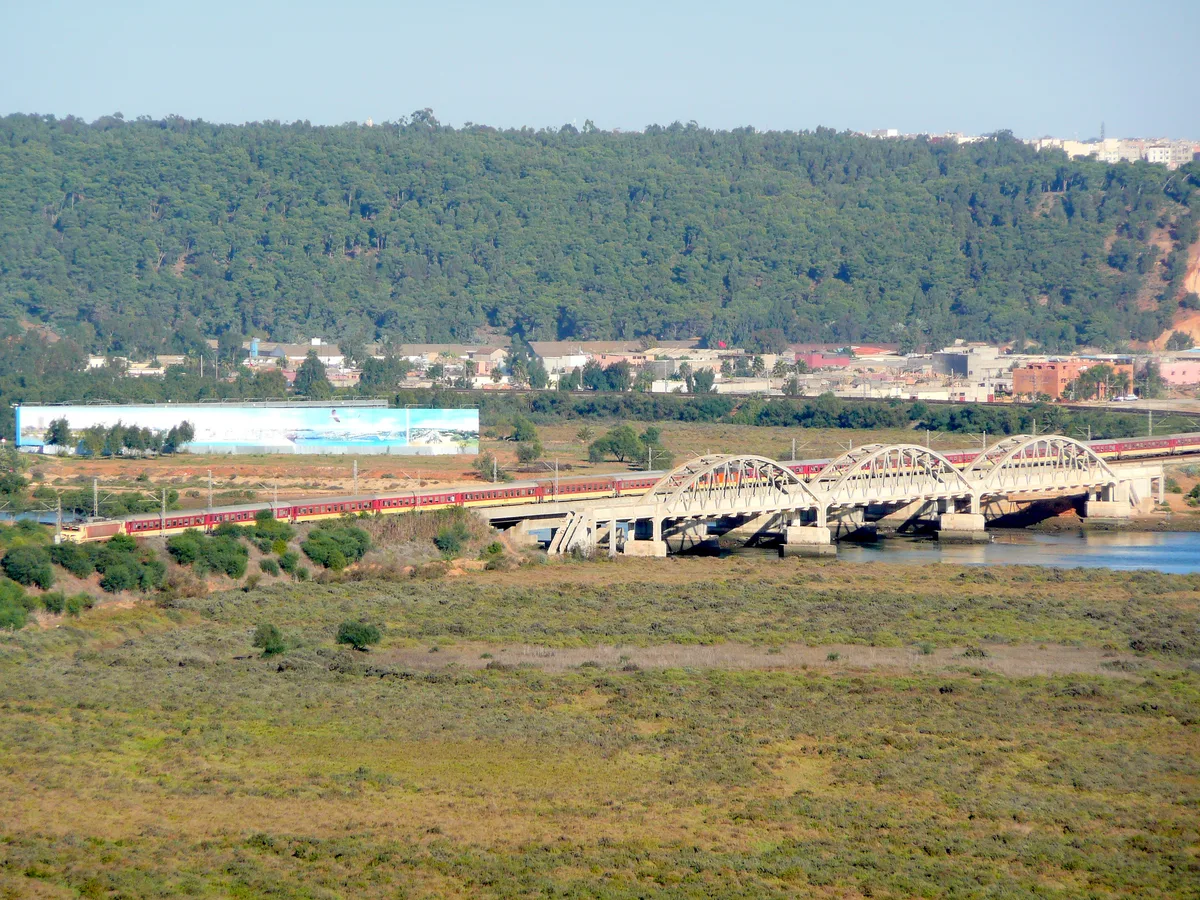
The corridor from Tangier to Casablanca is where Morocco’s railway shows off. It carries every kind of service the operator runs – high-speed trains on their own new line as far as Kenitra, classic trains on the older alignment, and the TNR shuttles thickening the Casablanca-Rabat end – and it links four cities a visitor actually wants: Tangier at the strait, Kenitra at the mouth of the Sebou, the capital Rabat, and Casablanca, the country’s commercial engine. Distances that look awkward on the road map collapse here: the whole corridor is a morning’s easy riding, and its trains run through the day at regular intervals rather than in a sparse long-distance pattern.
Geography writes the timetable. South of Tangier the line runs down the Atlantic plain past Asilah and Larache, through farmland and cork oak, crossing the Sebou river near Kenitra – the point where the high-speed line ends and every train, fast or classic, continues on the upgraded older railway. Then comes the corridor’s postcard: the crossing of the Bou Regreg estuary between Salé and Rabat, the two cities facing each other across the water, before the line turns down the coast through Mohammedia to Casablanca. Sit on the seaward side where you can; the corridor rewards a window seat more than its commuter reputation suggests.
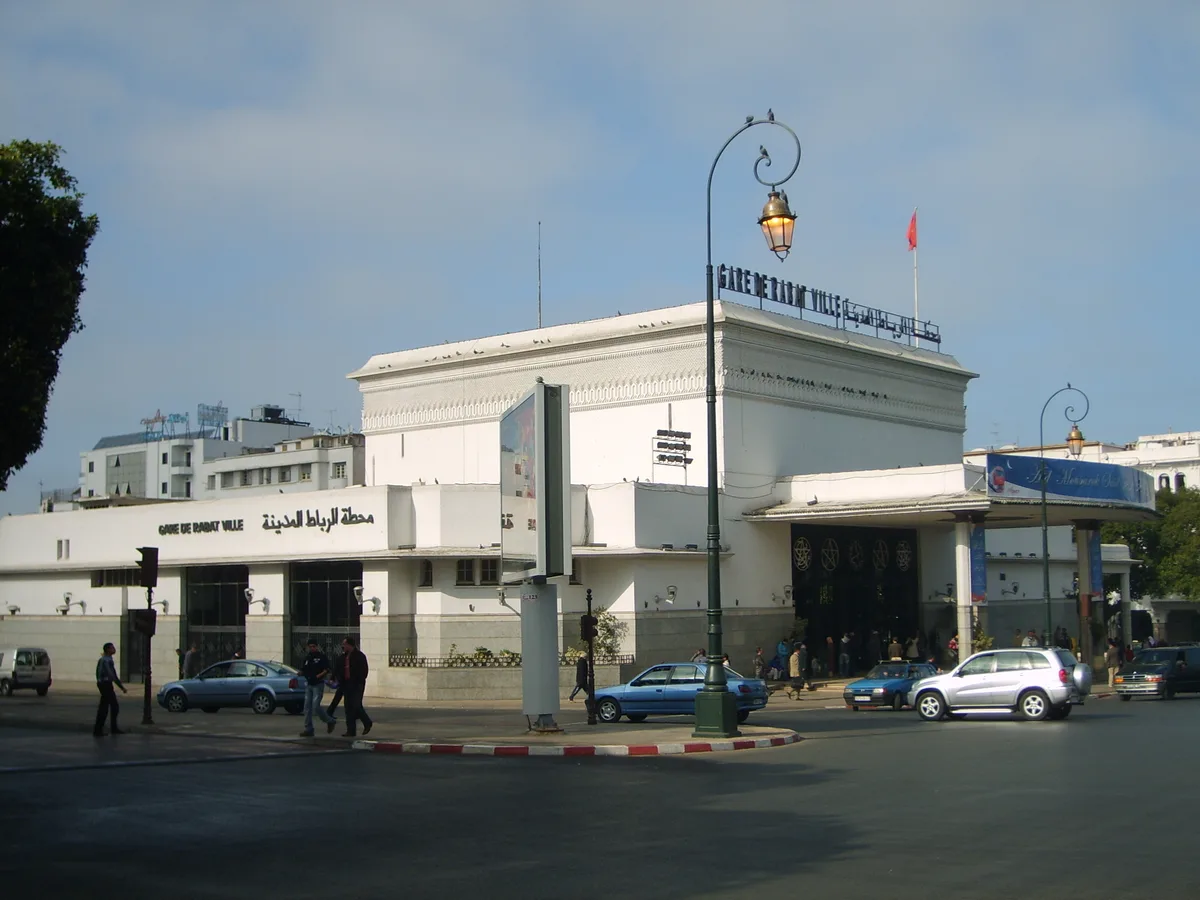
Two traps live on this corridor and both are about station names. Casablanca has two stations that matter: Casa Voyageurs, the long-distance hub where Al Boraq and the Marrakech and Fes trains call, and Casa Port, the smaller station by the port and medina served mainly by shuttles and local trains. Rabat likewise divides between Rabat Agdal – the rebuilt station where Al Boraq stops and most long-distance trains call – and Rabat Ville, the older art deco station in the city centre, used by classic trains and shuttles. Book to the wrong one and the trains in morocco will still get you there, just with an unplanned taxi ride in the middle. The stations section below gives the full list; for now, learn the pairs.
Al Boraq – the High-Speed Line in Brief
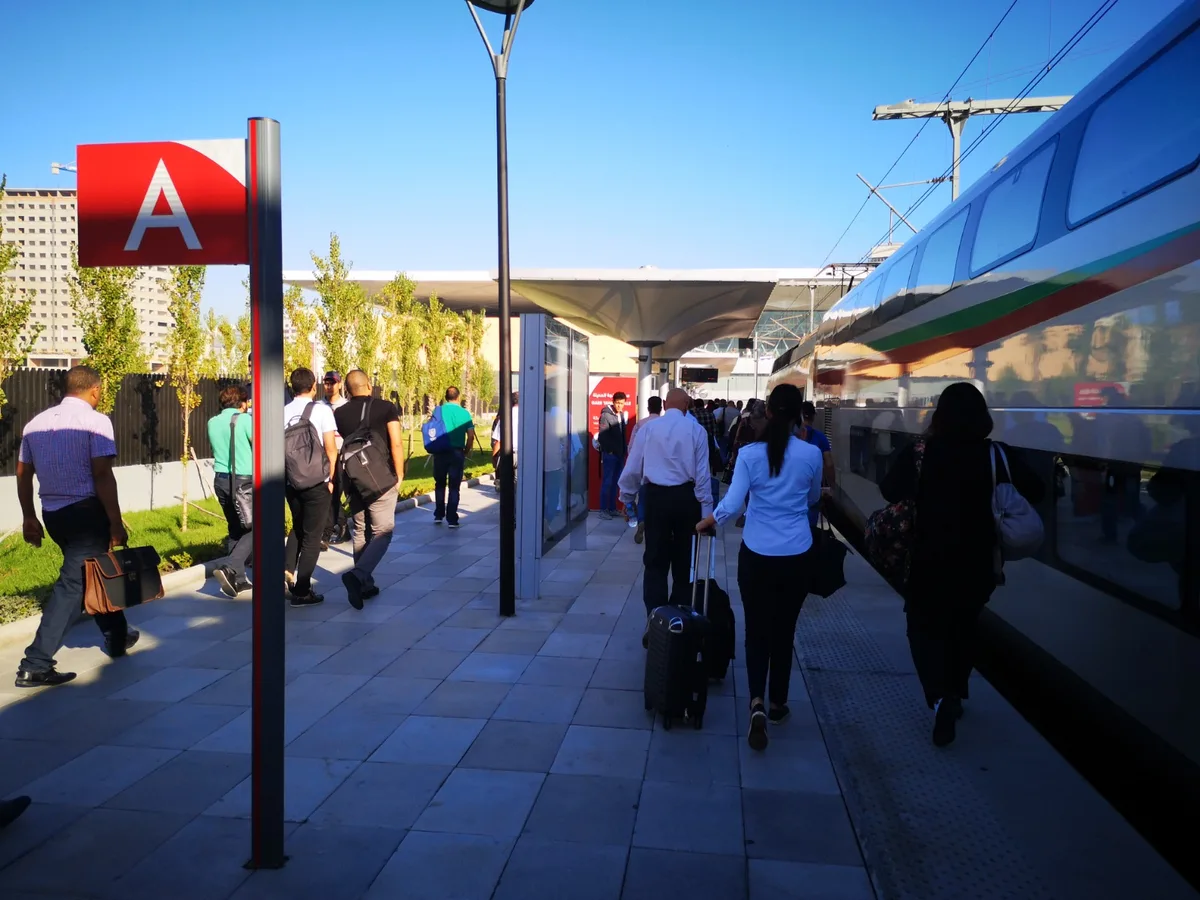
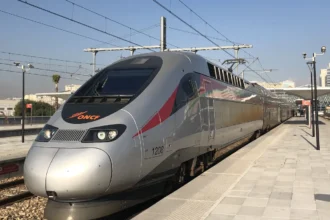
Al Boraq is the famous one, and this guide deliberately gives it one section rather than ten – it has its own dedicated guide on this site (see the planned links at the end of this package), and the whole-network picture is the job here. The essentials: opened in November 2018 as Africa’s first high-speed railway, Al Boraq links Tangier and Casablanca via Kenitra and Rabat Agdal. The Tangier-Kenitra section is a purpose-built high-speed line where the double-deck trainsets run at up to 320 km/h; south of Kenitra the same trains continue over the upgraded classic line at conventional speeds. End to end, the journey takes about two hours and ten minutes – against the better part of five hours the trip took before the line opened.
For many visitors Al Boraq is the first of the trains in morocco they ever ride, and it sets an expectation of gloss the classic network only partly matches – newer stations, faster boarding, a genuine sense of occasion. Judge it as a showcase and it delights; judge the whole railway by it and the honest Al Atlas trains will seem a step down they do not deserve to be judged as.
What that means for the wider network matters more than the speed record. Al Boraq turned the northern corridor into a genuine day-return railway and made Tangier a practical arrival city: off a ferry in the morning, in Casablanca by lunch. It also set the template the rest of the system is copying – numbered seats in both classes, tickets tied to one named train, platform zones matched to carriage positions, fares that rise as departure approaches. Every one of those mechanics began as an Al Boraq experiment and now governs the classic trains too, which is why the booking sections of this guide apply network-wide.
Two honest limits complete the summary. Al Boraq goes nowhere else: not to Marrakech, not to Fes, whatever a breathless headline implied – those remain classic-train journeys from Casablanca or Rabat. And its announced extension south, carrying high-speed rails from Kenitra towards Casablanca and eventually Marrakech, is a project framed around the 2030 horizon, not a service you can ride today. Until it opens, the pattern of this guide holds: Al Boraq for the north, Al Atlas for everywhere else.
Al Atlas – the Conventional Trains That Do Most of the Work
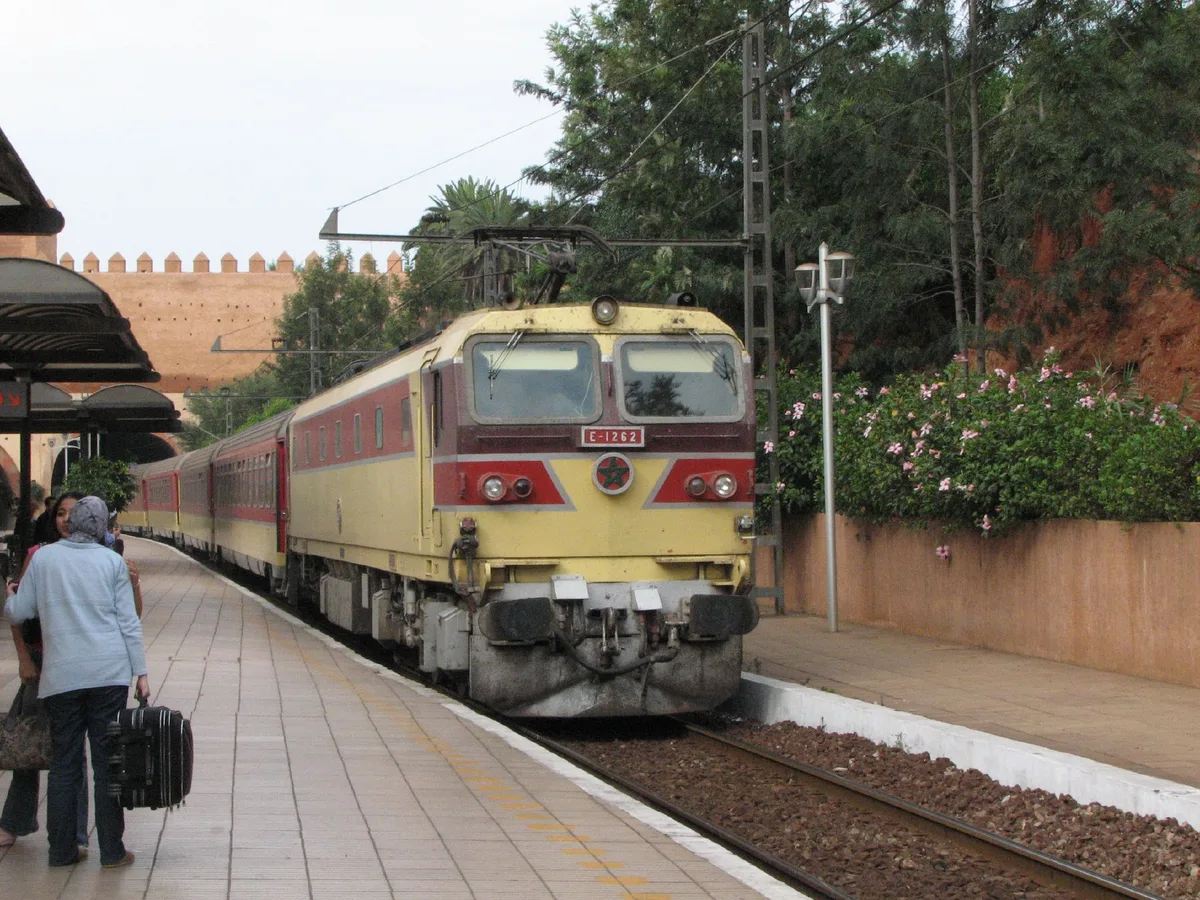
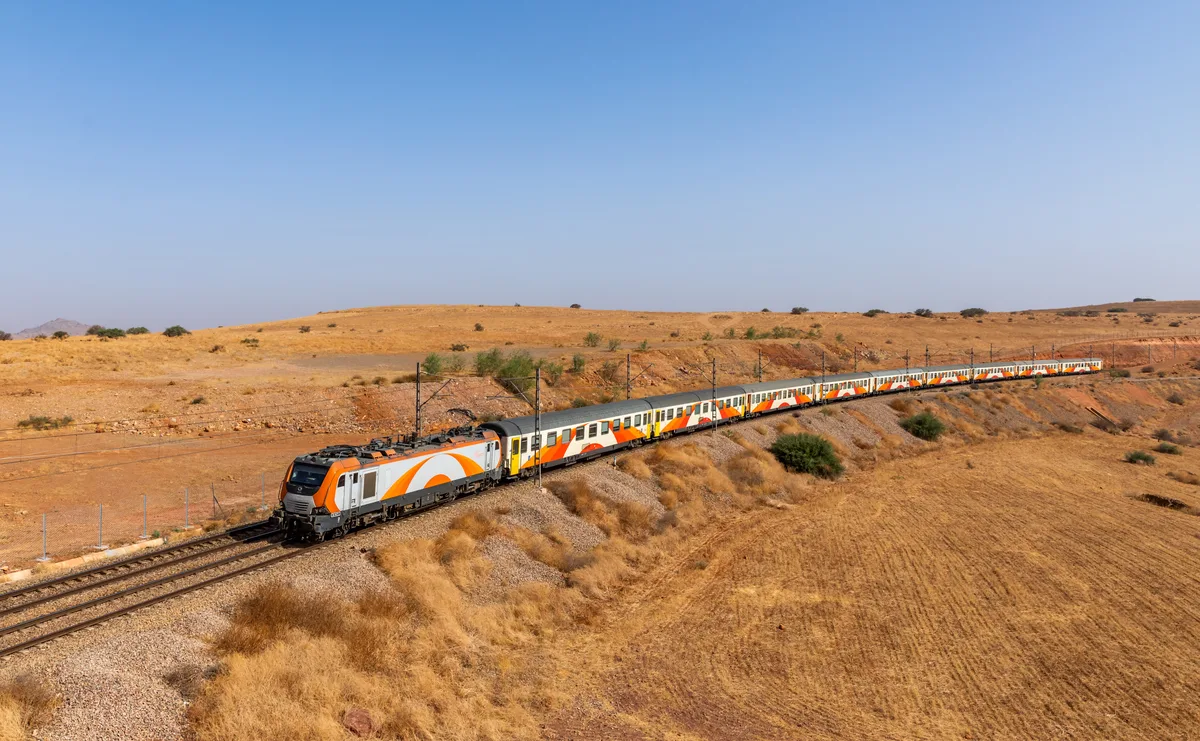
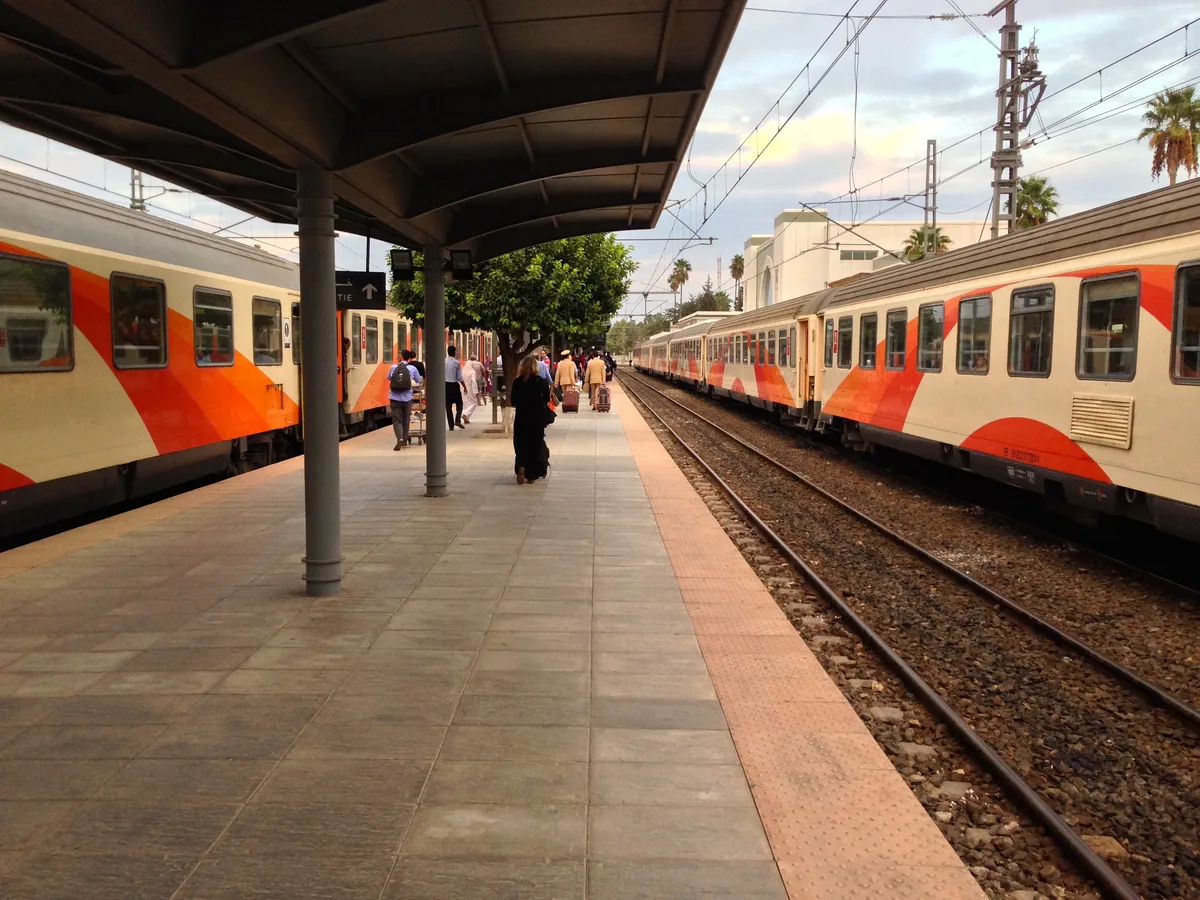
If Al Boraq is the poster, Al Atlas is the railway. Al Atlas is ONCF’s brand for its conventional long-distance trains – locomotive-hauled, air-conditioned, running at up to 160 km/h where the line allows – and they work every route the high-speed line does not: Casablanca to Marrakech, the imperial-city line to Meknes and Fes, the long eastern road to Oujda and Nador, and the classic services interleaved with Al Boraq on the northern corridor. Most journeys a visitor makes in Morocco are Al Atlas journeys, and they are good ones: the stock is a mix of compartment coaches and newer open-plan cars, the liveries are the orange-and-cream you see in this guide’s photographs, and a bar or buffet car rides on many of the longer runs.
The character differs from the high-speed line in ways worth expecting. Classic trains stop more, accelerate less urgently, and share their railway with freight and shuttles, so their timings carry more slack and a little more variance. In exchange they serve the stations Al Boraq skips – Rabat Ville in the capital’s centre, the smaller towns of the plains – and they run in a steady all-day rhythm on the main axes rather than a sparse flagship pattern. On the Casablanca-Marrakech and Casablanca-Fes axes, expect a train every hour or two through the day as the working pattern; check ONCF’s live search for the day you travel rather than trusting any printed grid, this one included.
Since the booking system was unified, Al Atlas trains run on the same rules as Al Boraq: your ticket names a specific train, your seat is numbered and reserved in both classes, and boarding a different departure than the one printed makes you an irregular traveller in ONCF’s eyes. The romance of the open ticket – buy one, ride any train that day – is gone from the classic network too. What remains is better: a guaranteed seat on a named train, and a fare that rewards booking early. The mechanics get their own sections below.
TNR Shuttles and the Airport Train – the Network’s Metro Layer
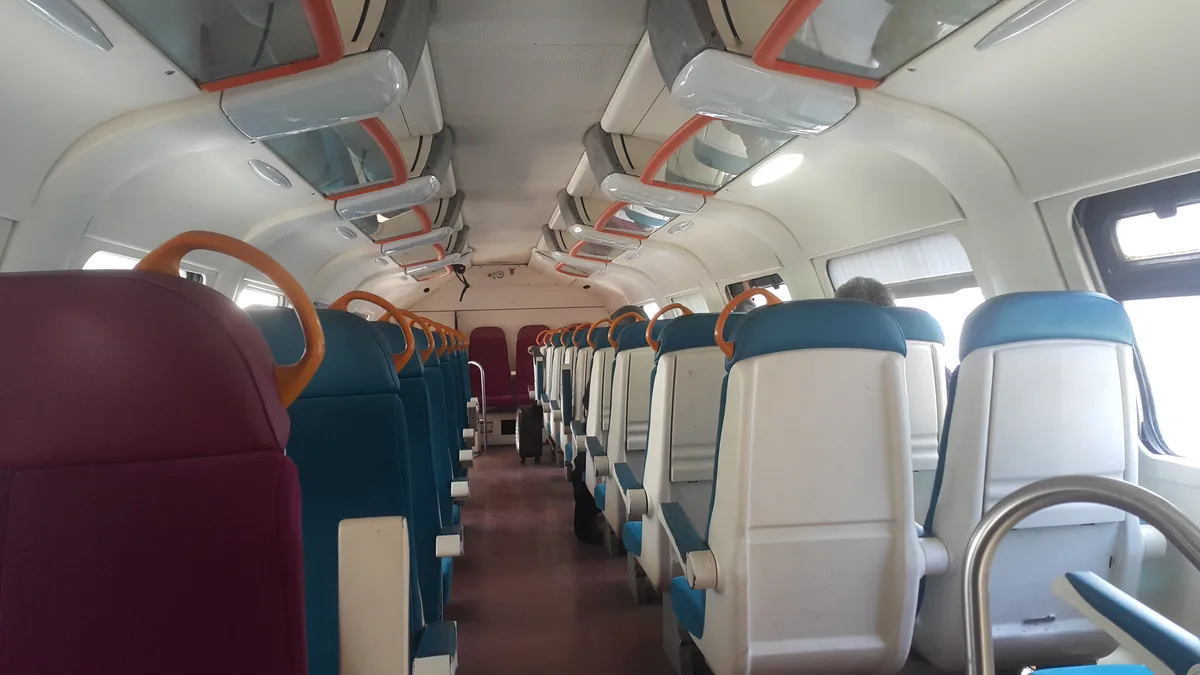
The third railway is the one Moroccans use most and visitors notice least. TNR – Trains Navettes Rapides, “fast shuttle trains” – is ONCF’s name for the intensive shuttle services that bind Casablanca, Rabat and Kenitra into one commuter field. Electric multiple units, including double-deck sets like the one photographed here, shuttle up and down the corridor through the day, at busy times as often as every half hour, stopping at the intermediate stations the expresses pass: Casa Port and Ain Sebaa in Casablanca, Mohammedia, Bouznika, Skhirat, Temara, Salé. For a traveller based in Rabat with a day in Casablanca – or the reverse – the TNR is simply how the trip is done.
The airport train belongs to this family. Mohammed V Airport, Casablanca’s international gateway out in the farmland south of the city, has its own station beneath the terminal, served by TNR trains running to Casa Voyageurs with stops at the city’s other stations on the way. It is the cheapest sane arrival in Morocco: no taxi negotiation, no motorway traffic, a short ride of well under an hour into the long-distance hub, where Marrakech, Fes and Tangier trains connect. The same ticket logic applies as on every shuttle – and here it differs from the expresses: a TNR ticket is not tied to one departure but is valid for an hour, as ONCF’s booking guide puts it, which suits a traveller whose flight landed when it landed.
Hold the distinction clearly, because it decides how you buy. Al Atlas and Al Boraq: one ticket, one named train, one numbered seat, bought in advance for the best fare. TNR: a shuttle ticket, bought at the counter or machine when you arrive, valid for the hour, sit where you find room. Confuse the two systems – turn up for an Al Atlas departure expecting shuttle rules – and the booking sections below explain the expensive conversation that follows. That split personality, one network behaving as two, is the single most useful thing to grasp about trains in morocco before you buy anything at all.
South to Marrakech – the Casablanca to Marrakech Line
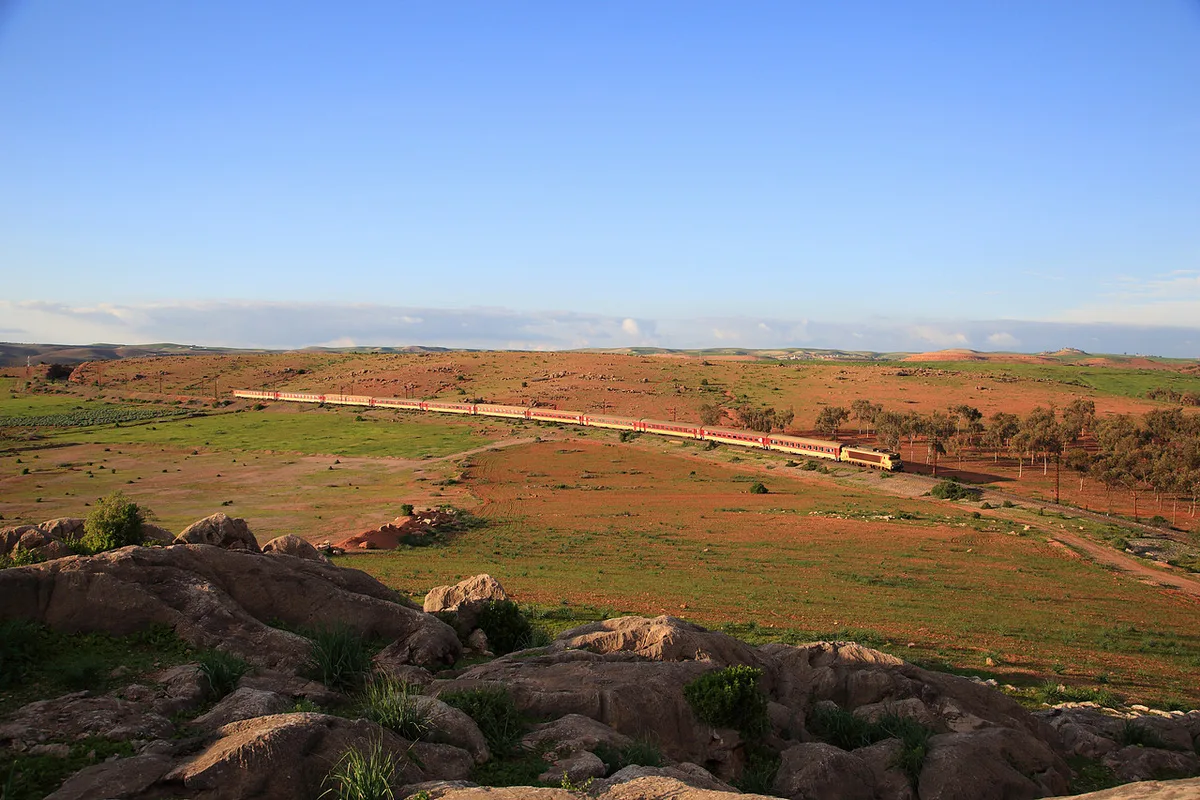
The line south from Casablanca to Marrakech is the busiest classic route in the country, and the one most visitors ride. It leaves the coast at Casa Voyageurs, crosses the Chaouia farmland through Settat, then runs across increasingly dry plains – Benguerir is the main intermediate stop – as the earth reddens and, on a clear winter day, the snow line of the High Atlas assembles itself on the southern horizon. The journey takes roughly three hours, and for a great many visitors it is their first real journey on trains in morocco – the one that converts them. It is also the civilised way to arrive: Marrakech station stands at the edge of Guéliz, the modern city, a short taxi ride or a manageable walk from the medina’s walls, with the Supratours coach station for Essaouira and Agadir connections close by in the same quarter.
Understand what this line is not. It is not high-speed, and no Al Boraq train will ever appear on it until the announced southern extension is built – today’s Marrakech trains are Al Atlas classics throughout, however they were sold to you. Nor is it a mountain railway: the line keeps to the plains west of the Atlas and never climbs, which is why it is fast and reliable in all weathers while the road over Tizi n’Tichka pass is neither. Travellers combining Marrakech with the desert should note the division of labour this creates: train to Marrakech in comfort, then road – tour, driver or coach – for the Atlas crossing and the dunes beyond, because the railway simply does not go there.
Practically, this is the route where advance booking earns its keep most visibly. Weekend and holiday trains out of Casablanca fill, the reserved-seat system means a full train is a full train, and the fare ladder rewards buying days ahead rather than hours. First class, with its guaranteed breathing room, sells out before second. None of that requires panic – the service is frequent – but the Marrakech line is the wrong place to test the walk-up-and-see approach on a Friday afternoon.
East to Fes, Meknes, Oujda and Nador – the Long Line Across the Country
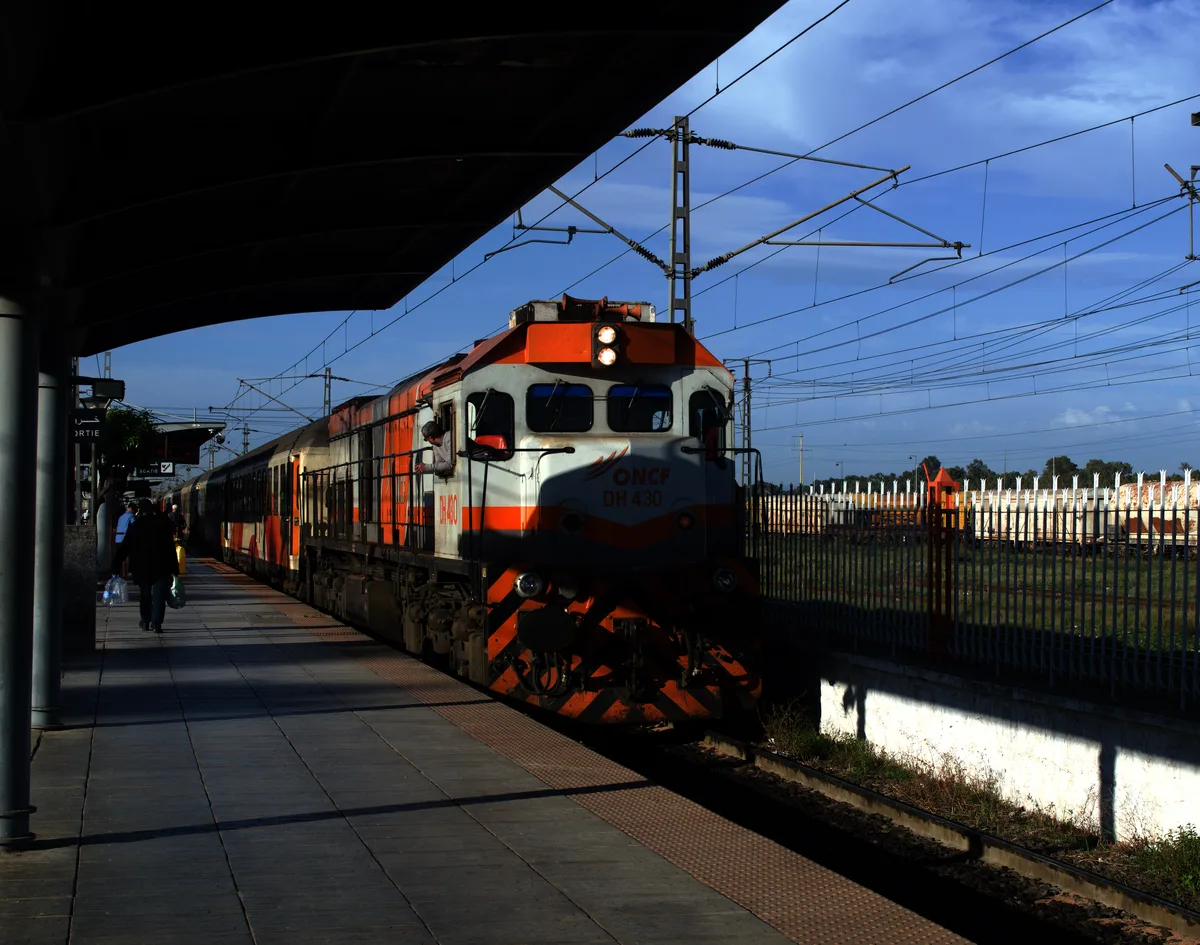
East of the corridor, the railway changes character. The line from Casablanca and Rabat runs inland through Sidi Kacem to Meknes and Fes – the imperial cities line, electrified, busy, roughly three and a half to four hours from Casablanca to Fes – and then keeps going, into a different Morocco. Beyond Fes the wires end. Diesel locomotives take the trains through the Taza gap, where the line threads between the Rif and the Middle Atlas, past the reservoir of Idriss I whose shore the railway skirts, and out onto the high eastern steppe: Guercif, Taourirt, and finally Oujda at the Algerian frontier – a border closed to passengers for three decades now, making Oujda a terminus in every sense. Allow the best part of a day for Fes to Oujda; it is the longest daylight ride in the country.
At Taourirt the Nador branch turns north: a newer line, opened in 2009, dropping from the steppe to the Mediterranean at Nador and its port station of Beni Ansar, where the ferries for Spain berth. The branch exists for the port and the diaspora traffic that floods through it in summer, and its trains are timed with that world in mind – including the overnight services described in the next section. For the ordinary visitor the branch matters as the railhead for Melilla and the eastern Rif coast, and as proof of the network’s logic: where a port or a city justifies it, Morocco still builds railway.
Two stops on the western half of this line deserve a traveller’s note. Meknes, the third imperial city, is the gateway for the Roman ruins of Volubilis and the holy town of Moulay Idriss – both a short grand-taxi ride from Meknes station, and together the easiest antiquity day trip on the whole network. Fes, an hour further, is where the line’s two worlds meet: westward, the frequent electrified railway of the corridor; eastward, the diesels and the steppe. Many travellers ride trains in morocco no further east than Fes, which is a pity – but it does mean the eastern trains run quieter than anything on the corridor, and a window seat is rarely contested.
The east is also where expectations should adjust. Frequencies thin beyond Fes, single-track sections mean waits in crossing loops, and the Al Atlas trains out here run older and plainer than the corridor’s showcase services. None of that makes the eastern line a hardship posting – the Taza gap and the steppe crossings are genuinely scenic, the trains are air-conditioned, and Fes station, the junction where east meets west, is a fine modern building. It makes it a line to ride with time in hand and a book for the loops, not one to schedule against a same-day flight.
Night Trains – Couchettes, Sleeping Cars and the Train-Hôtel
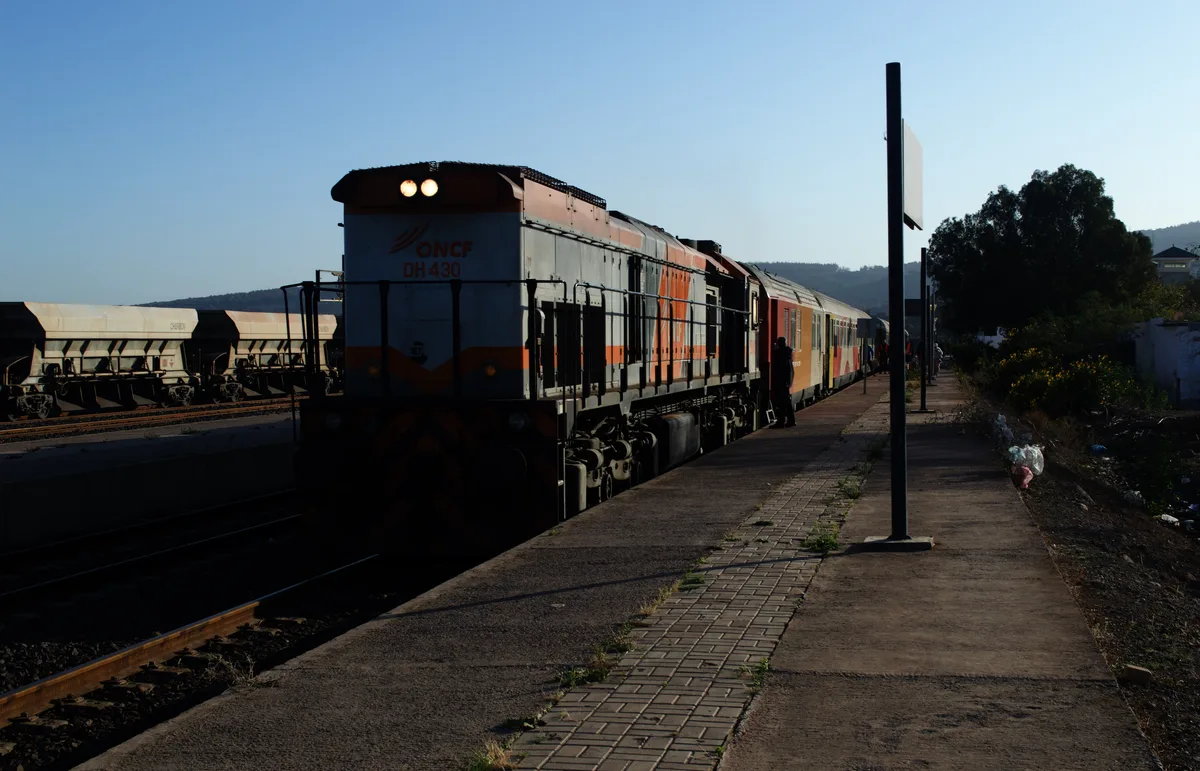
Morocco still runs proper night trains, and for long crossings they remain the smartest move on the network. Among trains in morocco the sleepers are the connoisseurs’ favourite – the one service where the journey is not a means to the day but a replacement for a night of it. ONCF’s overnight services – the operator markets them as voyages de nuit, night journeys – link the pairs of cities too far apart for a comfortable day ride: Casablanca with Oujda in the far east, Marrakech with Tangier the length of the country, and Casablanca with Nador on the port branch. The Marrakech-Tangier sleeper is the classic: board in the evening, sleep through the corridor, and step off at the strait in the morning, having traded a hotel night and a travel day for one berth. Overnight trains also run between Tangier and the east, though not every eastern service carries sleeping accommodation – check the specific train in ONCF’s search before assuming a berth exists.
The accommodation divides into couchettes and sleeping cars, and the difference is worth the money on the long hauls. A couchette compartment holds four bunks – a padded berth, a blanket, a small hygiene kit and water provided, and breakfast of a simple kind included in the fare structure as ONCF describes the product. Sleeping cars offer made-up beds in compartments of one or two, the closest thing Moroccan rail has to a hotel room, and on the Casablanca-Oujda run the operator goes further: its train-hôtel formation is all beds and couchettes, no ordinary seats at all – a train designed to be slept in, not sat in. Ordinary first and second class seats also ride on some night services for those who would rather save the supplement and lose the night.
Night trains are popular out of all proportion to their frequency – one departure a night in each direction is the pattern on the sleeper routes – and berths, especially sleeping-car berths and summer couchettes on the Nador and Tangier runs, sell out well ahead. Book them the way the next sections describe: online or at a station, in advance, for a named train. And confirm the current pattern before building an itinerary on a sleeper: night services are the first thing a seasonal timetable reshuffles, and ONCF’s live search, not any guide, is the authority on whether this winter’s Marrakech-Tangier train carries a couchette car.
First Class or Second Class – What the Difference Actually Buys
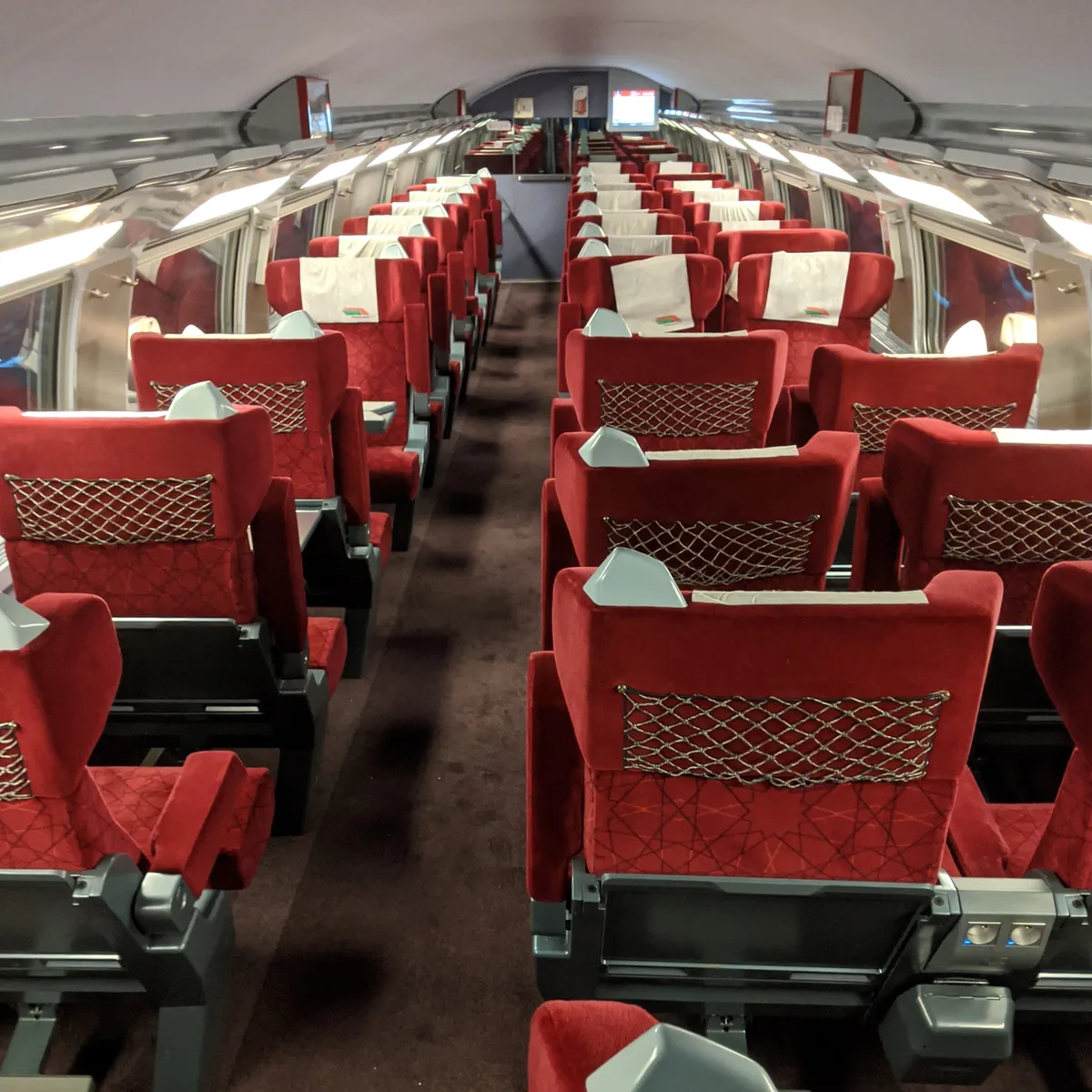
Every long-distance train in the country offers the same two classes, and the choice is simpler than the fare ladder makes it look. First class buys space and certainty: on the classic compartment stock, six seats to a compartment instead of eight, wider seats, more luggage room per passenger, and on Al Boraq the two-plus-one layout in the photograph, with the run of the first-class lounges ONCF provides at the corridor stations. Second class buys the same railway at a lower price: eight-seat compartments on the older coaches, open-plan seating in the newer ones, the same air-conditioning, the same arrival time. On the shuttle TNRs the classes compress – a first-class section in the same train, quieter mainly by price.
The decisive fact is one ONCF’s booking system created: on Al Atlas and Al Boraq alike, a ticket in either class now carries a numbered, reserved seat on a named train. Put simply, the difference between the classes on trains in morocco is space and calm, never speed – both classes arrive on the same train, at the same minute, through the same stations. The old second-class gamble – ticket in hand, seat if you are quick – is over on the reservation trains; second class guarantees your seat exactly as first does. What first class still guarantees beyond that is room: fewer neighbours, easier luggage, a calmer carriage on the busy axes. The premium is traditionally modest by European standards – this guide prints no fares, but the structure holds: first class costs a fraction more, not a multiple.
So the honest advice is situational. Short hops on the corridor: second class, and spend the difference on coffee. Long hauls – Casablanca to Fes, anything east, the Marrakech run at a holiday weekend: first class earns its premium in space and quiet, and because it sells out first on busy days, it is the class to book earliest. Night trains rewrite the question entirely – there, the choice is not first against second but berth against seat, and it is covered in the night trains section above. Families should know the system helps them: children travel at a discount under ONCF’s tariff, with the youngest riding free – the cards and discounts section below lays out the structure.
The Stations Worth Knowing – and the Two-Station Traps
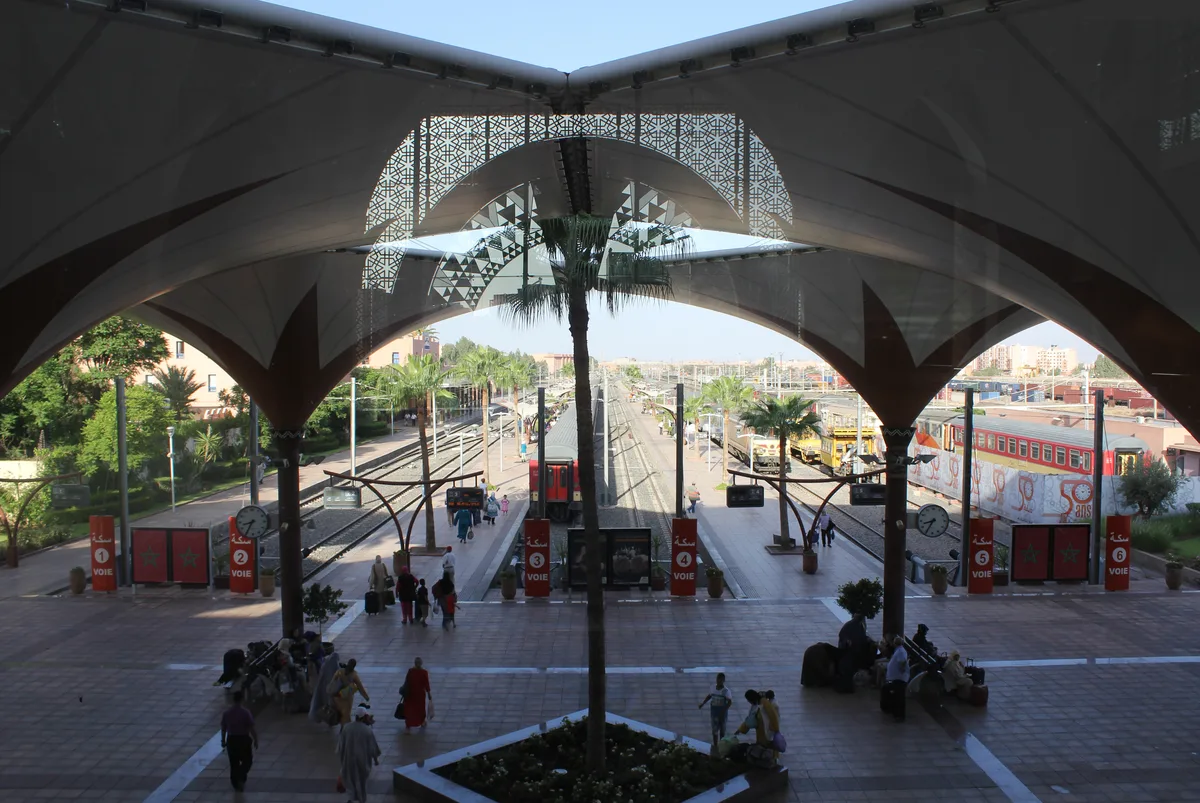
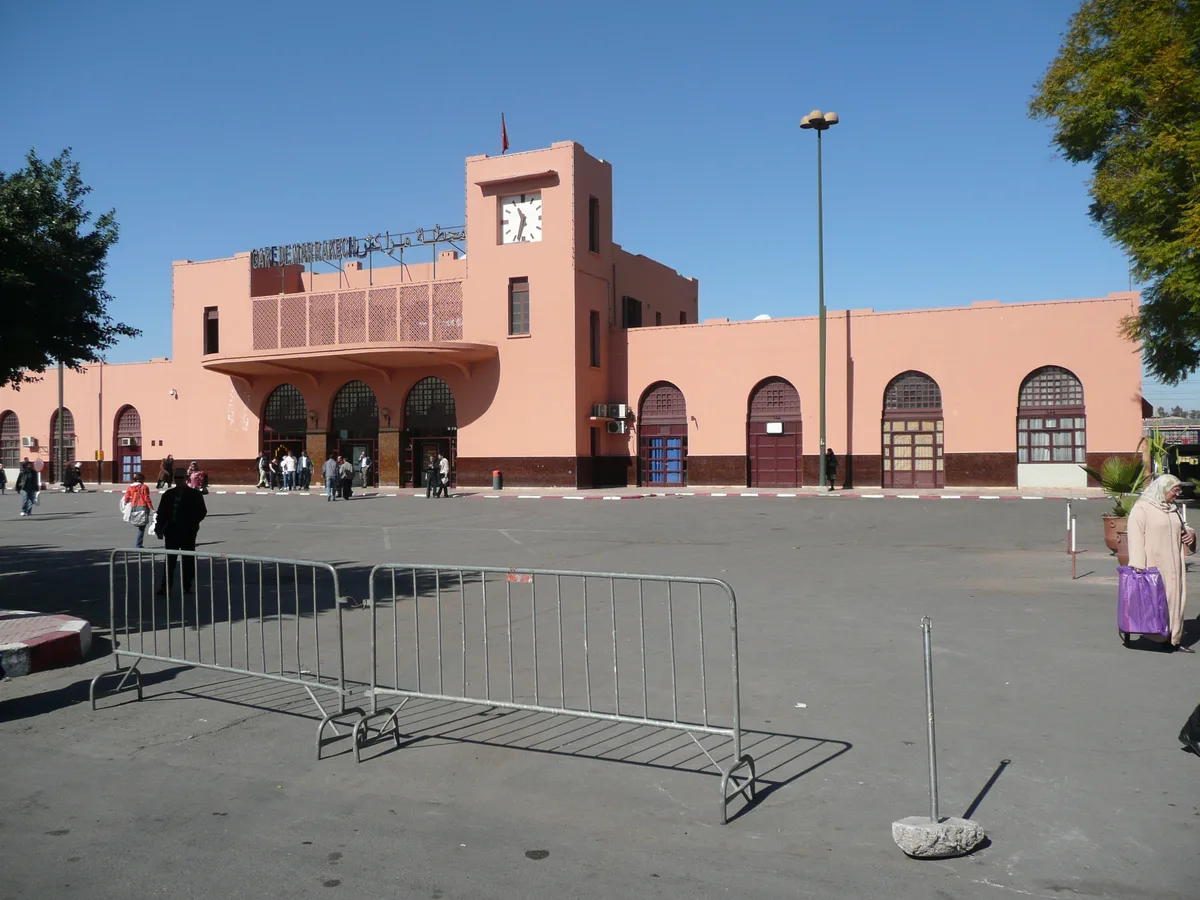
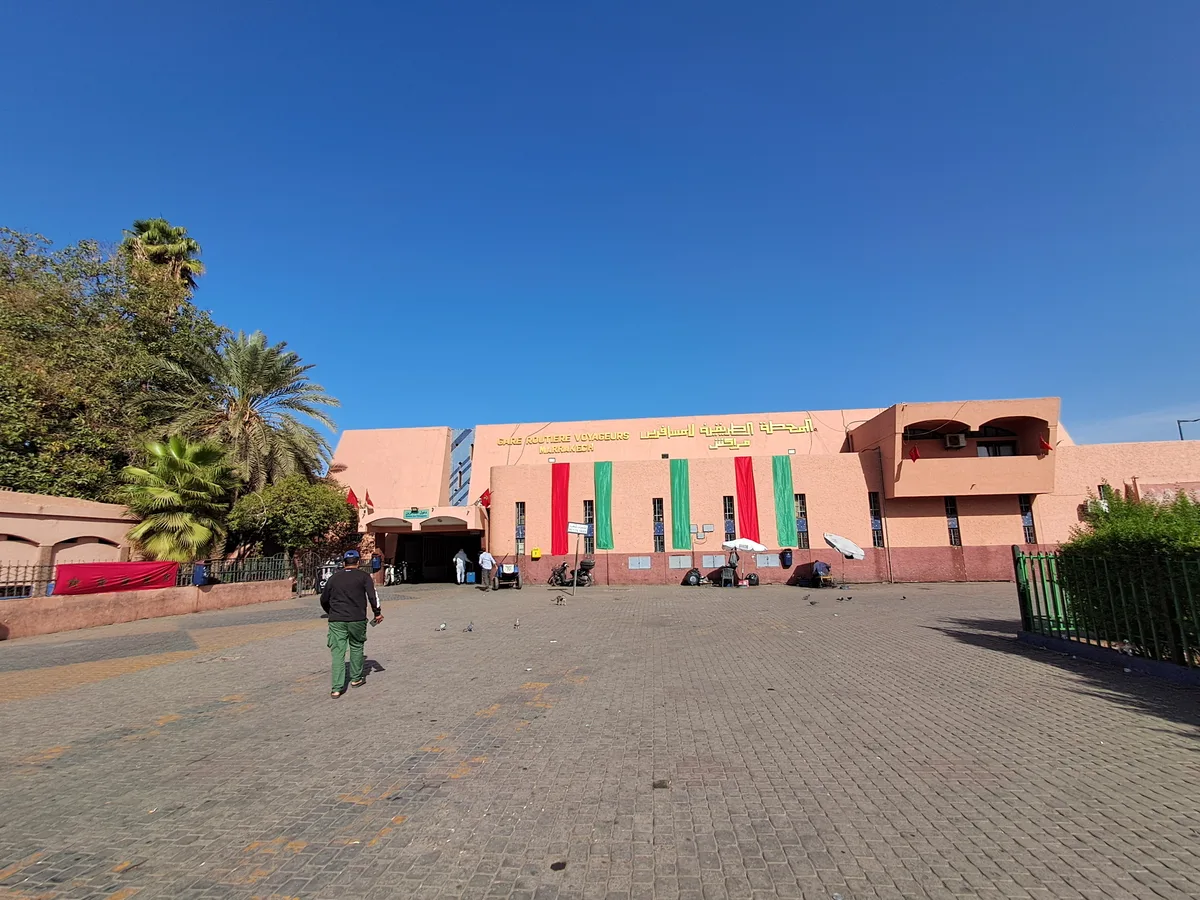
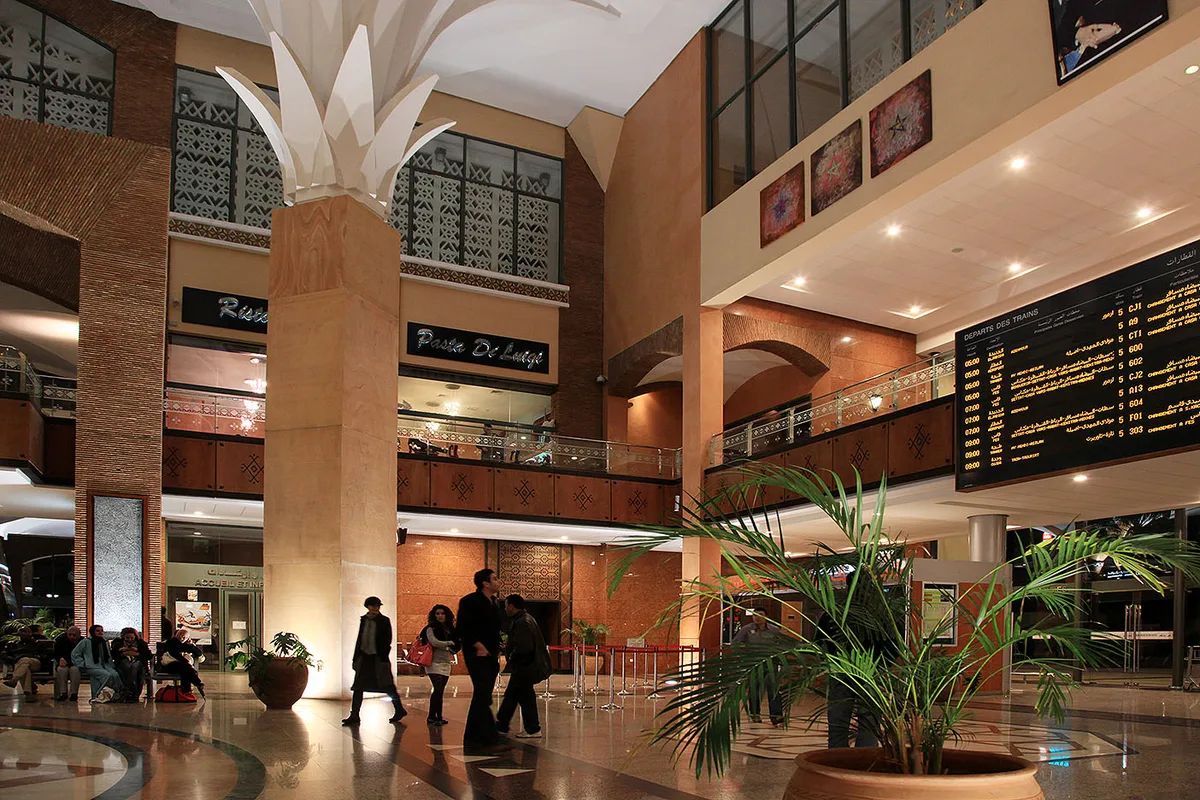
Morocco spent the 2000s and 2010s rebuilding its great stations, and the results are part of the pleasure: Kenitra’s lattice-fronted high-speed station, Rabat Agdal’s glass hall, Marrakech’s vast palm-shaded canopy, Casa Voyageurs with its clock tower presiding over the platforms. These are landmarks with cafes, shops and legible departure boards, built for the reservation era – platform access controlled, zones signed, staff visible. Arrive at one as you would at a small airport: ticket in hand, an eye on the board, a few minutes in hand. The smaller stations of the east and the branch lines are simpler – a booking hall, a platform, a board – but the rules of travel are identical.
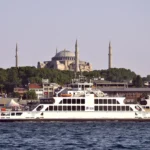
The traps are the doubled cities. Casablanca: Casa Voyageurs for Al Boraq, Marrakech, Fes and the airport trains; Casa Port for shuttles and the port-side medina – they are a short taxi ride apart, and the wrong one costs you exactly that ride plus your composure. Rabat: Rabat Agdal for Al Boraq and most long-distance trains; Rabat Ville, the white art deco station on the main avenue, for classic trains, shuttles and the walkable centre. Tangier has one station, Tanger Ville, beside the bay – do not confuse it with Tanger Med, the deep-water port an hour east, which has ferries and no railway station at all; ferry passengers for the trains land at Tangier’s city port, a short walk or taxi from Tanger Ville.
Fes and Marrakech, happily, are single-station cities. Fes station stands in the Ville Nouvelle, the modern city – the medina of Fes el-Bali is a petit taxi ride away, and no train will take you closer. Marrakech station likewise serves the modern city, with the medina a short hop east. In both, the walk from platform to taxi rank is where the city’s ordinary negotiations begin; have your destination named and, for the medina riads, a meeting point arranged. The trains in morocco deliver you to the station forecourt in good order; the last kilometre is Morocco’s own system, and it is priced and paced differently.
Booking Tickets – oncf-voyages.ma, the App and the Station Counter
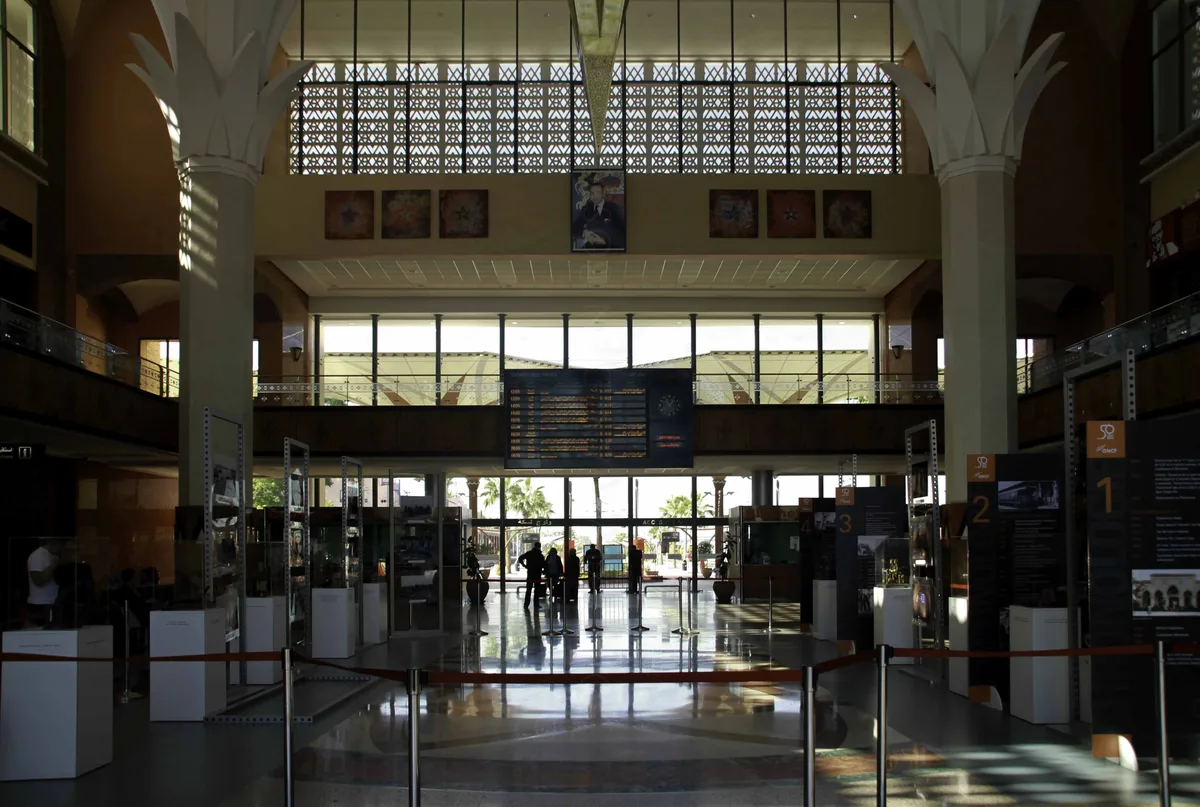
ONCF sells its tickets three ways, and its own booking guide lists them: at station ticket counters, at the ticket vending machines in the big stations, and online at oncf-voyages.ma, the operator’s booking site, which sells coach tickets for Supratours alongside the trains. The operator’s app, ONCF Voyages, does the same job on a phone – trains and Supratours coaches, account, bookings, the discount cards – while a second official app, ONCF Trafic, follows trains in real time and is the one to open when a connection feels tight. Between the site and the apps, every ticket this guide discusses can be bought without queuing anywhere.
Understand the fare system before you buy, because it is a ladder, not a price. ONCF’s published model – set out in full in ONCF’s own booking guide, read for this guide in October 2026 – prices each train dynamically: a seat costs least when bought early and rises as departure approaches and the train fills. Against that ladder sit two flexibility families. Semi-Flex is the cheaper, stiffer ticket: exchangeable once, refundable only in part. Flex costs more and behaves like the old railway: exchangeable several times, refundable in full until the day before travel, with a charge for a same-day refund. Choose Semi-Flex for the journey you are sure of, Flex for the one built around a flight.
Practical wrinkles, honestly stated. The sales window closes three minutes before departure – a train standing at the platform with seats free is still closed to you at two minutes to go, so the counter sprint is a losing sport. At holiday peaks and on Friday and Sunday afternoons, popular trains sell out in both classes; the booking system will offer you the next train, possibly hours later. The summer return of Moroccans living abroad swells everything further – the great July and August tide through Tangier and Nador is the busiest season trains in morocco ever see, and it is the season when booking ahead stops being advice and becomes the whole game. Foreign bank cards are a recurring complaint in traveller reporting about the website – some sail through, some are declined for reasons the site does not explain. The fallback is honourable and easy: the station counter and machines take cash and cards over the counter, and a ticket bought there is identical in every right to one bought online.
Reading Your Ticket – Car Numbers, Seat Numbers and Platform Zones
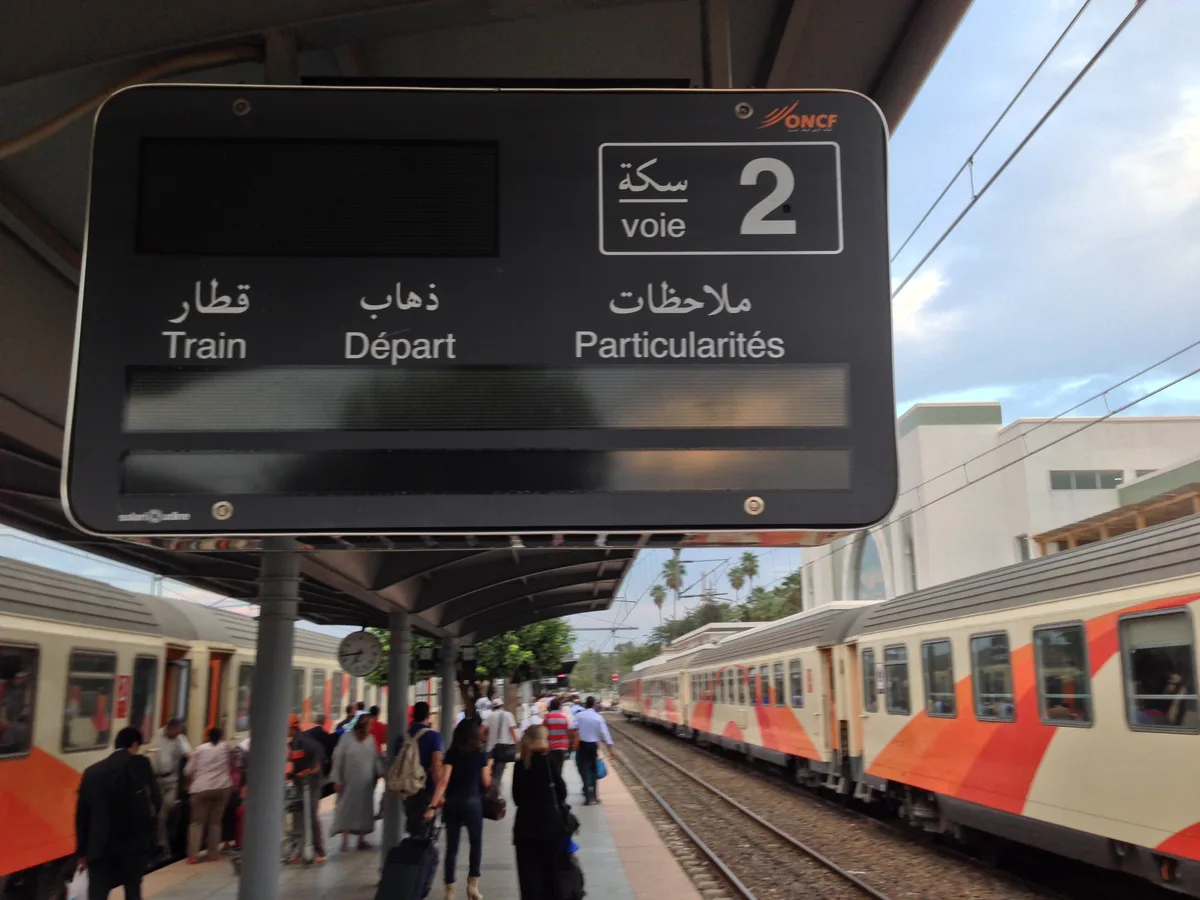
A Moroccan train ticket is a set of coordinates, and ONCF’s booking guide spells out how to read them: train number, car number, seat number. The train number is the master key – boards and announcements are organised by it, not by destination alone, so learn yours before you reach the platform. The car number tells you where along the train your carriage stands, and it is coded by class: first-class cars are numbered in the teens, second-class cars in the twenties and thirties. Platforms at the reservation-era stations are divided into lettered zones, and the train diagram on the departure monitor shows which zone each car number stops in. Walk to your zone before the train arrives and boarding becomes a stroll instead of a sprint with luggage.
The seat number completes the system. On the compartment stock it encodes the compartment and your place within it – the guide’s own example: seat 35 is place 5 in compartment 3 – with the numbers repeated on plates at the compartment door and above each seat. Sit in the seat you are given: on a reservation train, the cheerful seat-swap culture of the old open ticket is an irregularity, and the conductor’s tablet knows exactly whose name belongs in your chair. If you cannot find your car or seat, ONCF’s advice is disarmingly simple and correct – ask the staff on the platform; they do this five hundred times a day.
The timings around boarding are also published, and they are stricter than the country’s reputation suggests. Platform access opens forty minutes before departure; with a ticket in hand, be at the station at least fifteen minutes before your train; access to the platform closes two minutes before departure, after which a valid ticket and a stationary train still will not get you aboard. And the mirror rule: boarding without a valid ticket, or on a different train than the one printed, makes you an irregular traveller – regularised on board at the punitive on-board fare, or by a fine. The trains in morocco are friendly, but their paperwork is not sentimental.
Luggage – Everything Rides With You
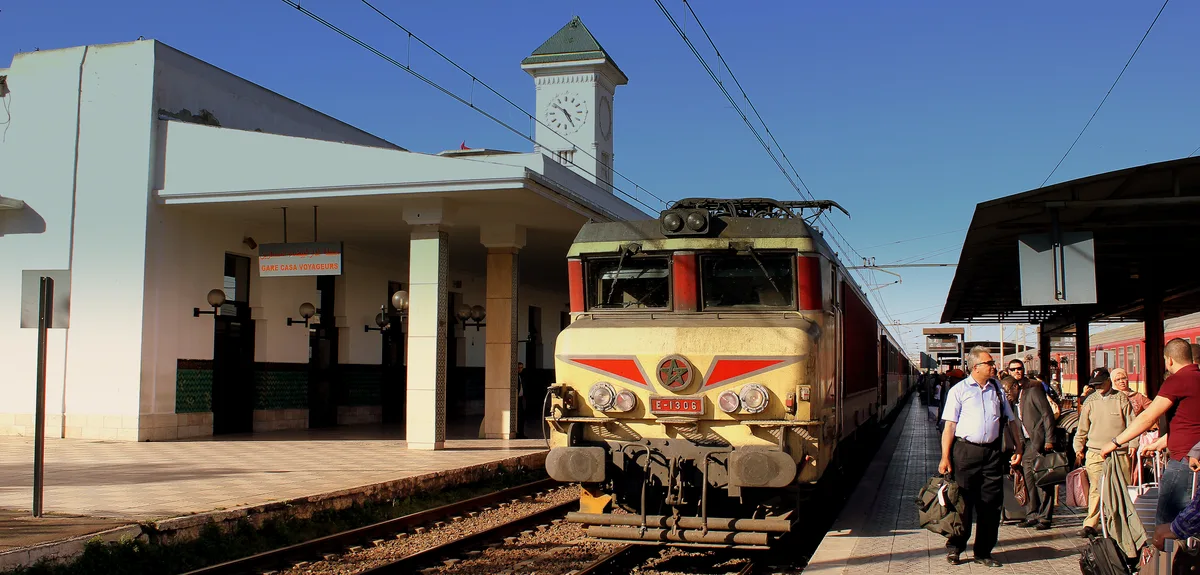
There is no checked baggage on Moroccan trains – no bag drop, no luggage car, no reclaim belt. What you bring, you carry: onto the platform, into your carriage, and into the racks yourself. The carriages are built for it – overhead racks along the compartment stock and open-plan cars, and larger spaces at the carriage ends for the suitcases that will not lift. A bag you cannot lift to shoulder height is a bag you will curse on every boarding, and boarding, remember, happens from your platform zone against a two-minute access cut-off. Pack for the railway you have: one main bag you can carry up a step and hoist, plus a small one for the seat.
There is a second, quieter consequence of the carry-everything rule: trains in morocco have no luggage weight police either. No scales, no per-kilo fees, no checked-bag dimensions – the practical limit is your own strength and the rack above your seat. Cyclists and travellers with instruments or trade samples use the system precisely because of this tolerance; the carriage-end spaces absorb what European railways would send to a courier.
At the big stations you are not entirely alone with the physics. Porters with hand carts work the forecourts and platforms of the major stations, and for a family with cases or a traveller with a bad shoulder they are worth their fee – agree the price before the bags move, as with every unmetered service in Morocco. Inside the train, keep documents and valuables in the small bag at your seat rather than in the rack: compartments are sociable, stations stops are frequent, and the ordinary rule of trains everywhere applies unchanged here. Nothing in the system is unsafe by regional standards; everything in it assumes you are awake to your own belongings.
Two luggage situations deserve planning. The night trains: your berth is your luggage’s berth too, couchette compartments are shared with strangers, so a smaller soft bag that fits beneath the bunk beats a hard case that colonises the compartment – and keep the morning’s needs at the top, because a couchette at 3 a.m. is no place for a full unpack. And the ferry connection at Tangier: travellers arriving off the boat with wheeled cases face a short, flat walk or a brief taxi hop between the city port and Tanger Ville station, easy in daylight – another reason the northern corridor through Tangier works so smoothly as an arrival route.
The Scenic Lines – Where the Window Earns Its Keep
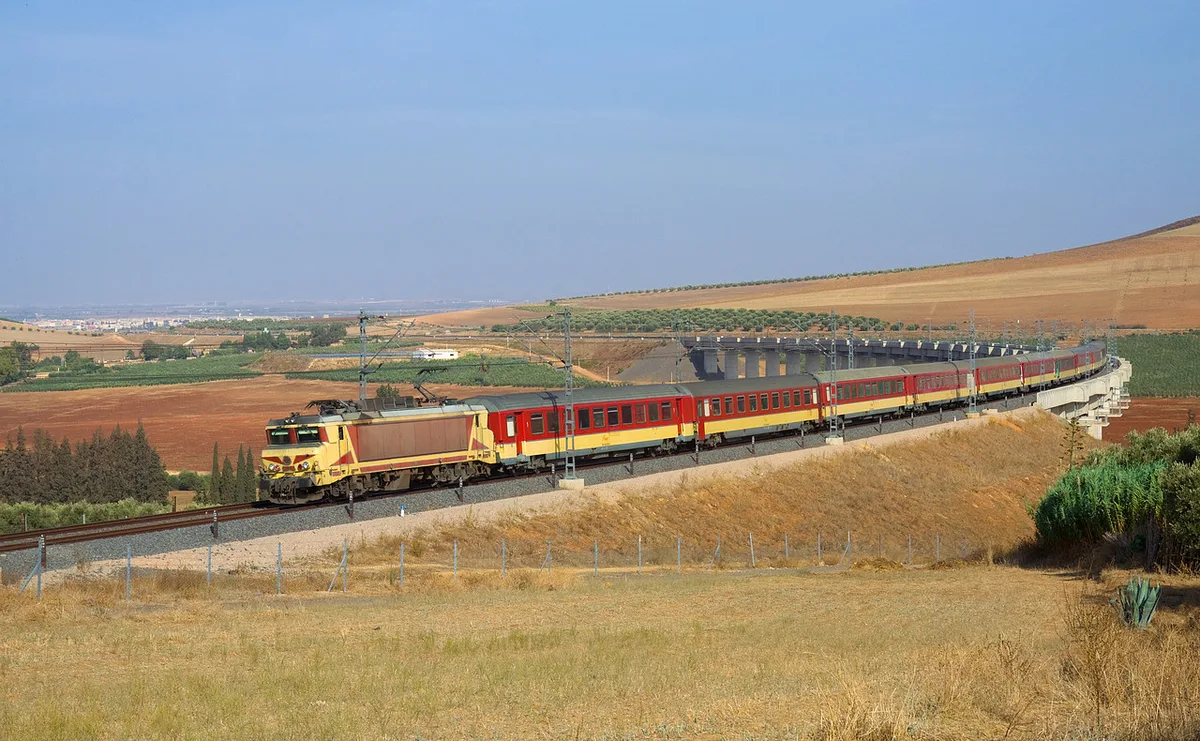
Morocco’s railways were built for commerce, not postcards, but three stretches repay a deliberate window seat. The first comes early on the northern corridor: the Bou Regreg crossing between Salé and Rabat, where the train runs out over the estuary with the two white cities facing each other and the Atlantic beyond the bridge – two minutes, and the best-known view on the network. Around it, the run south from Tangier has its own pleasures: the line keeps faith with the Atlantic plain, crossing the Sebou’s green floodplain by Kenitra and passing the edge of the Maâmora, one of the world’s great cork-oak forests, before the suburbs begin.
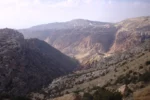
The imperial line east of Rabat is the connoisseur’s stretch. Between Meknes and Fes the railway crosses the Saïs, a rolling limestone plateau of wheat, olives and vineyards, with the Middle Atlas standing blue on the southern horizon – the photograph above catches it exactly – and east of Fes the line climbs through the Taza gap, the historic corridor between mountain ranges, before descending past the Idriss I reservoir and out onto the steppe. The steppe hours to Oujda divide opinion: it is empty, ochre and enormous, and travellers who take to it find the emptiness is the point.
South to Marrakech the scenery builds by accumulation: the green Chaouia, the drying plains, the first red hills, and then – in the clear air after winter rain – the High Atlas appearing whole along the horizon, snow on the high peaks, growing as the train runs toward it. Time that journey for a winter or spring morning if the Atlas matters to you. None of these lines is sold as a scenic railway, the windows are ordinary train windows, and the trains in morocco will not slow down for any of it – which is precisely why the views feel earned rather than packaged.
Where the Railway Stops – Supratours and the Towns Beyond the Tracks
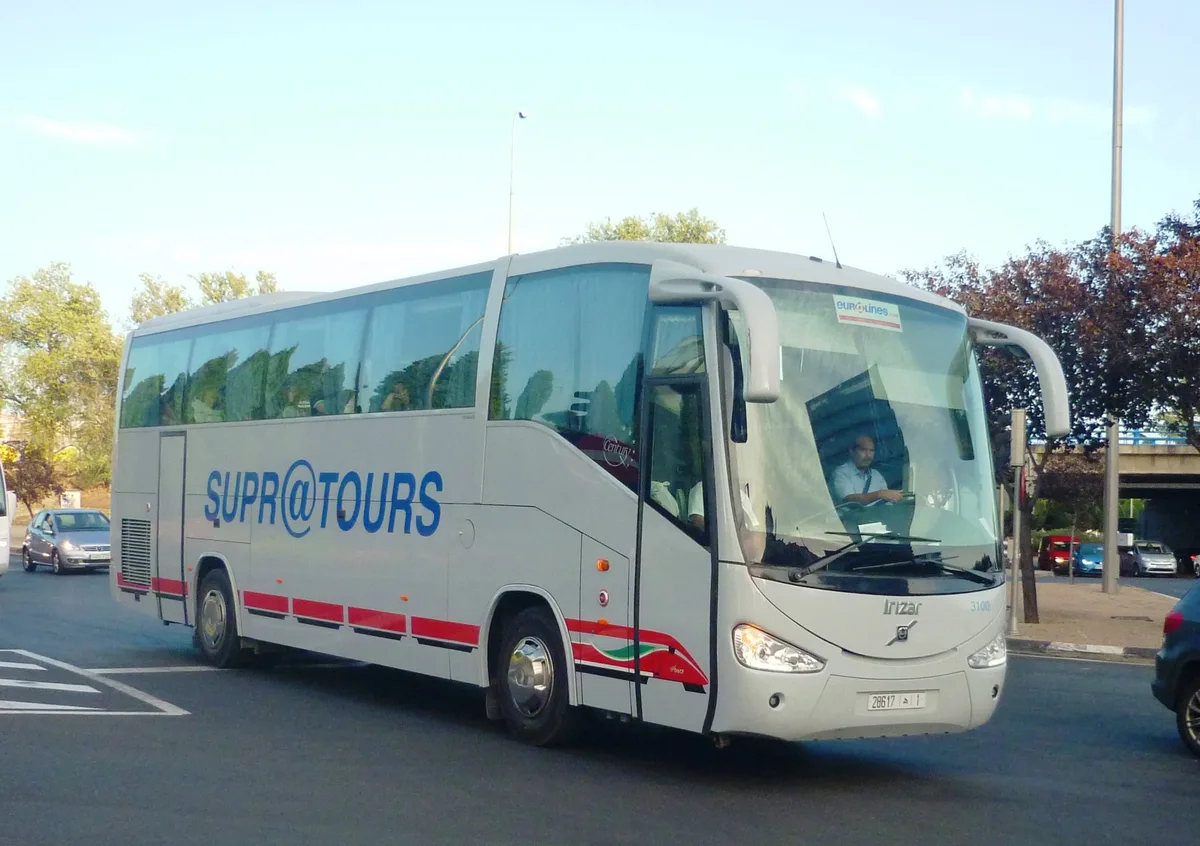
Draw the rail map on a napkin and the gaps are the famous names: Chefchaouen in its Rif valley, Essaouira on the Atlantic, Agadir and the southern coast, Tetouan, Ouarzazate and the kasbah road, the dunes at Merzouga. No rails reach any of them, and ONCF has never pretended otherwise – instead it built the bridge itself. Supratours is the national railway’s own coach company, and its services are timed and sold as extensions of the trains: the Marrakech to Essaouira coach that meets the Casablanca trains, the Marrakech to Agadir service, coaches from Tangier towards Tetouan and Chefchaouen. One booking, one operator, a ticket that reads like a train ticket because ONCF sold it to you as one.
That integration is the honest reason to choose Supratours over the independent coach stands for a rail-linked trip: the connection is designed, the ticket is bought on oncf-voyages.ma or in the app alongside your train, and your arrival at the railhead and your coach’s departure are planned by the same company. For journeys with no rail component at all, the wider coach market – CTM above all – is the comparison to make, and the next section weighs it. But the traveller riding the trains in morocco should treat Supratours as what it is: the network’s second half, wearing tyres.
The desert deserves its own sentence, because it is the gap travellers most often misjudge. The railway’s south-eastern limit for desert purposes is Marrakech, and everything beyond – the Atlas passes, Aït Benhaddou, the Dades and Todra, the Erg Chebbi dunes – is road country served by tours, drivers and coaches, never by rail. A train ticket to Marrakech plus a desert tour from Marrakech is the classic combination and a good one; a search for the Marrakech-to-Merzouga train is a search for a thing that does not exist.
Trains Versus Buses and Grand Taxis – Choosing Honestly
On the rail spine, the train wins and it is not close. Between Tangier, Rabat, Casablanca, Fes and Marrakech a train gives you a reserved seat, air-conditioning, a toilet that works, room to stand and walk, and a city-centre arrival, at a price in the same bracket as the coach – plus immunity from the motorway’s moods. The independent coaches, CTM first among them, are modern and well run, but on a corridor the railway serves they are the second choice for everything except a departure time the trains happen not to offer. Where travellers go wrong is the reverse error: forcing the train onto journeys it does not make, stitching a rail leg to a town the line passes miles from, when a direct coach would have been simpler.
Off the spine, the hierarchy inverts. CTM and Supratours coaches link the rail-less cities in air-conditioned comfort with booked seats and luggage in the hold – Essaouira, Agadir, Chefchaouen, Ouarzazate, the south. Below them, the grand taxi: the shared intercity car, traditionally a big Mercedes, leaving when full from a rank outside every station and medina, is the connective tissue of short hops – the forty-minute dash between neighbouring towns where neither train nor timetabled coach quite fits. Grand taxis are priced per seat, priced before you sit down, and priced differently again if you buy out the whole car; for a group, that buy-out is often the smartest transport buy of the trip.
And inside the cities, the petit taxi owns the last mile between station and medina – metered in principle, agreed in advance in practice where the meter stays shy. The complete system, then: trains in morocco for the spine, coaches for the web beyond it, grand taxis for the gaps, petit taxis for the last kilometre. Each layer is good at its own job. The only real mistake is asking one layer to do another’s.
Cards, Discounts and the Rail Pass Question
Every few months a traveller asks the internet for Morocco’s rail pass, and the honest answer is that the thing they are imagining – an Interrail-style card giving unlimited tourist travel for a week – is not part of ONCF’s current published offer, as checked against the operator’s own site and booking guide in October 2026. Old guidebooks describe loyalty cards of earlier eras in loving detail; those schemes no longer appear in the operator’s current tariff, and a guide that sold them to you as fact would be recycling print from another decade. What ONCF actually runs is a set of discount cards for defined travellers, commuter subscriptions, and seasonal promotions that appear, run for a summer, and vanish.
Start with what the system is really built on, because the pass question misunderstands it: the everyday discount on trains in morocco is not a card at all, it is the fare ladder itself – the same seat sold cheaper weeks ahead and dearer on the day. A traveller who books early rides at the closest thing to a pass price the network offers, without holding any card.
The standing cards, as the official booking guide lays them out, work by status rather than by pass. Students under 26 can hold a student rail card giving a discount on second-class travel across the network. Travellers under 30 travelling for leisure, and seniors over 60, each qualify for a percentage discount on the available fare in both classes, all year, regardless of when they buy. Children between 4 and 15 travel at a discount – on Al Boraq at a fixed child fare per class, the same whatever the journey – and groups of nine or more booking together receive a group reduction arranged through the station. The percentages and the fixed amounts are published in ONCF’s guide and were read for this article; the figures themselves are deliberately not frozen into this page, because fares are the one thing this site refuses to print stale.
The subscriptions are for residents, not visitors: the shuttle corridor’s commuters hold monthly or annual cards – the Smart’ Navette pass and its kin – which let them ride the TNR layer freely and reserve seats on reservation trains at no extra charge for the routes their card covers. Two lessons for visitors fall out of all this. If you qualify for a status discount, ask for it before you pay – discounts are never applied to the on-board fare after the fact. And if a seasonal promotion is running when you travel – summer tourist cards offering a run of discounted trips across Al Boraq, Al Atlas and TNR have appeared in recent summers – it will be on ONCF’s own channels and nowhere more reliable.
Trains in Morocco – Practical Questions, Answered
Do I need to book trains in Morocco in advance? For Al Atlas and Al Boraq, effectively yes. Your ticket is a reservation on one named train with a numbered seat, prices rise towards departure, and busy trains sell out – book days ahead online at oncf-voyages.ma or in the ONCF Voyages app, especially for Marrakech on weekends and for any night train. TNR shuttles are the exception: buy at the station when you arrive; the ticket is valid for an hour.
Can I just turn up and buy a ticket at the station? Yes – counters and vending machines sell every train, and station purchase is a perfectly good fallback if the website defeats you. Two warnings: sales close three minutes before departure, however empty the train, and on a peak day the train you want may simply be full. Turning up works best off-peak and on the corridor, where another departure follows soon.
Is there a rail pass for tourists in Morocco? No standing one. ONCF’s current offer, as published in its booking guide and checked in October 2026, is discount cards (students under 26, under-30s, over-60s, children, groups), commuter subscriptions for residents, and seasonal promotions that come and go. For a normal two-week trip, advance Semi-Flex tickets on the fare ladder will beat any pass arithmetic anyway.
Which class should I choose? Second class for short corridor hops – your seat is reserved and guaranteed there too. First class for the long hauls: Casablanca to Fes, the Marrakech run at busy times, anything east of Fes. The premium is modest, the space is not, and first sells out first on peak days, so book it earliest. On night trains, choose a couchette or sleeping car over any seat.
Can I reach Chefchaouen, Essaouira or the Sahara by train? No – and this is the most useful no in Moroccan travel. The railway never reaches them. Ride the train to the nearest railhead (Tangier for Chefchaouen, Marrakech for Essaouira, Agadir and the desert tours) and continue by Supratours coach, CTM coach or grand taxi; Supratours is ONCF’s own coach arm and its connecting tickets are sold on the same site and app as the trains.
How do I get from Casablanca airport to the trains in morocco network? Mohammed V Airport has a station under the terminal served by TNR trains to Casa Voyageurs, the long-distance hub – a short ride, no reservation, ticket valid for an hour. From Casa Voyageurs the Marrakech, Fes and (via the corridor) Tangier trains connect. It is the simplest arrival in the country; just follow the station signs in the terminal.
What happens if I board the wrong train, or travel without a ticket? In ONCF’s language you are in an irregular situation, and it is settled with money: the on-board fare – set punitively above the ordinary price – or a fine, with no seat guaranteed either way. The system is not bluffing; conductors check against the reservation list. If you realise a mistake before departure, go to the counter, not the carriage.
Are Moroccan trains safe and comfortable for a first-time visitor? Yes, by the standards of the region they are the benchmark: air-conditioned, staffed, reservation-run on the main lines, with stations rebuilt in the last two decades. The ordinary cautions apply – watch your bags at stops, keep valuables in your small bag, arrive with the fifteen minutes ONCF asks for – and the trains in morocco will repay you by being the calmest part of the trip.