Ksamil Travel Guide – Islands, Beaches and the Quiet End of the Riviera
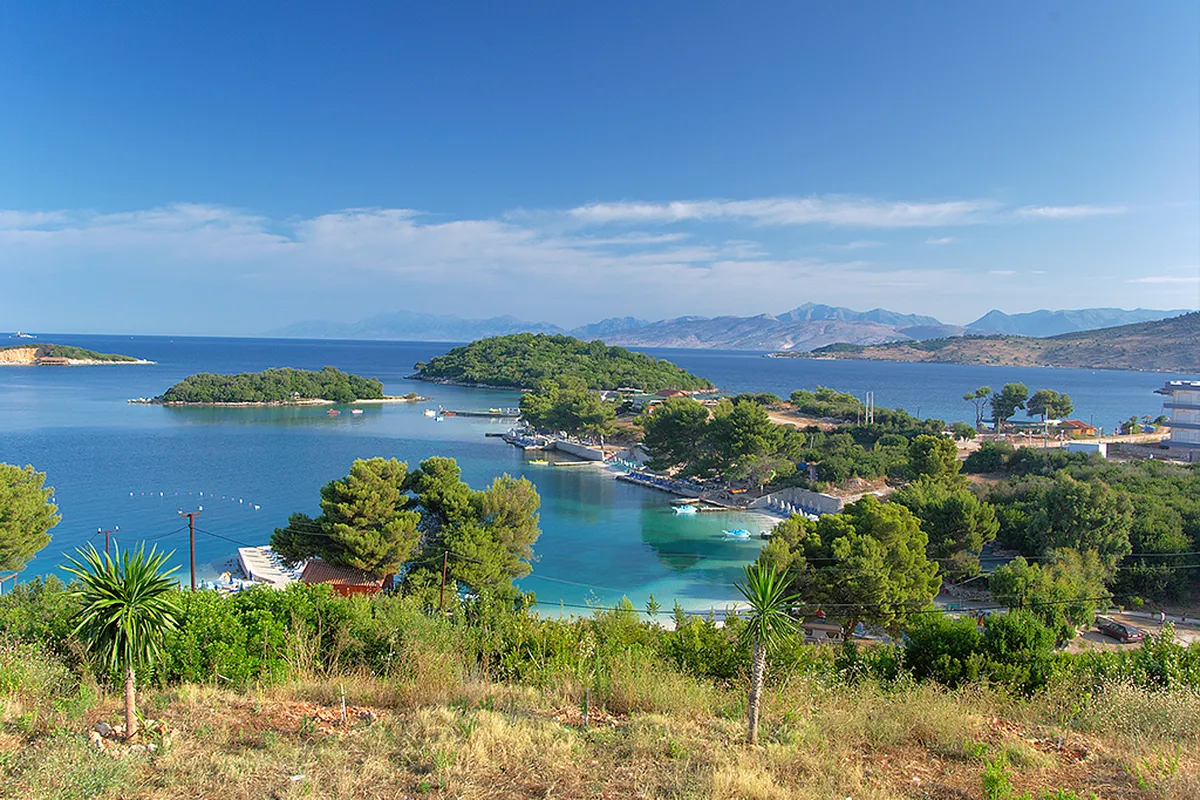
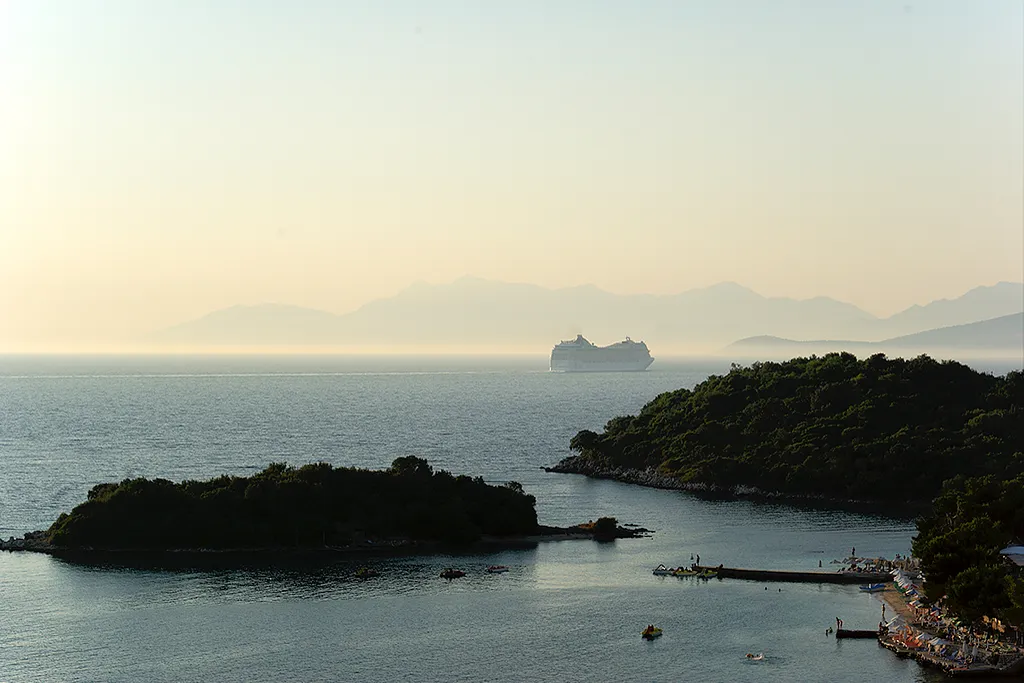
Ksamil is the last village on the Albanian Riviera, and it knows it. South of here there is almost nothing left of the coast road’s long run down from Vlore — a few kilometres of maquis and lake shore, the ancient city of Butrint sleeping in its woods, and then the Greek border. What Ksamil has, and what no other stop on that road can match, is a view: a chain of small bays in water so pale and shallow it looks poured rather than natural, and four green islands sitting just offshore, close enough that strong swimmers treat them as a morning exercise and everyone else reaches them in minutes by pedalo or boat. Behind the village, across the neck of land, lies Lake Butrint and its mussel rafts. In front of it, across the strait, lie the mountains of Corfu. It is a small place wearing a very large landscape.
It is also, in August, the busiest few kilometres of coast in Albania. This ksamil travel guide is written to hold both truths at once, because you need both to plan well. The water colour in the photographs is real. So is the fact that in high season nearly every metre of that sand is a managed beach parcel, rented out with loungers by the bars and restaurants behind it. Come in the right weeks — late May, June, September — and Ksamil is close to the quiet end of the Riviera its reputation promises. Come in the wrong ones and you are sharing it with half the Balkans. The sections below work through the beaches as they actually are, the protected islands, Butrint as the cultural anchor most beach days ignore, and the season decision that matters more than any other choice you will make here. For the country around it, our wider Albania travel guide carries the full routes and regions.
At a Glance
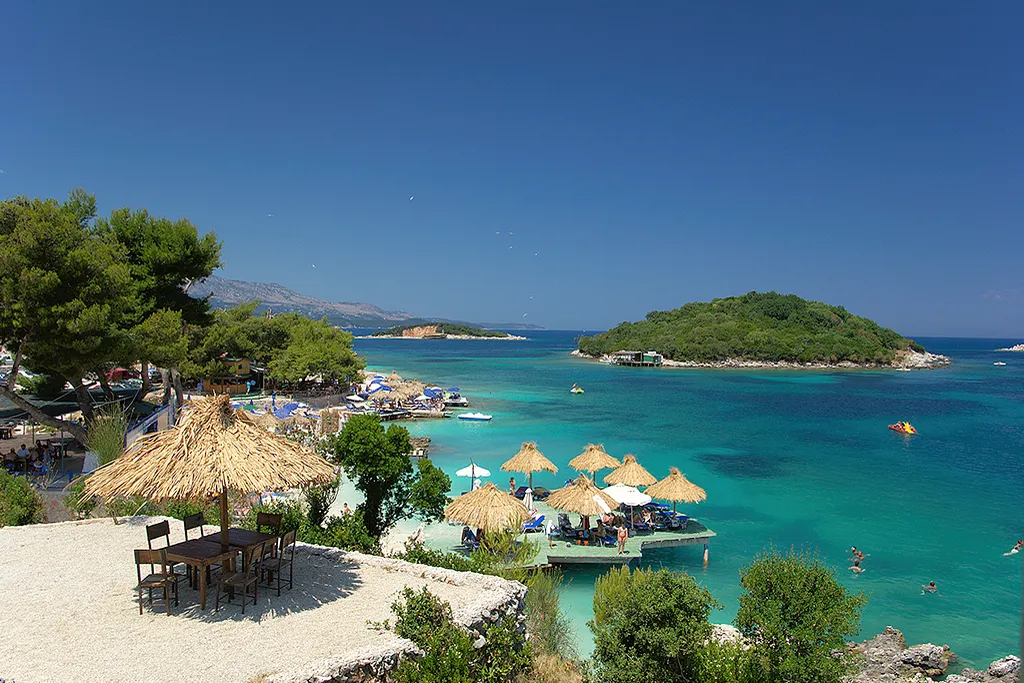
Short on time? Here is Ksamil on one screen — what there is, why each part earns its place, and the character of the time each one asks for. Nothing in this guide prints a price or a timetable, deliberately: beach rents, boat arrangements and bus habits in Ksamil change by the season and sometimes by the month, and any figure you find in print — here or anywhere — should be treated as a claim to re-check on the day, not a fact to budget on.
| Place or thing | Why it earns its place | Time character |
|---|---|---|
| The main bays and beach parcels | The famous water — pale sand, shallow entry, islands in view | A full beach day, best started early |
| The four Ksamil islands | Protected, unbuilt, swimmable-to — the view and the escape in one | A morning by pedalo, kayak or boat |
| Mirror Beach and Pulebardha | Quieter coves on the Sarande road, rockier and clearer | A half day away from the village strip |
| Butrint | A UNESCO-listed ancient city in woods and water, minutes away | Half a day, unhurried, in shade |
| Lake Butrint mussels | The local speciality, farmed on rafts behind the village | Lunch or dinner, at village pace |
| Sarande | The working town up the road — promenade, port, supplies | An evening, or your base instead |
| The Blue Eye spring | A deep karst spring inland, startling blue | A stop on the Gjirokaster road, not a day |
Two judgements sit behind that table. First, Ksamil divides cleanly into a wet half and a dry half — the bays and islands in front, Butrint and the lake behind — and the travellers who enjoy it most give both halves their time rather than spending four straight days horizontal. Second, almost everything here is close: the ancient city, the coves on the Sarande road and the town itself all sit within a short drive, which is why Ksamil works as well as a base as it does as a beach. Where it sits among the country’s other headline stops is covered in our round-up of the best places to visit in Albania.
The Beaches – Managed Sand, Clear Water
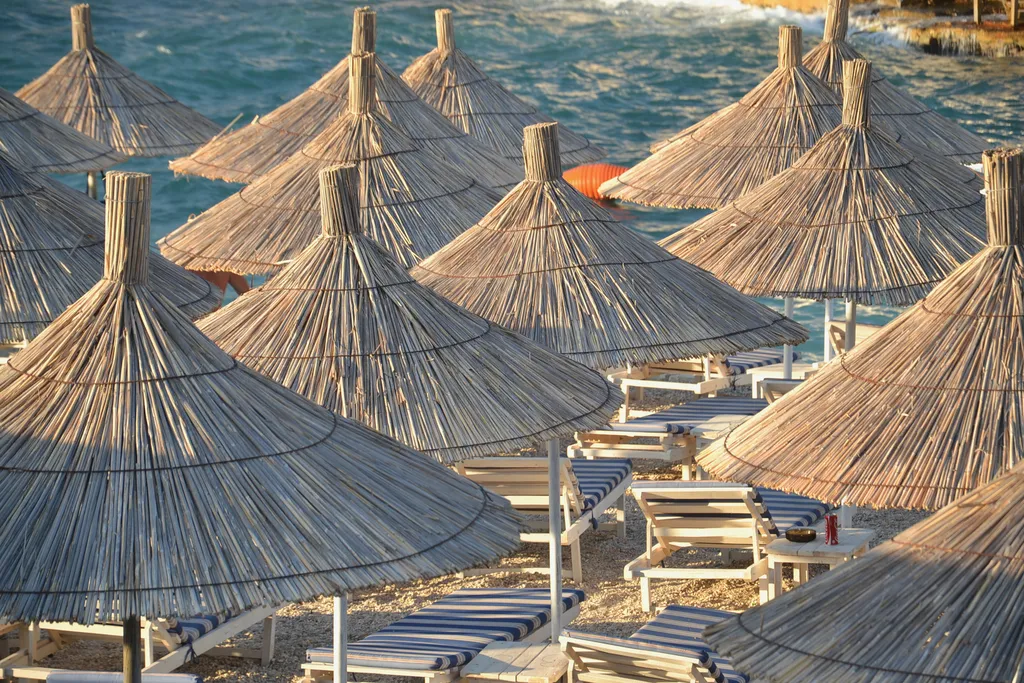
Start with the sand, because it is the first reason Ksamil is famous and the first thing other guides describe loosely. Most of the southern Albanian coast is pebble — handsome, clear-water pebble, but pebble all the same. Ksamil’s bays are different: pale, fine material, a sand-and-powdered-shingle mix that runs out into water so shallow you can walk a long way from shore and still be standing. For children and unconfident swimmers it is close to ideal, and the islands offshore break what little swell the strait sends in, so the bays stay calm when more exposed beaches are choppy. The colour is the other half of the story. On a bright morning the shallows run through every shade between milk and turquoise, and the photographs you have seen are, for once, not lying to you.
Now the part the photographs leave out. Ksamil’s shoreline is not one long public beach but a chain of small bays, and in season almost all of that sand is managed — divided into parcels run by the beach bars, restaurants and hotels behind it, each parcel furnished with its rows of loungers and umbrellas, rented as a set for the day. Albanian beach rules intend a share of every beach to remain public and free, and small free strips do exist, but in the busy weeks they are the first ground taken and the last most visitors find. The working assumption for a summer visit is simple: you will rent your patch of sand rather than spread a towel where you please, the better parcels fill from mid-morning, and arriving early is worth more than any other beach tactic. None of this makes the beaches bad. It makes them organised — closer in spirit to an Italian lido than to a wild cove — and travellers who arrive expecting that arrangement enjoy them far more than those who arrive expecting emptiness.
The Quiet Edges – Mirror Beach, Pulebardha and Early Mornings
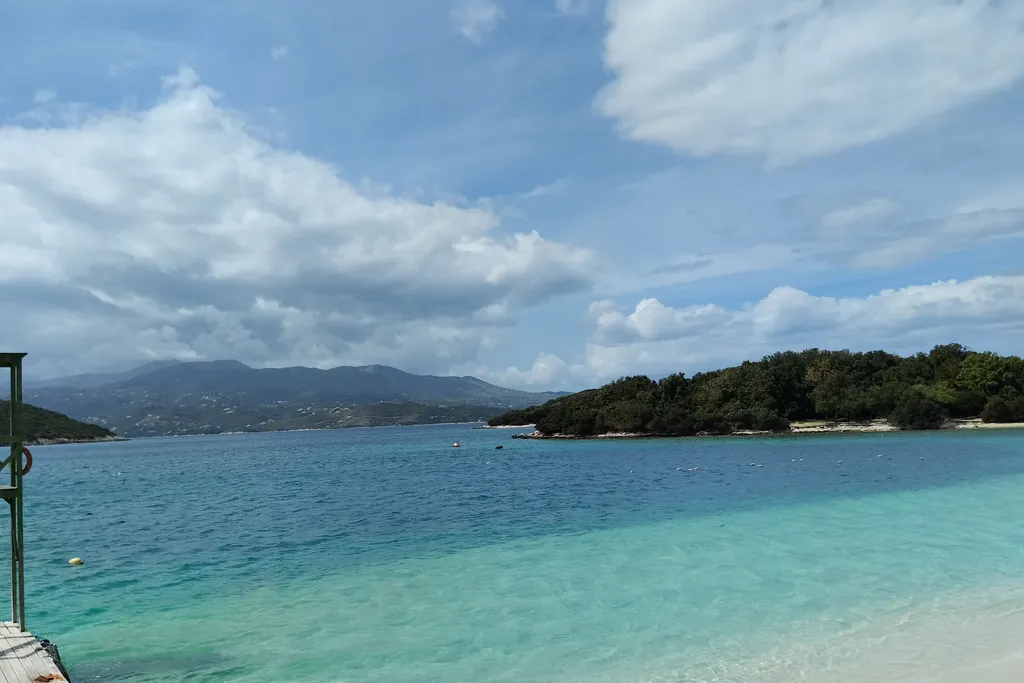
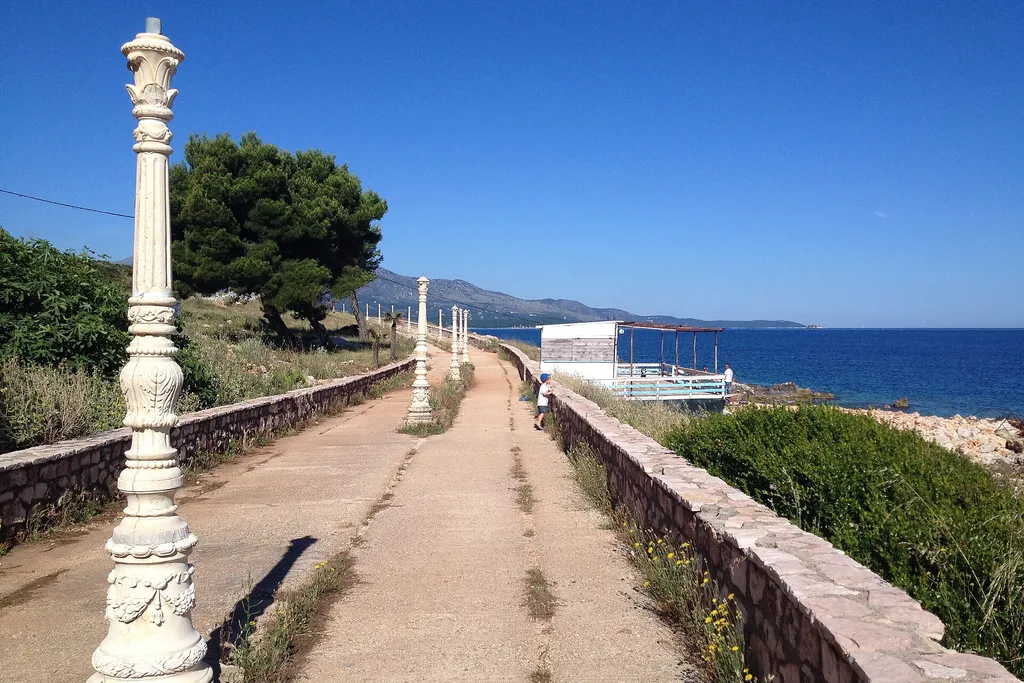
The managed strip is not the whole coastline, and the escapes are closer than the crowds suggest. North of the village, on the road back towards Sarande, two coves break the pattern. Mirror Beach — Pasqyra — drops below the road in a sweep of pale shingle and some of the clearest water on this coast, rockier underfoot than the village bays and better for swimmers who want depth and visibility over sand. Pulebardha, a little further along, is a smaller, greener cove that keeps a looser, less parcelled feel. Both are managed in season too, in their way, but at a lower intensity than the village strip, and both reward the short trip out of town with a different register of day — quieter, stonier, more about the swimming than the scene.
The second escape is timing rather than geography. Ksamil’s bays at eight in the morning are a different country from Ksamil’s bays at noon: the water flat and empty, the islands unvisited, the parcels still being raked and set. Swimmers who take their main swim early and their shade late consistently report a better village than the ones who reverse it. And the third escape is the calendar itself, which gets its own section below — because the difference between Ksamil in June and Ksamil in August is larger than the difference between most separate resorts. The village’s geography is fixed, and genuinely lovely. Everything else about it is a function of when you stand on it.
The Four Islands
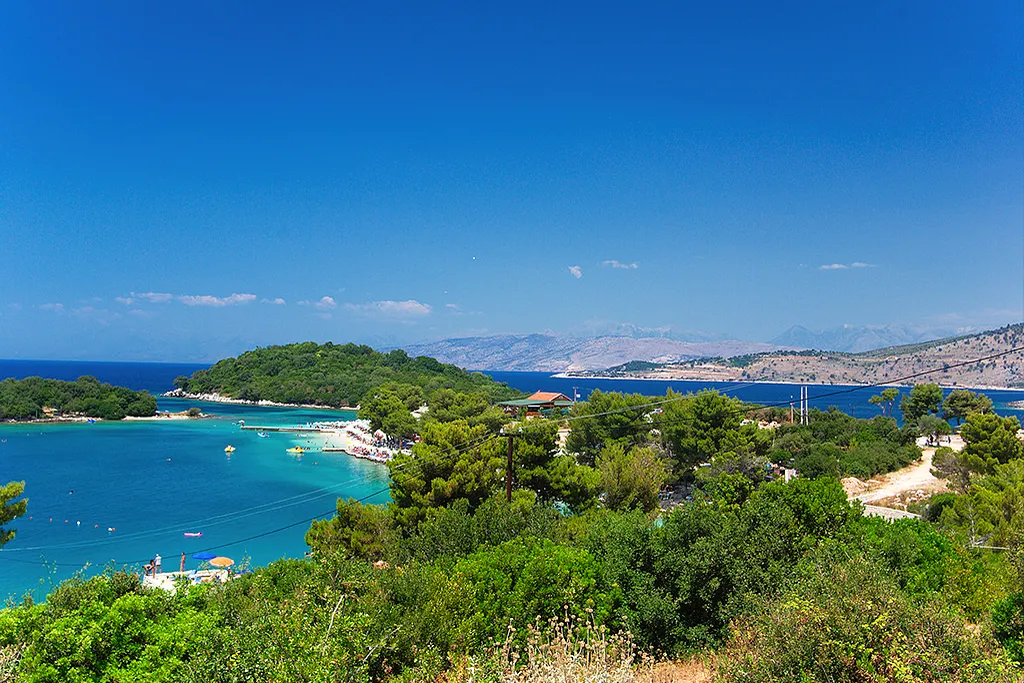
The islands are the view, the postcard and the point. Four of them lie offshore in a loose line — a close pair, the Twin Islands, near enough to the main bays that confident swimmers cross to them in calm water, and two larger, more wooded islands further out, reached by pedalo, kayak or one of the small boats that work the bays in season. They are small, steep and covered in Mediterranean green — pine, olive and maquis growing down to little shingle shores — and they are entirely unbuilt. No hotel has ever stood on them, no beach club parcel covers them, and that is not an accident of economics. The islets are protected: they sit within the protected landscape of Butrint National Park and are classed as a nature monument, which is why the view from every Ksamil beach still ends in green rather than in development. Treat them accordingly when you land — take everything back with you, keep to the shores, and let the interior scrub stay as undisturbed as it looks from the water.
A morning on the islands is the single best answer to the managed-beach problem, and it is worth organising deliberately rather than drifting into. Go early, when the crossings are empty and the little island beaches are still unclaimed; hire the pedalo or kayak for a proper stretch rather than the minimum; and pick your island by temperament — the near pair for an easy first swim-out with a safety margin, the further islands for quiet and shade. The water between is the same pale, shallow medium as the bays, deepening in the channels, and on calm days the whole arrangement feels less like an excursion than like the village extending itself across the water. By early afternoon the island shores fill with the same day’s crowd, in miniature, and the advantage is gone. Like everything in Ksamil, the islands reward the traveller who starts before the village does.
Facing Corfu – the Strait and the Greek Shore
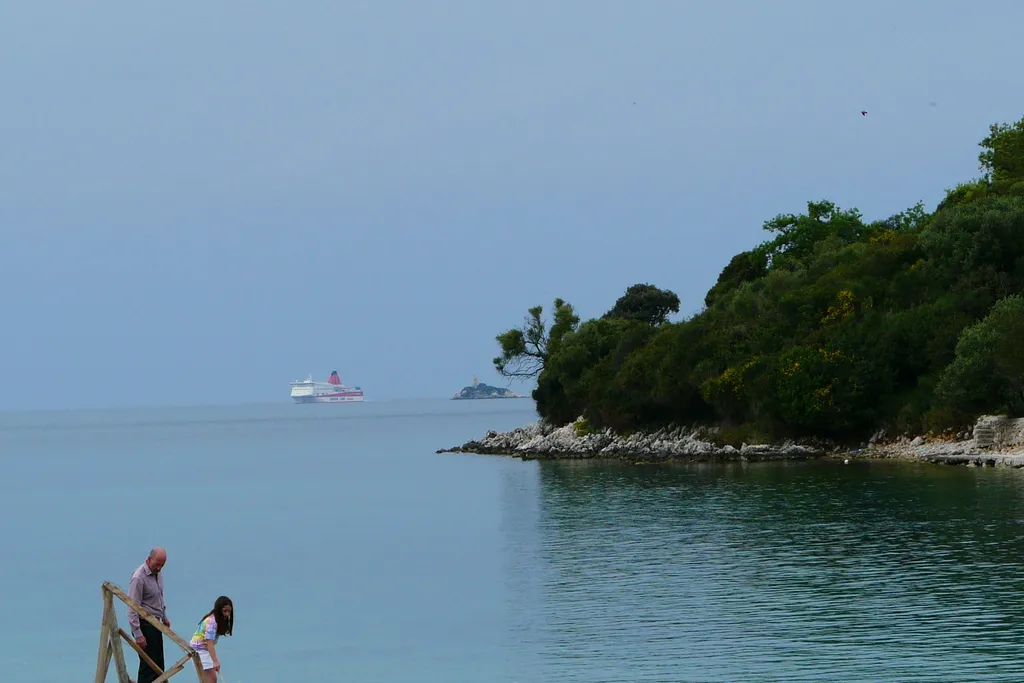
Stand on any Ksamil beach and look south-west and you are looking at another country. Corfu lies just across the strait, close enough that its northern mountains are a detailed presence on clear days rather than a horizon smudge, and the ferries that cross between Corfu and Sarande pass through the view all season. That geography shapes Ksamil in ways visitors feel without always naming. It is why so many of the village’s guests are Greek, Italian and northern European arrivals who came the short way — into Corfu’s airport and across the water — rather than the long way down from Tirana. It is why the light has the particular Ionian quality it does, the same light that colours the water off Corfu’s own east coast. And it is why Ksamil has always faced outward: this was a shore that traded, fished and watched across a narrow strait long before it had a single beach umbrella.
The strait also explains the village’s setting better than any map. Ksamil sits on a low neck of land between the Ionian and Lake Butrint, in the channel-laced flatland where Albania narrows towards Greece, and everything about its landscape — the shallow bays, the lagoon behind, the islands standing in the current’s path — belongs to that threshold position. On very clear evenings, from the higher ground above the village or the road down from Sarande, you can read the whole arrangement at once: Corfu’s ridge, the strait’s working water, the islands, the lake behind you and Butrint’s woods beyond it. Few villages in Albania let you see their entire geography in one turn of the head. It is worth finding that viewpoint in your first day, because afterwards every beach, boat ride and dinner in the village sits inside a picture you already understand.
Butrint – the Ancient City Next Door
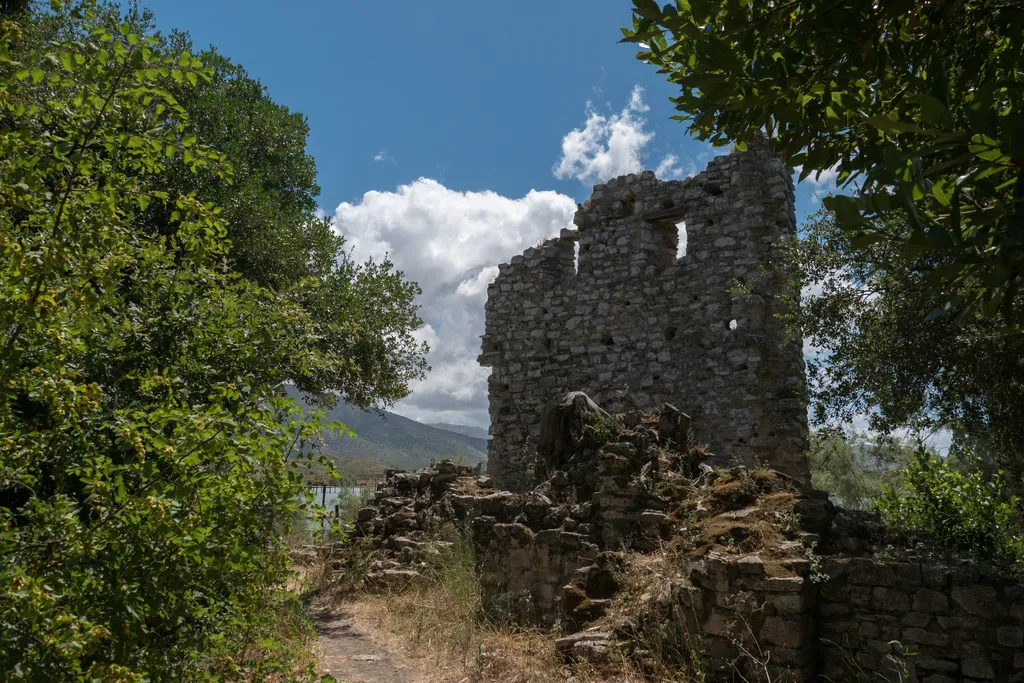
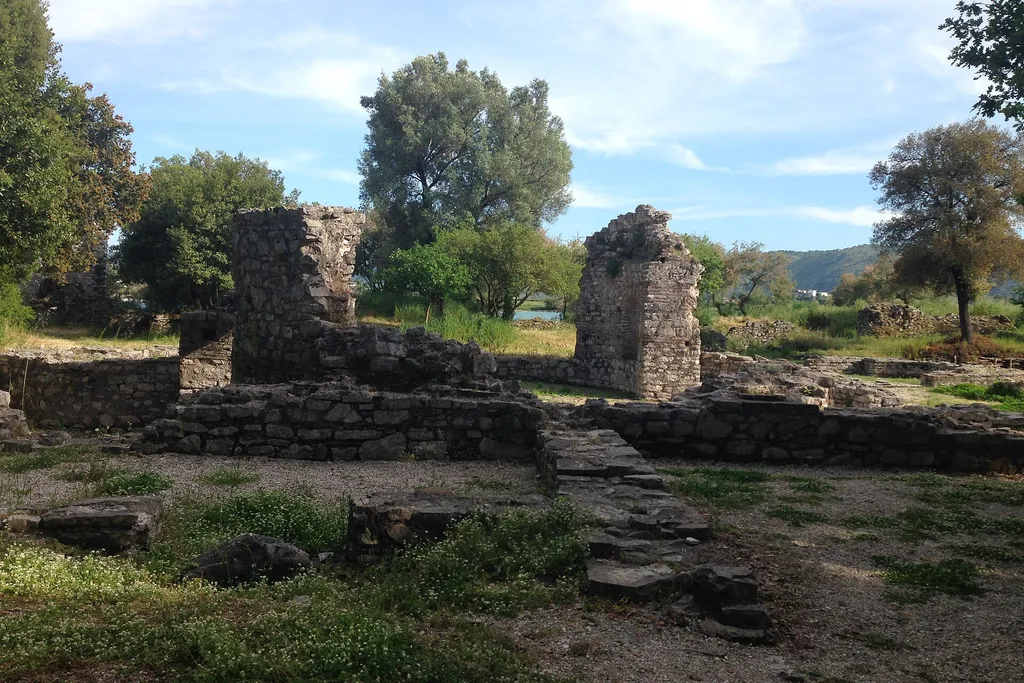
Four kilometres south of the village, where the road gives out at the Vivari Channel, lies the reason this coastline matters to anyone who never swims. Butrint is one of the great archaeological sites of the Mediterranean: a city inhabited from Greek and Roman antiquity through Byzantine and Venetian centuries, abandoned to marsh and forest, and inscribed on UNESCO’s World Heritage List in 1992 for the completeness of what survived. A Greek theatre, a Roman forum’s bones, an early Christian baptistery and great basilica, Venetian fortifications on the channel — the layers stand within a single wooded circuit, on a low peninsula between the lake and the sea, in shade that makes it walkable even in weeks when the beaches are at their fiercest. Read UNESCO’s own account at whc.unesco.org before you go; the site rewards the hour of reading as few places do.
For a Ksamil stay, Butrint does three pieces of work at once. It is the bad-weather and hot-afternoon answer — the place to go when the wind roughens the bays or the August crowds pass your limit, trading open sand for oak shade and twenty-five centuries of stone. It is the context that makes the whole coastline legible: the islands, the lake and the strait stop being scenery and become the harbour, fishery and frontier of a real ancient city. And it is, quietly, the quality filter on the village itself — a destination with a World Heritage Site at the end of its road attracts a different balance of visitors than a beach alone, and Ksamil’s evenings are the better for it. Give it half a day, go early or late for the softest light and the emptiest paths, and do not treat it as the optional extra. On this coast, the beaches are the interlude. Butrint is the text.
Eating in Ksamil – Mussels from the Lake
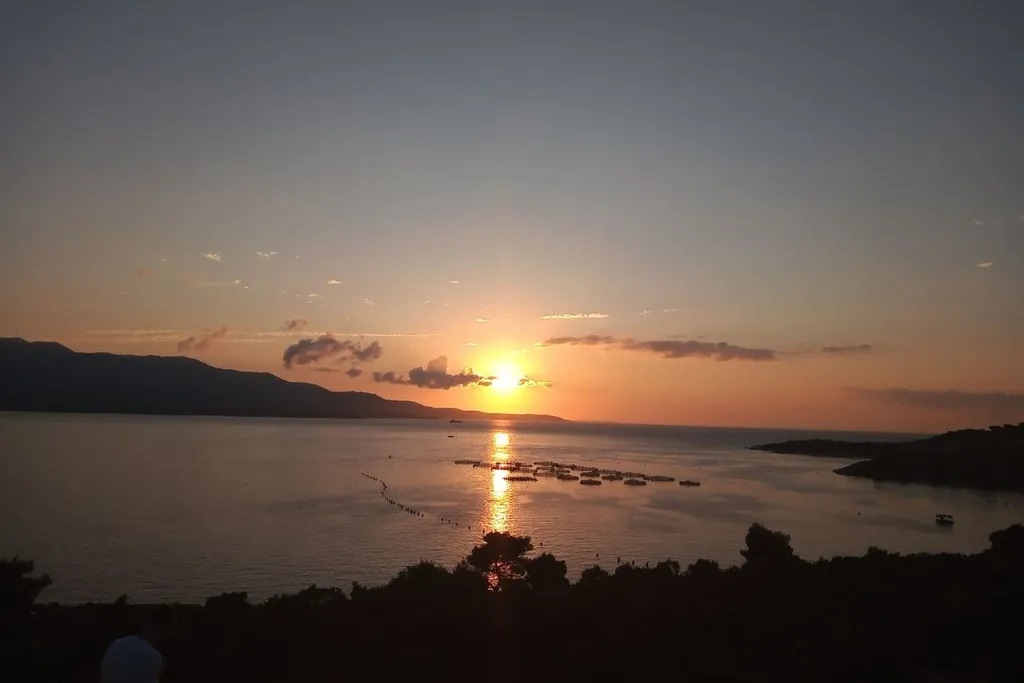
Every beach town has a dish it claims, but Ksamil’s claim is unusually literal: the village’s signature food is grown in the water behind it. Lake Butrint — the broad, brackish lagoon that separates Ksamil from the hills inland — is famous in Albania for its mussels, farmed on rafts and lines in the lake and served in the village’s restaurants grilled, steamed and in the pilafs and pastas that Albanian coastal cooking does so well. The lake’s mix of fresh spring water and sea inflow through the Vivari Channel gives the mussels their reputation, and for most of the season they are the correct order in Ksamil — the meal that tastes of this exact neck of land rather than of anywhere on the Mediterranean. When they are on and fresh, a plate of lake mussels with local white wine is the village’s best argument for its own existence after dark.
Beyond the mussels, eating in Ksamil follows the pattern of the Albanian south, and it is a good pattern. Grilled fish priced by the water it came from rather than the menu’s ambition, seafood pastas, slow village dishes in the family-run places a street back from the sand, and bakeries doing byrek for the morning. Two honest notes apply. In the peak weeks the seafront places fill and the service stretches; the same kitchen in June is a calmer and often better experience, which is the season argument retold at the table. And the village’s restaurant scene changes fast — places open, move and rename themselves between seasons at a rate that makes printed recommendations rot quickly, which is why this guide names the speciality and the pattern rather than a list of tables. Ask locally, eat what the lake produced, and you will eat Ksamil properly.
Where to Stay in Ksamil
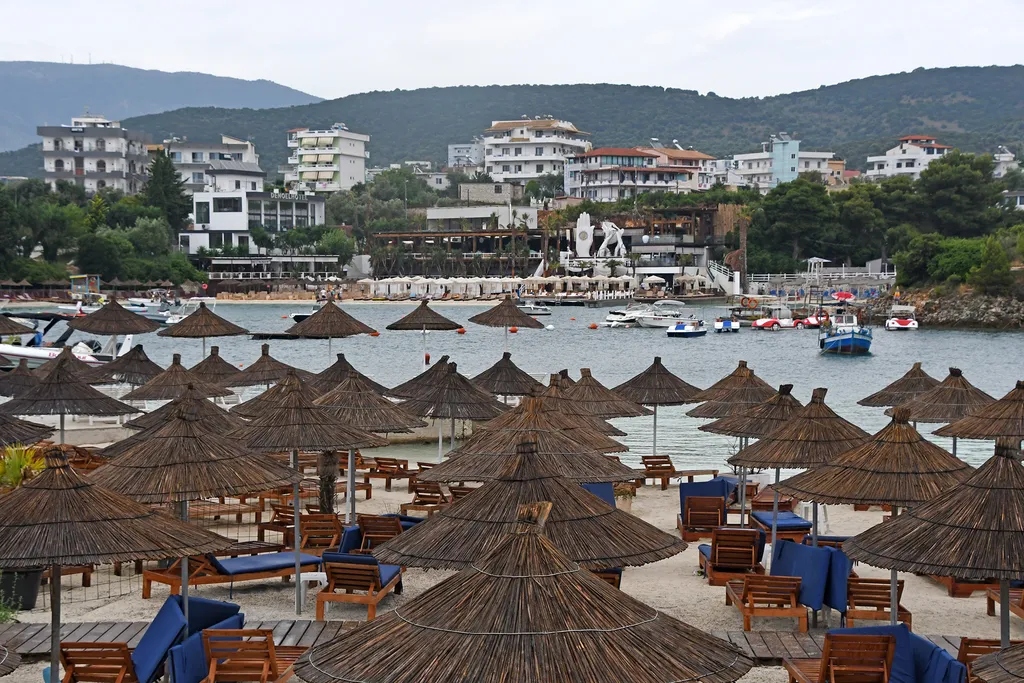
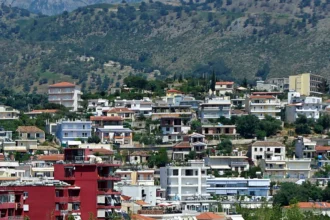
Ksamil is a village that became a resort faster than it could redesign itself, and where you stay is best understood as a choice among its layers. The village stock is mostly family-run hotels, guesthouses and apartment blocks, packed fairly tightly on the lanes between the main road and the bays — built for the season, run by the people who own them, and varying from simple rooms to genuinely polished small hotels. This guide names areas, not properties, because in a village developing this quickly the area outlasts any individual recommendation, and because the choice that matters is positional rather than nominal.
In the village, near the main bays is the walk-everywhere choice, and for a beach-first stay of a few nights it is usually the right one: the managed beaches, the boat hire, the restaurants and the evening life of the strip are all within minutes on foot, and no day needs a car or a bus to work. What you trade away in the peak weeks is quiet — the centre in August is lively late into the night — and in space, since the tightest-packed lanes are here. On the higher ground above the village, along and off the Sarande road, the stay changes character: sea views appear, the air moves, the evenings calm down, and the price of all three is a walk — downhill to the water with your bag, uphill home in the heat — that shapes every day. It suits longer stays, car travellers, and anyone whose Ksamil plan leans on Butrint and the coves as much as the main bays. In Sarande instead is the third real answer, and it is not a compromise: the town up the road has a proper promenade, a port, a wider spread of places to eat and sleep, and a life that runs beyond the beach season, at the cost of treating Ksamil as a day trip by bus, taxi or car. Travellers visiting in the shoulder months, when some of the village is still waking up or already closing down, often find Sarande the safer base and Ksamil the better excursion.
Getting There – via Sarande, Corfu or the Long Road South
Ksamil has three doors, and which one you use shapes the trip. The nearest town is Sarande, roughly fifteen kilometres up the coast road: the village is reached from there by local bus, minibus or taxi as a matter of routine, and Sarande’s bus connections and port make it the hub through which almost every Ksamil arrival passes. This guide states the connections, not the fares or frequencies, because those shift with the season and are best confirmed for your own dates — the pattern, though, is stable: in the season the road between Sarande and Ksamil is one of the most travelled in the south, and you will not struggle for a ride along it; out of season, plan the day’s last return with more care than the first outbound.
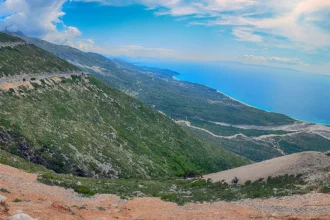
The second door is the one across the water. Many visitors reach Ksamil through Corfu — flying into the Greek island’s airport, crossing by ferry to Sarande, and continuing down the coast — a route that turns what looks on the map like the far end of Albania into one of the easier arrivals in the country. Ferries between Corfu and Sarande run through the season, with the pattern thickening in summer; treat timings as a thing to check when you book rather than a thing to memorise from any guide, this one included, because schedules are seasonal and operators change. The third door is the long road south from Tirana and the north — the full Riviera run past Vlore, over the Llogara pass and down through Himare and Sarande — several hours of some of Europe’s great coastal driving, ending at its final village. It is the slowest door and, for travellers building an Albanian road trip, often the best one: Ksamil rewards being arrived at gradually, as the journey’s end, far more than it rewards being dropped on. Inside the village, finally, your feet do the work — bays, boats and restaurants sit within an easy walk of each other, and the only journeys that need wheels are the short ones out to Butrint, the northern coves and Sarande.
Best Time to Visit – the Season, Honestly
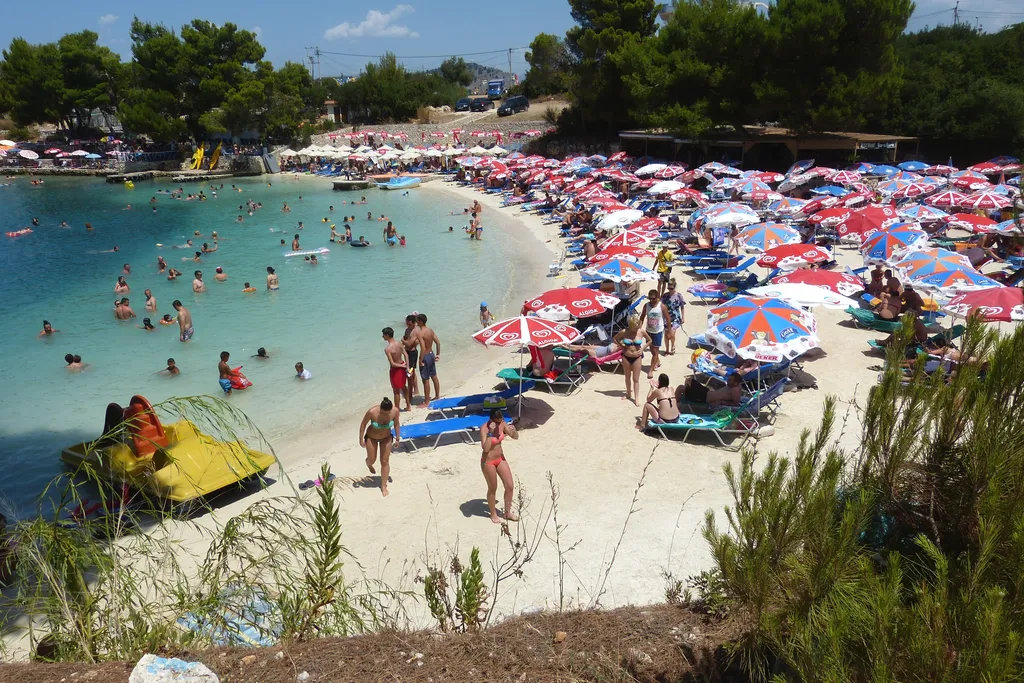
More than any other decision — more than the hotel, the beach, the boat — when you come decides what Ksamil is. In July and above all in August, the village runs at and beyond its capacity. It is Albania’s most popular beach destination in its most popular weeks, and it shows: the parcels full by mid-morning, the road from Sarande slow, the islands’ little beaches claimed early, the restaurants queued, the whole place running hot and loud and expensive by its own standards. Travellers who love a resort at full throttle — and there are many, and August Ksamil serves them with everything open and running — will find the energy genuine. Travellers who booked on the quiet-island photographs will feel misled, and this guide would rather tell you so than join in misleading you.
The shoulder months are the same geography in a different register, and they are when this guide recommends without hesitation. In late May and June the water has warmed, the village is fully awake, and the bays have room in them; the managed parcels are a convenience rather than a contest. September is, if anything, better still — the sea at its warmest after the summer, the crowds falling away after the first days of the month, the light softening over the strait. October runs quieter and cooler, with some places beginning to close, and winter belongs to the village itself: much of the beach economy shuts, the weather turns Ionian-grey, and what remains is the landscape and Butrint, which some travellers — honestly told — will prefer to any summer version. The rule is simple enough to print in one line: if your dates are free, choose June or September; if your dates are August, come anyway, but come early in the day, every day, and let Butrint and the islands carry the afternoons.
Frequently Asked Questions
Five questions decide most Ksamil stays, and they are answered here the way the sections above argue them — briefly, and without the prices and timetables that rot faster than any answer can travel.
How many days do I need in Ksamil?
Two full days is the honest minimum — one for the bays and an island morning, one for Butrint and a quiet cove. Three or four days is the comfortable version, letting the village settle into its rhythm of early swims and late dinners. Beyond that, Ksamil works best as a base: the same week that exhausts the village’s own sights easily fills with Sarande evenings, the Blue Eye spring inland and the road north up the Riviera.
Can I swim to the islands?
The near pair, yes — in calm conditions, confident swimmers cross to the Twin Islands from the main bays as a matter of routine. The further islands are a longer proposition and better reached by pedalo, kayak or boat. Judge it by the day rather than the map: the water is sheltered but it is open sea, boat traffic works the crossings in season, and if you are not a strong swimmer, the pedalo is not a lesser experience — it is the standard one.
Is there any free beach in Ksamil?
In principle the rules keep a public share of the beaches, and small free stretches exist; in practice, in the busy weeks, most usable sand is a managed parcel and the free ground is limited and fills first. Out of season the picture loosens considerably. Arrive assuming you will rent a lounger set on the village bays, treat any free stretch you find as a bonus, and use the quieter coves and islands for the towel-on-the-ground version of the day.
Is Ksamil good for children?
It is one of the better family beaches in Albania, for a simple physical reason: the bays shelve gently, the water stays shallow a long way out, and the islands calm what swell there is. Against that stand the peak-season crowds and the midday heat on sand with little natural shade. Families who come in June or September, swim early and late, and use Butrint as the midday break tend to rate it very highly.
Should I stay in Ksamil or Sarande?
Stay in Ksamil if the beach is the trip: waking beside the bays and walking to the islands’ boats is the experience, and the village in the evening is built around exactly your day. Stay in Sarande if you want a town around the beach — a promenade, a port, more choice of tables, a longer season — and are content to reach Ksamil as a short trip down the road. In August, Sarande’s relative breathing room settles the argument for many; in June, Ksamil’s mornings win it back.
The Short Version
Give Ksamil the right week and it gives you the best water on the Albanian coast. Come in late May, June or September; start your beach days early, while the bays are empty and the islands unvisited; take a pedalo out to the green, protected islets and swim off shores nobody has built on; eat the lake’s mussels in the village at night. Give Butrint its half day in the shade and let the ancient city explain the strait, the lake and the islands to you — and take the wider routes from our Albania travel guide, because Ksamil is the natural last chapter of the whole southern journey. If August is your only option, come with your expectations set by this guide rather than by the postcards, and the village will still deliver its mornings.
What Ksamil is not is a secret, and it has not been one for years. What it remains — at the right hour, in the right month — is the quiet end of the Riviera: the last village on the road, facing Greece across blue water, with four green islands doing the work that a thousand years of postcards could not improve on. Arrive knowing which Ksamil you have booked, and it will not disappoint you.