

Egypt’s visa system is not complicated, but it is very easy to get wrong, because there is no single rule to learn. There are three separate lists — the nationalities who may apply online, the nationalities who may buy a visa at the airport, and the small group who need no visa at all — and they are not the same lists. On top of that, the fees changed in 2026, the airport visa went digital partway through the year, and one of Egypt’s own official tourism pages still shows the old price. Travellers get caught out not by obscure rules but by reading the right answer for somebody else’s passport.
This egypt visa for tourists guide is organised the way the decision actually works. Find your list first. Then choose between the routes that list leaves open to you — the e-Visa arranged before you fly, the visa on arrival that now arrives as a QR code, the embassy visa that some travellers cannot avoid, and the free Sinai resort stamp that a Red Sea holiday may not need to pay anything at all. Every fee and rule below was checked against Egypt’s official portal and consular sources on 30 October 2026, and where Egypt’s official pages disagree with each other, this guide says so rather than picking the answer that looks tidiest. For the trip itself — routes, regions and how the country fits together — start with our Egypt travel guide; this page is only about the paperwork that gets you in.
At a Glance
| Question | Short answer |
|---|---|
| Do I need a visa for Egypt? | Most nationalities do. A small group (Gulf states) is exempt; a few more can enter Sinai resorts free for 15 days |
| What is the standard tourist visa? | Single entry, stay of up to 30 days — the same shape whether you buy it online, at the airport or at an embassy |
| e-Visa fee | $30 single entry / $65 multiple entry, as listed on the official portal on 30 Oct 2026 |
| Visa on arrival fee | $30 for the visa itself; the new digital QR route adds a $6 service charge, $36 total as published on the official platform |
| When must I apply for an e-Visa? | The official portal requires the application to be created at least 7 days before departure |
| Passport rule | Valid for at least 6 months from your arrival date — this is the portal’s own stated requirement |
| The one check that matters | Your nationality’s position on visa2egypt.gov.eg, checked close to your travel date |
Two habits protect you from nearly every Egypt visa problem. The first is treating nationality as the whole question: advice written for an American or a Briton may be exactly wrong for an Indian or South African passport, and most visa content online never says which passport it is quietly assuming. Work out which of the three lists your own passport sits on before you plan around any price, queue or promise in this guide or anywhere else.
The second habit is using only official addresses. The e-Visa lives at visa2egypt.gov.eg and nowhere else; the visa on arrival platform is apps.visaonarrival.gov.eg. Dozens of similar-looking sites will sell you the same visa for two or three times the official fee, and a few will sell you nothing at all.
Who Needs a Visa for Egypt

Start where the Egyptian government starts. The official e-Visa portal’s FAQ puts it plainly: a citizen of a foreign country who wishes to enter Egypt generally must first obtain a visa. That is the default position, and everything else in this guide is an exception or a method. Whatever route you end up using, one requirement never changes, because the portal states it as an entry condition for everyone: your passport must be valid for at least six months from your arrival date. If your passport is inside that window, no visa route will rescue the trip — renew the passport first.
The genuinely visa-free group is small. Nationals of the Gulf states — Bahrain, Kuwait, Oman, Qatar, Saudi Arabia and the United Arab Emirates — enter Egypt without a visa, and they are the exemption that Egyptian consular guidance leads with. Beyond them, exemptions thin out into special cases: a handful of other nationalities with limited exemptions, some of them restricted by age band or passport type. Rather than print a long exemption table that will quietly rot, this guide prints the rule instead: if you do not hold a Gulf-state passport, assume you need a visa until the official portal or an Egyptian consulate tells you otherwise for your specific nationality.
Between “no visa” and “embassy queue” sits the large middle group this guide mostly serves, and its defining feature is that it is split in two. The e-Visa list and the visa on arrival list overlap heavily — the United States, the United Kingdom, the EU, Canada, Australia, Japan and South Korea sit comfortably on both — but they are not identical, and a third category, the pre-approval nationalities, sits outside both: travellers whose passports require clearance arranged in advance, who cannot simply buy their way in at the airport. There is also a conditional door into the visa on arrival: Egypt’s tourism authority states that travellers from a very wide range of nationalities may qualify if they hold a valid, previously used visa from the United States, the UK, the Schengen Area, Japan, Canada, Australia or New Zealand. Find which list your passport is on before you read another word about prices, because the list decides everything downstream.
The Egypt e-Visa – the Route to Arrange Before You Fly
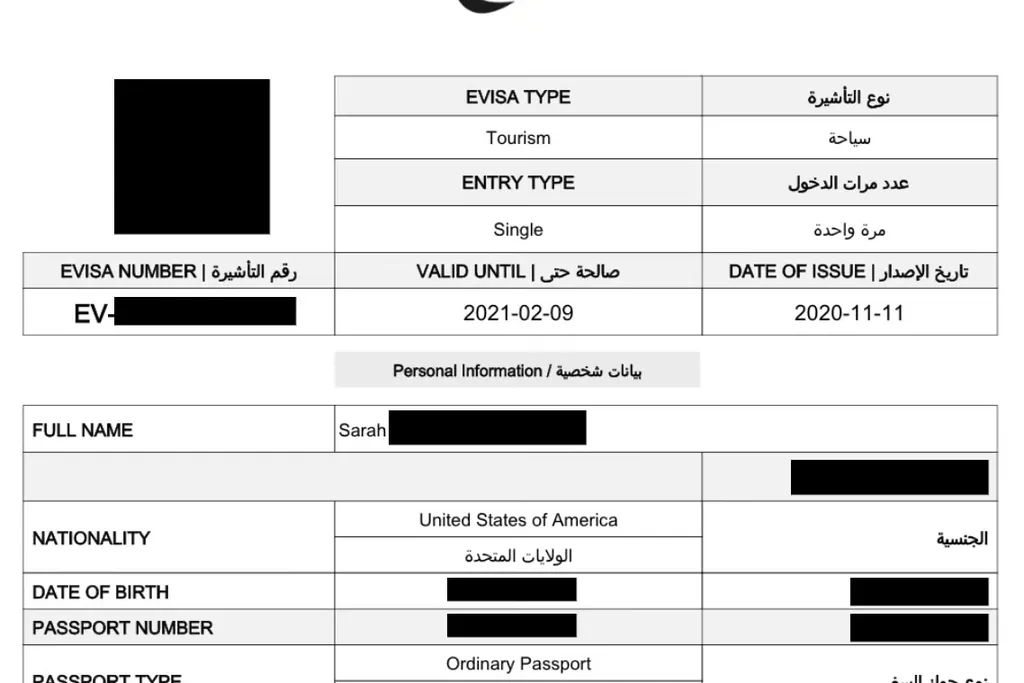
The e-Visa is Egypt’s pre-arranged route: an official electronic visa issued by the Ministry of Interior through the portal at visa2egypt.gov.eg. You apply from home, pay online, and receive a link to download the visa by email; passport officers at your port of arrival can verify it on their system. For tourists there are exactly two products, and the portal’s FAQ lists their fees directly: a single-entry tourism visa at $30, and a multiple-entry tourism visa at $65. Those are the figures the portal itself published when checked on 30 October 2026, and they are the only e-Visa prices this guide will quote — if a website quotes you a different number for an “Egypt e-Visa”, you are not on the government’s website.
Eligibility is a list, not a judgement call. The portal’s FAQ names the nationalities that may apply — around eighty of them, running from the United States, the UK and every EU state through India, China, Russia, Japan, South Korea, Brazil, Mexico, South Africa and the Gulf states. If your country is on that list, the e-Visa is open to you; if it is not, no amount of refreshing the page will change that, and your route is the embassy section below. The shape of the visa is consistent in official descriptions: tourism only, a stay of up to 30 days on a single-entry visa, and on the multiple-entry version a longer overall validity for repeat trips with each stay still capped at 30 days.
The e-Visa suits travellers who want the border to be a formality: you land with the decision already made, walk to passport control with a printout, and skip the payment queue entirely. It is also the safer route whenever your plans are fixed early, because it surfaces problems — a rejected application, a data mismatch — while you are still at home with time to fix them, rather than at an airport bank counter at midnight. Its one hard discipline is timing, and the portal states it in terms: the application must be created at least 7 days before departure. Treat that as a floor, not a target.
How to apply, step by step
- Go to visa2egypt.gov.eg — type the address yourself rather than following an advertisement, and check the address bar again before you pay.
- Create an account with your email address and confirm the registration, as the portal’s sign-up step requires.
- Start a new application and choose the tourism visa, single or multiple entry. Remember the portal’s rule: this must happen at least 7 days before you depart.
- Enter your details exactly as they appear in your passport — full name including any middle names, passport number, dates. Upload the passport scan the form asks for.
- Pay the fee through the portal with a Visa card, MasterCard or other debit card.
- Wait for the email. The portal processes the application after payment and emails you the status; an approved application brings the download link for the e-Visa itself.
- Download it and print it. The printout is not a courtesy copy — the portal lists an e-Visa printout among its entry requirements on arrival. Keep a copy on your phone as backup, and carry the passport you applied with, because the visa belongs to that passport number.
One honest warning about the middle of that process: the portal tells you the application will be processed and the result emailed, but it does not publish a guaranteed turnaround, which is precisely why the 7-day rule exists. Apply the day the rule allows and a slow week becomes your problem; apply two or three weeks out and it becomes a non-event. If an application is refused, the refusal arrives the same way — by email, while you are still at home — and the fallback is the embassy route below, not a second identical application.
Visa on Arrival – Now Issued as a QR Code

The visa on arrival is Egypt’s other front door, and for decades it worked the same way: land, queue at a bank kiosk in the arrivals hall, hand over cash, receive a sticker, carry the sticker to passport control. The sticker grants a single entry and a stay of up to 30 days, and the Ministry of Interior lists the visa itself at $30 — the same price as the e-Visa, which quietly kills the old idea that arriving unprepared was cheaper. Eligibility is broad: consular guidance consistently covers the United States, the United Kingdom, the EU states, Canada, Australia, New Zealand, Japan, South Korea and a long tail of other nationalities, plus the conditional route for holders of qualifying used Western visas described earlier. What it has never covered is the pre-approval list: the Embassy of Egypt in Washington states directly that passport holders from pre-approval countries cannot get a visa on arrival, and advises arranging the visa in advance instead.
In 2026 the mechanism changed underneath that familiar shape. Egypt built an official digital visa on arrival platform — apps.visaonarrival.gov.eg, live and verified for this guide — which issues the visa as a QR code: you enter your details and pay through the website, the mobile app or a self-service machine, and the code arrives by email or download, ready to print or show on a screen. The Embassy of Egypt in Washington states that from 1 September 2026 all Egyptian airports transitioned from the old stickers to this electronic QR code. Egyptian reporting through August and September 2026 describes the rollout reaching Cairo’s arrival halls first and completely during that period, with other airports following — so during the transition, what you meet depends on where and when you land, and a sticker at a smaller airport is a phase of the changeover rather than a scam. The digital route is not free of charge beyond the visa: the official platform’s published breakdown is $30 visa fee plus a $6 service charge, $36 in total.
Deciding between this and the e-Visa is mostly a decision about where you want your uncertainty. The visa on arrival keeps your options open until the last day and rescues trips booked too late for the portal’s 7-day rule — but it concentrates all the risk at the worst moment, after a flight, in a hall where a misunderstood eligibility rule or a payment problem has no easy fix. The e-Visa costs the same for the visa itself and moves every one of those moments home. Travellers eligible for both, with a trip more than a week away, are usually better served by the e-Visa; the visa on arrival is the right tool for the genuinely last-minute trip, used by someone who has already confirmed their nationality qualifies.
The Embassy Visa – Slower, and Sometimes the Only Door
Some travellers never get to choose between the two routes above. If your nationality appears on neither the e-Visa list nor the visa on arrival list — or sits on the pre-approval list, where Egypt requires clearance before travel — the visa has to come from an Egyptian embassy or consulate in advance. The same is true for journeys that are not tourism at all: work, study and long stays are separate visa categories arranged beforehand, and no tourist route, online or at the airport, converts into permission to take a job in Egypt. Travellers holding non-standard documents can also find the online system closed to them even when their nationality looks eligible; the consulate is where those cases are resolved.
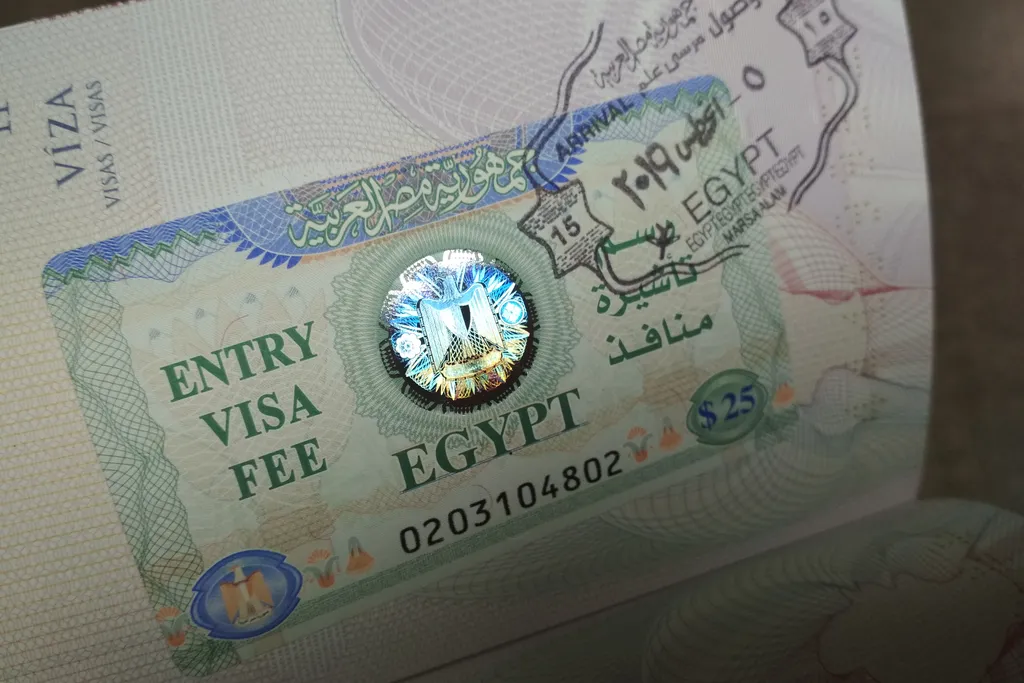
The consular process is the oldest of the three: an application to the embassy or consulate, supporting documents as that mission requires, a fee set by the mission, and a visa issued as a sticker in the passport. Two things differ from the portal in ways that matter. First, the price: consular fees vary by nationality and by mission, so the portal’s $30 and $65 simply do not apply here, and the only honest figure is the one on your own consulate’s current fee page — which is why this guide prints none. Second, the shape: the Egyptian Consulate in London’s published guidance notes that its single-entry visas allow a maximum stay of 30 days in Egypt, the same stay the tourist routes give, but they are issued within a validity window set by the consulate, so the timing of the application against the trip matters more.
Build this route in weeks, not days. Consulates work to their own appointment and processing rhythms, those rhythms slow sharply in peak season, and a pre-approval case can take longer still. One more group should use this door deliberately: travellers of Egyptian origin and dual nationals, whose entry and exit position can differ from other visitors — consular guidance summaries note, for example, that some dual nationals face documentation requirements on exit. A five-minute check with the consulate before booking is worth more than any paragraph here, including this one.
The Sinai Resort Stamp – Free, Fifteen Days, and Firmly Fenced

There is one corner of Egypt where the visa question can answer itself. Travellers arriving for the South Sinai resorts — Sharm El Sheikh, Dahab, Nuweiba and Taba — can receive a free entry permission stamp on arrival instead of a visa, allowing a stay of up to 15 days within those resorts. The Egyptian Consulate General in the United Kingdom describes the arrangement in exactly those terms for EU, UK and US citizens: no visa, a free permission stamp on arrival, provided the trip stays inside the named resorts. For a fly-and-flop week in Sharm or a Dahab diving trip that never leaves the coast, that stamp is the whole of the paperwork, and paying $30 for a visa you will never use is money spent on nothing.
The fence around the arrangement is real, and it is geographic. The stamp authorises the Sinai resorts and nothing else: it does not cover travel to Cairo, Luxor, Aswan or anywhere on the mainland, and a traveller who takes the stamp and then joins a day excursion to the Pyramids has left the area their permission covers. This trap is not theoretical — resort excursion desks sell Cairo day trips enthusiastically, and the stamp in your passport does not stretch to meet them. The safe logic runs the other way: if there is any realistic chance your trip will leave the South Sinai resorts, take a full visa — the e-Visa before you fly, or the visa on arrival if your nationality qualifies — and keep the whole country open. A visa covers Sinai too; the stamp covers nothing else.
Two final cautions belong here. The consular description names EU, UK and US citizens, while airline timetable data describes wider availability at the Sinai airports with a long list of excluded nationalities — so if your passport is none of those three, verify your position before building a trip on the stamp. And learn the map’s most common error: Hurghada is not in Sinai. It sits on the mainland Red Sea coast, across the water from Sharm, and it has never been part of this arrangement — Hurghada arrivals need a normal visa, every time. Travellers heading there should also read the visa on arrival section above, because Hurghada’s airport is one of the classic places the sticker — or now its QR successor — is bought.
Documents to Have Ready

Egypt tells you what to carry, if you read the right page. The e-Visa portal’s own FAQ lists its entry requirements on arrival, and they amount to a short, sensible folder: a passport valid for at least six months from the arrival date; a printout of your e-Visa; your travel itinerary; and hotel bookings or details of the places you will visit if you are travelling as a tourist. For business or family visits, the same list adds a supporting letter — from your company, or an invitation letter from whoever you are visiting. Visa on arrival travellers should treat the same folder as their standard: the visa may be bought in the hall, but the officer at the desk can still ask where you are staying and how your trip is shaped.
Two practical layers sit on top of that official list. The first is redundancy: carry the e-Visa printout on paper because the portal asks for a printout, and keep photographs or scans of the passport, the visa and the bookings on your phone because paper gets lost. The second is the journey out: be ready to show how you leave — a return or onward booking is the document that answers the question every border officer is really asking — and expect your airline to check your documents before departure, because carriers face fines for flying passengers who are refused at the other end. That airline check is why a problem with your visa sometimes surfaces at check-in in your home airport rather than in Egypt; annoying as it is, it is the cheapest place for the problem to appear.
A small honesty note belongs in this section, because document lists are where visa content most often inflates. You may meet long checklists elsewhere demanding bank statements, salary slips, tax records or character certificates for an ordinary tourist trip. Those belong to long-stay, work and residency applications, not to a two-week holiday, and they do not appear in the Egyptian portal’s stated requirements for tourists. If a consulate asks you for extra documents in a pre-approval or embassy case, that is a different and legitimate process — but for the standard tourist routes, the portal’s short list above is the requirement set, and anything longer is selling you anxiety.
Mistakes That Get Egypt Visas Refused, Delayed or Bought Twice

Applying on the wrong website. The e-Visa exists at one address, visa2egypt.gov.eg, and the visa on arrival platform at apps.visaonarrival.gov.eg. Search results are crowded with lookalike domains and “official partner” pages that charge two or three times the government fee for passing your details to the same system — and expired-fee pages still quoting $25 tell you how carefully the rest of their information is maintained. Type the address yourself, and check it again on the payment page.
Letting your application disagree with your passport. The portal processes the data you enter, and the officer compares your printout with the document in your hand. A transposed passport number, a missing middle name, a date in the wrong format — each turns an approved visa into an argument at the desk. Enter everything character-for-character as the passport shows it, including the names travellers habitually shorten, and apply with the passport you will actually travel on: renew the passport after applying and the visa is attached to a cancelled number.
Missing the timing rules. The portal requires the e-Visa application to be created at least 7 days before departure, and the passport behind it must still have six months of validity left when you arrive — two separate clocks that travellers constantly merge into one. Either can end a trip on its own. The visa on arrival has a timing trap of its own in reverse: the digital QR is a short-lived document (the official platform issues it for use around your arrival), so generating it far in advance is its own mistake.
Assuming the lists are interchangeable. An e-Visa-eligible passport is not automatically a visa on arrival passport, a visa on arrival passport is not visa-free, and a pre-approval passport is none of the three. The single most expensive assumption in Egypt travel is boarding a plane on a route your nationality cannot use, because the discovery happens in an arrivals hall with a return flight as the alternative. The second most expensive is geographic: paying for a full visa when the free Sinai stamp covers your whole trip, or taking the stamp and then buying a Cairo excursion that walks you out of its cover.
Budgeting on last year’s price. Egypt’s tourist visa fees rose in 2026: the old $25 single-entry and $60 multiple-entry figures were replaced by the $30 and $65 the portal lists today, and one of Egypt’s own official tourism pages was still showing $25 when this guide was checked — which is why this guide keeps repeating the check rather than the number. A further built-in fee change has been announced in Egyptian government decrees for 2027, which the portal had not adopted when checked on 30 October 2026. Whatever you budgeted when you first researched the trip, re-read the fee on the official portal in the week you apply.
Transit, Extensions and Overstaying

Not every Egypt visa question is about arriving, and not every trip ends on the day the itinerary said it would. Connections through Cairo raise their own version of the entry question — one that is answered at a check-in desk on another continent as often as at an Egyptian border — and trips that deepen, slow down or simply refuse to end on schedule run into the 30-day shape of the tourist visa itself.
Both situations have official ways through them, and both punish improvisation. Transit works smoothly when it is planned as transit and falls apart when it quietly becomes an entry nobody arranged; extensions are a routine in-person process right up until the day they become an overstay. The two halves of this section take them in turn.
Passing through – transit at Cairo

Cairo is a hub, and plenty of travellers meet Egypt only as a connection. Whether a transit needs a visa turns on the same two variables as everything else in this guide: your nationality, and whether you leave the airport’s international transit area. A same-ticket connection that stays airside is, for most nationalities, a visa-free movement; the moment a journey involves collecting bags, changing terminals landside or an overnight stop in the city, it becomes an entry, and an entry needs whatever your passport needs everywhere else in this guide. Because transit rules are applied nationality by nationality and enforced first by your airline at check-in, treat them as a thing to verify for your specific booking — with the airline and the official portal — rather than a thing to assume from another traveller’s connection.
The travellers who get caught are rarely exotic cases. They are people who booked two separate tickets that force a landside self-transfer, or who accepted a long layover planning to see the Pyramids “since we’re here anyway” — a plan that needs a full entry visa and, if the Grand Egyptian Museum is the target, a realistic read of Cairo traffic as well as paperwork; our Grand Egyptian Museum guide covers that visit properly. If your passport is e-Visa eligible, the tidy solution is to hold the visa anyway: it converts any transit surprise — a cancellation, a rebooking onto tomorrow’s flight — from a crisis into an inconvenience.
Staying longer – extensions and the 30-day line
The tourist visa in all its forms is built around a stay of up to 30 days, and trips that grow past that line need the extension process rather than optimism. Extensions are an in-person matter handled through Egypt’s passport and immigration administration offices inside the country — the famous address is Cairo’s Mogamma building on Tahrir Square, whose name generations of travellers have learned phonetically — and the correct approach is to go before your stay expires, passport and copies in hand, and let the office state the current terms. This guide deliberately prints no extension fee and no promised duration, because both are set administratively and change; what an office tells you on the day is the only version that counts.
Overstaying is the failure mode to avoid rather than a strategy to price. Egyptian practice is to settle overstays with a fine collected on departure, and the amounts are adjusted from time to time, which is why no figure appears here — a number printed in a guide is a number that will be wrong when it matters. What can be said plainly is that an overstay complicates the departure you do make, can restrict which flights and airports you may leave from, and is entirely avoidable by extending in advance. Treat the 30 days as a hard line with an official door in it, and use the door.
Frequently Asked Questions
The questions below are the ones that decide real trips: what it costs now rather than last year, how early is early enough, whether the airport route still exists at the Red Sea gateways, and what to do when your passport is on none of the convenient lists. Each answer sticks to the official position as checked on 30 October 2026, and says so where the honest answer is “check again before you fly”.
Where an answer gives a figure, it is the figure Egypt’s own portal or platform published on the check date. Fees in this system have already changed once in 2026, so treat every number here the way this guide treats its own research: correct when checked, and worth sixty seconds of re-checking on visa2egypt.gov.eg in the week you apply.
How much does an Egypt tourist visa cost in 2026?
On the official e-Visa portal, checked on 30 October 2026, a single-entry tourism visa is $30 and a multiple-entry tourism visa is $65. The digital visa on arrival published on the official platform totals $36 — the same $30 visa plus a $6 service charge.
The $25 figure you will still see everywhere, including on one of Egypt’s own official tourism pages, is the pre-March-2026 price. Embassy and consulate fees are a separate scale that varies by nationality, so for that route your consulate’s own fee page is the only reliable figure.
How long does the Egypt e-Visa take to come through?
The portal’s own rule is about your timing, not its promise: the application must be created at least 7 days before departure, payment is taken up front, and the decision is emailed to you once processing finishes. No guaranteed turnaround is published on the portal.
In practice, that means the honest planning figure is “at least a week, comfortably more”. Apply two to three weeks before you fly and even a slow processing week or a request to fix a detail leaves the trip untouched; apply on day seven and you are trusting everything to go first-time right.
Can I still get a visa on arrival at Hurghada or Sharm El Sheikh?
If your nationality is visa-on-arrival eligible, yes — the route operates at Egypt’s international airports, and both Hurghada and Sharm El Sheikh are established arrival gateways. Since 2026 the visa increasingly arrives as a QR code through the official platform rather than a paper sticker, with the rollout phased airport by airport, so the exact desk you use may differ between the two.
At Sharm, one question comes first: if your whole trip stays inside the Sinai resorts for 15 days or less, you may not need the paid visa at all — the free resort permission stamp described above exists precisely for that trip. At Hurghada there is no such stamp; it is mainland Egypt, and the paid visa is the way in.
Do UK, US or EU travellers need a visa for Egypt?
Yes — for Egypt as a whole, British, American and EU passport holders need a visa like most other visitors. All three groups are on both the e-Visa list and the visa on arrival list, so the choice between arranging it online in advance and sorting it at the airport is theirs to make on convenience.
The one exception is geographic, not national: the same passport holders heading only to the South Sinai resorts for up to 15 days can use the free permission stamp instead. Step outside the resorts — a Cairo day trip is the classic case — and the full visa is required again.
What happens if my nationality is not on the e-Visa list?
Then the portal is not your route, and no third-party website can put you on it. Your options are the embassy or consulate visa arranged in advance — always available in principle, slower by design — or, if your circumstances fit it, the conditional visa on arrival for travellers holding a valid, previously used visa from the US, UK, Schengen Area, Japan, Canada, Australia or New Zealand, as Egypt’s tourism authority describes it.
Check which of those applies to you before booking non-refundable travel, and start the embassy route early if it is yours: consular processing runs in weeks, and travellers on the pre-approval list have no airport fallback at all if the visa is not in the passport when they land.
Which website is the real Egypt e-Visa site?
One address: visa2egypt.gov.eg, run by Egypt’s Ministry of Interior. The official visa on arrival platform is apps.visaonarrival.gov.eg. Every other domain — including the ones with “egypt”, “visa” and “official” arranged in a different order — is a third party, however governmental its design looks.
The test is the price. If the site in front of you is charging more than the portal’s $30 for a single-entry tourist e-Visa, you are paying a middleman for the same form. Close the tab, type the real address yourself, and start again — it is the cheapest five minutes in Egyptian travel.
Before You Book Anything Else
The visa is the first booking of an Egypt trip, not an errand for the last week. Find your list, pick the route that list allows, and — if the e-Visa is yours — get the application in well ahead of the portal’s 7-day floor; everything else about the trip gets easier once the right to enter it is settled. Then plan the journey itself with our Egypt travel guide, which covers how the country’s regions fit together, and give Cairo’s newest sight its due in our Grand Egyptian Museum guide — a museum that was decades in the making deserves better than being squeezed into a layover.
It is also worth deciding, while the visa is being sorted, which version of Egypt the trip is for — because the visa routes map onto itineraries more neatly than travellers expect. A Cairo-and-Luxor circuit suits the e-Visa and a calm arrival; a last-minute Red Sea week may live entirely inside the Sinai stamp or a visa bought on landing at Hurghada; a long, slow journey down the Nile is the one that should be watching the 30-day line from the start. Matching the paperwork to the trip, rather than to a generic idea of Egypt, is what turns the visa from a hurdle into a formality.
One final habit, and it is the habit this whole guide is built on: re-check your position on visa2egypt.gov.eg close to your departure, even if you checked when you booked. Egypt changed its fees and digitised its airport visa within a single year; the rules in this page were verified on 30 October 2026 and are labelled with that date because rules with dates can be trusted to tell you when they need checking again. Your passport, the official portal, and a week to spare — that is the entire secret.