Ten days changes what an Egypt trip is. A week in Egypt is a race run well – the pyramids, both banks of Luxor, Aswan, home – and it works, but it works at a pace where every day has a headline and no day has a margin. This egypt itinerary 10 days route keeps the same one-way shape down the Nile, Cairo first and Aswan last, and spends the three extra days where a week feels them most: a slower Cairo that gets a day of its own instead of a leftover morning, an Alexandria day trip that no longer has to be stolen from Luxor, an Abu Simbel expedition that does not begin in the middle of the night, and a final morning at Philae with nothing scheduled after it. The sights are the famous ones. The difference is the temperature at which you meet them.
The split is four days based in Cairo, three in Luxor, and the last stretch in Aswan, with the travelling woven into the days rather than added on top of them. Cairo’s four include the day trip north to Alexandria, which is why the capital’s share looks large – one of its days is spent outside it. Luxor’s three buy the thing Luxor most rewards, a second west bank morning’s worth of slack inside a single west bank day. Aswan’s days are deliberately the loosest of the trip, because Aswan is where Egypt’s pace drops and because the far south holds the two journeys – Abu Simbel and Philae – that a tighter itinerary is forced to stack on top of each other. The full planning picture sits inside our Egypt travel guide; this page is the day-by-day shape itself.
One discipline survives from the seven-day version of this route, and it matters more than any single sight: travel in one direction and never backtrack. Every day below either sleeps in a new place further south or returns to the same bed by nightfall. There is no second visit to a city already done, no overland return north, and no transfer day that is only a transfer day. Ten days is enough for Egypt’s classic route done properly. It is not enough for Egypt entire, and this itinerary does not pretend otherwise – the desert oases and the deep south beyond Abu Simbel still belong to a longer trip. What ten days ends, completely, is the need to hurry.
What the Extra Three Days Actually Buy
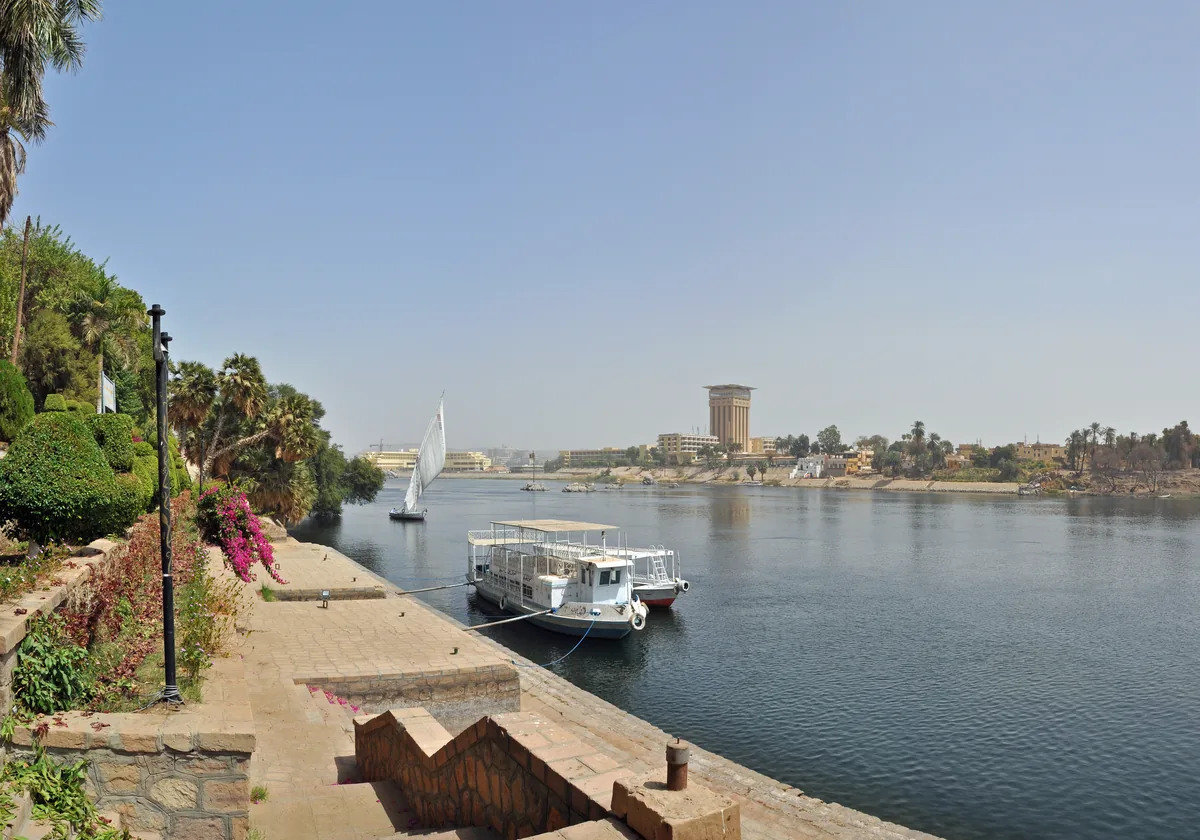
It is worth being precise about what three days purchase, because they do not purchase new wonders. Nothing in this egypt itinerary 10 days is invisible to the seven-day traveller except Alexandria, and even Alexandria is a day trip from Cairo rather than a discovery. What the days buy is sequence and slack. In a week, Saqqara competes with Islamic Cairo for a single morning and one of them loses. In ten days, the old city gets its day and Saqqara becomes a choice instead of a casualty. In a week, the west bank of Luxor is a dawn raid – the Valley of the Kings at opening, Hatshepsut at a stride, the Colossi from the road. In ten days the same valley gets a second act after lunch, when the tour groups have gone and Medinet Habu or the Ramesseum can be walked at the pace their reliefs deserve.
The clearest purchase is at the far end of the route. Abu Simbel, some 280 kilometres south of Aswan, is conventionally sold as a pre-dawn convoy run – a very early start, a few hours at the temples shared with every other early riser in Aswan, and a long drive back through the heat. With a day to spare, the same temples can be reached at a civilised hour by private car or by the short flight, arriving as the dawn crowds leave, and the day still ends in Aswan with an evening in it. The temples do not change. The experience of them changes completely, and it changes because of a day that, on paper, looks like nothing but a blank in the schedule.
The last purchase is decompression, and it is the one itineraries are most embarrassed to defend. Egypt’s classic route is dense – three thousand years of monumental building in a single corridor – and travellers on the seven-day version routinely describe the final days as a blur of pylons. Ten days inserts air: a Cairo day with no pyramid in it, a Luxor afternoon given to the river, a last morning at Philae taken slowly because the flight home is not until evening. A version of this route can also trade its final two days for the Red Sea, and that swap is argued honestly further down. But the default ending is the river, at Aswan’s pace, because that is the ending the extra days were bought for.
At a Glance
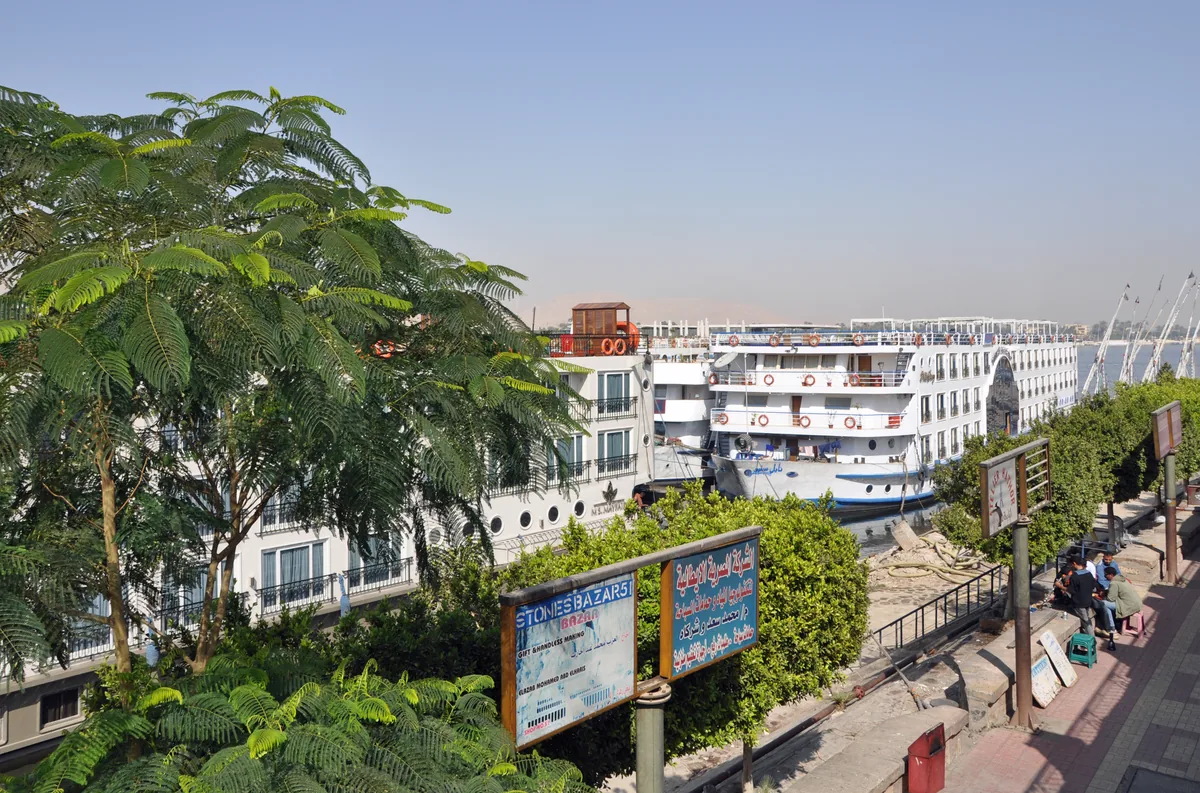
The whole ten days on one screen. Four bases at most, one direction, and no day carrying two headline sights plus a transfer – the rule that decides whether an Egypt itinerary feels rich or merely full.
| Day | Base | Focus |
|---|---|---|
| 1 | Cairo | Arrive, settle, the Nile in the evening |
| 2 | Cairo | Giza plateau in the morning, the Grand Egyptian Museum after |
| 3 | Cairo | The slow day – Citadel, mosques, Khan el-Khalili, or Saqqara |
| 4 | Cairo | Alexandria day trip by train, back by bedtime |
| 5 | Luxor | South by air or sleeper, Luxor Temple in the evening light |
| 6 | Luxor | East Bank – Karnak at length, the sphinx avenue, the corniche |
| 7 | Luxor | West Bank – Valley of the Kings, Hatshepsut, then the second site |
| 8 | Aswan | The river road south – Edfu and Kom Ombo, arrive Aswan |
| 9 | Aswan | Abu Simbel at a human hour |
| 10 | Aswan | Philae by boat in the morning, a slow afternoon, depart |
Two swaps are built into the table rather than bolted on. Days 5 to 8 can be re-shaped around a Nile cruise instead of hotel bases, and Days 9 and 10 can be traded for a Red Sea ending at Hurghada – both variants are set out in their own sections below, with what each one costs stated plainly. What the table will not do is hold everything at once: Alexandria, a cruise, Abu Simbel and the Red Sea together need more than ten days, and any egypt itinerary 10 days that promises all four in this frame is quietly halving something it is not telling you about.
Read the bases column as the plan’s skeleton. Four nights in Cairo sounds generous until you notice that one of them follows a day spent in Alexandria and another follows the slowest day of the trip – the capital is being used as a base camp, not besieged. Three nights in Luxor is the minimum that lets each bank have its own morning and still leaves an afternoon unassigned. And the Aswan nights sit at the end on purpose, because every journey in the final stretch – the river road down, Abu Simbel, the boat to Philae – starts from them, and because a trip should end in its calmest city rather than its loudest. Move any night from one base to another and something named in this table quietly falls off it.
How This Egypt Itinerary 10 Days Fits Together
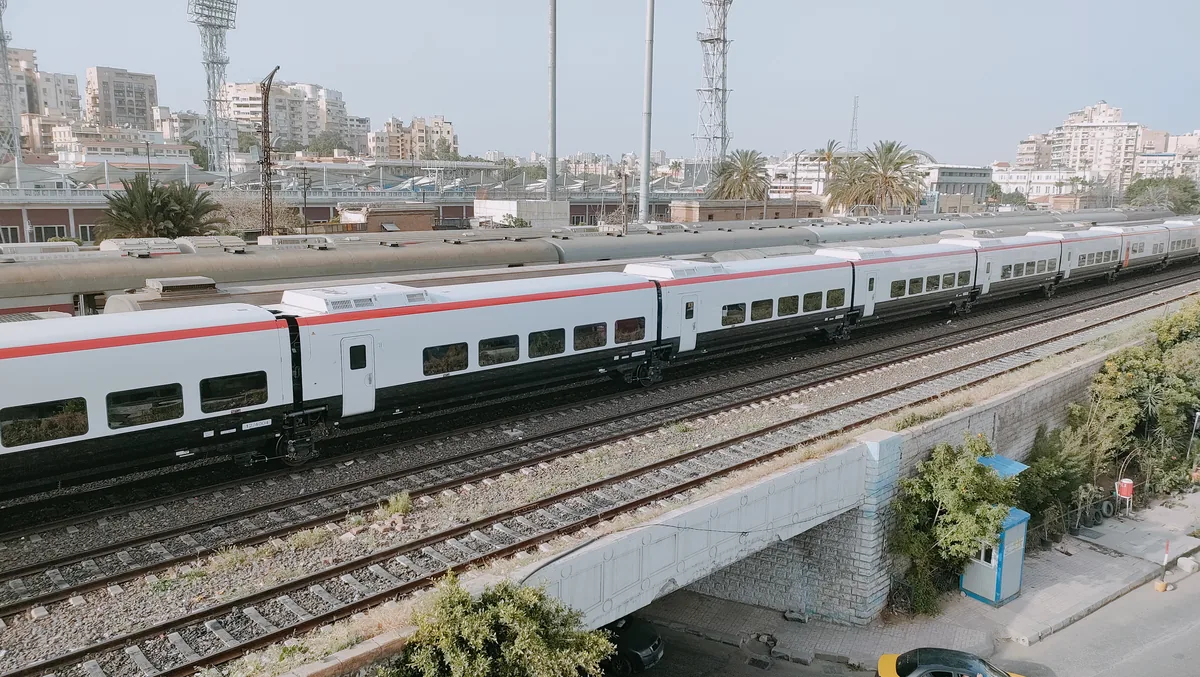
The route is a line, and its transport breaks into four legs, each with a mechanism worth understanding before you book anything. Cairo to Luxor is the long leg. A domestic flight does it in about an hour and lands you in Luxor with a day still usable, which is why Day 5 below is built around flying. The overnight sleeper train does the same leg while you sleep, leaving Cairo in the evening and arriving in Luxor early enough to start sightseeing – travellers divide sharply on its romance, but nobody disputes its efficiency, and it continues to Aswan, which makes it a genuine alternative spine for the whole route. Day trains cover the same ground in daylight at the cost of most of a day. What this itinerary would not do is drive it: the road leg is long, empty of sights, and spends the energy Days 6 and 7 need.
Alexandria is the one return journey in the plan, and it works because the mechanism is a shuttle rather than a relocation – trains run between Cairo and Alexandria through the day, the run takes roughly three hours each way, and the day tripper sleeps in the same Cairo bed at both ends of it. Luxor to Aswan is the leg with the famous choice. The land mechanism, used by the day-by-day plan below, is a single travelling day by road or rail broken at the riverbank temples of Edfu and Kom Ombo. The river mechanism is the cruise, which stretches the same leg across several nights and is given its own section below, because in a ten-day frame it is a real option rather than a compromise – there is finally room for it.
The last leg is the shortest and the most argued about: Aswan to Abu Simbel and back, roughly 280 kilometres each way by road, or a short domestic flight of well under an hour. Both mechanisms are described on Day 9, where the choice between them is the day’s whole content. Departure logic closes the route. Most travellers fly Aswan to Cairo and connect onward the same day, leaving a generous margin between the flights, or take a final night in the capital before an early home flight. What the plan must never do is end in Aswan and travel overland back north for a departure – that single decision burns the day the whole one-way structure exists to save, and in this egypt itinerary 10 days it would burn the day that Abu Simbel’s slower version depends on.
Day 1 – Arrive in Cairo and Do Almost Nothing
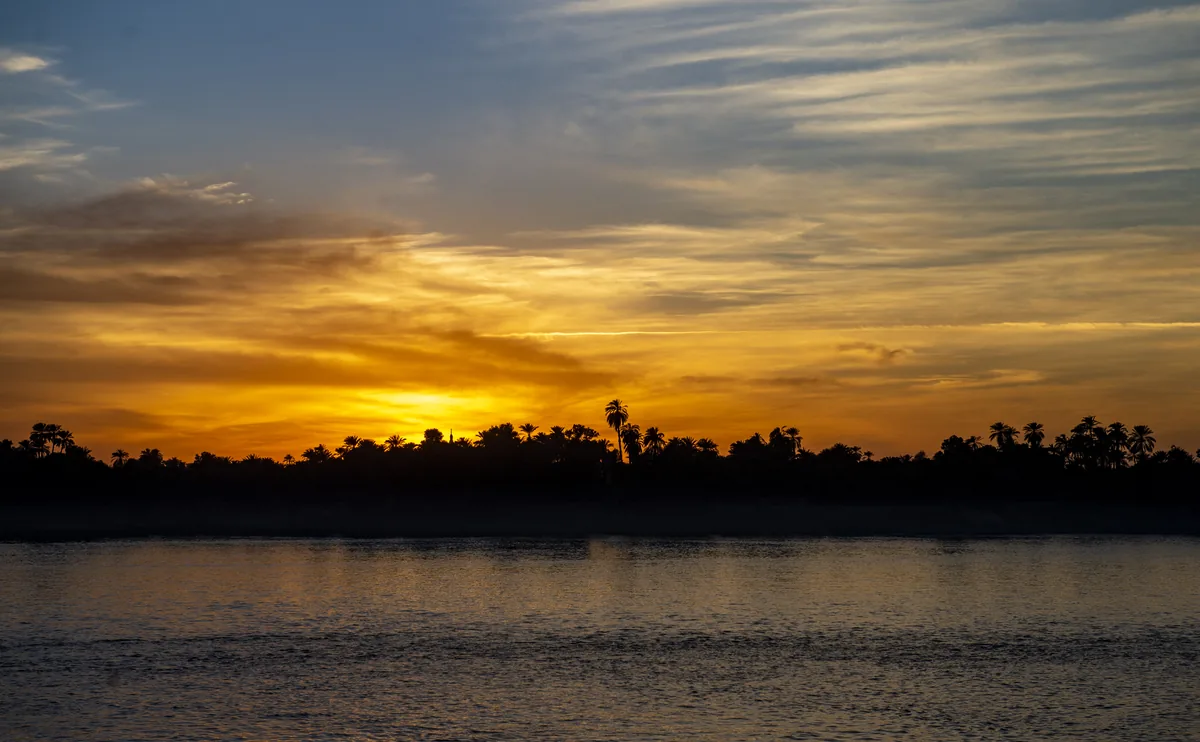
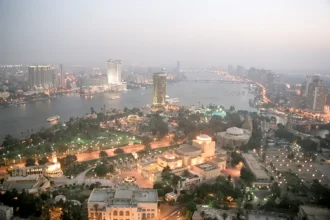
Day 1 is an arrival day, and ten days makes it easier, not harder, to treat it as one. Cairo’s airport delivers travellers at every hour, the city is vast and loud, and a first afternoon spent fighting it with a monument list buys photographs at the price of the energy the Giza day needs. The correct content of Day 1 is a hotel, a shower, a walk, and an early night. If the arrival is early and energy is genuinely there, the Nile is the right scale for it: the corniche in the evening, a felucca if the wind is kind, the old city’s minarets turning dark against the last light. Cairo rewards the rested, and this itinerary can afford to prove it.
The day has one piece of real work in it, and it is administrative rather than scenic. Confirm the bookings that the next three days hang on – the timed museum entry for Day 2, the Alexandria train plan for Day 4, the car or guide arrangements for whichever of Day 3’s options you have chosen. Ten-day trips fail less often at the famous sights than at these small hinges, and an hour of confirmation on a quiet first evening is cheaper than any of them improvised later. Then stop. Day 2 starts early, at the plateau, and it is the day the whole trip is photographed by.
Nothing in Day 1 is a concession. Travellers who land and immediately besiege the city tend to spend Day 3 recovering from Day 1, which in this plan would waste the slow day – the one genuinely new thing ten days buys in Cairo. Arrive, orient, eat well, sleep early. The pyramids have waited forty-five centuries; they will wait one more night.
Day 2 – Giza in the Morning, the Museum After
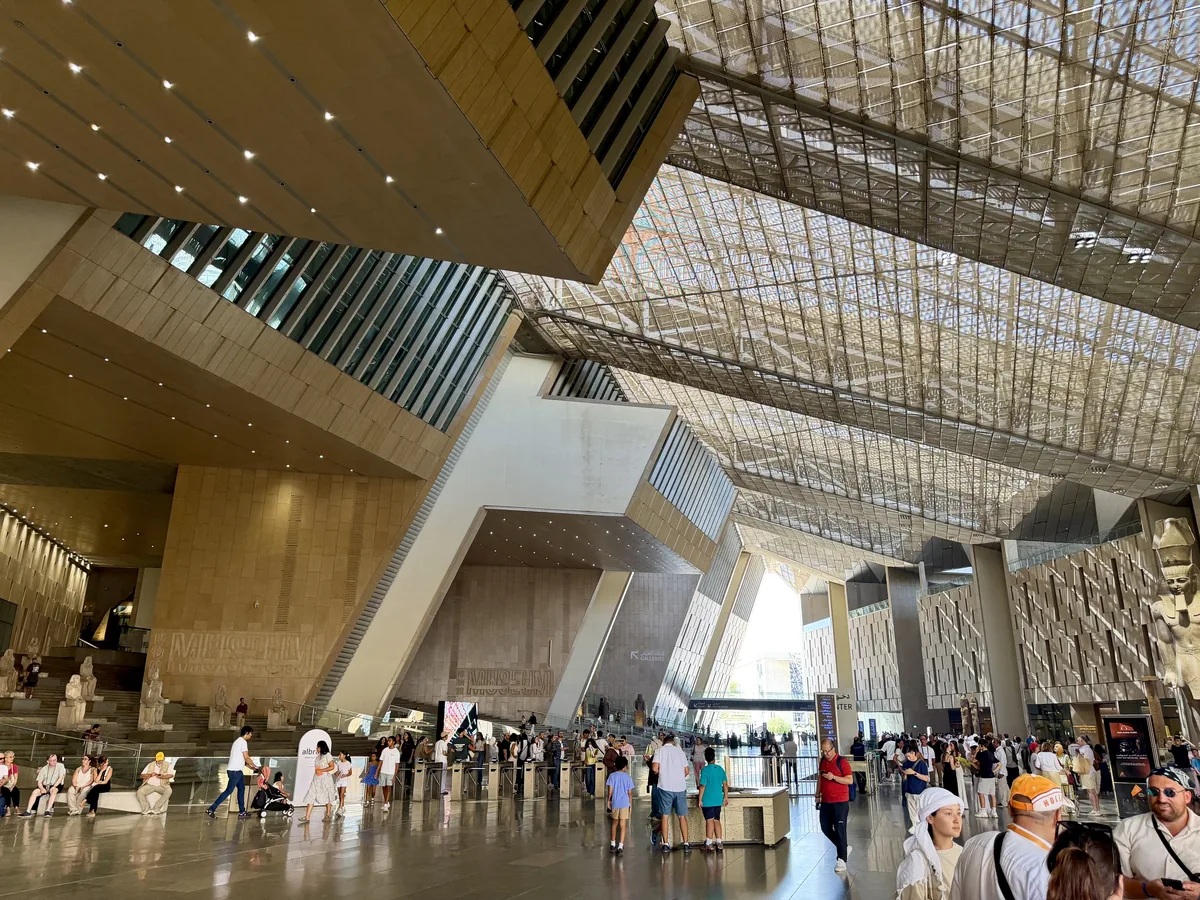
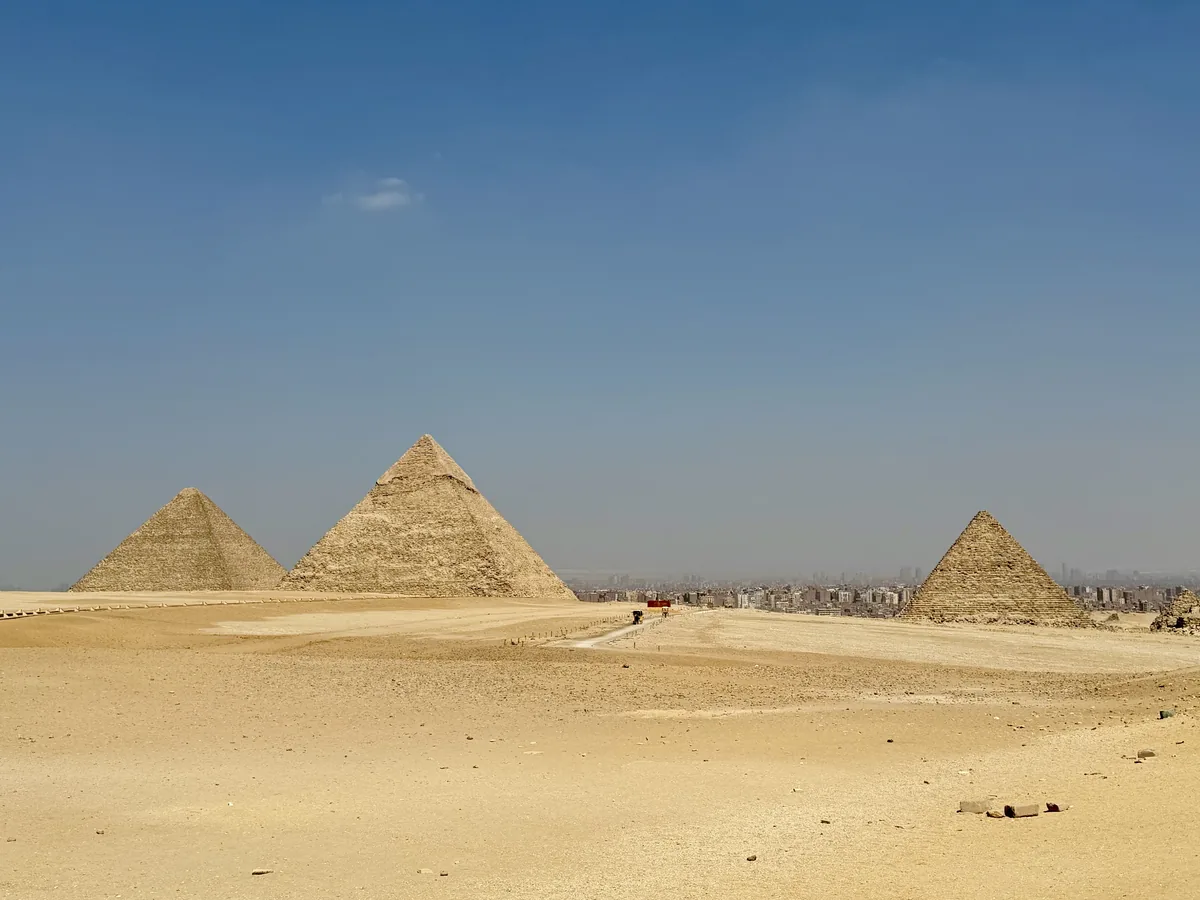
Day 2 is the classic pairing, and it is the day this itinerary changes least from any other – because it is already right. The Giza plateau at opening, walked as one landscape rather than three photo stops: the pyramids of Khufu, Khafre and Menkaure along their diagonal, the valley temples and causeways between them, the Great Sphinx at the edge looking east. Start early, while the light is low, and walk the Sphinx-to-panorama line that tells the plateau’s story in order. Going inside a pyramid is a separate ticket and a separate decision, honestly optional – the pyramids make their argument from outside, at scale. Our Pyramids of Giza guide walks the plateau monument by monument; this day needs only its shape and its morning.
What has changed the day in recent years is where its afternoon goes. The Grand Egyptian Museum stands about two kilometres from the plateau at El Remayah Square, and since it fully opened in November 2025 it has held the complete Tutankhamun collection – the gold that a Cairo trip used to chase across the city to Tahrir Square, now displayed whole, a short drive from the tombs it came from. The pairing closes a loop no other day on the route can: the burial places in the morning, the burial goods in the afternoon, Khufu’s great cedar boat in its own hall between the two stories. Our Grand Egyptian Museum guide covers the galleries and the timed-ticket system in detail; book the slot in advance, and do not book the earliest one – the plateau always takes longer than planned, and a museum entry missed to traffic is the day’s one unforced error.
The plateau and the museum together are the heart of the UNESCO-listed Memphis and its Necropolis World Heritage property, the pyramid fields running from Giza south to Dahshur, and Day 2 is deliberately the fullest sightseeing day of the Cairo stay. That is sustainable precisely because Day 3 is not. Travellers who try to add the Citadel or the old museum to Day 2’s evening are spending tomorrow’s day tonight, and the slow day is worth more than a tired extra sight. Eat in Giza or back in the city, keep the evening light, and let the day end where it peaked – in the museum’s glass, with the pyramids framed behind you.
Day 3 – The Slow Cairo Day
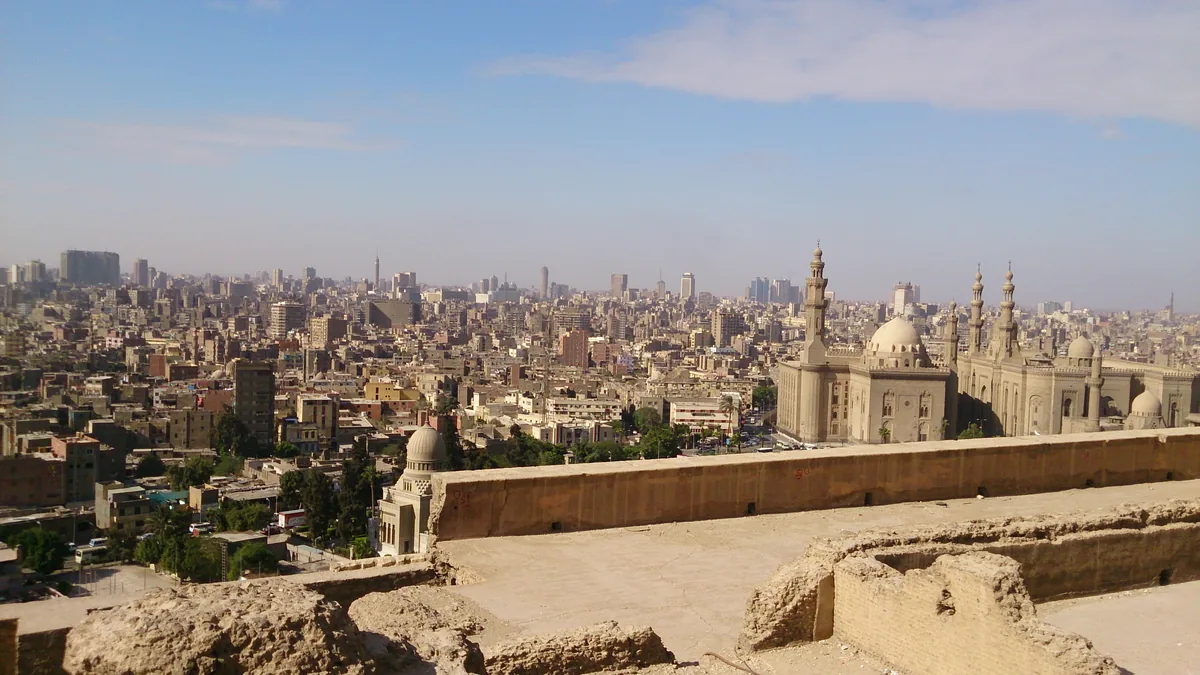
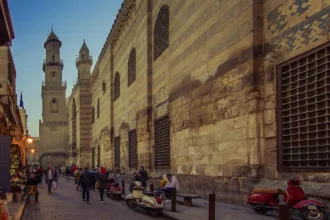
Day 3 is the day the seven-day route does not have, and it is the day that most changes how the trip feels. Its subject is the second Cairo – the city of the Citadel and the mosque-madrasas, of al-Muizz Street’s carved stone facades, of the Khan el-Khalili lanes and the coffee houses behind them. This is the medieval Islamic capital that ruled an empire, preserved as a UNESCO-listed historic centre, and it asks for a different energy from the plateau: walking rather than climbing, looking up at minarets rather than across at pyramids, letting lanes decide the route. From the Citadel the whole of it spreads below – the view that explains why this city, and not the pharaohs’ necropolis, became the capital of everything that followed.
The day divides naturally. The Citadel and its mosques in the morning, while the light is on the city. The lanes of the old city after – al-Muizz Street walked slowly, the bazaar taken as a place to drink coffee and watch a working market rather than a shopping assignment. Coptic Cairo, the Roman-walled quarter of the Hanging Church and the old synagogue, fits the late afternoon for travellers whose interests run that way, and it is a short hop rather than a second expedition. None of it needs an early start, a timed ticket or a guide’s narration to work, though a good guide turns the carved facades into a readable history for anyone who wants one. What the day needs is the one thing a week cannot give it: permission to be unhurried.
There is an honest alternative, and some travellers should take it. Saqqara, the necropolis where the pyramid story begins – Djoser’s Step Pyramid, the first great stone building in Egypt, and painted tombs of daily life finer than anything at Giza – can replace the old city as Day 3’s content, and for travellers who came for antiquity above all, it should. What an egypt itinerary 10 days will not do is both in one day, because that is the seven-day mistake wearing a longer trip’s clothes. Choose the city or choose the step pyramid. Either choice leaves the other for the second trip, and either leaves Day 4’s traveller rested rather than depleted.
Day 4 – Alexandria and Back by Bedtime
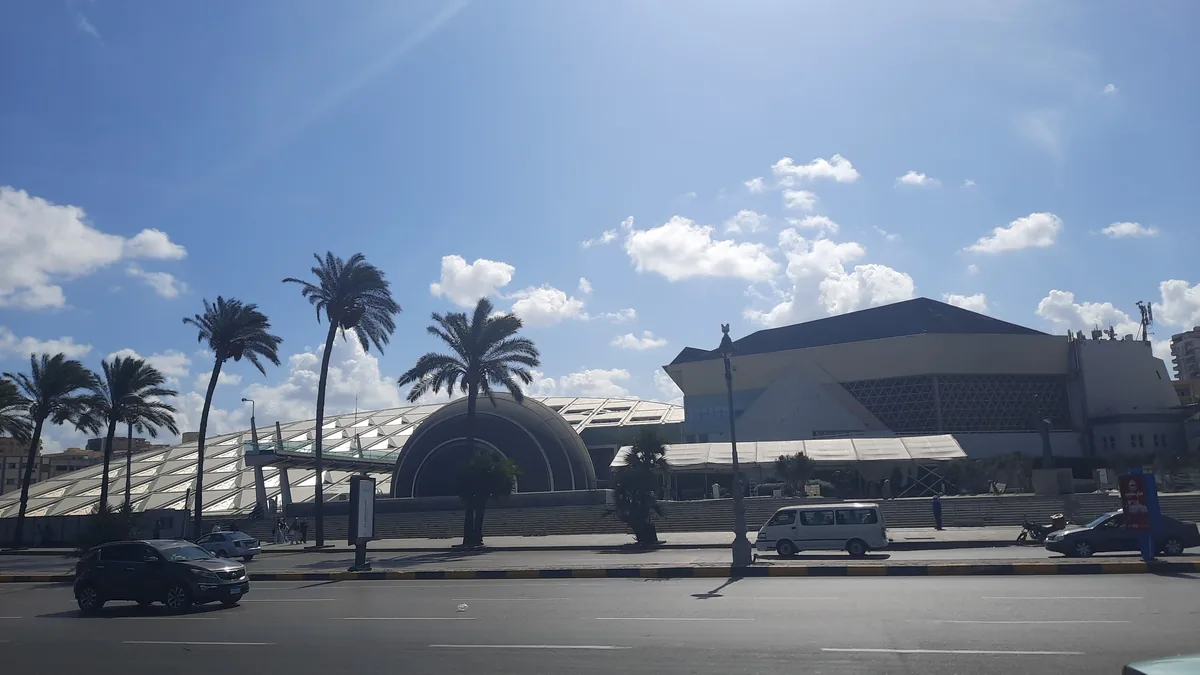
Day 4 is the day trip that a week has to refuse, and taking it is the clearest sign that this trip has room in it. Alexandria lies roughly three hours north-west of Cairo by train, on the Mediterranean, and it is a different country wearing the same flag: sea air instead of desert dust, a harbour city founded by Alexander and built by Greeks and Romans, a long corniche where the evening promenade is the main event. The mechanism is what makes it a day trip rather than a relocation – an early train out of Cairo, a day in the city, a train back after dinner, the same bed at both ends. No packing, no checkout, no new hotel to learn. The day costs a return fare and nothing else in the plan.
The city’s sights are a half-day list, and the other half of the day is the city’s mood. The Bibliotheca Alexandrina, the modern revival of the ancient library standing near its believed site, is the anchor – a building as much as a collection, worth an hour inside and a walk around its carved granite wall of alphabets. The Citadel of Qaitbay guards the harbour from the site of the Pharos, the lost lighthouse that was one of the wonders of the ancient world. The Catacombs of Kom el Shoqafa and the Roman theatre fill out the archaeology for those who want it. But Alexandria’s real content is the corniche at golden hour, seafood by the harbour, and the faded grandeur of its old streets – a Mediterranean pause in the middle of a Nile itinerary, taken while the trip is still young enough to enjoy a contrast.
The honesty this guide owes you is the same honesty it would owe about any day trip: Alexandria is the most droppable day in the ten. If the slow Cairo day ran long in your heart, Day 4 can become a second helping of it – Saqqara if you chose the city on Day 3, the city if you chose Saqqara, or the old Egyptian Museum in Tahrir, which still holds a vast collection and rewards the travellers who make the trip across town. Nothing downstream depends on Alexandria. That is exactly why it belongs here: it is the day the itinerary spends purely on appetite, and a trip with one such day in it is a trip that has stopped being an assignment.
Day 5 – South to Luxor, and the Temple by Night
Day 5 is the hinge, and its first decision was made back at the planning stage: fly south in about an hour and keep the day, or take the sleeper train the night before and wake up already there. This plan flies, on a morning flight that leaves Cairo after breakfast rather than before dawn – another small purchase of the ten-day frame – and it lands in Luxor with the afternoon intact. The sleeper version simply moves the journey into the previous night and gives Day 5 a dawn start on the west bank instead; both are respectable, and the route below works for either. What the day must not become is a second sightseeing marathon. Luxor holds the densest concentration of monuments in Egypt, and it will still be there tomorrow.
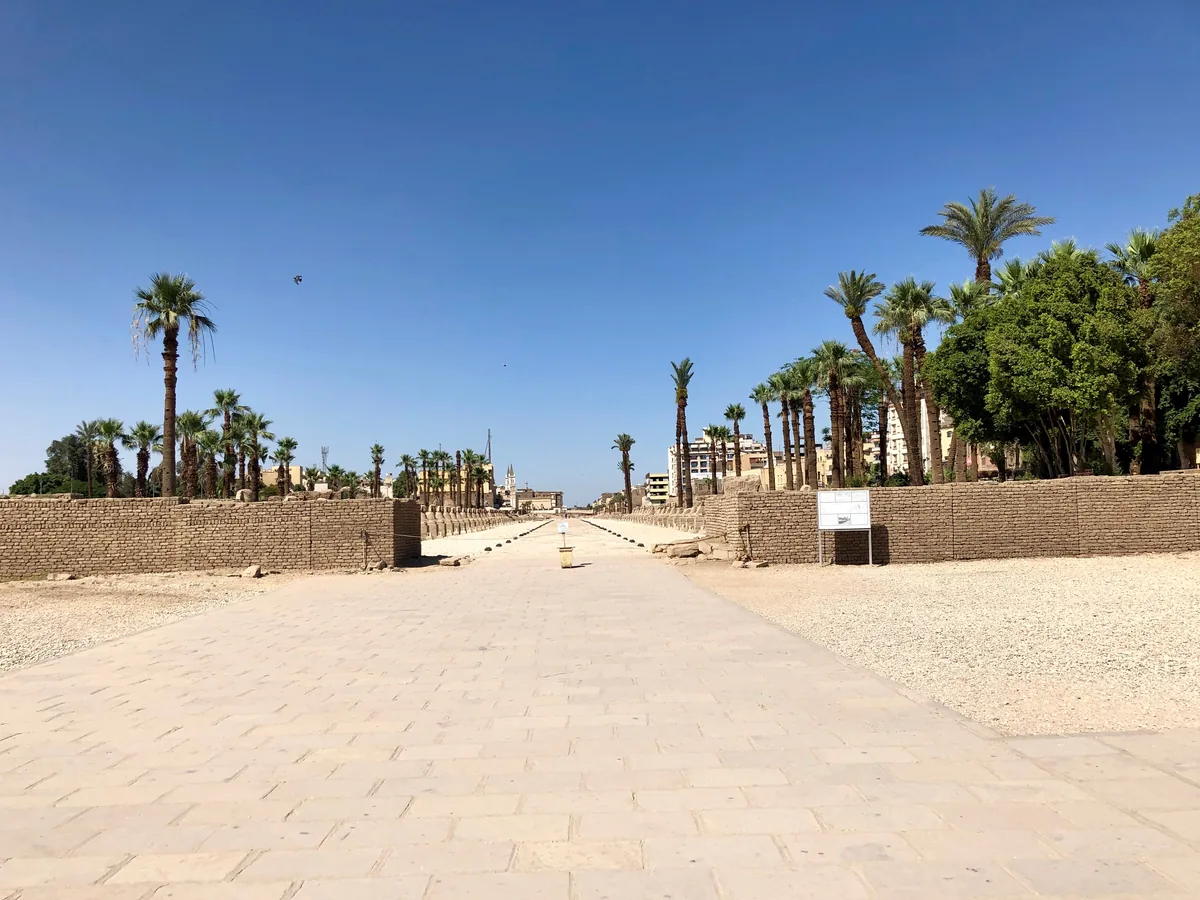
Luxor is ancient Thebes, and the river divides it as it always has – the east bank of the living, the west bank of the dead. Day 5 takes the gentlest possible introduction to it: settle in, walk the corniche, and give the evening to Luxor Temple. The temple stands in the centre of the modern city, a compact and legible New Kingdom building, built mainly under Amenhotep III and Ramesses II, and it is the one great temple in Egypt that improves after dark – floodlit, its colossi and colonnades warm against the night, the crowds gone home. Come at the end of the afternoon, read the carving in the last daylight, and stay for the lights. Our Luxor Temple guide walks it court by court, from the pylon of Ramesses II to the sanctuary Alexander rebuilt.
The evening has a second pleasure built into it. The Avenue of Sphinxes, the processional road that joined Luxor Temple to Karnak in the ancient Opet festival, has been excavated and restored along its line through the city, so the walk between the two temples is once again a single ceremonial street. Standing on it at night, with tomorrow’s temple at one end and tonight’s glowing behind you, is the moment the Luxor stay announces its shape: one bank per day, taken in order, with the river in between. Eat late. Luxor’s evenings are part of its itinerary, and Day 6 starts early enough to deserve a good one.
Day 6 – Karnak Without the Clock
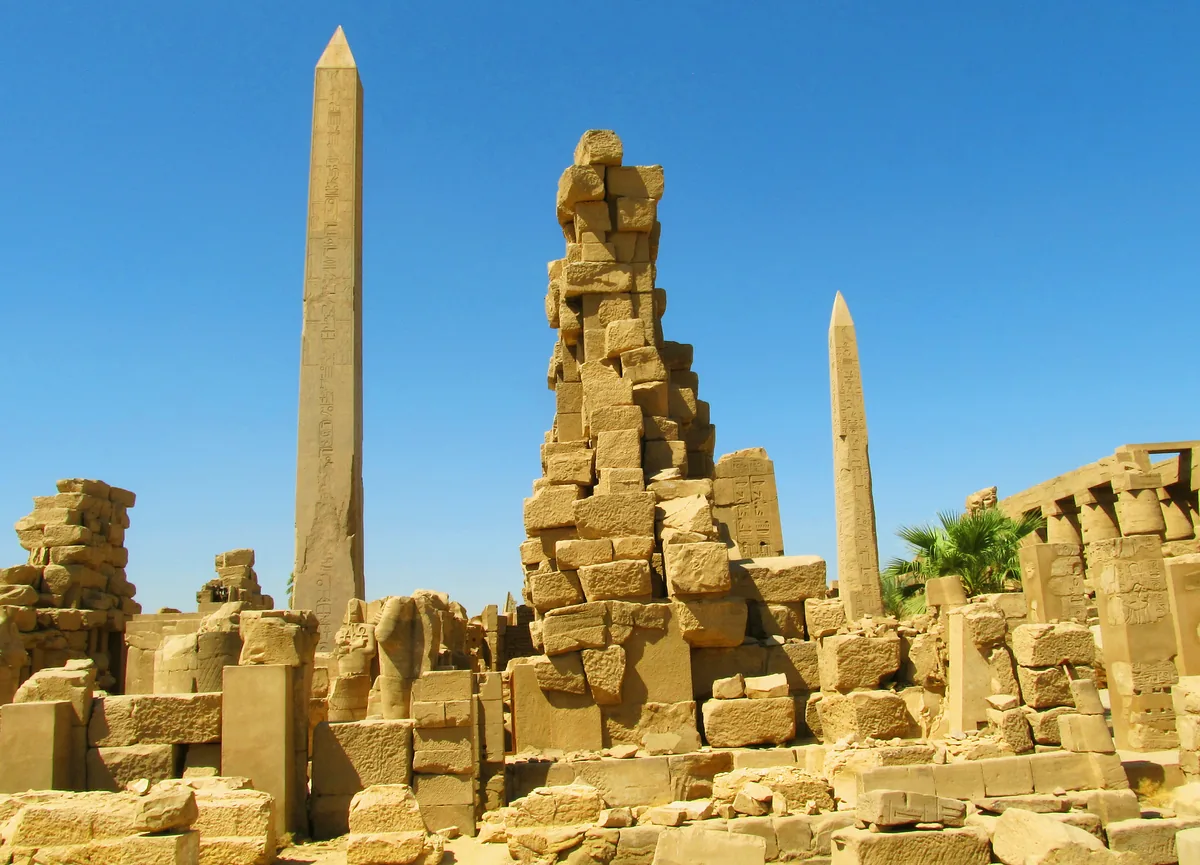
Day 6 belongs to the east bank, and above all to Karnak, which is less a temple than a city of temples – a precinct built and enlarged by pharaoh after pharaoh across some two thousand years, pylons behind pylons, the Great Hypostyle Hall’s forest of carved columns at its heart. Karnak is the site the rushed itineraries most damage, because it cannot be hurried without dissolving into big stone, and it is the site this itinerary most deliberately protects: a whole morning, arriving at opening, walking from the Avenue of Sphinxes inward as its builders intended, and staying until the place has accumulated rather than merely impressed. The obelisks tell its timescale in a single view – one of Hatshepsut’s pair still stands where her masons raised it, among the fallen grandeur of the hall her father built.
The discipline of the day is what does not happen in it. In the seven-day version, Karnak shares its day with the transfer south or with the west bank’s dawn start, and something always gives. Here, the afternoon after Karnak is deliberately minor: the walk back down the sphinx avenue to Luxor Temple for anything the evening visit missed, the Luxor Museum for travellers whose appetite survived the morning – it holds a fine, human-scale collection, including statuary found in the temple itself – or simply the corniche, the feluccas, and the west bank hills turning colour across the river. A day in Luxor that contains one enormous thing done properly and one pleasant thing done slowly is a day in balance, and balance is the resource Days 7 and 8 will spend.
There is a temptation, in a city this dense, to use the spare afternoon for an early run at the west bank – the Colossi are just across the river, the valley is just behind them. Resist it as a raid and respect it as a promise. Tomorrow is the west bank’s day, whole and early, and splitting it across two afternoons is how travellers end up seeing its two halves tired. The hills will keep. Watch them from the corniche instead, with the temple lights coming on behind you, and let the east bank close its own day.
Day 7 – The West Bank, With Time for the Second Site
Day 7 crosses the river before the heat, because the west bank’s strategy is a dawn strategy in any itinerary. The Valley of the Kings comes first: more than sixty royal tombs cut into a wadi in the Theban hills, the famous ones filling as the morning warms. A general ticket typically covers a selection of whichever tombs are open in the conservation rotation, with Tutankhamun’s small, dense, world-famous tomb handled separately – so the honest plan is to choose on arrival from what is open, rather than fix a list at home and be disappointed by a closed door. Descending a painted corridor into the mountain, the colour still on the walls after three thousand years, remains the single most concentrated encounter with ancient Egypt on this whole route, and it anchors the day exactly as it anchors the seven-day version.
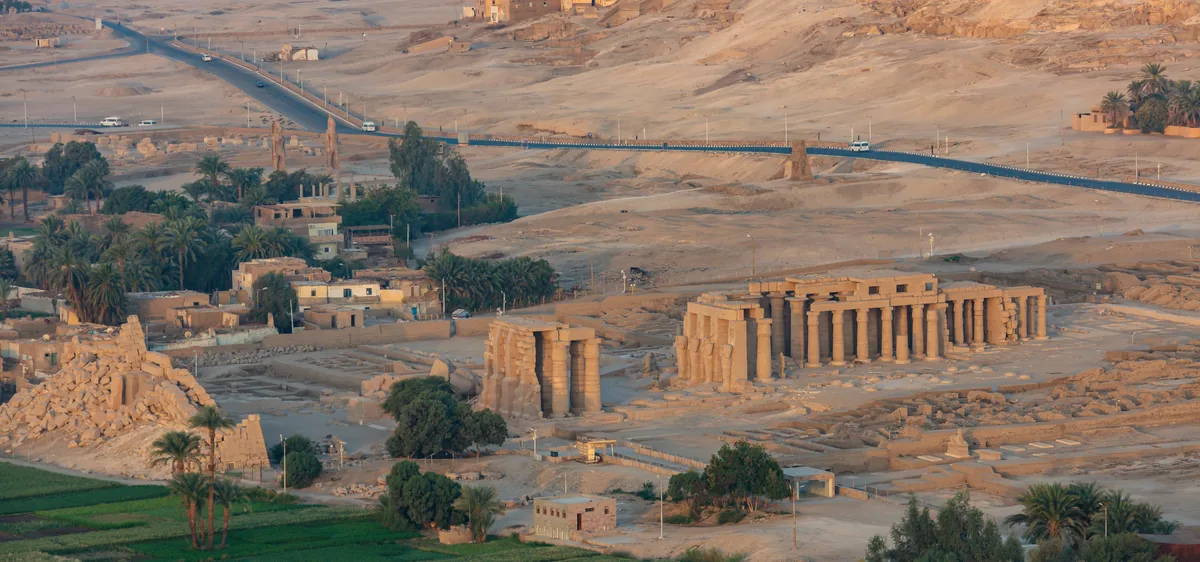
From the valley, the morning continues to Deir el-Bahari, where Hatshepsut’s mortuary temple rises in terraces against the cliff – clean horizontal lines against vertical rock, the most architecturally striking building in Egypt, telling its builder’s story in her own commissioned reliefs, the expedition to Punt among them. The Colossi of Memnon, two vast seated statues of Amenhotep III standing alone in the fields where his temple vanished, close the classic circuit on the way back toward the river. In a week, that is the day, and travellers drive back across the bridge well pleased. In ten days, it is merely the day’s first half.
The second half is what the extra time is for. The west bank’s reserve list is the finest in Egypt: Medinet Habu, Ramesses III’s mortuary temple, its reliefs among the best preserved in the country and its courts usually quiet; the Ramesseum, Ramesses II’s great memorial temple, half-ruined and wholly atmospheric; the tombs of the nobles, small, painted and intimate, full of vineyards, workshops and daily life rather than gods and kings. Choose one – two at most – and walk it slowly in the afternoon light, when the groups have gone and the stone has the place to itself. This is the day the whole egypt itinerary 10 days argument stands on: not a new wonder, but a great one given its hours. Return across the river in the evening with the hills behind you. Tomorrow the route turns south for the last time.
Day 8 – The River Road South to Aswan
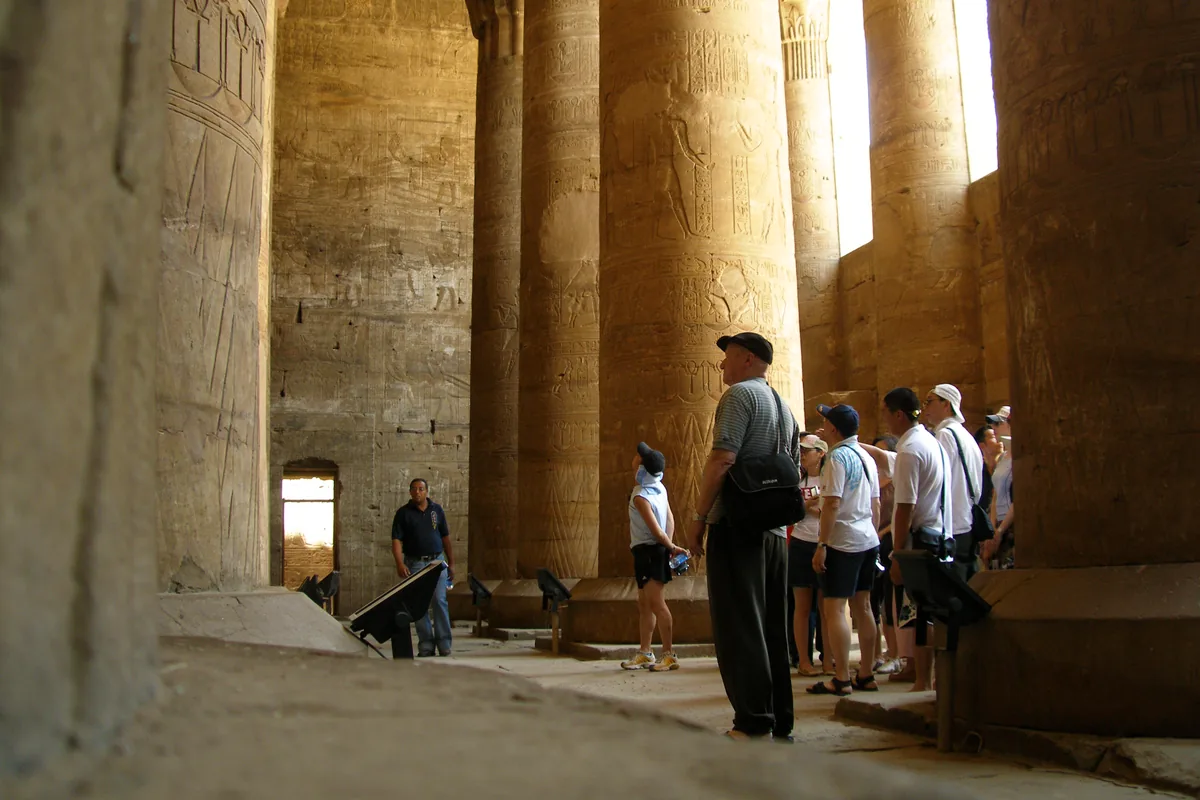
Day 8 is the travelling day, and in the land version of this route it is a good one, because the road south passes the two temples the river made. The mechanism is a single journey by road or rail from Luxor to Aswan, broken at Edfu and Kom Ombo – allow most of the day for it, and treat the stops as the day’s content rather than its interruptions. Edfu comes first: the Temple of Horus, the best-preserved ancient temple in Egypt, roofed, walled and legible as a complete building, its walls a textbook of the cult that used it. A traveller who has spent two days among Luxor’s magnificent ruins is often startled by Edfu, because it shows what they all once were – a working temple, entire.
Kom Ombo, further south, stands on a bend of the Nile where the river comes to meet it: a double temple shared by two gods, Sobek the crocodile and Horus the falcon, with twin entrances and twin sanctuaries along a single axis, and a small museum of mummified crocodiles beside it that children and adults remember in equal measure. Cruise passengers reach both temples from the water, on the ship’s schedule. The land traveller reaches them at their own hour, lingers or leaves as the place dictates, and keeps the evening at the far end – the trade this itinerary makes knowingly, and argues for in the cruise section below. Either way, the arrival is the day’s destination: Aswan, where Egypt softens.
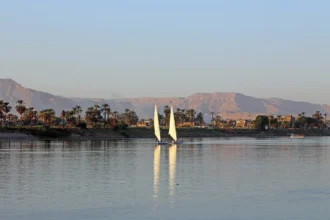
Aswan sits at the Nile’s first cataract, where the river runs clear around granite islands and feluccas outnumber every other craft. It is Nubian in culture, slower in tempo, warmer in every sense than anywhere else on the route, and Day 8’s evening belongs to it without an agenda – the corniche, the market’s spice pyramids, a felucca around Elephantine Island if the light holds. Get an early night for once not because tomorrow starts cruelly early – the whole point of Day 9 is that it does not – but because Aswan’s evenings are best enjoyed by people who are not yet tired, and its mornings by people who slept.
Day 9 – Abu Simbel at a Human Hour
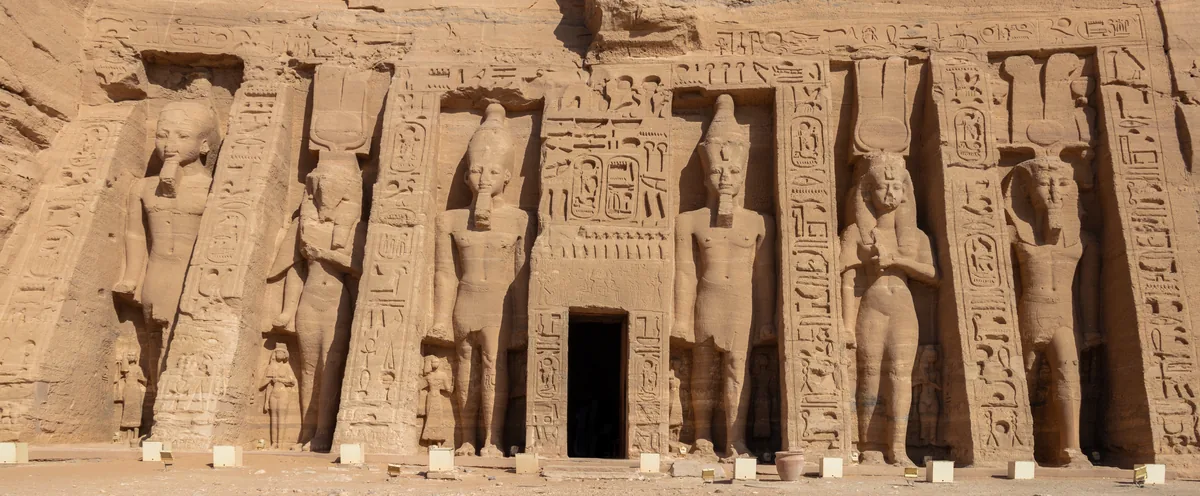
Abu Simbel is the far south’s great sight: two rock-cut temples of Ramesses II, the larger fronted by four colossal seated kings, the smaller dedicated to his queen Nefertari – a queen honoured with a temple of her own at a scale almost unheard of in ancient Egypt. Their modern story matches their ancient one. When the Aswan High Dam raised Lake Nasser, the temples were cut apart and reassembled on higher ground in the UNESCO-led international campaign of the 1960s and 1970s, the rescue that defined heritage salvage; both temples and Philae now share a single World Heritage listing, the Nubian Monuments from Abu Simbel to Philae. None of that is in dispute. What is in dispute, on every Aswan morning, is the hour at which you go.
The conventional mechanism is the shared tour: a departure from Aswan in the small hours, a convoy-paced drive of roughly three hours each way, a visit measured against the return deadline, and the site’s daily crowd experienced at its single peak – everyone who came that day, at the same temples, at the same time. It exists because most travellers are short of days and must be back for something else. This itinerary is not short of days, and Day 9 is built on the alternatives. A private car leaves after breakfast and answers to nobody’s schedule. The short domestic flight removes the road almost entirely. Either way, you arrive as the dawn wave is leaving, and the colossi – which photograph best and read best in angled light rather than dawn flatness – are shared with a fraction of the morning’s crowd. The temples are the same temples. The visit is a different visit.
Give the site its time when you get there. The Great Temple’s interior – the hypostyle hall of colossal Osiride statues, the reliefs of Ramesses’ campaigns, the sanctuary at the axis’s end where the famous solar alignment reaches twice a year – rewards the traveller who is not watching a departure board. Nefertari’s temple, gentler and less crowded even at peak, deserves more than the walk-past it usually gets. Then the road or the flight back to Aswan, an evening on the corniche, and the knowledge that the trip’s longest journey is behind you. Day 10, the last day, has nothing in it that requires an alarm. That sentence is the entire argument of this egypt itinerary 10 days in miniature.
Day 10 – Philae in the Morning, and the Slow Way Home
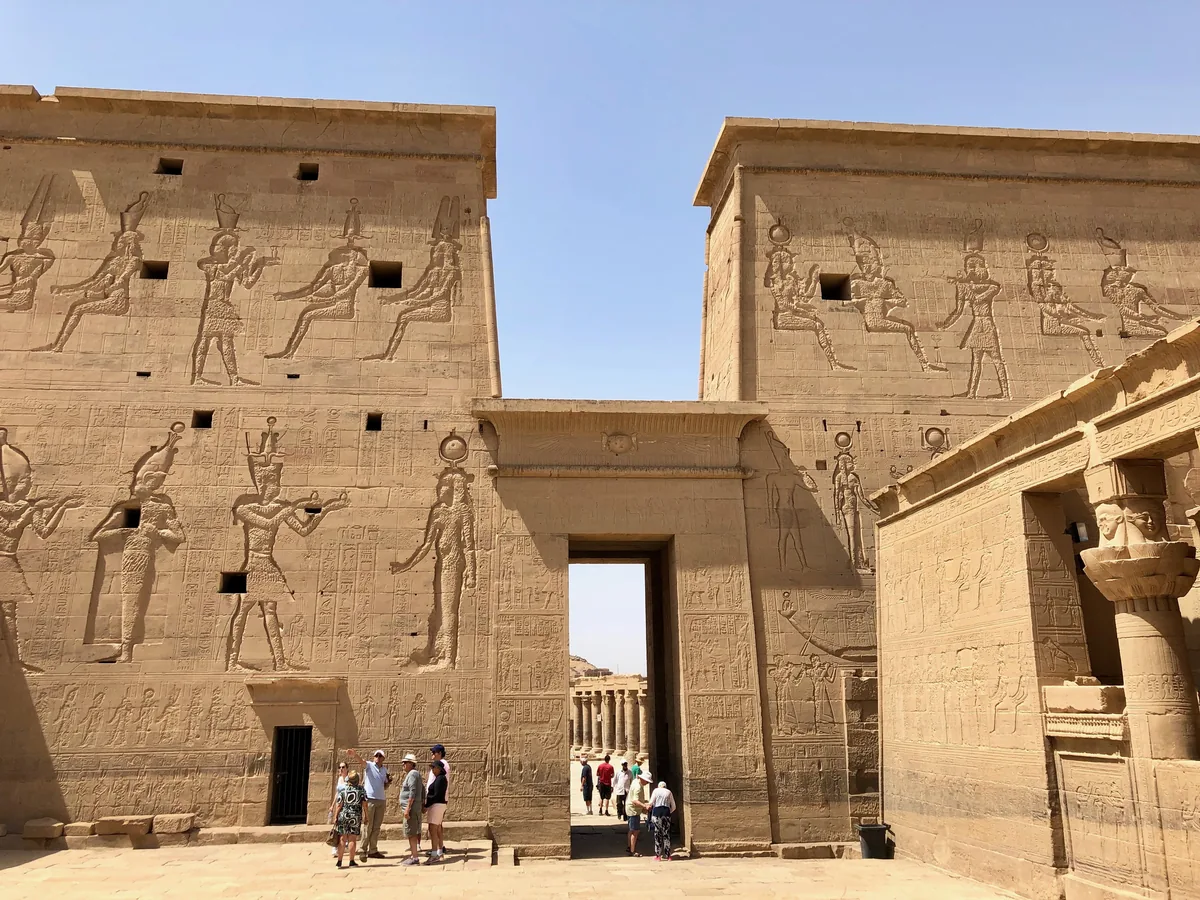
Philae is the right final sight, and in this itinerary it finally gets the slot it deserves: a morning of its own, unhurried, with nothing after it but lunch and a departure. The Temple of Isis stood on Philae Island until the dams changed the river, when the same UNESCO campaign that saved Abu Simbel moved it stone by stone to Agilkia Island nearby – and the rescue left it an accidental gift, because it is now reached by small boat across open water, exactly as its ancient pilgrims reached it, the pylons rising from the island as the boat comes in. Take the morning crossing while the light is on the stone and the day boats are still sparse. Inside, it is the gentlest of the great temples: late, graceful, carved with some of the last hieroglyphs ever cut, the place where the old religion made its final stand centuries after the pharaohs fell.
The rest of Day 10 is deliberately unscripted, and Aswan fills unscripted time better than anywhere on the route. The Nubian Museum, one of the finest in the country, gives the south its own history in its own voice. The Nubian villages across the river, painted in blues and oranges, repay a slow walk and a mint tea. Kitchener’s Island’s botanical garden is an hour of shade and green after ten days of stone. Or none of it: a long lunch above the river, the market for the spices and craft the rushed version of this trip never has an hour for, and the calm of a traveller whose sightseeing is complete. A final day spent this way is not an under-used day. It is the day that turns ten days of accumulation into a memory with a shape.
Departure, when it comes, follows the rule set at the start: fly Aswan to Cairo and connect onward with a generous margin, or take the last night in the capital if the home flight leaves early. Do not end the trip with an overland return north, and do not spend the final morning chasing a sight that needed a day of its own – there are none left, because the itinerary was built so there would be none left. Ten days, four bases, one direction, and the far south seen at the pace it asks for. The route home is short. The route you took was the point.
The Cruise Version of These Ten Days
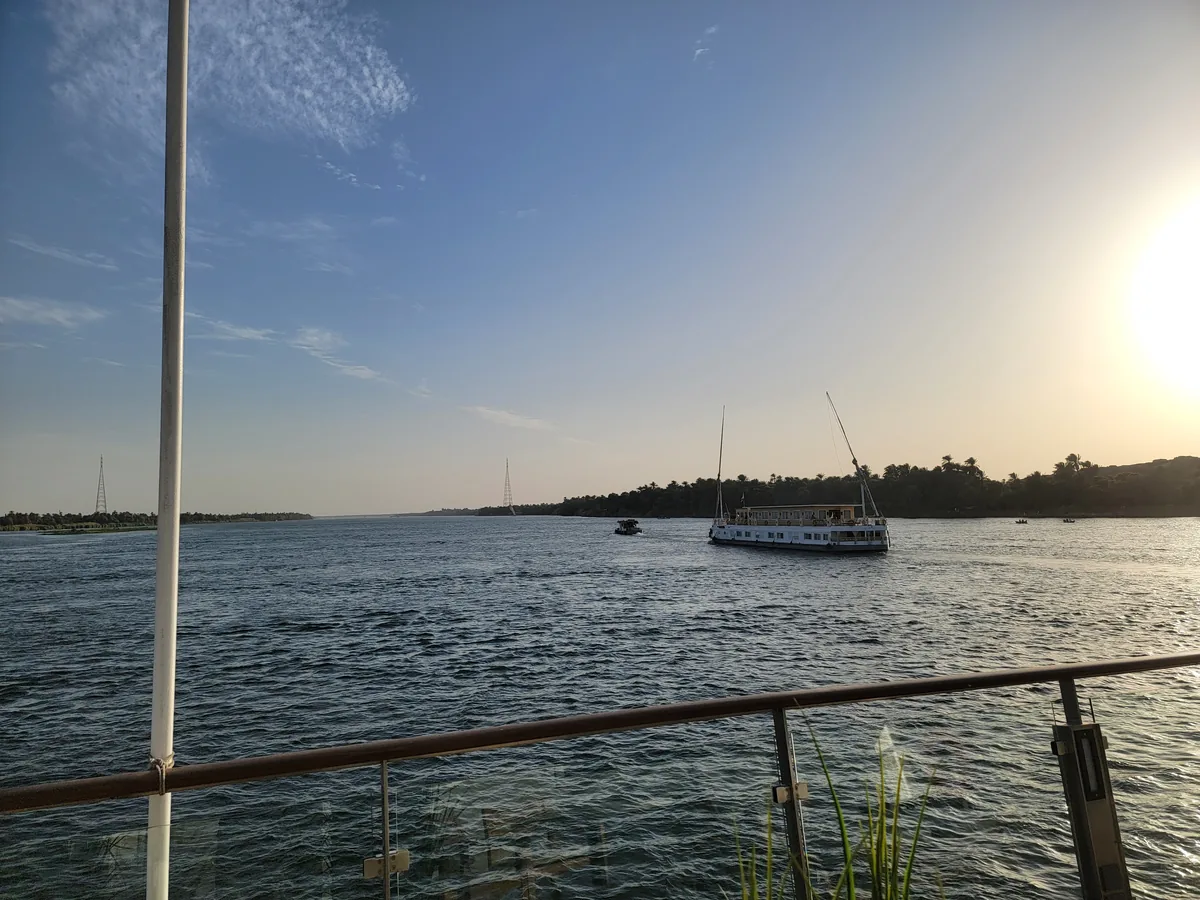
Everything above travels by land between Luxor and Aswan, with one travelling day. The cruise version re-shapes the middle of the trip instead: fly south on Day 5 as written, but board a ship in Luxor rather than checking into a hotel, and let the vessel carry Days 5 to 8 – sightseeing at Karnak and the west bank as the ship’s excursions, then sailing south with Edfu and Kom Ombo as riverbank stops, and docking in Aswan on Day 9 in time for Abu Simbel, with Day 10’s Philae and departure unchanged. Most standard Nile sailings between the two cities run three or four nights depending on direction, and their excursion pattern maps onto this route’s days almost exactly – because the cruise and the land itinerary are the same trip wearing different transport, the temples in the same order along the same river.
What the cruise buys is the river itself as a continuous experience: the banks sliding past, the temples arriving the way their builders’ visitors arrived, evenings on deck instead of in transit. What it costs is the slack this itinerary was built to hold. The ship’s Luxor days run to the excursion schedule, not to your own – Karnak gets the tour’s hours, not the whole unhurried morning of Day 6 – and the second west bank site of Day 7, the Medinet Habu or Ramesseum afternoon that ten days exists to permit, is usually the first thing a sailing timetable squeezes out. The honest summary is that in seven days the cruise competes with the sightseeing; in ten days it merely taxes it. Travellers for whom the river is half the point should pay the tax gladly. Travellers for whom the temples are the point should travel by land and take their river time in feluccas.
One slower variant deserves naming, because ten days is the first frame that can hold it comfortably: the dahabiya, the traditional sailing vessel revived as a small, quiet way to travel the Luxor-Aswan stretch – fewer passengers, no engine-driven schedule, stops at villages and smaller sites the big ships pass. Dahabiya sailings typically take longer over the same water, which is precisely why they belong to an egypt itinerary 10 days and not to a week’s. Whichever hull you choose, book the sailing as early as the flights, because the ship that fits your dates is a finite thing in a way that hotel rooms in Luxor and Aswan are not – and keep Day 9 and Day 10 on land, in Aswan, whichever way the middle was travelled. Abu Simbel at a human hour is not a negotiable part of this route.
The Red Sea Ending – Trading Two Days for the Sea

Some travellers would rather end a trip horizontal, and an egypt itinerary 10 days is enough to let them – provided the trade is made with open eyes. The Red Sea ending replaces Days 9 and 10: instead of Abu Simbel and the slow Philae morning, the route leaves the valley after Day 8’s arrival in Aswan – or, in the cleaner geometry, turns east from Luxor after Day 7 – and finishes with two nights at Hurghada, the resort city on the Red Sea coast. The mechanisms are a road journey of roughly four hours between Luxor and Hurghada, or flights routed through Cairo from Aswan, which cost most of a day in connections. What waits at the end of either is a different element entirely: coral reefs a few metres from the shore, snorkelling and diving over gardens of hard coral, boat days to offshore islands, and a resort strip built for doing very little, very comfortably.
Here is the trade, stated as plainly as this guide can state it. The Red Sea ending costs Abu Simbel – or, if Abu Simbel is protected, it costs Philae’s slow morning and the unhurried Aswan day, and the trip ends in a hurry of transfers instead of a decompression. It cannot be added; it can only be swapped. Travellers who have dreamed of the colossi since childhood should not make the swap, and should take the sea as the start of a second trip instead, because the Red Sea pairs naturally with a return to Luxor. Travellers who have come for a holiday that happens to include the ancient world – who want the temples and the reef in one journey and are honest that the reef matters as much – should make it without guilt, and will probably remember Hurghada’s water as fondly as Karnak’s columns.
What the swap does not change is the route’s spine. The Cairo days, Alexandria, the Luxor days and the journey south all stand exactly as written; only the ending forks. Take the fork at the planning stage, not in Aswan – the Hurghada nights and the transfer belong in the same early booking pass as the flights and the sleeper berths, because a Red Sea ending improvised at the last minute usually means the worst version of both endings: a rushed Abu Simbel skipped rather than savoured, and a single tired day at the sea instead of two good ones.
What to Book Ahead
A route this shape has a spine of things that genuinely need arranging early, and the discipline is knowing that almost everything else does not. Book first, as soon as dates are fixed: the international flights, obviously; the domestic flight or sleeper berths for the Cairo to Luxor leg, because the whole structure hangs on that one journey; the Grand Egyptian Museum’s timed entry for Day 2, which is sold online in advance and matched to an arrival slot; the Nile cruise, if the cruise version is chosen, because the sailing that fits your dates has a fixed number of cabins; and the Abu Simbel arrangement for Day 9 – a private car or the domestic flight – because the human-hour version of that day depends on transport that is yours rather than a tour’s. In the peak winter weeks, all of this firms up earlier than travellers expect.
Alongside the bookings sits the paperwork, and it has one hard deadline worth stating plainly: Egypt’s e-Visa, for nationalities who use it, must be applied for in advance through the official portal – our Egypt visa guide sets out who needs what and the timing the portal requires, and it belongs in the same week as the flight booking, not the week of departure. The second tier of arrangements is human rather than mechanical: licensed guides for Karnak and the Valley of the Kings are worth booking rather than improvising at the gate, because those two sites are close to illegible without their stories, and a good guide’s diary fills in season. Entry tickets to the monuments themselves are largely a matter of the day, with the pattern across Egypt’s major sites moving toward online sale through the official portal – a short check of the current arrangement for your headline sights, done before you travel, is the whole job.
What does not need booking ahead is everything the itinerary deliberately leaves loose: felucca sails, market evenings, the Alexandria train seats on most days, restaurants, and every unscheduled afternoon this plan protects. A traveller who has booked the spine – flights, sleeper or cruise, beds, the museum slot, the Abu Simbel car, two guides – and left the rest open has done this section exactly right. Book the bones early. The flesh of the trip is supposed to be decided by the trip.
When to Run This Itinerary
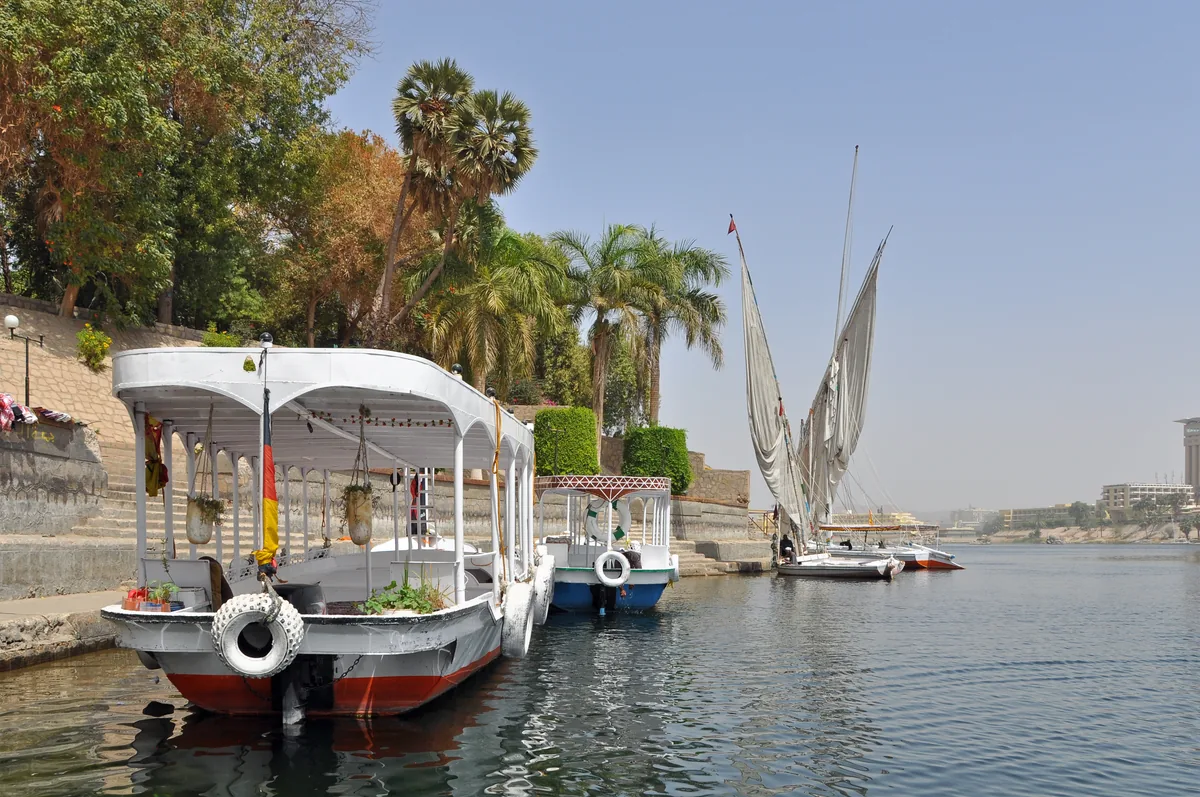
This route is season-sensitive, because most of it happens outdoors in stone courtyards without shade, and the honest headline is the one every Egypt guide gives: the classic window runs from October to April, when the valley’s days are warm rather than fierce and a full morning at Karnak is a pleasure instead of an endurance test. Within that window, the shoulder months – October and November in autumn, February and March in spring – are where this particular itinerary runs best, because they pair the kind weather with crowds below the Christmas and New Year peak, and the early starts the west bank asks for are met by mild dawns rather than cold ones or hot ones. The dawn balloon flights over Luxor, the trip’s most optional extra, belong to those calm, clear months too.
Summer does not cancel the route; it rewrites its clock. Between May and September the same ten days run on dawn starts and a structural midday retreat – temples at opening, the siesta as a planned part of the afternoon, Aswan’s river breeze earning its keep, and Day 9’s later start to Abu Simbel becoming an asset to manage against the heat rather than a luxury. What summer returns is quiet: the great sites at their emptiest, the valley at its most golden in the early light, the Red Sea ending at its warmest if that fork was taken. Ramadan, which moves through the year, changes the rhythm of the cities more than the sights – quieter days, livelier evenings – and a trip that falls inside it plans its sightseeing around the fast rather than against it.
The practical conclusion is short. If the dates are free, place the ten days in the shoulders of the classic season and book the spine early. If they are fixed in summer, keep the route and change the clock. If they are fixed in the peak holiday weeks, keep the route and change the expectations, taking the famous sites at opening time. A route this well-shaped does not need the perfect month – it needs the traveller to know which version of the year they are running it in, and this egypt itinerary 10 days runs in all of them.
Frequently Asked Questions
Is 10 days in Egypt too long for a first trip? No – it is close to the ideal length for the classic route. Seven days covers Cairo, Luxor and Aswan at a push, with Abu Simbel as a strained final option and no Alexandria. Ten days covers the same route with a slow Cairo day, the Alexandria day trip, Abu Simbel taken at a civilised hour and Philae given its own morning. What ten days is not enough for is everything – the Red Sea as an addition rather than a swap, the Western Desert oases, or a second region entirely.
What do the extra three days buy compared with a 7-day itinerary? Sequence and slack, rather than new wonders. A day for Islamic Cairo that is not stolen from Saqqara’s morning; Alexandria, which a week must refuse; a second-site afternoon on Luxor’s west bank, at Medinet Habu or the Ramesseum, after the classic circuit is done; an Abu Simbel visit that starts after breakfast instead of before dawn; and a final day at Aswan with nothing scheduled after Philae. The sights barely change. The pace at which you meet them changes completely.
Should I take the Nile cruise version or travel by land? Both work in ten days, and the choice is about what the trip is for. The cruise makes the Luxor to Aswan leg the experience itself – the river continuous, the temples arriving by water – and in this frame it fits as Days 5 to 8 without breaking the route. The land version keeps the unhurried Karnak morning and the second west bank afternoon that the ship’s excursion schedule tends to squeeze, and takes its river time in feluccas instead. If the river is half the reason for the trip, cruise. If the temples are, travel by land.
Can I have both Abu Simbel and the Red Sea in ten days? Only by cutting something the route needs. The Red Sea ending in this itinerary is a swap for Days 9 and 10, not an addition – taking it means giving up Abu Simbel, or giving up Philae’s slow morning and the unhurried final day. Travellers with twelve days or more can hold both comfortably. In ten, choose the ending that matches the trip you actually want, and let the other one anchor the next visit.
Is the Alexandria day trip worth a day of the ten? It is the most droppable day in the plan, and it knows it. Alexandria offers no single sight on the level of the pyramids or Karnak; what it offers is contrast – a Mediterranean, Greco-Roman, harbour city in the middle of a Nile itinerary, reached by an easy train shuttle with no change of hotel. Keep it if that contrast appeals; trade it for Saqqara or a second Cairo day if it does not. Nothing downstream depends on it either way.
Which direction should the route run? South, as written – Cairo first, Aswan last. Cairo is where arrivals land and where the story chronologically begins; Aswan is the calmest city on the route and the right register for a final day. The cruise version sometimes sails the middle leg north from Aswan for timetable reasons, which is workable, but the arrangement to avoid in any direction is an overland return to a base already used – every backtrack on this route costs most of a day, and in ten days a lost day is a lost city.
Ten Days, Well Spent
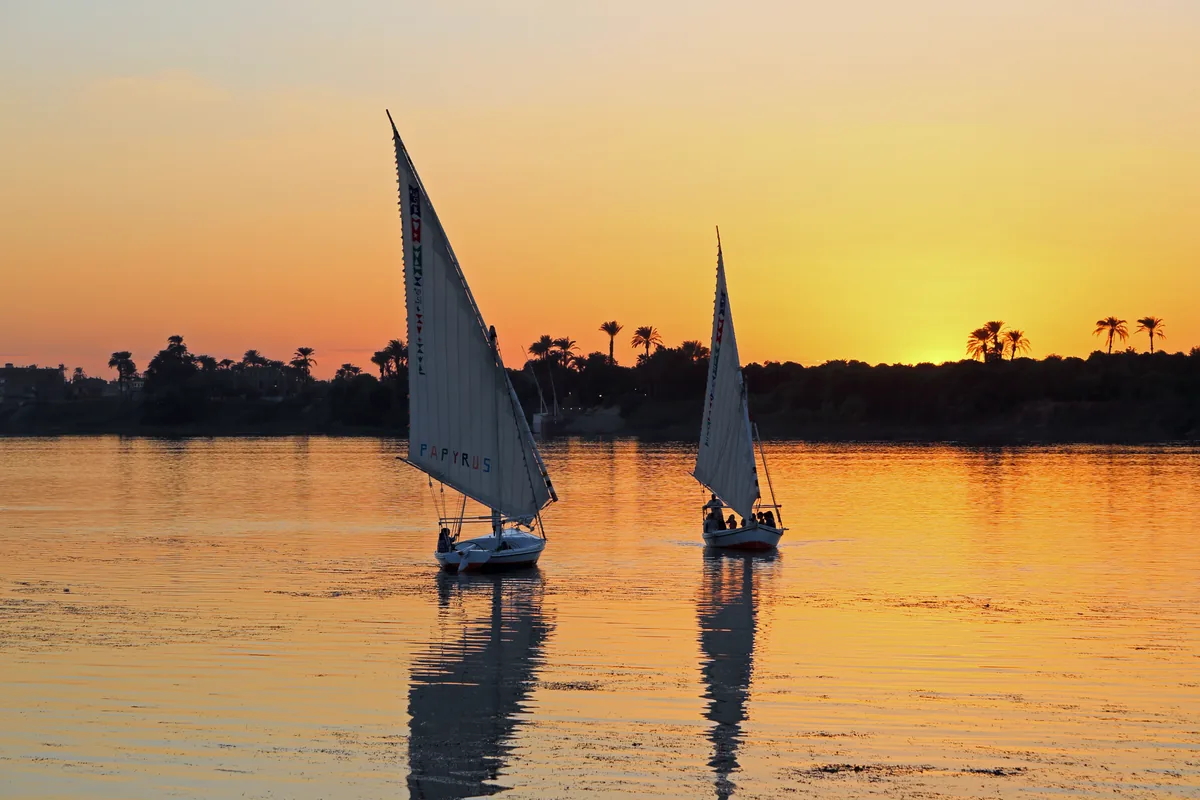
A good itinerary is mostly a set of refusals, and this one’s are easy to list: no backtracking, no second headline sight crammed into a transfer day, no pre-dawn convoy taken out of habit, no final morning spent racing a departure. What those refusals buy is a version of Egypt’s classic route that reads as a narrative rather than a tally. Giza is the beginning of the story and Saqqara its first draft; the GEM holds the treasure the tombs were emptied of; Islamic Cairo and Alexandria are the two cities the pharaohs’ corridor does not explain; Luxor is the empire at full stretch, its gods at Karnak and its kings in the hills; and Aswan, Philae and Abu Simbel are the long southern ending, the faith and the megalomania outlasting the empire together on the same rescued stretch of river. Ten days is long enough to read that story at reading speed.
The traveller who runs it will still come home with a list of things unseen – the nobles’ tombs given an hour that deserved three, Dahshur standing empty on the horizon, the desert left for another year – and that is not the itinerary failing. Egypt is not a country one trip finishes, at any length. The measure of these ten days is whether they leave the traveller oriented, unhurried in the memory, and already composing the return. For the wider map of where a second trip might go, our guide to places to visit in Egypt covers the regions this route deliberately leaves out, and the Egypt travel guide holds the full planning picture behind every day above. Ten days, four bases, one river, travelled in the direction it flows – and for once, enough time in it. That is the whole case for the longer trip: not more Egypt, but Egypt at the speed it was built to be seen at, by the people who built it along a river that has never once hurried.