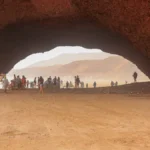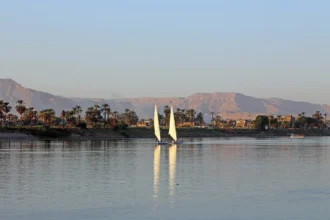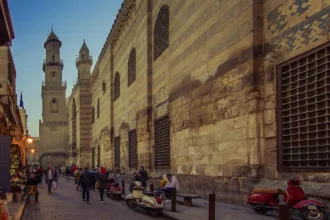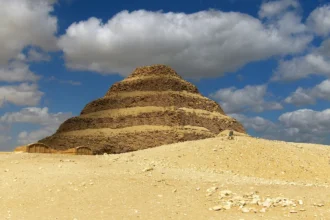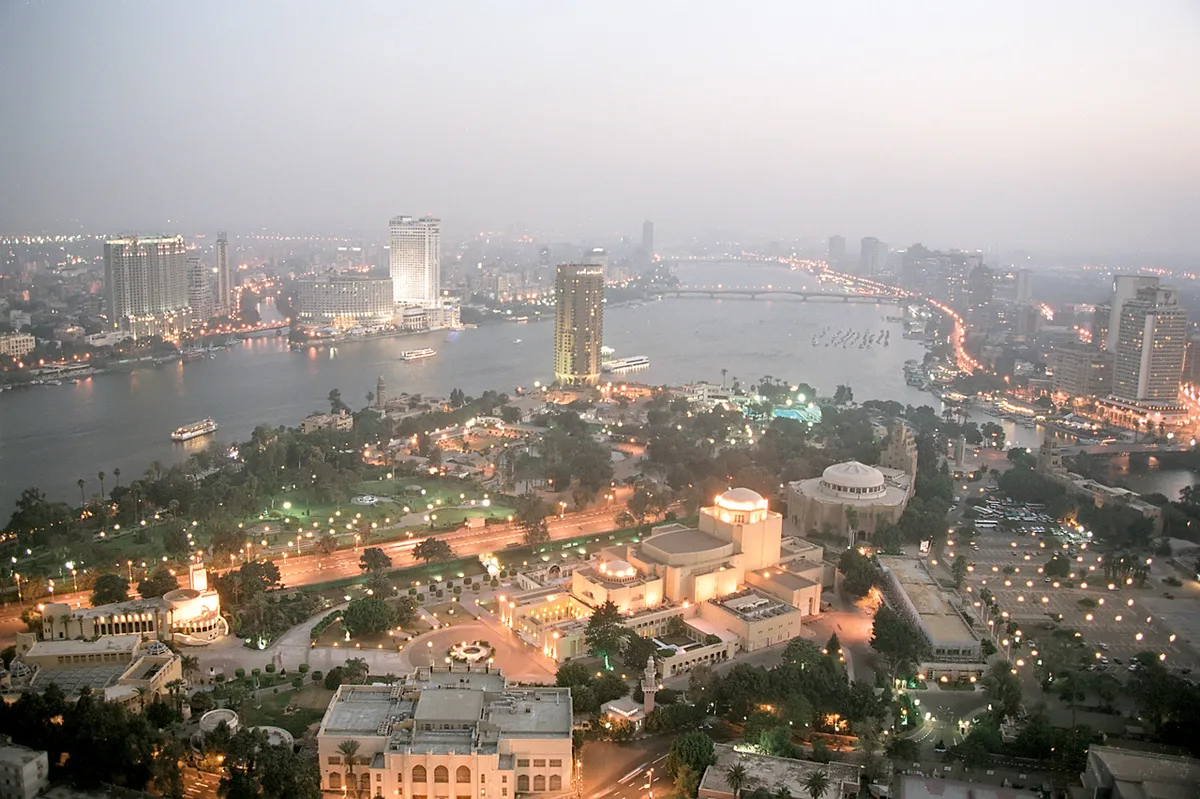
Choosing where to stay in Cairo is the single decision that most shapes an Egypt trip, and it is the one travellers most often make by accident – by picking a hotel first and discovering its geography later. Cairo is not a city with a centre and some sights around it. It is several cities sharing one name and one traffic system: a medieval Islamic city of lanes and minarets, a nineteenth-century Parisian downtown, a leafy island in the Nile, a garden suburb in the south, a desert plateau holding the only surviving wonder of the ancient world, and a scatter of new desert cities off to the east. A bed in each of those is a different trip, even if the itinerary on paper is identical, because what changes is not the sights – it is how much of your day you spend reaching them.
That is why this guide contains no hotel list. Hotels change names, owners and standards faster than any article can be corrected, and a recommendation written last season is a small betrayal this season. What does not change is the shape of the districts themselves – which one is quiet, which one is on the metro, which one faces the pyramids and which one faces a two-hour drive to them at the wrong hour. Districts are the durable part of the decision, and they are what this page compares: seven real bases, what staying in each actually feels like, who each one suits, and the honest catch that the booking sites leave out.
One promise before the comparisons. You will find no prices and no fixed journey times below, because in Cairo both of those are weather, not climate – a fare or a drive time printed with confidence will be wrong on the day you rely on it. What you get instead is the mechanism: which districts the metro serves and which it does not, which sights sit inside which base’s walking or short-ride radius, and how the city’s traffic rhythm rewards bases chosen by day-shape rather than by distance on a map. For the route that strings Cairo into a wider Egypt trip, start with our Egypt travel guide; this page is about the one choice that trip stands on.
Where to Stay in Cairo at a Glance
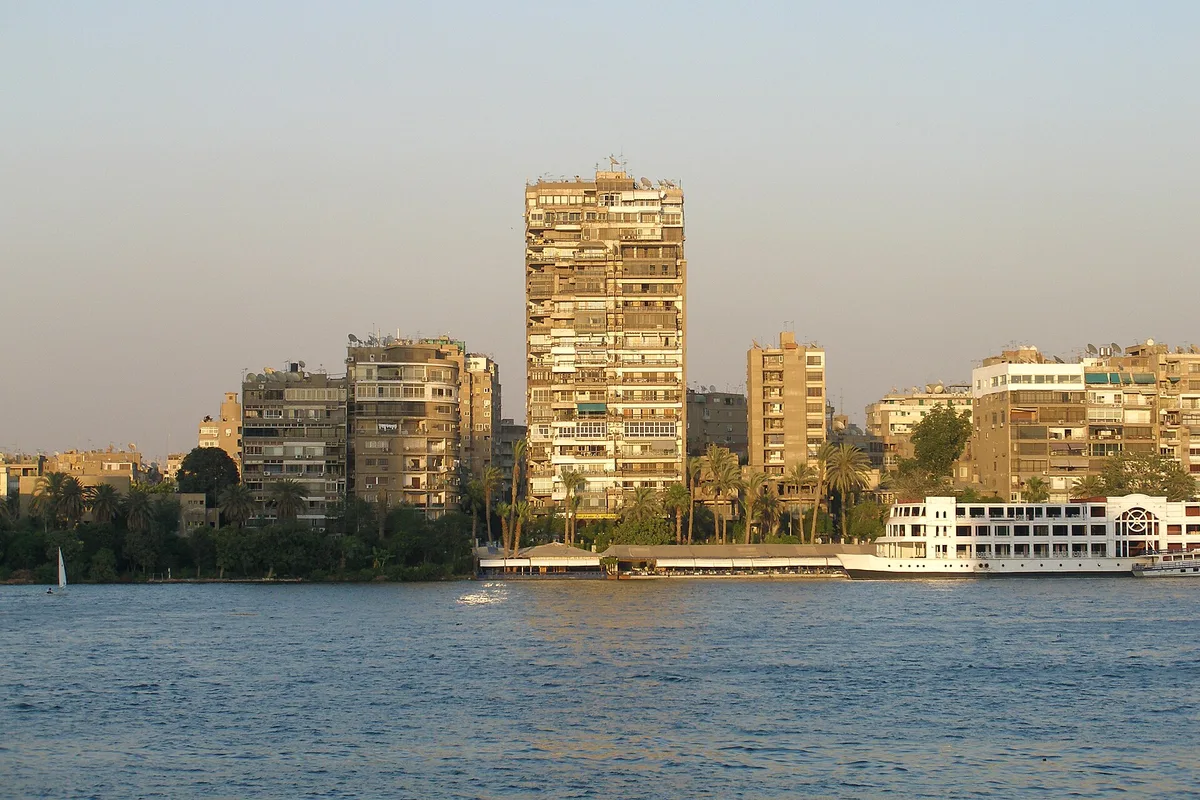
Where to stay in Cairo is really two questions wearing one coat. The first is which Cairo you want outside your door in the evening – café streets, bazaar lanes, silent villa roads, or a pyramid silhouette. The second is which Cairo your days will be spent in, because a base that is charming at night can be a poor launchpad at eight in the morning. The table below answers both at once; the sections after it take each area slowly.
| Area | Best for | The catch | Airport and centre reality |
|---|---|---|---|
| Zamalek | First-timers, couples, café evenings | Pricier rooms; no big sights on the island itself | Island in the Nile, a bridge from Downtown; Line 3 metro on the island; a full cross-city road trip to the airport |
| Downtown | Museums, metro, budget beds, city energy | Noise, fumes and full-volume street life | The centre itself; Lines 1, 2 and 3 all pass through; the airport is a long drive east |
| Garden City | Quiet Nile-side stays near the centre | Fewer cheap beds and fewer casual eateries | Just south of Downtown, walkable to Tahrir; Line 1 at Saad Zaghloul; airport still a cross-city drive |
| Giza (plateau side) | Pyramid-first trips, short stays built around Giza | The rest of Cairo becomes a daily expedition | Far west; the plateau and the GEM are on your side, the centre and airport are not; no metro at the plateau |
| Islamic Cairo | Atmosphere, history-first trips, photographers | Noise, crowds and lanes that defeat cars | Inside the old city, east of Downtown; Line 3 at Bab El Shaariya is the practical railhead |
| Maadi | Quiet, space, families, long stays | A long way from every headline sight | Far south on Line 1; rides to Giza or the airport cross the whole city |
| Heliopolis | Late arrivals, early flights, short stopovers | A suburb’s distance from the historic centre | North-east, the closest classic district to the airport; Line 3 serves its avenues |
| New Cairo | Business, space, modern comfort, airport runs | Characterless sprawl; nothing is walkable | East of the airport road; no metro; every trip is a car trip |
Read the last column as the honest one. In most cities the airport question is settled once, on arrival day. In Cairo it lurks inside every day of the trip, because the city’s sights, its airport and its districts are arranged along one congested east-west axis – and where you sleep decides which end of that axis owns you.
Use the table the way you would use a map of journeys rather than a map of streets. Pick the two or three days of your trip that matter most, find the base that makes those days shortest, and then check the catch column against your temperament – whether you sleep through horns, whether evenings need cafés outside the door, whether a quiet street is worth a longer morning ride. Almost every disappointed Cairo stay is a mismatch in one of those two checks, made at booking time and paid for daily. Almost every good one is simply the reverse.
Zamalek – the Leafy Island
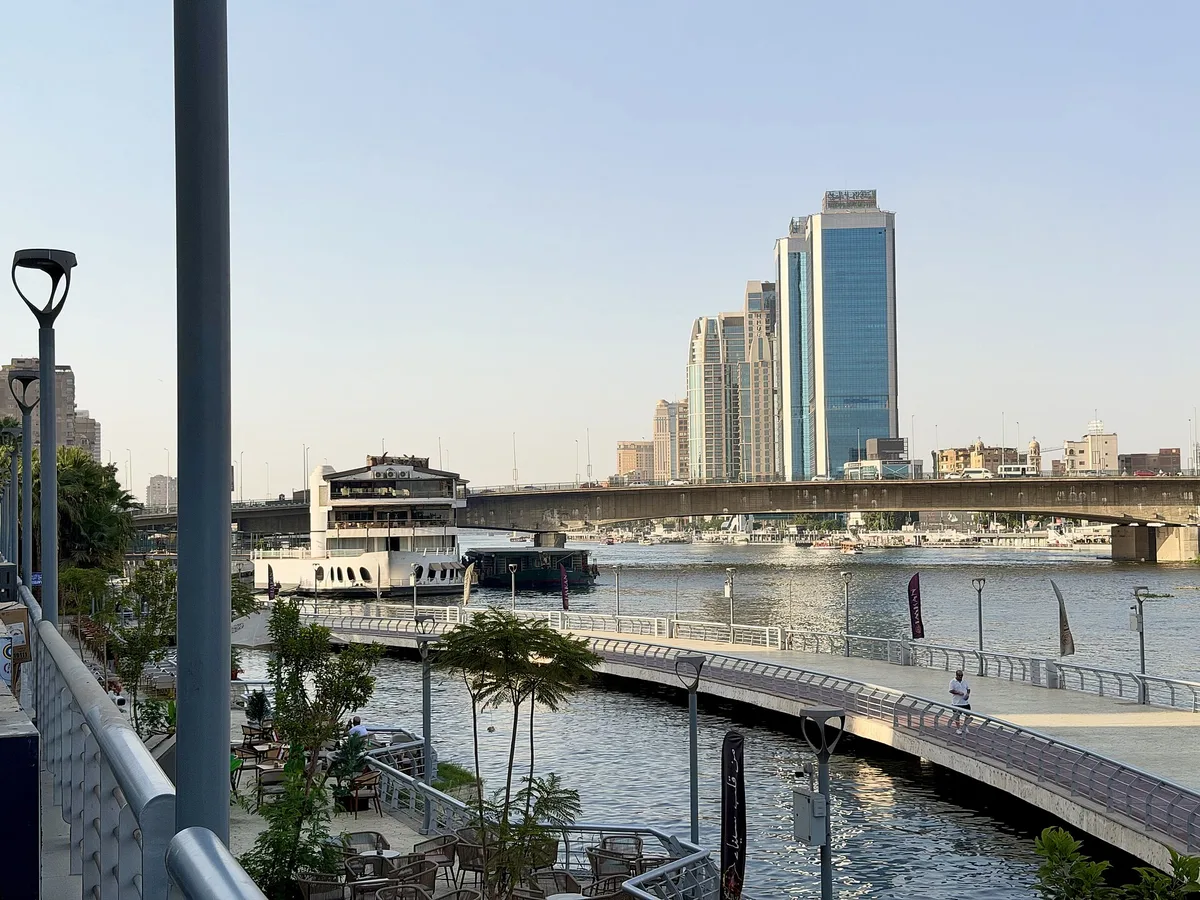
Zamalek occupies the northern half of Gezira, the island that sits in the Nile between Downtown on the east bank and Dokki and Mohandessin on the west. It was laid out as a garden suburb when Cairo’s wealthy wanted river air, and it has kept the character that history gave it: tree-lined streets of old apartment buildings and villas, embassies behind walls, small galleries, bookshops, and a café culture that runs from morning coffee to late evening without ever raising its voice. Of all the bases in this guide, Zamalek is the one where the walk from your door to dinner is a pleasure in itself rather than a negotiation with traffic, and for many visitors that single fact settles the question.
The practical shape matches the atmosphere. The island’s sights are modest – the Cairo Tower and the Opera House stand at Gezira’s southern end, and the bridges put Tahrir Square and the Egyptian Museum a short ride or a determined walk east – but Zamalek was never about sleeping beside a headline sight. It is about centrality without intensity: Downtown’s museums and Islamic Cairo’s lanes are close, Giza is a bridge and a causeway away, and the island itself now has a metro station, Safaa Hegazy, on Line 3, which puts Attaba, Abbassiya and the Heliopolis avenues on one line and the rest of the network one change away. Evenings are the district’s real argument – this is where Cairo’s café society actually lives, and a traveller based here ends days the way the city ends them, slowly and outdoors.
The honest catch is money and scale. Zamalek knows what it is, and its rooms, restaurants and cafés price accordingly; the budget traveller will find the same bed cheaper across the bridge in Downtown. The island is also small and entirely residential in feel – there is no bazaar, no great mosque, no ancient stone on it, and travellers who want to walk out of the door into old Cairo’s theatre will find Zamalek almost suspiciously calm. Sleep here if you want the city at one remove, with green streets to come home to; understand that you are paying, in money and in distance from the medieval city, for exactly that remove.
Downtown – the Historic Centre at Full Volume
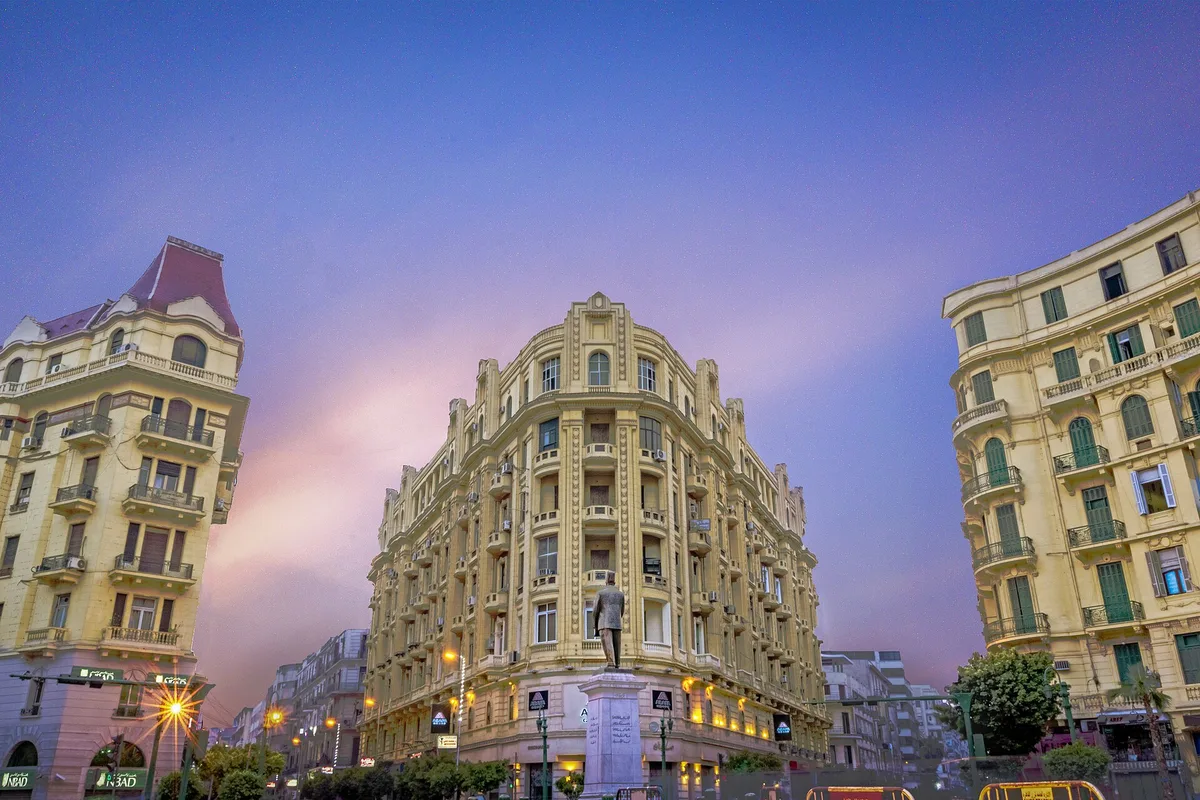
Downtown – Wust el-Balad, the middle of the city – is the Cairo that Khedive Ismail built in the 1860s when he decided his capital would have Parisian boulevards, and its grand, crumbling Belle Époque apartment blocks, arcaded avenues and old cafés still carry that ambition under a century and a half of patina. Tahrir Square anchors its western edge, with the Egyptian Museum standing on the square’s northern side, and the streets around Talaat Harb and Qasr el-Nil hold the city’s densest concentration of bookshops, coffee houses, cinemas and everyday commerce. Staying here means staying inside Cairo’s engine room: the city is not something you visit from Downtown, it is something happening around you at every hour.
No base in Cairo is better connected. Sadat station, under Tahrir Square, interchanges Lines 1 and 2; Nasser adds Line 3; Attaba, a short walk east, interchanges Lines 2 and 3 – so from a Downtown bed the metro reaches Giza station, Maadi, Zamalek, Islamic Cairo’s edge and the Heliopolis line without a car. The old city is walkable east, the Nile Corniche walkable west, and Ramses Station, the main railway terminus, is a short ride north for anyone arriving or leaving by train. This is also where Cairo’s cheap beds concentrate – the hostels and small hotels discussed in the budget section below are overwhelmingly a Downtown phenomenon, stacked in the upper floors of those same Belle Époque blocks. For a short, sight-dense, metro-powered trip, Downtown is the base that asks the least planning of you.
The catch is volume, in every sense. Downtown is loud – horns, crowds, commerce, late nights – and its air carries the traffic that its own centrality attracts; light sleepers and travellers who experience the city as an assault will wear out here faster than the itinerary wears them out. The grand buildings are also working buildings, often with elderly lifts and entrances that take finding, and the pavement theatre that delights on day one can grind by day five. Downtown rewards travellers who feed on cities. Those who merely tolerate them should take Zamalek’s or Garden City’s version of the same centrality instead, and visit Downtown by day.
Garden City – Nile-Side and Quieter
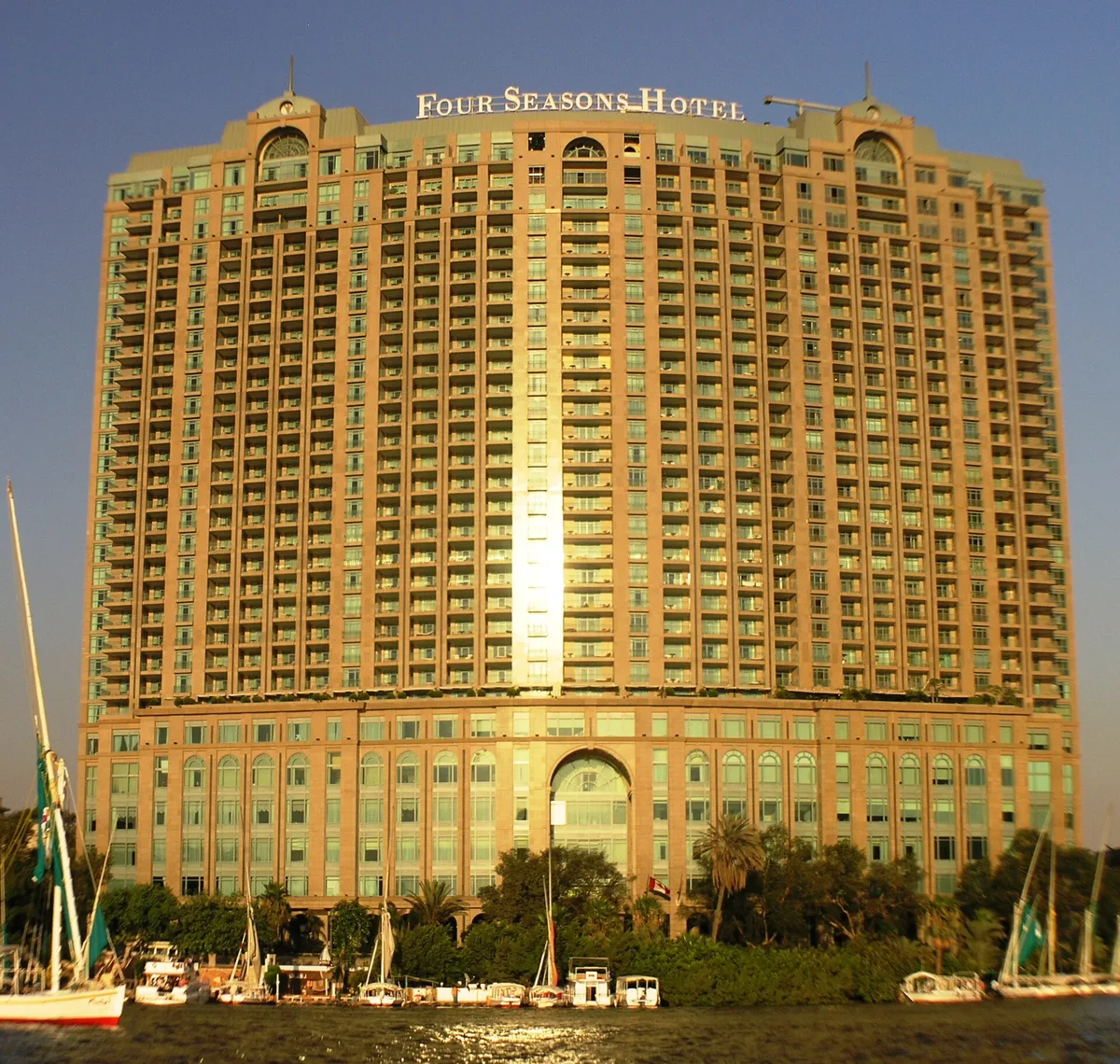
Walk ten minutes south from Tahrir Square and the grid dissolves. Garden City was laid out in the early twentieth century as a villa suburb of curving, tree-planted streets – a deliberate rejection of the straight boulevard – and it remains what it was designed to be: an embassy quarter of walled gardens, quiet lanes and big Nile-front hotels standing along the Corniche at its western edge. Several foreign embassies sit in its streets, which tells you most of what you need to know about its register: discreet, guarded, green and calm, with the centre’s noise held at the distance of a short walk rather than a drive.
For the visitor, Garden City is Downtown’s benefits with the volume turned down. Tahrir and the Egyptian Museum are walkable; Saad Zaghloul station puts Line 1 underneath the district’s southern edge, and Sadat is close enough to use without thinking. The Nile is at the end of the street, with the Corniche promenade for evening walks and felucca moorings along the bank, and Qasr el-Nil Bridge crosses from the district’s northern end to Gezira and Zamalek. Travellers who want a river-view room from a major hotel will find most of Cairo’s classic stock standing on this stretch of bank – the area has been the city’s grand-hotel row for generations, a fact about the district’s geography rather than a recommendation of any one house.
The catch is thinness at the everyday end. Garden City has few budget beds, few cheap eateries and little street life after dark – its streets are for sleeping in, not for wandering hungry at ten at night, and the traveller who wants dinner outside the door will walk to Downtown or Zamalek for it most evenings. It is a base for people who experience the city by day and retreat from it by night, and who are willing to pay hotel-row prices for a quiet room with the centre still on foot. If that is your rhythm, no district does it better; if it is not, Garden City can feel like an elegant waiting room between other people’s neighbourhoods.
Giza – Sleep Beside the Pyramids
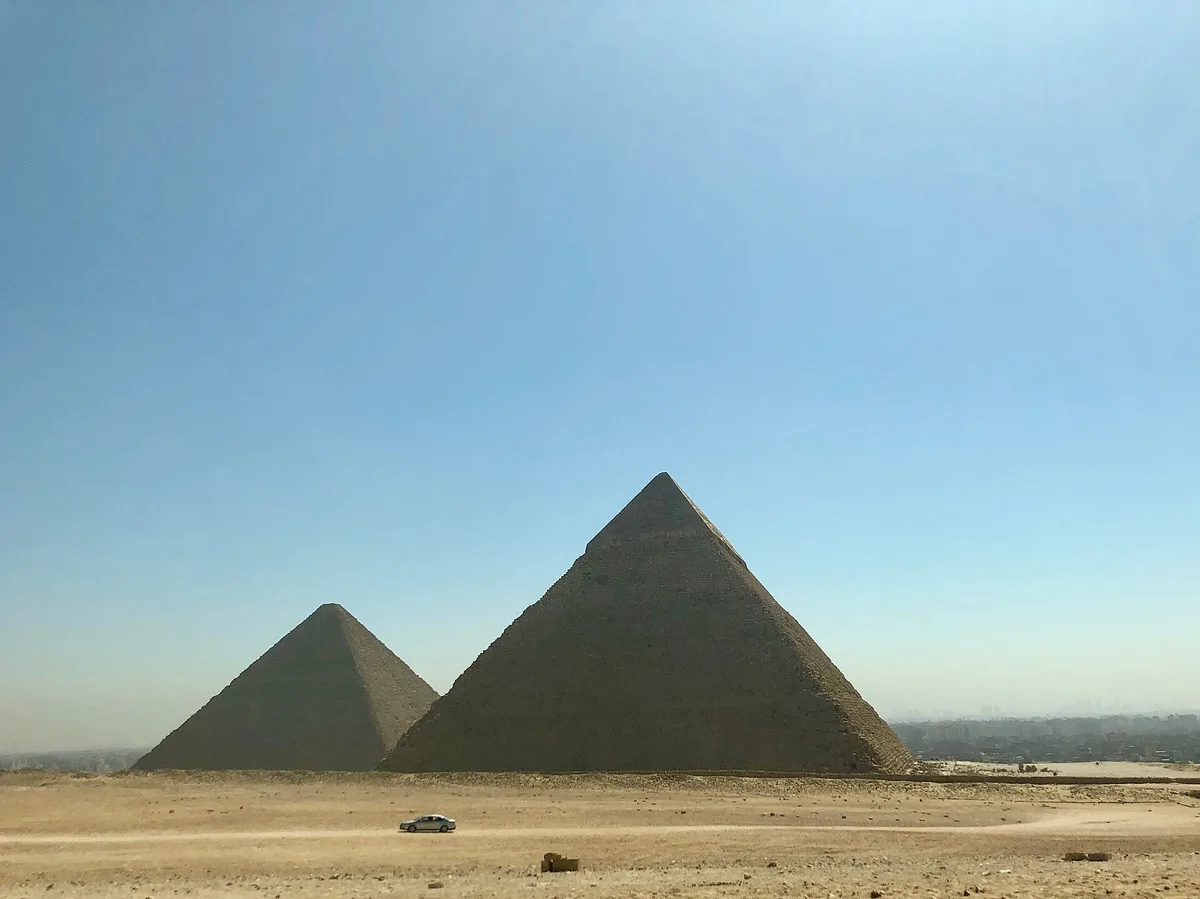
Giza is not a Cairo neighbourhood at all, strictly speaking – it is a separate city and governorate on the Nile’s west bank, whose built-up streets run west until they stop, abruptly, at the desert plateau where the pyramids stand. The sleeping options that matter to visitors form two loose clusters: the hotel strip along Al Haram street and the roads toward the plateau, and the guesthouses of Nazlet el-Semman, the village that sits directly below the plateau’s edge, where rooftops and balconies look up at the Sphinx and the pyramids fill the window. Waking in Giza means waking inside the one view every Egypt trip is built around, and for a short stay organised entirely around the plateau, that is not a small thing.
The district’s new weight is the Grand Egyptian Museum, which stands at El Remayah Square roughly two kilometres from the pyramids and fully opened in November 2025 – our Grand Egyptian Museum guide covers the visit itself. Between the plateau and the museum, a Giza base now covers the two biggest single sights in Egypt without a cross-city journey at all, and the Saqqara necropolis lies a manageable drive south. A pyramid-first trip of two or three nights can run entirely on this side of the river – plateau at opening, museum in the afternoon, the view again at dinner – and travellers who have done Cairo’s centre on a previous trip, or who simply know the pyramids are their trip, are rationally served here.
The catch is everything else. From Giza, Downtown’s museums, Islamic Cairo’s lanes and the old city generally are a cross-river expedition whose length traffic decides, and the airport – on the far north-eastern side of the whole metropolis – is about as far from a Giza bed as any point in the city. The plateau side also has no metro: Line 2’s Giza station serves Giza’s own city centre, still a road journey from the plateau, and the long-planned Line 4 that would reach toward the plateau and the museum remains a construction project, not a way to travel. Evenings in the village and along the strip are quiet and oriented to the view; the café life of Zamalek might as well be in another country. Giza is a superb base for the Giza days. As a base for Cairo, it inverts the trip.
Islamic Cairo – Inside the Old City
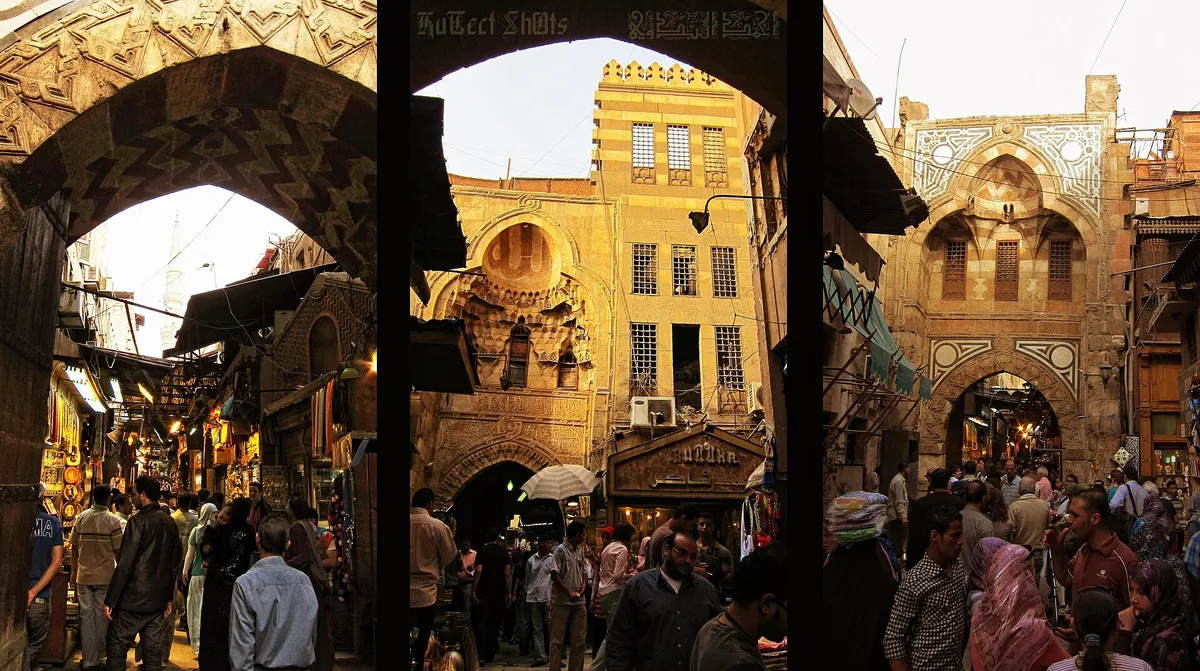
East of Downtown, behind the line of the old Fatimid walls, lies the medieval city: the UNESCO-listed Historic Cairo of Al-Muizz Street, Al-Azhar Mosque, the great Mamluk complexes and the Khan el-Khalili bazaar, founded as a city in 969 and layered with a thousand years of mosques, madrasas, gates and lanes. A small stock of rooms – boutique conversions in old houses, small hotels near the bazaar and along the old city’s edges – lets a traveller sleep inside that fabric rather than commuting to it, and for history-first visitors the proposition is powerful: dawn in the lanes before the crowds, the evening call to prayer rolling over the rooftops, Al-Muizz Street emptying at night into something close to its medieval self.
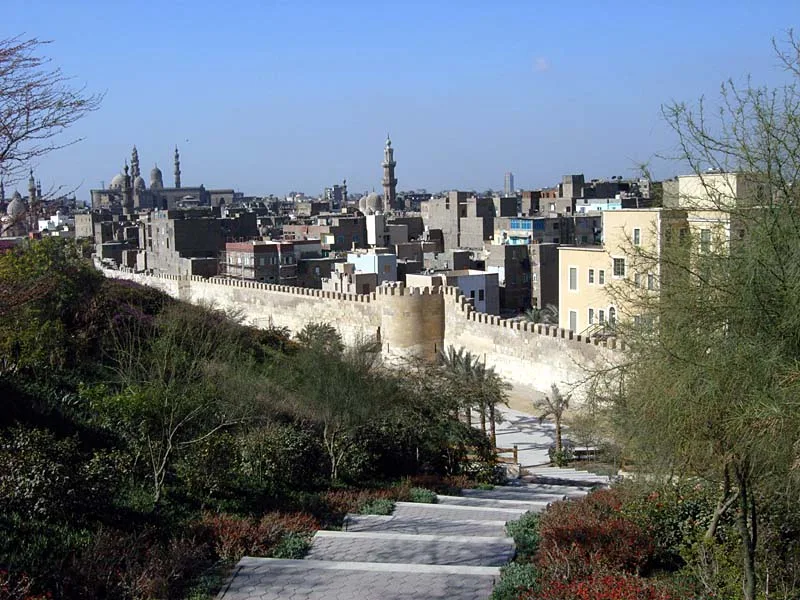
The days organise themselves around walking, because this district’s wealth is density. The monumental core from Bab al-Futuh to Bab Zuweila can be covered on foot in a way no other Cairo sightseeing can, the Citadel rises at the district’s southern end, and Al-Azhar Park, built on the old city’s eastern hill, gives the quarter green space and its famous skyline view. Practical access runs through the edges: Line 3’s Bab El Shaariya station serves the old city’s northern side, Attaba stands at its western edge, and beyond those railheads the lanes take over – narrow, crowded, and largely closed to any vehicle bigger than a motorcycle and a determined donkey cart.
The catch is the same density, experienced at sleeping hours. The old city is a living, working district of well over a million people’s routines compressed into medieval streets: it is noisy, its lanes can be disorienting and occasionally overwhelming, its air carries workshop and market smells alongside the spice pyramids, and a car can no more reach many of its doors than it could in 1400 – arrivals and departures with luggage are on foot for the last stretch, whatever the map suggests. Rooms inside the fabric also tend to be small and idiosyncratic rather than standardised. Sleep here if the old city is the point of your trip and you want it at full strength, mornings and nights included. Sleep in Downtown or Zamalek and walk in by day if you want it in doses.
Maadi – the Quiet South
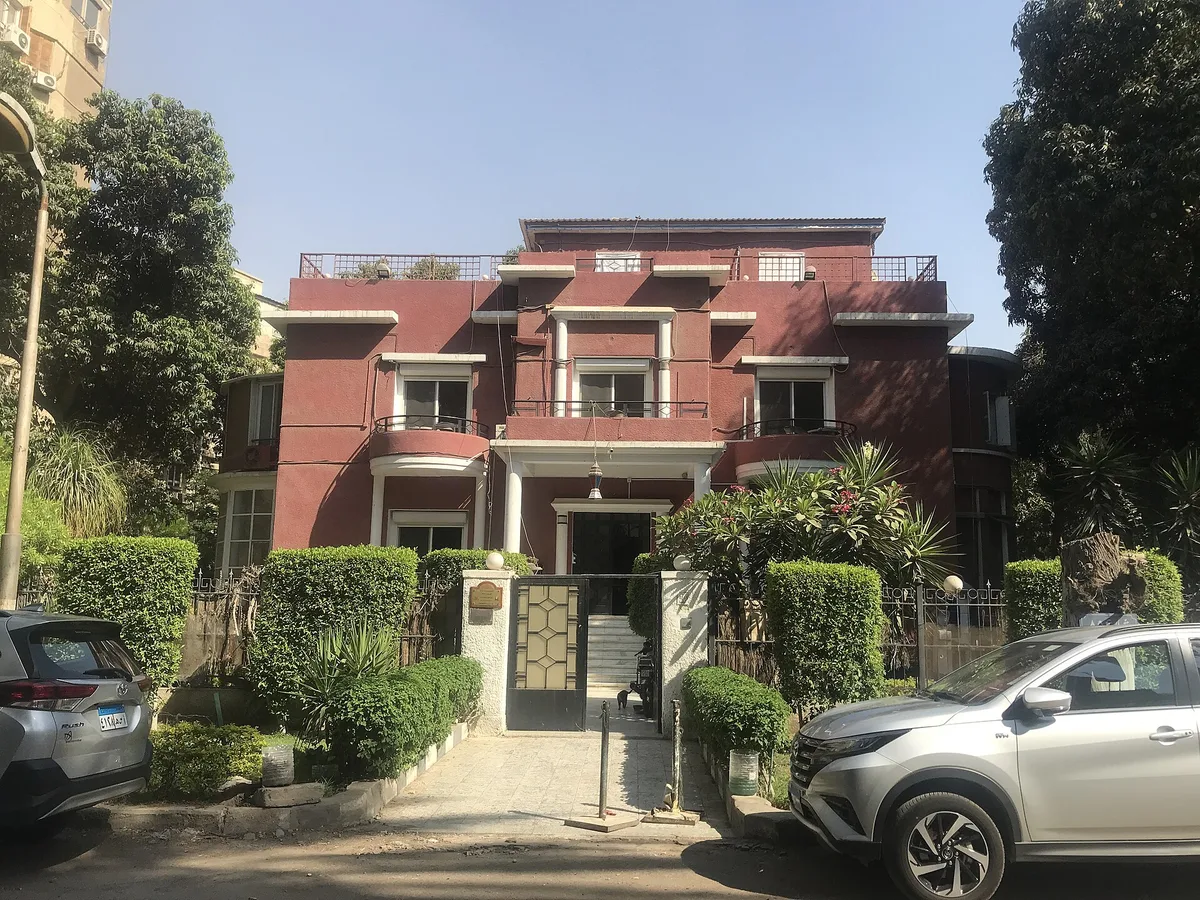
Maadi began in the early twentieth century as a planned garden suburb on the east bank south of the centre, and of all Cairo’s districts it has kept its founding promise most faithfully: low-rise villa streets in Maadi Sarayat under heavy tree cover, apartment blocks in Degla, the cafés and restaurants of Road 9, and an established population of foreign families, embassy staff and long-stay professionals that gives the district its schools, supermarkets and unhurried register. Staying in Maadi feels less like staying in a megacity than in a leafy small town that happens to have a metro line to one – which is precisely why its residents would not live anywhere else.
The metro is the mechanism that makes Maadi work at all. Line 1 runs through the district – Maadi, Sakanat El-Maadi and Hadayek El-Maadi stations – and up the east bank through the centre, so a Maadi-based traveller can reach Downtown and Ramses Station by rail, above the traffic that owns every road journey south. Days at home are genuinely pleasant: this is the best district in Cairo for travelling with children at a slow rhythm, for runners, for anyone working or studying through a long stay, and its restaurant streets mean evenings need no expedition. As a recovery base between sightseeing days – or as the Cairo of a second or third visit, when the headline sights are done – Maadi has a real case.
The catch is distance, stated plainly. Maadi sits far south of everything a first-time visitor came for: the pyramids are across the entire city and the river, the old city and the museums are a long Line 1 ride or a longer drive, and the airport is at the metropolis’s opposite corner. A Maadi base converts every sightseeing day into a commute, and commutes in Cairo are paid in the city’s least reliable currency. Travellers on a tight, sight-dense first trip will feel the tax daily; travellers whose trip is about living in Cairo for a while will find the tax buys them the city’s calmest mornings. Both are true, and the itinerary – not the district – decides which one matters.
Heliopolis – the Airport Side
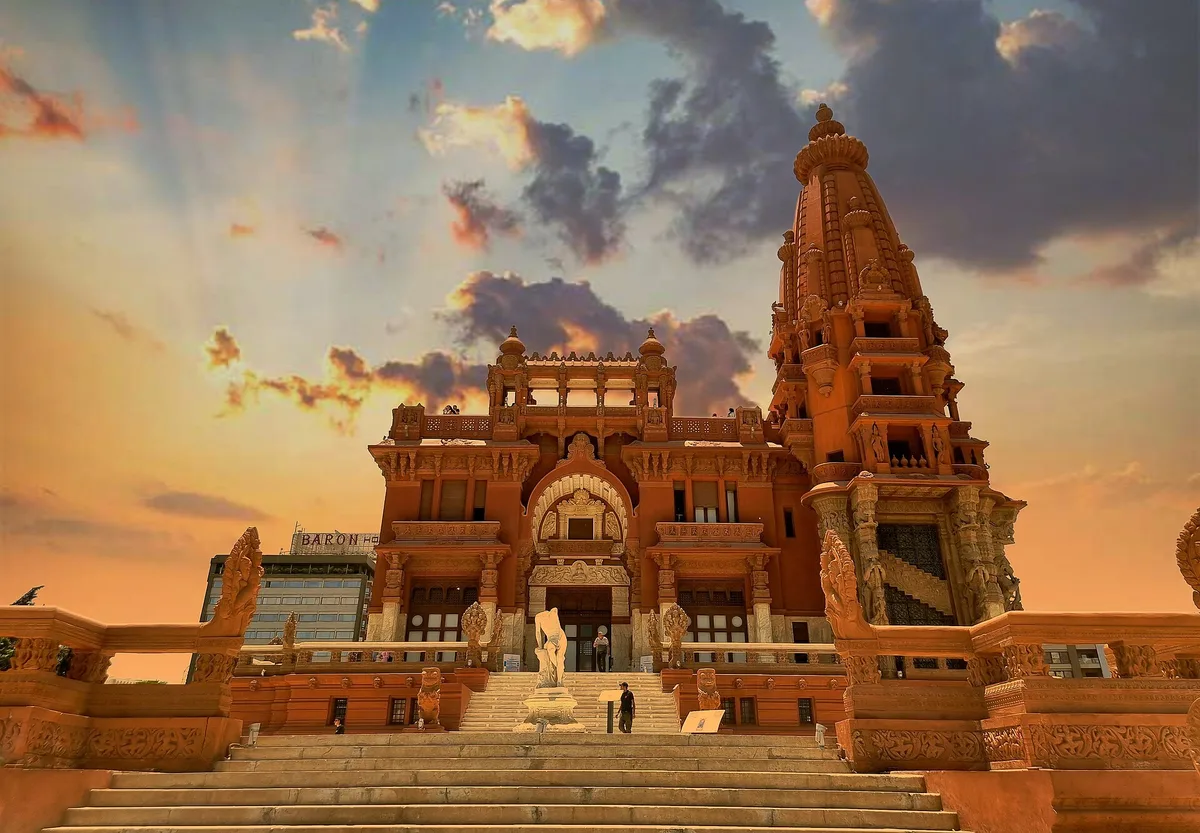
Heliopolis – Masr el-Gedida, the New City – was built from 1905 as a self-contained garden city in the desert north-east of the old capital, by the Belgian industrialist Baron Empain, whose extraordinary Hindu-inspired palace still stands as its emblem. What grew there was a complete district in its own right: arcaded avenues in the Korba quarter, churches and mosques and synagogues from its cosmopolitan founding decades, cafés, clubs, and a residential calm of wide streets and old trees. Then geography promoted it. Cairo International Airport was built on its north-eastern side, and Heliopolis became, and remains, the classic district nearest the runways – the natural first night and last night of an Egypt trip.
That role is the honest core of a Heliopolis stay. For a late arrival, the district replaces a long, disoriented cross-city drive at midnight with a short hop to a real bed in a real neighbourhood; for an early departure, it reverses the trick. Its own days are not empty either – the Korba’s arcades and the Baron’s palace reward a wander, the district eats well, and Line 3 now runs beneath its avenues, with Haroun, Heliopolis and Alf Masken stations putting the centre, and connections to the whole network, within reach when you want them. Travellers with a stopover long enough for one Cairo day often do better here than the map implies: the metro in, the centre’s sights, the metro back, and no luggage ever crosses the city.
The catch is that Heliopolis is a suburb in spirit as much as in distance – handsome, settled and self-sufficient, but a long way, in every sense, from the old city’s electricity. A first-time visitor who answers where to stay in Cairo with Heliopolis for a whole trip will spend that trip commuting to a Cairo that starts many stations west, and the district’s evenings, pleasant as they are, belong to its residents’ routines rather than to travellers. Treat Heliopolis as what it is: the airport’s civilised antechamber and a fine short-stay base, not a substitute for the centre. One night at either end of a trip, it is close to perfect; five nights in the middle of a first visit, it is a compromise you will feel.
New Cairo – Practical, Modern, Spread Out
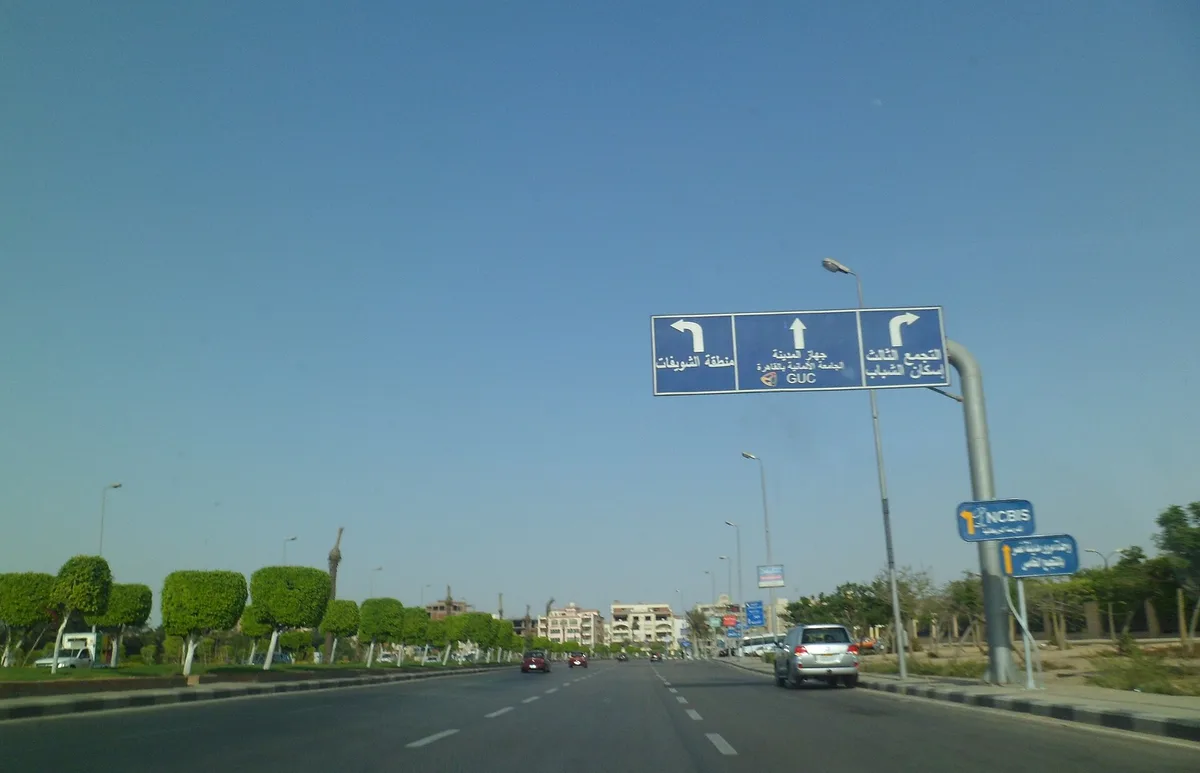
East of the Ring Road, beyond the airport, the desert fills with the new cities: New Cairo and its Fifth Settlement, built from the 2000s as Cairo’s planned overflow of gated compounds, malls, business parks, international schools and the relocated campus of the American University in Cairo. This is where corporate Egypt increasingly lives and works, and its accommodation follows its population – modern hotels and serviced apartments built for conferences, contracts and family visits, with pools, gyms, parking and every system a new building is expected to have. Nobody has ever called it characterful. A great many travellers, arriving exhausted at midnight, have called it exactly what they needed.
The practicalities are real. New Cairo sits on the airport’s side of the metropolis, so airport runs avoid the cross-city gauntlet entirely; its hotels are the newest stock in this guide, its rooms the largest, its streets the quietest, and for travellers whose Cairo business is actually in the east – a conference, a campus, a company office, a family in the compounds – basing anywhere else would be perverse. Long-stay visitors asking where to stay in Cairo for a month of work often end here by the same logic, trading the old city’s theatre for space, silence and a functioning desk.
The catch completes the description: there is no there there, in the traveller’s sense. New Cairo has no walkable fabric – distances are desert distances, every movement is a car movement, the metro does not reach it, and each of the historic city’s sights is a deliberate expedition across the Ring Road and the whole of old Cairo. As a sightseeing base for a first trip it is the weakest choice in this guide, whatever the room quality, because it spends the trip’s scarcest resource – hours – on the metropolis’s longest drives. Stay here when your business is here, or when the airport is your trip’s true centre of gravity. Otherwise it is a solution to a problem a holiday does not have.
The First-Timer’s Default
If this is your first trip and you do not want to think about the question again, here is the answer the evidence supports. Asking where to stay in Cairo for the first time is really asking for a base that forgives mistakes – one from which every sight is reachable, every error recoverable, and every evening self-organising. That base is the central triangle: Zamalek if the budget allows it, Downtown if it does not, and Garden City if you want the centre’s reach with quieter streets and hotel-row comfort. From any corner of that triangle, the Egyptian Museum is at hand, Islamic Cairo is a short ride east, Giza is the one big westward expedition of the trip, the metro fans out in every direction, and no single day’s plan can strand you on the wrong side of the metropolis.
The reason the default is a triangle and not a point is that the three districts share the same geography and differ only in register – island calm, full-volume centre, embassy quiet. Choose between them by temperament, not by itinerary, because the itinerary they serve is identical. First-timers are the travellers with the least slack in their days and the most sights on their list; the centre is where a Cairo trip’s moving parts cost the least when they go wrong, and things in Cairo go wrong in small ways daily – a closed gallery, a changed plan, a traffic jam that eats a morning. Based centrally, each costs an hour. Based at the wrong end of the axis, each costs a day.
What the default is not is Giza or the east. Both are excellent answers to narrower questions, as the next sections set out – but they are answers that assume you already know which single thing your trip is about. A first trip rarely knows that until it is over. Sleep in the middle, day-trip to the certainties, and let Cairo introduce itself from the centre outward. It has been receiving travellers that way for a century and a half, and the arrangement has survived because it works.
Pyramid-First Trips – One Base or Two
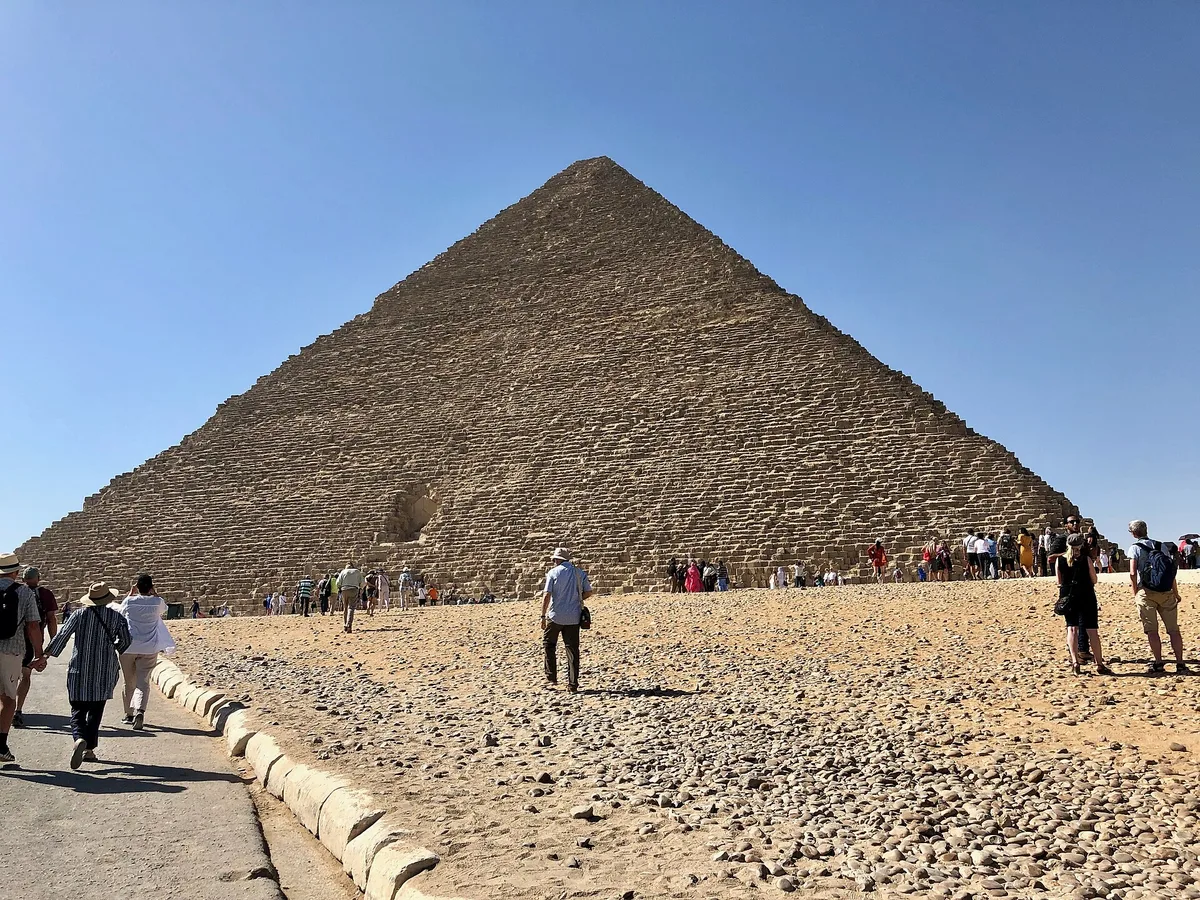
Some trips are honest about their priorities: the pyramids are the point, Cairo is the context. If your days are few and the plateau and the Grand Egyptian Museum dominate them, the geometry reverses the default – a Giza base stops being an inversion of the trip and becomes its correct shape, putting you at the plateau gates for opening, at the museum for its quieter hours, and at dinner within sight of the reason you came. Our Grand Egyptian Museum guide shows how the plateau and the museum now pair into a single great day, and a base on that side of the river is what makes the pairing effortless rather than merely possible.
For longer trips, consider the two-base solution that Cairo’s shape quietly invites: split the stay. Nights in Giza for the plateau, the museum and perhaps Saqqara, then a move across the river to a central base for the museums, the old city and the evenings. The split costs one luggage move and buys back every cross-city expedition becoming somebody’s problem only once, in one direction, at a chosen hour – ideally a Friday morning or a midday lull, when the city’s roads are at their kindest. Travellers with four or more Cairo nights will usually find the arithmetic favours the split; travellers with two nights will find it favours picking the base that matches the heavier half of their list and accepting the one long drive.
The mistake to avoid is the compromise base – the hotel chosen because it looked “between” Giza and the centre on a map. In Cairo there is no useful between: the in-between districts put you in traffic’s jurisdiction for both directions and in walking reach of nothing. Commit to a side, and spend the saved hours at the sights. The pyramids have waited four and a half thousand years; the one thing they ask of you is to be standing in front of them in the morning, and your base is what decides whether you are.
Families – Space, Quiet and an Early Night
Travelling with children rearranges the priorities rather than changing the map. Ask where to stay in Cairo with a family, and the honest ranking of districts turns upside down. What family days actually consume is space – rooms that fit everyone, streets where a pushchair is not an act of war, somewhere green to burn off the hour before dinner, and evenings that end when children end rather than when the district does. By those measures the family ranking inverts the backpacker one: Maadi’s villa streets and restaurant rows, Zamalek’s calm and cafés, and Garden City’s quiet and big-hotel facilities all rise, while Downtown’s glorious density – its crowds, its horns, its elderly lifts to small rooms – falls hardest. New Cairo’s modern family-sized stock earns its place on this list too, if the trip’s shape is eastern or the stay is long.
The sightseeing arithmetic still applies, and it is kinder than parents fear. Children rarely want five sights a day; a family day usually holds one great thing done properly – the plateau in the cool of the morning, the museum in the heat, a felucca at sunset – and one great thing a day is exactly the pace at which even Maadi’s distance stops mattering, because a single planned expedition with a driver is a different proposition from a commuter’s daily grind. Al-Azhar Park, the green hill above the old city, deserves its place in family plans specifically: it is the one central space where children can run on grass with the medieval skyline for a backdrop and a café for the adults.
Two honest cautions. First, pavements: outside the villa districts, Cairo’s sidewalks are uneven, interrupted and shared with parked cars, so the very young are carried more than they are pushed, and distances that look pram-friendly on a map are not. Second, traffic fumes and noise are a real factor in small children’s sleep and temper in the central districts – a quiet street is not a luxury preference with a toddler, it is the difference between a holiday and an endurance event. Choose the calm base, hire the day out, and let one sight a day be enough. It will be.
Budget Cairo – How Cheap Stays Actually Work
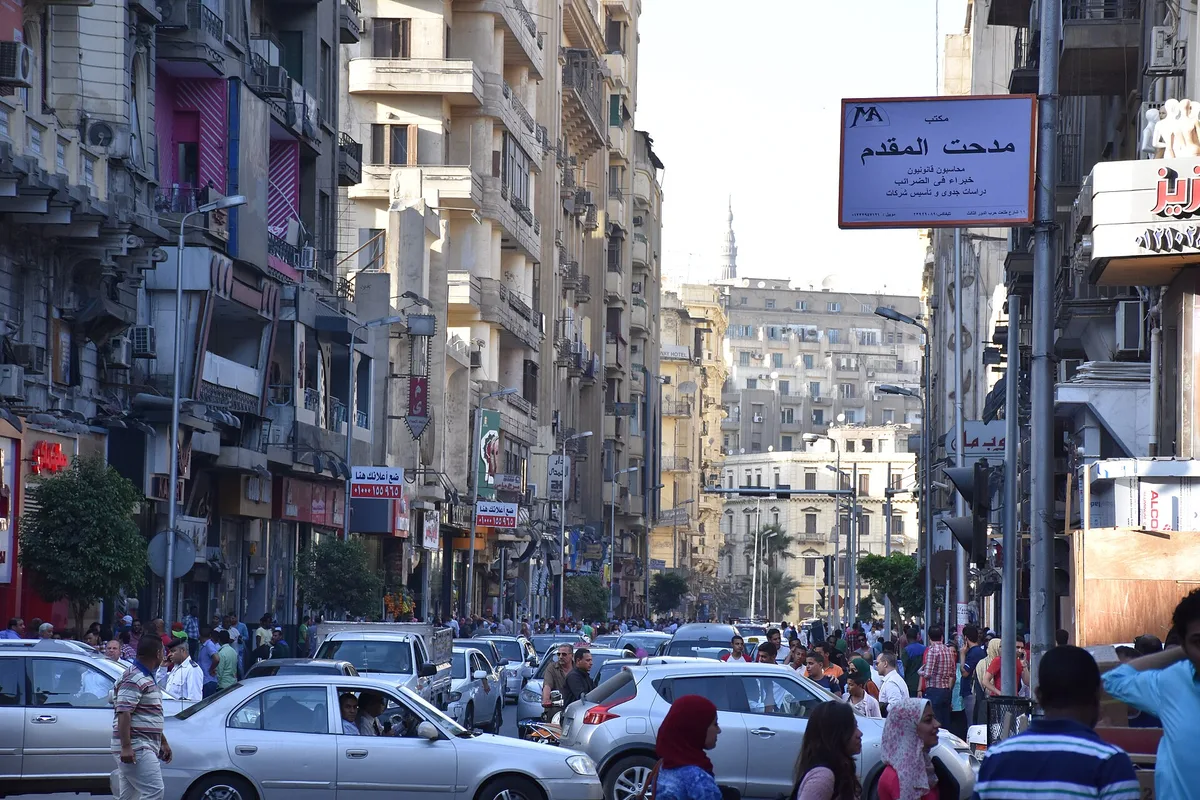
Budget travellers asking where to stay in Cairo will find the answer is not a district so much as a building type. Cairo’s cheap beds live overwhelmingly in Downtown, in the upper floors of the same nineteenth- and early twentieth-century apartment blocks that give the district its face: hostels and small family hotels reached by a marble staircase or an elderly cage lift, often several different establishments stacked in one building, their presence announced by a small sign at a street door that a first arrival walks past twice. Understanding that mechanism matters more than any list, because it explains both the prices – no lobby, no frontage, no overheads – and the experience, from the rooftop terraces where backpacker Cairo socialises to the variation in standards between one floor and the next.
A secondary, calmer budget pocket sits across the river in Zamalek, where a smaller stock of hostels and guesthouses trades a little money for quieter streets, and Giza’s village guesthouses below the plateau form a third: cheap pyramid-view rooms exist there precisely because the village is not the centre, and for a traveller whose trip is the plateau they can be the correct budget answer rather than a compromise. What all three pockets share is the honest structure of Cairo value – the money buys location and character, and what it does not buy is insulation from the city. Thin walls, street noise, eccentric plumbing and heroic breakfasts are the budget traveller’s standard exchange, in Cairo as everywhere, with the city’s warmth thrown in free.
Two mechanism warnings, offered because they save real grief. First, verify the floor and the lift before you commit: a sixth-floor room in a building whose lift is decorative is a different product after a day at the pyramids than it was in the photograph, and asking takes one message. Second, arrive in daylight the first time. Downtown’s hostel doors are findable, its streets safe and busy – but they are findable at three in the afternoon in a way they are not, with luggage, at midnight. Budget Cairo is one of the world’s great bargains precisely because the mechanism is old-fashioned; meet it on its terms and it works beautifully.
Late Arrivals and Layovers – Sleeping on the Airport’s Side
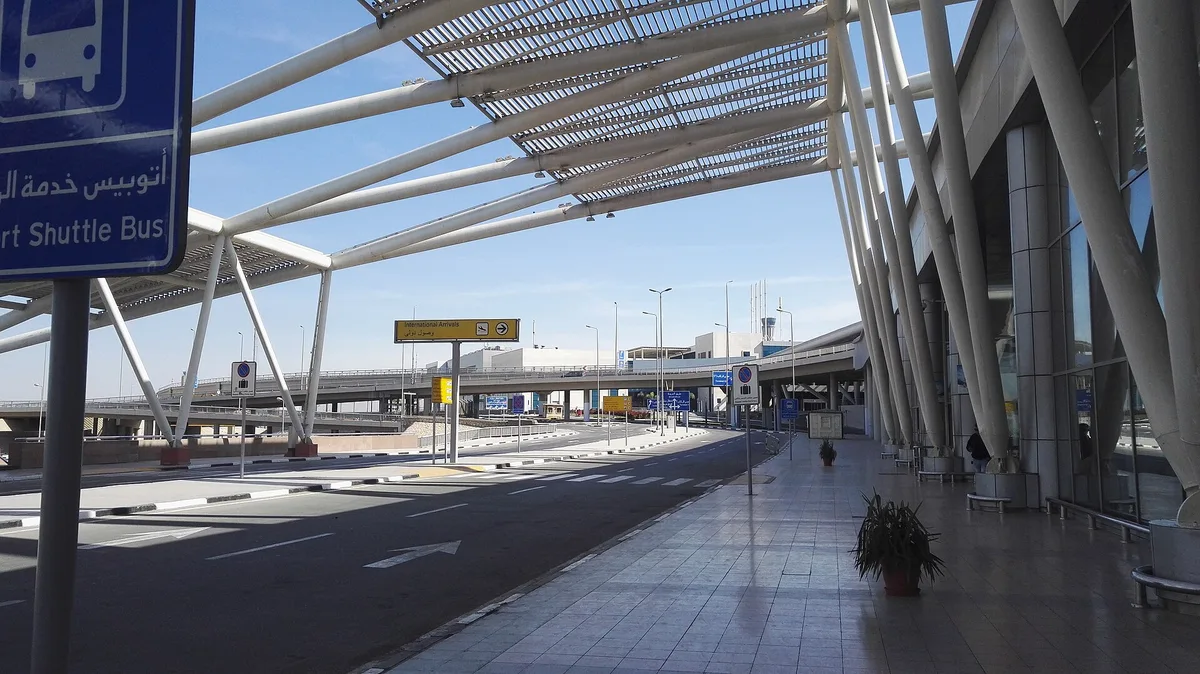
Cairo International Airport stands on the metropolis’s north-eastern edge, beyond Heliopolis, and everything about a late arrival runs from that single fact. The traveller who lands at midnight and sleeps in Giza has added the longest drive in the city to the end of a travel day, across a metropolis that never entirely sleeps, in the care of a driver met minutes before. The same traveller landing into a Heliopolis bed – or into the airport-area hotels near the terminals, or east in New Cairo – is asleep within the hour, in a neighbourhood, with the real Cairo startable fresh the next morning. For one-night stands at either end of a trip, the airport’s side of the city is not a compromise. It is the correct answer, and the districts there – Heliopolis for character, New Cairo for modernity – are covered above.
The arrival mechanism itself deserves honesty, because it is the first negotiation of the trip and it sets travellers’ teeth on edge more than any other. Official taxi and limousine desks operate inside the terminals, ride-hailing apps work at the airport with designated pickup points, and many hotels will send a car if the arrival is arranged in advance – three systems, all functional, none of them requiring an argument with a stranger in the arrivals hall. The traveller who pre-arranges the ride, through any of the three, walks out of the doors with the trip already working. The one who improvises at midnight pays the midnight rate in money or in patience, and starts Egypt tired and suspicious, which is a poor exchange for a saving that was never really on offer.
Layovers divide by length. A night and a morning is Heliopolis’s exact shape – sleep near the airport, take Line 3 into the centre for one great sight and a walk, and be back with hours in hand. A daylight gap of a few hours is not a Cairo visit at all, whatever the tour desks say; the city’s scale and traffic make a pyramids dash from the airport a gamble against your onward flight, and the honest advice is to rest, eat and save Cairo for a trip that can hold it. The metropolis rewards commitment and punishes sampling – nowhere more than from its airport.
Traffic Decides Everything
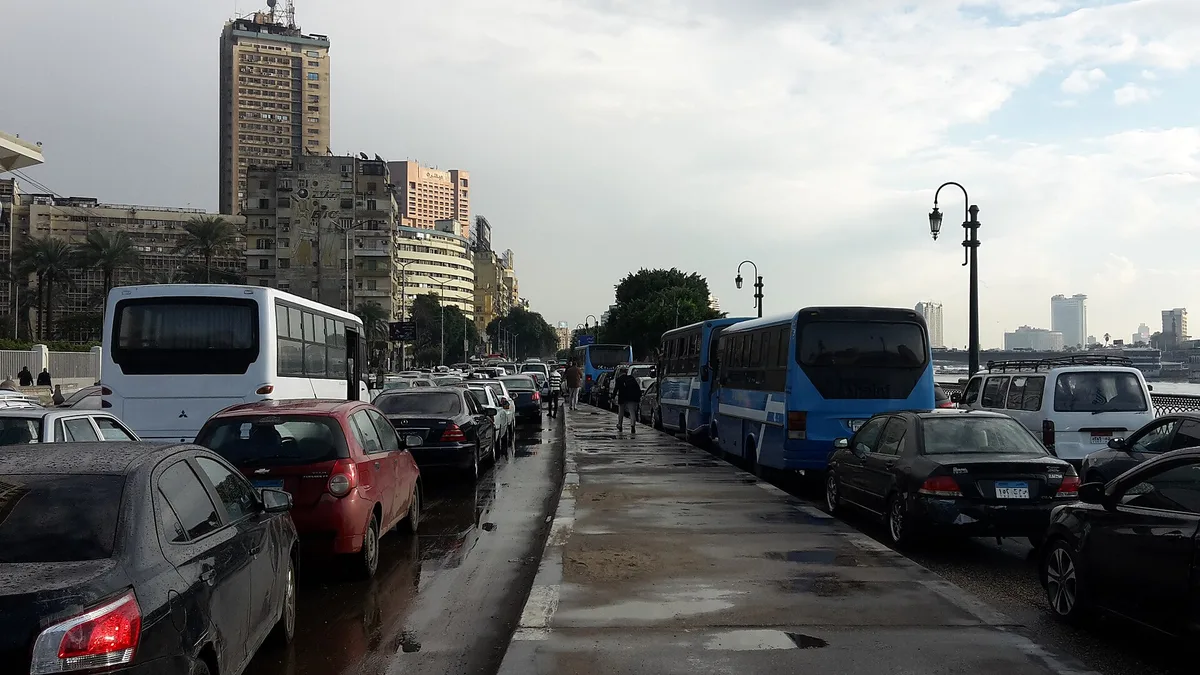
Every section above has circled one fact, which deserves its own hearing: in Cairo, traffic is not a condition of the trip but its governing variable, and it should be allowed to make the where-to-stay decision openly rather than in disguise. The city’s road system carries one of the world’s great urban populations along a river valley’s constrained geometry – a handful of bridges stitching two banks, a Corniche and a Ring Road doing the work of motorways, and millions of daily journeys funnelled onto both. The consequence is that distance in Cairo is a nearly meaningless unit. Two points can be near on the map and far in the day, and the same drive can take a fraction of the time at one hour that it takes at another. Any guide that quotes you a fixed number of minutes across this city is inventing it, and any itinerary built on invented minutes collapses by day two.
What can be known, and planned around, is the rhythm. Cairo’s roads load through the morning, peak brutally in the afternoon and evening, and stay busy late – this is a city whose social day runs long into the night, and its traffic keeps the same hours. Friday mornings are the great exception, when the weekend’s first day empties the roads until prayers and lunch refill them, and the experienced Cairo traveller protects that window for the one cross-city journey the trip cannot avoid. The metro is the counter-system that ignores all of it, which is why this guide keeps returning to it: a base on Lines 1, 2 or 3 holds a fixed-price ticket out of the traffic economy, and bases off the network – Giza’s plateau side, New Cairo – are making a wager that the roads will behave.
So let the traffic choose, consciously. Count your trip’s journeys, not its kilometres: which sights, which days, which direction at which hour. A base that puts your two heaviest days on foot or on the metro and your one expedition in a car at a chosen hour will feel, by day three, like a different and easier city from a base that looked closer on the map. That is the whole secret of where to stay in Cairo, and it is not really a secret – it is just that nobody prints it, because it cannot be sold. This page can, and has.
Questions Travellers Ask About Staying in Cairo
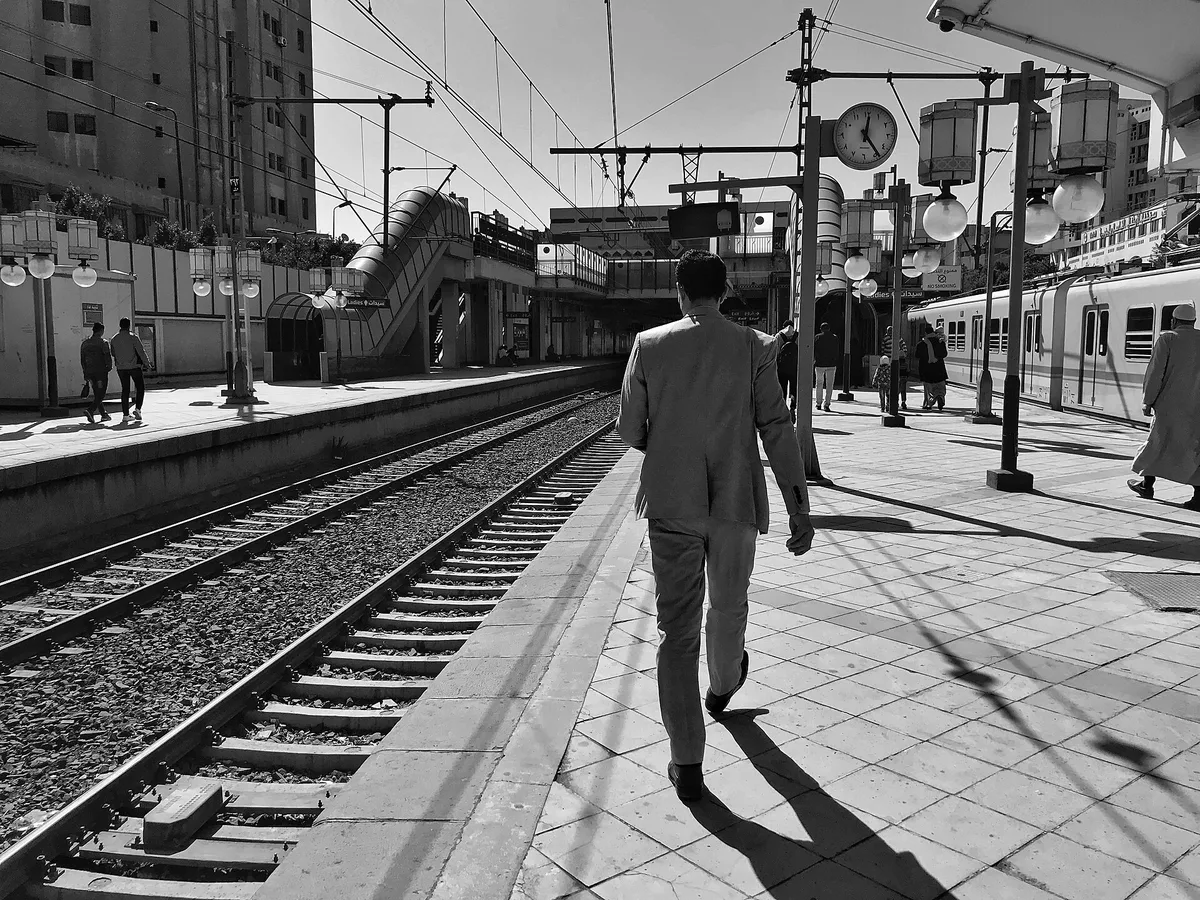
Where should I stay in Cairo for the first time?
In the central triangle – Zamalek, Downtown or Garden City. The three share one geography and differ only in register: island calm, full-volume centre, embassy quiet. From any of them the museums are at hand, the metro fans out in all directions, and no day’s plan can strand you at the wrong end of the city. Choose between them by temperament and budget, not by itinerary.
Is it better to stay in Giza or in central Cairo?
It depends what the trip is for. Giza wins if the pyramids and the Grand Egyptian Museum are the trip – two or three nights built around the plateau. The centre wins for everything else, and for any trip longer than the Giza days, because from Giza the rest of Cairo becomes a daily cross-city expedition. With four or more nights, split the stay and take both.
Which area is best for the pyramids?
Giza itself – the hotel strip toward the plateau and the guesthouses of Nazlet el-Semman below it, where pyramid views come with the room. You are trading the centre for the view: mornings at the plateau gates, evenings in a quiet village, and every other sight a planned drive away. For a pyramid-first trip that trade is correct; for a general first trip it usually is not.
What is the best base on a budget?
Downtown, where the hostels and small hotels stack in the upper floors of the old apartment blocks around Tahrir and Talaat Harb – the cheapest beds in the city, on top of its best metro interchanges. Check the floor and the lift before booking, and arrive in daylight the first time. Zamalek’s smaller hostel pocket is the calmer alternative for a little more money.
Where should I stay for one night before an early flight?
On the airport’s side of the city: Heliopolis if you want a real neighbourhood with the airport close, New Cairo or the airport-area hotels if modern and immediate matters more. Sleeping across the metropolis from a dawn departure – in Giza above all – turns the trip’s last morning into its longest drive.
Is Zamalek or Downtown better?
They are the same base at two volumes. Zamalek is greener, calmer, more expensive, with the café evenings; Downtown is denser, cheaper, louder, with the museums on the doorstep and more metro lines under it. Solo travellers and café people tend to pick Zamalek; city-feeders and budget travellers pick Downtown. Neither choice is wrong, and the two are one bridge apart.
Can I rely on the metro from my base?
In the centre, yes – Lines 1, 2 and 3 together serve Downtown, Garden City’s edge, Zamalek, Islamic Cairo’s northern edge, Maadi and Heliopolis, and the network is the one cross-city system traffic cannot slow. Two gaps matter: there is no metro at the Giza plateau or the Grand Egyptian Museum yet, whatever older posts imply, and there is no metro station at the airport – Line 3 ends at Adly Mansour, well short of the terminals. Bases in Giza and New Cairo are road bases; plan them as such.
How many nights does Cairo need?
Two nights is the honest minimum – a Giza day and an old-city day – three is better, and four or more lets you split bases or add Saqqara and a slower second look at the centre. Cairo punishes the single-night raid more than any city in this guide’s five countries: the traffic takes its cut of every short stay before the sights get theirs.
The Short Version – Where to Stay in Cairo in One Paragraph
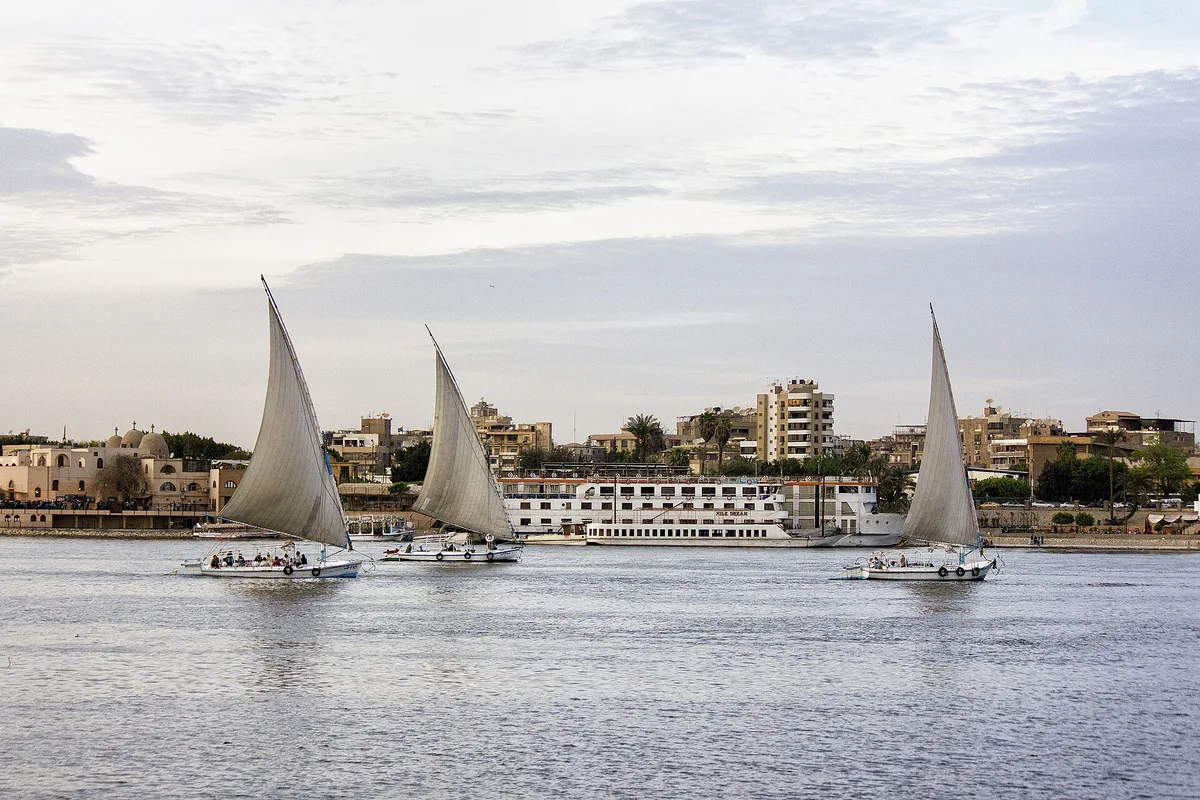
Stay in the middle. For a first trip, sleep in the central triangle – Zamalek for calm and cafés, Downtown for the metro, the museums and the budget beds, Garden City for quiet streets and river hotels – and day-trip outward from there, because Cairo’s traffic, not its distances, decides what a day can hold. Sleep in Giza only when the pyramids and the Grand Egyptian Museum are the trip itself, or split a longer stay between Giza and the centre; sleep in Heliopolis or New Cairo for the nights that belong to the airport; keep Maadi for quiet, space and longer stays, and Islamic Cairo for the travellers who want the medieval city at full strength, mornings and nights included. Choose the base by the shape of your days, not by a star rating or a photograph of a pyramid – and Cairo, which defeats so many itineraries, will start working for yours. For the trip this base supports, see our Egypt travel guide.