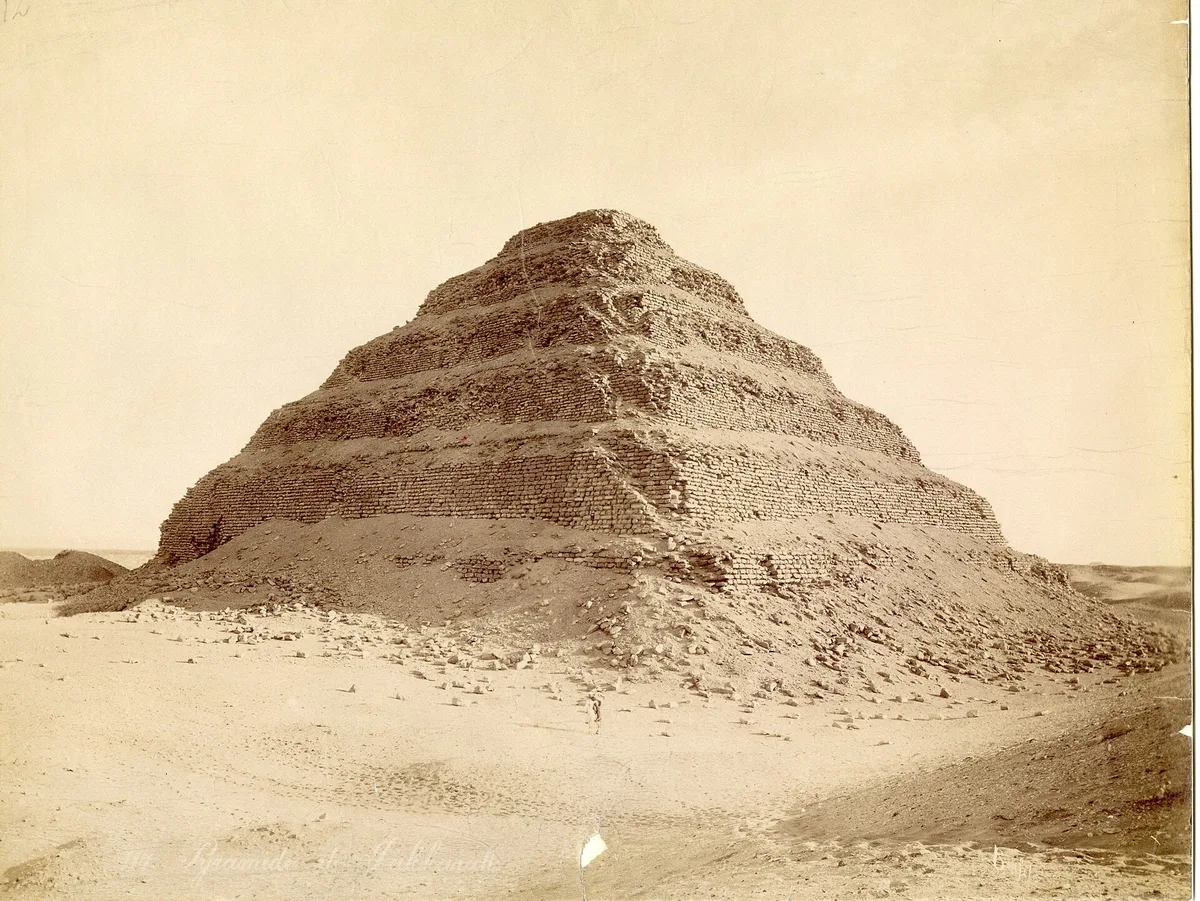
Every pyramid in Egypt descends from one experiment on this plateau. Around 2670 BC, on the desert edge west of the Nile and some 30 kilometres south of modern Cairo, a king named Djoser and his architect Imhotep stacked six stone mastabas on top of each other and produced the first pyramid and the first large building in cut stone anywhere in Egypt. That stepped silhouette is the reason this guide exists, but it is only the opening chapter. The Saqqara pyramids stand in the middle of a necropolis that Egypt used for more than three thousand years, from the first dynasties around 3000 BC to the age of the Coptic monasteries, and the burial ground of a capital city, Memphis, that ruled the country for most of that span.
That depth is what makes Saqqara different from Giza. Giza gives you three perfect mountains from one short, brilliant period. Saqqara gives you the whole story – the invention of the pyramid, its refinement, its decline into rubble mounds, the first religious texts ever carved inside a tomb, an underground cathedral built for sacred bulls, and nobles’ tombs whose walls are crowded with farmers, boat-builders, brewers and hippos. Almost everything Egypt is famous for was tried here first, and a good saqqara pyramids visit is really a walk through the entire pharaonic age in a single morning.
It is also, honestly, a site that punishes the unprepared. The necropolis stretches for kilometres along the plateau, the monuments sit in separate clusters with hot, shadeless walks between them, and the Egyptian authorities open and close individual tombs in rotation, so the tomb you came for may be locked on the day you arrive. None of that should put you off. It should shape the plan. This guide walks the site in the order you will actually meet it, explains what each building is and why it matters, and is frank about the heat, the distances and the closed doors, so the day goes the way it should.
One promise before we start. Everything practical here is written at the level that stays true – how the tickets and clusters work, how the rotation behaves, what combines well – rather than a list of prices and opening times that would be out of date before the season turns. Where something specific is stated, it comes from the Egyptian Ministry of Tourism and Antiquities or UNESCO, checked on 31 October 2026, and the sources are listed at the end. For the wider trip this necropolis belongs to, our Egypt travel guide covers the country’s regions and routes in full.
Saqqara Pyramids at a Glance

Start with the scale, because the scale is the first thing visitors get wrong. The Saqqara pyramids are not a group you stroll around in twenty minutes. They are the royal peaks of a burial city roughly seven kilometres long, and even the standard half-day covers only its northern half. The table below fixes the essentials before the detail begins.
| The essentials | What to know |
|---|---|
| Where | Desert plateau west of the Nile, about 30 km south of central Cairo |
| What it was | The main necropolis of Memphis, Egypt’s first capital |
| In use | Around 3000 BC to the Coptic period – more than 3,000 years |
| The headline monument | The Step Pyramid of Djoser, c. 2670 BC, the first pyramid ever built |
| The architect | Imhotep, later worshipped as a god |
| World Heritage status | Part of “Memphis and its Necropolis – the Pyramid Fields from Giza to Dahshur”, inscribed by UNESCO in 1979 |
| Other royal pyramids | Userkaf, Unas, Teti and others of the 5th and 6th Dynasties, mostly ruined |
| Underground highlights | The Serapeum of the Apis bulls and the Pyramid Texts inside Unas |
| Best tombs | The mastabas of Ti, Mereruka, Kagemni and Ptahhotep |
| Time needed | Half a day for North Saqqara; a full day with Memphis and Dahshur |
| The catch | Tombs open in rotation – no single interior is guaranteed on a given day |
Hold on to two of those rows. The first is the date range. Three thousand years of continuous burial means the plateau holds First Dynasty mudbrick, Old Kingdom stone, New Kingdom temple-tombs and Late Period shaft tombs stacked through the same sand, and the sections below keep returning to that layering. The second is the catch. Rotation is not a malfunction of the system; it is the system, run to rest fragile painted plaster. Plan around it and the Saqqara pyramids will still give you more Egyptology in a day than any other single site in the country.
The Necropolis of Memphis – Three Thousand Years of Burials
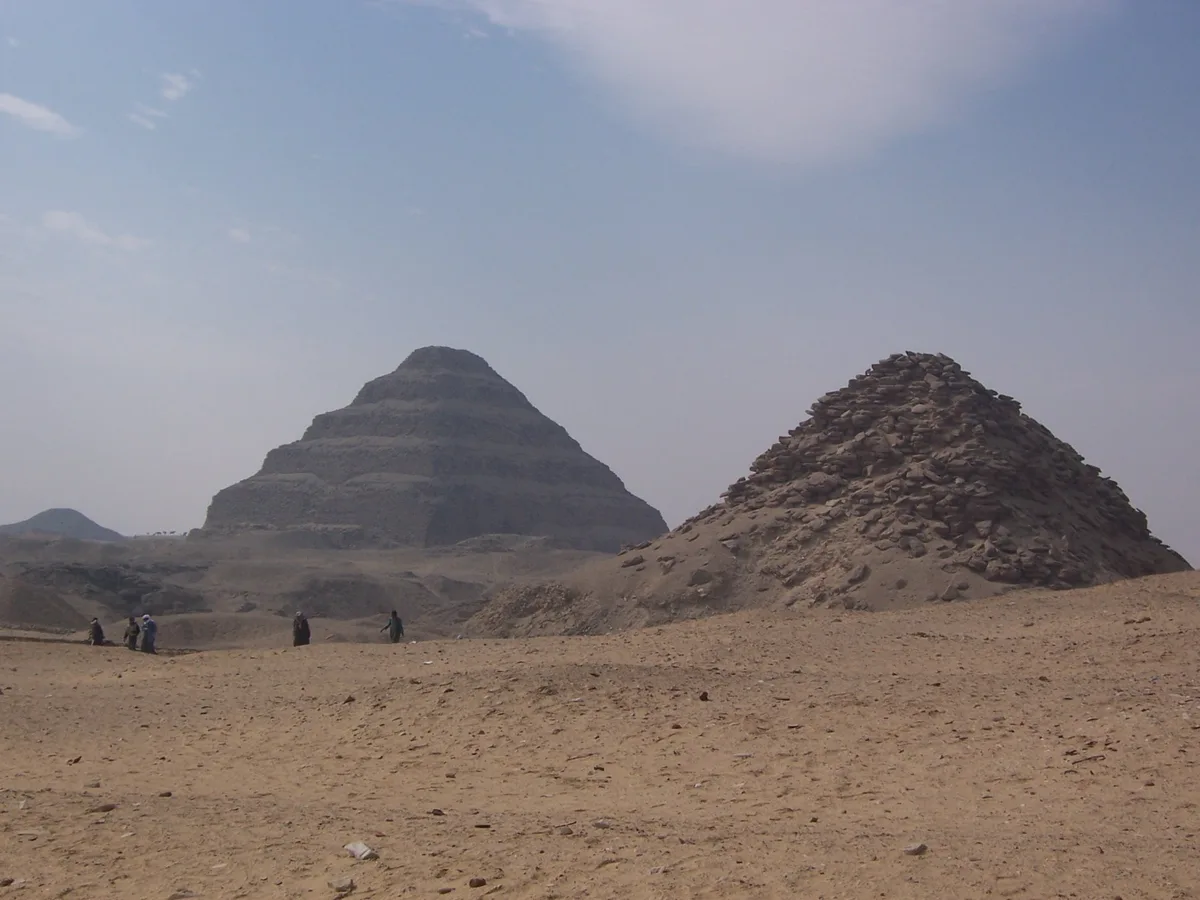
To understand Saqqara, start in the green valley below it. Memphis, founded around 3000 BC as the capital of a newly unified Egypt, sat at the apex of the Nile Delta where the river valley splits – the one spot from which a king could command both the valley of Upper Egypt and the Delta of Lower Egypt. UNESCO’s listing for the property puts it plainly: there was no possible alternative capital for any ruler with serious ambition to govern both halves of the country. Memphis stayed the effective administrative capital through the Old Kingdom and returned to importance again and again for three millennia.
Every capital needs a cemetery, and Egyptian cemeteries belonged on the west bank, where the sun died. So the dead of Memphis crossed to this plateau, and they kept crossing for the whole life of the city. The ministry’s own summary of the site calls Saqqara an open-air museum with all of ancient Egyptian history on display, and for once the phrase is not inflated. Kings and nobles of the first two dynasties, from about 3040 to 2686 BC, were buried here in mudbrick mastabas. The Old Kingdom then built in stone – Djoser’s complex, and after it the pyramids of the Fifth and Sixth Dynasties. Burial continued through the First Intermediate Period, the Middle Kingdom and the New Kingdom, whose officials built temple-shaped tombs of an entirely different style in the southern sector. The Late Period dug enormous shaft tombs and animal catacombs, the Ptolemies were still burying sacred bulls here, and the Copts finished the sequence with the Monastery of Apa Jeremiah, occupied into the eighth century AD.
UNESCO counts more than nine thousand rock-cut tombs across the Memphis necropolis as a whole, from the First Dynasty to the Graeco-Roman period. Even allowing that the count covers the full pyramid fields from Giza to Dahshur, the point stands – this is not a cemetery with a few famous graves. It is a three-thousand-year archive in which the Saqqara pyramids are simply the tallest surviving markers, and almost everything below the sand is still unexcavated. That fact will matter again when we reach the recent discoveries, because the plateau keeps producing them.
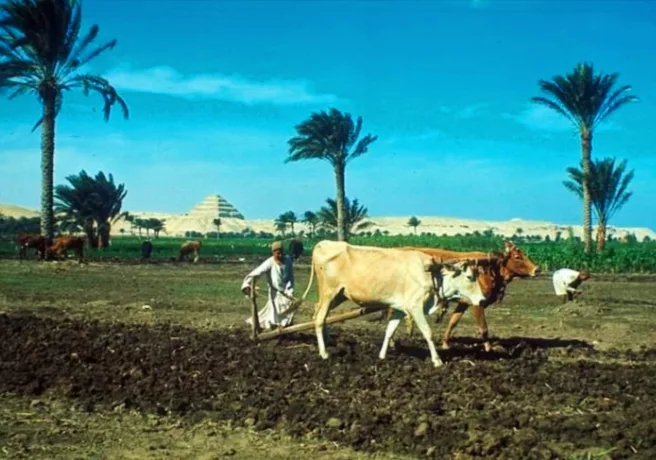
The name itself probably comes from Sokar, the falcon-headed god of this necropolis, which the ministry notes as the likely origin. Sokar’s festival involved hauling his barque around the burial ground, and the god of the dead of Memphis watched over the plateau long before the first stone was cut. Keep the geography in mind as you read on – a living city in the valley, a dead one on the plateau edge above it, and the pyramids rising where the cultivation ends. That edge, green on one side and white sand on the other, is the single most powerful view the site offers, and it has barely changed since the first mastaba was built.
Djoser and Imhotep – The Two Men Behind the First Pyramid

The king was born Netjerykhet and is remembered as Djoser. He reigned in the twenty-seventh century BC – the ministry gives his reign as about 2667 to 2648 BC – as the second king of the Third Dynasty, early in the period we call the Old Kingdom. Before him, even royal tombs were mudbrick. Kings of the first two dynasties had gone into the ground at Saqqara and at Abydos under flat-topped benches of brick, the shape Arabic speakers would later call a mastaba. Nothing in that tradition prepared Egypt for what Djoser’s officials did next, which is why the credit has always been shared between the king and one extraordinary servant.
Imhotep held titles that pile up like a modern CV dictated by the man himself – chancellor of the king of Lower Egypt, first after the king, administrator of the great palace, high priest of Heliopolis. Later Egyptians credited him with wisdom, medicine and writing as well as building, and they did something almost unheard of for a commoner: after his death they made him a god, the only non-royal Egyptian of the pharaonic age to be fully deified. His statue base found at Saqqara carries Djoser’s name beside his own titles, which is how we know the connection is contemporary and not a later legend. His own tomb has never been identified, despite centuries of looking – one of the plateau’s standing mysteries, and a useful reminder of how much of Saqqara remains unknown.
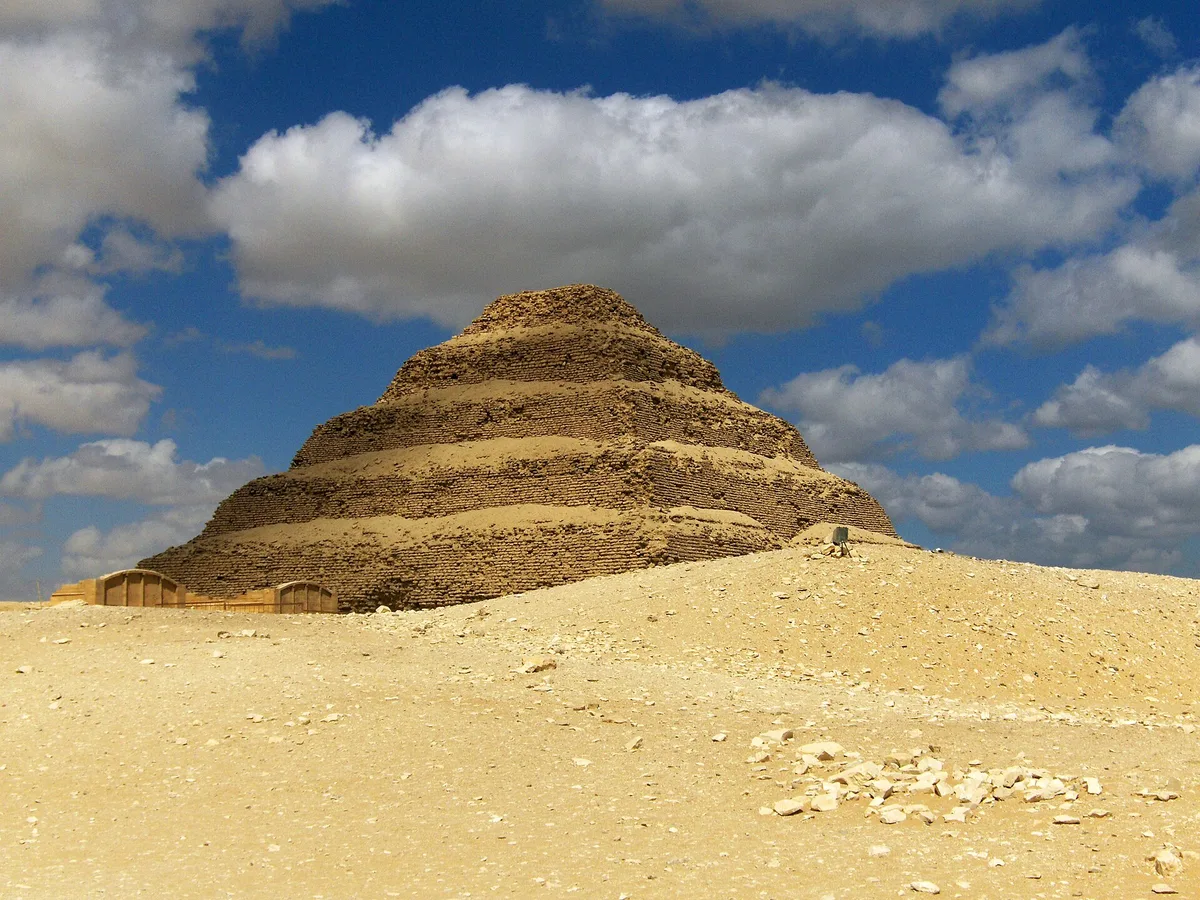
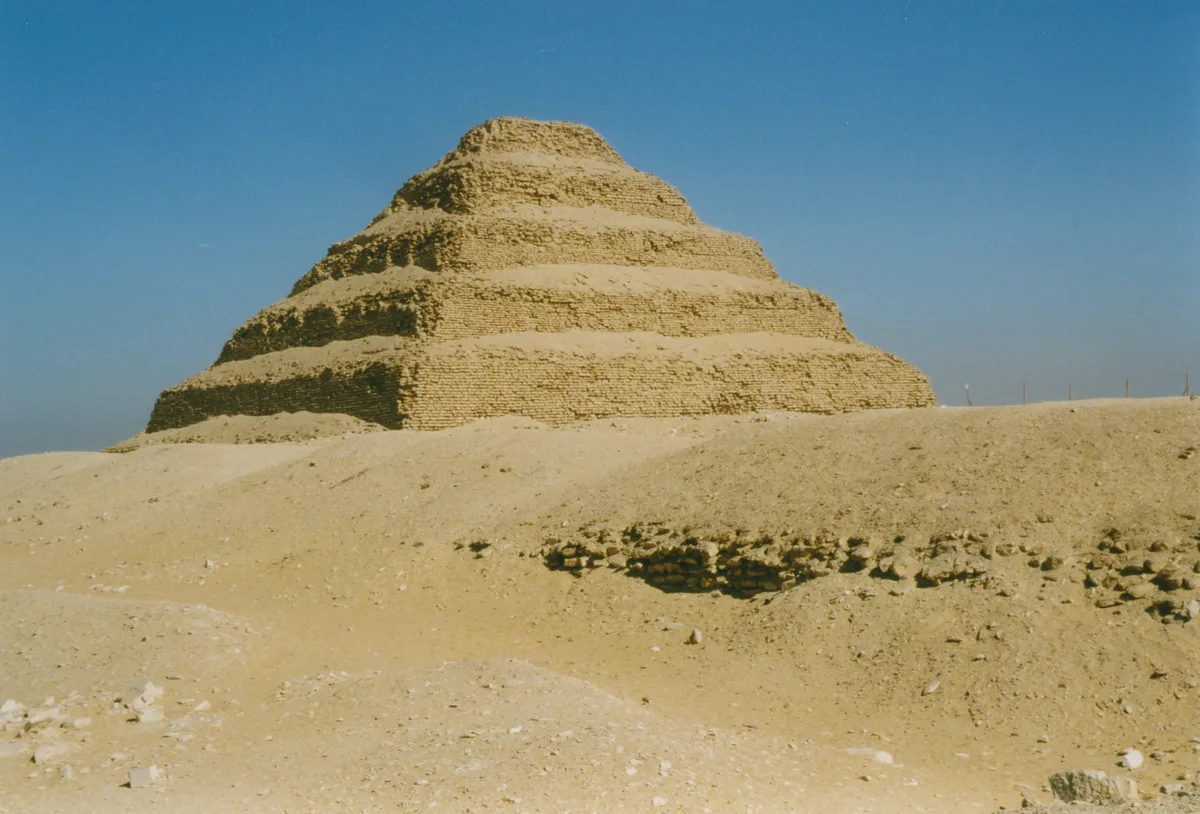
What Imhotep’s builders actually did, the ministry’s monument page describes with admirable economy: the Step Pyramid is composed of six stacked mastabas, and Imhotep may very well have been responsible for the innovation. The archaeology shows the design growing in stages – first a great square mastaba of stone, then enlargements on every side, then a four-stepped pyramid, then the final six steps, rising just over 60 metres on a base of about 121 by 109 metres. Underneath, a burial shaft drops 28 metres to a granite burial chamber, with kilometres of galleries branching around it – storage rooms, chambers panelled in blue-green faience tiles, reliefs of the king running his ritual circuit, and eleven shafts sunk for members of his family.
UNESCO’s verdict on the result is the one to quote: the Pyramid Complex of Saqqara contains the first monumental stone building ever constructed and the first pyramid ever built. Notice what that means for everything else in Egypt. The smooth pyramids of Giza, the temples of Karnak, the whole stone civilisation – all of it starts as an idea inside one walled rectangle on this plateau, executed by workmen who had to invent the techniques as they went, cutting stone blocks small enough to handle like the mudbricks they already knew. When you stand in front of the saqqara pyramids’ founding monument, you are not looking at a primitive attempt at Giza. You are looking at the moment Egypt learned to build in stone at all, and the building is still standing after some 4,700 years to prove the lesson took.
Walking the Step Pyramid Complex in Order
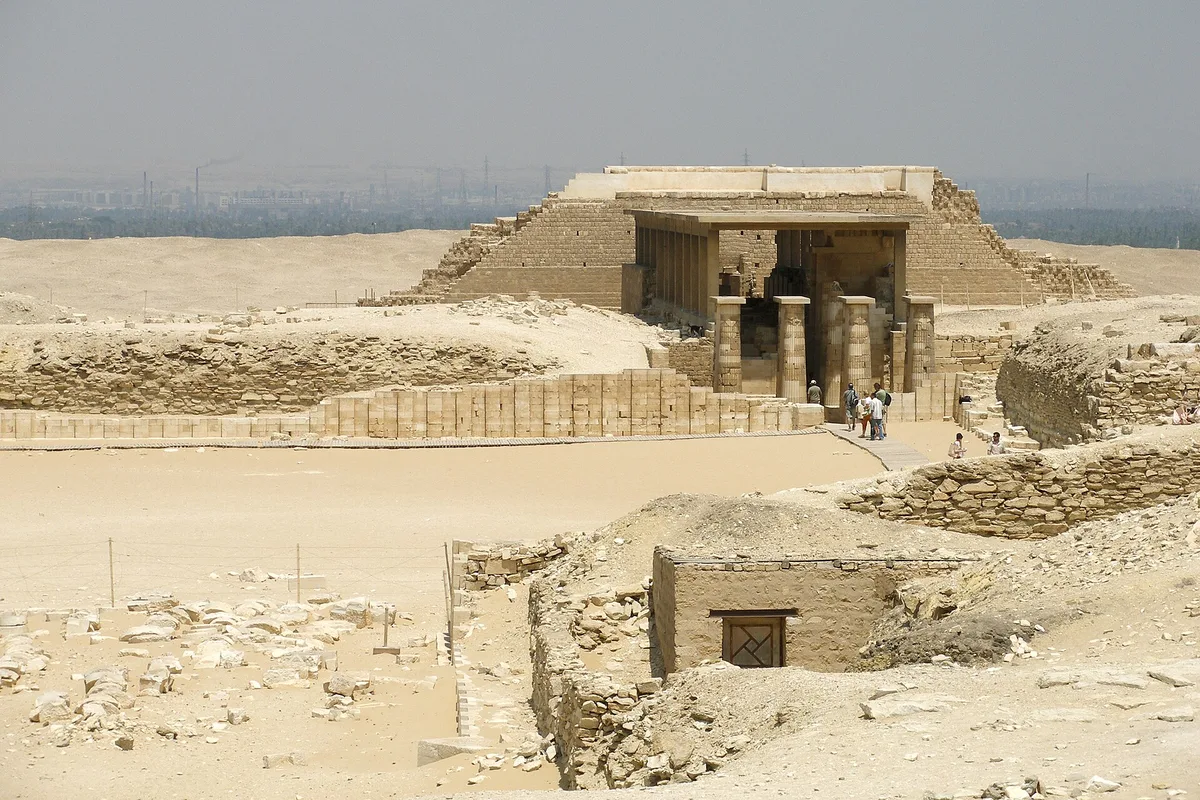
Djoser’s complex is a walled rectangle of about 550 by 280 metres, ringed by a limestone wall over ten metres high, panelled with the niches of a palace facade. Of the fifteen doorways spaced along that wall, fourteen are false – carved shut for eternity. One, at the south-east corner, is real, and it is still the way in. That single door is the beginning of a deliberate route, and the complex makes most sense walked in the order its designer intended: entrance colonnade, great court, festival court, the dummy palaces of the two lands, the pyramid itself, and finally the South Tomb at the far end of the enclosure.
A word on what you are walking through. Almost every building inside the wall is a dummy – solid masonry with no usable rooms, a palace, festival ground and temple city built as stage scenery for a dead king’s eternal ceremonies. The Egyptians believed the afterlife ran on the same rituals as this one, so Imhotep built the rituals a permanent home in stone, copying reed, timber and mudbrick originals detail for detail. Read the complex that way and its strange, beautiful emptiness stops being a puzzle. It was never meant for the living at all.
The Enclosure Wall and the Colonnade Entrance

You enter as every visitor since the Third Dynasty has entered, through the one real door in the south-east wall, and the first space sets the tone for the whole site. A roofed colonnade runs ahead of you, its walls studded with engaged columns – columns attached to the wall rather than standing free, their shafts carved in vertical ribs to imitate bundles of reeds lashed together. In a country building in stone for the first time, the masons copied the plant stems their grandfathers had built with, and the copy is so faithful that you can read the original material straight off the stone.
The colonnade is a lesson in controlled movement. It runs in a straight, dim corridor, opens into a wider hall, and delivers you at last into the blaze of the Great South Court with the pyramid filling the sky ahead. That compression and release – dark passage, then open court and the full height of the steps – is architectural theatre of a very high order, and it was achieved in Egypt’s first stone building. The niches along the colonnade walls held statues, and the whole passage functioned as a processional way, moving the king’s statue and his priests from the world outside the wall to the ceremonial ground inside it.
Practical notes belong here too. The colonnade is one of the few shaded stretches in the complex, and on a hot visit it is worth slowing down in it rather than hurrying through to the famous view. The modern roof overhead is protective, not ancient – the original was stone slabs, some of them carved underneath to imitate palm-log ceilings, another perishable material translated into permanence. Look up as well as ahead. Even the ceiling of the saqqara pyramids’ entrance hall is making the same argument: nothing here was allowed to rot, because it was built to be used forever.
The Great South Court and the Heb-Sed Festival Court

The court you emerge into is the largest open space in the complex, a broad arena running along the pyramid’s southern face. Its purpose was the Heb-Sed, the sed festival – the royal jubilee in which a king who had reigned thirty years symbolically ran a ritual course, claimed the thrones of Upper and Lower Egypt again, and had his power renewed. At the court’s southern end stand the remains of the altar and the double throne platform from which the king presided, and embedded in the ground are the boundary markers of the ritual run, the territory of the two lands shrunk to a courtyard.
On the court’s eastern side, a second, narrower court holds the festival’s architecture in miniature: rows of dummy chapels, each a solid block of masonry wearing a different facade – curved roofs, fluted half-columns, the shrine shapes of Egypt’s provinces. The ministry’s description is exact: the structures on the side of the eastern court emulate in stone the ephemeral shrines that were used in this festival, thus ensuring that the king could continue being rejuvenated forever. The originals were built for one celebration out of reeds and poles and then taken down. Imhotep rebuilt them to outlast geology.
This is the place to grasp the Egyptian logic that built the whole necropolis. A tomb was not a memorial; it was machinery. The festival court was not a picture of the jubilee – it was the jubilee, permanently installed, so that Djoser’s spirit could run the course and take the thrones for ever. Once that clicks, the dummy buildings stop looking like a half-finished city and start looking like what they are: the most literal-minded, and in its way most moving, religious architecture in Egypt. The chapels photograph best in low light, when the facades model in shadow – one of several reasons the timing advice later in this guide pushes you towards the ends of the day.
The House of the South and the House of the North
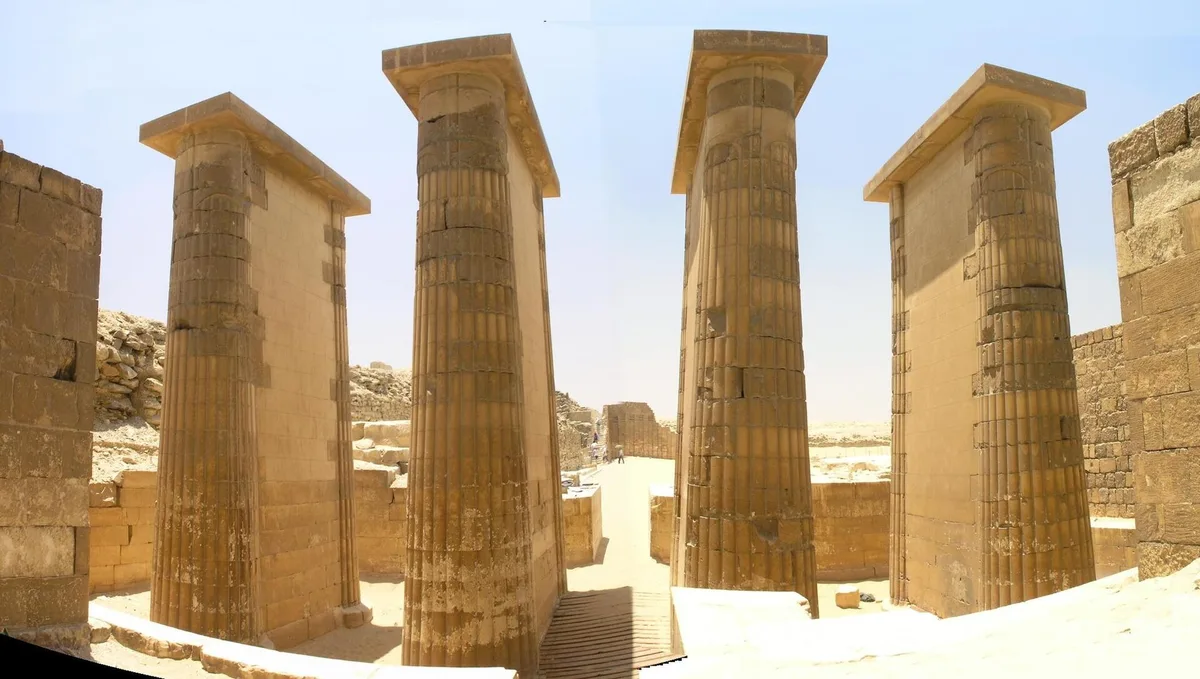
East of the pyramid, beyond the festival court, stand the two most elegant buildings in the complex – the pavilions Egyptologists call the House of the South and the House of the North. They represent the two halves of the kingdom, Upper Egypt in the south and Lower Egypt in the north, and their architecture advertises the difference. The House of the South carries engaged columns with capitals carved as the lotus, the plant of the south; the House of the North answers with papyrus, the plant of the Delta. Between them, the dual kingship that every pharaoh claimed is spelled out in botany.
Like everything else here, both houses are dummies – beautifully finished outside, solid within, their doorways opening onto shallow niches or nothing at all. They served the Heb-Sed cycle and the king’s eternal progress between his two lands, and they served it by existing, correctly shaped and permanently staffed by the king’s spirit. For the modern visitor they are also the best place in the complex to study Imhotep’s stone translation of older materials at close range: columns that are really wall, capitals that are really carved flower-heads, ceilings that imitate bent plant stems, all of it sharp after four and a half millennia.
Give these two buildings ten unhurried minutes. Most tours sweep past them towards the pyramid, and they are among the finest things at Saqqara – the moment where the world’s first stone architecture stops being an engineering experiment and becomes genuinely beautiful. They also frame the essential political fact of the site. Memphis existed to rule two lands from one throne; Djoser built that claim into his tomb in plant stone; and the saqqara pyramids rise over a necropolis whose first great monument is, among other things, a constitution rendered in limestone.
The Pyramid Itself, the Serdab and What Lies Beneath
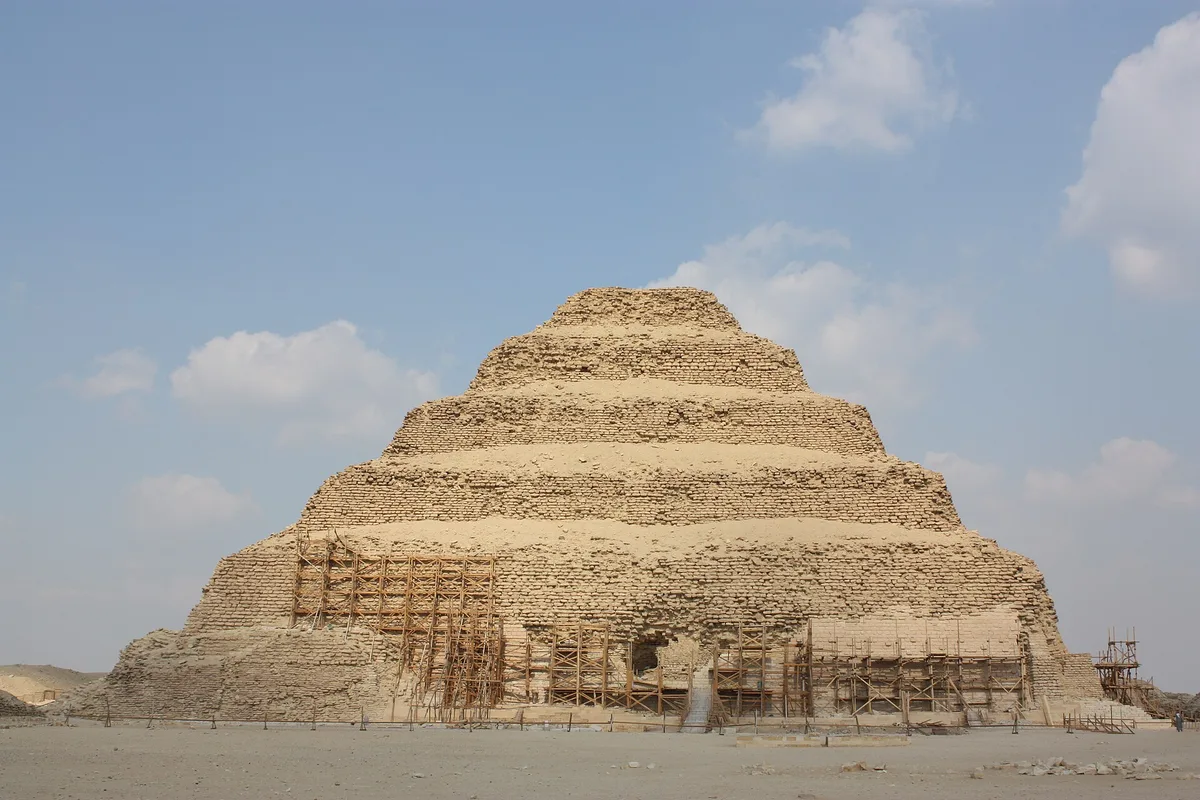
From the courts, the pyramid fills everything. Stand close and the construction reads clearly – six great steps of locally quarried limestone, the blocks small by later standards and laid in courses that lean slightly inward, the whole mass skinned originally in fine white Tura limestone that has long since been stripped away. What you see now is the core, weathered to the colour of the desert, and it is worth remembering that Djoser’s contemporaries saw a gleaming white staircase, not a sand-coloured ruin. The height, just over 60 metres, sounds modest next to Giza’s 146, but against the flat plateau and the low dummy city at its feet it still dominates absolutely.
The inside is the surprise. A labyrinth of passages – some three miles of them by the usual estimate – honeycombs the rock beneath the pyramid: the 28-metre burial shaft with its granite chamber, the eleven family shafts, storerooms that held tens of thousands of stone vessels, and the tiled chambers where blue-green faience imitates reed matting and reliefs show the king performing the Heb-Sed run. Visitors in recent years have entered by the southern entrance, a passage added in the Twenty-sixth Dynasty, to reach the burial chamber and look up the great shaft. The interior was closed for a long restoration after the 1992 earthquake shook the monument, and the ministry reopened it in March 2020 with consolidated passages, new lighting and a proper visitor path – but interiors at Saqqara open and close with conservation needs, so treat entry as a privilege of the day, never a certainty.
On the pyramid’s north face, two smaller things repay attention. The ruined mortuary temple against the north side handled the king’s daily cult. Beside it sits the serdab, a sealed stone box tilted slightly back, holding a seated statue of Djoser that stares out through two drilled eye-holes at the circumpolar stars – the imperishable stars, the destination of the king’s soul. The statue in the box today is a copy; the original, the first life-size royal statue in Egyptian art, presides over the Egyptian Museum in Cairo. Peer through the holes anyway. You are looking down the exact sightline a sculptor cut 4,700 years ago, and the king is still looking back.
The South Tomb – A Second Burial That Never Held a King

The last stop inside the enclosure is its strangest. Along the southern wall stands a chapel crowned with a frieze of cobras, and beneath it a shaft descends to a miniature copy of the pyramid’s own underground world – corridors, blue-tiled chambers, and a burial chamber of pink granite. This is the South Tomb, and the ministry offers the reading most Egyptologists accept: it acted as an additional, symbolic tomb for Djoser, perhaps reflecting his role as dual king of Upper and Lower Egypt. One king, two lands, two burials.
Other explanations compete – a tomb for the king’s viscera, a cenotaph for his southern kingship, a Heb-Sed burial for his spirit – and the honest position is that nobody knows for certain. What is certain is the craftsmanship of the copy. The South Tomb’s builders reproduced the pyramid’s faience tiles, its relief-carved doorways and its granite chamber at reduced scale, which makes the underground visit here one of the most atmospheric at Saqqara when it is open: you descend into a rehearsal of eternity, built by people covering every theological possibility they could think of.
That closes the complex, and the walking order now leaves the enclosure the way most visits do, heading west and south across open sand towards the second great pyramid field of the northern necropolis. Ahead lie Userkaf’s ruined pyramid, the mastaba streets around Teti, and – the destination that justifies the walk on its own – the little ruined pyramid of Unas, whose outside promises nothing and whose inside contains the oldest religious writing in the world. The Saqqara pyramids save some of their best things for those who keep walking.
The Pyramid of Unas – Small Pyramid, Immortal Words
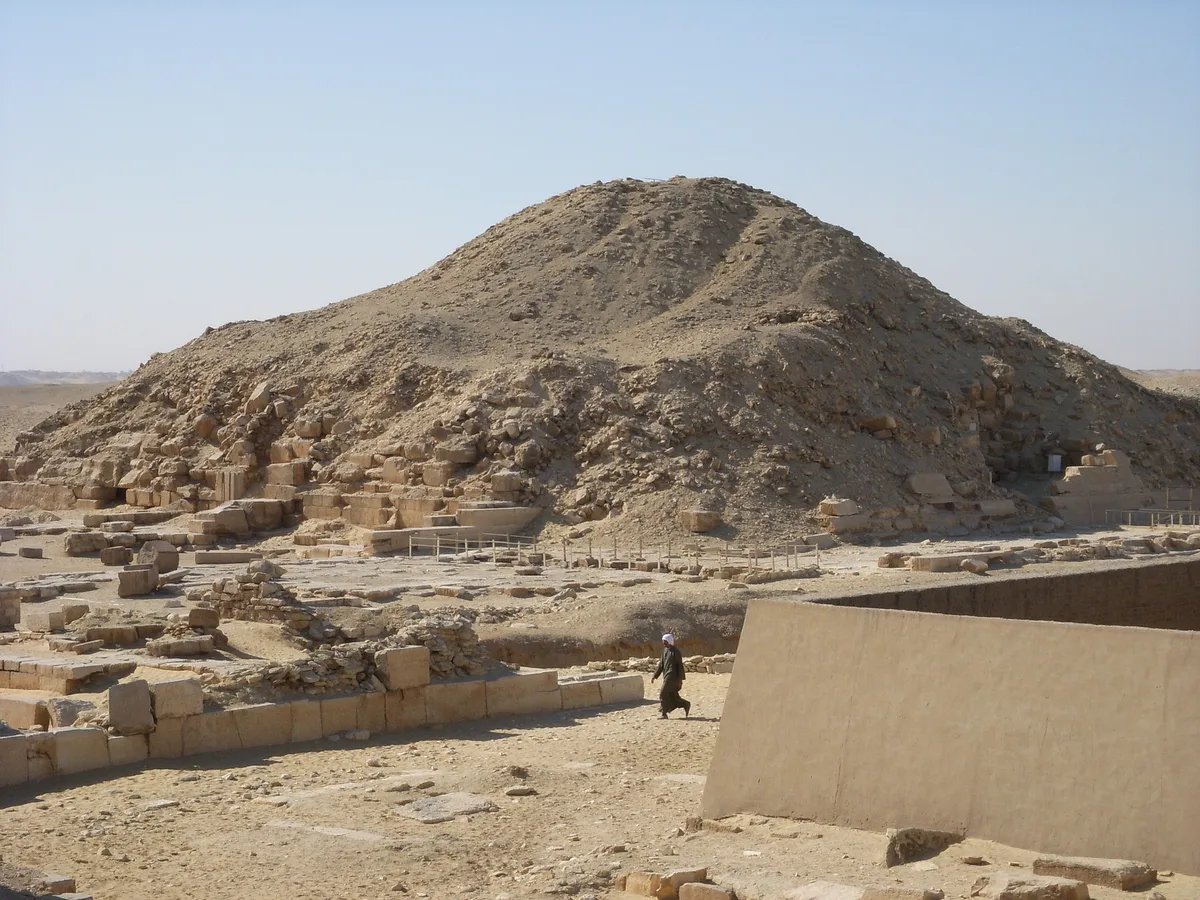
From the outside, the pyramid of Unas is the most disappointing royal tomb in Egypt. Unas, last king of the Fifth Dynasty, who reigned about 2375 to 2345 BC by the ministry’s dating, built at the south-west corner of Djoser’s enclosure, hard against the older complex. His pyramid was small even when new – around 43 metres high – and it has lost both its fine casing and much of its core, slumping into a rough mound of rubble that first-time visitors regularly walk past without a glance. There is a lesson in that. At Saqqara, significance and appearance part company more completely than at any other site in Egypt, and Unas is the proof.
Because inside this mound, Unas did something no king had done before: he had the walls of his burial chambers covered, floor to ceiling, with carved and painted religious texts. The ministry states the fact and its meaning in a single sentence – the pyramid of Unas features the oldest pyramid burial chamber decorated with texts, the so-called Pyramid Texts, whose purpose was to protect the deceased king on his journey to the afterlife. Every later Egyptian religious book, the Coffin Texts, the Book of the Dead, the whole literature of the afterlife, flows from the spells first cut into these rooms. The smallest royal pyramid of the Old Kingdom carries the largest idea of the age.
The complex around the mound still reads well at ground level. The mortuary temple at the pyramid’s eastern foot, the remains of two great boat pits, the queens’ pyramids nearby, and above all the causeway – treated in its own section below – make Unas a complete small complex rather than a single monument. Entry to the interior, when it is open, is down a low passage that demands a crouch and rewards it with one of the great rooms of Egypt. If you take only one pyramid interior among the saqqara pyramids, take this one; and if the rotation has closed it, the mastabas nearby will console you. But try Unas first.
The Causeway of Unas
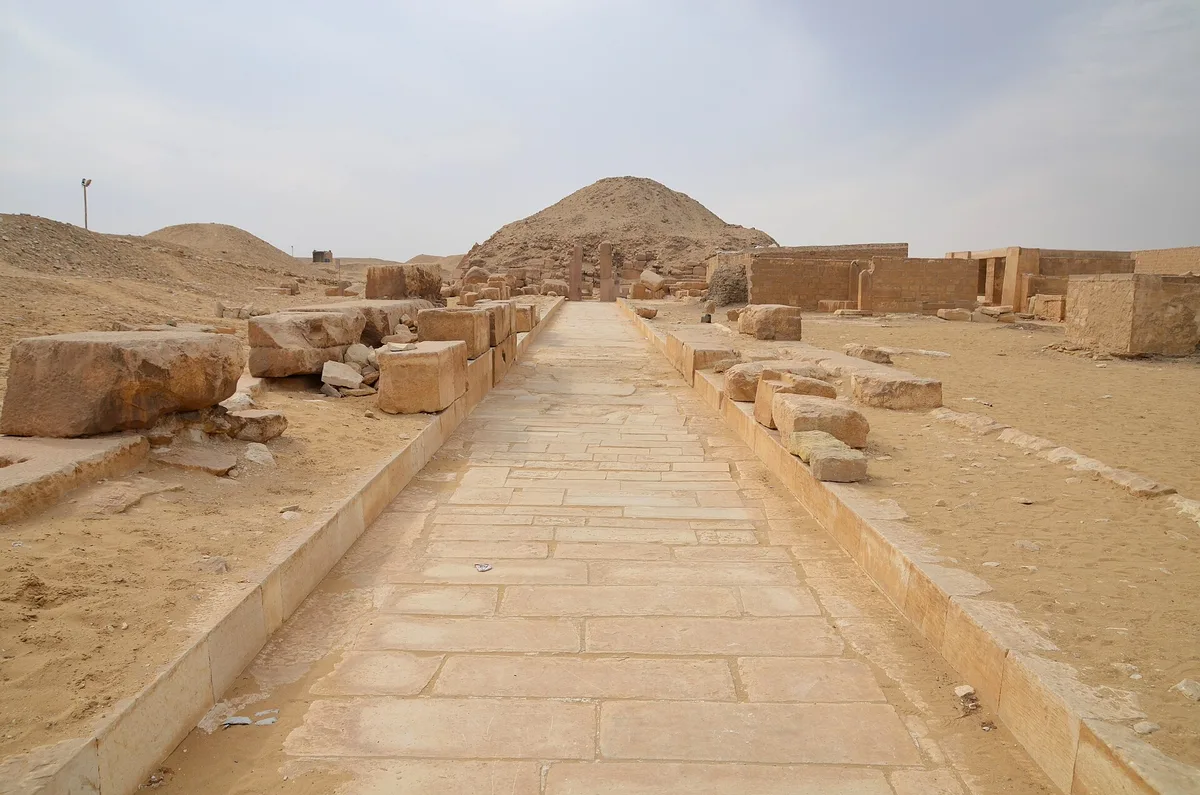
The causeway is the thread that ties Unas to the Nile. From the valley temple at the cultivation’s edge, a paved corridor some 750 metres long climbed the plateau slope to the mortuary temple and the pyramid. It was roofed for most of its length, with a slit left open along the centre of the ceiling so that a blade of light fell on the reliefs covering both walls – processions of offering bearers, ships bringing granite columns from Aswan, craftsmen at work, and, in the most famous panel of all, emaciated desert nomads starving in a famine, a scene with no parallel in earlier art and a dozen competing explanations.
Much of the causeway was dismantled in later antiquity and the New Kingdom tombs of the southern sector were cut across its line, but long stretches of the paving survive, and walking its course uphill towards the mound is the most historically layered stroll at Saqqara. You pass the shaft tombs of the Persian period cut down beside it, the Coptic monastery built over its lower end, and the doorways of officials who wanted eternity within sight of a king’s road. The famous reliefs themselves are divided now between the site, Cairo and museums abroad – a pattern, the dispersed fate of carved blocks from the saqqara pyramids, that the honest visitor should register. What remains in place is the road itself, and the road is eloquent enough.
Stand at the top and look back. The causeway aligns the pyramid with the valley temple and the river beyond, the same sacred geography as Djoser’s wall and Memphis below: city, harbour, road, tomb, desert. Every Old Kingdom pyramid complex repeats this diagram, and because Giza’s causeways are largely ruined or built over, Saqqara – and Unas above all – is where you can still walk it end to end and feel how the machine was meant to work.
The Pyramid Texts – The Oldest Sacred Writing in a Tomb
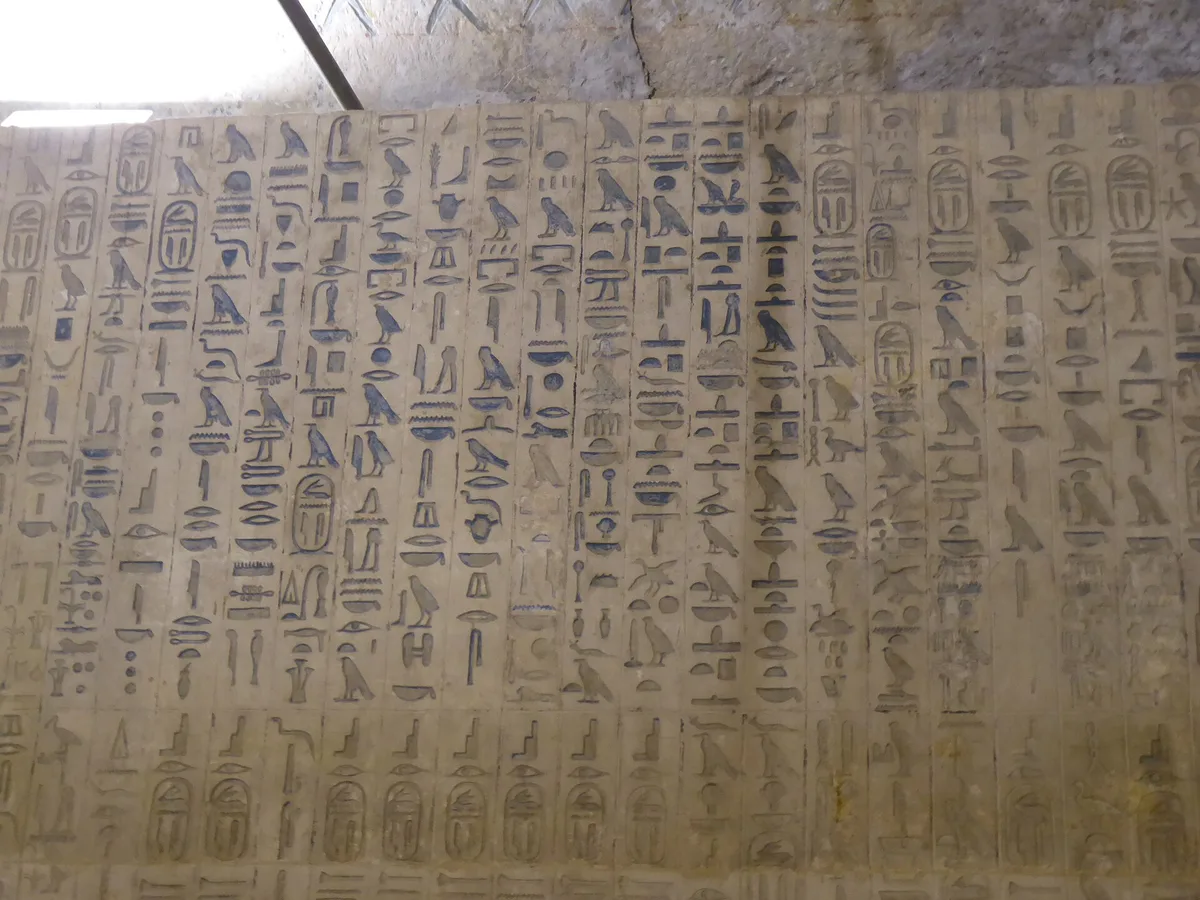
The descent into Unas is short and steep, through a passage from the north face into an antechamber and then the burial chamber itself. The room is lined in pale limestone and alabaster, the gabled ceiling painted with golden stars on a night-blue ground, and every wall is ruled into columns of hieroglyphs, their signs filled with blue pigment so the text reads like ink on paper. Beside the basalt sarcophagus, one wall holds a different and older-looking programme – false door panelling and offering lists in the style of a First Dynasty shrine, archaism built deliberately into the newest kind of tomb.
The texts themselves – Egyptologists count some 228 spells or utterances in Unas’s version – are gloriously various. Some are rituals: the offering liturgy, the resurrection ceremony performed over the king’s body. Some are hymns and identifications, the king named as Osiris, as a star, as a falcon. Some are protective snarls aimed at snakes, scorpions and hostile gods, and a few are strange beyond summary, including the so-called Cannibal Hymn in which the king devours the gods to absorb their power. They were first revealed to modern scholarship when Gaston Maspero’s workmen entered the pyramid in 1881, and their publication reset the study of Egyptian religion: here, suddenly, was a complete sacred literature from the twenty-fourth century BC.
Later kings of the Sixth Dynasty – Teti, Pepi I, Merenre, Pepi II – copied and expanded the corpus into their own pyramids at Saqqara, and queens received versions too, which is why the site’s royal texts form a library rather than a single book. For the visitor, no translation is needed to feel the room’s force. The sheer density of the carved columns, the care of the pigment, the stars overhead: this is a king surrounding himself with words the way his ancestors had surrounded themselves with stone vessels and furniture. Unas bet his eternity on text. Judged by the fact that you can still read his spells 4,350 years later, it is the most successful bet any of the saqqara pyramids ever placed.
The Serapeum – A Cathedral for Sacred Bulls
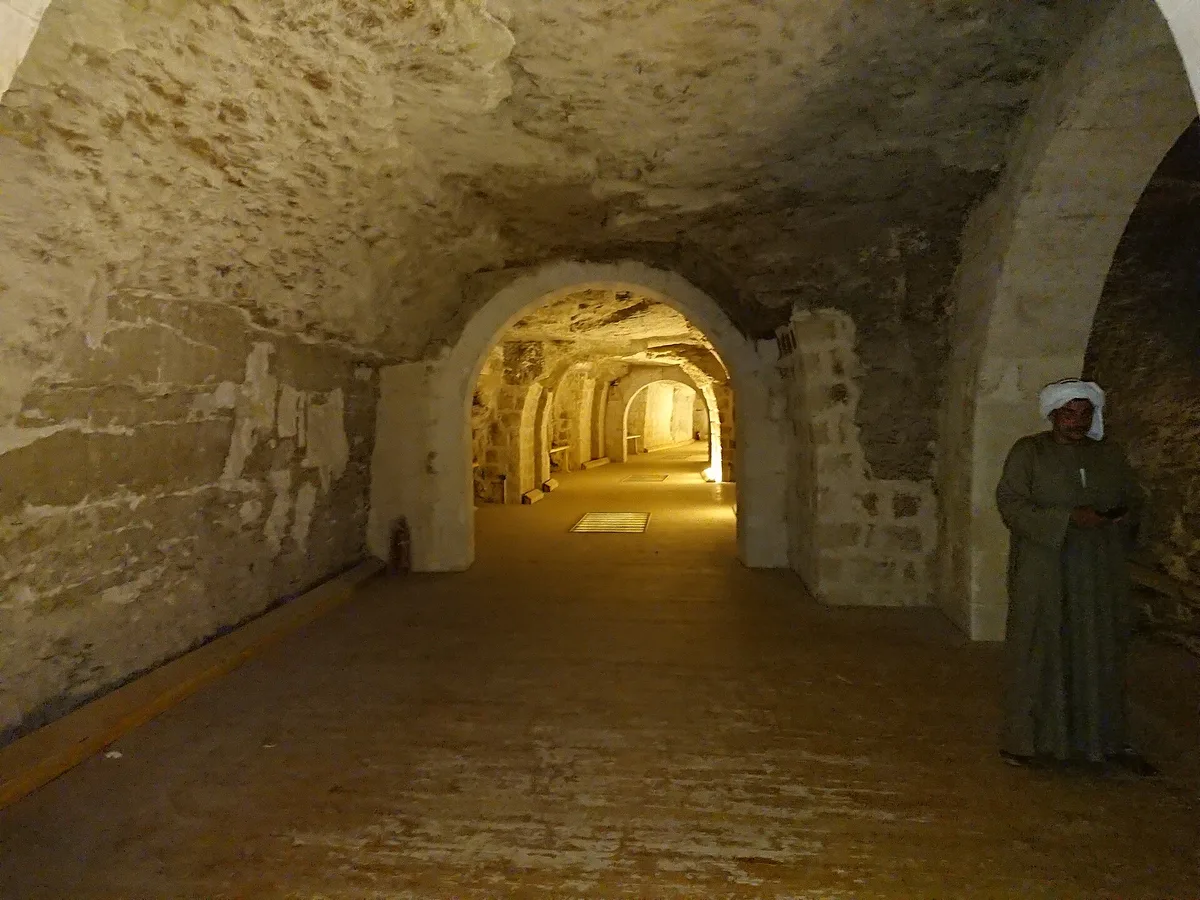
North-west of Djoser’s complex, a separate ticket and a short walk bring you to the strangest interior in Egypt. The Serapeum is a system of underground galleries in which the mummified bodies of the Apis bulls were buried, one by one, across more than a thousand years. The Apis, the ministry explains, was considered an incarnation of Ptah himself, the creator god of Memphis; there was only ever one Apis at a time, living in honoured state at the temple of Ptah, and when it died it was buried with full honours until a successor could be found. Full honours, at Memphis, meant this: a rock-cut cathedral, expanded reign by reign until the New Kingdom galleries gave way to the Greater Vaults of the Late Period, a main corridor flanked by vaulted side chambers, each chamber holding a single sarcophagus of granite or basalt so large that the boxes still defeat modern guesses about exactly how they were manoeuvred into place.
The discovery story is part of the monument. In 1850 the French archaeologist Auguste Mariette, guided by the ancient writer Strabo’s description of an avenue of sphinxes half-buried in this desert, dug along the sphinxes’ line and broke into the vaults – finding, in one undisturbed chamber, a bull burial with its funerary equipment and the footprints, it is said, of the last ancient workman in the dust of the floor. The avenue, the Lesser Vaults of the New Kingdom, where Ramesses II’s son Khaemwaset organised the burials into a single system, and the Greater Vaults with their two dozen giant boxes: the whole complex grew the way cathedrals grow, by accretion around a cult too important to move.
The experience underground is unlike any tomb. The scale is industrial rather than funerary – corridors high enough for a procession of priests and a god on a sledge, chambers like railway arches, and those enormous polished sarcophagi, some approaching four metres high, sitting in the dark with their lids ajar. Almost all were robbed in antiquity; the bulls are gone, and what remains is the architecture of devotion at its most monumental. The Serapeum closed to visitors in 1986 and remained shut for over two decades before reopening after restoration in 2012 – the clearest demonstration at Saqqara that access is a revolving door, and one more reason to build a day that does not collapse if a single interior is locked.
Do not rush it. The Serapeum sits apart from the pyramid clusters, many tours skip it entirely, and that is a mistake twice over: the galleries are a top-three experience among the saqqara pyramids’ monuments on any honest list, and their emptiness, cool air and silence give you the necropolis at its most contemplative. If your ticket and the rotation align, go in the middle of the visit, when you have earned a break from the sun and can give the bulls the unhurried half hour they deserve.
The Noble Tombs – Daily Life Carved in Stone

The kings built for the gods; their officials built for themselves, and posterity should be grateful. Scattered through the northern necropolis, and especially in the streets of mastabas around the pyramid of Teti, stand the tombs of the Old Kingdom’s civil service – viziers, overseers, priests and royal hairdressers – whose chapel walls carry the finest detailed relief carving in Egypt. Where a pyramid interior gives you texts and stars, a noble’s mastaba gives you the world: estates and workshops, hunts and harvests, boats, breweries, cattle, cranes, hippos, board games, dwarfs, dancers and tax-dodgers being dragged in by the ear. Egyptologists mine these walls for the entire material culture of the Old Kingdom. Visitors simply fall for them.
The great virtue of the mastabas, for a one-day visit, is their density. The Teti cemetery alone holds Mereruka, Kagemni and Ankhmahor within a few minutes of each other, and Ti lies a short walk north of the Serapeum. The great risk is rotation: these painted interiors are exactly the monuments the authorities rest most often, and the group open on your day may differ entirely from the group open on another. The answer is to know the top four, hold the list loosely, and treat whichever two or three you get as the day’s gift rather than its shortfall. The flagship, in almost every visitor’s judgement, is Ti.
The Mastaba of Ti – The Ford, the Hippos and the Workshops
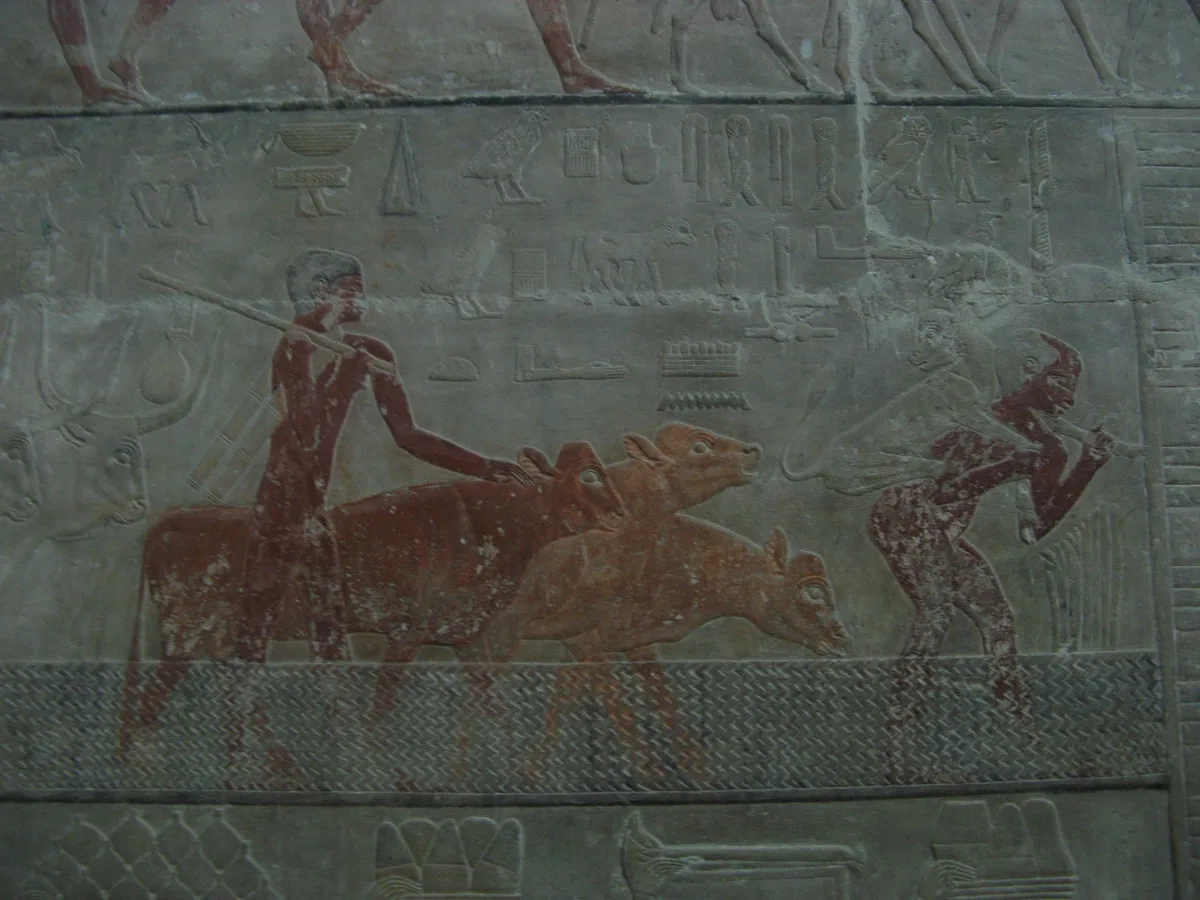
Ti was not royal, and his tomb is the better for it. He served Fifth Dynasty kings as overseer of the pyramids and sun temples of Neferirkare and Nyuserre and as the king’s hairdresser – an intimate court office, since the man who held a razor to the royal throat was trusted indeed – and he married a woman of royal blood, Neferhetpes. Auguste Mariette found the tomb in 1865, and its reliefs have been the benchmark for Old Kingdom art ever since: whole walls of painted limestone where every register is a small, observed masterpiece of animal behaviour and human work.
The famous scenes earn their fame. In the cattle ford, herdsmen drive the herd through waist-deep water while one man carries a calf on his shoulders, the mother lowing after it – a trick Egyptian farmers used to keep the herd moving, recorded here with tenderness and complete accuracy. Elsewhere Ti rows into the marshes to watch a hippopotamus hunt; shipwrights bend timbers; carpenters, sculptors, metalworkers and brewers crowd the workshop registers; and Ti himself, hugely larger than his staff, inspects it all from a pavilion, leaning on his staff. A serdab in the chapel held his statue – the original, like Djoser’s, is in Cairo – and the false door at the chapel’s heart is where his family left food and beer for his spirit for generations.
What lifts Ti above a picture gallery is the sense of a managed world. Nothing on these walls is random decoration; it is an estate rendered permanent, every loaf, fish and goose that Ti intended to enjoy forever, produced by people he clearly watched closely and carved by artists who had plainly done the work themselves. Of all the interiors among the saqqara pyramids, it is the one visitors describe with the word warm. If the rotation gives you one noble’s tomb, hope it is this one – and then read the walls slowly, register by register, from the bottom up.
Mereruka, Kagemni and Ptahhotep – The Viziers’ Row
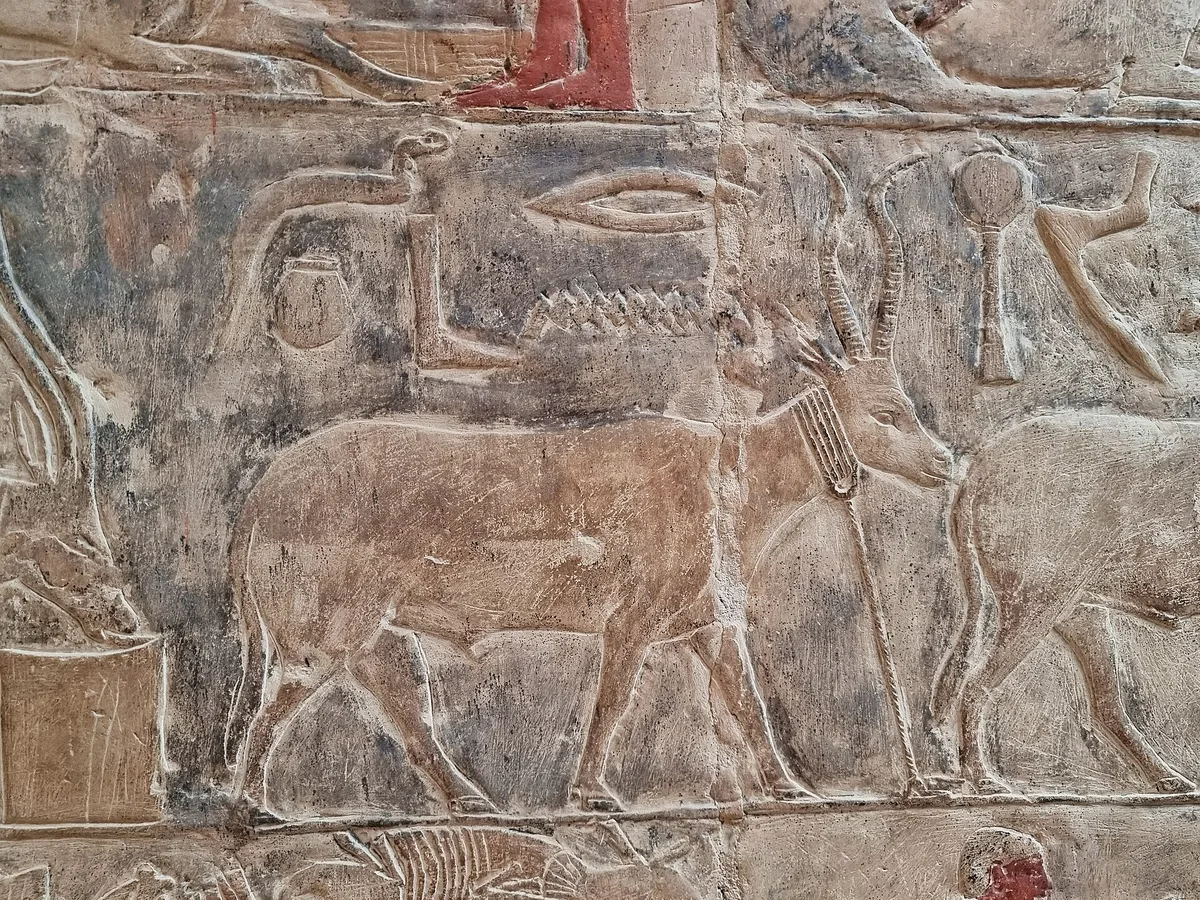
North of Teti’s pyramid, three more mastabas cover the official class at its most powerful. Mereruka, vizier and chief justice under Teti and husband of the king’s own daughter, built the largest Old Kingdom mastaba at Saqqara – more than thirty chambers for himself, his wife Waatetkhetor and their son, a house of eternity the size of a village house-block. Just inside the entrance, a nearly life-size statue of Mereruka strides out of the rock as if still arriving at his own chapel; deeper in, the relief programme runs from the marsh hunt – where the hippopotamus in the photograph above opens its jaws among the papyrus – to the famous scene of Mereruka himself at an easel, painting the three seasons of the Egyptian year while his wife watches.
Kagemni, another of Teti’s viziers, lies close by with a different flavour: fishing and fowling scenes of exceptional delicacy, geese being force-fed, a pond stocked with fish, and a hyena being led on a leash among the offerings. Ptahhotep, from the generation before, shares a double mastaba with his son Akhethotep near the Unas causeway, its chapel small, calm and carved in the most refined raised relief of the Fifth Dynasty – fittingly, since Egyptian tradition credited Ptahhotep with the Instruction, a book of advice on conduct that became one of the classics of Egyptian literature. His tomb and his book are the same man thinking about order, four and a half thousand years before you stand in front of either.
Practical counsel ends the row. These three, plus Ankhmahor – the so-called Physician’s Tomb, with its debated scenes of operations on hands and feet – form a natural group, but they are A-list rotation candidates, and their doors are the ones most likely to be chained on a given morning. Ask at the ticket office which mastabas are open before you walk the Teti cemetery, sequence them early while your legs are fresh, and never let a locked vizier spoil the walk: the quarter’s streets, false doors and inscribed lintels are a museum in themselves, even from outside.
The Other Saqqara – New Kingdom Tombs, Animal Catacombs and New Finds
Everything so far has been Old Kingdom, and Saqqara is bigger than its first age. Walk south of the Unas causeway and the architecture changes completely: here the great officials of the New Kingdom – the age of Tutankhamun and Ramesses – built temple-tombs with pylons, courtyards and columned halls, deliberately unlike the Theban rock tombs of their southern counterparts, as the ministry notes. The general Horemheb raised his here while he was still a commoner, filled it with superb reliefs of prisoners and military life, and then abandoned it unused when the throne fell to him and he cut a royal tomb in the Valley of the Kings instead. Nearby lies Maya, Tutankhamun’s treasurer, whose tomb and its golden treasures were lost and found twice – plundered in antiquity, glimpsed in the nineteenth century, relocated only in 1986. These tombs open less predictably than any others at Saqqara, and their reliefs have partly migrated to museums, but the quarter alone proves the necropolis never stopped working.
Underground, the late periods changed the scale of devotion entirely. Around the northern plateau, catacombs for sacred animals run for kilometres: galleries of mummified ibises and falcons offered to Thoth and Horus, baboons, cats in the Bubasteion quarter by the escarpment, dogs in the Anubieion – millions of animals across the centuries, the physical residue of a pilgrimage industry. Most are closed to visitors, and the Serapeum above remains the animal cult’s one great visitable monument, but knowing the plateau is honeycombed with them changes how the sand feels under your feet.
And the archive is still open. In December 2018 the ministry announced the tomb of Wahtye, a Fifth Dynasty priest, its walls vividly painted and its shafts holding family burials; the same excavations south of the Unas causeway had already revealed a mummification workshop, complete with the embalmers’ tools and measures. In November 2020 the ministry announced more than a hundred sealed, painted wooden coffins of the Twenty-sixth Dynasty from deep shafts near the Bubasteion, with gilded statues among them – at the announcement, the minister remarked that perhaps one percent of Saqqara’s antiquities had been found. March 2022 brought five more Old Kingdom tombs near the pyramid of Merenre; May 2023, two further embalming workshops described as the largest yet found. Take the numbers as official announcements rather than settled counts, but the pattern is beyond argument: the saqqara pyramids stand in the middle of the most productive excavation field in Egypt, and the plateau you tour in the morning may be re-dated by the evening news. Many headline finds are destined for display in the new Grand Egyptian Museum, which is where the Saqqara story currently continues.
How a Visit Works – Tickets, Clusters and Distances
The visit begins at the plateau entrance below the Djoser complex, where the Imhotep Museum stands beside the ticket office. Go into the museum first or last – it is small, well labelled, and built for orientation, displaying finds from the whole span of the necropolis from Djoser’s reign to the Coptic monastery, including the carved fragments and tools that explain how the plateau was built. It is named for the architect rather than a king, which is exactly right for Saqqara, and twenty minutes inside it will double the value of everything outside.
Tickets are sold at the gate as a general admission with add-ons. In recent seasons the pattern has been a main ticket for the plateau and the Djoser complex, with separate tickets for particular interiors – the Serapeum, the Step Pyramid and South Tomb interiors, groups of mastabas, the New Kingdom tombs – but the grouping, the prices and what is bundled change from season to season, and this guide deliberately prints no figures. Treat the board at the ticket office as the only reliable price list in Egypt, buy for the interiors you actually intend to enter, and ask the direct question that saves the whole day: which tombs are open today? The answer reorganises your route, and it costs nothing to ask before you pay.
Getting around is the second half of the logistics. The visitable necropolis falls into clusters: the Djoser complex; the Unas and Userkaf group immediately west of it; the Teti cemetery with the viziers’ mastabas to the north-east; Ti and the Serapeum further north-west; and the New Kingdom quarter to the south, which most visitors reach only by vehicle. Between clusters lie open sand tracks with no shade and no facilities – ten minutes here, fifteen there, each trivial on a map and each a real cost in summer heat. Most organised tours move by minibus between clusters and walk within them, and independent visitors with a hired car and driver should do the same; a purely walking circuit of everything above is possible in winter for the fit, and unwise for anyone in July.
Two last practicalities. Photography rules at Egyptian sites have changed repeatedly in recent years, including the introduction of paid photo arrangements at some sites and phone-camera relaxations at others; confirm the current rule at the gate rather than trusting anything written, this guide included. And carry water beyond what you think you need, buy it before the plateau, and plan on finishing the visit by the hour the site empties of everyone sensible – a point the sections below will not let you forget.
Saqqara With Memphis and Dahshur – Building the Full Day
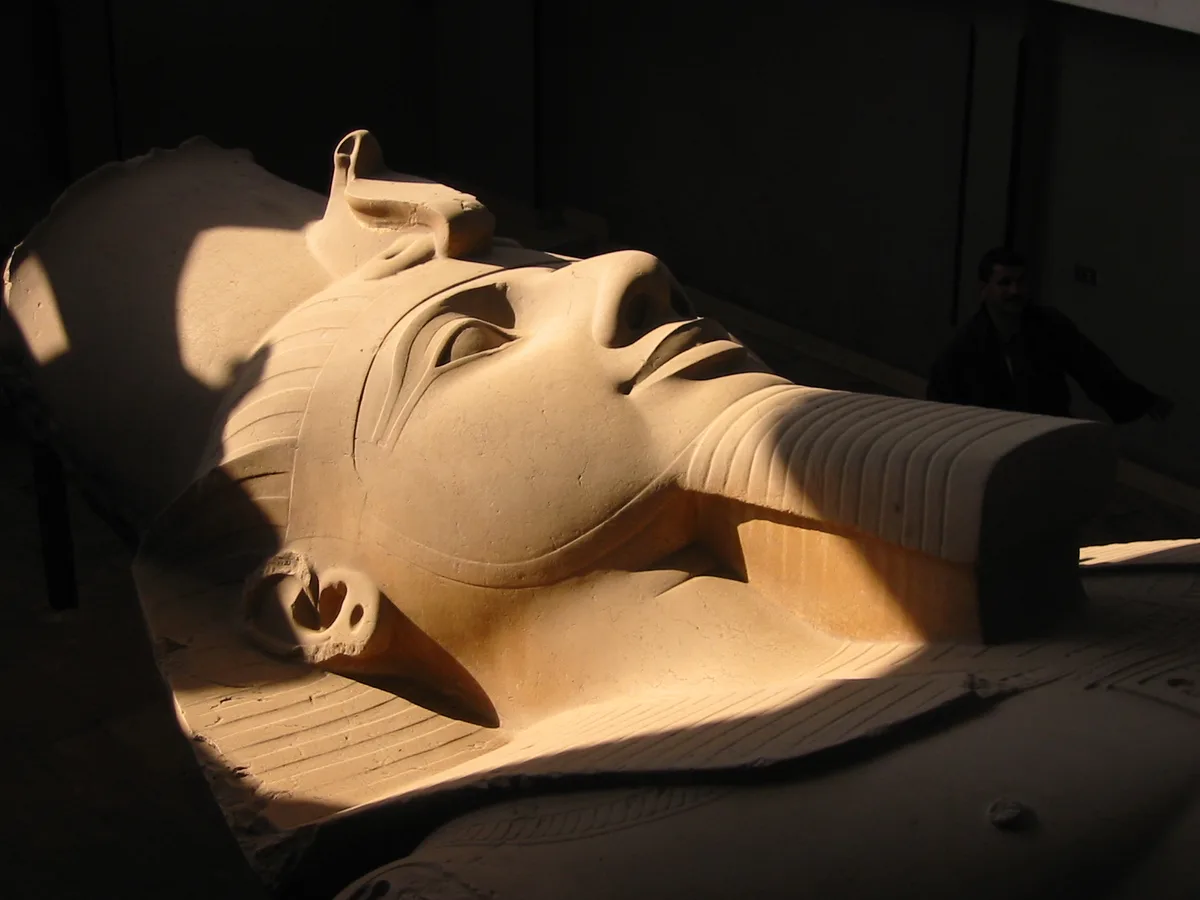
Saqqara’s neighbours are not optional extras; they are the other two points of its triangle. Memphis itself, the city all this served, lies in and under the modern village of Mit Rahina, ten minutes from the plateau, where an open-air museum holds the fallen limestone colossus of Ramesses II – a king more than ten metres long, lying on his back in a purpose-built pavilion, his face carved with a calm that four thousand years and a lost lower half have not disturbed. Around him stand an alabaster sphinx, statues and the scant foundations of the great temple of Ptah. It takes forty minutes, it is mostly shade and grass after the white plateau, and it completes the diagram: here is the city, up there is its cemetery, and the two were one machine.
South of Saqqara, the plateau continues to Dahshur, where the experiment Djoser began reached its climax in the reign of Snefru, a century later. Dahshur holds his two great pyramids: the Bent Pyramid, which begins at one angle and finishes at another – the visible correction of a design going wrong in real time – and the Red Pyramid, which the ministry’s Old Kingdom page identifies as Egypt’s first completed true pyramid, the proof that the lesson of Saqqara had been fully learned. The Bent Pyramid’s interior was opened to visitors in 2019 after decades of closure. A day that runs Saqqara, Memphis and Dahshur is a day that watches the pyramid invented, argued with and perfected, in chronological order, within a dozen kilometres.
Which raises the comparison every visitor makes. Our separate pyramids of Giza guide covers the famous plateau; the honest verdict is that the two sites are complements, not rivals. Giza is the greater spectacle – bigger, later, more perfect, and far more crowded. The saqqara pyramids are the greater education: older, quieter, denser in ideas, and the only place where the pyramid has a visible childhood. If you have one day for pyramids, argue it out honestly with yourself; if you have two, do Giza for the wonder and Saqqara for the understanding, and notice how differently the two evenings feel. Visitors based in the capital will find both folded into wider plans in our places to visit in Cairo guide.
Sequencing for the full day is simple. Start at Saqqara at opening time, before the heat and the buses; take the Djoser complex first, then the clusters in the order the rotation dictates; drop down to Memphis for a shaded midday pause; and finish at Dahshur in the lower light, when the Bent Pyramid’s double angle reads best against the sky. Reverse the order and you will be walking the Saqqara sand at noon, which the next sections will describe in the tone it deserves.
When to Go – Season, Week and Hour
Saqqara is a desert plateau with almost no shade, and its calendar is written by the sun. The generous season runs from October to April, when midday on the plateau is a pleasure rather than a negotiation; November to February are the kindest months of all, with cool mornings that can ask for a jacket on the exposed escarpment edge. March and April warm up but stay manageable, with the caveat of the khamsin, the hot spring wind that can fill the air with dust for days at a time. From May the terms harden; June to September is genuine desert summer, when a Saqqara visit is an early-morning operation only, and even the site’s own staff pace themselves by the shade that is not there.
Within the week, Friday and Saturday form the Egyptian weekend, bringing local families and school groups to the plateau; the great tour circuits run every day, but midweek mornings remain the quietest version of the site. Within the day, the answer is the same as at every exposed monument in Egypt: be at the gate at opening. The first two hours give you the Djoser complex in low, raking light, with the six tiers separating like the steps of a staircase drawn for giants, the courts empty enough to hear the wind in them, and the day’s whole walking plan still ahead of your legs. The same complex at one in the afternoon is a white glare with coach parties queued at the colonnade.
There is one exception worth naming. Late afternoon is the second-best hour, and for photography of the Heb-Sed chapels and the plateau edge – where the green of the valley meets the white of the necropolis – it may be the best hour of all. If your arrangements allow a split day or a late start, take it; just never allow the middle of a summer day to find you halfway between Ti and the Serapeum with an empty bottle. The saqqara pyramids have stood through 4,700 summers. They are patient. Be as patient as they are, and come when the light and the temperature are on your side.
The Honest Downsides – Heat, Distance and Closed Doors

Every guide owes its reader the paragraph of warnings, and Saqqara’s are specific. First, the ruins are ruins. Beyond Djoser’s complex and the painted interiors, much of what you will see is weathered core and rubble mound: Userkaf’s pyramid is a gravel heap, Unas’s a slumped hill, Teti’s little better, and visitors raised on Giza’s geometry sometimes feel cheated by a necropolis whose kings mostly lie under what look like natural hills. The answer is in the interiors and the ideas, not the silhouettes – but if your heart is set on perfect triangular mountains, know before you come that Saqqara will not supply them.
Second, the scale works against the clock. The clusters are strung across open desert, the sand steals pace, there is effectively no shade and no café society between the ticket office and the car park, and the Djoser complex alone can absorb two hours before you notice. Visitors who bolt Saqqara onto a Giza day as an afterthought routinely meet it at its worst – hot, rushed, half seen – and leave wondering what the fuss was about. The site deserves the half day this guide assumes, and repays it fully; squeezed, it disappoints, and the fault is the schedule’s, not the necropolis’s.
Third, the closed door. Rotation is conservation, and it is non-negotiable: a tomb is open until the day it is not, the official lists change faster than any publication can track, and the ministry’s own site pages, checked for this guide in October 2026, describe the monuments without promising a definitive day-by-day open list. Build the day so that no single interior carries it. If Ti is open, the day is charmed; if Ti is shut, Mereruka or Unas or the Serapeum will carry it instead – and if your one non-negotiable tomb matters that much, have a local agent or your driver telephone ahead the day before, because that is the only forecast that exists.
Frequently Asked Questions
How long do you need at Saqqara?
A focused half day covers the Djoser complex, Unas, the Teti mastabas and either Ti or the Serapeum. Add Memphis and Dahshur and it becomes the full, unhurried day this guide recommends. Two hours is the absolute minimum for the Djoser complex alone, and it will feel like a trailer rather than the film.
Can you go inside the Step Pyramid?
Yes, when it is open. The interior – the great shaft, the burial chamber and part of the gallery system – reopened in March 2020 after a fourteen-year restoration, and visitors enter by the southern passage. Interiors close for conservation without long notice, so confirm on the day, and expect the visit underground to be a separate ticket.
Is Saqqara better than Giza?
It is different rather than better. Giza’s pyramids are larger, later and more perfect; the saqqara pyramids are older by a century and a half, far richer in tombs, texts and ideas, and much quieter. History-first visitors usually rank Saqqara the greater day; spectacle-first visitors usually rank Giza. With time for both, the argument dissolves.
Which tombs are open at Saqqara?
Whichever the rotation has open on your day. The authorities rest the painted mastabas and the pyramid interiors in turn, and no list published in advance can be trusted – ask at the ticket office on arrival, and sequence your walk around the answer. Ti, Mereruka, Kagemni, Ptahhotep, Unas and the Serapeum are the names to ask about first.
How do you get to Saqqara from Cairo?
By road, south through the valley villages to the plateau entrance below the Djoser complex – roughly 30 kilometres from central Cairo, usually combined with Memphis on the same drive. Almost all visitors come on an organised tour or with a hired car and driver; the clusters are spread widely enough that you will want the vehicle between them in any case.
Is Saqqara safe and suitable for children?
The plateau is an open, guarded archaeological site and the visit is a walking tour in the sun; the practical challenges are heat, sand and distance, not security. Children who can manage several kilometres of walking and can be kept interested by hippos in stone, a bulls’ cathedral and a staircase pyramid usually love it – bring hats, water and a finish time, exactly as for the adults.
The Short Version of This Saqqara Pyramids Guide
If the rest of this page scrolled past too fast, here is the necropolis in one breath. The saqqara pyramids stand in the burial ground of Memphis, Egypt’s first capital, in use for over three thousand years and protected since 1979 within the UNESCO listing that runs from Giza to Dahshur. Come for Djoser’s Step Pyramid of about 2670 BC – the first pyramid and the first great stone building in Egypt, designed by Imhotep and best read in walking order: colonnade, festival courts, the Houses of the North and South, the pyramid and its serdab, the South Tomb. Stay for the pyramid of Unas, whose rubble exterior hides the Pyramid Texts, the oldest religious writing carved in a tomb; for the Serapeum, where the Apis bulls lie in granite boxes the size of trucks; and for the mastabas of Ti and Mereruka, where the whole of Old Kingdom daily life is carved on the walls. Ask at the gate which tombs the rotation has open, start at opening time, give it at least half a day, and if the day allows, finish the story with the fallen colossus at Memphis and Snefru’s Bent and Red pyramids at Dahshur – the place where the idea born at Saqqara grew up.