History of Egypt – From the First Kings to the Modern Republic, the Story Behind the Stones
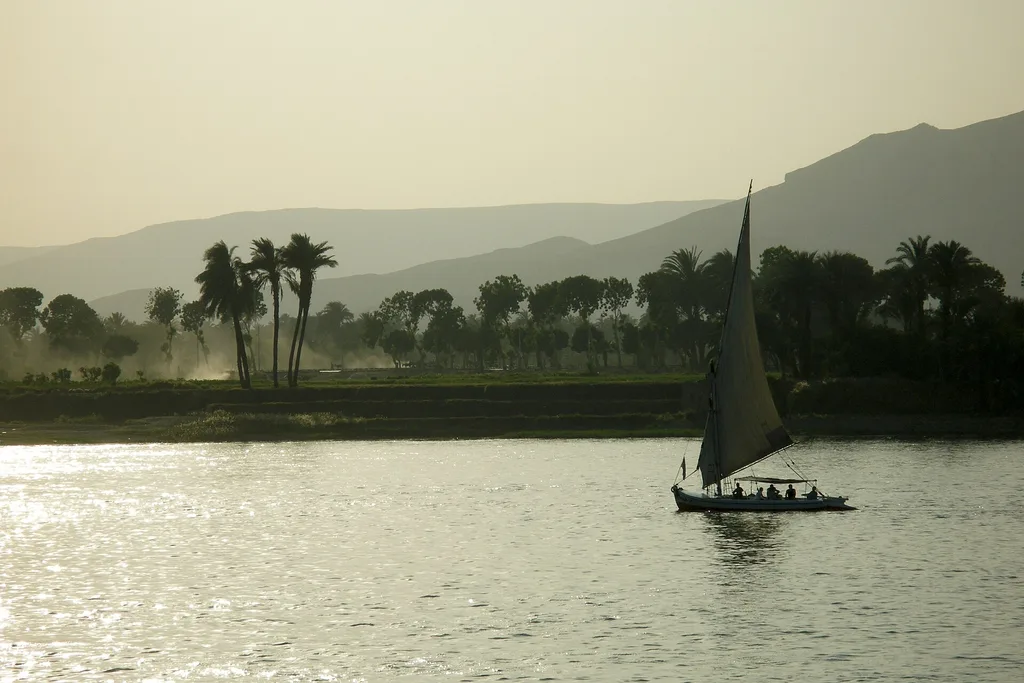
Egypt is the wrong country to visit with a single period in your head, because no single period explains it for long. Stand on the Giza plateau and you are looking at the work of one dynasty of pyramid builders; cross Cairo the same afternoon and you are walking streets laid out a thousand years ago by a different civilisation entirely, under minarets raised by sultans whose names most visitors have never heard. Sail south to Luxor and the temples there were already ancient — already tourist sights, already being restored and argued over — when the Romans arrived. Egypt’s past is not a chapter. It is a stack of them, five thousand years deep, and unusually much of the stack is still standing in stone, in the open, where you can walk into it.
That layering is the whole point of this page. It is not a textbook, and it does not try to settle the arguments scholars are still having. Where the evidence is debated — and for the earliest chapters the chronology genuinely is approximate — it says so, plainly. What it does is tell Egypt’s past in the order a traveller meets it, as one continuous story: the first kings who welded two lands into one state, the pyramid age, the reunified Middle Kingdom, the imperial New Kingdom, the long twilight of foreign kings, the Greek Ptolemies, Rome and the first Christians, the Islamic centuries that built Cairo, the Ottoman province, the canal that redrew the world’s trade routes, and the modern republic that still lives among all of it. Each era ends, in effect, with an address — the place where that chapter is still standing, so that the history stops being background and starts being something you can walk into. For the routes and logistics that turn the story into a trip, our Egypt travel guide is the companion to this page: that guide for the planning, this page for the five thousand years underneath it.
One honest note on dates before the story starts. Egypt’s chronology is built from king lists, inscriptions and astronomy, and the further back it goes the more the dates are scholarly estimates rather than fixed points — the unification of the two lands is conventionally put around 3100 BCE, but “around” is doing real work in that sentence, and the reign dates of early kings can shift by decades between textbooks. The dates this article leans on hardest are the ones no serious account disputes: Alexander’s arrival in 332 BCE, the Roman takeover in 30 BCE, the founding of Cairo in 969, the Ottoman conquest of 1517, the opening of the Suez Canal in 1869 and the revolution of 1952. Everything earlier is given in the broad shape the evidence supports, and no precision is claimed that the evidence cannot carry.
Timeline at a Glance
Here is the whole story on one screen before it is told properly. Twelve eras, each with a place where it still stands. If you only remember one thing from this page, remember the proportions — the pharaohs account for roughly the first three thousand years, and everything since, Greek, Roman, Christian, Islamic and modern, is stacked into the last two thousand and a bit, much of it in a single city, Cairo.
| Era | Dates | Where you see it today |
|---|---|---|
| The first kings | From around 3100 BCE | Abydos, Saqqara, the Narmer Palette |
| The Old Kingdom | Around 2686 to 2181 BCE | Giza, Saqqara, Dahshur |
| The Middle Kingdom | Around 2055 to 1650 BCE | Karnak’s White Chapel, Beni Hasan, the Faiyum |
| The New Kingdom | Around 1550 to 1070 BCE | Karnak, Luxor, the Valley of the Kings, Abu Simbel |
| The long twilight | Around 1070 to 332 BCE | Hibis Temple, Sais, Tanis |
| Ptolemaic Egypt | 332 to 30 BCE | Alexandria, Dendera, Edfu, Philae |
| Roman and Christian Egypt | 30 BCE to 641 CE | Pompey’s Pillar, the Coptic monasteries |
| Early Islamic Egypt | 641 to 969 | Fustat, the Mosque of Ibn Tulun |
| Fatimid and Mamluk Cairo | 969 to 1517 | Al-Azhar, Bab Zuweila, Sultan Hassan |
| Ottoman Egypt | 1517 to 1805 | The Wikala of al-Ghuri, the Citadel |
| Muhammad Ali and the canal century | 1805 to 1922 | The Suez Canal, Khedivial Cairo |
| Modern Egypt | 1922 to today | The High Dam, the Grand Egyptian Museum |
Read the table downwards and you are also reading the map, because Egypt’s eras are not spread evenly along the Nile. The oldest story is in the south and the desert-edge cemeteries of the early capitals. The imperial story belongs to Thebes, modern Luxor. The Greek and Roman story belongs to the Mediterranean coast at Alexandria. The Islamic story belongs overwhelmingly to Cairo, a city the early Islamic centuries founded and every later era enlarged. A single trip that follows the table in order runs the length of the country and back, but even a short trip that crosses two or three rows — Giza plus Islamic Cairo, say, or Luxor plus Dendera — will start to show the layering, and that is the real reward of travelling here with the history in hand.
The First Kings – Unification, Memphis and the Invention of the State
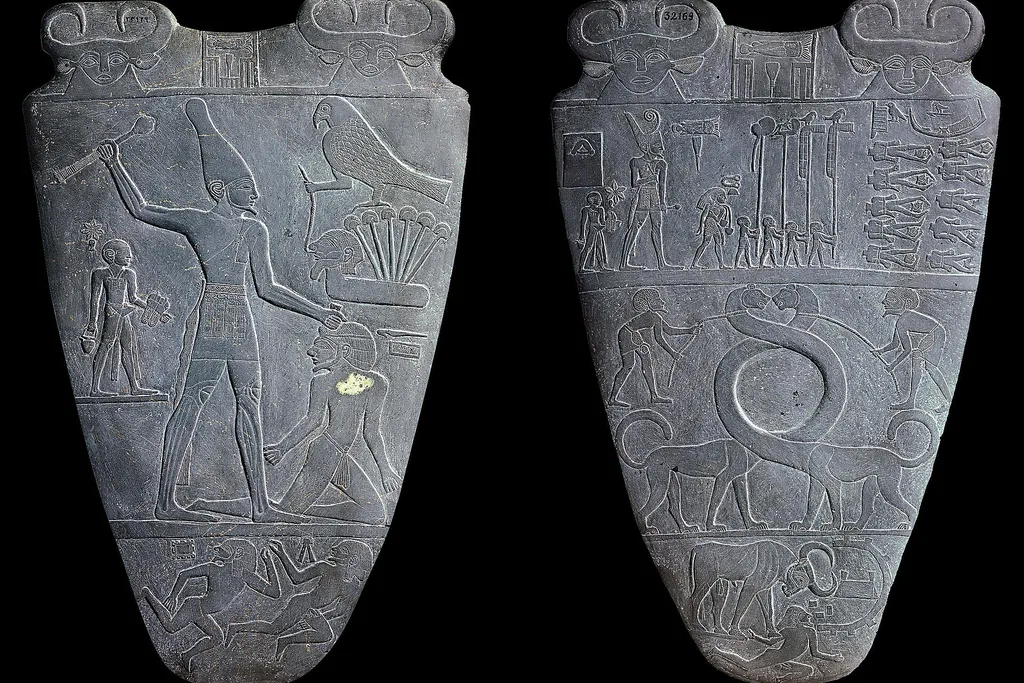
Egypt begins, unusually for so old a civilisation, with a single political act that its own later records remembered: the joining of two lands into one. Along the Nile in the fourth millennium BCE there were farming communities, then chiefdoms, then two loose kingdoms — Upper Egypt, the narrow valley in the south, and Lower Egypt, the broad fan of the Delta in the north. Tradition, recorded by the priest-historian Manetho more than two thousand years later, credited a king called Menes with uniting them; modern scholarship usually identifies the founding figure with Narmer, a king of around 3100 BCE whose carved stone palette shows him wearing the crowns of both lands and striking down an enemy — the first great piece of Egyptian political art, and quite possibly a piece of political theatre as much as a record. The honest position is that unification was probably a process completed around that date rather than a single battle, and that Menes and Narmer may be the same man, two men, or a legend wrapped around both. What is not in doubt is the result: by around 3000 BCE a single state governed the Nile from the Delta to the first cataract, and it lasted, in recognisable form, for three thousand years.
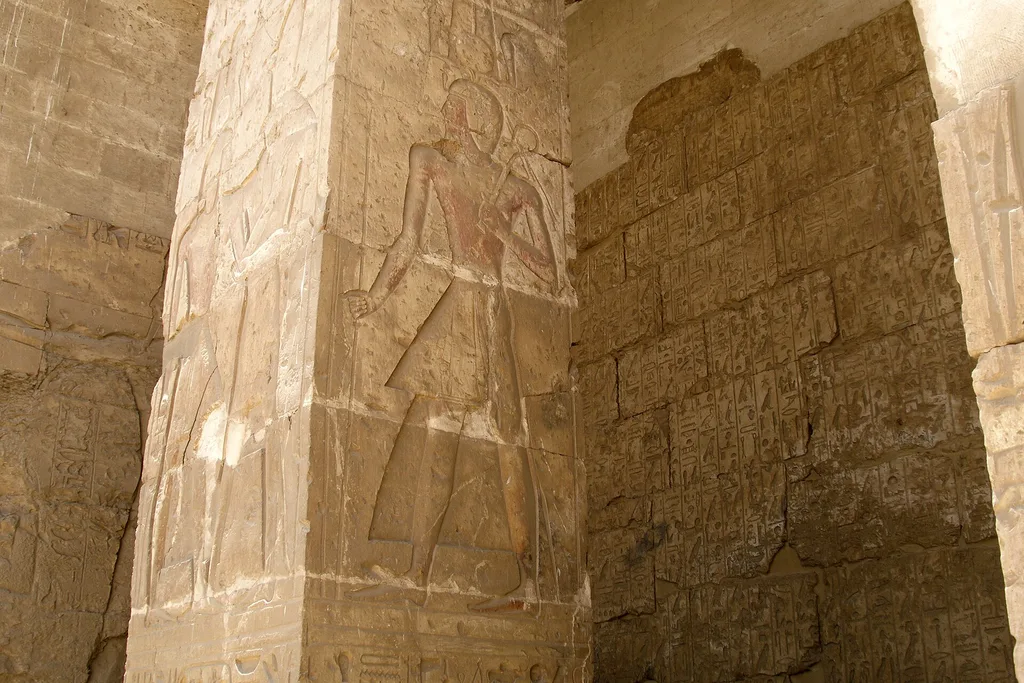
The new state built its capital at Memphis, where the valley meets the Delta — a position that let it command both lands — and around the capital the machinery of the world’s most durable bureaucracy took shape: a king regarded as a god, a vizier and administration, taxation in grain, and a writing system, hieroglyphs, that appears in the record at just this moment, already sophisticated. The kings of the first two dynasties were buried at Abydos, far to the south, in mudbrick tombs that grew steadily grander; their names survive because later Egyptians themselves carved king lists, most famously in the temple of Seti I at Abydos, where a New Kingdom pharaoh is shown reading the names of his predecessors back across fifteen centuries. When you stand in that gallery you are watching Egyptian civilisation in the act of remembering itself — and your list of kings starts in the same darkness theirs did.
For the traveller, this chapter is the hardest to see and the most important to understand, because its monuments are modest next to what came later: early tombs at Abydos and Saqqara, the palette in a museum case, place names rather than pyramids. But everything Egypt became is present in embryo in these two centuries — the divine king, the taxed and measured Nile, the written record, the belief that order, ma’at, had to be maintained against chaos by ritual and administration. The pyramid age did not invent Egypt. It inherited a state already centuries old, and spent its genius making that state visible in stone.
The Old Kingdom – The Age of the Pyramids
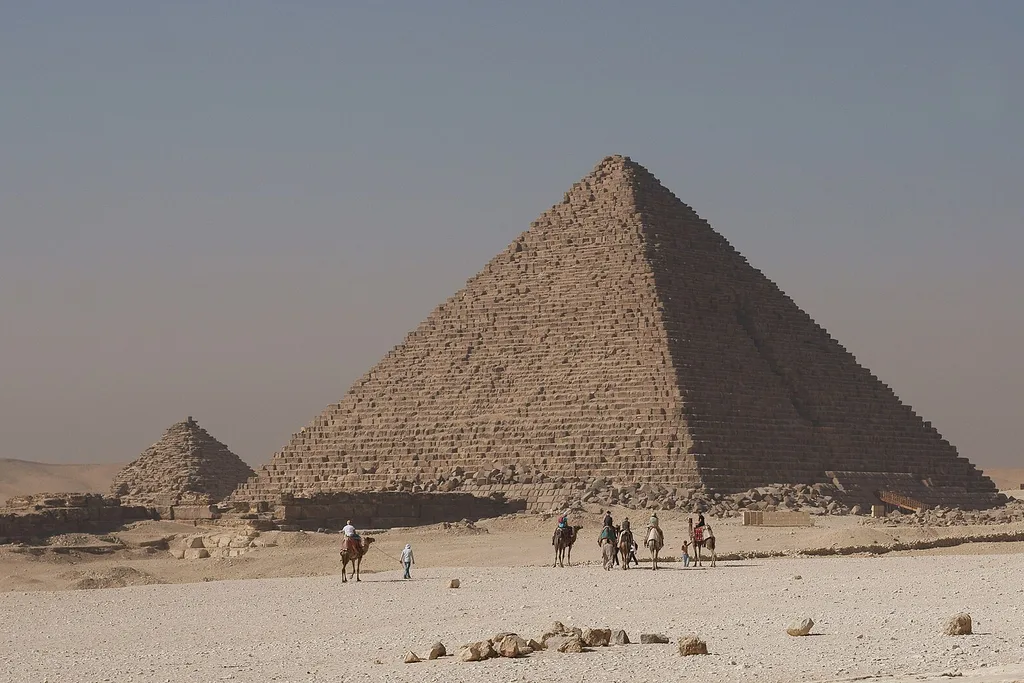
The Old Kingdom, roughly 2686 to 2181 BCE, is the age that built the images the whole world now uses for Egypt, and it began with an experiment. Around 2670 BCE the king Djoser, advised by his official Imhotep — one of the few non-royal Egyptians later ages worshipped as a god — raised at Saqqara a tomb unlike anything before it: a stepped pyramid of stone, stacked mastabas rising some sixty metres over the desert edge. Within a few generations the experiments converged on the true pyramid, and under Khufu, around 2560 BCE, Egyptian builders raised the Great Pyramid of Giza: by most reckonings the tallest structure humans had built, a title it kept for more than three thousand years, and the only one of the famous seven wonders of the ancient world still standing. Khafre’s pyramid and the Great Sphinx followed on the same plateau, then Menkaure’s smaller pyramid, and the age of the giant pyramid closed almost as quickly as it had opened — later Old Kingdom pyramids are smaller, though their interiors carry the Pyramid Texts, the oldest large body of religious writing to survive from Egypt.
It is worth being honest about what the pyramids were and were not. They were royal tombs at the centre of working temple-and-town complexes, built by seasonal labour forces of Egyptian farmers and craftsmen — organised, provisioned and paid in grain and beer on a scale that itself proves the state’s power — not by the slaves of later legend, a picture modern excavation of the builders’ town at Giza has dismantled. The deeper point is what they say about the Old Kingdom state: a government that could survey to astonishing precision, feed tens of thousands of workers, and aim a king’s tomb at the stars was one whose reach ran the length of the Nile. Solar religion grew with the pyramids; the king was the son of Ra, and the pyramid’s shape itself may have spoken of sunbeams and ascent, though — as so often in this period — the symbolism is argued over and this article will not pretend otherwise.
The Old Kingdom did not fall in a single blow. Across the sixth dynasty royal authority thinned, provincial governors grew into hereditary local powers, and a run of low Nile floods, recorded in the anxious literature of what followed, strained the grain economy the whole system rested on. Around 2181 BCE central government dissolved into the First Intermediate Period, a century and more of rival kingdoms that Egyptian tradition remembered with horror and modern historians read more coolly — a fragmented, poorer Egypt, but not an empty one. For the traveller the age needs no advocacy: Giza at dawn, Saqqara’s step pyramid alone on the desert edge, and the smaller fields at Dahshur are the chapter, standing exactly where the Old Kingdom left them.
The Middle Kingdom – The Country Put Back Together
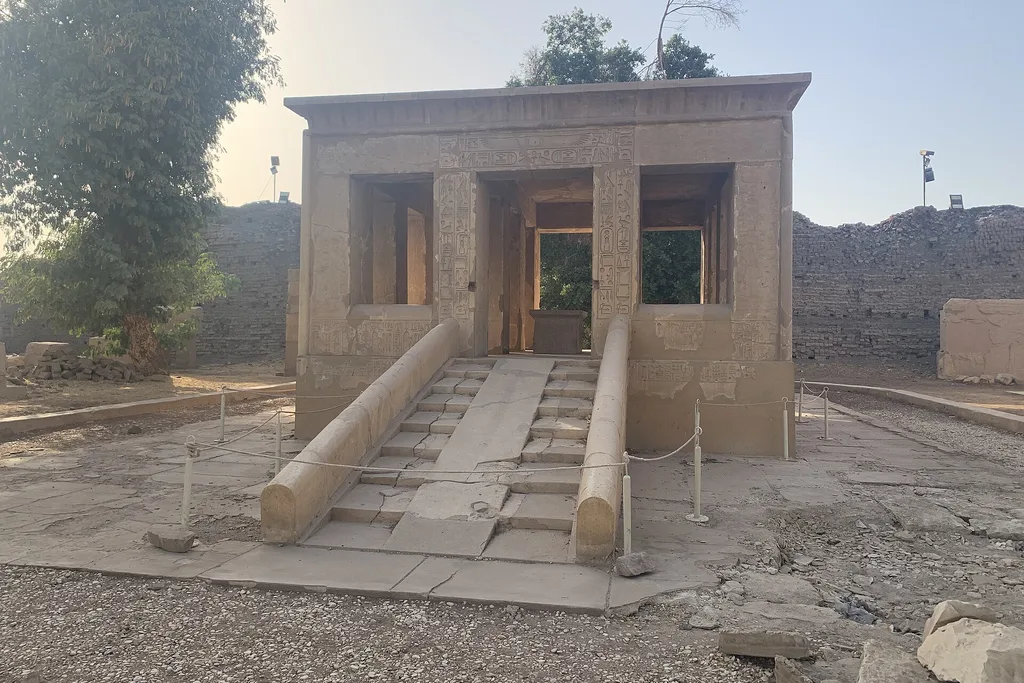
The Middle Kingdom, roughly 2055 to 1650 BCE, is the chapter visitors most often skip, and it is in some ways the most human of all of them. Egypt was reunified around 2055 BCE by Mentuhotep II, a Theban king who fought his way north and was remembered, rightly, as a second founder; his terraced mortuary temple at Deir el-Bahari, built against the cliffs of western Thebes, set the architectural pattern Hatshepsut’s more famous temple would follow five centuries later on the neighbouring terrace. The kings of the twelfth dynasty who followed, the Senusrets and Amenemhats, were administrators as much as builders: they re-centralised the state, curbed the provincial governors who had grown too strong, pushed Egypt’s frontier south into Nubia behind a chain of massive mudbrick fortresses, and drained and farmed the Faiyum oasis southwest of Memphis in one of the ancient world’s great land-reclamation projects.
What survives from the Middle Kingdom is different in kind from the Old Kingdom’s monuments, and that is precisely its interest. At Karnak, the White Chapel of Senusret I — a small, exquisitely carved alabaster shrine — was dismantled in a later age and its blocks used as fill inside a New Kingdom pylon, then recovered by archaeologists and rebuilt stone by stone in the open-air museum, where it stands today as the single finest piece of Middle Kingdom craftsmanship a visitor can walk around. Elsewhere the era survives as the painted tomb chapels of officials at Beni Hasan, with their wrestlers, dancers and scenes of ordinary life, and as literature: the Middle Kingdom is when Egyptian writing found its classical voice, in stories and teachings that Egyptians themselves copied for a thousand years. This was also the age that worried — its most famous poem is a dialogue between a man and his own soul — and that self-questioning, preserved on papyrus while the pyramids keep their silence, makes it the first Egyptian century that feels like it has an interior life.
The end came by erosion from the north. As central power weakened in the thirteenth dynasty, immigrants from the Levant settled thickly in the eastern Delta and, in the disorder of the seventeenth century BCE, their rulers — the Hyksos, “rulers of foreign lands” — took power at Avaris and governed the north for about a century, while a native dynasty held Thebes in the south. Later Egyptian propaganda painted the Hyksos as a catastrophe; the archaeology shows a more complicated picture of trade, technology transfer — the horse and chariot came to Egypt in these years — and gradual takeover. Either way, the humiliation of a divided, foreign-ruled Egypt burned itself into the Theban kings’ memory, and what they built in response changed Egypt from a kingdom into an empire.
The New Kingdom – Empire, Gold and the Great Temples
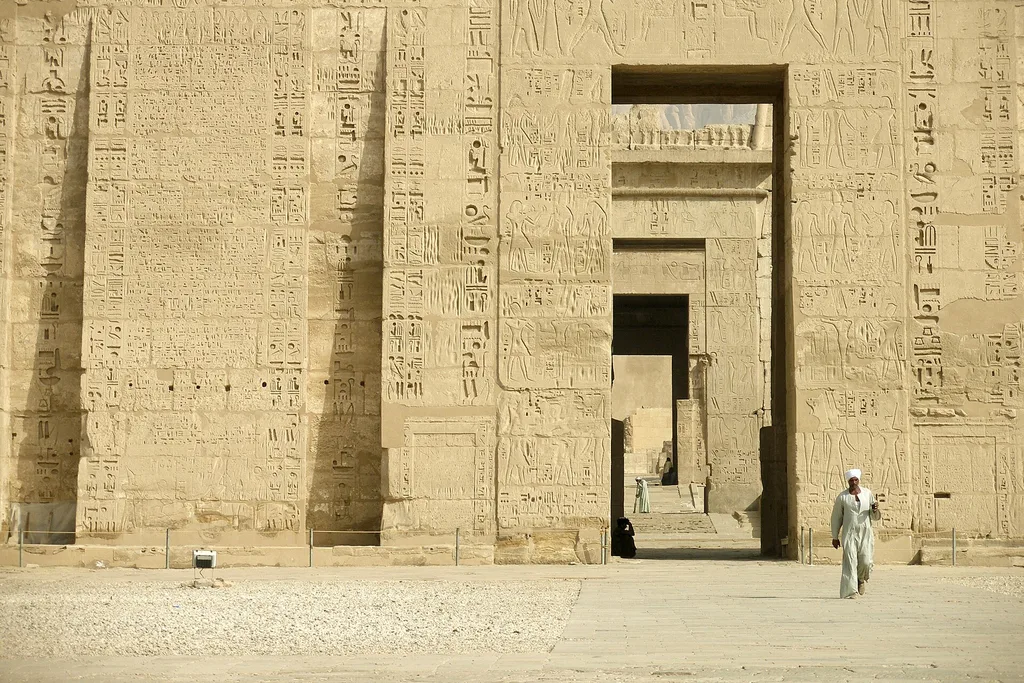
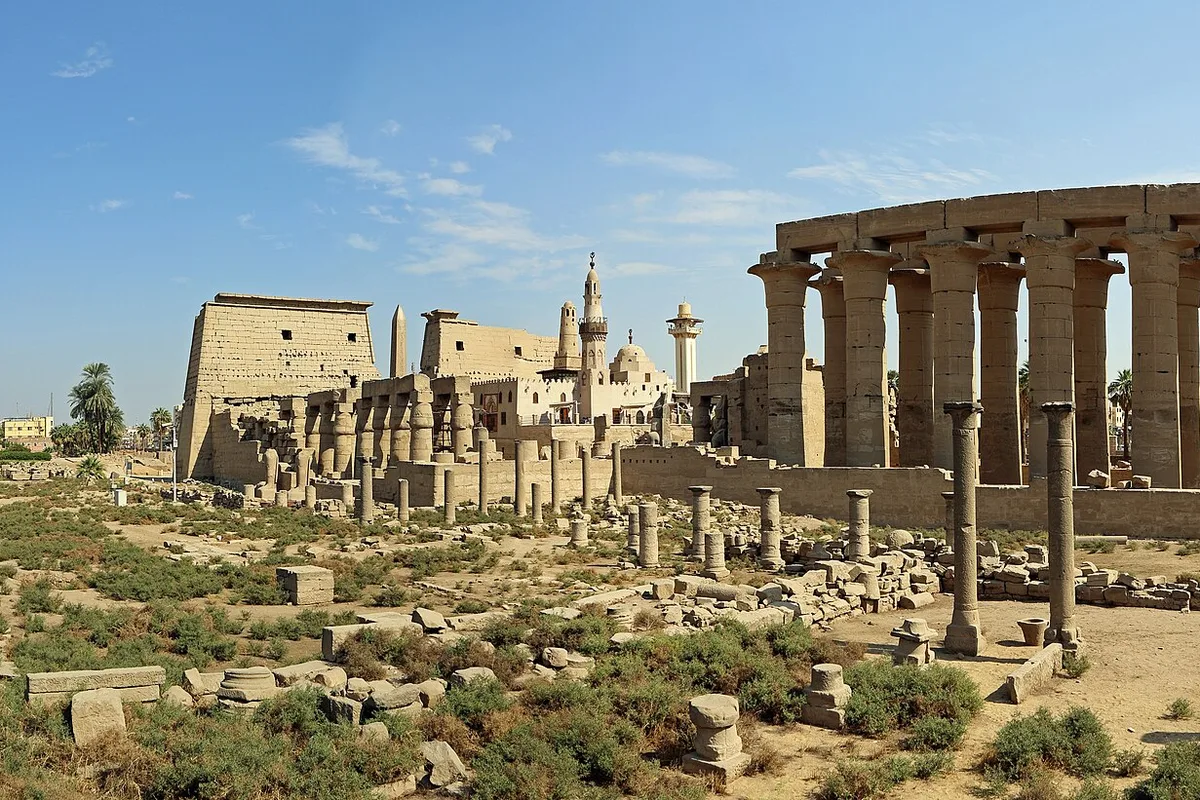
Around 1550 BCE the Theban king Ahmose expelled the Hyksos and reunified Egypt, and his successors drew the conclusion the Hyksos century had taught them: never again be the invaded — be the invader. The New Kingdom, roughly 1550 to 1070 BCE, is Egypt at maximum extent and maximum self-confidence: an empire running south to the fourth cataract in Nubia and north-east to the Euphrates, gold flowing in from Nubian mines, and a building programme that filled Thebes — modern Luxor — with the greatest concentration of temples on earth. Our Luxor Temple guide walks the greatest of the east-bank temples in detail. At Karnak, generation after generation added pylons, courts and obelisks to the temple of Amun for five hundred years; across the river, the kings cut their tombs into the Valley of the Kings rather than advertising them with pyramids, and raised their mortuary temples along the desert edge, Hatshepsut’s terraced masterpiece among them. Hatshepsut herself — a queen who ruled as king for two decades, sent a famous trading expedition to Punt, and was nearly erased from the record by her successor — is one of the era’s several outsized figures, alongside the warrior Thutmose III, the heretic Akhenaten, whose brief revolution for a single sun-god convulsed Egyptian religion before being undone, and the boy king Tutankhamun, remembered today less for his reign than for the luck that left his tomb almost intact.
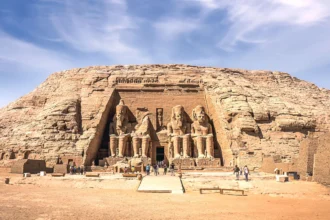
The era’s most famous king, Ramesses II, reigned for sixty-six years in the thirteenth century BCE, built on a scale matched by almost no one — Abu Simbel, the Ramesseum, additions everywhere — and fought the Hittites of Anatolia to a draw at Kadesh around 1274 BCE before concluding with them, around 1259 BCE, a peace treaty that survives in both sides’ versions: the earliest surviving international peace treaty anywhere, and the document that links this story to the history of Turkey, whose kings were the other signatories. Travellers meet the New Kingdom everywhere in Upper Egypt, because it built in stone meant for eternity and largely got its wish: Medinet Habu, the mortuary temple of Ramesses III on Luxor’s west bank, preserves the era’s last great victory reliefs on its pylons, recording wars against the Sea Peoples in the twelfth century BCE — campaigns Ramesses III won, even as the world around Egypt was coming apart.
That unravelling is the honest end of the chapter. The Late Bronze Age world system — the web of empires and trade that Egypt’s empire depended on — frayed in the twelfth century for reasons historians still debate: invasion, drought, internal revolt and systems collapse all have their evidence and their advocates, and this article will not crown one of them. What is certain is the outcome. Nubia was lost, the empire in Asia evaporated, royal authority was contested by the high priests of Amun at Thebes, and around 1070 BCE the New Kingdom ends with Egypt splitting into a north ruled from Tanis and a south run, in effect, by Amun’s priesthood. The temples of Luxor stand as the record of the five most confident centuries in Egyptian history; the silence after them lasted, in one form or another, for seven hundred years.
The Long Twilight – Foreign Kings, Persian Rule and the Last Pharaohs
The seven centuries between the New Kingdom and Alexander are usually told as a long decline, and the truth is more interesting than the label. Egypt in the Third Intermediate Period, roughly 1070 to 664 BCE, was politically divided for much of the time — rival lines of kings in the north, priest-kings at Thebes, Libyan military families ruling Delta cities — but it was not culturally dead: its craftsmen produced metalwork and jewellery of extraordinary refinement, and its religion deepened rather than faded. Then, in the eighth century BCE, the wheel turned in a direction no summary expects: kings from Kush, the Nubian kingdom to the south that Egypt had once conquered, conquered Egypt in their turn, reunified it as the twenty-fifth dynasty, and ruled as self-consciously traditionalist pharaohs, building at Karnak and restoring old cults, until Assyrian invasions from the north drove them back to Nubia. Their pyramids — for the Kushite kings built pyramids of their own, in Sudan, where more pyramids stand today than in Egypt itself — are this period’s most startling legacy.
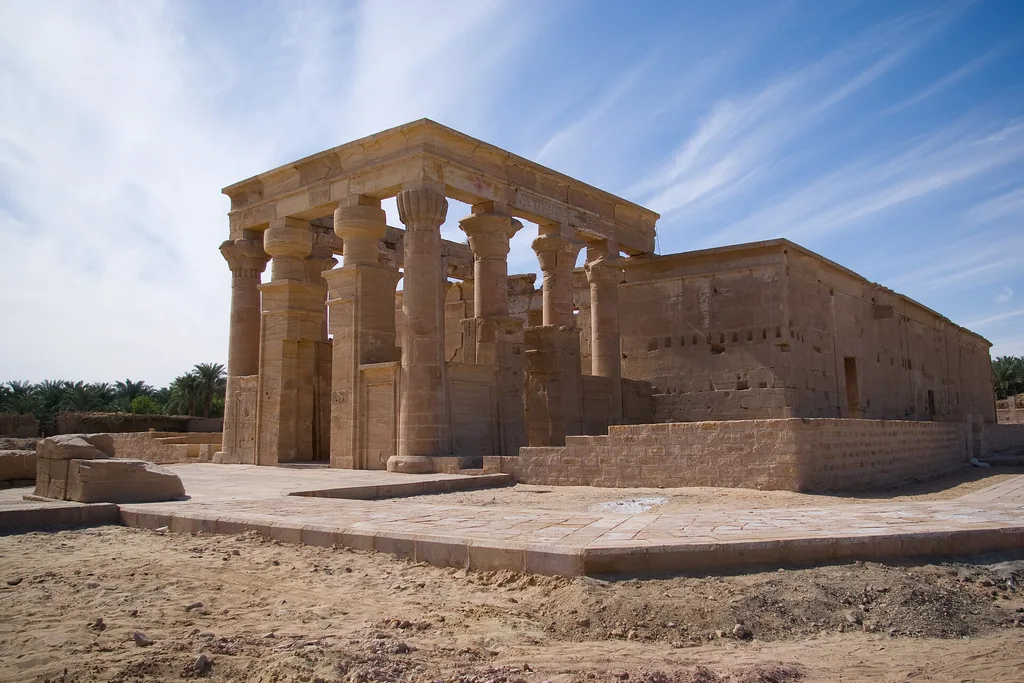
There was one more flowering of native rule, and Egyptians remembered it as a golden afternoon. The Saite kings of the twenty-sixth dynasty, from 664 BCE, reunified the country from their Delta capital at Sais, revived classical Egyptian art and language with deliberate archaism, traded across the Mediterranean with Greek merchants and mercenaries — Greek soldiers scratched their names on the legs of Ramesses II’s colossi at Abu Simbel, graffiti that is still there — and held the great powers at bay for over a century. It ended with Persia. Cambyses conquered Egypt in 525 BCE, and Egypt became a province of the Achaemenid Empire, ruled from afar with intervals of successful revolt. The Persian period left one of its finest monuments far from the Nile: the Temple of Hibis in the Kharga Oasis, decorated under Darius I, standing in the Western Desert as the best-preserved Egyptian temple of its era, proof that the old religion carried on building under foreign kings who presented themselves, shrewdly, as pharaohs.
Native rule returned for two final generations in the fourth century BCE — the last native dynasty, the thirtieth, whose Nectanebo II was the last Egyptian-born pharaoh — before Persia retook the country in 343 BCE and held it for a decade. So when Alexander of Macedon arrived in 332 BCE, he was received by many Egyptians less as a conqueror than as a liberator from the Persians, and he was careful to behave as one: travelling to the oracle of Amun at Siwa Oasis, in the far western desert, to be recognised as the god’s son. The three-thousand-year age of the pharaohs was over in everything but form. What replaced it, remarkably, kept the form — Greek kings ruling as pharaohs, building Egyptian temples in Egyptian style — for another three centuries.
Ptolemaic Egypt – Greek Kings, Egyptian Gods
When Alexander died in 323 BCE, his empire was divided among his generals, and Egypt fell to Ptolemy, who founded the dynasty that would rule it for nearly three hundred years — the longest-lived of all the successor kingdoms. The Ptolemies’ capital was Alexander’s own foundation, Alexandria, planted on the Mediterranean shore in 331 BCE and unlike anything Egypt had had before: a Greek city of harbours, colonnades and palaces, whose great lighthouse, the Pharos, was counted among the wonders of the world, and whose library and Mouseion drew scholars from across the Greek world. How great the library truly was, how many scrolls it held and exactly how it was lost are all, honestly, argued over — ancient sources give enormous figures that modern historians treat with caution, and its destruction was probably a long attrition rather than a single famous fire — but that Alexandria was the intellectual capital of its age is not in doubt, and the city’s scholars, from Euclid to Eratosthenes, worked in the shadow of its collections.
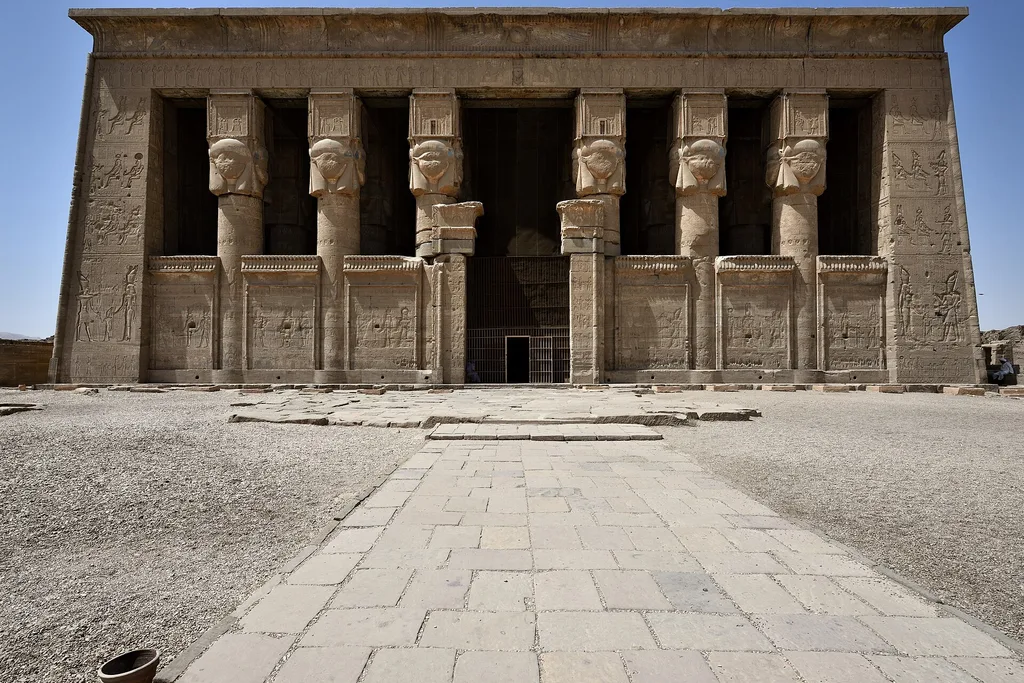
The striking thing about Ptolemaic rule, for a traveller, is how Egyptian it looks on the ground. The dynasty’s wealth came from the Nile valley’s grain, and its kings bought legitimacy in the old currency: temples. The great sanctuaries that visitors love in Upper Egypt — Edfu, Kom Ombo, Philae, and the Temple of Hathor at Dendera, whose facade of goddess-faced columns still stops travellers in their tracks — are overwhelmingly Ptolemaic buildings, Egyptian in theology, iconography and language, raised by Greek kings who had themselves carved on the walls in pharaonic dress, offering to gods their court in Alexandria barely worshipped. Two cultures ran in parallel — Greek Alexandria and Egyptian Egypt, different languages, different laws — meeting mainly through taxation and temples, and the arrangement, for all its tensions and periodic revolts in the south, held for an extraordinarily long time.
The end of the dynasty is the most famous story in Egyptian history and the least Egyptian part of it: Cleopatra VII, the last Ptolemy, the only one of her line who troubled to learn the Egyptian language, allied herself first with Julius Caesar and then with Mark Antony, and gambled the kingdom on Rome’s civil wars. She lost. After the battle of Actium in 31 BCE and the fall of Alexandria the next year, Cleopatra and Antony were dead, Egypt’s treasury sailed to Rome, and in 30 BCE the country that had been a great power, on and off, for three thousand years became a province — the personal estate, in effect, of the Roman emperor. The temples went on being built and decorated under Roman emperors for centuries more, but the decisions about Egypt were now made elsewhere, and they would be made elsewhere for the next two thousand years.
Roman and Christian Egypt – The Empire’s Granary and the Desert Fathers
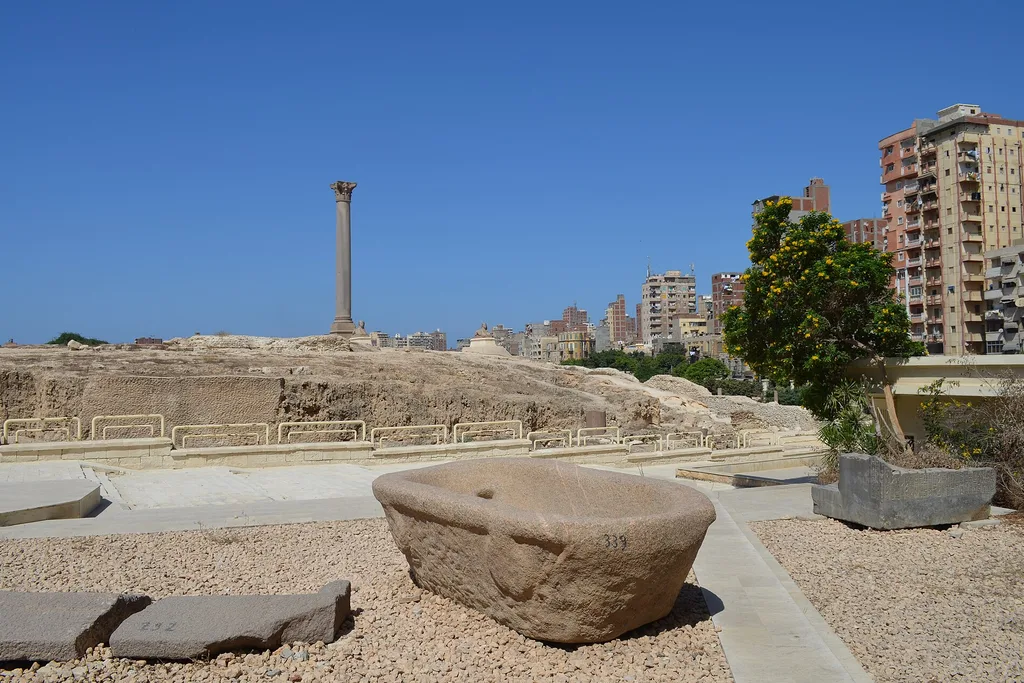
Rome ruled Egypt for nearly seven centuries, and it ruled it, above all, as a farm. The province’s grain fed the city of Rome and later Constantinople, its taxes were among the empire’s richest, and its emperors governed it through a prefect answerable to themselves alone — senators were famously forbidden even to visit without permission, so valuable and so sensitive was the prize. Alexandria remained a great and turbulent city, Greek in culture, home to a large Jewish community and to schools of philosophy and medicine, and periodically to riots that shook the empire. The era’s most visible Alexandrine survivor is a monument with a lying name: Pompey’s Pillar, a colossal granite column raised around 297 CE for the emperor Diocletian on the acropolis of the Serapeum, the great temple of Serapis. It has nothing to do with Pompey — the name is a medieval travellers’ error — and the temple it honoured is gone; the pillar still stands over the modern city, among the fallen columns and carved blocks of the sanctuary it guarded.
Egypt’s second great gift to the Roman world was a religion Rome at first persecuted. Christianity reached Egypt early — tradition gives the evangelist Mark as Alexandria’s founder — and spread with a speed and depth few provinces matched, taking root in Egyptian villages as much as in Greek Alexandria and giving the Egyptian language its final written form, Coptic, written in Greek letters. When the empire turned Christian, Egypt became one of its theological engines and, characteristically, one of its great dissenters: the Christological arguments of the fifth century left the Egyptian church estranged from Constantinople, a division whose consequences ran for centuries. Egypt also gave Christianity monasticism. In the late third and fourth centuries, men and women withdrew to the desert edges in their thousands — Anthony, the most famous of the desert fathers, retreated into the Eastern Desert in stages from around 270 CE — and the monasteries they founded, some of them still living communities in Wadi Natrun and by the Red Sea, are among the oldest Christian institutions on earth.
The old religion died slowly, and its death certificate is one of history’s poignant documents. On the island of Philae, far in the south where Egyptian cults held out longest under treaty protection, a priest carved a hieroglyphic inscription in 394 CE that is generally regarded as the last dated hieroglyphic text anywhere: after three and a half thousand years, the script of the pharaohs falls silent in the written record, within living memory of the empire that was closing its temples. Within two and a half centuries the world the inscription belonged to was transformed twice over — first by the division of the Roman Empire, which left Egypt to the Byzantine east, and then, in 641, by the arrival of an army from Arabia carrying a new faith and a new language, which would change Egypt more permanently than Rome ever had.
Early Islamic Egypt – Fustat, Ibn Tulun and a Century of Change
The Arab conquest of Egypt, completed between 639 and 642 under the general Amr ibn al-As, was fast as conquests go and slow as transformations go, and the difference matters. Egypt changed rulers in a campaigning season; it changed its language and its majority faith across centuries. The conquerors founded a garrison city, Fustat, beside the Roman fortress of Babylon on the Nile’s east bank, and there Amr raised the mosque that bears his name — rebuilt so many times since that little of the seventh century survives in its fabric, but the site itself is the founding monument of Islamic Egypt. For two centuries Egypt was governed from abroad, first by the Umayyad and then the Abbasid caliphs, while Arab tribes settled, Arabic spread through administration and daily life, and Egyptians converted gradually — a matter of generations of individual decisions shaped by taxation, opportunity and conviction, not a single moment, whatever later summaries on either side imply.
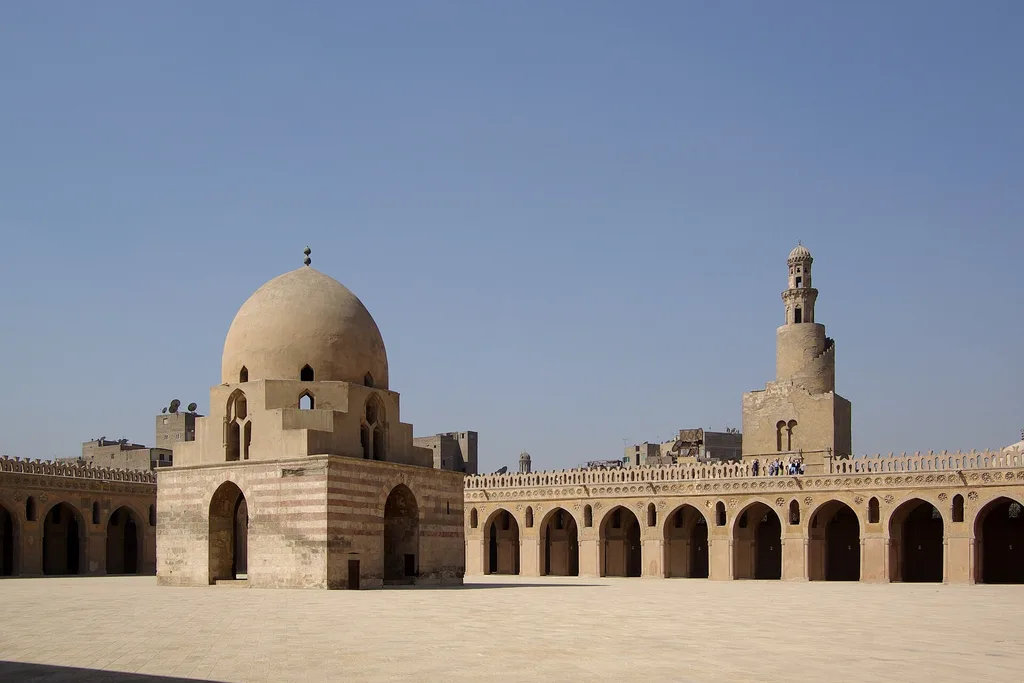
The first ruler to make Egypt a power in its own right again was, fittingly, a governor who stopped obeying. Ahmad ibn Tulun, sent from Baghdad in 868, built his own dynasty, his own capital city beside Fustat, and in 876 to 879 the mosque that carries his name — a vast, austere, brick-and-plaster masterpiece built around a spiral minaret unlike anything else in Egypt, and often described as the oldest mosque in Cairo still standing close to its original form. The Tulunids fell within a generation of his death, and Egypt passed back to direct Abbasid rule and then to the Ikhshidids, but the pattern Ibn Tulun set — Egypt as the prize and the platform of ambitious soldiers, governed from a new city planted beside the old — would repeat for a thousand years. Almost nothing of his capital survives but the mosque, alone above the rooftops of the modern district, keeping the memory of a city that otherwise vanished.
By the middle of the tenth century, then, Egypt was an Arabic-speaking country with a large and growing Muslim majority and a substantial Coptic Christian minority whose church, language and monasteries carried the pharaonic country’s last living threads into the new age. Its cities were Fustat, by then a great commercial metropolis, and the string of gubernatorial palaces to its north. What it did not yet have was a capital of its own built to imperial scale, or a dynasty that saw Egypt not as a province to be taxed but as the centre of an empire. Both arrived, from the west, in 969 — and the city they founded is the one you will spend much of your trip inside.
Fatimid and Mamluk Cairo – The City That Still Crowns the Skyline
In 969 a general of the Fatimid caliphate — a Shia dynasty risen in North Africa and claiming descent from the Prophet’s daughter Fatima — conquered Egypt and did the most consequential piece of town planning in the country’s Islamic history: beside Fustat he founded a new royal city and named it al-Qahira, the Victorious. We call it Cairo. Within its walls the Fatimids raised al-Azhar mosque in 970 to 972, which grew into one of the oldest universities in the world and a seat of Islamic learning that still anchors the old city; they ringed Cairo with stone walls and gates, of which Bab Zuweila and its northern brothers still stand; and for two centuries Egypt was, for the first time since the pharaohs, the capital of an empire rather than a province of one. The Fatimid century was also, by the standards of its age, a strikingly plural one — Christians and Jews held high office, the Coptic church endured, and Cairo’s markets traded with India and Italy alike — though it had its persecutions too, and this article will not polish it into a golden age.
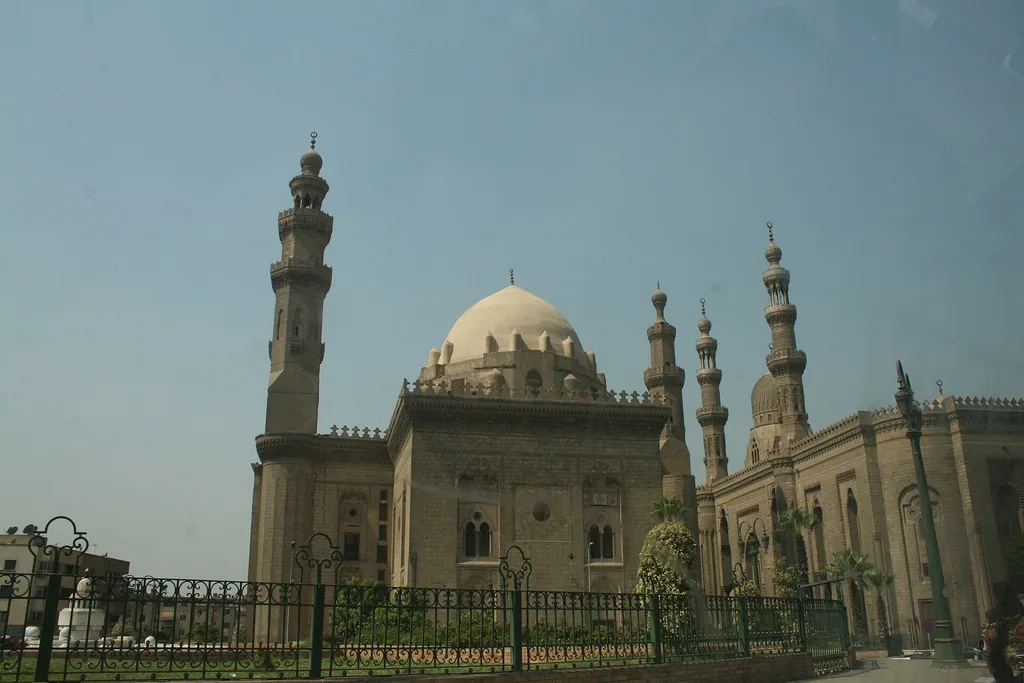
The Fatimids were succeeded, after the Crusades made Egypt the shield of the Islamic east, by Saladin and his Ayyubid dynasty — Saladin, the Kurdish general who retook Jerusalem in 1187 and began Cairo’s Citadel in 1176 — and then, in 1250, by the most improbable ruling caste in Egypt’s long history: the Mamluks, slave-soldiers bought as boys from the Eurasian steppe, trained as cavalry, freed into service, and for two and a half centuries the sultans of Egypt and Syria. Mamluk Cairo is the city a traveller actually sees. Their sultans and emirs endowed mosques, madrasas, mausoleums, hospitals, markets and caravanserais on a scale funded by the spice trade between Asia and Europe, and the skyline of minarets that earned Cairo its nickname — the city of a thousand minarets — is overwhelmingly their work. Its supreme monument is the mosque-madrasa of Sultan Hassan, built 1356 to 1363, a stone giant whose mausoleum dome and minaret — the tallest of medieval Cairo — still dominate the square below the Citadel; its builders worked through years that included the Black Death’s arrival in 1347, which killed a large share of the city’s people and returned for generations.
The Mamluk sultanate was brilliant, violent and increasingly strained — sultans were made and murdered with regularity, the spice revenues that paid for the minarets were undercut after 1498 when Portuguese ships opened a sea route to India around Africa, and the treasury thinned. Even so, the last Mamluk sultans built superbly to the end: the Wikala of al-Ghuri, a merchants’ inn of 1504 to 1505, belongs to their final decade. In 1516 and 1517 the Ottoman sultan Selim I destroyed Mamluk armies in Syria and then at Ridaniya, outside Cairo, and Egypt changed masters again — this time for nearly three centuries, and this time into a subordination so complete that Cairo, the imperial capital of two eras, became a provincial city.
Ottoman Egypt – A Province of Empire, Run From Afar
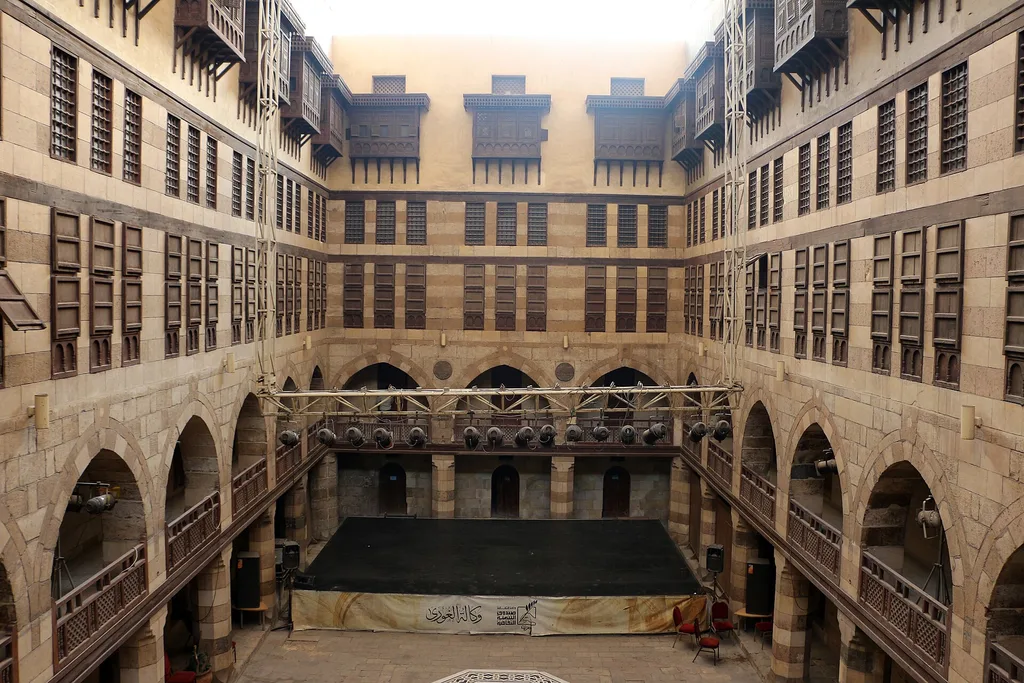
Ottoman Egypt, from 1517 to the beginning of the nineteenth century, is the quietest long chapter in this story, and its quietness needs explaining rather than apologising for. Selim I carried off to Constantinople not only Egypt’s sovereignty but, in the traditional account, its caliphate and much of its treasure; what he left behind was a province governed by a pasha sent from Istanbul, garrisoned by Ottoman troops, and taxed for the imperial treasury. But the conquest had a complication the Ottomans never quite solved: the Mamluks. The sultanate was destroyed, but the Mamluk system — households of military slaves, their beys and their factions — reconstituted itself inside the Ottoman order, and by the eighteenth century Egypt was run in practice by rival Mamluk beys who treated the Ottoman governor as a guest in his own province. Cairo shrank from imperial capital to a rich but second-rank city, its great age of building behind it, though never entirely still: Ottoman-era mosques, sabils and houses filled its streets, the coffee trade through Mocha made fortunes, and the Wikala of al-Ghuri and a hundred buildings like it went on housing merchants, goods and travellers as they had since the last Mamluk years.
What reached Egypt from the wider Ottoman world was real but refracted — an imperial style softened by local craft, Turkish officials who came and went, and a country whose intellectual life, by most accounts, dimmed relative to its Mamluk brilliance even as al-Azhar continued to draw students from across Africa and Asia. For the ordinary run of Egyptians, the centuries divide less neatly than the dynasties suggest: the Nile flooded or failed, the grain was taxed, the caravans left for Jeddah and the spice ports, and Cairo’s quarters lived their own dense lives behind their gates. It is also fair to say that Ottoman Egypt’s reputation as a stagnant backwater was written largely by the men who arrived to conquer it next, and modern historians treat the old picture with more care than the textbooks used to.
The end came suddenly, from the sea. In 1798 Napoleon Bonaparte landed at Alexandria with a French army and a staff of scholars, defeated the Mamluk beys at the battle of the Pyramids — fought, whatever the legend implies, within sight of them only in the loosest sense — and occupied Cairo. The occupation lasted three years and failed militarily; culturally it detonated. The French savants surveyed, measured and drew the whole country for the great Description de l’Égypte, and in 1799 French soldiers rebuilding a fort near Rosetta turned up a black stone slab carved with the same decree in three scripts — hieroglyphs, demotic and Greek — which, after it passed to the British, gave scholars the key they had sought for centuries. In 1822 Jean-François Champollion announced the decipherment of hieroglyphs, and pharaonic Egypt, silent for fourteen hundred years, became readable again. The French left in 1801, the Mamluk beys were finished as a power, and into the vacuum stepped an Albanian officer in Ottoman service named Muhammad Ali.
Muhammad Ali and the Canal Century – Egypt Remade at Speed
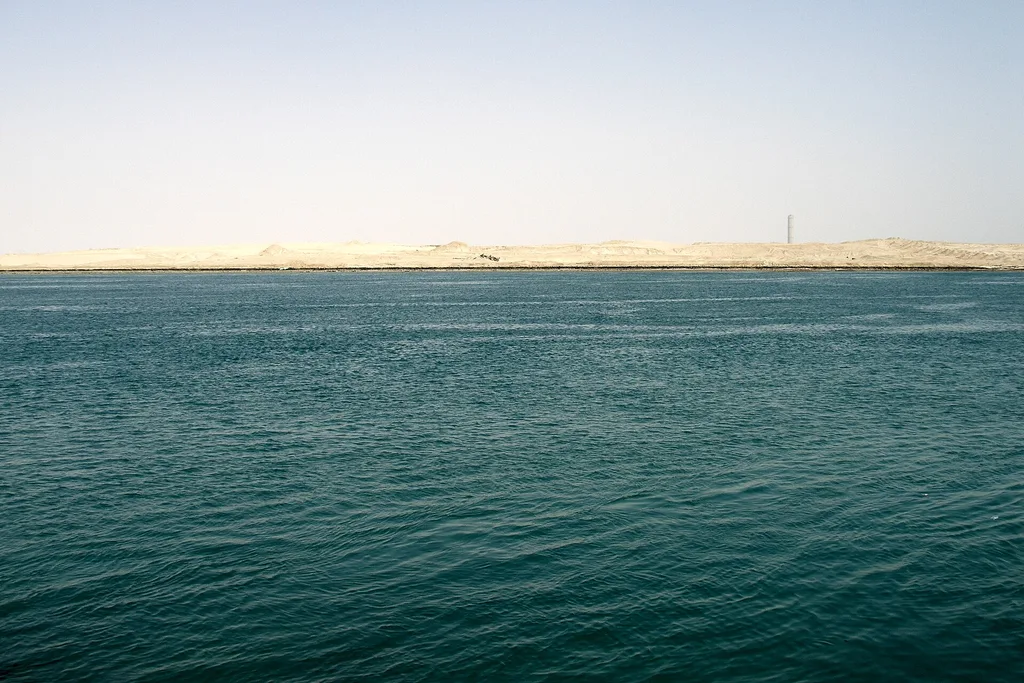
Muhammad Ali, who secured power in 1805 and destroyed the last Mamluk beys in a notorious Citadel massacre in 1811, is conventionally called the founder of modern Egypt, and for once the convention is roughly fair. In four decades he and his dynasty built a centralised state of a kind Egypt had not had in centuries: a modern army and navy, factories and schools, missions of students to Europe, long-staple cotton planted across the Delta as a cash crop that tied Egypt’s economy to Lancashire’s mills, and an empire of his own that at its height took his armies into Arabia, Sudan, Greece and to the gates of Constantinople, twice. The European powers, determined that no Egyptian sultan should replace the Ottoman one, forced him back in 1840 to hereditary rule of Egypt alone — but hereditary it was, and his family would reign, under mounting foreign constraint, until 1952. The traveller meets his Cairo everywhere downtown without knowing it, and meets him literally in the great alabaster mosque he raised on the Citadel, visible over the old city.
His grandson Ismail, who reigned from 1863, tried to finish the transformation in a decade and paid for the ambition with the country. Ismail rebuilt central Cairo as a modern European-style city of boulevards and gardens beside the medieval one, extended railways and telegraphs, and in 1869 presided over the opening of the Suez Canal — the sea-level waterway, dug over ten years under Ferdinand de Lesseps with Egyptian labour whose cost in lives remains honestly disputed, joining the Mediterranean to the Red Sea and cutting the voyage between Europe and Asia by weeks. The canal made Egypt the hinge of the world’s shipping and, in the cruellest of sequences, the prize no great power would leave alone: Ismail’s debts forced the sale of Egypt’s canal shares to Britain in 1875 and foreign control of his treasury soon after, and in 1882, after a nationalist revolt under the officer Ahmed Urabi, Britain bombarded Alexandria and occupied the country. Egypt remained nominally Ottoman, then nominally independent, but the British consul-general was its effective ruler for decades.
The canal century’s ledger is therefore honestly double-sided, and a traveller reads it in the landscape: a modern capital and an ancient debt, a waterway that enriched world trade while its profits flowed abroad, an occupying power that built irrigation works and stayed seventy years. Egyptian nationalism, born in this friction, matured through the First World War and exploded in the revolution of 1919; in 1922 Britain issued a unilateral declaration of Egyptian independence that kept so much in British hands — the canal, defence, Sudan — that Egyptians called it independence in name only, though it did bring a constitution, a parliament and a king, Fuad, in place of a sultan. The same year, in the Valley of the Kings, Howard Carter’s excavation uncovered the intact tomb of Tutankhamun, and the world’s newspapers discovered that the oldest Egypt could still make the newest headlines — a coincidence of dates that neatly frames the chapter: a country negotiating its modern sovereignty while holding, quite literally, the keys to antiquity.
Modern Egypt – Republic, High Dam and a New Century
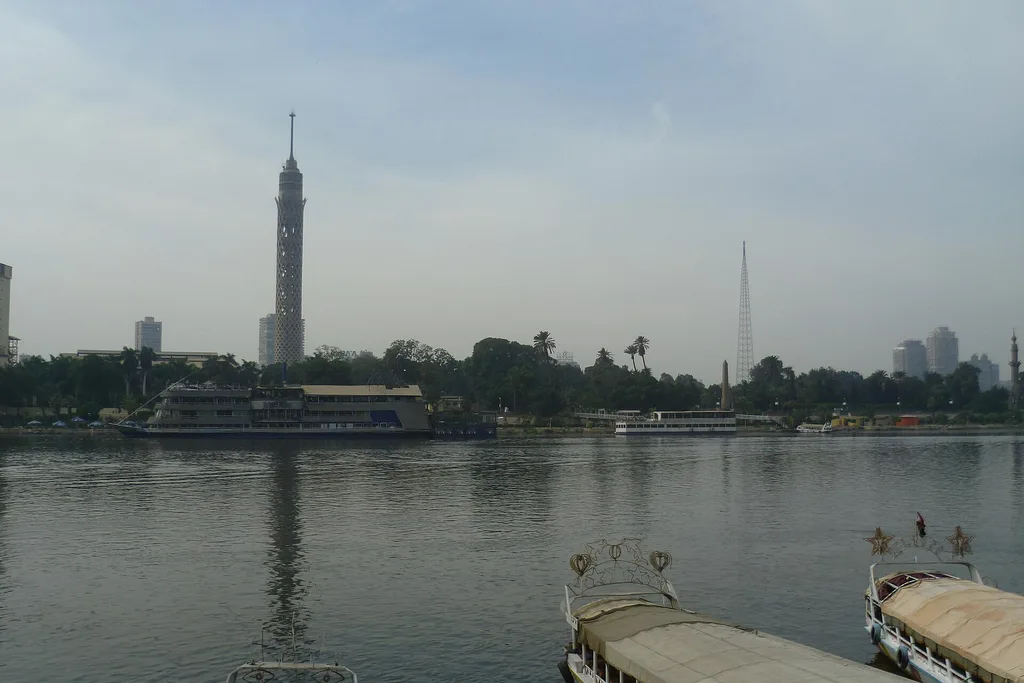
The monarchy Muhammad Ali founded ended the way it had often governed — in negotiation with a foreign power that no longer convinced anyone. After the Second World War, with British troops still in the canal zone and the 1948 war in Palestine lost, a group of army officers seized power in July 1952, exiled King Farouk, and in 1953 proclaimed the republic Egypt still is. Its defining figure, Gamal Abdel Nasser, nationalised the Suez Canal in 1956 and survived the tripartite attack by Britain, France and Israel that followed — a political victory that made him the hero of the Arab world — and then spent Egypt’s energies on Arab unity projects, a vast expansion of education and land reform, and wars that ended, in 1967, in a defeat whose consequences ran for decades. His successor Anwar Sadat reversed the alliances, recovered Sinai through the 1973 war and the peace treaty with Israel that followed in 1979 — the first between Israel and an Arab state — and was assassinated in 1981 by soldiers of the cause the treaty had enraged. Hosni Mubarak’s thirty years brought stability of a heavy-handed kind, a tourism economy built on the pharaohs, and pressures that finally broke surface in the uprising of 2011, when mass protests centred on Cairo’s Tahrir Square ended his rule in eighteen days. Egypt’s path since — an elected government, its removal by the military in 2013, and the presidency of Abdel Fattah el-Sisi — remains contested ground among Egyptians themselves, and this article records the sequence without pretending it is settled history.
The republic’s most permanent monument is not a palace or a square but a wall of rock in the Nile at Aswan. The Aswan High Dam, completed in 1970, ended the annual flood that had organised Egyptian life since before the pyramids, gave the country its electricity and year-round irrigation, and created Lake Nasser, one of the largest artificial lakes in the world — at the price of flooding Nubia, displacing its people, and drowning ancient landscapes that UNESCO’s great rescue campaign of the 1960s raced to record and, where it could, to move, most famously the temples of Abu Simbel, cut into blocks and rebuilt above the water. Modern Cairo, meanwhile, has grown into one of the largest urban agglomerations on earth, its medieval core still inhabited inside the megacity, its modern landmark the lattice shaft of Cairo Tower across the Nile from downtown. And on the Giza plateau, the story has come full circle in the most literal way: after decades of building, the Grand Egyptian Museum has gathered the country’s treasures — the complete contents of Tutankhamun’s tomb among them — into a single modern museum in sight of the pyramids its oldest objects were buried beside. Our Grand Egyptian Museum guide covers what is inside; the point here is the arc — the newest chapter of Egyptian history is, characteristically, a building full of its first one.
Reading the Sites With This Story – Five Places, Five Eras
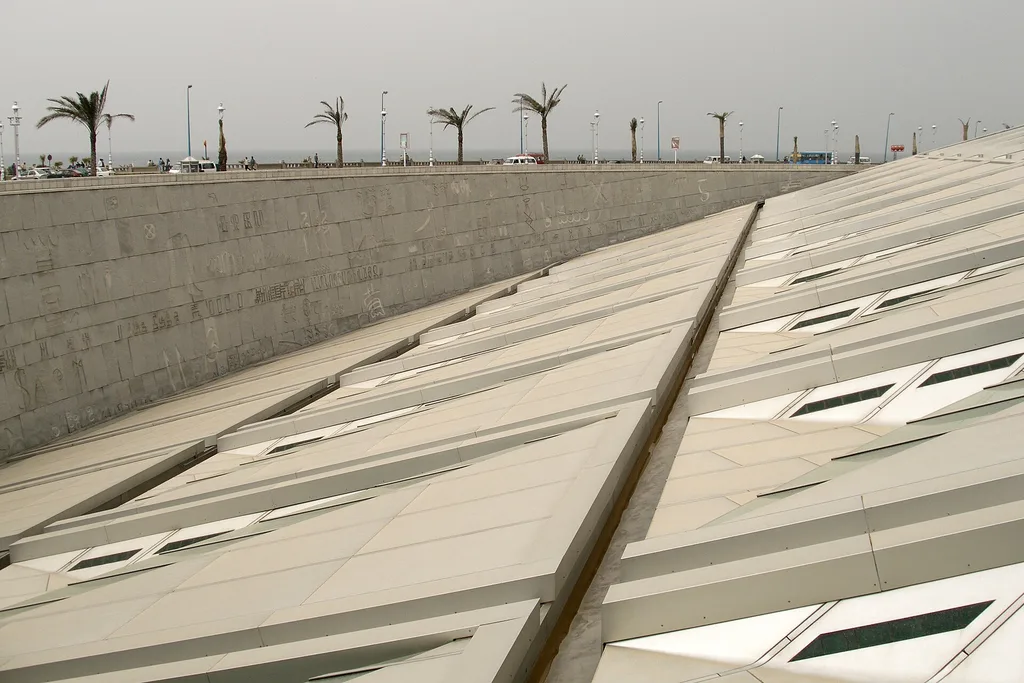
History earns its place in a trip when it changes what your eyes do at a site, so here is the whole story translated back into five places most travellers will actually stand in. At Giza, read the pyramids as a state budget written in stone: not tombs in the abstract, but proof of what a unified, taxed, well-administered kingdom of around 2500 BCE could organise, and read the plateau’s order — Khufu, Khafre, Menkaure, the queens’ pyramids, the cemeteries in their streets — as a royal city, not a photo backdrop. At Karnak, read the temple as the sediment of empires: a Middle Kingdom chapel hidden inside it, obelisks of the great New Kingdom kings, Kushite and Ptolemaic and Roman additions in the courts, one sanctuary enlarged by fifty generations of rulers who each wanted their name in the god’s house. Karnak is not a building; it is the table of contents of this article, in stone.
At Dendera, read the facade against everything you have seen at Luxor: the same goddess, the same hieroglyphs, the same theology — and then remember that the men who commissioned it spoke Greek, ruled from a city on the Mediterranean, and were separated from Ramesses II by more time than separates us from them. No site in Egypt better teaches the traveller’s central lesson, that the pharaonic world did not end with a crash but was curated, funded and performed for centuries by foreign kings. In Islamic Cairo, walk the eras as a single street: from Ibn Tulun’s ninth-century austerity to the Fatimid walls and al-Azhar, then along al-Muizz street through Mamluk domes and minarets to the Ottoman sabils and the Wikala of al-Ghuri — a thousand years of Islamic architecture within one walkable kilometre, in a living city rather than a ruin field. And at Alexandria, read absence as honestly as presence: the Pharos is a Mamluk fort on its footprint, the library is a brilliant modern building standing near, not on, the ancient one’s site, and Pompey’s Pillar keeps its wrong name over the Serapeum’s stones. Our Egypt travel guide strings these readings into routes; this page exists so that when you stand in them, you know which chapter you are in.
Questions Travellers Ask About Egypt’s Past
Who built the pyramids, and were they slaves? Egyptians did — farmers working in the flood season when their fields were underwater, alongside permanent craftsmen, organised in named crews and provisioned by the state with bread, beer and meat on a scale the excavated builders’ town at Giza documents in detail. The slave-built pyramid is a later invention, owed to Greek storytelling and Hollywood rather than to anything found at Giza; the truth — a taxed, fed, rotating national workforce — is less dramatic and considerably more impressive, because it shows what the early state could administer.
How old is Egypt, exactly? Older than any honest single number can make tidy. The unified state dates to around 3100 BCE — so roughly five thousand years of continuous civilisation along the same river — but the farming communities it grew from are older still, and the conventional date rests on tradition and inference rather than a document that says “Egypt starts here”. Treat any source that gives the unification a precise year as selling you a certainty the evidence does not contain.
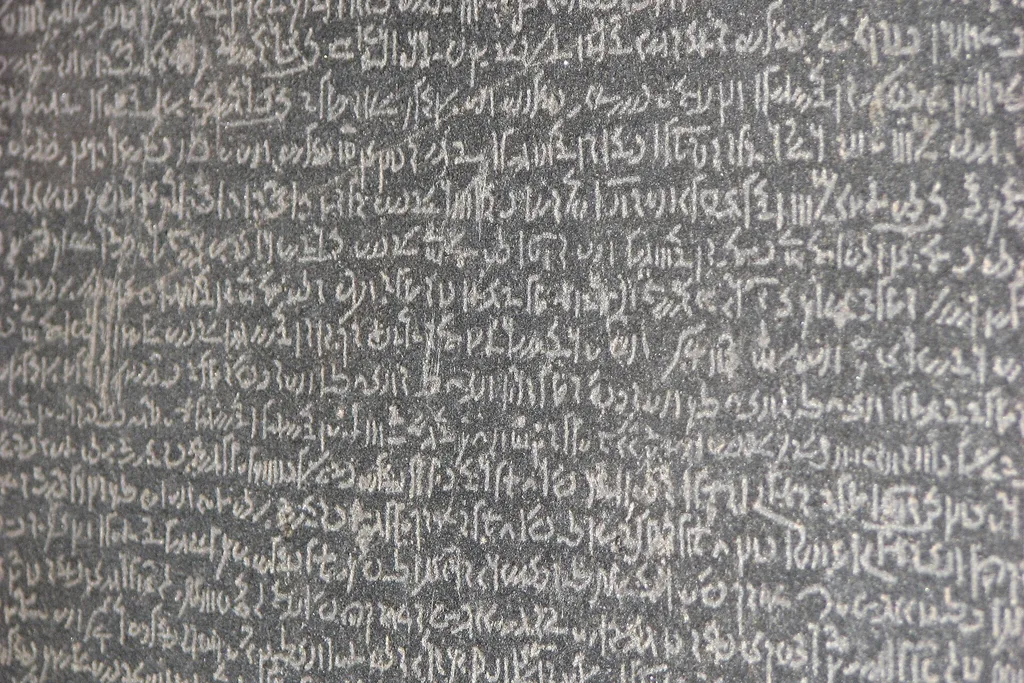
Why did hieroglyphs die out, and how were they read again? The script faded as Egypt Christianised and temple culture was suppressed: the last dated hieroglyphic inscription was carved at Philae in 394 CE, and within a few generations no one alive could read the old writing. It was recovered because the Rosetta Stone, found in 1799, carries the same decree in hieroglyphs, everyday demotic script and Greek; comparing the three, and cracking how royal names were ringed in cartouches, let Jean-François Champollion announce the decipherment in 1822.
Did Cleopatra look Egyptian? Cleopatra VII was a Macedonian Greek by descent, the last of Ptolemy’s line, and her surviving images are political instruments rather than portraits — coins that stress authority, temple reliefs that dress her as a pharaoh, Roman busts that may or may not be her. What the record does support is that she was formidably educated, spoke many languages including — unusually for her dynasty — Egyptian, and ruled a kingdom, not a harem intrigue; the rest is two thousand years of other people’s imaginations, and any confident answer about her face should be distrusted on principle.
Which era produced the things I will actually see? More eras than you expect. The pyramids are Old Kingdom, most of Luxor’s temples are New Kingdom with later additions, the best-preserved temples in the south are Ptolemaic, Alexandria’s standing monuments are Roman and Mamluk, Cairo’s historic skyline is Fatimid, Mamluk and Ottoman, and the museums gather all of it. A standard first trip crosses at least six of this article’s twelve eras, which is precisely why Egypt rewards reading its history as one long story rather than a single ancient chapter.
The Short Version
The shortest true summary of Egypt’s past is that it is not one past at all, but a succession of them that refused to leave. Kings who united a river valley and taught it to write. Pyramid builders who turned a tax system into wonders. An empire that filled Luxor with temples and signed the first peace treaty. Greek kings who built Egyptian temples for three centuries, Roman emperors who taxed the grain and raised a pillar to the wrong man, desert monks who carried a new faith out of the world and into the sand. A new city called Cairo that grew minarets the way Thebes had grown pylons, slave-soldiers turned sultans who built its golden age, an Albanian officer who dragged the country into modernity, and a canal that made the whole world sail past its door. No single chapter explains the country, and that is the point. The country is the chapters, piled up, along one river.
So read the sites in their order when you go. Start, if you can, with a carved palette and a mudbrick tomb in the south, and end, if your route allows, in a museum at Giza where a boy king’s gold sits in sight of the pyramids built two thousand years before him. Stand in Dendera knowing its Greek kings are further from the pharaohs than you are from them. Stand in Ibn Tulun’s courtyard knowing the pharaohs’ language was still being spoken in the churches a few streets away. A country that can be understood on one trip is a rare thing, and Egypt, for all the millennia stacked inside it, can be — because its history is not a confusion but a sequence, and the sequence, now, is yours.