Best Time to Visit Turkey – Six Climates, Balloon Mornings and the Swimming Months
Ask when to visit Turkey and most guides answer with two windows — April to May, September to October — as if the country were one climate with one calendar. For one particular trip, the classic loop of Istanbul, Cappadocia and Ephesus, that answer is honest enough. For almost every other trip it quietly fails, because Turkey is at least six climates sharing a flag. In the same July week, Antalya is baking at 35°C, the Black Sea coast is taking its summer rain under green cloud, Cappadocia is swinging from a hot afternoon to a night cool enough for a jumper, and Erzurum, in the far east, is enjoying the only gentle month of its year. A single “best time” cannot describe a country that contains all four of those weeks at once.
So this guide refuses the single answer and hands you the working parts instead — six regional calendars, then the seasons read across the whole map, then the trip types, because in Turkey the honest unit of planning is not the month but the match between a month and a place. The short version up front: for a first mixed trip of cities, ruins and valleys, late April into May and late September into October are the most forgiving windows in most regions at once, and everything below explains why, where that rule bends, and where it breaks completely.
One promise governs every number on this page. The temperatures quoted are climate normals — long-term averages, mostly 1991–2020, for the weather stations named in each section — which means they describe what a month typically does, not what your week will do. A normal August in Antalya is fierce and a normal January night in Cappadocia below freezing, and you can plan on both; but weather deals the actual hand, and forecasts outrank tables in the week itself. Use this guide to choose the season. Use the forecast to pack for the week.
At a Glance – Six Climates, One Calendar
The whole argument of this guide fits in one table. Read across for a region’s year, and notice how rarely two rows peak together — that mismatch is why “when should I go” has no honest one-line answer in Turkey.
| Region | Best window | Winter character | Summer character |
|---|---|---|---|
| Istanbul and the Marmara | Apr–May and Sep–Oct | Cold, wet and quiet — the museum season | Warm and humid; sightseeing by morning and evening |
| Cappadocia and Central Anatolia | Apr–Jun and Sep–Oct | Snowy, beautiful, balloons often grounded | Hot dry days, cool nights; balloons fly early |
| The Aegean coast | May–Jun and Sep–Oct | Mild, rainy, ruins nearly empty | Hot and dry with the meltemi wind; ruins shadeless |
| The Mediterranean coast | May–Jun and Sep–early Nov | Mild but the wettest months of the year | The full beach season — and fierce heat off the sand |
| The Black Sea | Late May–Sep (its summer is the season) | Mild, grey, wet — the off-season | Warm, green and still rainy; the highlands’ great weeks |
| The east | Late May–early Oct | Severe — snow country, Erzurum nights far below freezing | The gentle season — warm days, cool nights, long light |
Two habits make the table useful rather than decorative. First, plan by your most demanding region, not your arrival city — a trip that ends with a balloon flight should be timed by Cappadocia’s wind and cold, even if it begins in gentle Istanbul, because the balloon morning is the least forgiving appointment on any Turkish route. Second, treat the hinges as their own seasons. Late May behaves like summer on the Mediterranean and like spring in the east; late September is autumn in Istanbul and still high summer in an Antalya sea that has stored a season of heat. The travellers who get Turkey wrong are rarely wrong by a season — they are wrong by a fortnight, at the hinge.
Spring – March to May
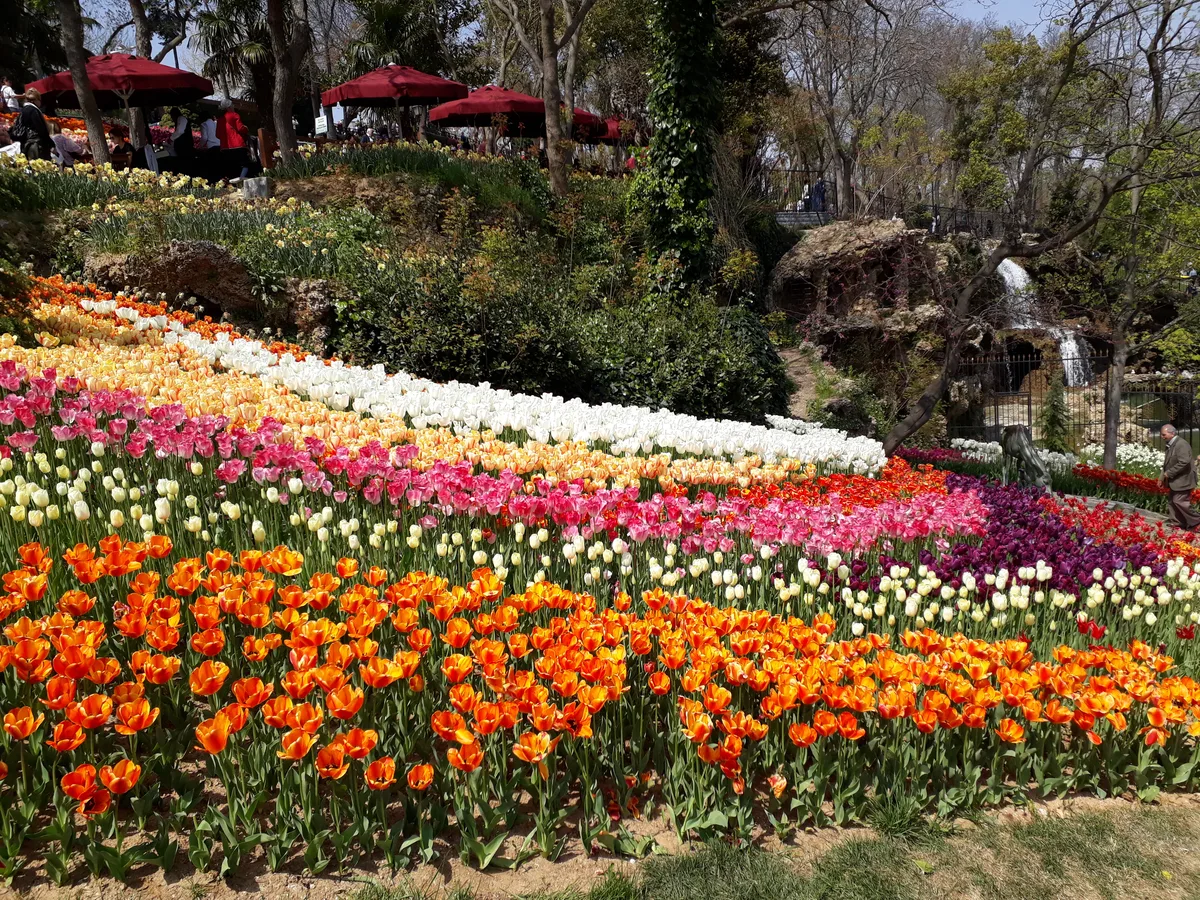
Spring is the season Turkey’s reputation is built on, and the reputation is earned in stages. March is the hinge and should be planned as one — Istanbul’s average March high is only about 12°C with rain still a regular visitor, Cappadocia is shaking off a winter whose nights ran below freezing, and the east is barely thawing. By April the west has turned: Istanbul averages around 16°C by day and fills its parks with tulips — the April plantings in Emirgan and the other big parks are the season’s fixed spectacle — the Aegean ruins stand in green country rather than summer’s straw, and Antalya is reaching the low twenties. May is the crescendo, the month in which the most regions agree at once: Istanbul and Cappadocia both around 21°C, the Aegean warm enough for long days at exposed sites, and the Mediterranean sea finally reaching roughly 21°C — swimmable for most people by the month’s end.
The season’s fine print is written in rain and wind rather than cold. Spring is not Turkey’s dry season in the interior — at Nevşehir, the station for Cappadocia, May is actually the wettest month of the year on the normals, in the form of afternoon showers that roll over the valleys and clear; balloon flights still cancel on unsettled mornings, which is why the spare-morning strategy in the Cappadocia section matters in May as much as in any month. Hold one caution against the brochure version: Easter and the May holiday weekends price and crowd the classic route at something like summer levels, because the famous combination — balloons, tulips, mild ruins — is famous precisely because it works. Take spring in the order the season travels — west in April, the whole map in May — and it is the finest quarter of the Turkish year.
Summer – June to August
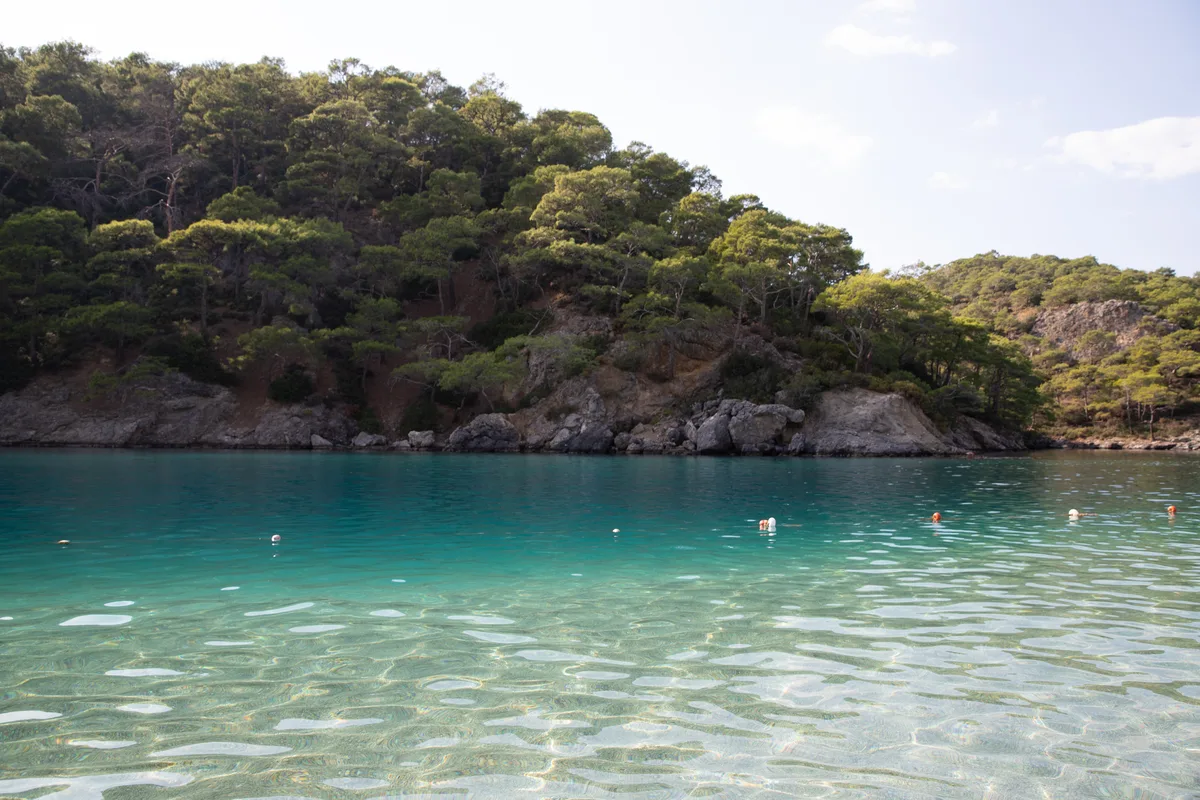
Summer splits Turkey into two countries, and you must choose which one you are visiting. The first is the coast in its glory — the swimming season proper, when the Mediterranean off Antalya climbs through roughly 25°C in June to a peak around 28 to 29°C in August, the beach towns run at full stretch, boat trips sail daily, and the Aegean’s meltemi wind takes the edge off afternoons that would otherwise match the south. Days are long, evenings are the social peak, and a coast-anchored trip in July is not a compromise at all — it is the trip the season was designed for, taken by millions of Turks as well as visitors. August is the national holiday month, and the resorts are at their fullest and most expensive accordingly.
The second summer country is the interior at midday, and it asks respect. Antalya’s own average highs sit at about 35°C through July and August, İzmir’s at about 34°C, and the great open-air sites — Ephesus above all, a shadeless marble city — become exercises in early starts, hats and water. Cappadocia is subtler: afternoons reach about 29°C, fierce enough in altitude sun, but nights fall back to around 14 or 15°C, and the dawn balloon flights operate in the day’s coolest, calmest air. Istanbul averages around 28°C with real humidity — pleasant on the water, but a city to sightsee in the morning and evening rather than at one o’clock. Summer inland punishes only the traveller who fights it with a packed noon itinerary.
And summer holds two regions the “too hot” slogan gets wrong. The Black Sea coast is in its best quarter — Trabzon’s summer highs sit in the high twenties, the tea gardens and highland pastures are in their great weeks, and even its famous rain eases to its annual minimum, though on that coast a minimum still means wet days. The east is in its one gentle season: Van averages around 28°C by day with nights near 16°C, the plateau is green after the snowmelt, Lake Van is swimmable at its beaches, and the long northern light makes these the east’s prime months — the exact weeks the classic route is avoiding elsewhere. Summer in Turkey is not a warning. It is a sorting exercise.
Autumn – September to November
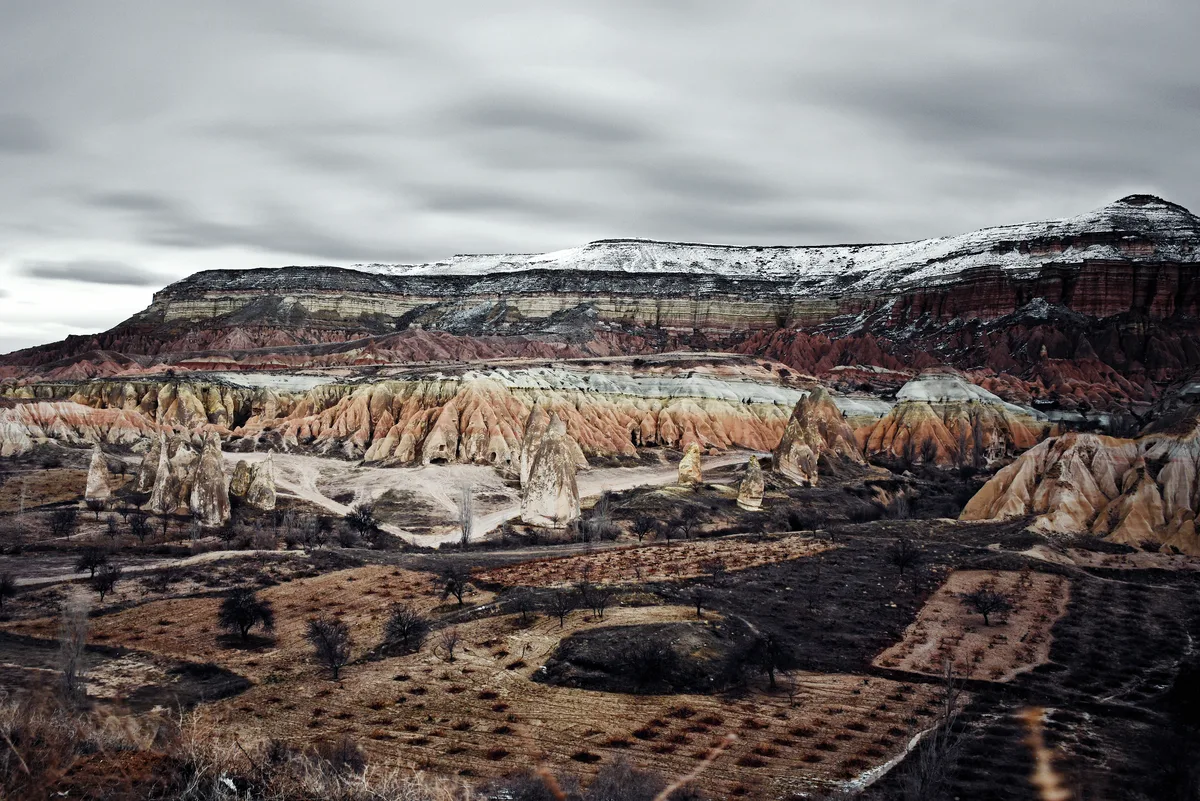
Autumn is the connoisseur’s season, and its secret is that it arrives in stages. September begins as summer’s tail — Antalya still averages about 32°C by day, Istanbul is warm at about 25°C — but the character has already changed: the August crowds have gone home, the light has softened, and the sea is at its stored-heat best, still around 28°C off the Mediterranean coast. Through October the whole country reaches the balance spring promised: Istanbul around 20°C, Cappadocia around 19°C with its poplars turning, the Aegean ruins back in walking weather, and the Mediterranean sea still near 25°C — the one month in which a swimmer and a sightseer can share an itinerary without either conceding anything.
The season’s working trips are its own. Autumn is the prime hiking quarter on the southern trails — the Lycian Way and its neighbours are summer routes only for the heat-proof, and they come into their own from late September as the coast paths cool. Cappadocia’s valleys in October are the year’s great walking weeks, dry, golden and uncrowded. Harvest runs under it all — grapes in Cappadocia and the Aegean, pomegranates and citrus building on the south coast — and the east takes its last bow, with September’s warm stability at Lake Van giving way to October’s first serious cold at altitude.
November is the hinge, and it should be planned as one. The rains return in force to the west — November is among Istanbul’s wettest months and opens Antalya’s very wet winter — the Black Sea turns grey, the east closes down as snow reaches the high plateau, and Cappadocia’s balloon cancellations multiply as the mornings destabilise. None of this ruins a November trip; it reorders it. The Mediterranean keeps a mild, swimmable-into-early-November tail that the Aegean has already surrendered, and the month rewards the traveller who treats it as early winter in the north and late autumn in the south rather than as a single national season.
Winter – December to February
Winter is Turkey’s most misreported season, usually described as a cheap disappointment when it is actually three different trips wearing one name. The first is the Istanbul trip, and it is a genuine pleasure: the city’s average January high is about 9°C, its wettest months are these — December is the wettest of the year on the normals — and what that buys is the great sights at their emptiest, long museum afternoons, hammam weather, and a working city’s unhurried rhythm. Dress for a cold, damp northern city and winter Istanbul is a strategy, not a compromise.
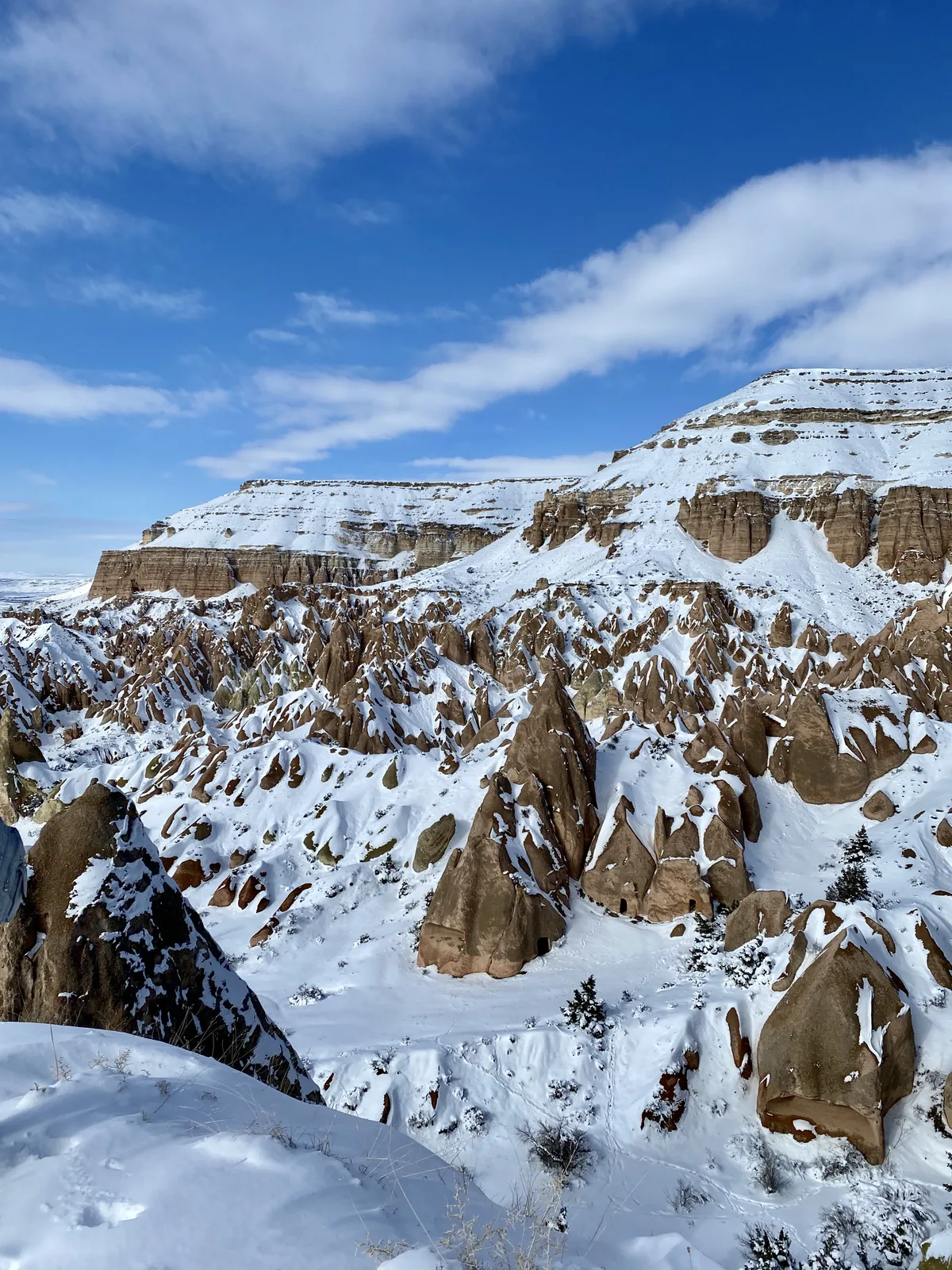
The second winter trip is the mountains, and it surprises people who think of Turkey as a summer country. Turkey skis: Uludağ above Bursa is the historic resort, Kartalkaya serves the Istanbul–Ankara corridor, Erciyes rises over Kayseri within day-trip reach of Cappadocia, and Palandöken at Erzurum holds some of the country’s longest, coldest season. The season is snow-dependent and usually runs from around late December into March, deepest and most reliable in the east — check the snow report for your resort and week rather than trusting any calendar, including this one. Paired with it is winter Cappadocia itself: the valleys under snow are the region at its most beautiful, January days at Nevşehir hover near 4°C with nights near −4°C, and the balloon flights continue when the mornings allow — which, in winter, is the gamble the Cappadocia section explains.
The third winter trip is the one not to take by accident. The east in winter is a serious continental cold — Erzurum’s average January night falls to about −16°C and its average day does not reach freezing — and travel there is a specialist’s undertaking of short days and snow-covered roads. The Mediterranean runs its mild paradox: Antalya’s January days average a pleasant 15°C between rains that are the heaviest of its year. Winter is not the off-season here. It is the season that most demands you know which of its trips you are taking.
Istanbul and the Marmara – the City-Break Calendar
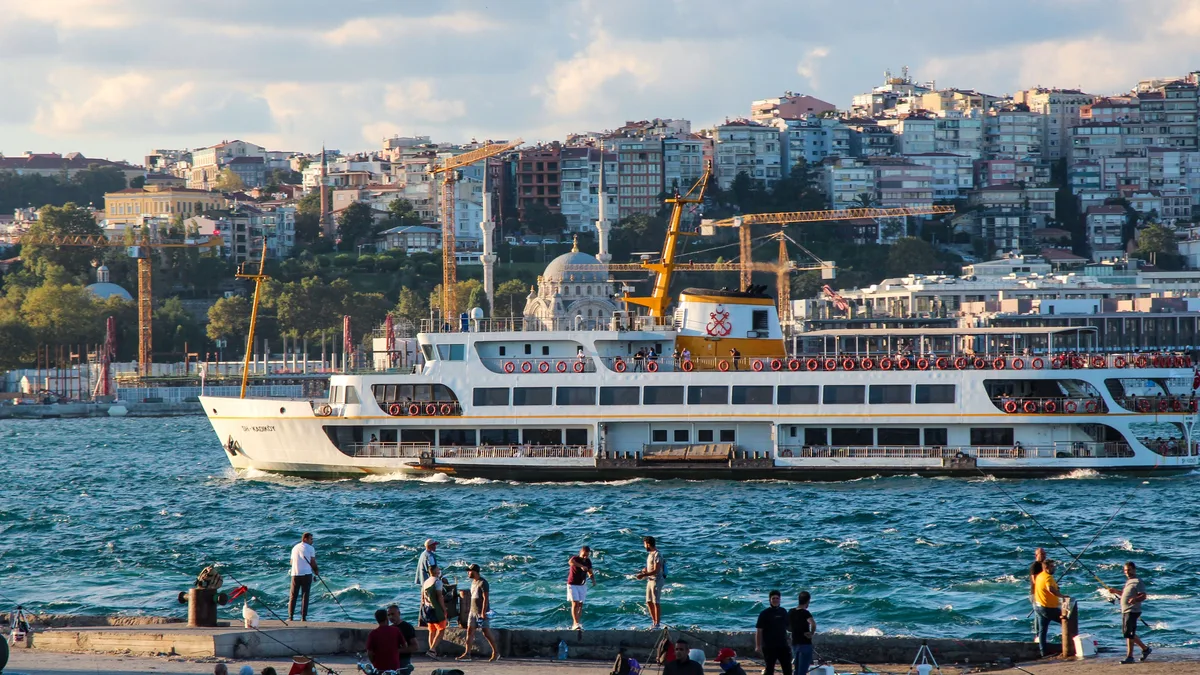
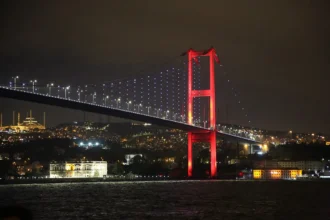
Istanbul is the one Turkish destination that never closes, and its calendar is about texture rather than possibility. The city’s own normals tell the shape: average highs run from about 9°C in January through 16°C in April and 21°C in May to a humid 28°C in July and August, then back through 25°C in September and 20°C in October. Rain belongs to no single season here — Istanbul takes precipitation in every month, with its wettest stretch from November into January and even July averaging a few wet days — so the honest packing rule in this city is a layer and a shell in every month.
Each season deals the city a different hand. Spring is the celebrated one: the tulip plantings of April, mild ferry weather, the Bosphorus at its greenest. Summer is the humid one, made for evenings — the city’s life moves to the water and the rooftops, and the classic visitor error is a midday museum marathon rather than a morning start and a long lunch. Autumn is the local favourite, September’s warmth running into October’s golden light on the strait. Winter is the quiet one, where the great buildings empty out and the city’s interior life — bazaars, hammams, tea houses — takes over from its terraces. Our Istanbul travel guide sequences the city day by day; read it against this calendar and the two together will time a visit in any month.
The Marmara around the city follows the same rhythm at lower volume: Bursa, the first Ottoman capital at the foot of Uludağ, is a spring and autumn city that becomes a ski base in winter, and the Princes’ Islands are a summer institution whose season runs from May to October. The practical read for the whole region is the simplest in this guide — Istanbul forgives almost any month, provided you let the month set the day’s shape: outdoors at the day’s mild end, interiors and water at the other.
Cappadocia and Central Anatolia – Balloon Mornings and Cold Nights
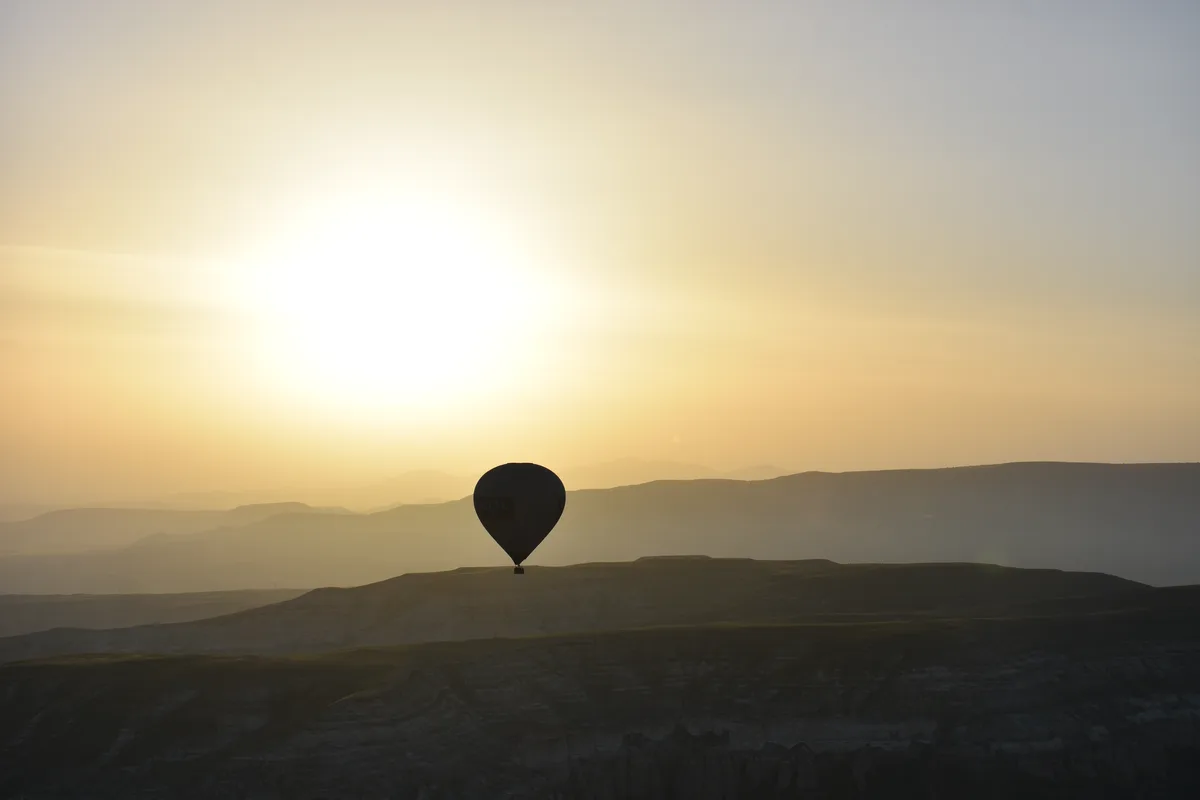
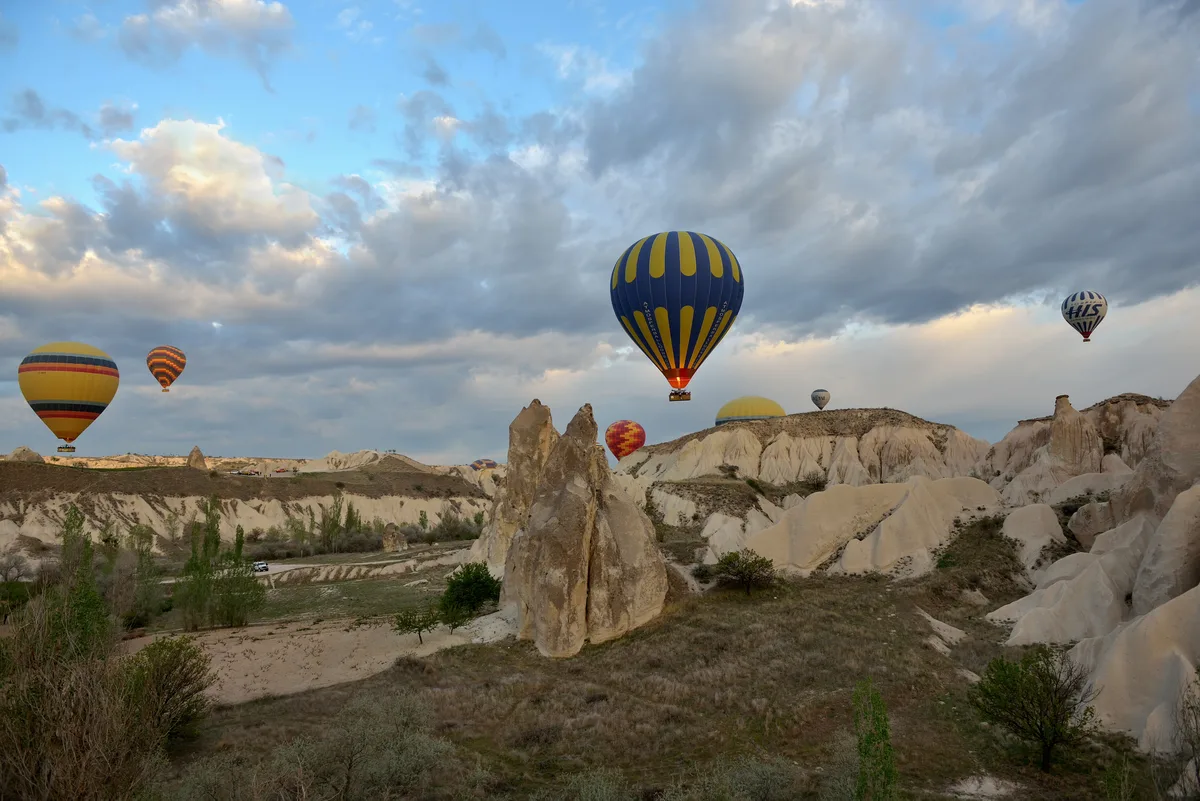
Cappadocia’s calendar is governed by a single appointment: dawn. The balloon flights leave at sunrise, in the day’s calmest air, and whether they leave at all is decided morning by morning on the wind and weather — there is no season in which flying is guaranteed and no booking that changes that arithmetic. What the seasons change is the odds and the price of losing. In the settled weather of late spring, summer and early autumn, most mornings fly and a cancellation usually costs you a day’s wait. In winter and in unsettled spring spells, cancellations can stack up across a whole short stay, and the traveller who has given Cappadocia one morning has, in those months, a real chance of giving it none of them. The strategy follows directly: put the flight on your first morning, not your last, keep at least two mornings in the valleys — three in winter — and let the underground cities, cave churches and valley walks carry the days the balloons cannot. A grounded morning is a disappointment; a grounded only morning is a ruined plan, and the difference is entirely in how you scheduled it.
The region’s temperatures explain its tempers. Nevşehir’s normals show a true plateau climate: average January highs near 4°C with nights around −4°C, July and August highs around 29°C with nights back down near 15°C, and a daily swing that can run to fifteen degrees in any month. Snow covers the fairy chimneys in most winters, and spring brings its own surprise, with May the wettest month of the year in the form of building afternoon showers. Pack for Cappadocia as you would for a mountain town at 1,000 metres, because that is what it is: layers in July, a serious coat from November to March, and never — in any month — only summer clothes.
Match the visit to the plateau’s moods and every season has its case. Late spring gives green valleys and long days. Summer gives the most reliable flying weather and cool nights after hot afternoons. Autumn gives the harvest and the year’s best walking. Winter gives the snow scenes and the emptiest cave churches, at the price of the balloon gamble — the region never closes, it simply asks in winter for more mornings and warmer clothes than the brochures mention.
The Aegean Coast – Ruins, Wind and a Shorter Sea Season
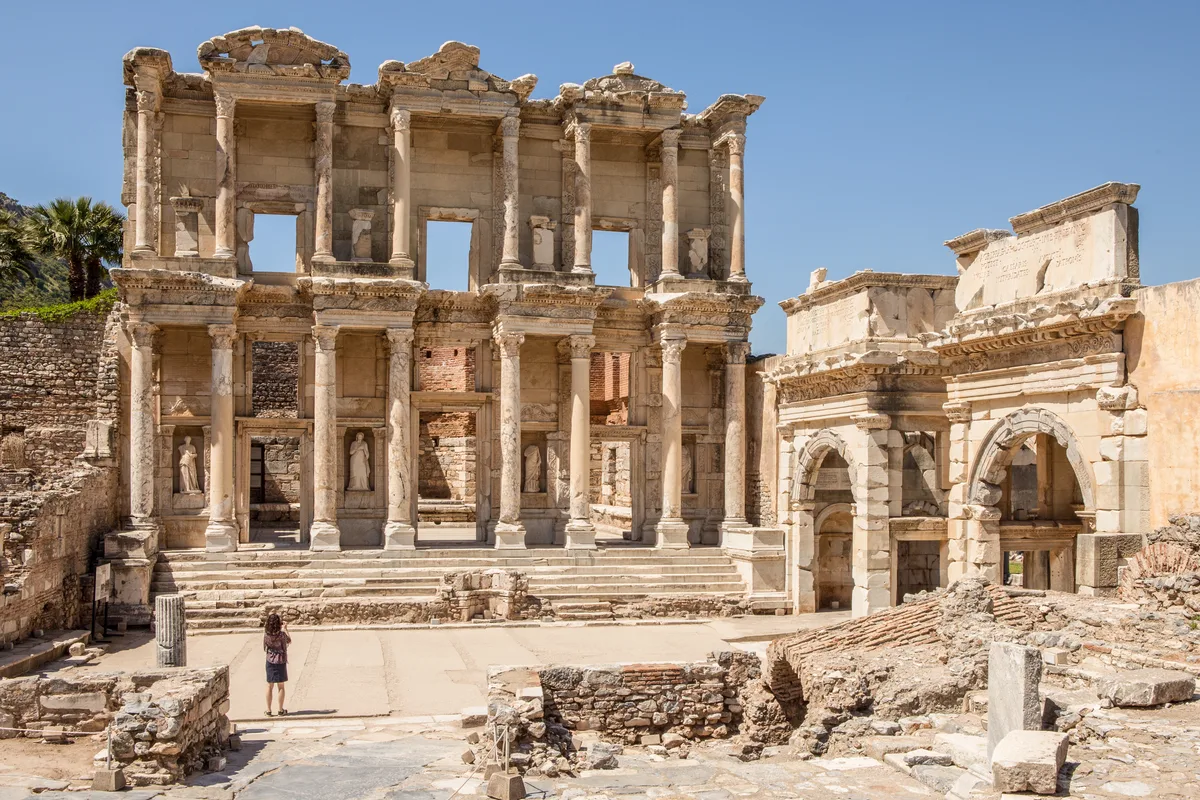
The Aegean runs a Mediterranean climate with the edges filed differently — a little cooler than the south coast, a little windier, and with a sea that warms later and cools sooner. İzmir’s normals set the frame: average highs of about 13°C in January, 21°C in April, 27°C in May, 34°C in July and August, and 25°C in October, with the year’s rain concentrated from November to March and summers nearly dry. The region’s signature is the meltemi, the northerly wind that builds through summer afternoons — a genuine gift on a hot day in town, and the reason Aegean summer evenings are pleasanter than the thermometer alone explains.
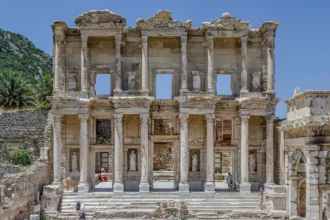
The Aegean’s great sightseeing problem is exposure. Ephesus, Pergamon and the region’s other open-air cities are unshaded stone, and in July and August they should be walked at opening time or in the late afternoon, full stop. Spring and autumn reverse the problem into a pleasure — April, May and October are the ruin months, when the sites stand in green or golden country and a full day outdoors is a delight. The swimming season here is the honest version of the south’s: the Aegean is a cooler sea, comfortable for most swimmers from around June into early October, with September its sweet spot, and the resorts of Bodrum, Çeşme and Kuşadası run on those dates rather than Antalya’s longer ones.
Winter on the Aegean is the connoisseur’s quiet season — mild, rainy in spells, the famous sites nearly empty, a state in which Ephesus in February drizzle has a gravity no summer morning can match. What winter is not here is a beach season in any disguise. Take the region by its own calendar — ruins in the shoulder months, sea in the summer ones, silence in the winter — and it never disappoints.
The Mediterranean Coast – the Long Swimming Season
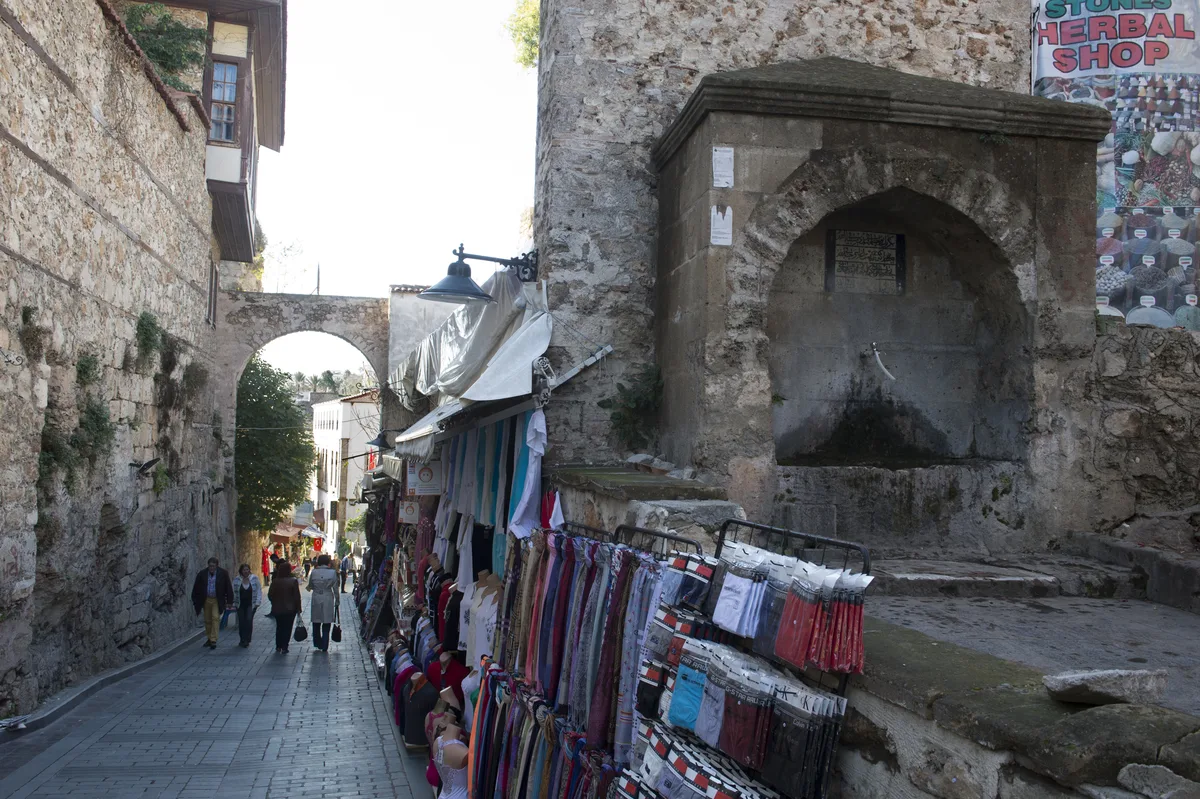
The Mediterranean coast — Antalya, Side, Alanya, Kaş, Fethiye and the Turquoise Coast between them — holds Turkey’s longest and warmest summer, and its calendar is the mirror image of the rest of the country’s: the season everyone else calls winter is its wet season, and the season everyone else calls peak is its furnace. Antalya’s normals draw the shape precisely. Average highs run from about 15°C in January to 22°C in April, 26°C in May, 35°C through July and August, then back to 32°C in September, 27°C in October and 22°C in November. The rain is brutally concentrated: December and January between them bring well over 400mm in an average year, while July and August bring almost none.
The sea is the coast’s real calendar, and it runs behind the air by a month in both directions. Long-term averages put Antalya’s sea at roughly 17 to 18°C through the winter, about 18°C in April — colder than the pretty spring weather suggests, which is why April pool decks are full and April beaches are brave — around 21°C in May, 25°C in June, a bath-warm 28 to 29°C in August and September, still about 25°C in October, and around 22°C into November. The swimming season, honestly drawn, runs from late May to early November, and its finest weeks are at the ends: June, before the heat reaches full pitch, and September into October, when the sea is at its warmest, the crowds have gone, and the ruins up the coast can be walked again without a dawn start.
The trade at the season’s centre should be stated plainly. In July and August this coast delivers the beach holiday perfectly and everything else at a cost: the Lycian tombs, the ancient cities of Perge and Aspendos, the lanes of Kaleiçi are all still there, but they are midday-punishing, and a summer itinerary here should be built as mornings and water, sightseeing at the day’s edges. Build it the other way — sites first, beach as garnish — and the season will tax you daily. The coast’s terms are written in its two calendars, the air’s and the sea’s, a month apart.
The Black Sea – Green in Every Month
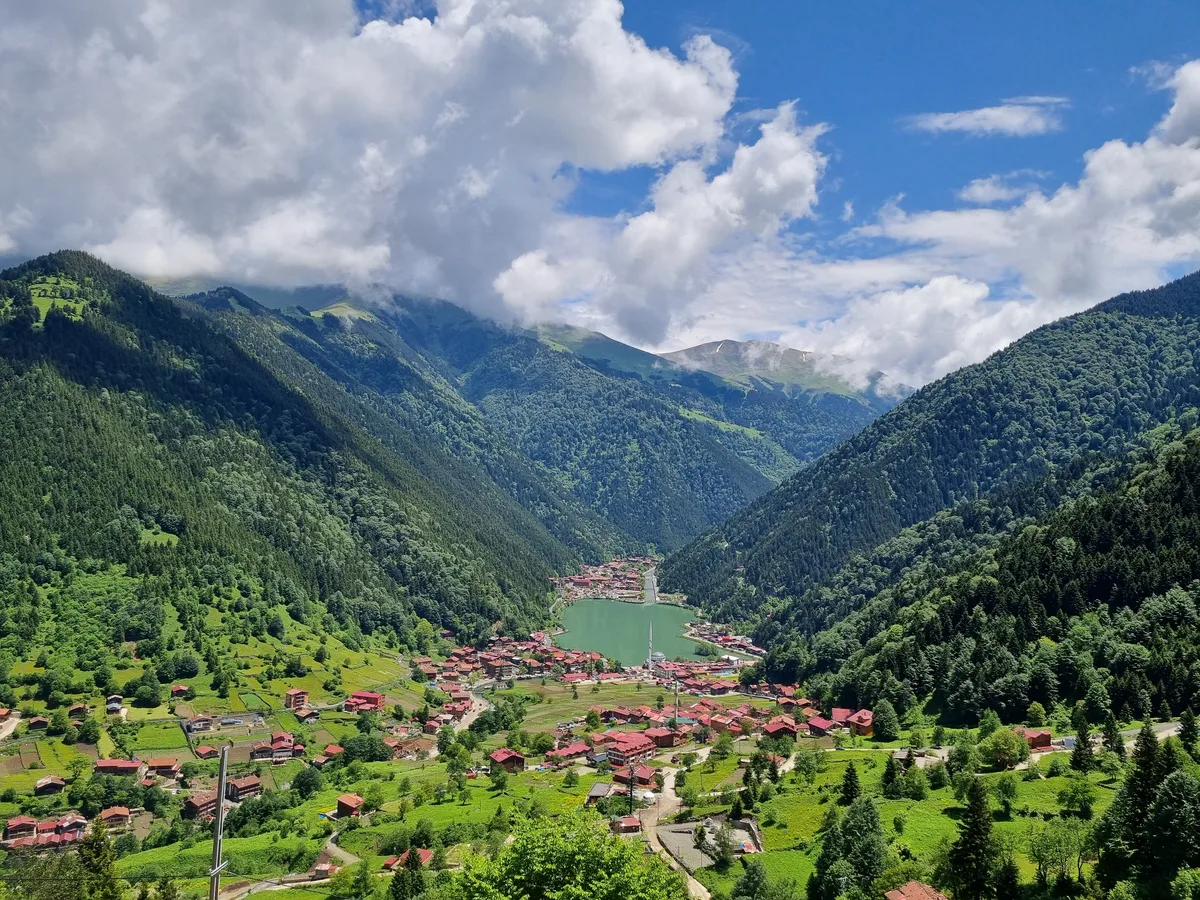
Every other region in this guide has a dry season. The Black Sea does not, and understanding that single fact is the whole of its calendar. Trabzon’s normals show rain in every month of the year — its driest month, July, still averages several wet days, its wettest, October, brings around 134mm — and the coast’s famous green, the tea gardens and hazel groves climbing impossible slopes, is simply what that rainfall looks like from a distance. Average highs run mild rather than hot, from about 11°C in January to 28°C in August, and the sea is the country’s coolest. Nobody comes here for a guaranteed beach fortnight, and the traveller who arrives expecting the Mediterranean with fewer people has misread the map.
What the Black Sea offers instead is a summer that the rest of Turkey cannot. When the plateaus bake, this coast is in its gentle quarter: warm days, green everywhere, and the yayla — the highland pastures above the tree line, where the region’s own people have always spent the summer — in their great weeks of cool air and cloud seas, from roughly June into September. The Sümela Monastery in its forested cliff valley and the tea country around Rize belong to this summer logic, and both reward the traveller who packs for four seasons in a week, because a Black Sea summer day can deliver most of them. Autumn is the hinge into a long grey close season — the rains build from September, the highlands empty, and from November to April the coast is mild temperatures, heavy skies and quiet — so time the region for May to September, dress for rain inside the sunshine, and it becomes what it is: Turkey’s green exception, running on its own calendar in defiance of the national one.
The East – Short Summers on a High Plateau
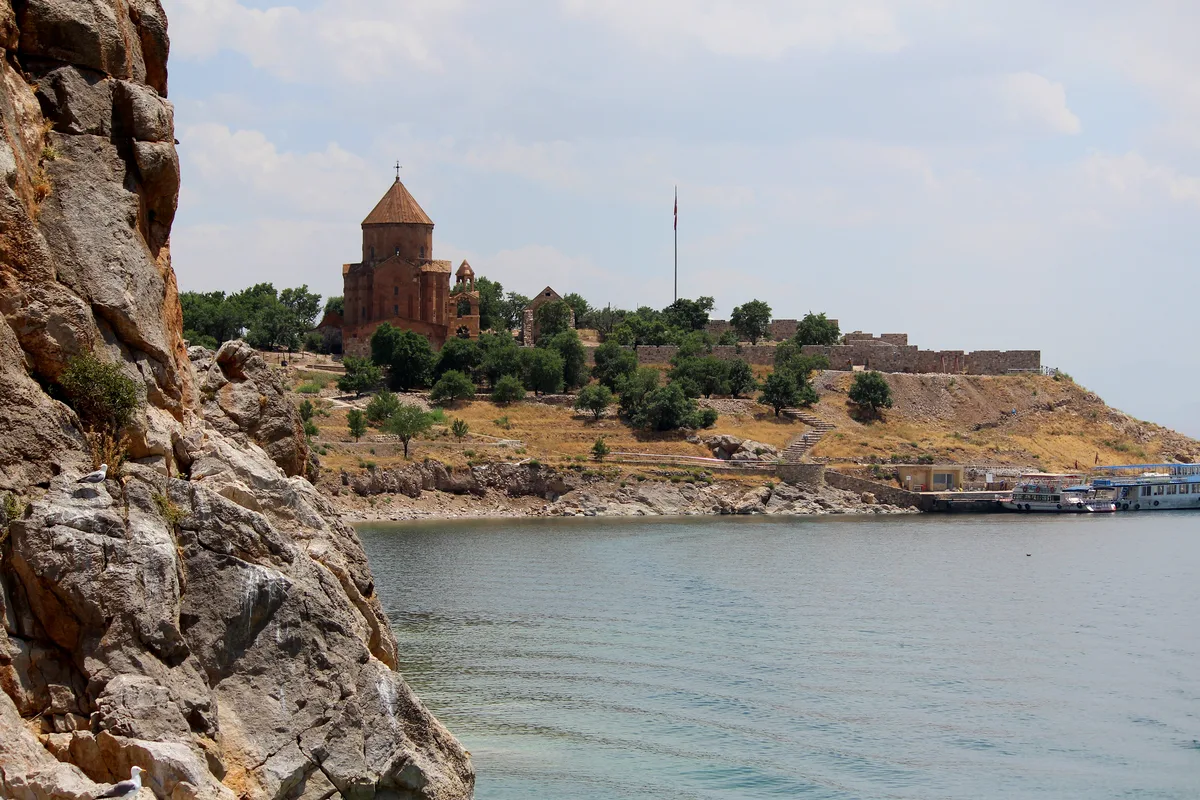
The east is where Turkey’s calendar is shortest and its stakes highest, because altitude rules everything here. The region’s two great bases tell the story in numbers. Van, at some 1,650 metres on its vast lake, averages January highs near 3°C with nights around −6°C, climbing to 28°C days and 16°C nights in July and August. Erzurum, higher still and the region’s winter capital, averages a January day that does not reach freezing and nights near −16°C — among the coldest figures for any Turkish city. Between those winters lies the east’s whole travelling season, and it runs, honestly drawn, from late May to early October. Arrive outside it without specialist intent and the region will not argue; it will simply be closed by weather.
Inside the season, the east is one of Turkish travel’s great rewards, and summer is not its compromise but its prime. June and July bring the plateau green after snowmelt, long northern evenings, Lake Van warm enough at its beaches for swimming, and the island churches — Akdamar above all — in their best light. Ani, the ruined medieval capital on the Armenian border plateau near Kars, is a summer and early-autumn visit of huge skies and no shade, best in the morning. September is the connoisseur’s month — stable, golden, thinning crowds — and October the gambler’s, glorious until the week the snow arrives at altitude and stays.
The practical rules write themselves. Build eastern itineraries inside the season and put the altitude-sensitive legs — the high passes, Ani, the Ararat country — in its stable heart rather than at its edges, and expect cold nights in every month at this height, even in August.
Choosing by Trip – Balloons, Swimming, Cities and Trails
Region calendars answer “when for a place”. Many travellers hold the other question — “when for the thing I came to do” — so here is the same year read by trip type. For a city break, Istanbul is the year-round answer, spring and autumn its finest registers, winter the quiet bargain for museum travellers. For the great ruins — Ephesus, Pergamon, the Lycian and Pamphylian cities — the answer is the shoulder seasons outright: April, May and October, when exposed marble can be walked all day; summer visits belong at opening time. For hiking, the southern coastal trails, the Lycian Way first among them, are spring and autumn routes, while the high trails of the Kaçkar and the eastern ranges are summer-only, July to September, when the snow has left the passes.
Two combinations deserve naming. Balloons plus swimming — Cappadocia and the coast on one trip — works best in June and September, when the flying weather is settled and the sea is warm at both ends of the journey. And the grand first-timer’s loop of Istanbul, Cappadocia and Ephesus is the one trip the standard advice actually fits: late April to May, or late September to October, serves all three at once — which is exactly how that advice got its reputation, and why it should not be stretched to cover the Black Sea, the east, or a beach fortnight it was never describing.
Ramadan, the Bayrams and the Holiday Calendar
Turkey’s religious calendar deserves the same treatment this guide gives the weather — the mechanism, not a borrowed date. Ramadan is the ninth month of the Islamic lunar calendar, and because a lunar year runs about eleven days shorter than the solar one, the month travels: it begins roughly ten to eleven days earlier each year and works through all the seasons across a cycle of about three decades. In Turkey the year’s religious calendar is set out in advance by the Presidency of Religious Affairs, the Diyanet, and the practical rule follows from the drift: when you book, note that Ramadan and the bayrams move, and before you travel, confirm the dates for your specific year from the Diyanet’s calendar — dates copied from an article written for a different year will be wrong by the better part of a fortnight, including any this page could print, which is why it deliberately prints none.
What the month changes for a traveller is rhythm more than access. Turkey’s tourist machinery does not stop for Ramadan: the sights, transport and resort life run, and in the big cities and resorts many visitors notice little beyond quieter daytime streets in conservative districts and a particular evening energy when the fast breaks at sunset and the iftar tables fill. The two bayrams — the holidays that close Ramadan and, roughly seventy days later, mark the Feast of the Sacrifice — are the traveller’s real planning events, and they work in the opposite direction to the fast itself: they are national holidays on which Turkey travels to itself. Domestic flights, buses, coastal hotels and the roads fill around them, and resort prices feel it. Book transport and beds early across any bayram window, expect the coast to run at August intensity for those days whatever the month, and treat the surge as a fact of the calendar rather than a surprise in it. The fixed calendar, by contrast, is gentle — the national holidays fall on their dates each year, Republic Day on 29 October among them — and the habit that protects every Turkish trip is the one this section began with: whatever month you choose, check what the lunar calendar is doing inside it for your year, because the difference between the same week in two different years can be a bayram, and no climate table will warn you about that one.
Month by Month – The Quick Calendar
Everything above, compressed for the fridge door. The table describes typical years built from the normals — the forecast for your actual week always outranks it.
| Month | Istanbul | Cappadocia and the centre | The coasts | Black Sea and the east | The one-line verdict |
|---|---|---|---|---|---|
| January | Cold, wet, gloriously quiet | Snowy; balloons a gamble | Antalya mild between heavy rains | East in deep winter; Black Sea grey | The museum-and-ski month |
| February | Cold, brightening late | Snow lingers; spare mornings essential | Wettest weeks on the south coast | Erzurum coldest — and its skiing best | Winter’s serious half |
| March | The hinge — mild spells, real rain | Thawing; valleys waking | Warming; sea still cold | East barely thawing | Good in the west, early elsewhere |
| April | Tulips; prime city weather | Green valleys; showers about | Ruins at their best; sea brave-only | Too early for the high east | The classic month |
| May | Warm, long days | Showery; great walking | Swimming starts late month in the south | East opens late in the month | The all-round month |
| June | Warm, festival season | Settled flying weather | Full season opens; sea warm | Highlands and east in prime | Summer done right |
| July | Hot and humid; evenings on the water | Hot days, cool nights | Peak beach season | Yayla season; the east gentlest | Coast, highlands or height |
| August | Hot; the city empties to the coast | Busy; nights rescue the days | Fullest, warmest sea, highest prices | The east’s best light | Turkey’s own holiday month |
| September | Warm, golden, thinning | Harvest; classic flying and walking | The sea at its warmest | East golden; Black Sea turning | The all-round month, second |
| October | Prime; soft light | Poplars turning; top walking | Swimming till late month in the south | East closing; first snow at altitude | Swimmer and sightseer share it |
| November | Wet and moody; museums | Cancellations multiply | South mild early; rains build | The east shuts; Black Sea grey | South first, north in waterproofs |
| December | Wettest month; quiet | Snow scenes, balloon gamble | Antalya’s rains at full weight | Ski season opens; east severe | Two trips in one |
Used well, the table also works backwards. Fix the activity you care about most — a flight, a swim, a trail, a silent museum — read down for the months when it glows, then check what those months do to the rest of your route. In Turkey the compromises are usually visible a season ahead, which is the whole difference between a trip designed around the country’s six climates and a trip ambushed by one of them.
Frequently Asked Questions
What is the single best month to visit Turkey?
May, with late September as the closest of seconds. In May Istanbul sits near 21°C and is still green from the tulip season, Cappadocia’s valleys are at their spring best, the Aegean ruins can be walked all day, and the Mediterranean sea reaches swimmable warmth by the month’s end. Late September repeats the trick in reverse — the sea at its annual warmest, the crowds gone, harvest in the valleys — and loses only because the east and the Black Sea are already turning. If your trip leans on one region or activity, let that overrule the general answer: a Black Sea trip belongs to July, an eastern one to June or September.
When can you actually swim in Turkey?
On the Mediterranean coast, comfortably from late May to early November — the sea off Antalya averages roughly 21°C in May, 25°C in June, peaks around 28 to 29°C in August and September, and is still near 25°C in October, warmer then than in May. The Aegean runs a shorter, cooler season, roughly June to early October, September its best month. April’s pretty weather is the trap: the southern sea is still around 18°C then, colder than November’s. Black Sea swimming is a summer pleasure between rains, not a season to build promises on.
When do the Cappadocia balloons fly most reliably?
There is no reliably — there are only better and worse odds, and honesty about that is worth more than any month named with false confidence. Flights are decided morning by morning on wind and weather, in every season. The settled months, roughly May to October, fly on most mornings; winter and unsettled spring spells can ground the fleet for days. The defence is scheduling, not season-picking alone: book the flight for your first morning in Cappadocia, keep two or three mornings in the region, and let the valleys and underground cities fill the grounded days — they will not feel like consolation prizes.
How cold is Turkey in winter, really?
It depends which Turkey, which is this guide’s whole argument in one answer. Istanbul’s January averages a high near 9°C and a low near 4°C — a cold, damp, northern-European kind of winter. Antalya’s January days average about 15°C between the rains. Cappadocia’s January nights fall to around −4°C with snow on the ground, and Erzurum averages nights near −16°C and days below freezing — a serious continental winter. “Turkey in winter” can mean a light coat by the Mediterranean or the coldest week of your travelling life, and the region, not the country, decides which.
Should I avoid travelling during Ramadan or the bayrams?
Ramadan itself asks for awareness rather than avoidance — the sights and transport run, resort life continues, and the iftar evenings are many travellers’ favourite memory of the country. The bayrams are the dates to plan around, not because anything closes to visitors but because Turkey travels domestically in huge numbers: transport and coastal beds fill and prices climb for those days in any month. Both move about eleven days earlier each year, so confirm the current year’s dates with the Diyanet calendar before booking — fixed dates printed in an older article belong to a different year’s calendar.
The Short Version
Turkey does not have a best time to visit; it has six, belonging to six different countries sharing one map. If you are taking the classic mixed trip and can choose freely, choose May or late September into October. If your dates are fixed, fix your geography instead — coast, highlands and the east in summer; Istanbul’s museums and the ski mountains in winter; ruins and trails in the shoulder seasons; the Black Sea only in its green summer. Whatever your month, give the balloons spare mornings, respect the sea’s month-behind-the-air lag, and check what the lunar calendar is doing inside your dates for your year.
The city that anchors most of these trips is sequenced day by day in our Istanbul travel guide, and the official GoTürkiye portal keeps the country’s visitor information at goturkiye.com. Choose the season that fits the Turkey you actually want — the snowy one, the swimmable one, the harvest one or the furnace you are wisely scheduling around — and the calendar stops being a risk and becomes the first good decision of the trip.