Berat Travel Guide – The City of a Thousand Windows and Its Living Castle
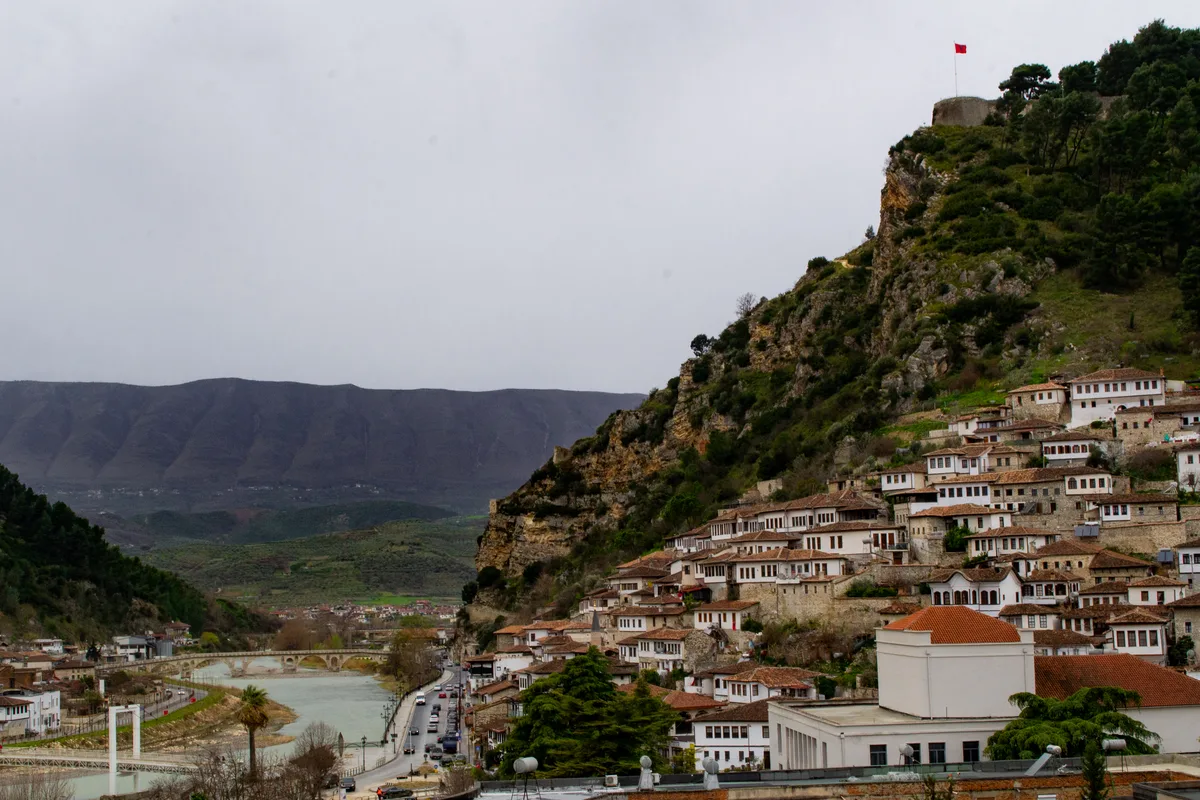
Berat is the Albanian old town that never stopped being a town. Below its castle rock, two historic quarters face each other across the Osum River — Mangalem, its white Ottoman houses stacked in tiers so steep that every window seems to stand on the roof of the house below, and Gorica, quieter and greener, on the far bank. Above them both, inside walls first raised in antiquity, people still live in the fortress: cooking, hanging washing, running small guesthouses and cafes between Byzantine churches. That continuity is the point of the place. Berat has been a settlement since Illyrian times — it was probably ancient Antipatrea, later the Byzantine Pulcheriopolis and the Slavic Belgrad, the “white city” — and almost nothing of its old core is a reconstruction or a stage set.
The wider country around it is covered in our Albania travel guide, because Berat only makes full sense inside an Albanian route. This berat travel guide does the city itself: the inhabited castle and the museum of icons inside it, the two quarters and the bridge between them, the canyon that justifies a second day, and the judgements a visit turns on — day trip or overnight, which bank to sleep on, and how Berat pairs with Gjirokaster on the road south.
That listing is worth stating precisely, because most pages blur it. Berat and Gjirokaster share one World Heritage property, the Historic Centres of Berat and Gjirokastra — Gjirokaster was inscribed in 2005 and Berat was added in 2008, as UNESCO’s own record at whc.unesco.org sets out. What UNESCO protected here is not a single monument but a way of building and living: tiered houses of the late 18th and 19th centuries, churches and mosques side by side, faiths sharing one small city for centuries. UNESCO also notes, honestly, that illegal building in the late 1990s dented the old town’s integrity — you will see the occasional concrete interloper among the tiled roofs. Berat is a living city with a protected core, not a sealed one, and it is better for being read that way.
At a Glance
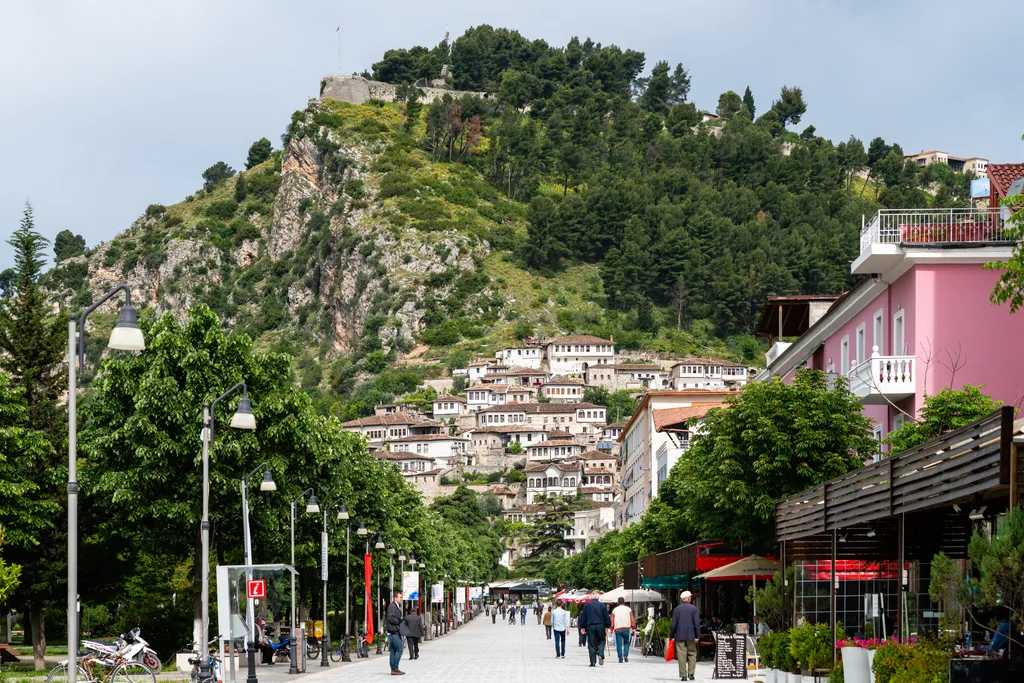
Berat divides into three pieces — the castle hill, the two quarters below it, and everything the river valley leads to — and a good visit touches all three rather than a whole day on one. Nothing in this guide prints a price or a timetable, deliberately: entry charges, museum arrangements and bus habits in Albania change often enough that any figure in print is a claim to check on the day, not a fact to budget on.
| Place or thing | Why it earns its place | Time character |
|---|---|---|
| Berat Castle (the Kala) | A fortress quarter people still live in – churches, lanes and views inside the walls | Two to three hours, unhurried |
| The Onufri Museum | Albania’s great icon collection, inside the castle’s cathedral | An hour inside the castle visit |
| Mangalem quarter | The thousand windows themselves, plus the old mosques and the Ethnographic Museum at its foot | A morning of steep lanes |
| Gorica and its bridge | The quiet Christian quarter, and the bank the famous view is taken from | Late afternoon into sunset |
| The lower town’s mosques and teqe | King Mosque, Lead Mosque, Bachelors’ Mosque and the Halveti Teqe within a few streets | An hour, combined with Mangalem |
| Osum Canyon and Bogova Waterfall | The gorge country south of the city – spring rafting, summer swimming | A full second day |
| Mount Tomorr | The great ridge behind the city, backdrop to every view and a Bektashi holy mountain | Present in every photograph |
Two judgements sit behind that table. First, Berat rewards staying the night in a way few day-trip towns do, because its two best hours are the first and last of the day — the lanes empty, the light rakes across the windows — and those are the hours a day trip from Tirana spends on the road. Second, the castle is not a sight you add to the old town; it is a third of it, and the visit works best when the three pieces are braided together rather than ticked off. Where Berat sits among the country’s other headline stops is covered in our round-up of the best places to visit in Albania.
Berat Castle – a Fortress That Never Emptied
The castle comes first in most visits and should, but it helps to arrive knowing what it is not. It is not a ruin, a museum with walls, or a monument quarter emptied for visitors. The Kala, as locals call it, is a walled neighbourhood on a rocky hill above the river, and it has been lived in continuously since long before the walls took their present shape. UNESCO’s summary gives the bones of it: the castle’s origins reach back to the 4th century BC, most of what stands was built in the 13th century, and its citadel holds Byzantine churches alongside mosques from the Ottoman centuries that began here in 1417. The walls themselves were strengthened under the Byzantine emperor Theodosius II in the 5th century, rebuilt under Justinian in the 6th, and rebuilt again in the 13th under the Despot of Epirus — a fortress patched by every age that needed it.
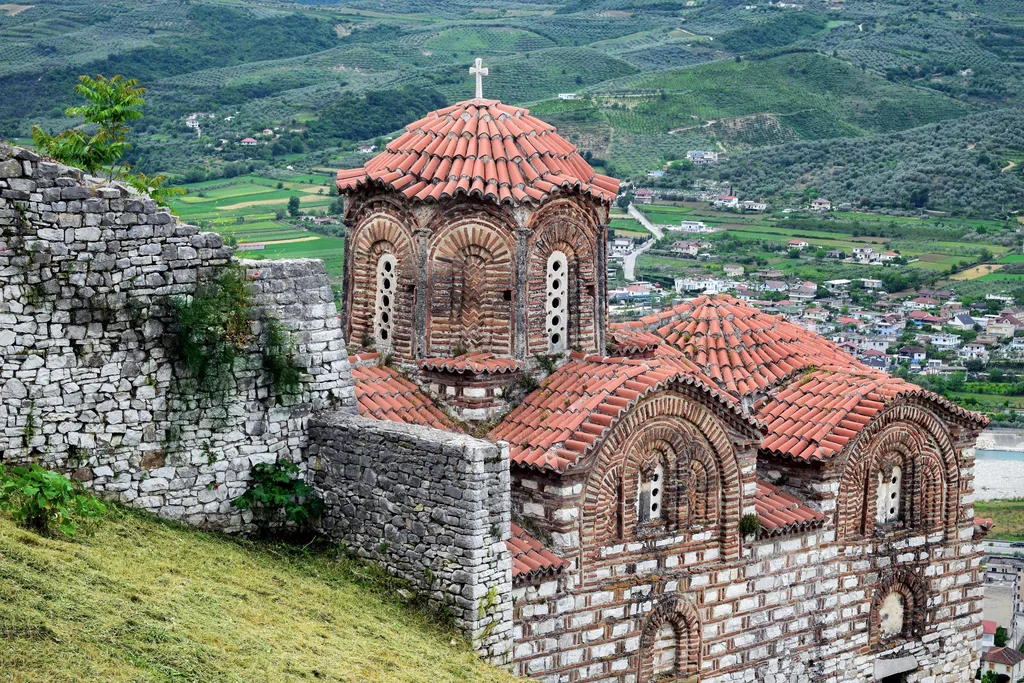
Inside, the fortress once held some twenty churches for its Christian population and a single mosque for the Ottoman garrison, and the survivors make the strangest and best walk in Berat. The Church of the Holy Trinity, cross-shaped and muralled, stands on the southern slope with the valley opening below it. The 13th-century Church of St Mary of Blachernae carries 16th-century wall paintings by Nikolla Onufri, son of the great Onufri. St Theodore’s church holds paintings by Onufri himself, and the little Church of St Michael clings to the rock outside the walls below. Among them, the garrison’s mosque — remembered as the Red Mosque, among the oldest in Albania — survives as ruins around a brick minaret that still stands. Churches and a mosque, frescoes and family homes: the castle is the whole of Berat’s layered history compressed into one walled hill, and it is still somebody’s address.
Give it two to three hours, not the brisk tour-bus circuit, and walk it like a neighbourhood, because it is one. Go up on foot through Mangalem if your knees allow — the cobbled climb is the historic approach, and worn stone is slippery when wet — or take the road and save your legs for the lanes. The finest view in the city is from the castle’s southern edge, where both quarters, the river and the bridge arrange themselves below you. There is a ticket kiosk at the gate; this guide prints no charge for it, or for any museum in Berat, because those figures change. Carry lek in small notes.
The Onufri Museum – the Red Nobody Else Could Mix
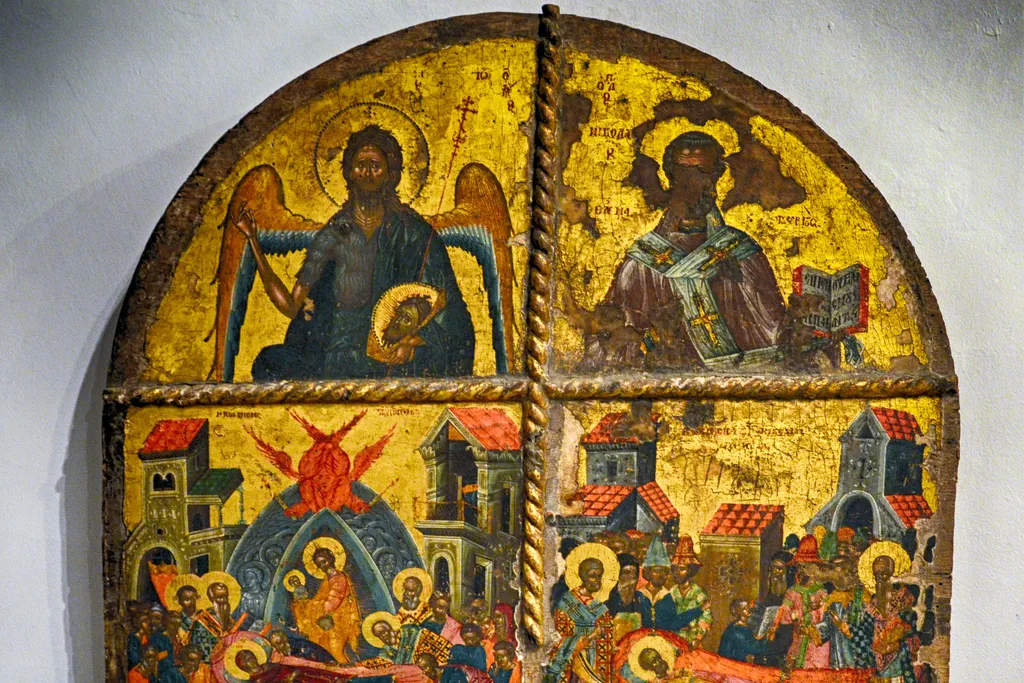
At the highest point of the castle quarter stands its cathedral, the Church of the Dormition of St Mary, rebuilt in 1797 on the foundations of an older church of the same name and the most representative post-Byzantine building in Berat. Since 1986 it has housed the Onufri National Iconographic Museum, the one interior in the city that no visit should skip. The museum was assembled from the funds of Albania’s churches and monasteries: out of some 1,500 objects gathered nationally, 173 were chosen for display here, 106 of them icons and 67 liturgical objects — silver Gospel covers, sacred vessels, carved work — spanning the 14th to the 20th centuries.
The name over the door belongs to the master who anchors the collection. Onufri, a priest as well as a painter, was the greatest Albanian artist of the 16th century, and his signature is a colour: a luminous, shining red that he introduced into icon painting and that later generations simply named after him, because nobody could match it. He also bent the stiff conventions of Byzantine iconography towards something more human — faces with individuality and expression, bodies that sit naturally in their scenes. His own hand declares itself across the country: an inscription found in a church in Kastoria reads, in his words, “I am Onufri, and come from the town of Berat.” Around his work the museum gathers the school he founded — his son Nikolla, who inherited the style if not quite the fire of it, the painter known as Onufër the Cypriot, David Selenica, Kostandin Shpataraku, and the Çetiri family of icon painters, whose work also fills the cathedral’s great carved and gilded wooden iconostasis of 1806.
The honest framing for the museum is scale. This is not a national gallery with wings; it is one consecrated church, three halls, and a concentration of quality that rewards an unhurried hour more than a dutiful march. Go while you are already inside the castle — the museum and the fortress explain each other, the icons giving faces to the churches you have just walked between — and let the red do its work in the dim light it was painted for. If you see one painted thing in Albania, the consensus of five centuries is that it should be this.
Mangalem – Reading the Thousand Windows
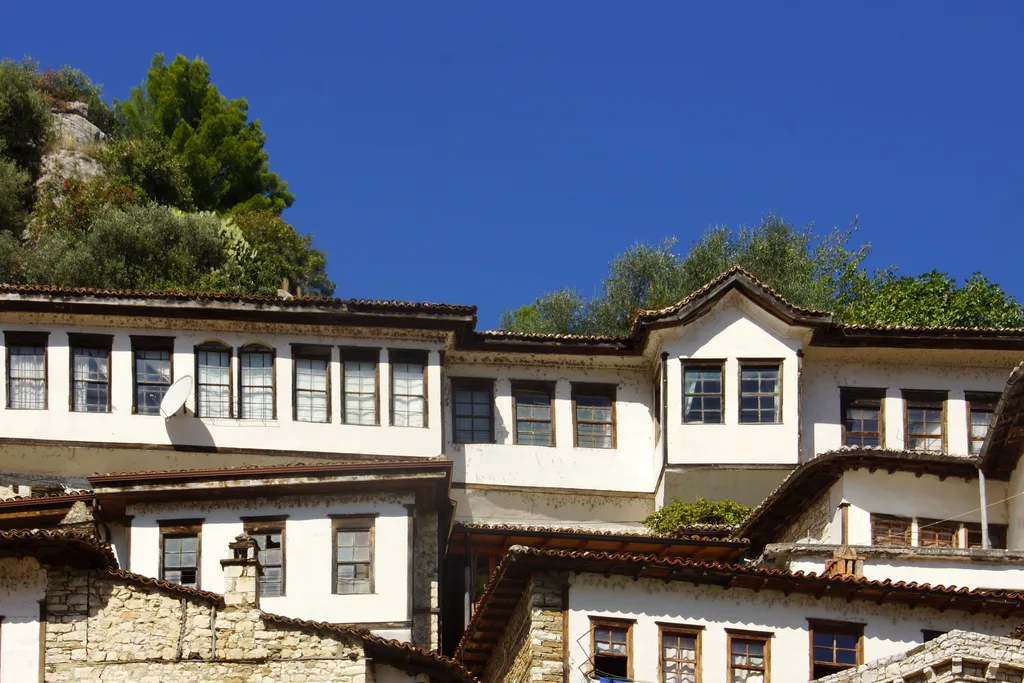
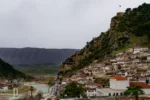
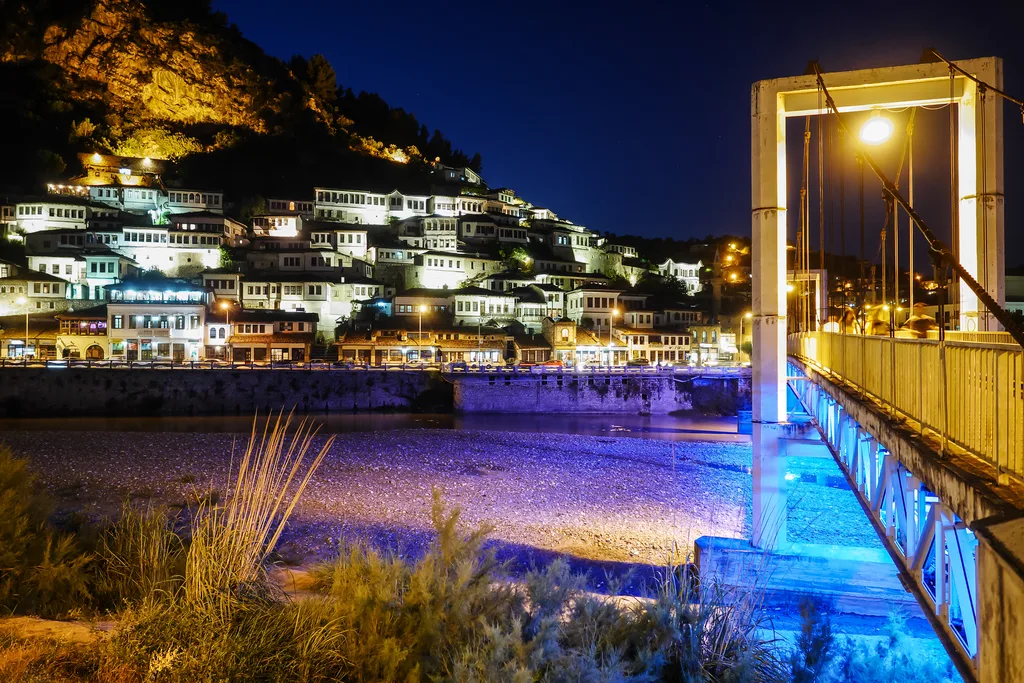
Mangalem is the quarter in every photograph of Berat, and it earns the attention honestly. Tier upon tier of white houses climb the slope beneath the castle, each storey set back a little from the one below, each facade a row of large windows catching the light off the river. Most of the houses date from the late 18th and 19th centuries, and UNESCO’s description of them is precise about the effect: predominantly horizontal in layout despite the slope, built to make abundant use of the entering daylight. Stand in Gorica at the right hour and the hillside is a wall of lit windows, one above another — the older Albanian version of the name translates as “the town of one window on top of another,” which is less poetic than “a thousand windows” and more accurate.
Traditionally this was the Muslim quarter, and its religious buildings stand at the foot of the hill where the lanes level out towards the river. The King Mosque, raised under Sultan Bayezid II around the turn of the 16th century, is the oldest mosque in the town and notable for its fine painted ceiling. A few streets away, the Lead Mosque of 1555 — its dome once sheeted in the lead that gives it its name — marks the centre of the old commercial town. The Bachelors’ Mosque of 1827, built for the young unmarried shop assistants of the bazaar, wears its decoration outside: painted flowers, plants and houses across its facade. And beside the King Mosque stands the Halveti Teqe, a Sufi prayer hall first raised in the 15th century and rebuilt in 1782 by Ahmet Kurt Pasha, known for its carved wooden ceiling. Four buildings, four centuries of one city’s faith, within a short walk of each other — that density, more than any single monument, is what the UNESCO listing means by coexistence.
The quarter’s other essential interior is a house. The National Ethnographic Museum, opened in 1979, occupies one of Mangalem’s finest 18th-century Ottoman homes, all stone below and timber above, with the open veranda — the çardak — that defines the type. Inside, the ground floor gives you the material culture of the old town whole: a hall laid out as a medieval street with traditional shops on both sides, an olive press and a wool press, great ceramic dishes, the house’s own well. Upstairs are the rooms as they were lived in — a village sitting room, a kitchen, a loom, the archive — furnished rather than labelled to death. Its subject is not faith or war but dinner, cloth and olive oil, and between the museum, the mosques and the lanes, Mangalem asks for a full morning.
Gorica and the Bridge – the Quarter That Watches Back
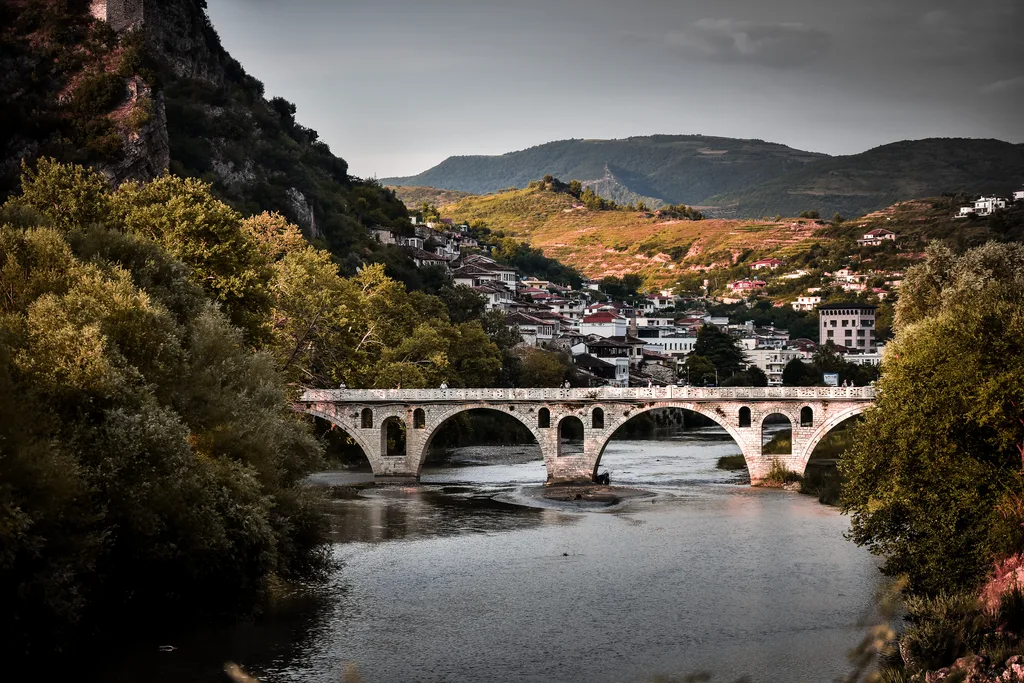
Every account of Berat photographs Mangalem, and almost every one of those photographs is taken from Gorica. The quarter across the river was traditionally the Christian half of town, and its great privilege is the view: from Gorica’s bank and lanes, the whole amphitheatre of the opposite hill — the tiers of windows, the castle rock above, the flag on the citadel — arranges itself in the composition the city is famous for. Gorica itself is the quieter experience. Its houses stand on gentler ground among gardens, its lanes carry local traffic rather than tour groups, and its old churches, St Spiridon and St Thomas among them, serve a living parish rather than an itinerary. Travellers who cross over find the register changes: less postcard, more village that happens to face one.
Local legend attaches to the bridge the kind of story bridges collect: a girl immured in the original structure to appease the spirits troubling its building — a foundation myth told of famous crossings all over the Balkans, and worth hearing here because the town tells it of its own bridge. What is certain is the fabric. The crossing at Gorica was first built in wood in 1780; the stone bridge you walk today, seven arches and 129 metres long, is a rebuilding of the 1920s. That date matters, because rival guides routinely sell it as an Ottoman stone bridge, full stop. The truth is better: an Ottoman crossing, renewed in stone by the modern town — the link between the quarters has been rebuilt by every era that inherited it, which is Berat’s whole story in one structure.
Time Gorica for the end of the day. In the late afternoon the sun swings round onto Mangalem’s facade, the windows light up tier by tier, and the bridge and the Gorica bank become the grandstand for the show the nickname promises. Cross back slowly, eat on whichever side you are sleeping: the two quarters are not two sights but one conversation across a river — Muslim and Christian, castle and garden suburb, the view and the place the view is from. A Berat visit that never crosses the bridge has only heard half of it.
Osum Canyon – the Day the River Takes Over
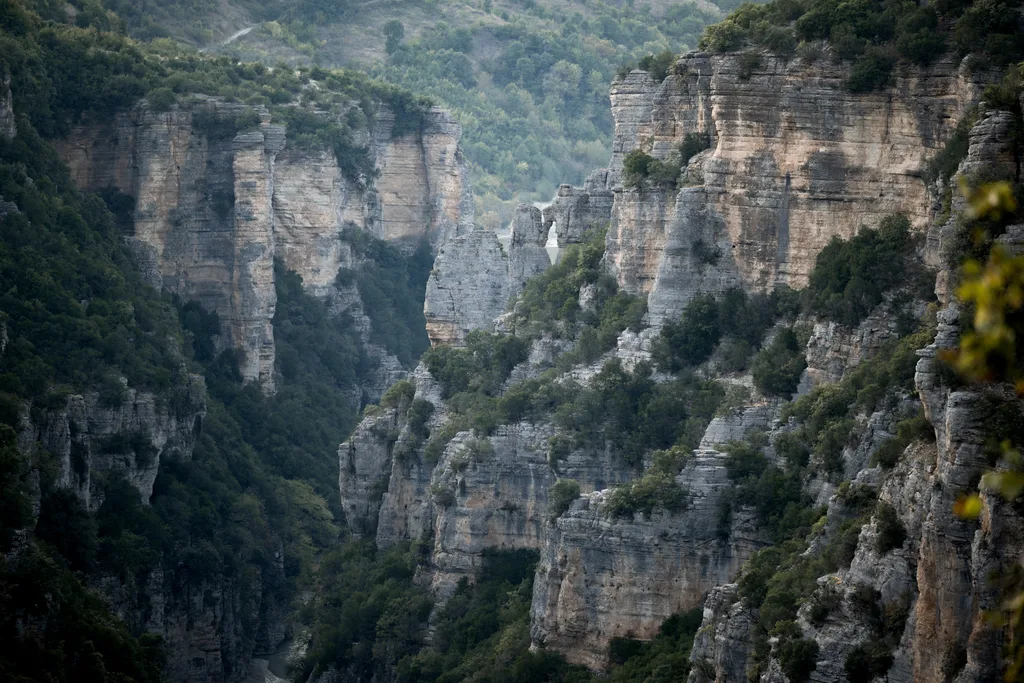
The Osum that slides politely past Berat’s boulevards has a second life an hour and a half to the south-east, and it is the reason to give Berat a second day. Beyond Çorovodë, in the Skrapar hills, the river has cut a gorge through the limestone plateau that runs for some 26 kilometres — walls in places around 80 metres high, narrowing here and there to little more than the river’s own width, opening elsewhere into chambered bends with waterfalls threading down the rock after rain. Albanians call it their Grand Canyon, and for once the comparison is a measurement rather than a boast: no windows, no minarets, just green water under white cliffs and the Tomorr massif standing over the plateau.
What you do in the canyon depends entirely on when you go — it is planned by season, not enthusiasm. In spring, when snowmelt and rain fill the river — roughly March into June, conditions deciding — local operators run guided rafting through the gorge, the water high enough to carry rafts through its corridors and past the side falls. As summer lowers the river, rafting gives way to gentler versions of the same day: tubing the calm stretches, walking the canyon floor where the water allows, swimming in the pools under the walls. On the same road, most canyon days pair the gorge with the Bogova Waterfall, where a stream drops some twenty metres into a deep, cold pool in the foothills of the Tomorr country — the swim of the trip, if you are built for cold water.
The honest practicalities are simple. The canyon is a full day from Berat, not an add-on to a castle morning; the road south through Poliçan into Skrapar is part of the experience, and the day runs to the operators’ timetable and the river’s mood, not yours. Book with the local outfits in Berat or Çorovodë who run the gorge in season, expect the plan to bend around water levels, and trust no printed price — what a rafting day costs belongs to the week you travel. A Berat stay with a canyon day in it is a different trip: the old town gives you the centuries, and the river gives you the landscape those centuries sat in.
Eating and Drinking – Vineyards, Tavernas and the Slow Evening
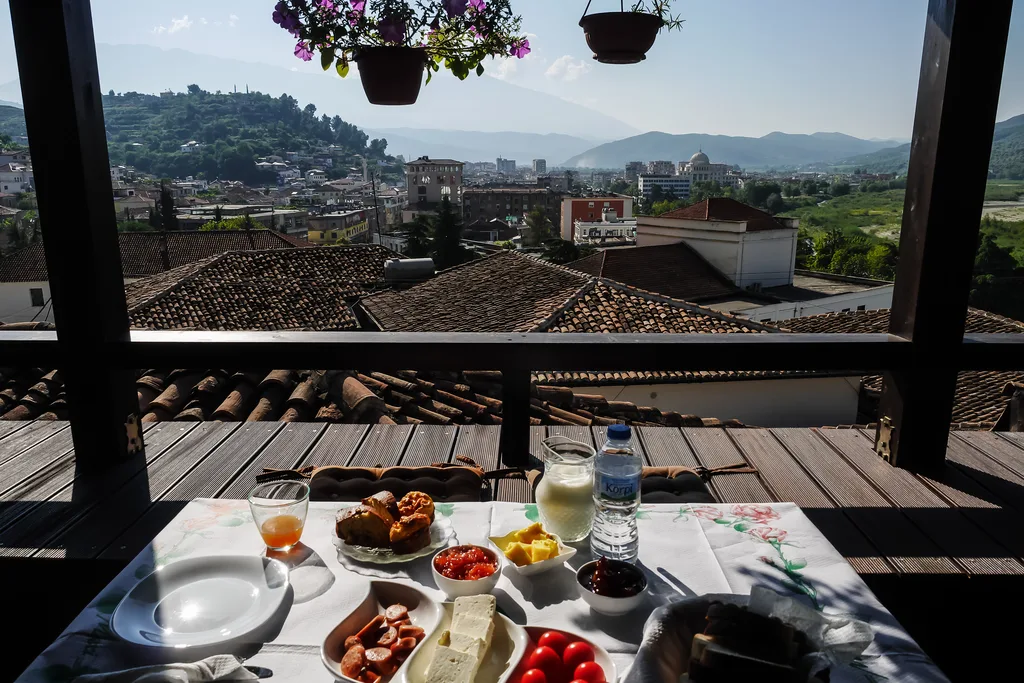
Berat eats like an inland Albanian town that has always fed itself from its own hills, and the pattern is more useful than any list of addresses in a city whose kitchens open, move and rename themselves between seasons. The ground rules: family-run tavernas in the old quarters and along the boulevard cook the central-Albanian repertoire — slow stews and oven dishes, grilled meats, stuffed peppers and aubergines, salads that taste of a garden rather than a supply chain. Stuffed vine leaves turn up everywhere, which is the landscape arriving on the plate: the hills around Berat are vine country, planted with the country’s own grapes, the white Shesh i Bardhë and the dark Shesh i Zi, and the same leaves that shade the fruit wrap the rice. In the guesthouses — and if you stay in the old town you should eat breakfast where you sleep — the morning table runs to bread, white cheese, eggs, olives, tomatoes and fruit preserves, taken on a terrace if the house has one, with the castle for a view.
The drinking follows the vines. Family wineries in the villages just outside the city open their cellars to visitors, pouring their own vintages alongside the stronger punctuation of raki, the grape spirit that begins and ends Albanian hospitality. This guide names no cellar door, deliberately: the pleasure of Berat wine country is that it is still small enough to be recommended by whoever is hosting you, and print would only favour the big places over the small. Ask where you are staying. The answer will be a family, a village a few minutes out of town, and a table under the vines — an arrangement that has outlasted every empire mentioned here.
And then there is the institution that organises the Berat evening without appearing in any sight list: the xhiro, the slow promenade that Albanian towns take at dusk. In Berat it flows along the riverside boulevard, families and teenagers all walking nowhere in particular at the pace of conversation, as the windows of Mangalem light up across the water and the cafes fill. Join it. A town that still takes its evening walk is telling you something about why its old quarters survived — they were never abandoned to become scenery. Dinner afterwards, late and unhurried, is simply the xhiro sitting down.
Where to Stay – Three Berats, Three Different Trips
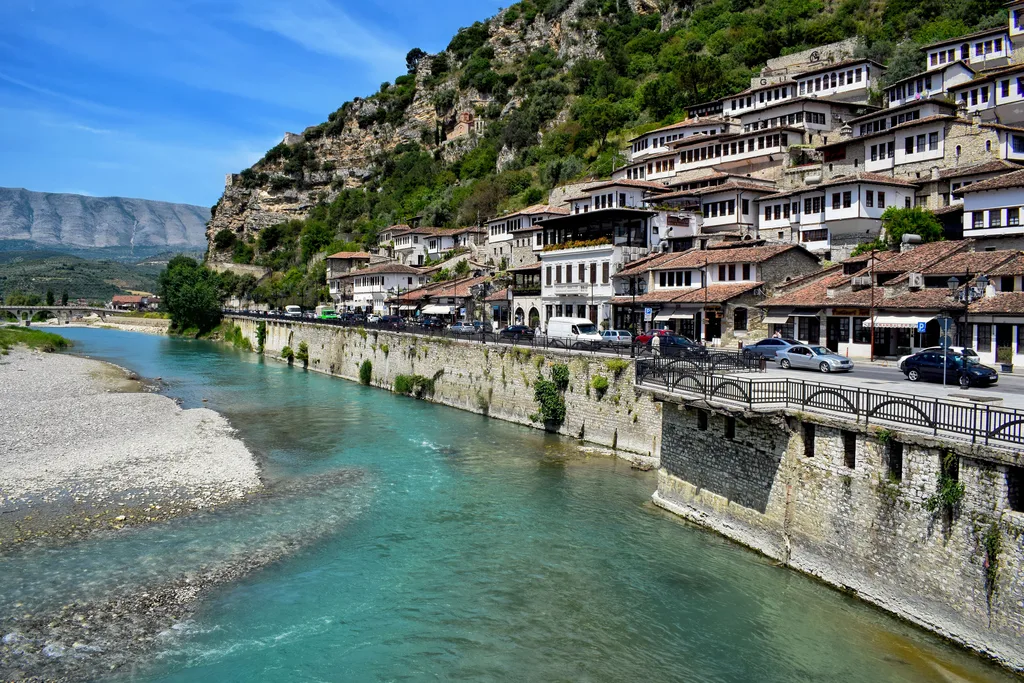
Berat offers three different nights within a few hundred metres of each other, and choosing between them shapes the visit more than any choice of hotel. This guide names areas, not properties — the old town’s guesthouse stock changes hands and names too fast for print to keep up, and the decision that matters is which Berat you wake up in.
Inside the castle is the romantic answer, and for a night or two it earns the word. A handful of family houses within the walls take guests, and sleeping inside a lived-in fortress — waking to church bells and the valley filling with light, walking out of your door into lanes that were old when the Ottomans arrived — is an experience almost no other European citadel still offers. The costs are practical and worth stating plainly: the climb, with luggage, up cobbles that are treacherous when wet; the quiet after dark, which is total; and the thin choice of places to eat once the day visitors leave. Taxis exist for the luggage problem. Nothing fixes the quiet except wanting it.
In Mangalem is the central answer: guesthouses and small hotels threaded through the famous quarter itself, restaurants at the foot of the hill, the boulevard and the bridge within minutes, and your own window among the thousand. It suits first visits and short ones — everything in this guide is walkable from a Mangalem base — though the quarter is a staircase with rooms attached, and a house high in the tiers will test your legs daily. In Gorica is the connoisseur’s answer, and the one repeat visitors drift towards: you give up being inside the postcard in exchange for looking at it, breakfasting over the river with Mangalem lit across the water, in a quarter that keeps village hours. The bridge makes the separation trivial — a minute’s walk — while the difference in register is real. A fourth, purely practical option exists in the newer town along the boulevard, where the larger hotels stand: easier parking, easier buses, no atmosphere. It suits only drivers passing through with an early start — and Berat deserves better than to be passed through.
Getting There – and Onwards to Gjirokaster
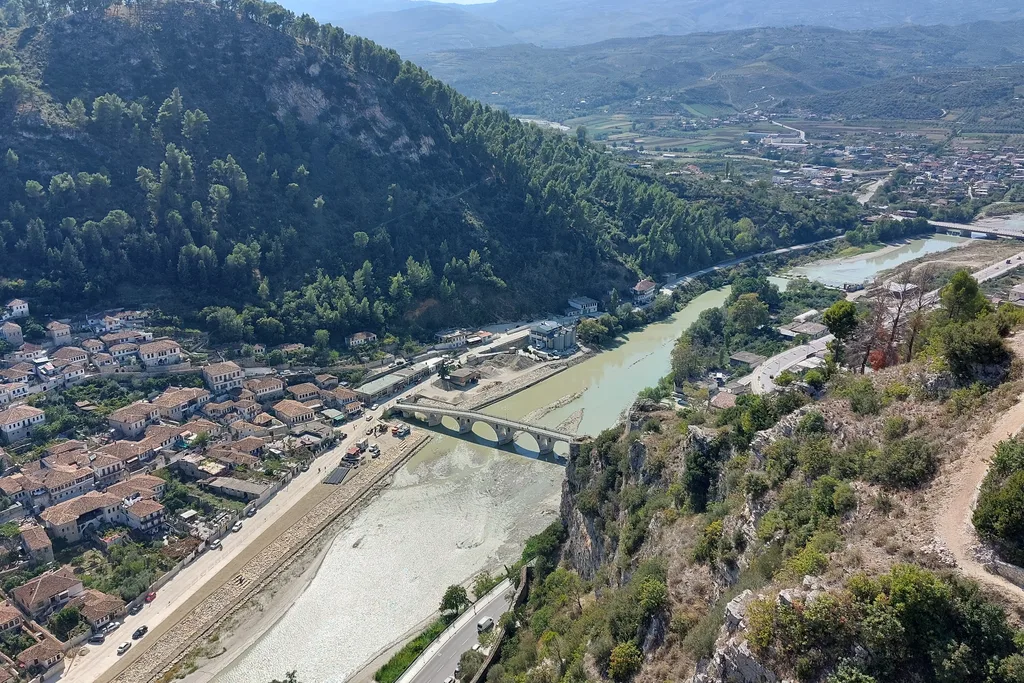
Berat has no airport and no railway; every arrival is by road, and the road is good. The nearest airport is Tirana’s, and from the capital the journey runs south past Durrës and Lushnjë — roughly two hours by car on a straightforward day, two and a half on a slow one, with buses and furgons covering the same route through the day from Tirana’s terminals. Berat’s own bus station stands outside the old town, a short local bus or taxi ride from the quarters — a small gap worth knowing before you arrive with a suitcase. Treat none of that as a timetable: Albanian intercity buses keep habits rather than published schedules, frequencies thicken in summer, and the correct method is the old one — ask at the station or your guesthouse the day before.
What makes Berat’s position interesting is not the trip in but the trip through. The city is the hinge of southern Albania: the point where a journey south from Tirana stops being a transfer and starts being a tour. South-east lie the Skrapar hills and the canyon country. West, under an hour away, the road runs to Fier and the coast. And due south, roughly three hours by road through the hills past Tepelenë, stands Gjirokaster — the other half of Berat’s own World Heritage listing, a stone-roofed citadel town in the Drino valley. Berat is the fortified town that stayed open, built by craftsmen and merchants; Gjirokaster is the citadel of the great landowners, all towers and slate. Together they are the complete sentence, and the loop that strings them — Tirana, Berat, Gjirokaster, then the coast at Sarandë and Ksamil before turning north — is the classic southern circuit.
The planning consequence follows directly. Berat handled as a day trip from Tirana is Berat reduced to a photograph; Berat handled as the first overnight of the southern loop is Berat at full strength — an evening xhiro, a morning in the castle before the buses, then the road south with the whole day in hand. Build the loop that way if you can. Neither UNESCO town asks for more than a day and a night of a first trip, and together they give a southern journey its spine, leaving the coast as the reward at the end rather than the whole of it.
Best Time to Visit – Spring Water, Summer Heat
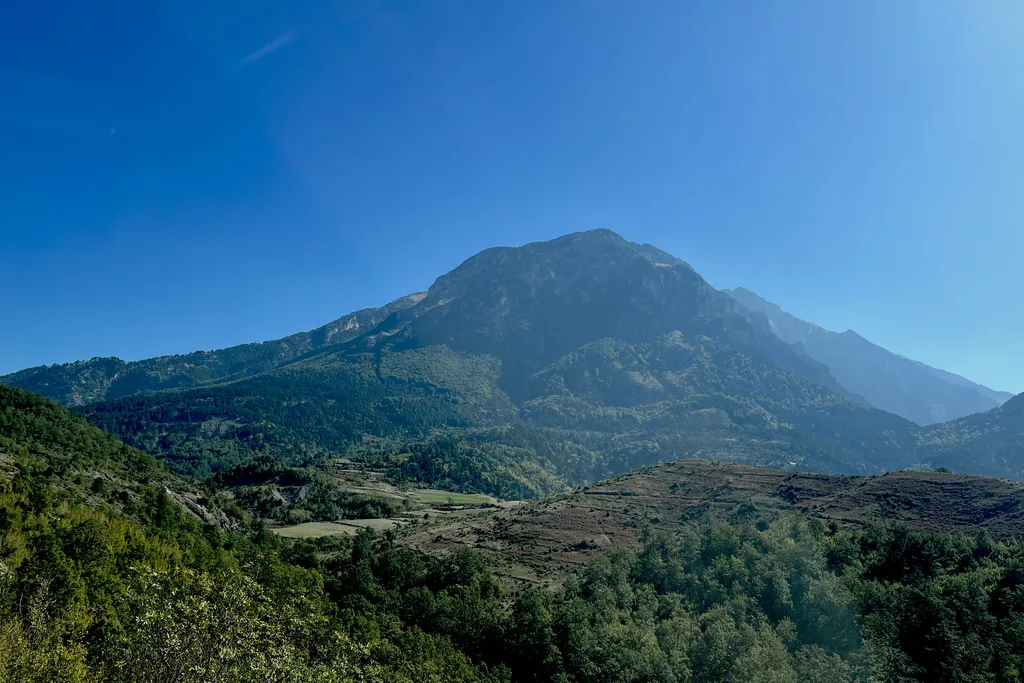
Berat is an inland town in a Mediterranean country, and its calendar is written by that fact, and by the great ridge of Mount Tomorr standing east of the city, weather-maker and backdrop in one. The mountain matters to more than the view. Tomorr is a national park and one of Albania’s holy places, sacred to the Bektashi order, whose pilgrims climb each August to the shrine of Abbas Ali near the summit; its snowfields feed the springs of the region, the Osum included. When you are deciding when to come to Berat, you are deciding which version of this valley you want.
Spring, from about April to June, is the consensus answer and the right one. The hills are green, the lanes are comfortable at midday, the river runs high enough for the canyon’s rafting season, and the old town is awake without being crowded. Summer, July and August, is the honest problem: Berat in high summer is hot in a way the coast never is, with daytime highs averaging in the low-to-mid thirties and the castle climb at noon a genuine exertion. It is not impossible — it is a matter of tactics, castle at dawn, museums and long lunches through the heat, Gorica and the xhiro after dark — but know that you are choosing the hardest version of the town. Autumn, September into October, runs spring close: warm light, the grape harvest in the vineyards around the city, the river settling, the crowds gone. Winter is the quiet, wet season — the year’s rain concentrates in the late-autumn and winter months — and belongs to travellers who want the castle and the icons nearly to themselves, do not mind short grey days, and accept that the canyon is a view rather than an activity. The rule prints in one line: come in late spring or early autumn if your dates are free; come in summer with a dawn-and-dusk plan; and never let the season talk you out of the overnight.
Frequently Asked Questions
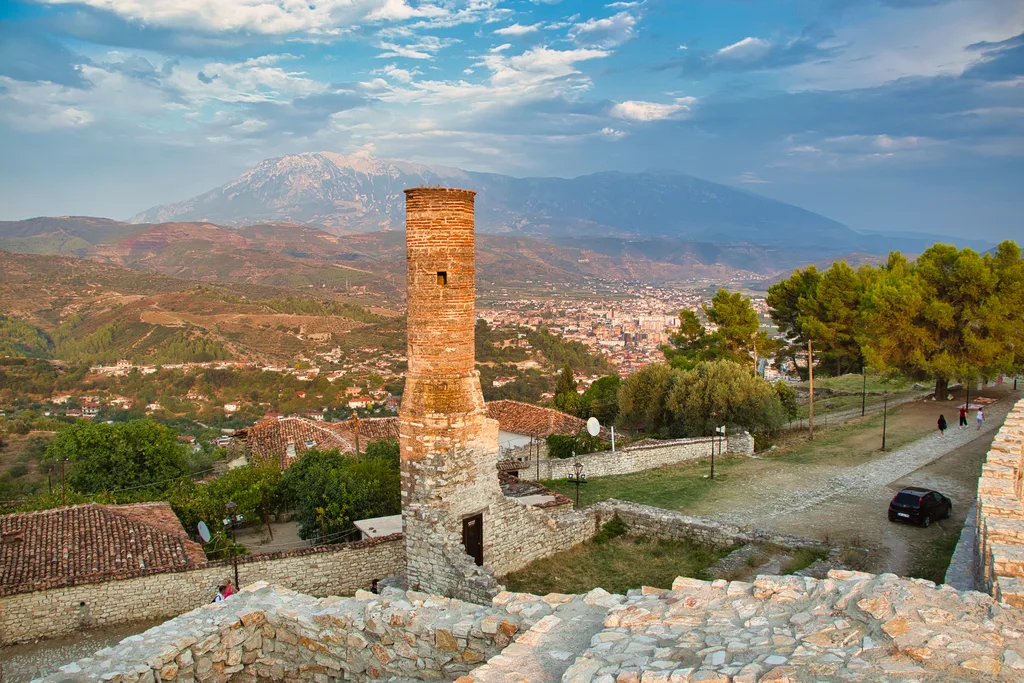
Six questions decide most Berat trips, and they are answered here the way the sections above argue them — briefly, and without the prices and timetables that rot faster than any answer can travel.
How many days do you need in Berat?
One full day covers the ground — castle and Onufri Museum, both quarters, the bridge at sunset — and two days cover the place, adding the Osum Canyon day trip and the unhurried mornings and evenings that are Berat at its best. A single night is the minimum this guide recommends; two is the comfortable version.
Is Berat worth it as a day trip from Tirana?
It is possible and popular — around two hours each way, leaving roughly six hours in the city, which is genuinely enough for the castle, the museum and a walk to Gorica. What it cannot include is Berat at its best hours: the empty castle lanes of early morning and the windows lighting up at dusk. If a day trip is all your itinerary allows, take it and go early. If you can free one night, the overnight is the better trip by a distance.
Why is Berat called the City of a Thousand Windows?
Because of the houses of Mangalem and Gorica: tiered Ottoman-era homes whose facades are mostly window, stacked so closely up the hillside that from across the river the whole slope reads as a single wall of glass and whitewash. The older Albanian form of the nickname is “one window on top of another” — which, standing in Gorica at sunset, is barely an exaggeration.
Does it cost anything to enter Berat Castle?
There is a ticket kiosk at the castle gate, and the museums charge as museums do — but this guide deliberately prints no figures, because entry charges in Albania change often and any published number would be unreliable by the time you travel. Carry lek in small notes, expect the sums to be modest by European standards, and confirm arrangements on the day.
Can you visit Berat and Gjirokaster on the same trip?
Not only can you — you should. The two towns share a single UNESCO listing, sit roughly three hours apart by road, and complete each other: Berat the open merchants’ town of windows and icons, Gjirokaster the closed citadel town of stone towers and slate roofs. One night in each is the spine of the classic southern Albanian loop, with the coast beyond Gjirokaster next.
When can you raft the Osum Canyon?
In spring, when snowmelt and rain raise the river — broadly March into June, with the exact season set by the water each year. Through the summer the river drops, and the canyon day becomes tubing, walking and swimming instead. Either way it is a guided day with local operators from Berat or Çorovodë, and the state of the river has the final word.
The Short Version
Give Berat a night and it gives you the most complete old town in Albania. Climb to the castle while the lanes are quiet and walk a fortress that is still a neighbourhood — Byzantine churches, a ruined mosque’s minaret, family homes and the valley arranged below. Spend an hour inside its cathedral with Onufri’s icons and the red that nobody else could mix. Walk Mangalem’s tiers in the morning, read its mosques and its ethnographic house at the foot of the hill, then cross to Gorica in the late afternoon and watch the famous hillside light up window by window from the bank it is always photographed from. Take the second day for the Osum Canyon if the season gives you water. Eat where the guesthouses send you, drink the local wine under somebody’s vines, and take the xhiro at dusk like a citizen.
Then let Berat do its other job. It is the hinge of the south — the first overnight on the road from the capital to Gjirokaster and the coast, half of a World Heritage listing that only makes sense whole. The wider routes are in our Albania travel guide; the argument here is simpler. Most old towns in Europe ask to be looked at. Berat, lived in for two and a half thousand years and counting, asks to be stayed in — briefly, on foot, and after dark, when a thousand windows answer the name.