Jordan UNESCO World Heritage Sites – All 8 Inscribed, from Petra to the Aqaba Reef
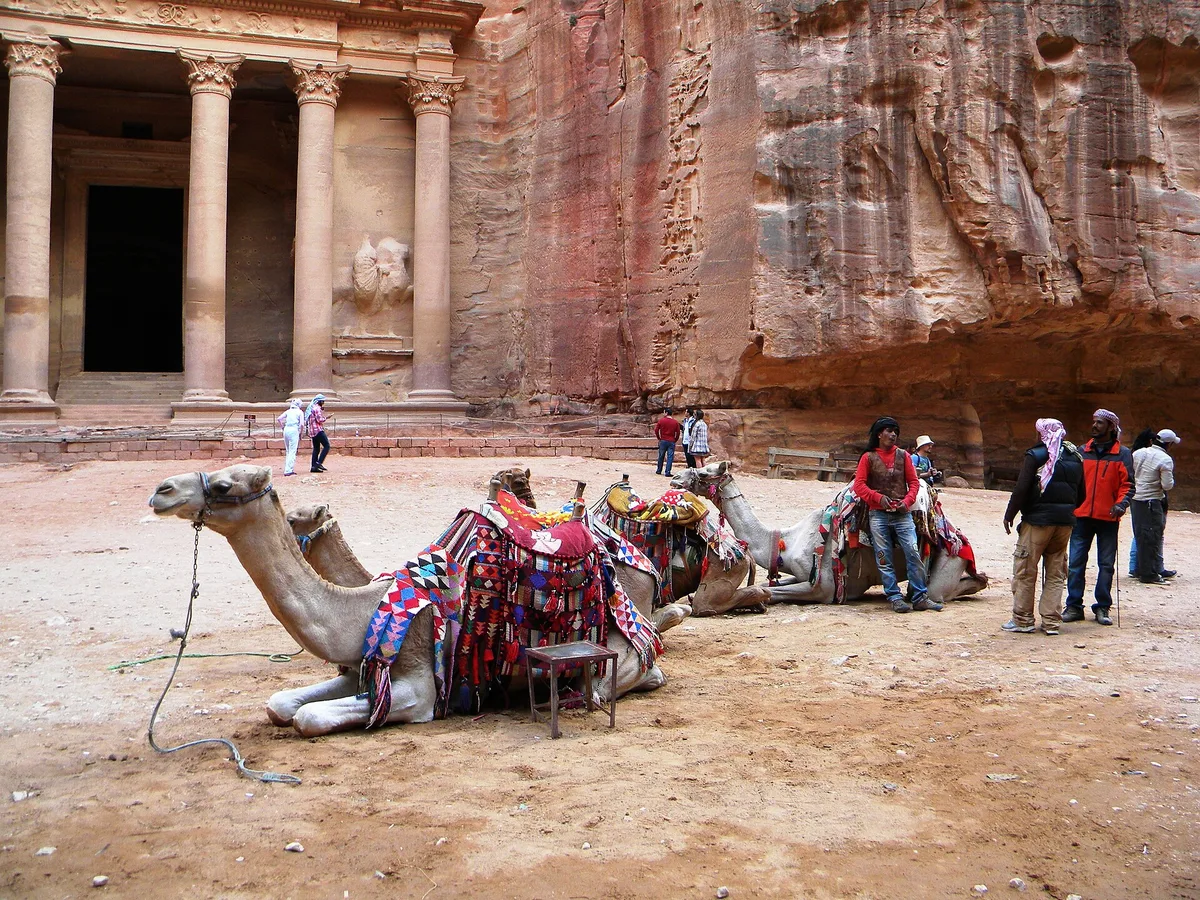
Ask a room of travellers how many UNESCO World Heritage Sites Jordan has and you will get confident answers of five, six and seven — all of them wrong, and all of them once right. The jordan unesco world heritage sites now number eight, and the list changed as recently as 2026, when a coral reef in the Gulf of Aqaba joined a roll that began in 1985 with Petra. In between came a painted Umayyad bath house, a mosaic town still mostly buried, a desert inscribed for both its rocks and its rock art, the riverbank where Christian tradition places the baptism of Jesus, a living town of golden limestone, and a black basalt village in the northern Hauran. Eight inscriptions, six of them cultural, one natural and one mixed, spread across a country you can drive end to end in a day.
This guide treats the list itself as the subject. Each site below gets its inscription year, the formal reasons UNESCO accepted it — the criteria, translated out of committee language into plain English — and what that recognition actually covers, which is sometimes more and sometimes less than the brochures imply. After the eight comes the part most pages skip or fudge: the Tentative List, the thirteen Jordanian sites that are officially waiting for nomination but are not World Heritage Sites, however often they are advertised as such. Jerash is the famous case. If you read nothing else here, read its entry in the FAQ before you repeat the claim that it is inscribed. The full official record, which this page follows throughout, is UNESCO’s Jordan country page at whc.unesco.org. Jordan signed up early — it ratified the World Heritage Convention in 1975 — yet its inscriptions arrived in bursts: two in 1985, then long silences broken one site at a time across four decades. That pattern is itself information. Getting onto this list is slow, argued and selective, which is precisely why the list is worth travelling by.
At a Glance – the Eight Inscriptions
| Site | Year inscribed | Type | UNESCO criteria |
|---|---|---|---|
| Petra | 1985 | Cultural | (i), (iii), (iv) |
| Quseir Amra | 1985 | Cultural | (i), (iii), (iv) |
| Um er-Rasas (Kastrom Mefa’a) | 2004 | Cultural | (i), (iv), (vi) |
| Wadi Rum Protected Area | 2011 | Mixed | (iii), (v), (vii) |
| Baptism Site “Bethany Beyond the Jordan” (Al-Maghtas) | 2015 | Cultural | (iii), (vi) |
| As-Salt – The Place of Tolerance and Urban Hospitality | 2021 | Cultural | (ii), (iii) |
| Umm Al-Jimal | 2024 | Cultural | (iii) |
| Aqaba Marine Reserve | 2026 | Natural | (ix), (x) |
The criteria column needs one paragraph of translation, because it is the whole logic of the list. UNESCO inscribes a property only if it meets at least one of ten criteria and demonstrates what the Convention calls outstanding universal value. Criteria (i) to (vi) are cultural — masterpieces of human creativity, testimony to civilisations living or vanished, outstanding examples of building types or landscapes, places associated with events and traditions of universal significance. Criteria (vii) to (x) are natural — superlative landscapes, the story of the Earth’s geology, living ecosystems and the habitats of threatened species. A “mixed” property, and Jordan has exactly one, clears both bars at once. When a section below says a site was inscribed under criterion (iii), it means UNESCO accepted it as exceptional testimony to a culture or civilisation — the single most common reason on Jordan’s list, appearing in six of the eight inscriptions.
One more piece of reading equipment before the sites themselves. An inscription is not a review, a ranking or a star rating, and it is not permanent by right — properties carry management obligations, and UNESCO’s own files on Jordan include regular state-of-conservation reports on Petra, the Baptism Site, Um er-Rasas and Wadi Rum. What inscription does do is draw a legal and moral boundary around a defined property and declare, on the record, why that specific place matters to everyone rather than only to the country that holds it. Read the eight sections that follow as eight separate arguments that Jordan made to the world, four decades apart — because that is exactly what they were. One reassurance for travellers who follow conservation headlines from home: for all the monitoring and the management reports, none of Jordan’s eight currently sits on the List of World Heritage in Danger.
Petra, 1985 – the Rock-Cut Caravan City
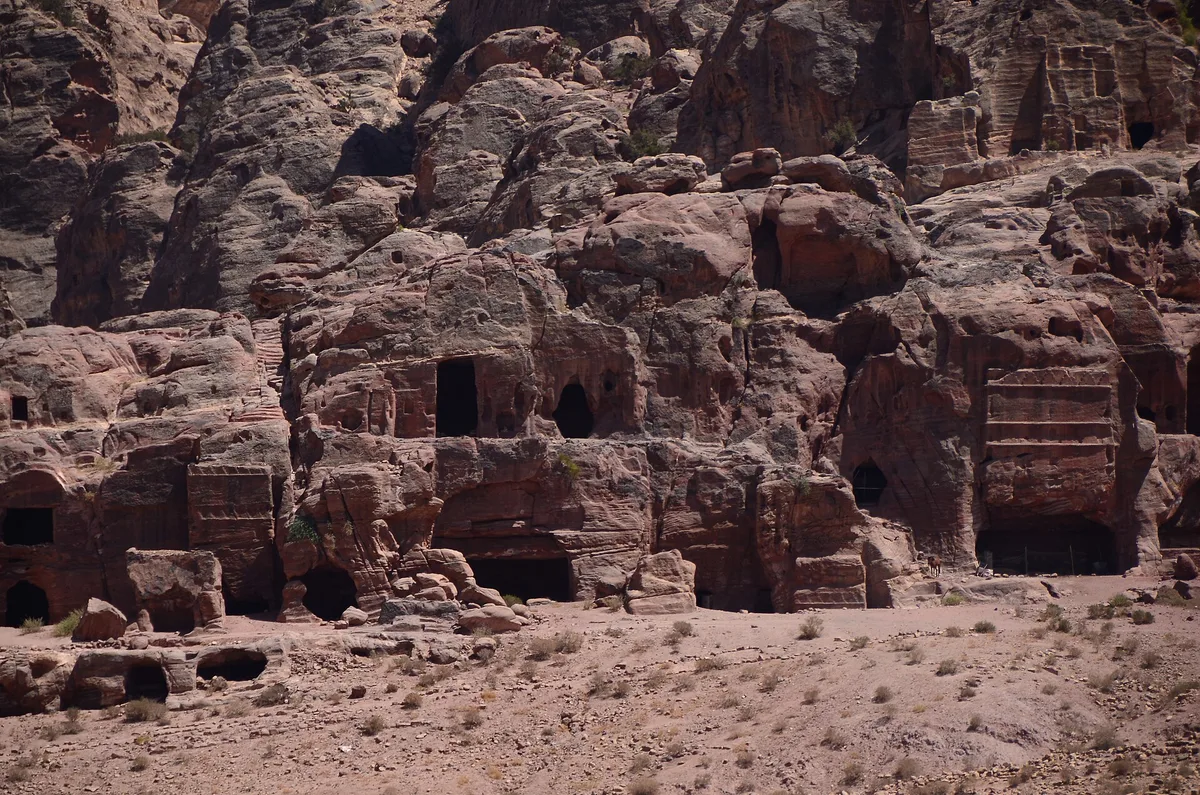
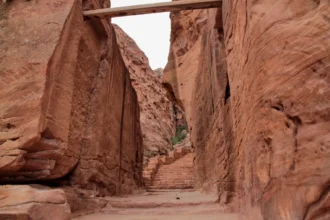
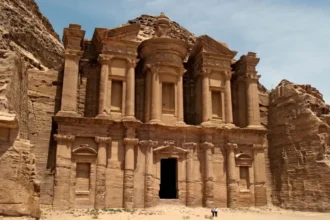
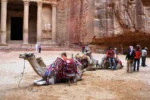
Petra was among the earliest inscriptions anywhere in the Arab world, and its file still reads like the template for how a desert city earns a place on the list. The formal case rests on three criteria. Under (i), the Treasury, the Monastery and the Royal Tombs are masterpieces of rock-cut architecture, Hellenistic facades carved with an assurance that still stops engineers mid-sentence. Under (iii), the city is unique testimony to the Nabataeans, the Arab trading civilisation that grew rich moving frankincense and spices between Arabia, Egypt and the Mediterranean and then vanished from history so completely that its capital was lost to the outside world for centuries. Under (iv), Petra is an outstanding example of a landscape made habitable by ingenuity — the dams, cisterns, channels and ceramic pipelines that caught flash-flood water in a wadi system and kept a city of gardens alive in the desert.
The boundary matters as much as the reasons. The inscribed property is not the Treasury photograph; it is the whole archaeological park, a protected area of more than 26,000 hectares covering the basin, the outlying suburbs, Little Petra and the mountains around them. That scale explains both Petra’s survival and its management problem — the same UNESCO file that celebrates the site also carries decades of state-of-conservation reports about erosion, salt damage to the sandstone and visitor pressure on the Siq. Inscription, at Petra, is a forty-year-old argument between fame and fragility that is still being refereed.
For the practical version — routes, trails, the Monastery climb, the back-door path from Little Petra — our dedicated petra travel guide walks the site in full. What belongs here is the inscription’s own bottom line: Petra is not on the list because it is beautiful, though it is. It is on the list because a vanished civilisation left, in one defended basin, the most complete surviving evidence of how it built, traded, worshipped, stored water and buried its kings. Everything else in Jordan’s eight is measured against it.
Quseir Amra, 1985 – the Painted Bath House in the Desert
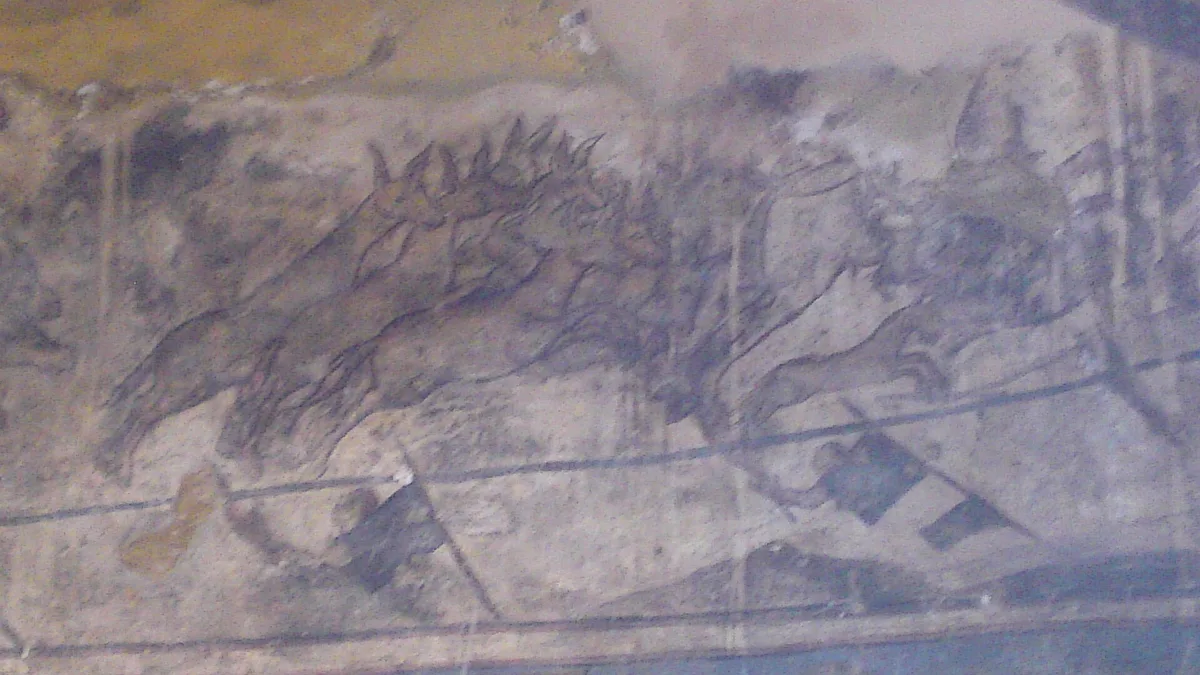
Jordan’s second 1985 inscription could hardly be smaller or stranger. Quseir Amra is a single early eighth-century Umayyad bath house and audience hall standing in flat desert east of Amman, and its exterior gives almost nothing away — a plain stone shed of a building. The inscription is for what is painted inside it. The walls and vaults carry frescoes of hunting scenes, bathers, musicians, dancing figures, the rulers of the age and a zodiac mapped across a dome — the largest body of figurative painting to survive from early Islam, made for a caliph’s private pleasure at a moment when the art of an empire was being invented. UNESCO’s criteria mirror Petra’s — (i), (iii) and (iv) — masterpiece, testimony to a civilisation, and outstanding example of a building type: the desert castle, in its most complete surviving form.
The context sharpens the point. The Umayyad desert castles are usually visited as a loop from Amman, and of the standard stops only Quseir Amra is inscribed. Qasr Kharana down the road is on neither the World Heritage List nor the Tentative List; Qasr Azraq, Lawrence’s headquarters, is in the same position; two other desert residences, Qasr Al-Mushatta and Al Qastal, sit on the Tentative List, a formal step below. Travellers routinely come home believing they have seen three UNESCO castles. They have seen one — and fortunately it is the one whose interior justifies the entire excursion on its own.
Amra also carries the quietest conservation story of the eight. Its frescoes survived because the building was abandoned early and the desert kept visitors away for a thousand years; they are threatened now by exactly the forces inscription brings, including humidity, salts and well-meaning tourism. The building is small, the visit is short, and the paintings ask for slowness rather than coverage. Stand under the zodiac dome and let the room be the whole point. Of Jordan’s eight inscriptions, this is the one where the outstanding universal value fits inside a single chamber — and needs a torch-lit ten minutes, not a day, to make its case.
Um er-Rasas, 2004 – the Mosaic Town Still Mostly Underground
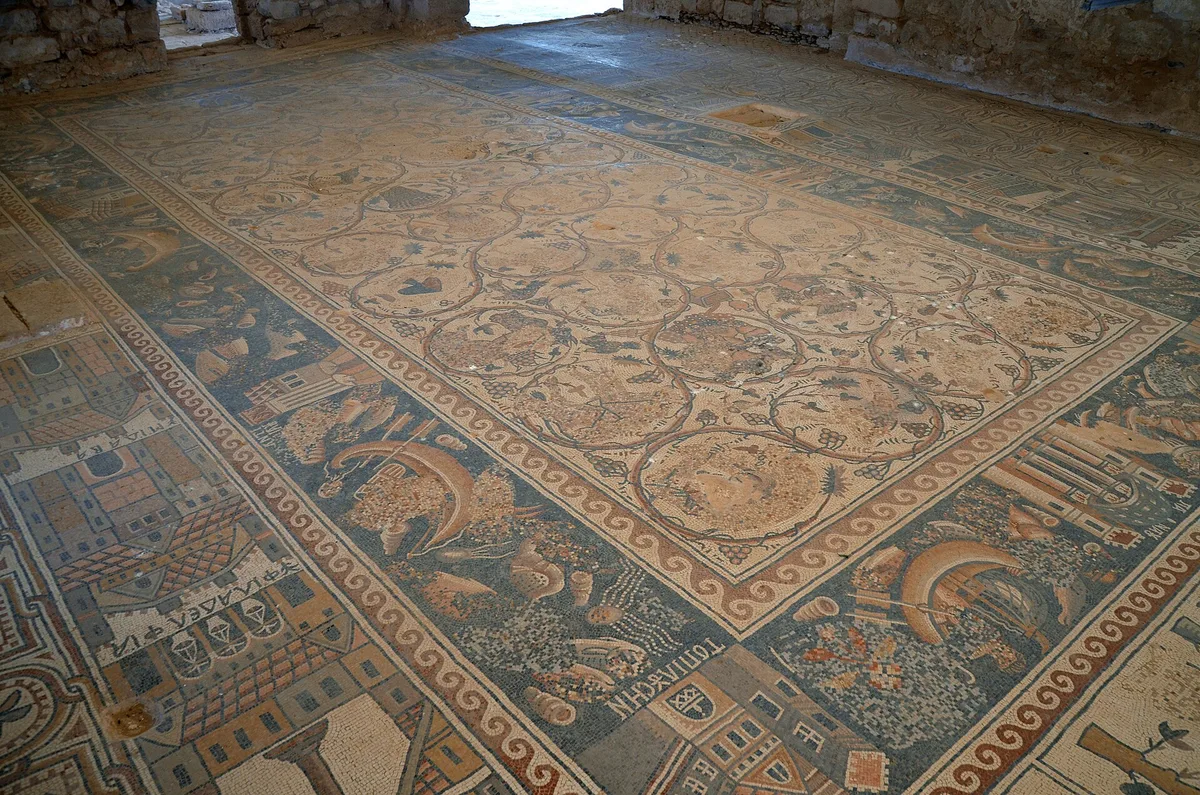
Nineteen years passed before Jordan added a third site, and it chose the least developed of them all. Um er-Rasas, south-east of Madaba, began as a Roman fortified camp — Kastrom Mefa’a, a rectangle of walls on the desert fringe — and grew beyond its walls into a Byzantine town of churches, houses and towers, later lived in under Islam. Its inscription in 2004 rests on criteria (i), (iv) and (vi). The (i) is the floor of the Church of Saint Stephen, an eighth-century mosaic that frames a portrait of the region itself: labelled depictions of the cities of the Holy Land, from Jerusalem and Gaza to the towns east of the Jordan, laid out in stone cubes with a draughtsman’s care. It is a map you stand on, made by a congregation that wanted its whole world inside its church.
The (iv) is the town plan itself — an outstanding example of a military camp that outgrew its purpose and became a settled, church-building community, its Roman walls still legible in the later streets. The (vi) belongs to two stark towers standing apart from the ruins, identified as the platforms of stylite monks, the ascetics who lived for years atop pillars in prayer. Surviving evidence of that strange and influential practice is rare anywhere; at Um er-Rasas the towers rise over an empty landscape exactly as their occupants arranged.
What makes the visit unlike any other inscribed site in Jordan is how little of it you see. Most of the town remains unexcavated — grassed-over mounds and wall lines running out from the fenced core — and UNESCO’s file treats that buried completeness as part of the value, not a defect. You walk a site that is mostly still an archive. Pair it with Madaba, half an hour away, whose famous map mosaic and Um er-Rasas’s city portraits belong to the same mosaic-making world; the two together are the strongest half-day in Jordan for anyone who cares about the Byzantine centuries.
Wadi Rum, 2011 – the One Site Inscribed for Both Culture and Nature
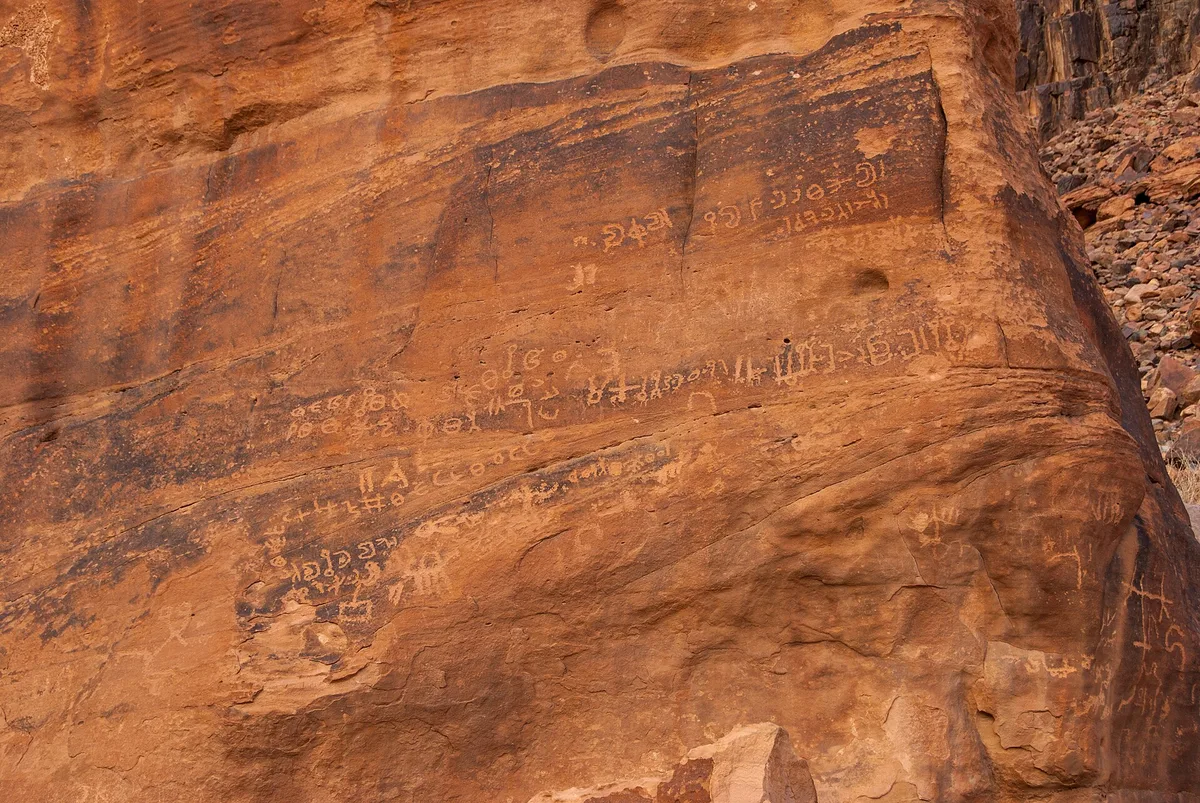
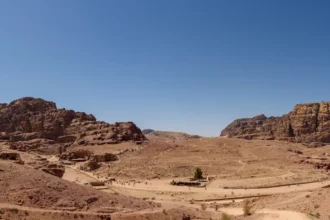
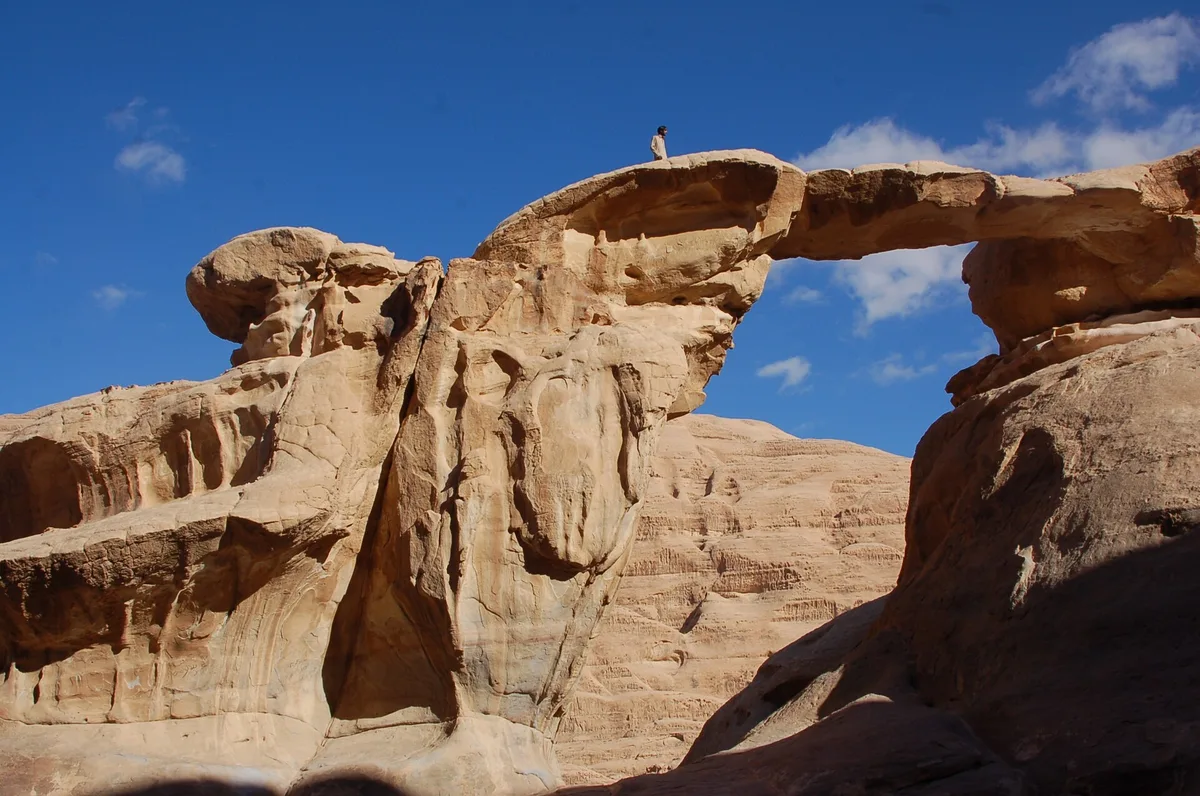
Wadi Rum is Jordan’s only mixed property, and the double inscription is the most honest description of the place ever put on paper. The natural case, under criterion (vii), is the landscape itself — a protected area of some 74,000 hectares where granite and sandstone massifs, narrow gorges, natural arches, caves and fault scarps make up one of the world’s great desert landform libraries. The cultural case, under (iii) and (v), is written on that landscape: tens of thousands of petroglyphs, inscriptions and archaeological traces recording roughly 12,000 years of people living in, crossing and marking this desert — Thamudic, Nabataean and Arabic texts, hunting scenes, camel caravans, the graffiti of pastoralists who treated the cliffs as a noticeboard across millennia.
That pairing explains something travellers feel in Rum without naming. Many deserts are empty and beautiful. Rum is inhabited in its stones — the inscriptions cluster exactly where water, shade and passage made people stop, so the human record and the geology explain each other at every halt on a jeep route. UNESCO inscribed not a backdrop but a relationship: a traditional land use, criterion (v)’s concern, in which Bedouin pastoral life continued inside a dramatic and fragile landscape into living memory, and in a real sense continues still in the villages at the protected area’s edge.
Two clarifications belong on the record. The famous film history — Lawrence of Arabia, The Martian, the dunes standing in for alien planets — played no part in the inscription and postdates most of the value by thousands of years; the desert was not recognised for looking like Mars. And the property is the protected area, not the whole Rum region: the boundary follows the reserve, which is why the camps and tours operate under rules a merely famous landscape would never impose. Sleep inside that boundary if you can. The inscription’s two halves, the carved rock and the dark above it, are best read after the day jeeps have gone home.
The Baptism Site, 2015 – Al-Maghtas and the Tradition of Pilgrimage
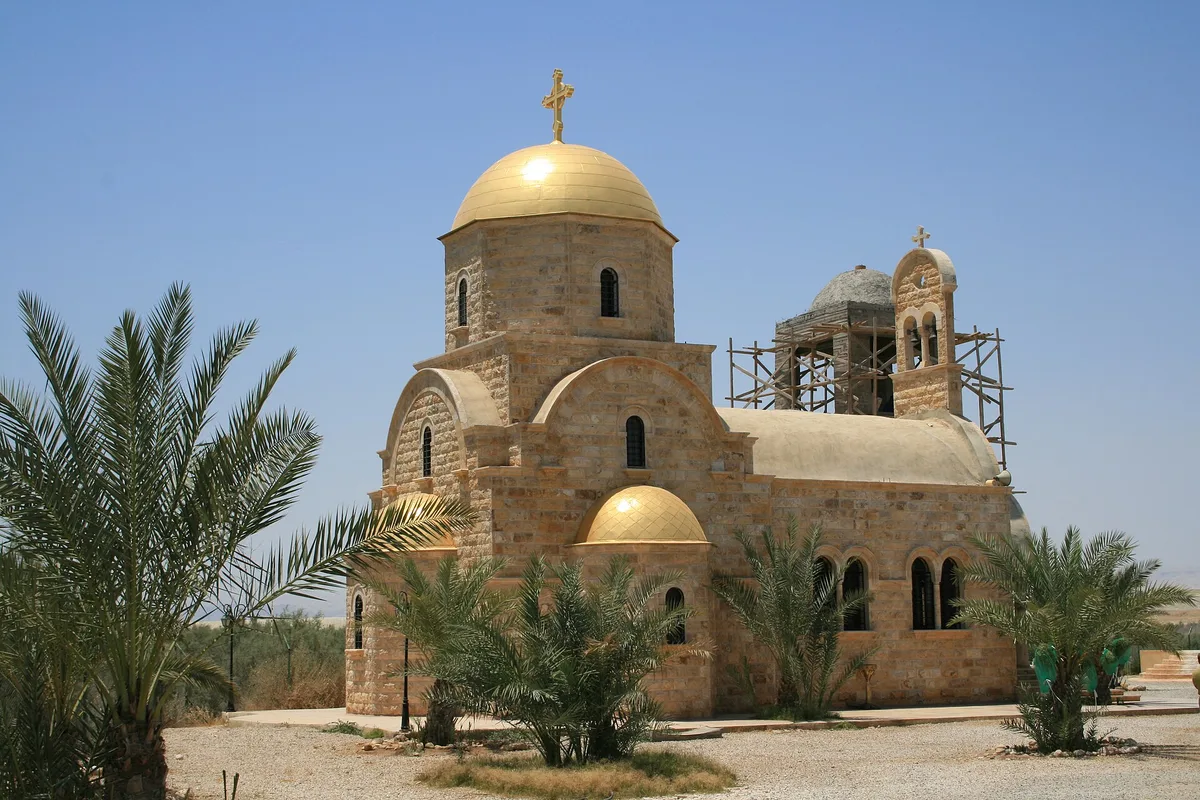
The fifth inscription is the one where UNESCO’s language does the most careful work, and it is worth following its lead. The Baptism Site “Bethany Beyond the Jordan” (Al-Maghtas), in the Jordan Valley north of the Dead Sea, was inscribed in 2015 under criteria (iii) and (vi). Criterion (iii) recognises the site as exceptional testimony to the tradition of baptism and of pilgrimage to this riverbank — a tradition documented in the ground itself, in remains running from the fourth to the fifteenth century: churches, chapels, a monastery, hermit caves, water systems, pools and a cruciform baptismal pool, spread across two archaeological areas, Tell el-Kharrar — Elijah’s Hill — and the churches of St John the Baptist near the river. Criterion (vi) records the direct association with the baptism of Jesus by John the Baptist, accepted as having taken place here by the majority of Christian denominations — UNESCO’s own framing, and the right one. The listing recognises the tradition and its archaeology; it does not ask the visitor to settle theology.
What that means on the ground is a site whose power is in accumulation rather than spectacle. Byzantine pilgrims scratched graffiti, hermits cut caves into the marl hills, churches rose and were rebuilt by the river, and after long abandonment the area was demined in the 1990s and excavated — the finds landing, one after another, where the early pilgrim accounts said they should. Pilgrimage continues today under every denomination’s flag, in a string of modern churches rising just outside the protected core, and baptisms still take place in the river’s slow green water.
Judge the visit by the right standard. The Jordan here is a modest stream, shrunken by upstream diversion on all sides, and the archaeology is low, scattered and quiet. Travellers who arrive expecting a monument go home puzzled; travellers who arrive for the layering — scripture, Byzantine stone, living ritual, all in one reed-lined valley — tend to count it among the most affecting stops in Jordan. Of the eight inscriptions, it is the only one whose outstanding universal value is still being actively performed, every day, by the people who come to be baptised.
As-Salt, 2021 – the Living Town of Golden Stone
After four inscriptions about ruins and one about a wilderness, Jordan’s sixth site did something different: it nominated a town that is still fully alive. As-Salt, on hills half an hour west of Amman, was inscribed in 2021 under criteria (ii) and (iii) as “The Place of Tolerance and Urban Hospitality”. The (ii) is the interchange written into its buildings. Between the 1860s and the 1920s As-Salt was the region’s great trading crossroads, and the merchants and craftsmen who settled there from across the Levant built tall houses of golden-yellow limestone that mix European Art Nouveau and Neo-Colonial touches with local craft — an architecture of exchange, raised by the very trade it housed.
The (iii) is the social fact the town still demonstrates. As-Salt’s Muslim and Christian families have shared its neighbourhoods, schools, markets and customs for generations, without the segregated quarters that structure so many historic cities — churches and mosques standing street by street, hospitality extended across the community lines as a matter of civic identity. UNESCO inscribed a pattern of coexistence and the urban fabric that expresses it, which is why the property is the historic core of a working town rather than a fenced enclosure: the value has to stay inhabited to stay true.
For the visitor, that changes the method entirely. There is no ticket logic to As-Salt; there are lanes climbing between three hills, old merchant houses, a small museum in one of the grandest of them, mosques and churches, bakeries and coffee houses, and the town going about its business in golden stone. It pairs naturally with the Baptism Site below it in the valley and with Amman itself, and it is the easiest of the eight to fold into an ordinary day. Come without a checklist. As-Salt is the proof inside Jordan’s list that World Heritage can be a place people still live in, not only a place they used to.
Umm Al-Jimal, 2024 – the Black Basalt Village of the Hauran
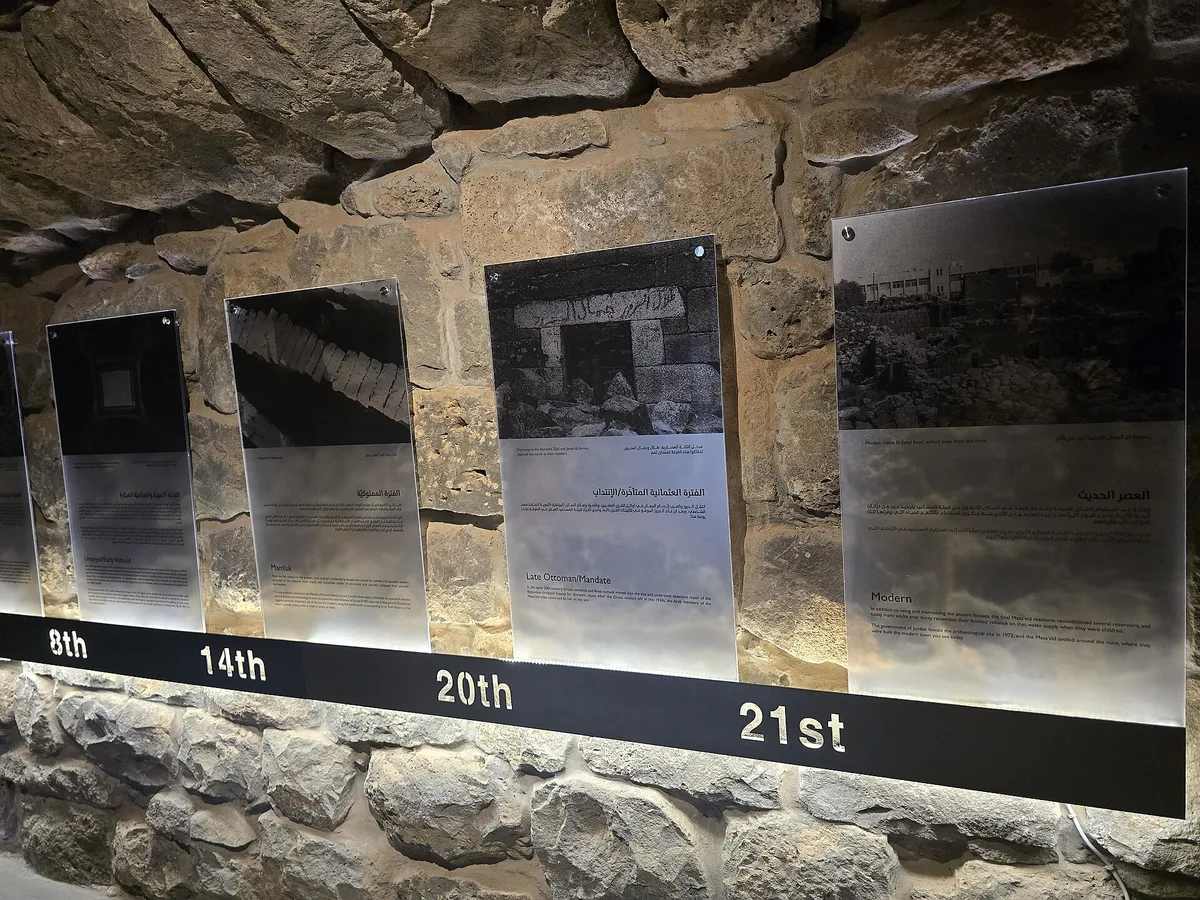
Jordan’s seventh inscription, in 2024, completed the list’s swing from the famous to the overlooked. Umm Al-Jimal, in the basalt country of the northern Hauran near the Syrian border, is a rural settlement that grew organically over an earlier Roman post from around the fifth century and functioned until the end of the eighth — not a capital, not a fortress city, but an ordinary farming town that happened to be built of a stone that does not rot. Its single criterion, (iii), is testimony: to the rural way of life of the Hauran plateau in the Byzantine and early Islamic centuries, preserved in black basalt with a completeness no mudbrick or timber settlement could have managed.
The physical record is domestic rather than monumental — more than 170 structures within the town wall, clusters of multi-storey courtyard houses arranged in three neighbourhoods, sixteen churches among them, Roman military buildings folded into the later town, and a sophisticated water catchment system of reservoirs and channels that harvested the wadi’s flow to irrigate fields in a dry land. UNESCO’s summary of the place catches its real significance: a window into the hinterland, the ordinary agricultural world that fed the famous cities. Inscriptions in several languages across the site track its people changing religions and rulers while keeping their building traditions — resilience, in the file’s word, built in stone.
Like Um er-Rasas, Umm Al-Jimal is largely unexcavated — only a handful of its structures have been formally investigated — and it sits far off the standard circuit, in the far north-east near Mafraq. That remoteness is now its atmosphere: a black stone town standing quiet in open country, visited in small numbers, read slowly. Travellers building a northern day around Jerash and Umm Qais can add it with a determined detour east; travellers who make the trip usually rate the silence and the strangeness of the place — a whole Byzantine village at standing height — beside anything in the south.
Aqaba Marine Reserve, 2026 – a Coral Reef Joins the List
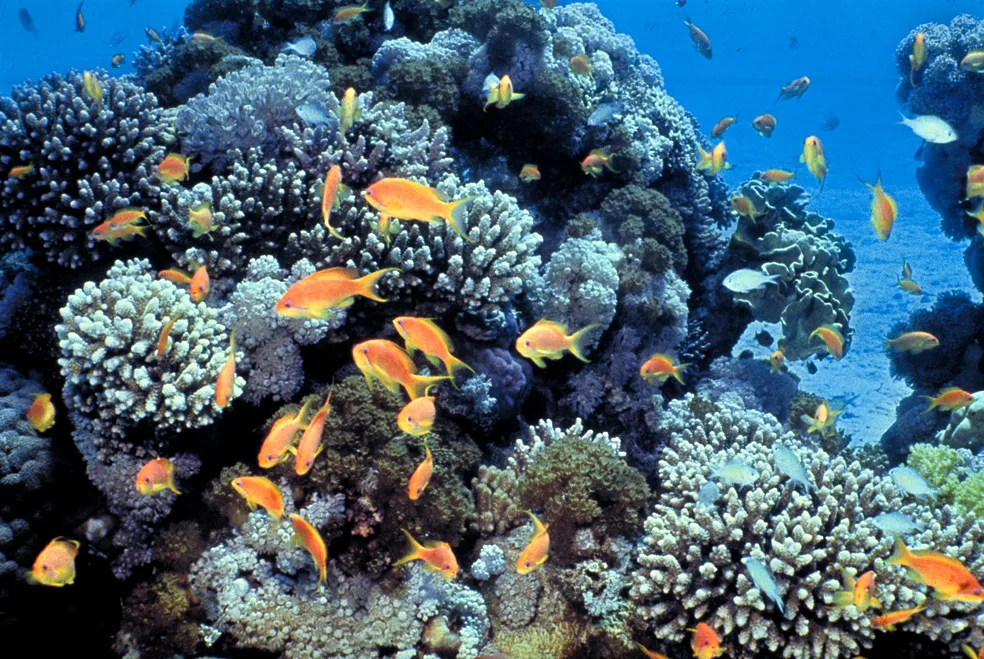
The newest inscription changed the list’s character outright. In 2026 the Aqaba Marine Reserve, on Jordan’s short Red Sea coast, became the country’s first purely natural World Heritage Site, inscribed under criteria (ix) and (x) — the ecosystem criteria. The property is compact, some 700 hectares of reef, seagrass bed and deeper mesophotic water at the northern tip of the Red Sea, and its claim is superlative in a way no ruin can match: this is the world’s northernmost tropical coral reef system, and its corals are, by the standards of a warming ocean, freakishly tough.
Criterion (ix) is the evolutionary story. Over roughly the last 10,000 years, as the gulf’s corals adapted to high salinity, heat and recurring marine heatwaves, the population became thermally resilient in a way scientists believe may keep it among the last reefs standing this century — a living genetic reservoir for reef restoration worldwide, in UNESCO’s assessment an irreplaceable research site for understanding how corals survive climate change. Criterion (x) is the census: more than 150 species of hard coral — some 61 percent of all Red Sea endemic hard corals, forty of them globally threatened — alongside over 500 fish species and around a thousand mollusc species, with dugongs and four species of sea turtle in the same small reserve. UNESCO’s own account of the property is at whc.unesco.org.
For travellers, the inscription reframes an Aqaba beach day. The reef that snorkellers and divers have floated over for years as a holiday extra is now, formally, the most important natural property in the country — the natural counterpart to Petra, reached not by a gorge walk but by swimming out from the South Beach shore into water where the coral gardens begin within metres. It also completes the list’s geography: Jordan’s eight now run from a basalt village in the far north to a coral reef at the far south, and the newest of them is the only one that is alive and growing.
The Tentative List – Thirteen Sites in the Waiting Room
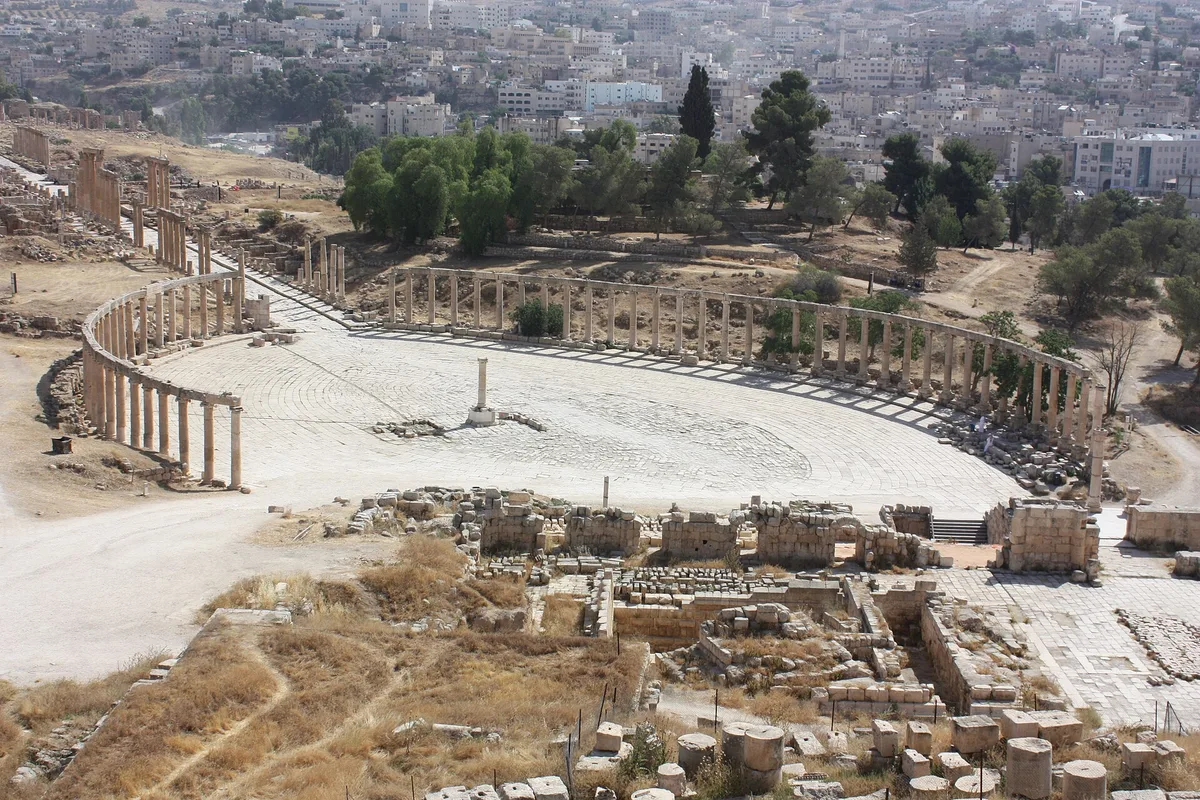
Every inscribed site begins life on a Tentative List — the official inventory each country keeps of properties it intends, one day, to nominate. Jordan’s holds thirteen entries, and the honest traveller should know two things about them: the list is real, maintained and meaningful, and it confers nothing. A tentative site has no World Heritage status, no plaque rights and no place in the count. It is a declared intention, and some intentions wait decades. Jordan’s thirteen, with the year each was listed, are: Al Qastal (2001), the Sanctuary of Agios Lot at Deir ‘Ain ‘Abata (2001), Shaubak Castle (2001), Qasr Bshir (2001), Pella (2001), Qasr Al-Mushatta (2001), Abila City (2001), Gadara — Umm Qais (2001), Jerash Archaeological City (2004), Dana Biosphere Reserve (2007), Azraq (2007), Mujib Nature Reserve (2007) and the Jordanian harrah (2019).
Read that roll with a traveller’s eye and it is a second, shadow itinerary of Jordan. The Decapolis north is there almost complete — Jerash, Gadara, Pella, Abila. The desert east holds the Umayyad Qasr Al-Mushatta and the Roman frontier fort of Qasr Bshir; the south holds Shaubak, the Crusader castle the King’s Highway passes on its way to Petra; and the natural Jordan waits too, in Dana’s canyons, Mujib’s gorge and the Azraq wetland. Eight of the thirteen were listed in a single year, 2001, which tells its own story — a burst of intent, then the slow machinery of nomination, in which a full dossier, comparative studies and evaluation missions stand between a tentative entry and an inscription.
The practical consequence is simple and widely ignored. When a hotel, a tour page or a guidebook calls Jerash or Umm Qais a “UNESCO World Heritage Site”, it is promoting them a rank they have not earned — yet. They are candidates, officially. That distinction is not pedantry: it is the difference between a promise and a fact, and the sites themselves lose nothing by it. Jerash after twenty years in the waiting room is still the most complete Roman city most visitors will ever walk. It just is not, today, a World Heritage Site, and no honest page should tell you otherwise.
The Ones Everyone Gets Wrong
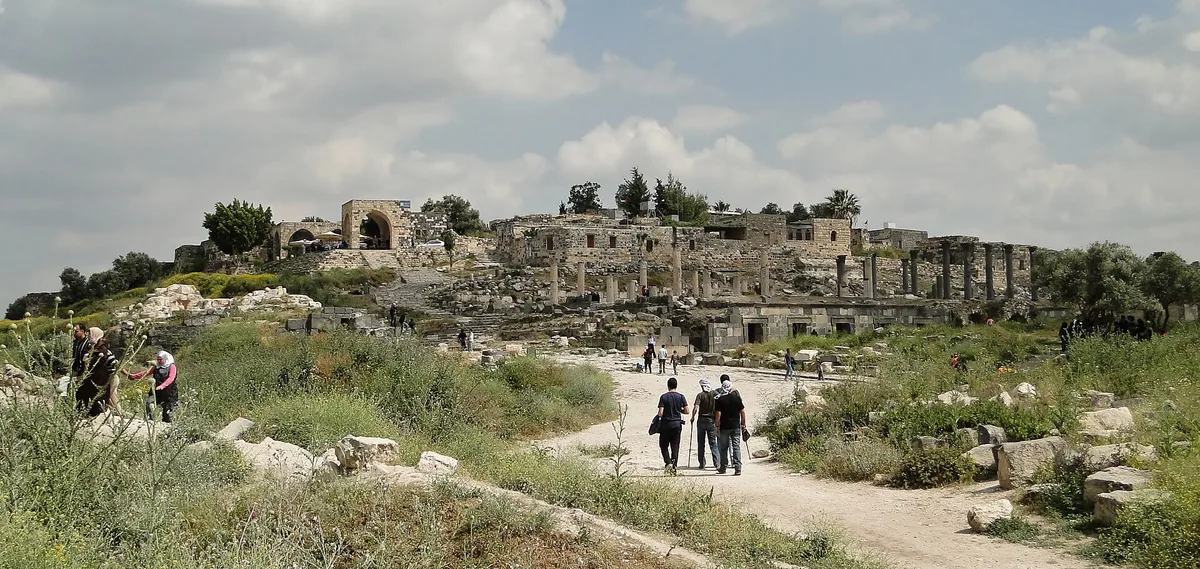
Since accuracy is this page’s whole argument, here is the correction list in one place. Jerash — not inscribed; Tentative List since 2004. Umm Qais, ancient Gadara — not inscribed; tentative since 2001. Dana and Wadi Mujib — not reserves with World Heritage status; both tentative since 2007, whatever the dive-shop and hiking pages imply. Shobak Castle — tentative since 2001; its more famous King’s Highway neighbour Kerak is on neither list at all, inscribed or tentative, a fact that surprises almost everyone. The Dead Sea — not a World Heritage Site on either shore; no part of it is inscribed, and the closest property in spirit, Mujib, is tentative only. Mount Nebo and Madaba — neither listed, though Madaba’s mosaic-making neighbour Um er-Rasas is. Amman’s Citadel — not listed, despite sitting in a capital full of listed company elsewhere in the region.
The second family of errors is arithmetic. Pages that count six Jordanian sites are working from before 2021 — As-Salt and everything after is missing. Pages that count seven were right until 2026 and have not caught up with the Aqaba reef; at its most recent crawl before this article, even Jordan’s own Department of Antiquities page still described seven inscribed sites and fourteen tentative entries, when the record already stood at eight and thirteen. Older exhibitions, older guidebooks and older officialdom all lag the same way, and each outdated page becomes the source for the next one. That is how the room of travellers at the top of this article ended up so confidently wrong.
None of this is an argument against the unlisted places. Kerak without a plaque is still a great Crusader fortress; the Citadel without inscription is still the best first hour in Amman; Jerash’s columns do not need UNESCO’s permission to be extraordinary. The argument is only for calling things by their right names. A list that means something has to have edges, and Jordan’s eight are more valuable — to the country and to the traveller planning around them — when the boundary is drawn where UNESCO actually drew it.
Seeing Them Together – Routes That Link the Inscriptions
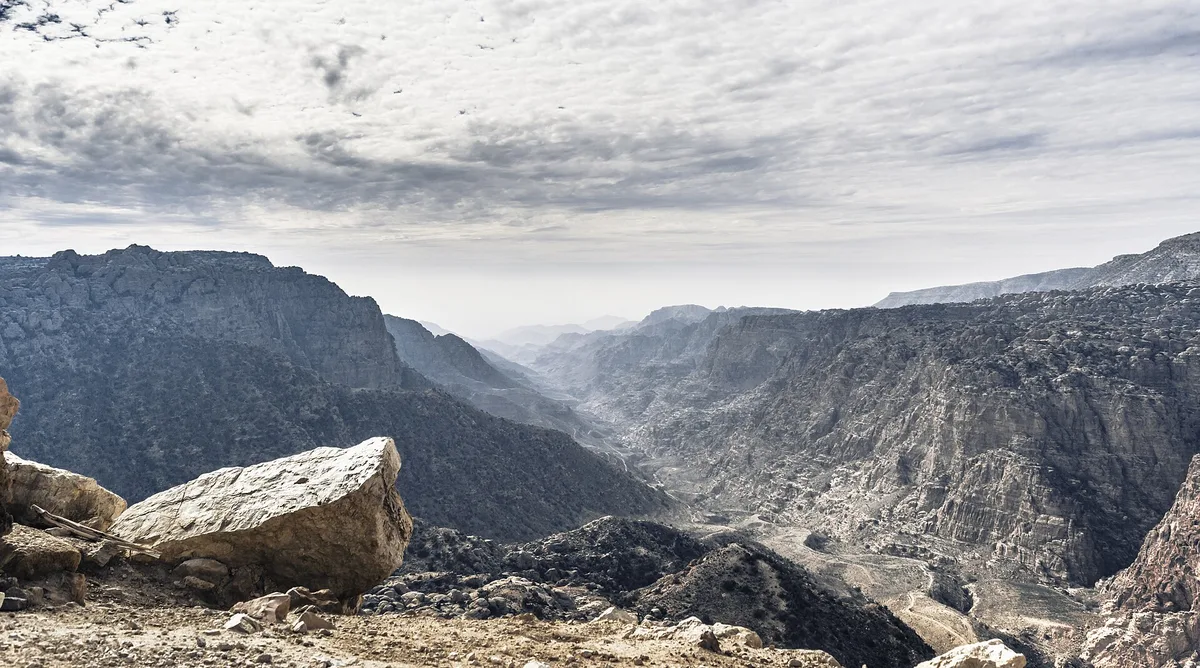
The eight inscribed sites were never designed as a set, but Jordan’s geography strings them onto its roads almost obligingly, and a heritage-minded trip can be built as three arcs. The Amman arc holds three inscriptions within day-trip reach of the capital. West and down into the valley runs the oldest layer: As-Salt on its hills and the Baptism Site on the river below, an easy pairing in a single day. South-east, the Madaba day gathers Um er-Rasas beyond the mosaic town — Madaba itself unlisted, its neighbour inscribed — with Mount Nebo riding along unlisted and unbothered. East of the city, Quseir Amra anchors the desert-castle loop, the inscribed jewel among unlisted companions.
The King’s Highway arc runs south through the country’s whole argument. From Madaba and Um er-Rasas the old road passes Kerak, neither inscribed nor tentative, descends past Dana — tentative, and proud of its walking rather than its paperwork — and Shobak, tentative since 2001, before arriving at Petra, the first inscription and still the centre of gravity. It is the finest heritage drive in the country precisely because it mixes the categories honestly: inscribed, tentative and unlisted in one day’s windscreen, each legible for what it is.
The southern arc closes the list. Petra and Wadi Rum sit an hour and a half apart, the rock-cut city and the mixed desert, and Aqaba lies just beyond Rum — so a trip can end with three inscriptions in three days, descending from Nabataean facades through inscribed desert to a living coral reef, the newest site of all. Count the whole pattern and a single unhurried week can stand inside all eight properties without a single backtrack: north for Umm Al-Jimal if you are thorough, Amman for its three, the Highway for Petra, the south for Rum and the reef. No other country of Jordan’s size lets a traveller read an entire national list, first page to last, in one journey.
Frequently Asked Questions
How many UNESCO World Heritage Sites are there in Jordan?
Eight, as of the most recent inscription in 2026 — six cultural properties, one natural property and one mixed property. They are Petra (1985), Quseir Amra (1985), Um er-Rasas (2004), Wadi Rum Protected Area (2011), the Baptism Site at Al-Maghtas (2015), As-Salt (2021), Umm Al-Jimal (2024) and the Aqaba Marine Reserve (2026). A further thirteen Jordanian sites sit on UNESCO’s Tentative List, which is a separate inventory of intended future nominations; tentative sites are not World Heritage Sites and are not included in the count of eight.
Is Jerash a UNESCO World Heritage Site?
No. Jerash has been on UNESCO’s Tentative List since 2004, which means Jordan has formally declared its intention to consider nominating it — nothing more. It has not been evaluated for or entered on the World Heritage List itself, and describing it as a World Heritage Site, as a great many tour pages and hotel websites do, is simply incorrect. The same applies to Umm Qais, Dana and Wadi Mujib. Jerash’s quality is not in question — it is among the most complete Roman cities anywhere — but its status is candidate, not inscription.
What is Jordan’s newest World Heritage Site?
The Aqaba Marine Reserve, inscribed in 2026 as the country’s first purely natural property. The reserve protects the world’s northernmost tropical coral reef system in the northern Gulf of Aqaba, recognised for the evolutionary story of its heat-resilient corals and for biodiversity that includes more than 150 hard coral species, over 500 fish species, dugongs and four species of sea turtle. Before it, the most recent inscription was Umm Al-Jimal, the basalt Hauran settlement added in 2024.
Are all the Desert Castles UNESCO sites?
No — only one of them. Quseir Amra, the small bath house with the famous frescoes, was inscribed in 1985. Qasr Al-Mushatta and Al Qastal are on the Tentative List, and the other castles on the standard loop from Amman, including Qasr Kharana and Qasr Azraq, appear on neither list. The loop is well worth driving, but it contains exactly one World Heritage Site.
Can you visit all eight sites in one trip?
Yes — Jordan is compact enough that all eight fit into a single journey of about a week without heroic driving. Three sit within day-trip reach of Amman (As-Salt, the Baptism Site, Quseir Amra, with Um er-Rasas just beyond Madaba counting as a fourth half-day), the King’s Highway carries you south to Petra, and Wadi Rum and the Aqaba reef follow in sequence. Umm Al-Jimal, in the far north-east, is the only real detour; travellers short on days are the ones who usually leave it, and Jerash’s tentative ruins, for a second trip.
Is the Dead Sea a UNESCO World Heritage Site?
No. No part of the Dead Sea, on either shore, is inscribed on the World Heritage List. The nearest related entry is Jordan’s Mujib Nature Reserve, the canyon reserve on the sea’s eastern shore, which has been on the Tentative List since 2007 — a candidate, not an inscription. The Dead Sea needs no designation to justify a float, but it does not have one.
The Short Version
Eight inscriptions, honestly counted. Petra and Quseir Amra from 1985 — the rock-cut caravan city and the painted bath house, the masterpiece pair that started the list. Um er-Rasas in 2004, a mosaic town still mostly asleep underground. Wadi Rum in 2011, the desert inscribed twice over, for its carved texts and its landforms alike. The Baptism Site in 2015, where the value is a tradition still being practised. As-Salt in 2021, a living golden town inscribed for coexistence. Umm Al-Jimal in 2024, an ordinary Hauran village made immortal by black basalt. And the Aqaba Marine Reserve in 2026, a coral reef that turned a list of stones into a list with something alive on it.
Then the discipline that makes the eight worth trusting: thirteen more sites are waiting on the Tentative List, Jerash first among them, and they are candidates — not World Heritage Sites until UNESCO says so, whatever the brochures claim. Visit the inscribed eight for what each was formally recognised for, visit the tentative thirteen for what they plainly are, and let no one sell you a ninth site that does not exist. Jordan’s real list needs no inflating. It runs from a basalt village to a coral reef, across forty years of inscriptions, and every name on it earned its place in writing.