Things to Do in Marrakech – Jemaa el-Fnaa, Palaces, Gardens and the Souks Done Properly
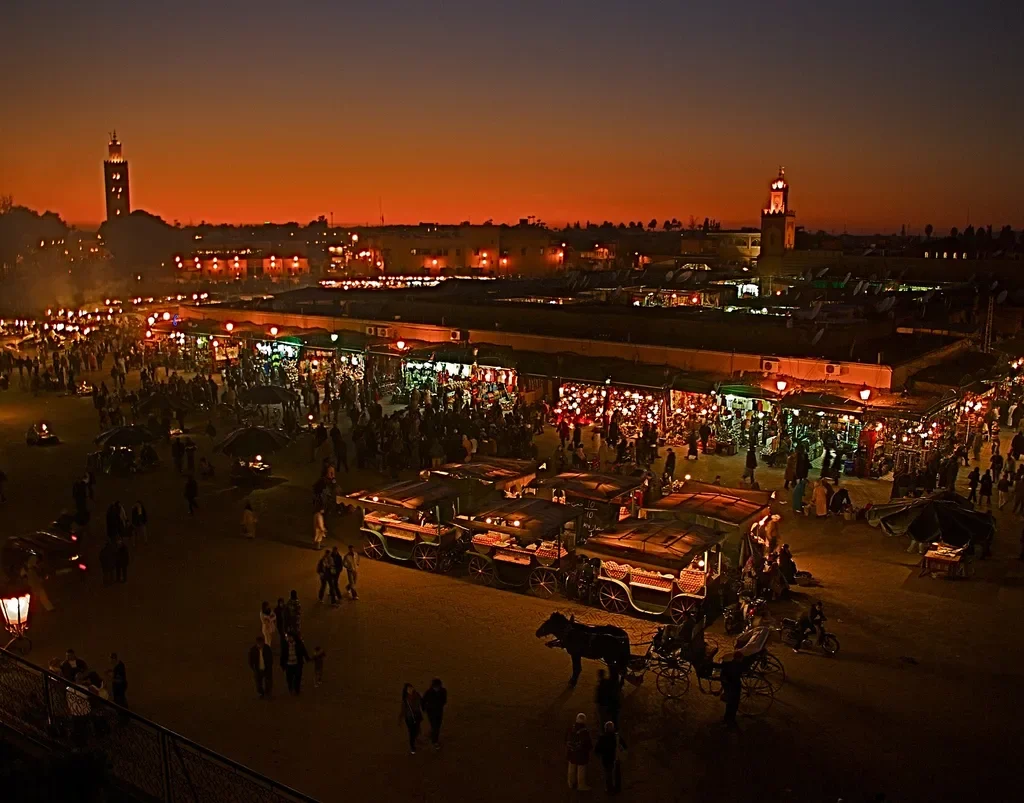
Marrakech does not hand you its sights in a neat row, the way some cities do. It hands you a working medieval city — a medina of some 700 hectares that UNESCO inscribed in 1985, founded by the Almoravids in 1070–1072 and still lived in, traded in and cooked in at full volume — and it lets you find your way. The monuments are real and several are superb, but the honest list of things to do in marrakech is mostly a list of experiences that happen to have monuments inside them: an evening on the great square when the grills light, a morning in the souks while the workshops are actually working, a vizier’s palace read as a career move in tile and cedar, a blue garden that a painter built and a fashion designer saved. This guide is organised that way on purpose, experience first, with the judgements the listicles skip — including the famous names that do not earn your limited days, and the ones that quietly do.
One promise governs the page, the same one this site keeps everywhere. Nothing here prints a price, an opening hour or a fee, because in Marrakech those figures change faster than any article can chase them, and a printed number is a claim you should not budget on. What does not change is the shape of the city: the square’s daily rhythm, the souks’ organisation by trade, the palaces’ stories, and the order in which a day here actually works. That shape is what follows.
At a Glance
Short on time? Here is the city on one screen — what there is, why each thing earns its place, and the time each one asks for.
| Experience | Why it earns its place | Time character |
|---|---|---|
| Jemaa el-Fnaa at dusk | The square’s nightly transformation – performers, grills, the call to prayer over all of it | Late afternoon into the evening, every day |
| The souks | A working craft city organised by trade, not a souvenir mall | A morning, when the workshops are open |
| Koutoubia Mosque | The 77-metre Almohad minaret the whole city is read by – exterior only | Half an hour, folded into any medina day |
| Bahia Palace | A grand vizier’s ambition built in zellige, stucco and painted cedar | One to two hours, early in the day |
| Saadian Tombs and El Badi | One sultan’s golden age – the jewel-box tombs and the vast ruin he built them beside | Half a day in the Kasbah, combined |
| Ben Youssef Madrasa | The medina’s great sacred interior that everyone may enter | An hour, in the northern medina |
| Jardin Majorelle and the Berber Museum | The painter’s blue garden, saved by Yves Saint Laurent | Two hours – book ahead, go at opening |
| Menara Gardens | The Almohad reservoir and pavilion – calm, local, unhurried | An hour at the day’s edge |
| A hammam | The weekly ritual of hot rooms, black soap and the kessa scrub | One to two hours, end of a dusty day |
| Eating the city | Night stalls, tanjia, mechoui and mint tea on a rooftop | Every evening; one stall dinner minimum |
| A day out of the city | Atlas villages, the Ourika Valley or the Agafay’s stone desert | One full day if the trip allows |
Two judgements sit behind that table. First, Marrakech is a city of hours more than of sights: the same square is a fruit market at noon and a theatre at seven, the same souk is a workshop at ten and a gauntlet at four, and timing is worth more than any ticket strategy. Second, the medina rewards depth over coverage. Two palaces understood properly beat five photographed through a doorway, and a single evening spent on the square from a rooftop, watching it assemble, teaches you more about this city than a second day of queuing.
Jemaa el-Fnaa – the Square That Is Really a Theatre
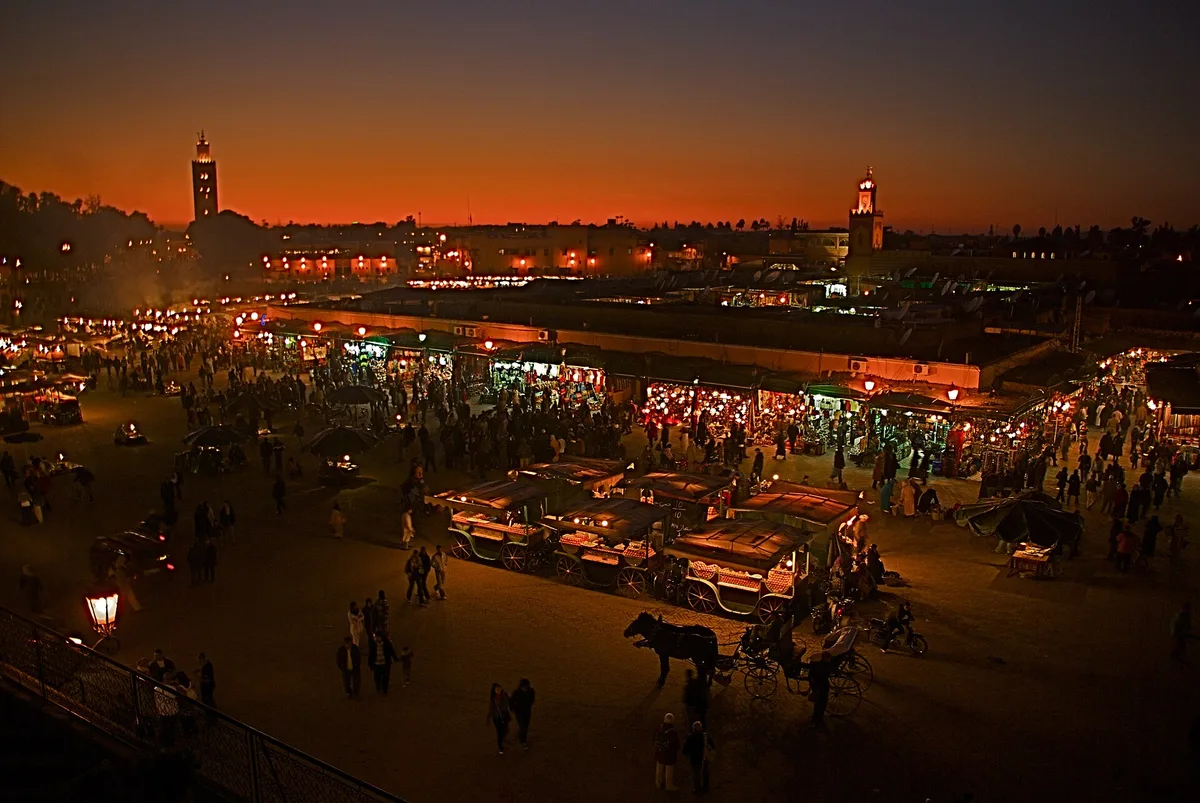
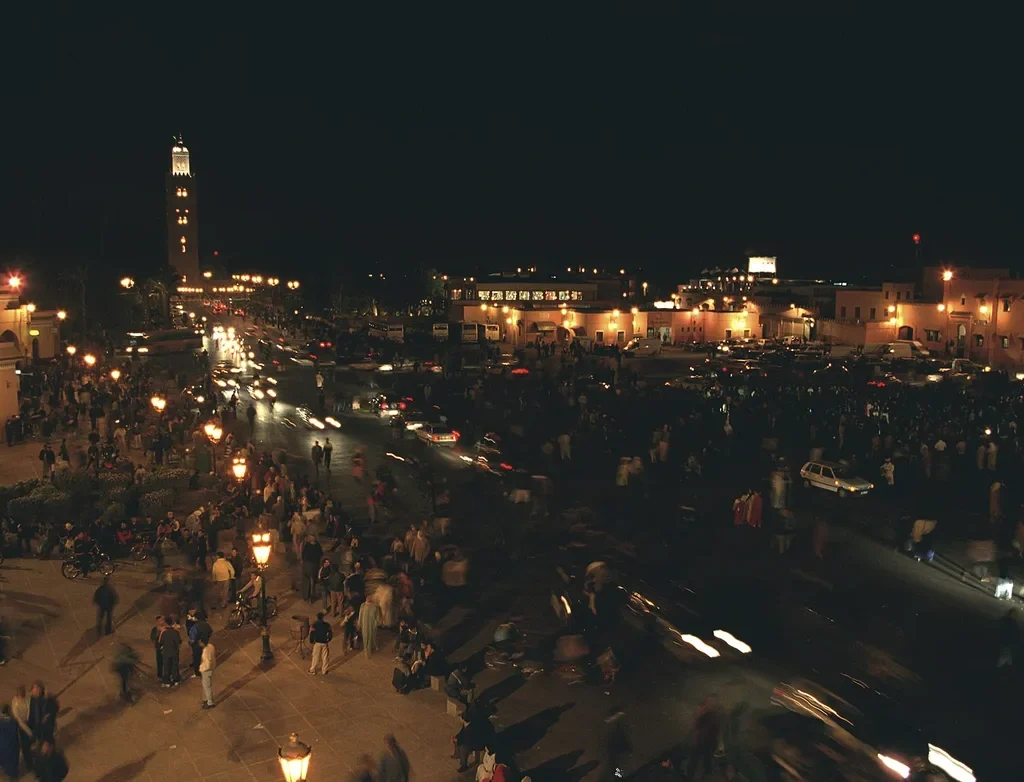
Every account of Marrakech starts here, and for once the accounts are right. Jemaa el-Fnaa is a vast, sloping, irregular expanse at the medina’s south-western edge, and what happens on it has been happening, in recognisably the same form, for centuries. The square began in the 1070s beside the Almoravid palace, steps from where the Koutoubia now stands. In 2001 UNESCO proclaimed its cultural space a Masterpiece of the Oral and Intangible Heritage of Humanity — the listing protects not the ground but what is performed on it — and as UNESCO’s own record at whc.unesco.org puts it, the square is a true open-air theatre. That is the correct way to read it. You do not visit Jemaa el-Fnaa. You attend it.
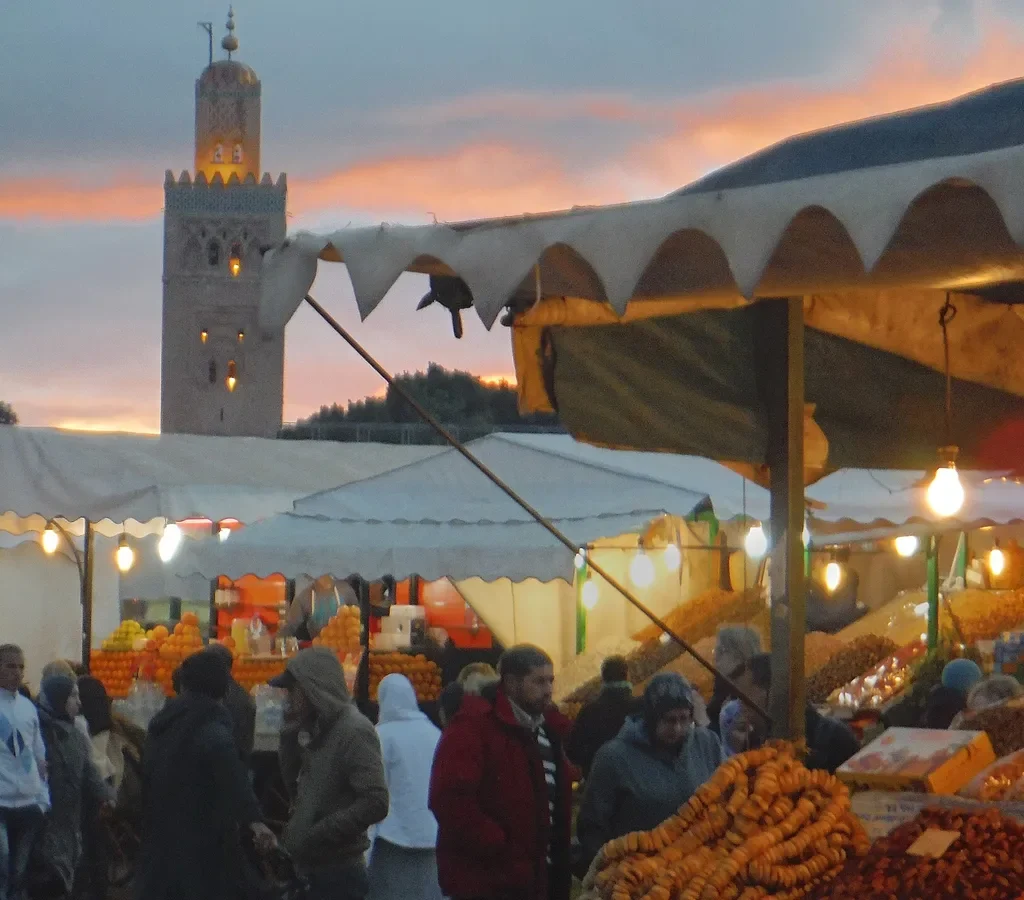
The day has two acts. Through the morning and afternoon the square belongs to the practical city: orange-juice carts in rows, dried-fruit and nut stalls under awnings, herbalists and henna artists, water sellers in their fringed red costumes, and the first circles forming. Then, in the last hour of light, the transformation the city is famous for: scores of food stalls are assembled from components, benches and grills rolled out, smoke begins to rise, and the halqas — the performance circles — tighten around storytellers, acrobats, and Gnawa and Chaabi musicians. The storytellers are the square’s oldest act and its most fragile one: the tales are told in Moroccan Arabic and Berber, the circle of listeners is mostly local, and you are welcome at its edge without understanding a word, because the theatre is in the voice and the crowd’s response. Put a coin in when the collector comes round. That is how the art survives.
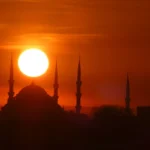
The honest notes, because the square has edges. The snake charmers and the men with chained Barbary macaques work the daylight square, and the transaction they want is a photograph — yours, with their animal, for a fee negotiated loudly after the shutter clicks. The monkeys’ welfare is a genuine and visible problem, and the cleanest response is also the easiest: watch the charmers’ music from a distance if you wish, decline the photo, and do not let an animal be placed on your shoulder, because that contact is the sale. Henna artists may take your hand and begin a “gift” design that becomes a bill; a clear no, given early and with a smile, is the whole technique. None of this is dangerous, and all of it fades once you learn the square’s own choreography — drift, pause at the circles’ edges, keep small notes handy, and take your sunset from one of the rooftop terraces on the square’s edge, where a mint tea buys you the finest seat in Morocco: the stalls lighting below, the Koutoubia turning rose, the call to prayer rolling over the smoke.
The Souks – a Working City That Happens to Sell Things
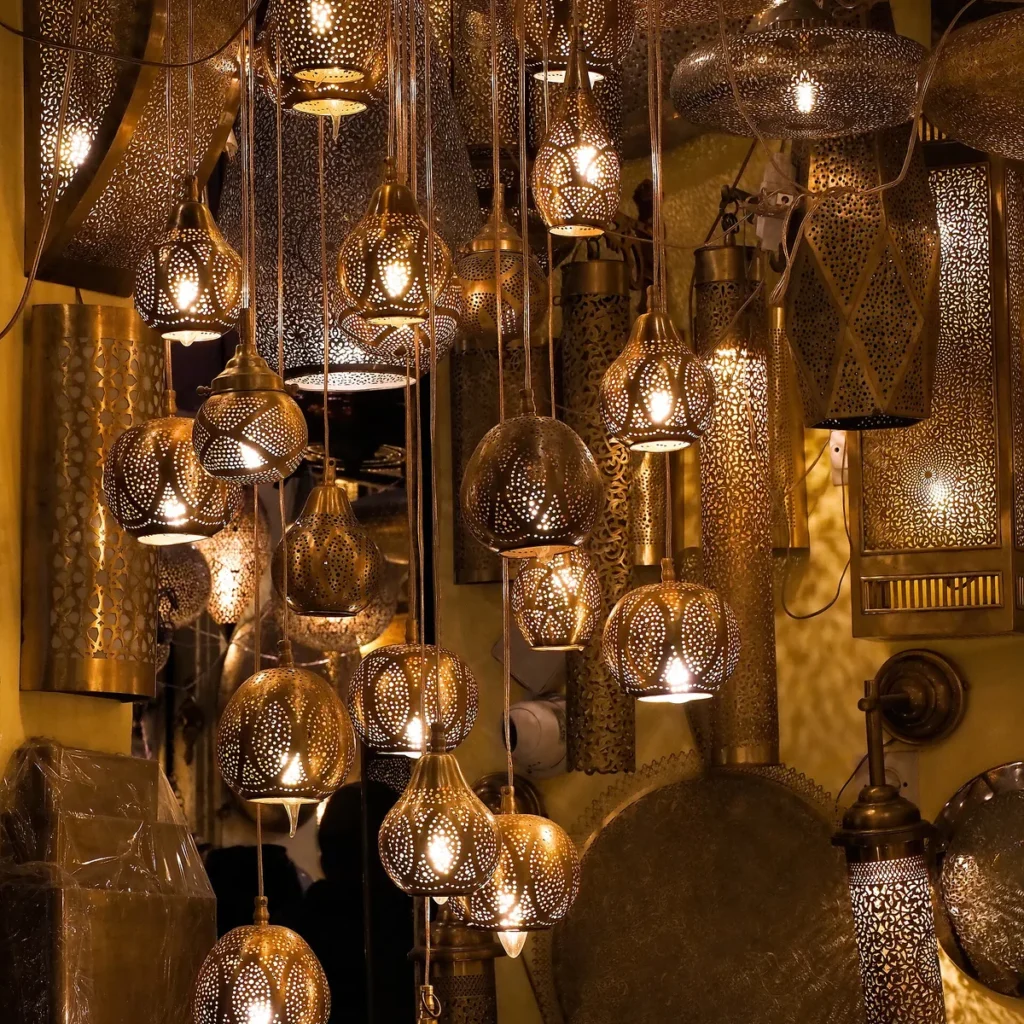
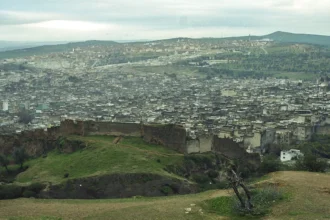
North of the square, the medina’s roofed lanes begin, and the first discipline is to stop reading them as a shopping centre. The souks of Marrakech are a manufacturing city folded into alleys, organised the way medieval cities always organised production — by trade, each craft with its own quarter, its own street, its own noise and smell. Souk Semmarine, the broad covered artery that runs north from the square, is the textile and clothing spine. East and west of it the trades step down in specialisation: the dyers of Souk Sebbaghine, where skeins of wool in violent purples and saffrons hang drying overhead; the blacksmiths and lantern-makers of Souk Haddadine, where the pierced-metal lamps are hammered in workshops a doorway from where they are sold; the leatherworkers, the carpenters, the spice sellers of the Rahba Kedima, the old square where pyramids of turmeric, paprika and cumin stand beside traditional apothecaries selling everything from argan oil to dried chameleons for the local medicine trade. The point, as in Fes, is that so much of it is made here. You are not buying an import with a view. You are buying the output of the street you are standing in.
Haggling is the souks’ second language and it is not optional theatre — it is the pricing system. The first figure quoted is an opening position, the seller expects a counter, and the exchange is meant to be good-humoured: offer, react, walk a slow half-step away, and you will usually meet somewhere sensible. Two calibration tools help. The state-run Ensemble Artisanal, near the Koutoubia, sells the same crafts at fixed, marked prices; a browse there first teaches you what things should cost, and some travellers simply buy there and skip the game entirely, which is a fair trade of money for peace. And go in the morning. Before eleven the lanes are cooler, the workshops are at full production — the souks as a workplace, which is their best self — and the sellers have the day’s patience. By late afternoon the same lanes are a river of visitors and the prices harden accordingly.
Getting lost is part of the purchase and should be budgeted for rather than feared. The lanes branch, double back and change names; phone maps lose their nerve under the roofs; and every local you ask for directions will, understandably, route you past a cousin’s shop. Treat a wrong turn as inventory — this is how you find the dyers, the weavers’ looms, the fondouks where caravans once unloaded. The souks’ own compass is simple: downhill and south brings you, eventually, back towards the square and the light.
Koutoubia – the Minaret You Read the City By
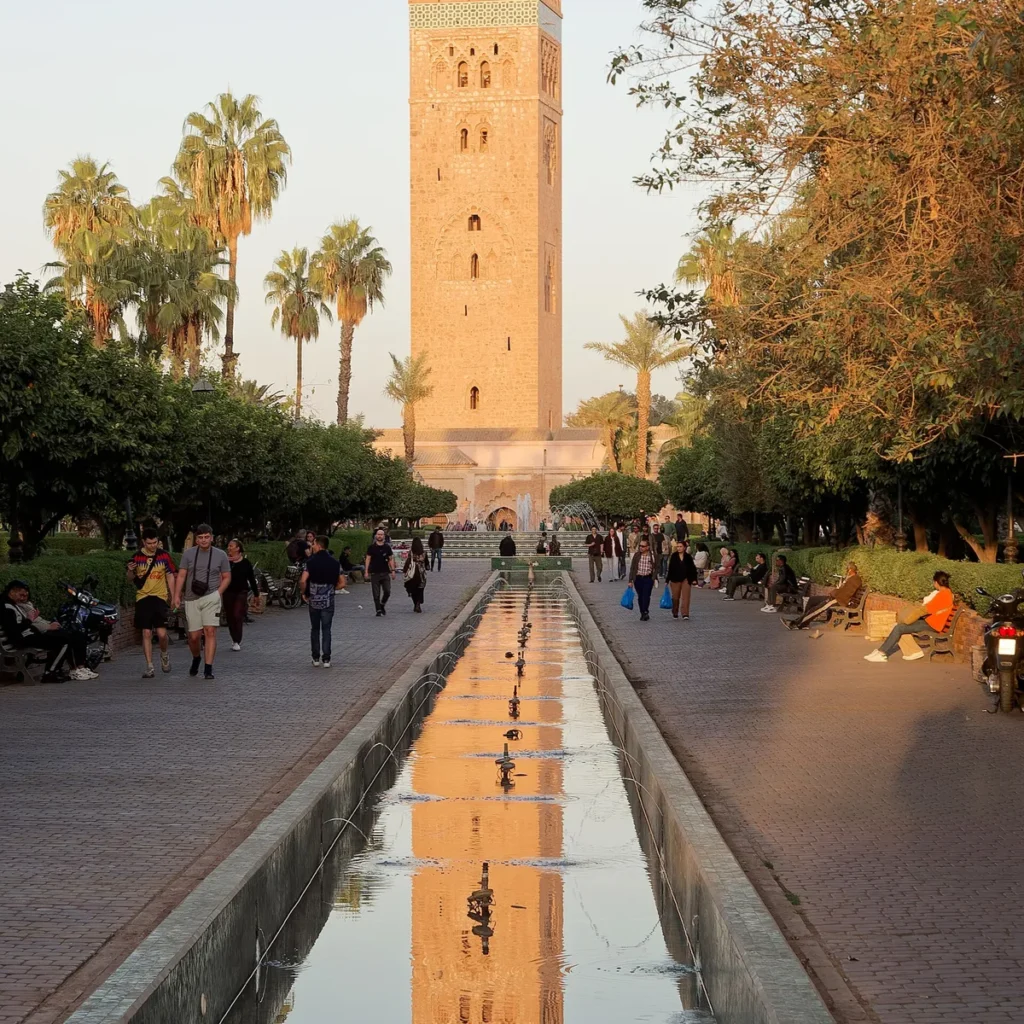
Stand anywhere in the medina and one object tells you where you are. The Koutoubia’s minaret — 77 metres of rose sandstone, finished in the 1190s under the Almohad caliph Yaqub al-Mansur — is Marrakech’s compass, its clock and its logo, visible over the rooftops from almost every lane and terrace in the old city. UNESCO calls it an essential monument of Muslim architecture, and it set the pattern for two famous sisters: the Giralda in Seville and the Hassan Tower in Rabat follow its proportions and its square, staged silhouette. The mosque below it takes its name from the kutubiyyin, the booksellers whose stalls once surrounded it — the city’s main mosque began as the neighbour of a book market, which is a very Marrakech piece of history.
The visitor’s facts are short and should be plain. Non-Muslims may not enter the Koutoubia, as they may not enter any working mosque in Morocco; the visit is the exterior, and the exterior is genuinely enough. Walk the gardens that flank it — rose beds and orange trees laid out along a long basin, the minaret doubled in the water at the still hours — and circle the building to read it from its several angles: the carved interlacing on the tower’s upper faces, the band of tiles at its crown, the small lantern tower that tops it. The esplanade on the medina side fills in the evening with promenading families, which is the right company in which to see it.
What the Koutoubia really gives a stay is orientation, and that is worth more than it sounds. Learn the trick on your first day: the minaret stands at the medina’s south-west, hard by the square. Lost in the souks, climb to any rooftop or find a sightline and the tower re-draws your map. A first visit to Marrakech divides neatly into before you learned to navigate by it, and after.
Bahia Palace – a Vizier’s Ambition in Tile and Cedar
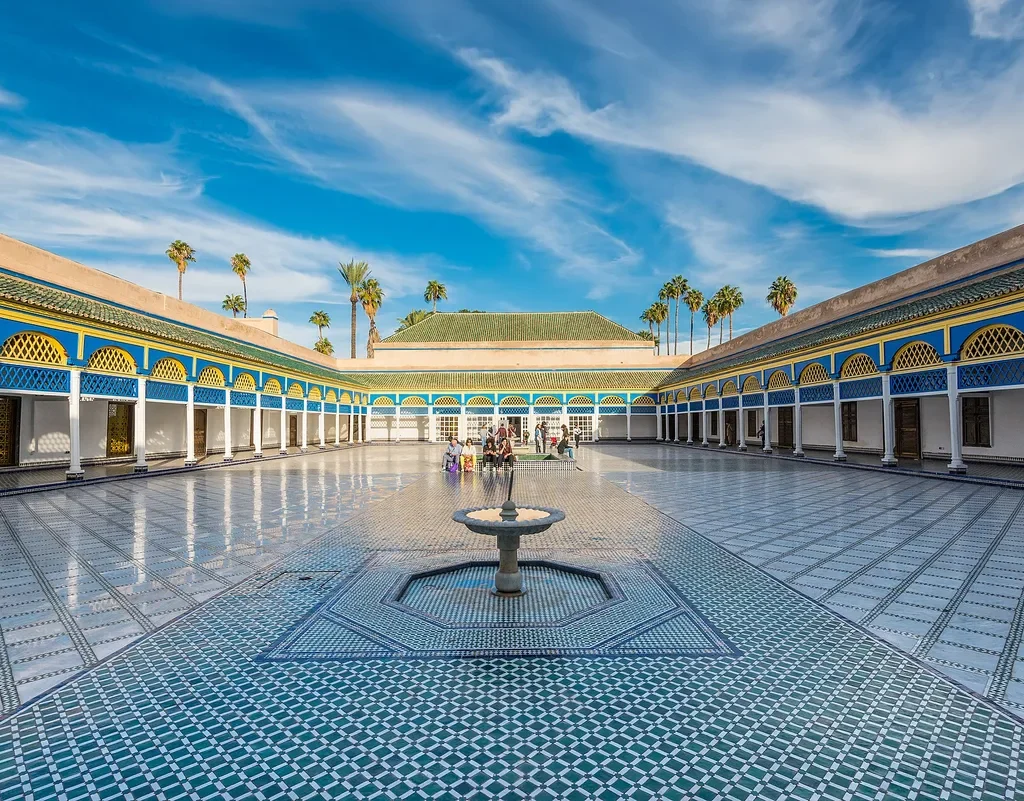
The Bahia is the palace of a man who was never sultan, and that is the whole story of the building. It was begun in the 1860s by Si Moussa, grand vizier to the sultan, and expanded piece by piece between 1894 and 1900 by his son Ba Ahmed, grand vizier to a boy sultan and, until his death in 1900, the effective ruler of Morocco. Ba Ahmed bought up the houses north of the Mellah as they came available and stitched them into a single sprawling complex — around 150 rooms around courtyards and walled riad gardens, all on one level, reportedly because his own heavy build made stairs a trial. The name, al-Bahia, means “the Brilliant”, and is said to have been his favourite wife’s. Within hours of his death, the palace was looted on the sultan’s orders — a detail that tells you exactly how personal its ownership had been.
What you walk through is decoration at maximum density and not much else, and it is better to know that before you go in. The rooms are empty. There is no furniture, no recreated court life, no collection — the Bahia’s contents were dispersed a century ago. What remains is the shell, and the shell is extraordinary: cedar ceilings painted with floral arabesques in colour that still glows, carved stucco as fine as embroidery, zellige tilework running up the walls, floors of Carrara marble. The Grand Courtyard, laid out in 1896–97, is the set piece — fifty metres by thirty of Italian marble ringed by a painted wooden gallery, built for ceremony and for being looked at, which is still its function. The older Grand Riad at the complex’s northern end, dating to Si Moussa’s 1860s, is the quieter pleasure: a real garden of orange trees and jasmine between two halls whose inscriptions date them to 1866–67, with the decoration at its most intimate.
The materials carry the politics. Ba Ahmed had cedar hauled from the Middle Atlas, tiles from Tetouan, marble from Meknes — in part, it is said, marble recycled from the Saadian palaces there for the stripping — and craftsmen brought from across the country. The Bahia is what the Moroccan state could still build at the end of the 19th century, assembled by one servant of that state for himself. Go early, when the tour groups have not yet filled the courtyards and the painted ceilings have the light; give it an hour and a half; and read it as a career, not a museum.
The Saadian Tombs and El Badi – One Sultan, Two Kinds of Ruin
In the Kasbah, the royal quarter at the medina’s southern edge, the Saadian century survives in two opposite conditions, and they belong in one visit. Ahmad al-Mansur, who reigned from 1578 to 1603, was the dynasty’s golden sultan — victor at the Battle of the Three Kings, rich on Sudanese gold and on the sugar of the Sous — and he spent that wealth on Marrakech. His palace, El Badi, “the Incomparable”, begun in 1578 and a quarter-century in the building, was the showpiece: hundreds of rooms around a courtyard the size of a parade ground, materials looted in turn from Italy and Mali, the wonder of every ambassador who saw it. Today El Badi is a ruin of the grandest kind — that same vast courtyard empty, its pools dry, its walls stripped by the Alawite sultan Moulay Ismail, who spent years carting its marble and onyx to build his own capital at Meknes. What is left is scale, and storks: the great walls are a nesting colony, and the clatter of their bills is the site’s soundtrack. Walk it for the dimensions of Saadian ambition, not for detail — the detail is all at Meknes, or in the tombs next door.
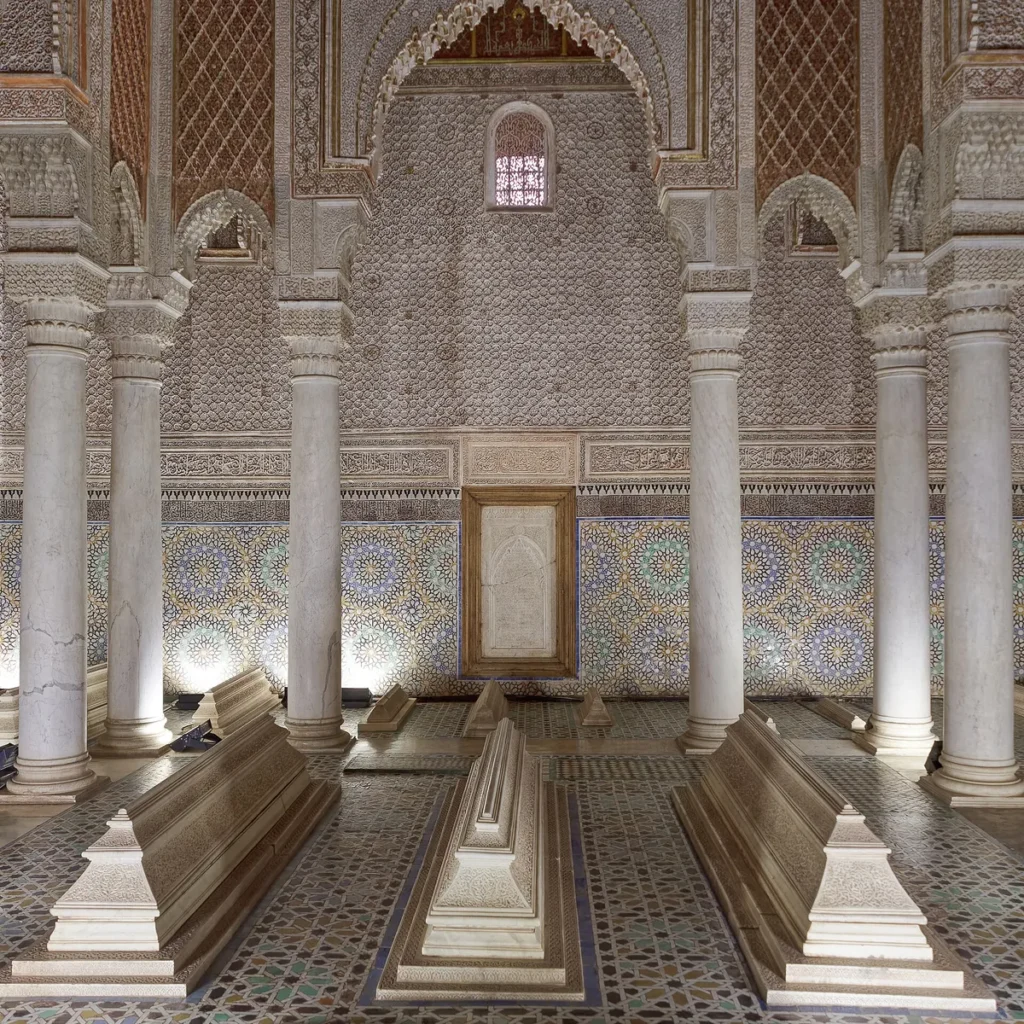
For a few steps away, behind the Kasbah Mosque, is where al-Mansur kept the detail for himself. The Saadian Tombs are the dynasty’s necropolis: a first mausoleum raised in the 1550s–1570s by the sultan Abdallah al-Ghalib over his father Muhammad al-Shaykh, and then, under al-Mansur, the western building whose Chamber of the Twelve Columns is the single finest interior of the Moroccan 16th century. Twelve Carrara marble columns carry a cedar dome carved and painted like lacework; beneath it lie the marble tombstones of al-Mansur himself, dead in 1603, and his successors and wives, the inscriptions picked out in calligraphy. Around the two mausoleums, a walled garden holds a hundred simpler tombs under coloured tiles — princes, courtiers, children of the dynasty. When Moulay Ismail sealed the complex off rather than destroy it, the tombs dropped out of the city’s memory entirely; they were only rediscovered in 1917, in the early years of the French Protectorate.
Two practical truths. You do not walk through the Chamber of the Twelve Columns; you file past a viewing opening and look in, which makes the queue for that opening the site’s bottleneck — come at opening time or accept the wait as the price of the room. And combine the Kasbah sights in one southern sweep: the tombs, El Badi’s courts, and the Kasbah Mosque’s square between them, where the neighbourhood still does its shopping. It is the medina’s most history-dense half day.
Ben Youssef Madrasa – the Sacred Interior Everyone May Enter
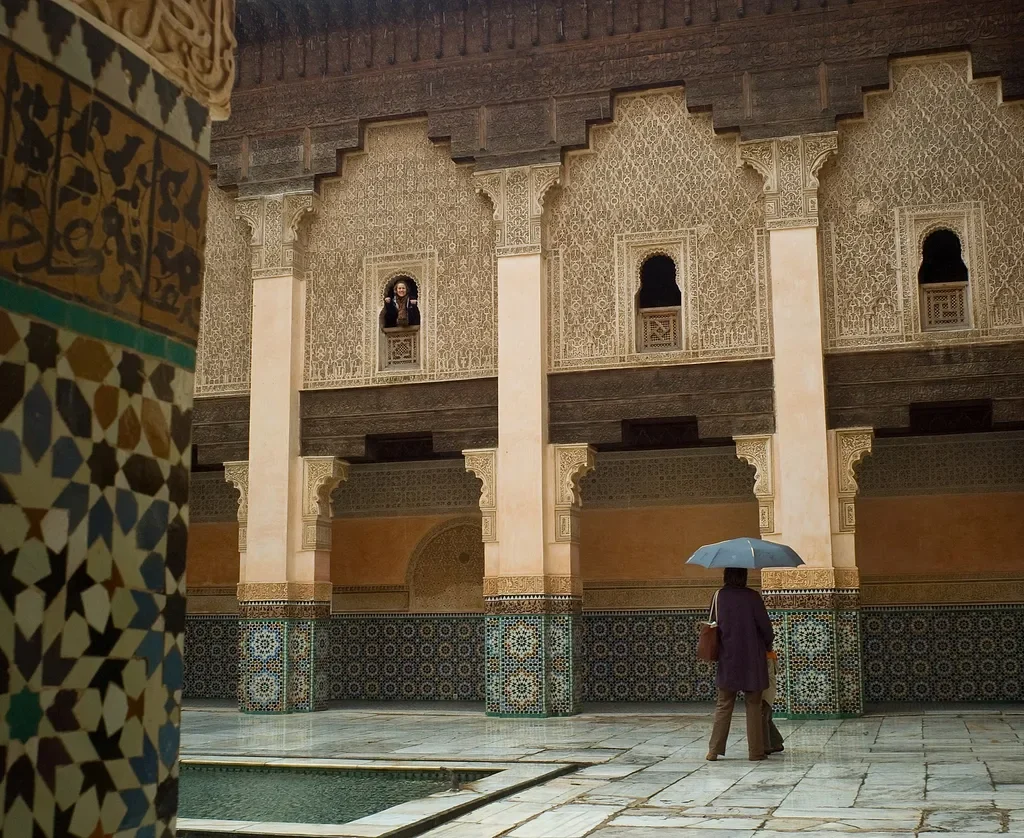
Morocco’s mosques are closed to non-Muslims, which makes the Ben Youssef Madrasa the great exception of a Marrakech visit: a sacred, working-past interior of the first rank that anyone may walk into. It stands in the northern medina, beside the mosque that shares its name, and it was built in 1564–65 by the Saadian sultan Abdallah al-Ghalib — the same sultan who began the Saadian tombs. When it was finished it was the largest madrasa in the Maghreb, a college for the study of Islamic law and theology housing, by the usual estimate, up to 800 students in 130 small cells arranged around the central court and six lesser courtyards. The building taught for four centuries, closed as a school in 1960, and — after its most recent long restoration — reopened to visitors in 2022, its surfaces cleaner than they can have looked in generations.
The experience is a single, staged revelation. A dim entrance corridor, a vestibule under a honeycombed muqarnas vault, and then the courtyard opens: a long shallow pool down its centre, and every surface around it worked — zellige below, carved stucco in the middle register with pine-cone and calligraphic motifs, carved cedar above, the whole thing symmetrical and calm after the lanes outside. The prayer hall at the court’s far end carries the richest stucco of all around its mihrab. Then go up and look into the student cells: tiny, bare, many with a sliver of courtyard light, each one a monkish box for a scholar far from home. The contrast between the cells’ austerity and the court’s splendour is the building’s actual lesson — the wealth was spent on the shared, sacred space, not on comfort.
The madrasa anchors a northern-medina cluster worth the walk. A few steps away stands the small Almoravid Koubba, a domed ablutions pavilion of the early 12th century and the oldest surviving monument in Marrakech, from the city’s first dynasty — the carved dome inside is the seed from which everything you have been admiring grew. The Marrakech Museum, in the 19th-century Dar Menebhi Palace nearby, makes a reasonable third stop if palaces have taken hold of you; if they have not, the northern souks are on your way back south, and the day is well spent either way.
Jardin Majorelle – the Blue Garden and the Museum Inside It
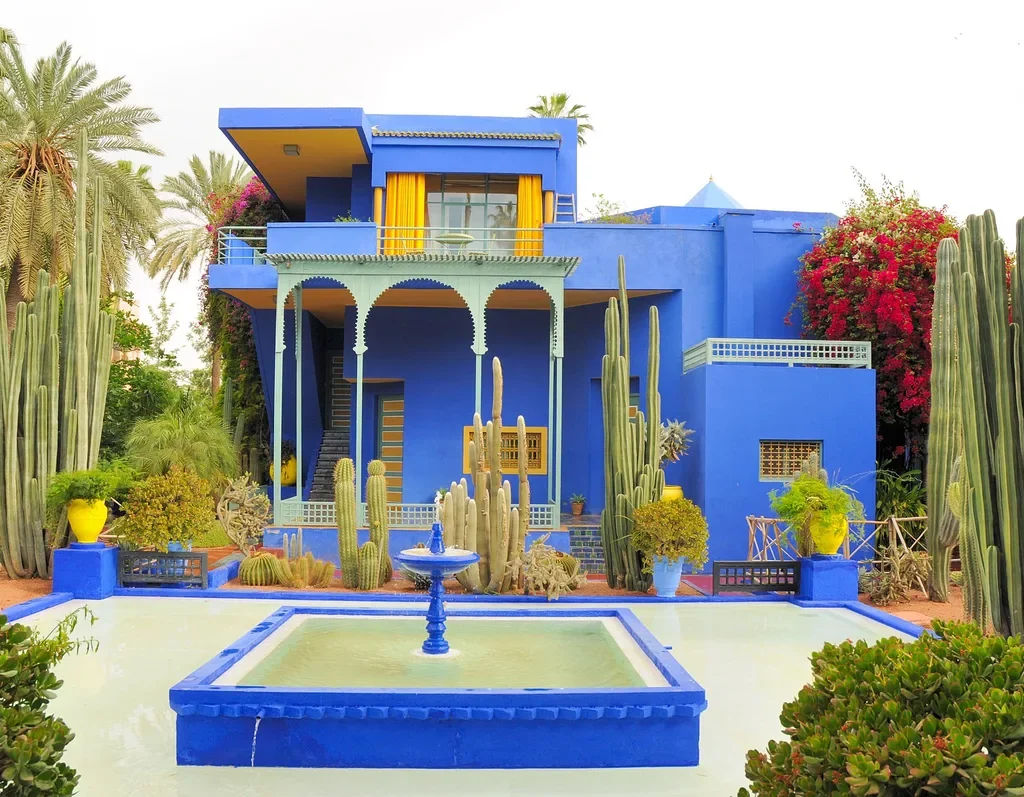
Outside the medina walls, in the modern town, stands the one Marrakech sight that belongs to the 20th century — and on many days it is the city’s busiest, so this section begins with its honest warning: the Jardin Majorelle is small, famous beyond its size, and ticketed, and the difference between a good visit and a bad one is almost entirely a matter of booking ahead and arriving at opening. Do that, and what is inside the ochre wall is genuinely unlike anything else in Morocco.
The garden was the life’s work of Jacques Majorelle, a French painter who settled in Marrakech after the First World War, bought a palm-grove plot in 1923, and spent almost forty years building his garden around the Cubist villa that the architect Paul Sinoir designed for him in the 1930s. He planted it as a composition — cacti and succulents from the world’s deserts, bamboo, palms, bougainvillea, water lilies on still ponds — and painted its walls, pots and fountain in the saturated cobalt he developed and patented: bleu Majorelle, Majorelle Blue, a colour now so identified with the city that it reads as Moroccan, though it arrived with a Frenchman. The garden cost more than it earned; Majorelle opened it to the public in 1947 to help pay for its upkeep, and after his death in 1962 it slid towards ruin. Its rescue is the second half of the story: in 1980 the fashion designer Yves Saint Laurent and his partner Pierre Bergé, who had known and loved Marrakech since the 1960s, bought the property, restored the garden plant by plant, and kept Majorelle’s studio as a shrine of sorts. Saint Laurent’s ashes were scattered here in 2008.
The villa now houses the Berber Museum — the Musée Pierre Bergé des Arts Berbères, opened in 2011 — and it deserves more of your visit than visitors usually give it. Its rooms lay out the material culture of Morocco’s Amazigh peoples: jewellery and costume, carved doors, tents and tools, presented with the seriousness of an ethnographic museum and the eye of collectors who spent decades acquiring it. It is the best single explanation available of the culture that underlies half of what you have seen in the souks. Next door, since 2017, stands the Yves Saint Laurent Museum, a separate building and a separate ticket: go if the fashion matters to you, and know that the garden’s own ticket does not include it. The garden itself, at the right hour, takes an unhurried hour — paths between the cactus beds, the fountain court, the memorial to Saint Laurent under the palms. Then step back out into the modern city, and let the medina have you again.
Menara Gardens – Marrakech Breathes Out
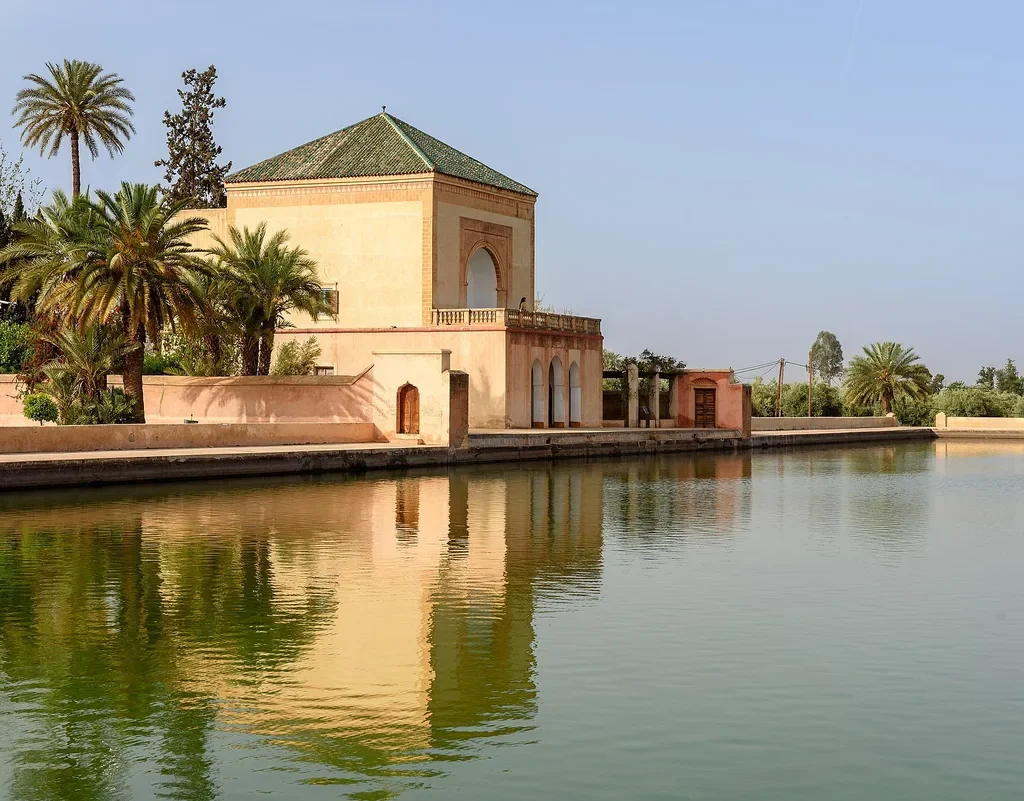
West of the medina, where the city loosens into olive groves, the Menara is Marrakech at its calmest — and the honest description of it is that there is almost nothing to do there, which is precisely its use. The garden’s heart is a great rectangular reservoir, dug in the Almohad 12th century to water the orchards and fed for eight centuries by the same underground channels that made this desert-edge city bloom. On its southern bank stands the pavilion — the menzeh, a 19th-century sultan’s pleasure house with a green-tiled pyramidal roof — and across the water, on the clear mornings that winter and spring provide, the High Atlas fills the horizon, snow over a grove of olives in the middle of a city. It is the postcard view of Marrakech that predates postcards, and UNESCO lists the water feature and pavilion among the monuments that justify the medina’s inscription.
Go the way Marrakchis go: at the day’s edge, when the light is kind and families are walking the paths between the olive trees. The Menara is not a sight to schedule at noon between two palaces; it is the exhale after them, best paired with nothing more demanding than the Agdal gardens’ walls on the walk back or a slow return through the modern olive avenues. Travellers sometimes leave underwhelmed, and they usually visited at midday on a tour-bus stop of twenty minutes. Given an evening hour and a bench by the water, it earns its place in this guide — as the reminder that Marrakech was always a garden city, engineered around water, of which the medina is only the densest expression.
A word here for the Palmeraie, the ancient palm grove north-east of the walls, because its name is attached to so many offers. The grove is real and historic — its planting is attributed to the Almoravids — but it is now threaded with villas, hotels and golf courses, and the camel ride sold as its headline act is twenty minutes on a roadside palm plot, a photograph rather than an experience. If palms and a camel are the point, you will have them more honestly on a day trip; if they are not, the Palmeraie is the one famous Marrakech name a short trip can skip without a backward glance.
The Hammam – Hot Rooms, Black Soap and the Weekly Reset
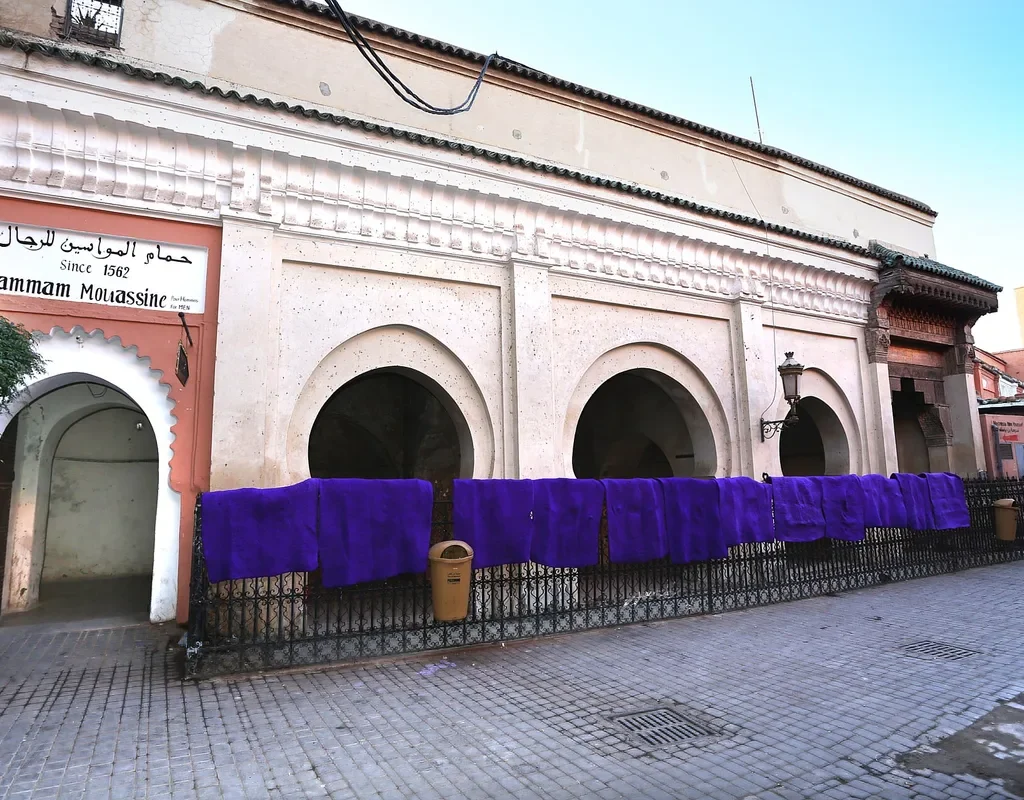
By the third day in the medina — dust in your shoes, souk negotiations in your head — the city has a specific answer prepared, and it is steam. The hammam is Morocco’s public bathhouse and one of its oldest social institutions: traditionally a weekly ritual of washing, scrubbing and unhurried conversation, housed in domed buildings near the mosques they historically shared water and heating with. In the medina the great working hammams, like the Mouassine by its fountain, still serve their neighbourhoods exactly as they always have, men and women in separate rooms or at separate hours. As a visitor you choose between two versions of the ritual, and both are legitimate. The neighbourhood hammam is the real one — functional, steamy, sociable, bring-your-own everything. The riad and spa hammam is the same ritual translated: private room, attendant provided, gentler pace, higher comfort. First-timers often do best with the translation; return visitors graduate to the original.
The ritual itself runs on a simple liturgy. You move through rooms of rising heat until the skin softens, wash down with savon beldi — the black, olive-based soap sold in tubs everywhere in the souks — and then submit to the kessa, the coarse exfoliating glove, wielded by an attendant with an thoroughness that takes off a visible layer of the medina. A rinse, perhaps a coating of ghassoul, the mineral clay from the Atlas sold in the apothecaries, and you emerge rinsed, pink and strangely light, into the lane, where the correct next step is a mint tea and no plans at all. Etiquette is equally simple: follow what the room does, keep the modesty the room keeps — swimwear or underwear is the visitor’s norm and nobody will expect more or less — and take no photographs, ever, for obvious reasons.
The hammam is also secretly a food section. The traditional cook-fire of the bathhouse, the farnatchi, keeps a bed of hot ash all day, and Marrakech puts it to use: the city’s own dish, tanjia, is beef sealed in a clay urn and sent to the hammam’s ashes to slow-cook for hours. The bathhouse scrubs the traveller; its furnace feeds him. Keep both appointments.
Eating Marrakech – Stalls, Tanjia and the Butcher’s Alley
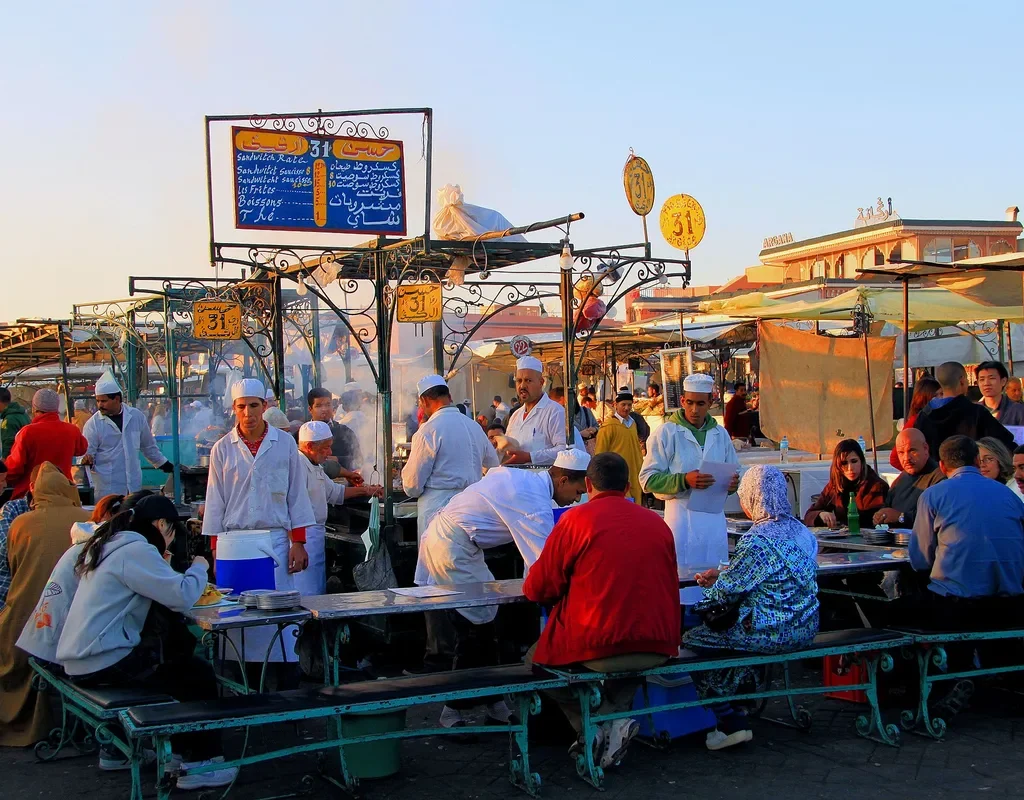
Eating is not a break from Marrakech’s sights. On the evidence of any evening, it is the main one, and its stadium is the square. As dusk settles, Jemaa el-Fnaa’s food stalls — a hundred or so, numbered, each with its grills, its benches, its touts and its smoke — become the largest open-air restaurant in Morocco. The method that works is observation: walk a full circuit first, note where the benches are full of Moroccan families rather than tour groups, and sit there. Order what that stall’s grill is doing fastest: brochettes of lamb, kefta and merguez; grilled fish at the fish stalls; harira, the tomato-and-chickpea soup, to start; and mint tea because it arrives anyway. The brave graduate to the square’s deeper canon — bowls of babouche, snails in a peppery, herbal broth eaten with a pin, and the sheep’s-head stalls, where the meat is picked to order. Stall touts will compete for you with menus and compliments as you pass; it is salesmanship, not threat, and a pat of the stomach and “already eaten” is the local password out.
Beyond the stalls, Marrakech eats two dishes that belong to it alone. Tanjia is the first: not a tagine, whatever the menus imply, but beef — classically — sealed with preserved lemon, garlic and spices in a tall clay urn of the same name and cooked for hours in the ashes of a hammam’s furnace, traditionally prepared by men for a gathering and eaten communally, the meat falling to shreds. The second is mechoui, whole lamb roasted in a pit oven until the skin crackles, sold by weight in the lane everyone calls Mechoui Alley near the square, where you point, they carve, and you eat with bread, cumin and salt off paper. Add the mornings — msemen flatbreads and baghrir pancakes with honey and soft cheese at a medina cafe, a glass of freshly crushed orange juice from a square cart — and the city’s full menu is a day long.
Two honest judgements to close the section. The rooftop terraces ringing the square charge for altitude, not cuisine: go up at sunset for the tea and the view, and eat your dinner at ground level. And if a cooking class appeals — and Marrakech runs many — choose one that starts with a market shop in the souks and cooks in a riad kitchen, and treat the class as what it really is: the most enjoyable way to learn what you have been eating. The city will happily feed you for a week. Let it, but let the square feed you first.
Beyond the Walls – Atlas, Ourika and the Agafay, Honestly Labelled
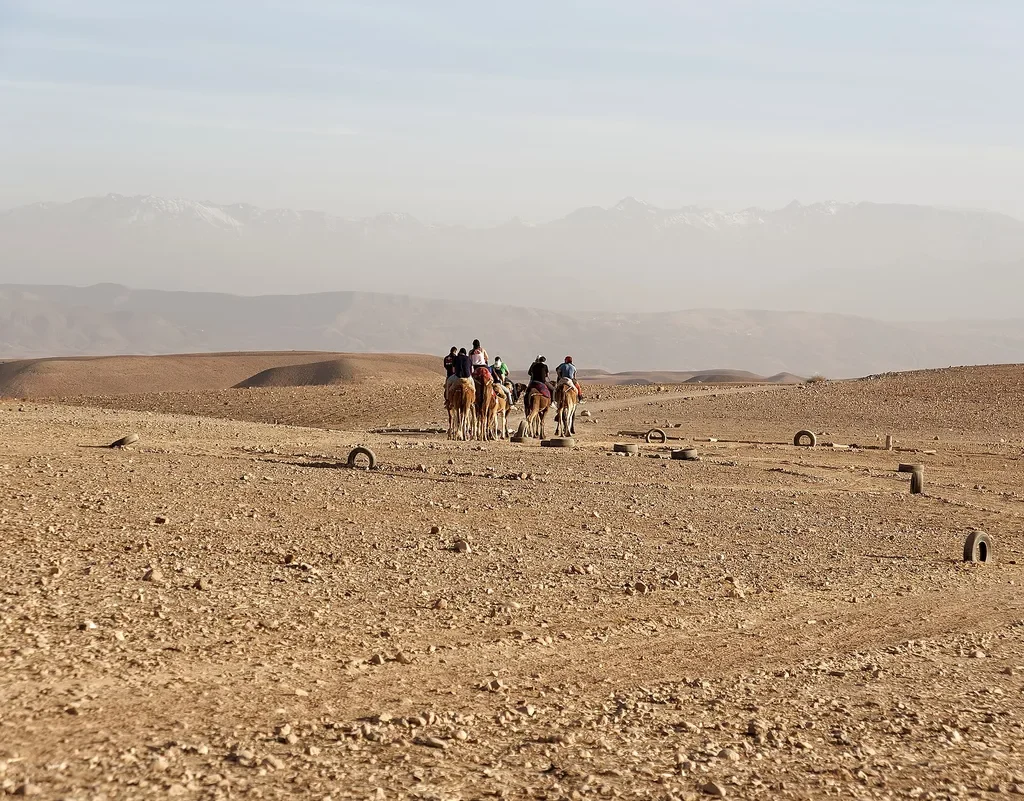
If the trip has a spare day, Marrakech’s geography offers three escapes of rising commitment, and the deciding factor is which landscape you actually came for. Closest to the city, under an hour, the Agafay is a plateau of pale, eroded stone hills — a reg, a stone desert — where the light at evening is superb, the Atlas stands on the horizon, and a generation of camps now offers the camel-at-sunset-and-dinner circuit. Go with clear eyes: the Agafay is a beautiful evening out and it is not the Sahara. There are no dunes. Any seller who lets you believe otherwise is selling you the photograph in your head, and the real erg — the dune sea at Erg Chebbi by Merzouga — is a full day’s drive east, a journey of two or three days minimum that deserves its own planning; our morocco itinerary builds it into the classic route properly.
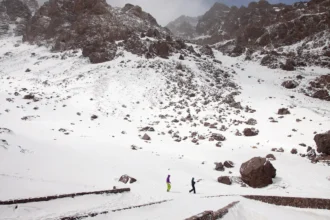
The green escape is the Ourika Valley, where the road from the city climbs into the Atlas foothills along a river lined with walnut trees and riverside cafes, to the village of Setti Fatma and the waterfalls above it. It is the Marrakchis’ own weekend refuge, which means it is at its best on a weekday and at its most crowded — joyfully, locally crowded — on a fine Sunday. A step deeper, the Imlil valley is the hikers’ door: Imlil village, an hour and a half or so from the city, is the trailhead for Jbel Toubkal, at 4,167 metres the highest summit in North Africa, and for a web of paths between Berber villages built of stone and earth. You do not need the summit to justify the day; a guided walk between villages, lunch in one of them, and the mountain air will do it.
One fact belongs in any honest account of these valleys, and it changes how a visit should feel. The High Atlas south of Marrakech was the epicentre of the earthquake of September 2023, which devastated villages across the region, Imlil’s valley among the wider area affected. Rebuilding continues, and tourism — spread locally, with local guides, into village guesthouses and lunches rather than a photo stop — is one of the ways the valleys have asked to be helped. Go gently, hire from the valley, and the day trip becomes the most worthwhile thing on this page.
Frequently Asked Questions
Six questions decide most Marrakech stays.
How many days do you need in Marrakech?
Three full days is the sweet spot — one for the southern medina (square, souks, Koutoubia), one for the palaces and the Kasbah, one for the Majorelle and a day trip or a slower second pass — and two days still works if Majorelle and one palace give way. A single day shows you the square and the souks and withholds the rest. Note that most classic Moroccan journeys start or end here; the morocco itinerary 7 days route threads Marrakech through a week that ends in Fes.
Can non-Muslims go inside the Koutoubia?
No. In Marrakech, as in almost all of Morocco, working mosques are open to Muslim worshippers only, and the Koutoubia is the city’s principal mosque. The visit is the exterior — the minaret, the esplanade and the gardens — and the great sacred interior you can enter is the Ben Youssef Madrasa, which is a college rather than a mosque and admits everyone.
Do you have to haggle in the souks?
In the souks, yes — the first price is an opening bid, and paying it without a counter is the one move that actually gives offence to the ritual. Keep it friendly, counter low, meet in the middle and be ready to walk away smiling, which settles most numbers. If the whole game wearies you, the fixed-price Ensemble Artisanal near the Koutoubia sells comparable crafts with the prices printed; you pay a premium for the calm, and it can be worth it.
What should I skip in Marrakech?
The Palmeraie camel ride sold as a desert experience — it is a photo opportunity among palm plots and villas. The big fantasia dinner-shows outside the city, unless spectacle is your holiday’s point: they are staged for tour groups and eat a whole evening. Photo “opportunities” with monkeys and snakes on the square. And El Badi if ruins without detail leave you cold — its neighbour the Saadian Tombs carries the same history in finer form, though the two together make the better visit.
When is the best moment for Jemaa el-Fnaa?
Late afternoon, from about an hour before sunset. You catch the day square winding down, take a rooftop seat for the light, and watch the night square assemble — stalls rising, smoke going up, the halqas forming — which is the famous transformation itself, better than arriving at either finished state.
Is Marrakech overwhelming – and is it safe?
It is intense rather than dangerous: the pressure you will feel is commercial — invitations, directions with a destination in mind, opening prices — persistent around the square and the souk entrances and fading the moment a polite refusal lands. Big-city sense covers the rest: awareness in the evening crowds, valuables unflashy, and a riad escort or main streets for the late walk home. Most travellers find their rhythm inside a day, and the intensity becomes the thing they describe most fondly afterwards.
The Short Version
Give Marrakech its rhythm and it gives you everything. Start a day in the souks while the workshops are working, learn the city by the Koutoubia’s tower, and read the Bahia as one vizier’s magnificent career move. Spend a southern half day in the Kasbah between al-Mansur’s jewel-box tombs and his stripped, stork-haunted ruin, and a northern hour inside the Ben Youssef Madrasa, the one great sacred room open to all. Book the Majorelle ahead and go at opening — the blue villa, the cacti, and the Berber Museum that explains the culture the souks sell. Take the Menara at evening, a hammam at the end of a dusty day, and dinner at least once on a numbered stall in the square, with a rooftop mint tea above it at sunset. If there is a day to spare, spend it honestly: the Agafay for an evening of stone and light, the Ourika for green water, Imlil for the high valleys — and save the true Sahara for a journey built to reach it.