Morocco is an easy country to travel and an even easier one to get slightly wrong. Nobody will arrest you for using the wrong hand, and no shopkeeper will throw you out for refusing tea. But the difference between a trip that stays at the level of transactions and a trip that turns into conversations, invitations and genuine welcome is almost entirely a matter of moroccan culture and etiquette. The rules are not complicated, and that is the encouraging part. Most of them fit on an index card: greet people properly, use your right hand, dress with a little care, accept the tea, ask before you photograph, and never expect to walk into a mosque. What takes longer is understanding why those rules exist, because in Morocco etiquette is rarely about politeness for its own sake. It is about hospitality, faith and dignity, and once you see that, the rules stop feeling like a list and start feeling like a language you can actually speak.
This guide works through moroccan culture and etiquette in the order you will meet it: the first greeting, the first meal, the first mosque you cannot enter, the first bargain you strike and the first hammam you visit. It is written for first-time visitors, but travellers on a second or third trip tend to find the sharpest edges in the middle sections, around Ramadan, tipping and photography, where even experienced visitors get caught out. Nothing here asks you to perform being Moroccan. You are a guest, and you will be treated as one, often with a generosity that outruns anything you can repay. The aim of learning moroccan culture and etiquette is simply to be a good guest: to notice how much care is being extended to you, and to return it in the small currencies that matter locally, which are time, respect and attention.
One promise before the details. Where a custom has a hard edge in law, this guide says so plainly, because a few things that are merely frowned on at home are illegal in Morocco, and visitors deserve to know which is which. And where a figure would be a guess dressed up as a fact, above all with tipping, this guide describes the custom and leaves the number out. Moroccan prices, wages and habits vary too much by city and season for a single printed figure to be honest. If you want the route-planning side of a first trip alongside the customs, our Morocco travel guide covers the practical shape of the journey; this page stays with the people you will meet along it.
Start With Hospitality – Why Etiquette Matters Here
The single most useful thing to understand about moroccan culture and etiquette is that hospitality is not a service industry here; it is a social obligation with religious roots. A guest is traditionally regarded as a gift and a responsibility, and the Moroccan National Tourist Office, which is not given to exaggeration about its own country, puts it simply: when you are invited, you are served tea, and people get to know each other over that tea. Hosts who have very little will still find something to offer a visitor, and the offering is the point, not the value of what is offered. This is why so many of the customs in this guide revolve around accepting gracefully. In a culture where giving is a duty, a flat refusal is never read as a neutral act. It closes a door that someone has deliberately opened for you.
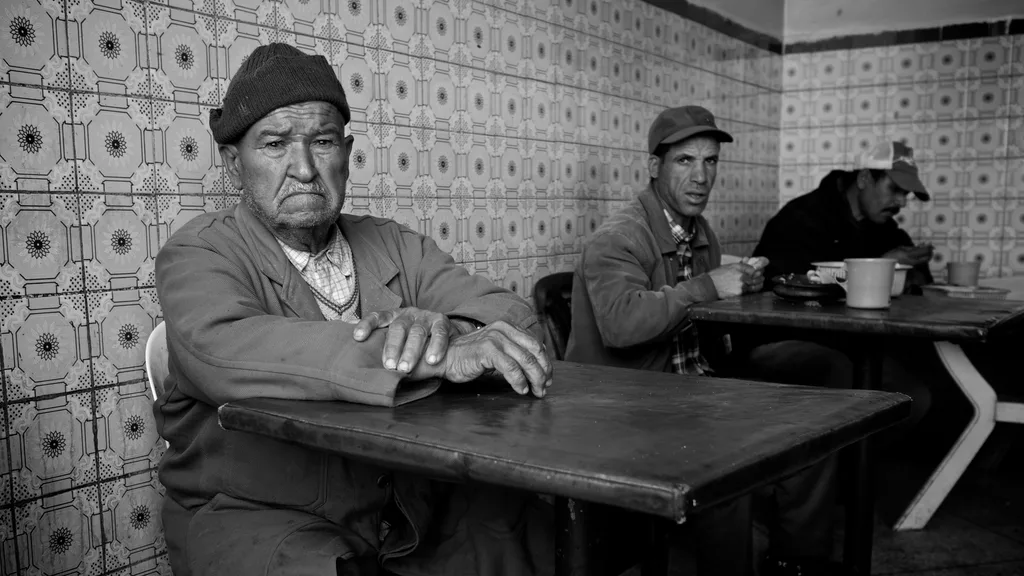
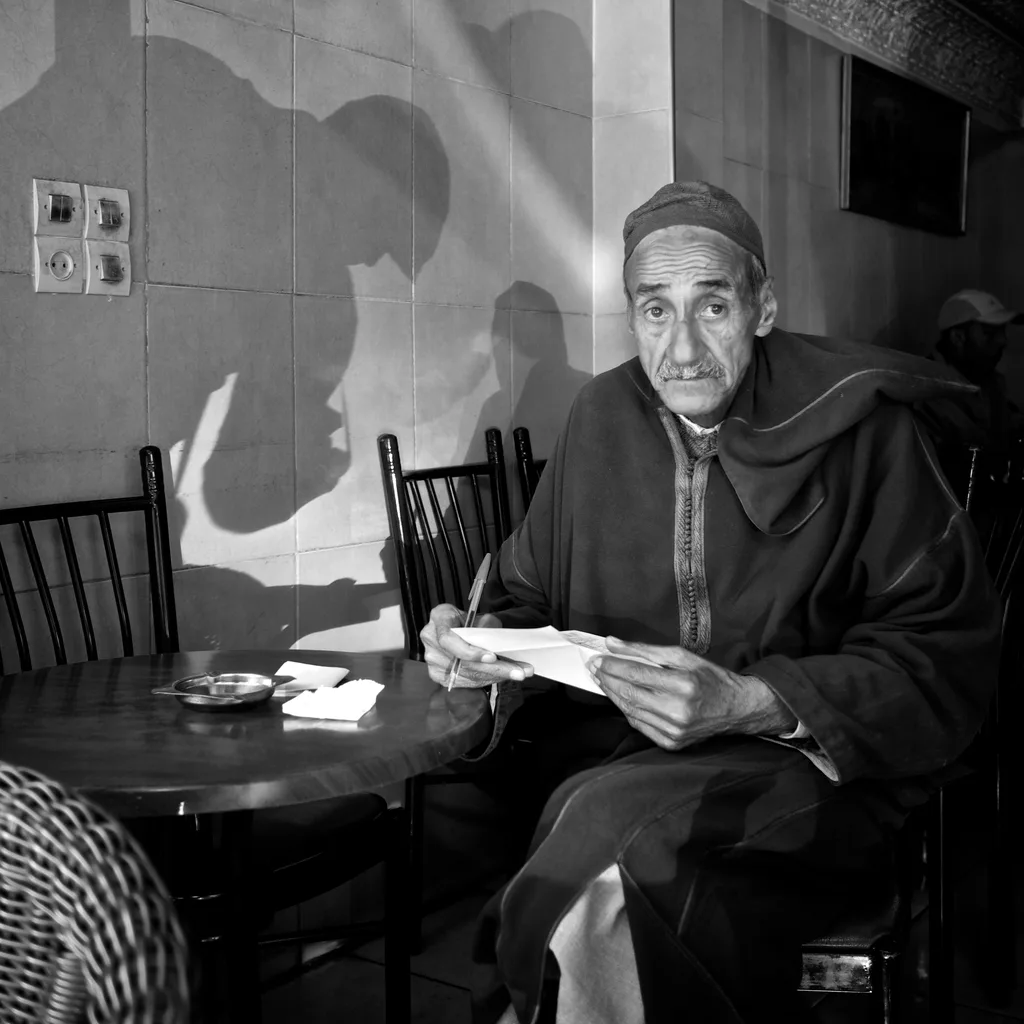
The cafe is where you can watch this social fabric working at street level. Moroccan cafes, especially the older terrace cafes of the medinas and small towns, function as public living rooms: places where news is exchanged, business is softened up, football is argued over and the day is given its rhythm. You do not need an invitation to join that world; you only need to sit down, order slowly and not be in a hurry. Travellers who treat cafes purely as fuel stops miss one of the easiest windows into everyday life the country offers. Sit for an hour, and you will start to see how greetings stretch, how acquaintances are acknowledged, and how much of Moroccan social life happens in public, at walking pace, over small glasses.
A second thing follows from the first, and it shapes all of moroccan culture and etiquette: saving face, yours and everyone else’s, matters enormously. Criticism is usually indirect, refusal is usually softened, and a request is often wrapped in enough courtesy that an outsider can miss that a request was made at all. As a visitor, the practical translation is that tone beats content. A warm, unhurried, smiling approach will carry a badly pronounced greeting further than perfect grammar delivered briskly. Moroccans are famously forgiving of visitors’ mistakes; what registers is effort and warmth. Nobody expects you to get everything right. They notice, very quickly, whether you are trying.
Greetings and First Words – the Longest Hello in the World
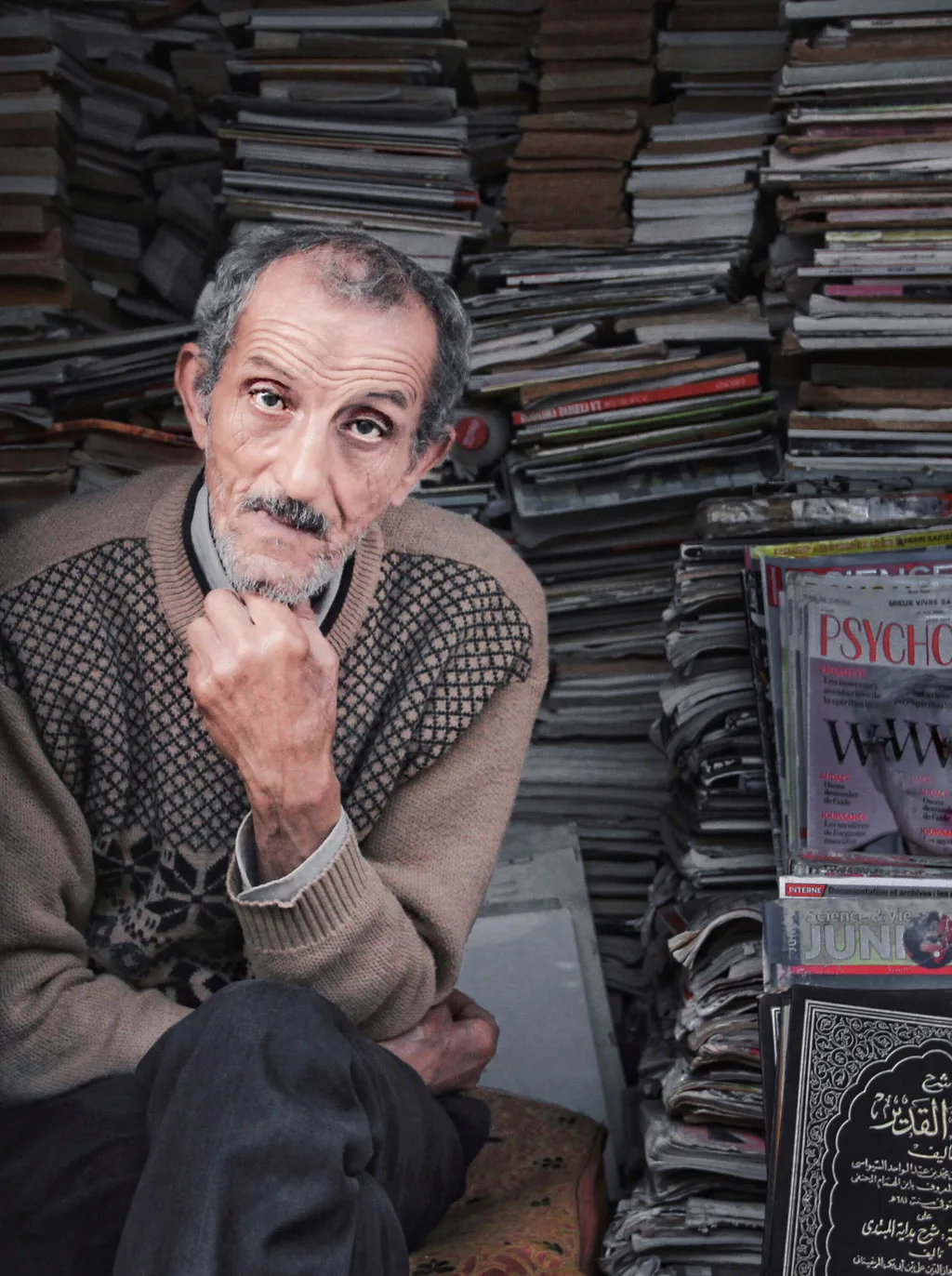
A Moroccan greeting is not a preamble to the conversation; in local terms, it is a large part of the conversation. Where a British or American hello takes two seconds, a proper Moroccan greeting unrolls: peace be upon you, and how are you, and how is your family, and how is your health, and praise be to God. Rushing it reads as coldness. The good news is that you only need a handful of words to take part. The standard greeting is “salam alaikum” (peace be upon you), answered with “wa alaikum salam” (and peace be upon you). Add “labes?” (how are you?) and “shukran” (thank you) and you have covered most everyday interactions, as any Moroccan etiquette guide will tell you, because Moroccans respond to the attempt itself. A greeting attempted in Darija, the Moroccan dialect of Arabic, earns a warmth out of all proportion to its grammar.
Language in Morocco is layered, and knowing the layers helps you read a room. Darija is the everyday spoken language, Amazigh (Berber) languages are the mother tongues of many Moroccans, particularly in the mountains and the south, and French is widely understood in cities, in business and on signage, a legacy of the protectorate years. Many people in tourism move between all three mid-sentence. As a visitor you are not expected to manage any of this perfectly. What matters for moroccan culture and etiquette is sequence: greet first, in whatever language you share, and only then ask your question, state your business or raise your camera. Walking up to a stranger and opening with “how much?” or “where is?” skips the step that makes you a person rather than a demand. Thirty seconds of greeting changes the temperature of everything that follows.
Physical greeting follows its own grammar. A handshake, offered with the right hand, is the standard between men and in most business settings, and among friends and family the handshake flowers into kisses on the cheek, usually two, sometimes more, exchanged between women and between close male friends. Between men and women, custom is more variable and more conservative, especially outside the big cities: some women shake hands readily, others prefer not to, and the graceful move as a visitor is to let the other person set the terms. If a woman does not extend her hand, a smile, a slight nod and a hand placed briefly over your own heart carries the greeting perfectly well and gives offence to no one. Never grab, never insist, and never treat a declined handshake as a snub; it is simply a boundary being kept, and respecting it is itself good etiquette.
The Right Hand Rule – Hands, Giving and Eating
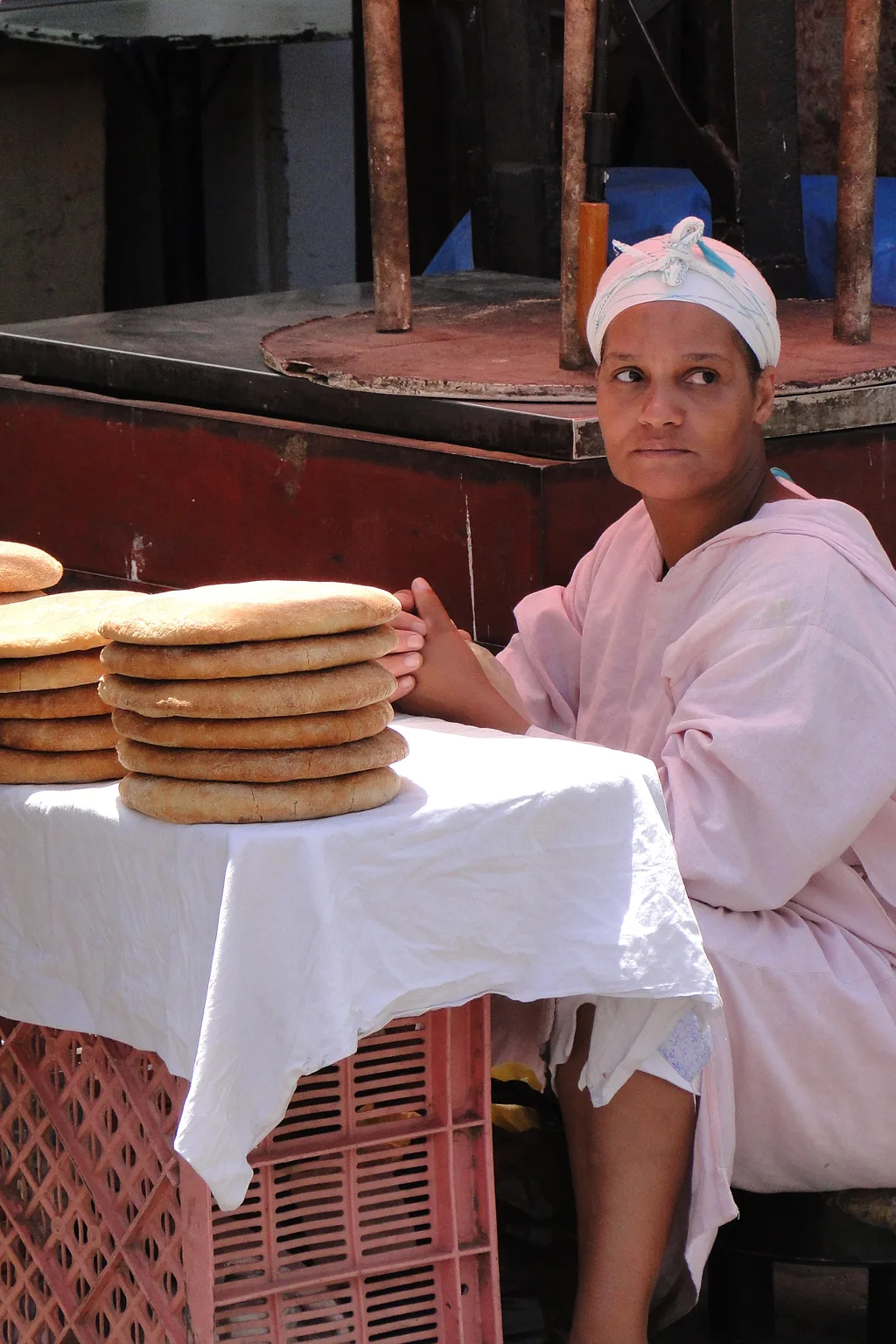
If you learn only one physical rule of moroccan culture and etiquette, make it this one: use your right hand. In Moroccan and wider Islamic tradition, the left hand is reserved for personal hygiene and is considered unclean for social purposes. The right hand is therefore the hand for greeting, for giving and receiving, for handing over money, for accepting a glass of tea and for eating. This is not a obscure piece of folklore; it is a live, everyday convention that Moroccans of all ages observe automatically, and a visitor who eats, pays and shakes hands right-handed will simply look well brought up. Left-handed travellers are not expected to perform miracles, and nobody is keeping score, but making the effort where you can, particularly when handing something to an elder or eating from a shared dish, is noticed and appreciated.
Eating is where the rule becomes practical. Many Moroccan meals, above all in homes, are eaten from a shared dish placed in the middle of the table or mat: a tagine, a platter of couscous, a dish of olives and bread. There may be no cutlery, or cutlery only for serving. The technique is to tear a small piece of bread with your right hand and use it to scoop, pinching food between bread and thumb. Eat from the section of the dish directly in front of you rather than reaching across to the choicest pieces on the far side; your host will often move the best pieces toward you anyway, which is their privilege, not yours. Wash or rinse your hands before a meal if a basin or jug is brought round, as it often is in traditional settings, and wait for the host’s signal, a “bismillah” (in the name of God) or a gesture, before starting.
Hands carry a few smaller signals worth knowing. Beckoning, pointing and passing objects all read better done openly and gently; snapping fingers at a waiter or summoning someone with a curled finger lands badly almost everywhere, and Morocco is no exception. When you give a gift or a tip, give it with the right hand, or with both hands, which signals that the gift is given fully. And when you receive change, tea or a purchase, receive it the same way. None of this requires choreography. It is the accumulated effect that counts: a visitor whose hands are consistently courteous is read, at a level below words, as a respectful person, and in Morocco that reading opens more doors than any phrasebook.
Dressing With Respect – What to Wear and Where It Matters
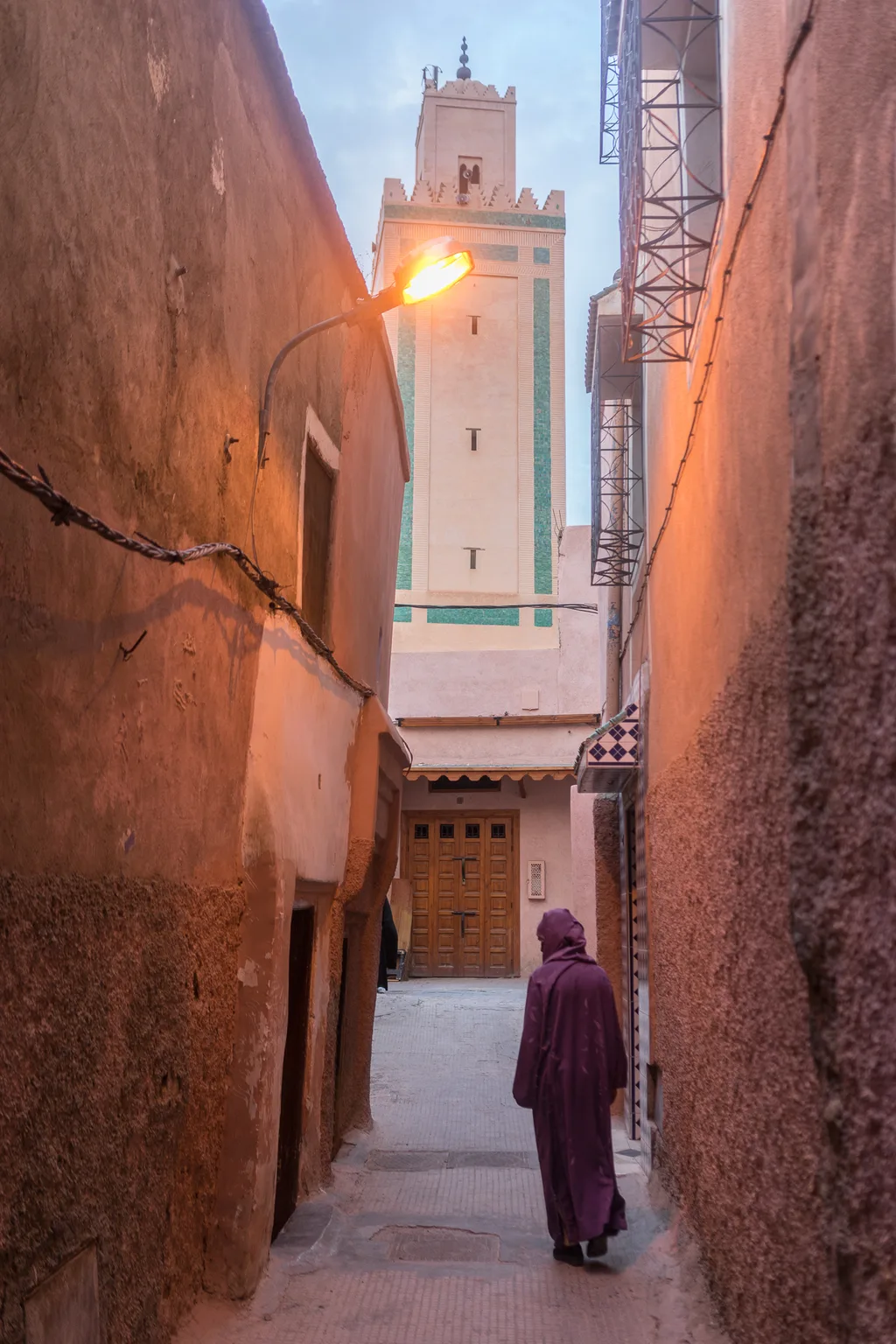
Morocco dresses more conservatively than southern Europe and less formally than you might fear, and the honest summary is that context, not a national costume code, decides what is appropriate. In the beach resorts, in the new towns and in the international hotels, visitors wear roughly what they would wear anywhere warm. In the medinas, in smaller towns, in villages and anywhere near religious life, modest dress is the norm that moroccan culture and etiquette expects: shoulders covered, knees covered, clothing loose rather than tight. For women, that means leaving short shorts, crop tops and low necklines for the resort; the UK Foreign Office advice to women travellers is to consider loose-fitting clothing that covers the arms, legs and chest, and Canadian government advice says simply to dress conservatively and respect religious and social traditions. Follow that line and you will be comfortable everywhere, including in places where nobody would ever say anything but everyone would notice.
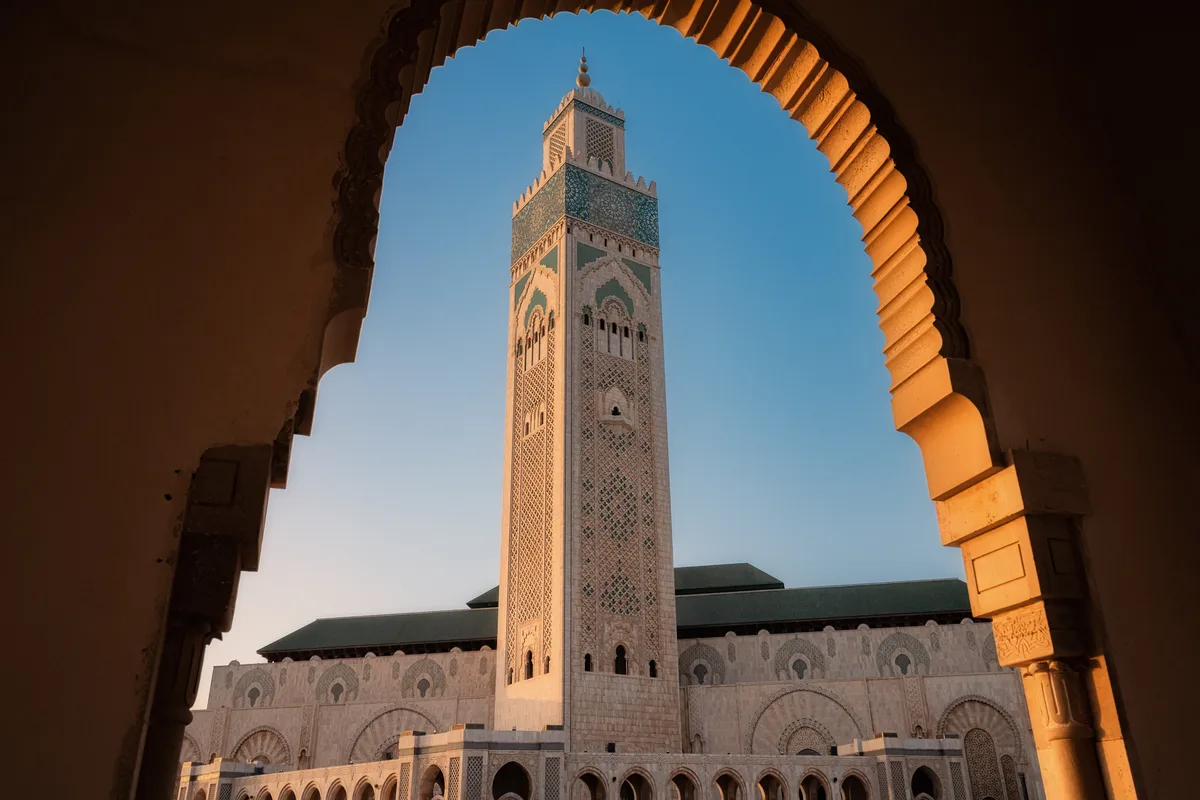
One persistent myth needs clearing away: visiting women are not required to cover their hair in Morocco, and there is no law or general social rule asking it of non-Muslim visitors. Moroccan women themselves choose a wide range of dress, from full traditional djellaba and headscarf to jeans and uncovered hair, often within the same family. A light scarf is still a useful thing for a woman to carry: it can serve as a shoulder cover when passing a conservative neighbourhood, as warmth on a mountain evening, and as the expected head covering if you take the guided tour inside the Hassan II Mosque in Casablanca, where modest dress is required of all visitors. Men should apply the same logic: sleeveless vests, bare chests and very short shorts read as careless in a medina or a village, however normal they feel at a beach club. Swimwear belongs at the beach and the pool, not on the walk back through town.
Dress also has a temperature of its own in the Moroccan day. You will notice that local dress, the djellaba for both sexes, the headscarf, the layered robes of the mountains, is loose, covered and practical against sun as much as it is modest. Copying the principle rather than the garment is the visitor’s version of good dressing: light, loose, covered clothing is simply more comfortable in a Moroccan summer than straps and shorts, and it carries you from a market to a mosque courtyard to a family lunch without a costume change. Dressing with a little care is one of the cheapest forms of respect there is, and Moroccans, who take real pride in appearance, register it immediately.
Mosques and Religious Spaces – Admire From the Garden
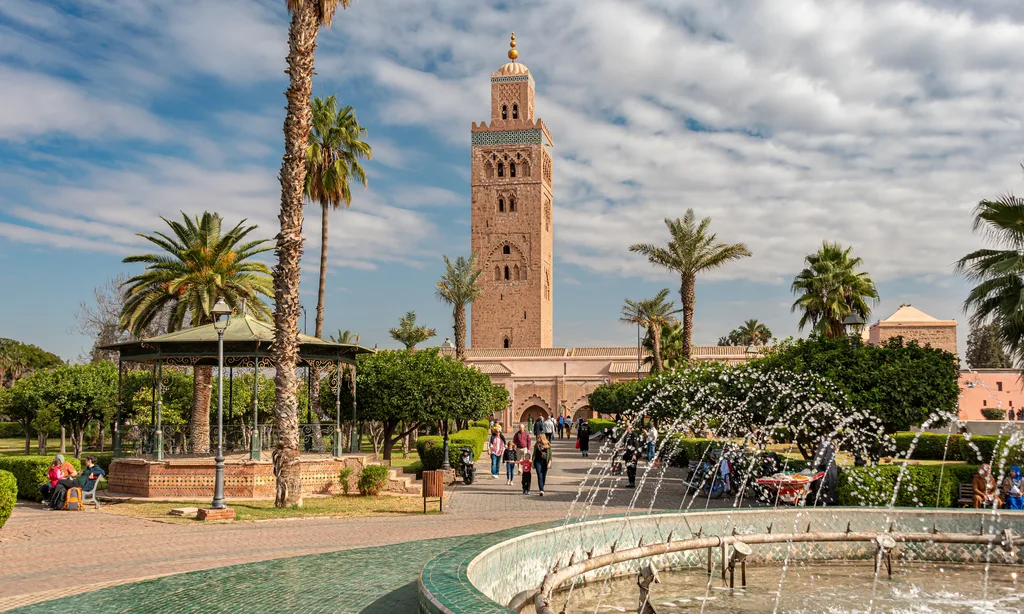
Here is the rule that surprises more visitors than any other in moroccan culture and etiquette: in Morocco, mosques are for worshippers, and non-Muslims generally cannot go inside them. This is not a tourist policy that varies by keeper or by tip; it is the settled national practice, and it applies to the great historic mosques of Fes, Marrakech and Rabat just as it does to the smallest neighbourhood prayer hall. The minarets still belong in your itinerary, the carved doors and green-tiled roofs still reward a slow walk around the outside, and at prayer times the sight and sound of a mosque in use is one of the most powerful things you will witness in Morocco. But the door itself is not for you, and testing it, peering in with a camera, or wandering in “just for a peek” is the single most reliably offensive thing a visitor can do. Admiring from outside is not a consolation prize here; it is the correct and expected way to experience these buildings.
There is one famous exception, and for many visitors it is a highlight of the whole trip. The Hassan II Mosque in Casablanca, the vast mosque built over the Atlantic and completed in 1993, officially admits non-Muslim visitors on guided tours, run outside prayer times and taking in the prayer hall, the ablutions halls and the hammam level below. It is the one working mosque in the country where a visitor can stand inside on a ticket, and the tour is worth planning a Casablanca stop around. Dress modestly for it, shoulders and knees covered, and women will be asked to cover their hair inside. A ruined historic mosque, Tin Mal in the High Atlas, was long visitable as a monument, but it has been closed for repairs since the 2023 earthquake; treat any older guidebook’s promises about it as out of date until it officially reopens.
Behaviour around mosques follows from the same respect. Keep voices down near a mosque during prayer, do not block doorways as worshippers come and go, and do not photograph people at prayer, whether inside a courtyard you can see into or through an open door; photographing the architecture from the street is generally fine, photographing devotion is not. The same care applies to Morocco’s other sacred spaces: the zawiyas (shrines), saints’ tombs and the mellah synagogues and cemeteries of the old Jewish quarters, some of which welcome visitors and some of which do not. Read the signs, ask the guardian where there is one, and accept a closed door gracefully. In moroccan culture and etiquette, a sacred threshold is not a challenge to your itinerary. It is somebody else’s prayer, and you are standing next to it, not in it.
Fridays and the Call to Prayer – Reading the Week’s Rhythm
The Moroccan day is punctuated by the adhan, the call to prayer, sounded five times a day from every minaret, the first before dawn and the last after dark. You do not need to do anything about it, and nobody expects a visitor to organise sightseeing around it, but noticing it will attune you to the country’s clock: shops briefly quieten, some men step away to pray, and the medina takes a held breath before resuming. The one day the rhythm genuinely changes travel plans is Friday. Friday is the day of congregational prayer, and from late morning through the midday prayer many shops, workshops, offices and souk stalls close or run reduced hours, reopening in the afternoon. A Friday morning is a poor time to schedule the medina shopping you have been saving up, and a good time to do almost anything else.
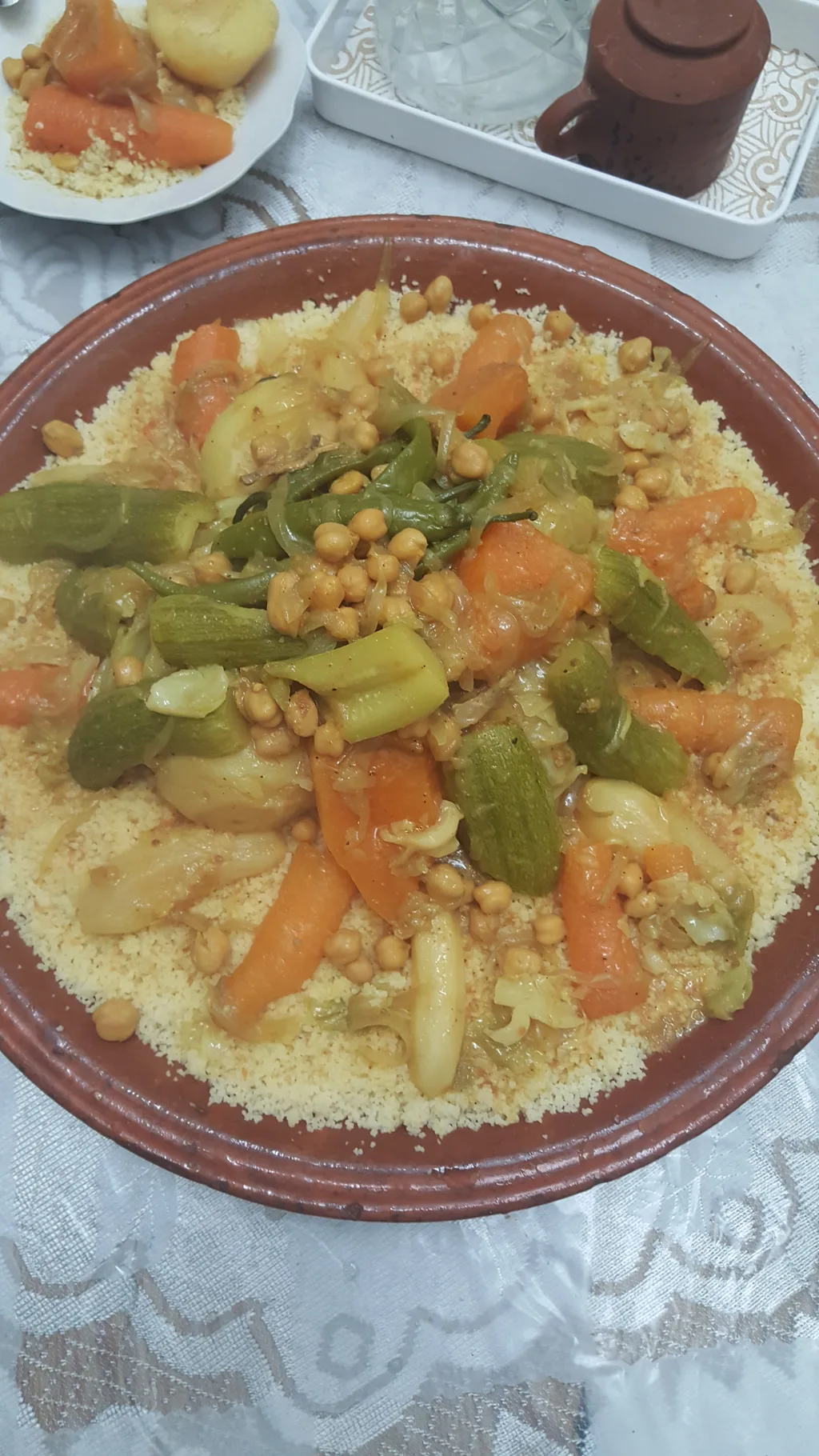
Friday also has a taste, and it is couscous. After the midday prayer, Moroccan families gather for the week’s main shared meal, and that meal is traditionally couscous, steamed in stages and served on one great platter with vegetables, chickpeas and meat, eaten together at unhurried length. The Moroccan National Tourist Office calls couscous the country’s staple of solidarity, and Friday is when you see why: it is the dish that assembles the family. Restaurants know this too, and many serve couscous only on Fridays, so if you want to eat it where Moroccans eat it, Friday lunch in a local restaurant is your moment; arrive after the prayer rush, expect a leisurely room, and do not plan anything brisk for the hour that follows. A Friday in Morocco is not a day when the country is closed. It is a day when the country is at lunch with its family, and the wise visitor plans around that rather than against it.
Building your itinerary with this rhythm in mind is the practical end of moroccan culture and etiquette: put mosque-heavy sightseeing and souk bargaining on other days, treat Friday midday as a long lunch and a quiet garden, and let the call to prayer be a texture of the trip instead of background noise. Our Morocco itinerary for 7 days builds the classic route day by day, and it is worth a glance with a calendar open, so that your Fes or Marrakech medina day does not land on a Friday morning by accident. None of this requires piety from you. It requires only what everything in this guide requires: noticing that the country has a rhythm of its own, and stepping into time with it rather than demanding it step into time with you.
Ramadan – Travelling in the Fasting Month
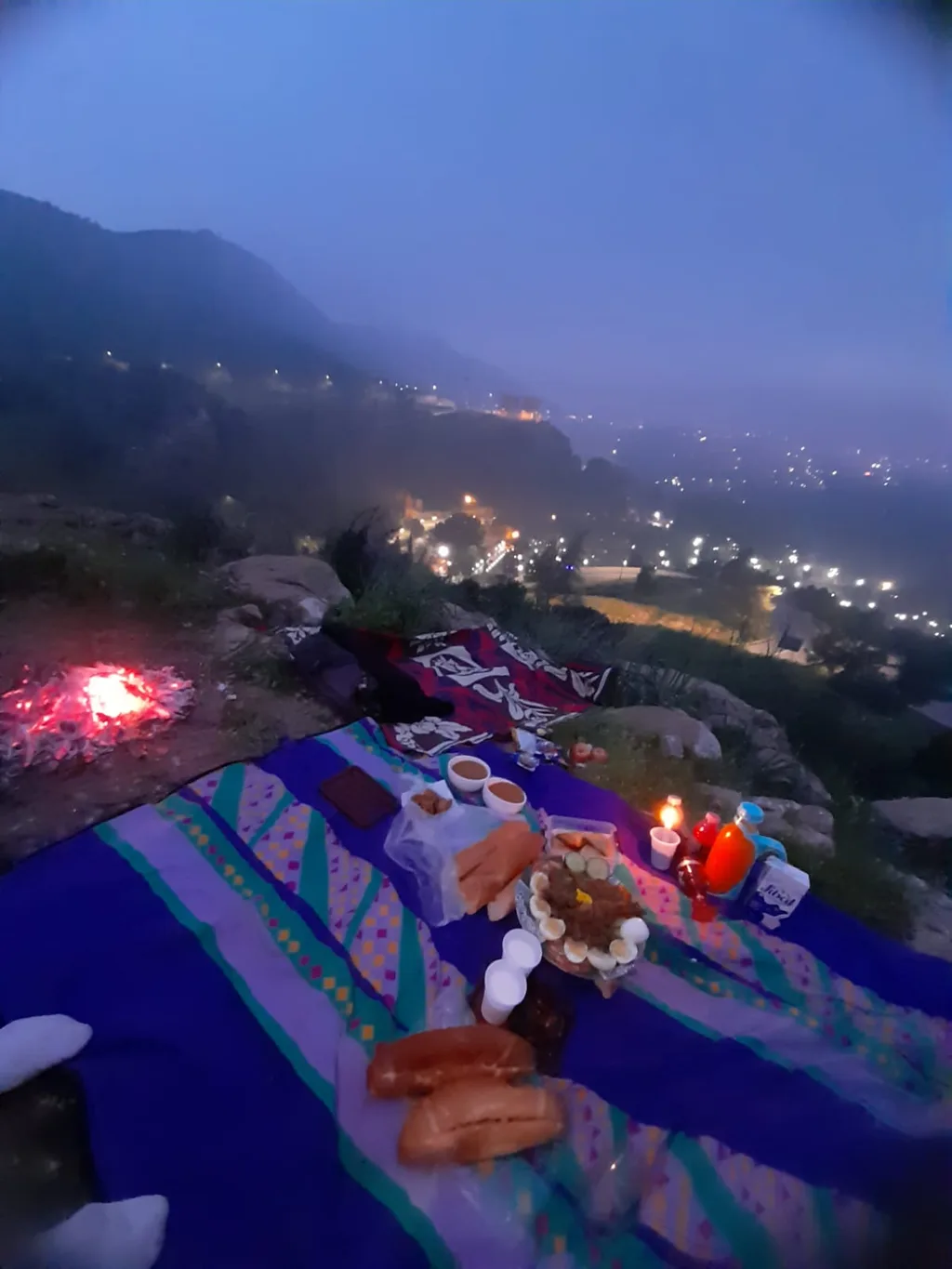
Ramadan, the ninth month of the Islamic lunar calendar, is the most demanding and in many ways the most rewarding time to be in Morocco. From dawn to sunset, observant Muslims neither eat nor drink, water included, and the whole country reorganises itself around that fact: the next Ramadan is expected to begin in February 2027, and because the lunar year is shorter than the solar one, the month moves earlier by roughly eleven days each year. Days in Ramadan are slow, shuttered and drowsy, especially in the late afternoon; nights are transformed, with streets, cafes and food stalls coming alive after sunset and staying lively deep into the evening. Travelling well in Ramadan is mostly a matter of joining the right half of that rhythm and being considerate in the other half.
The visitor’s rules are courtesy, not law, but they are strongly felt. Eating, drinking, smoking or chewing gum in public during fasting hours may cause real offence, as the UK Foreign Office puts it, and the Canadian government’s advice is the same: in public, between sunrise and sunset, refrain. You are not expected to fast, and hotels and some restaurants will serve you, sometimes behind screens that separate non-fasting guests from the street. The graceful pattern is to eat discreetly, indoors or in those designated spaces, rather than picnicking on a medina bench in front of people who have not touched water since dawn. Be extra patient in the late afternoon, when fasting staff, drivers and officials are running on empty, and be careful on the roads around sunset, when the whole country is hurrying home to eat and driving can turn erratic. Morocco even turns its clocks back an hour for the month, a practical detail that catches out travellers with trains to catch.
What you get in return is iftar, the breaking of the fast, and it is one of the great food moments in Moroccan life. At sunset a cannon or a siren sounds in many towns, and tables fill with harira soup, dates, chebakia (honeyed sesame pastries), eggs, breads and mint tea, eaten first quickly and then at long leisure. If you are invited to an iftar, accept: it is among the warmest invitations moroccan culture and etiquette can extend, and arriving with dates or pastries in hand makes you a contributor rather than only a guest. Even uninvited, you can eat your way through Ramadan nights at the stalls and cafes that open after dark. Travel in Ramadan asks more of you than any other month, and this guide will not pretend the sleepy afternoons are anything but sleepy. But visitors who come prepared for the rhythm usually leave saying the fasting month showed them more of Morocco than any festival could.
Tea Is Never Just Tea – the Ceremony of Atay
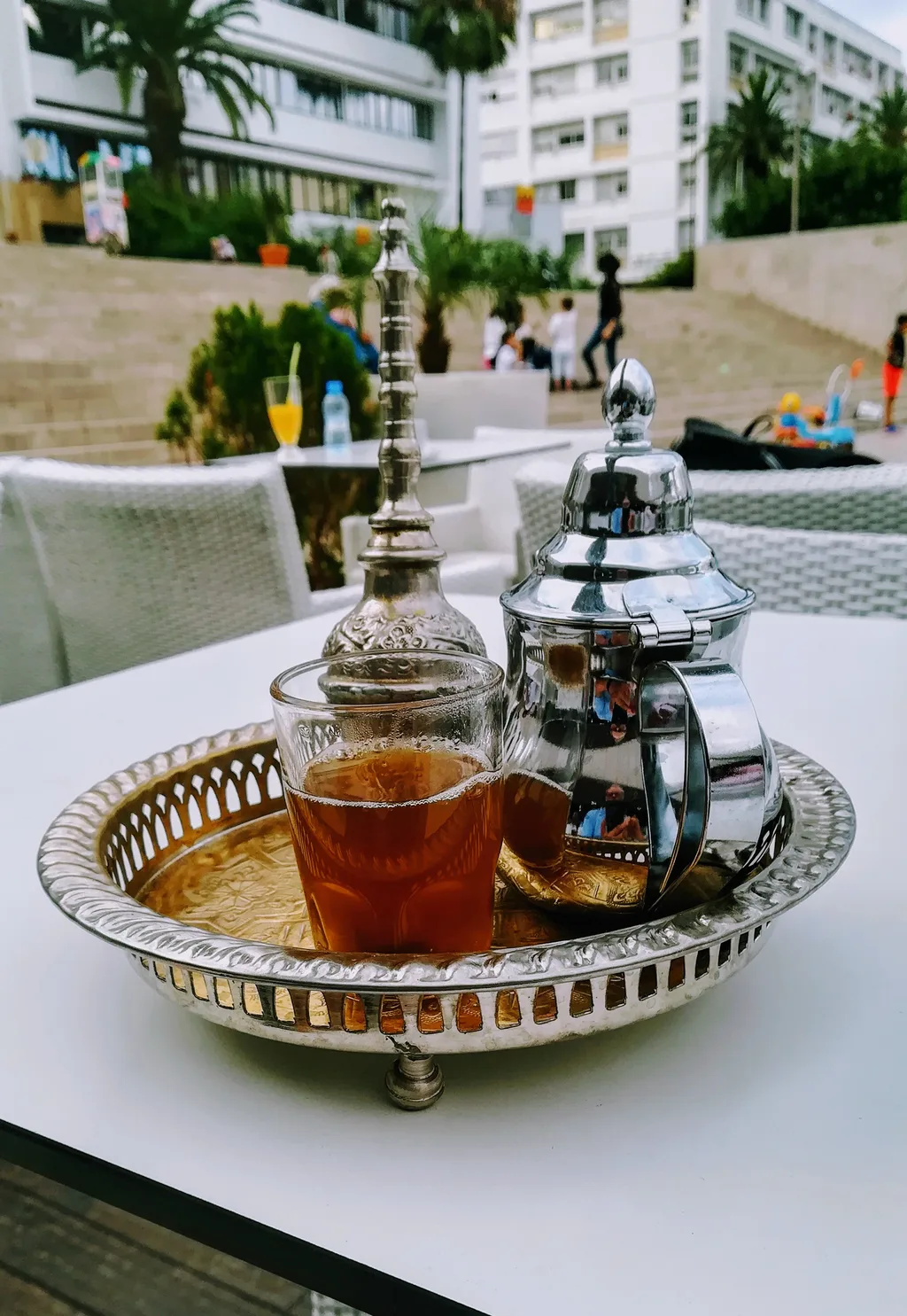
At some point in Morocco, usually within your first hour, someone will pour you a small glass of mint tea. Understand what is happening: this is not refreshment, it is the handshake that comes after the handshake. Mint tea, atay, is made from green tea softened with fresh spearmint and a generous hand with sugar, brewed in a metal pot and poured from a height so the tea aerates and lands with a froth on top. It is offered in homes, in riads, in carpet shops and in desert camps, by hosts showing welcome, by sellers opening a negotiation and by families marking you as a guest rather than a customer. The Moroccan National Tourist Office describes the pattern plainly on its hospitality pages: when you are invited, you are served tea, and people traditionally get to know each other over it. Refusing outright, as Moroccan etiquette guides put it, can read as declining the hospitality itself rather than the drink.
So accept. If you are worried about sugar, about caffeine, about being on your fifth glass of the day, accept anyway and drink a few sips; a small acceptance is the comfortable middle path, and a half-finished glass left politely is understood everywhere. If you truly cannot drink it, decline with your hand to your heart, a smile and a word of thanks, and the warmth of the refusal will do the work. In a shop, understand the tea’s second function without being cynical about it: tea slows the transaction down into a relationship, and that is not a trap, it is the local theory of how buying and selling should feel. You are under no obligation to buy because you drank the tea, and no honourable seller believes you are. But the visitor who drinks, chats and then browses will usually enjoy the souk more, and often pay less, than the one hovering at the door.
The tea ceremony has its own small choreography worth copying. The host pours, the host serves, and the eldest or most honoured guest is served first; take the glass in your right hand, drink at the pace of the room, and do not rush a visit that is being measured in glasses rather than minutes. In some settings the glasses keep coming, and the visit is over when the host judges it over, which for a guest translates as: settle in. Tea is where moroccan culture and etiquette becomes visible as a practice rather than a set of rules, and it is the cheapest education in the country. Every glass is a small lesson in how Morocco prefers to do things: slowly, sweetly, and in company.
Invitations and the Shared Dish – Being a Guest in a Moroccan Home
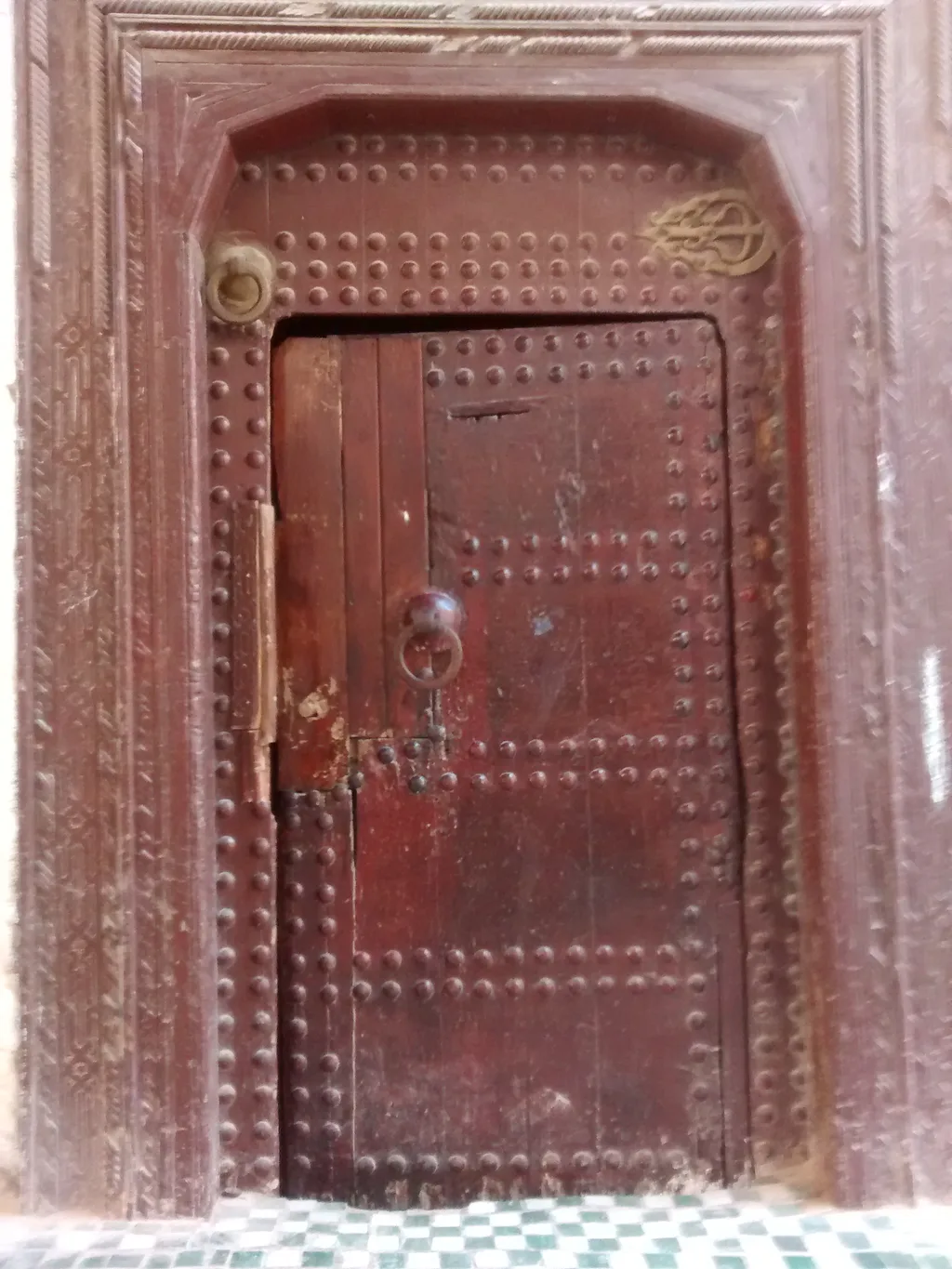
Sooner or later, if you travel with any openness at all, Morocco will invite you in: a shopkeeper’s family lunch at the back of the stall, tea at a guide’s home village, a full dinner from a riad owner who has decided you are no longer just a booking. An invitation is not a casual pleasantry in moroccan culture and etiquette; it is one of the highest compliments the culture pays, and it should be treated as such. Accept if you possibly can, arrive at the time given rather than fashionably late, and bring a small gift that adds sweetness to the house: a box of pastries from a good bakery is the classic, easy and always welcome choice. Do not bring alcohol to a Moroccan home unless you are quite certain it will be welcome, which in most homes it will not be.
At the door, follow your host’s lead on shoes: in most homes you will leave them at the entrance, as you do in riads, and being ready to slip yours off without fuss is a small polish that hosts notice. You will usually be seated in the salon, the formal room with banquettes around its walls that Moroccan houses keep for guests, and there may be a wait, scented with hospitality, while the household finishes preparing; that wait is part of the ceremony, not a delay. When food comes, expect abundance and expect to be pressed. The host’s honour is measured in your fullness, so eat well, praise specifically (the sauce, the bread, the olives are all safe and genuine compliments), and when you are truly finished, leave a little on the shared platter rather than polishing it bare, which in local reading can suggest the food was not enough. Eat with your right hand from your side of the dish, as the earlier section explained, and let your host steer the best morsels toward you.
Two cautions keep a home visit comfortable for everyone. First, family life has private zones: do not wander the house, photograph the family or the interior without asking, or assume an invitation to lunch is an invitation to the whole home. Second, pace yourself socially as well as gastronomically; a visit unfolds over tea, food and more tea, and leaving abruptly just after eating reads as taking the meal and skipping the relationship, which is the opposite of the point. When it is time to go, thank the cook by name if you can, thank the household collectively, and mean it. Travellers remember Morocco’s monuments; they dream about its dinners. Being a good guest at one is the highest skill moroccan culture and etiquette asks of a visitor, and the one most richly repaid.
Haggling in the Souks – a Conversation With a Price Attached
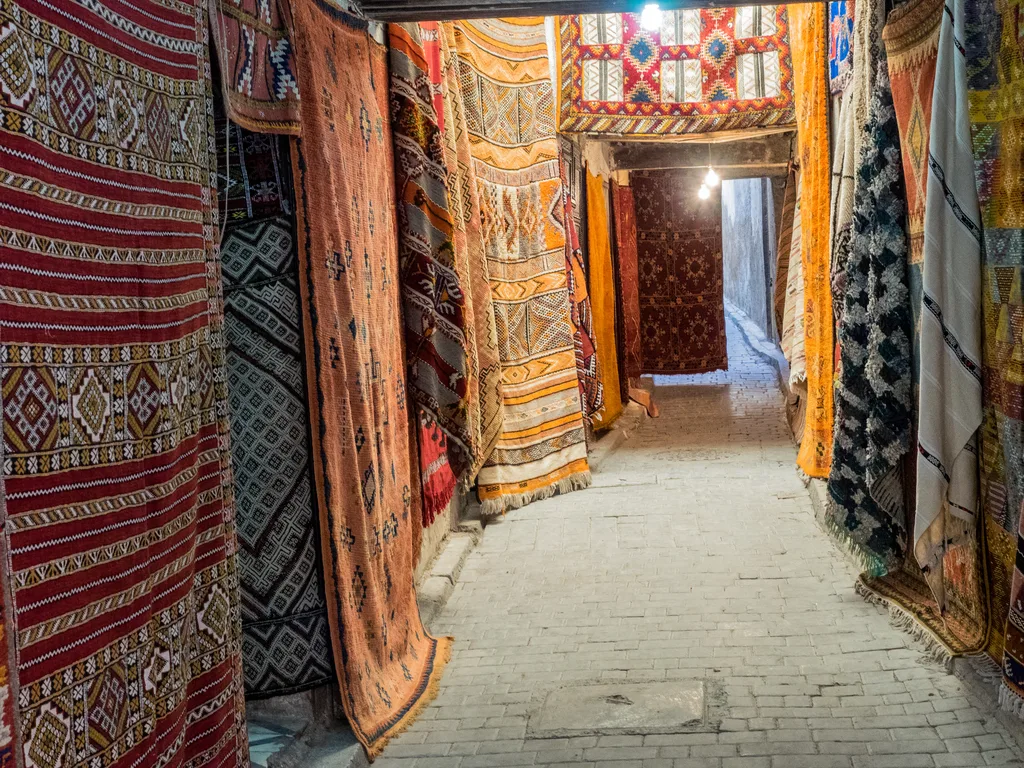
In a Moroccan souk, the first price is not a price; it is an opening line. Bargaining is expected in market stalls and small medina shops, built into the first figure a seller quotes, and skipping it does not make you a polite customer, just a customer who paid the opening line. The exceptions are places with fixed prices, which include the state-run artisan ensembles and many cooperatives, where prices are marked and the same for everyone; if in doubt, a cheerful “is this fixed?” settles it. Everywhere else, treat the negotiation as what it is in moroccan culture and etiquette: a social performance with a transaction inside it, closer to a friendly argument between equals than to a battle. Sellers generally enjoy a good bargainer. What they do not enjoy is contempt, and the line between the two is tone.
The mechanics are simple and worth knowing before your first carpet shop. Browse first, decide what the piece is worth to you, and never open a serious negotiation for something you do not actually want, because reaching a price and then walking away from it breaks the game’s one real rule. When the seller names a figure, a common rule of thumb in Moroccan etiquette guides is to counter at roughly half of it, sometimes lower for pure tourist goods, and then to climb in small steps while the seller descends in larger ones, meeting somewhere both sides can call fair. Keep it light: smile, compliment the workmanship, deploy your “la shukran” (no, thank you) with a grin when you need it, and use the walk-away slowly and honestly, since leaving calmly is often what produces the final price, called after you down the alley. Tea will probably appear. Drink it; it obliges you to nothing but good manners.
Perspective is the last haggling skill. Convert the remaining gap into your own currency before you dig in: visitors routinely spend ten theatrical minutes contesting a sum that buys a coffee at home, in front of a man whose margin it actually is. Bargain fairly, bargain cheerfully, and then stop at a price that lets both of you feel the deal was done well. And a word for the fixed-price shops and the cooperatives of weavers, potters and women’s argan-oil associations you will meet across the country: there, paying the marked price without argument is itself a form of respect, putting money directly into makers’ hands. Knowing when not to haggle is as much a part of moroccan culture and etiquette as knowing how.
Tipping – Small Notes, Given Often
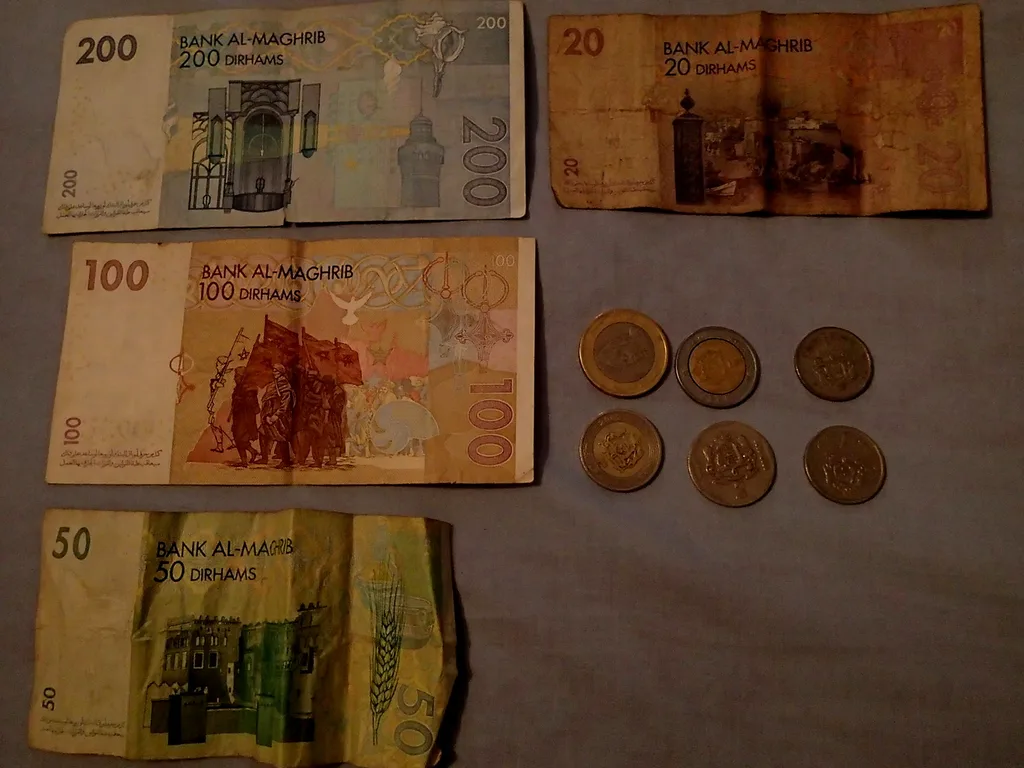
Tipping in Morocco is not an occasional reward for excellence; it is a lubricant that runs through the whole day, and visitors who understand that have smoother trips than those who tip only at restaurant tables. The system works on small money, given often, to the people who grease the wheels of travel: the cafe waiter who brought your tea, the guardian who opened a door or watched your car, the porter who carried your bag up medina stairs no vehicle can climb, the hammam attendant, the guide who walked you through the souk, the driver who waited. In a country where many service wages are modest and tips form a real part of income, the small note is not charity. It is how the economy of kindness balances its books, and withholding it where it is customary is the one money habit that genuinely does read as rude.
The practical craft matters more than any figure, which is why this guide prints no tipping table: amounts quoted by tour operators vary wildly, wages and prices differ between Marrakech and a mountain village, and any precise number printed here would be false confidence. What you can rely on is the mechanism. Keep a dedicated pocket of small notes and coins, because the eternal obstacle to tipping in Morocco is change; dirhams are a closed currency you will draw from ATMs in large notes, and breaking them at cafes and bakeries is a daily chore worth doing deliberately. Give the tip directly, with your right hand and a word of thanks, at the moment the service happens rather than in a lump at the end of a stay. Round a taxi fare up rather than waiting for exact change. And where a service has genuinely gone beyond the call of duty, a larger note given quietly and personally will be received with a grace that tells you it mattered.
Two situations deserve specific care. In restaurants, check whether a service charge is already on the bill in smarter establishments, and tip the waiter in cash on the table even when you pay by card, so the money reaches the person it is for. With guides, official and unofficial, agree the price of the guiding itself before you start, and treat the tip as an addition, not a substitute that lets the agreed price dissolve. Travellers who handle small money well find that moroccan culture and etiquette starts to work for them: doors open, guardians wave them through, and the country begins to feel less like a market and more like a network of people who have been treated fairly and are returning the treatment.
Photography – Ask First, and Mean It
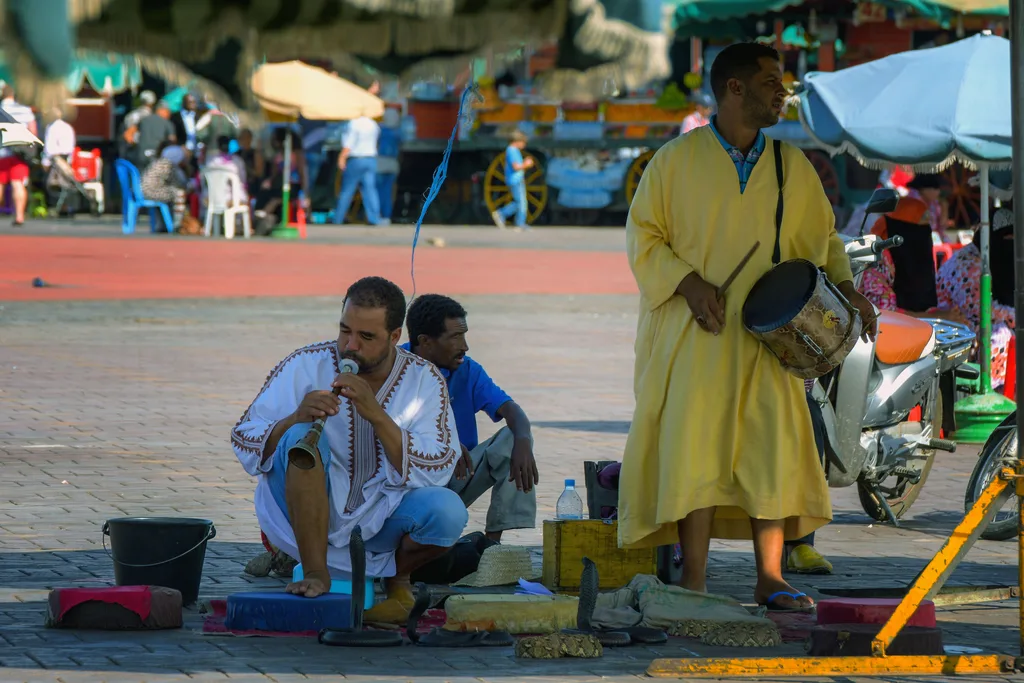
Morocco is one of the most photogenic countries on earth, and one of the easiest in which to give offence with a camera, sometimes in the same minute. The governing rule of moroccan culture and etiquette is consent: ask before you photograph people, and ask properly, with the camera lowered and a smile, rather than with a lens already raised in someone’s face. Many Moroccans are happy to be photographed, some are delighted, and some will refuse, for reasons that range from religious modesty to simple tiredness of being treated as scenery. A refusal costs you nothing and should be met with a smile and a “shukran” anyway. The photographs that haunt visitors’ consciences are never the ones they failed to take; they are the ones they took over a refusal. Street photography of scenes, architecture and crowds is fine and is practised by everyone; portraits are personal, and personal requires permission.
Some subjects carry rules beyond courtesy. It is illegal to photograph near sensitive sites, which in practice means military installations, police, checkpoints, royal palaces and government buildings: the UK Foreign Office states it plainly, and Moroccan police will enforce it, so keep the camera down anywhere near uniforms and officialdom. Drones are effectively a separate legal adventure, requiring prior permission from Morocco’s civil aviation authority, and turning up with one unregistered risks confiscation, so leave the drone at home unless you have done the paperwork. At the other end of the scale are the performers of Jemaa el-Fna and the souks, the snake charmers, water sellers in their tasselled hats, henna artists and musicians, for whom being photographed is a job: take the picture and pay a small tip, as you would drop a coin for a busker at home. Photograph first and haggle about the tip afterwards is the order that causes arguments; agree the game by smiling, taking your shot and handing over the note with thanks.
A subtler point completes the section, and it is about photographs of devotion and of women. Do not photograph people praying, inside or outside a mosque, and be particularly careful about aiming a long lens at women going about their day in conservative neighbourhoods and villages, where a stranger’s camera can cause real distress to the subject and real anger among her family. Children are photographed only with a parent’s clear agreement, never over a parent’s hesitation. None of this should shrink your photography; Morocco rewards the camera like few places on earth, and most of the great frames are of light, landscape, architecture and the thousand public performances of the medina. It simply asks that the people in your pictures remain people, not props, which is the whole argument of moroccan culture and etiquette in one sentence.
Men, Women and Public Affection – Reading the Social Temperature
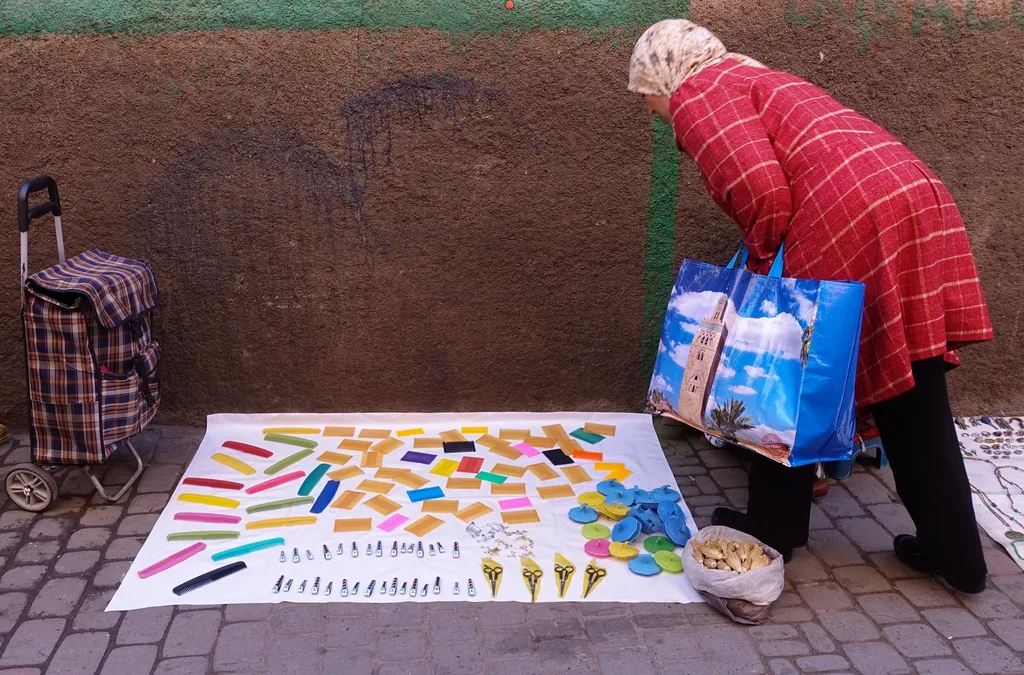
Morocco’s social life runs warmer between friends of the same sex and cooler, at least in public, between men and women who are not family, and a visitor who reads that temperature correctly will avoid most awkward moments. You will see Moroccan men walking arm in arm or holding hands, and women greeting each other with embraces and kisses, while a Moroccan couple in a traditional setting may show almost no physical contact in public at all. Public displays of affection between partners are frowned upon, as Canada’s travel advice puts it, and the UK Foreign Office advises avoiding showing affection in public, particularly near religious sites. For visiting couples the adjustment is small: save the kissing for private, keep hand-holding modest in conservative settings, and you will simply blend into the local register of how affection is handled outdoors.
Interaction between visiting men and Moroccan women, and visiting women and Moroccan men, follows the greeting rules set out earlier: let the other person define the physical terms, accept a non-handshake gracefully, and keep interactions courteous and unhurried rather than effusive. Visiting women travelling alone or in pairs should also be ready for attention, which in busy tourist areas can range from salesmanship to flirtation to plain curiosity. The experienced traveller’s toolkit is unglamorous and effective: modest dress, sunglasses that let you decline eye contact, a firm and cheerful “la shukran” without breaking stride, and no obligation to explain, apologise or engage with every approach. Most Moroccans, it should be said plainly, will treat a woman traveller with complete propriety, and many will go out of their way to be helpful; the toolkit is for the minority, and for the confidence of knowing you have it.
Underneath these courtesies sits a legal line that couples in particular should know exists. Sexual relations outside marriage are illegal for Moroccan nationals, and while the law is not generally applied to visiting foreign couples in tourist areas, it is why unmarried Moroccan partners cannot share hotel rooms and why discretion is the local watchword all round; the UK Foreign Office sets out the position in its Morocco advice, and it is worth reading before you travel if your situation is complicated. Same-sex relations are also illegal in Morocco, a fact LGBT travellers need in plain terms rather than euphemism. None of this is a reason to be fearful; it is a reason to be discreet, which in the end is what moroccan culture and etiquette asks of everyone, Moroccan and visitor alike: keep private life private, and public life courteous.
The Hammam – Bathhouse Etiquette for First-Timers
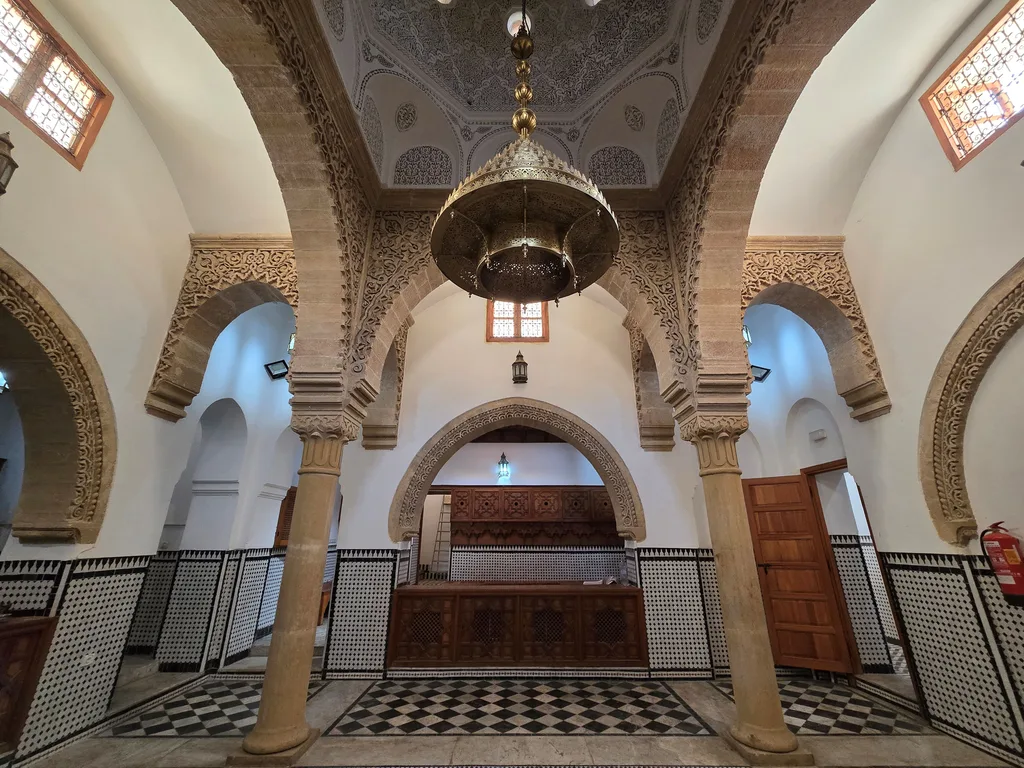
The hammam, the public steam bath, is one of Morocco’s oldest social institutions, a weekly ritual of washing, scrubbing and unhurried talk that doubles as a neighbourhood parliament, especially for women, for whom the hammam has traditionally been a social world of its own. Almost every town has at least one, and visiting one is among the most genuinely Moroccan experiences a traveller can have, provided you arrive understanding the customs. The first is segregation: traditional neighbourhood hammams are for one sex at a time, either in separate sections or in separate hours for men and women, and mixed bathing is not part of the institution. The tourist-facing hammams of hotels and riads are a different format, with private rooms and spa treatments, and can suit couples; know which kind you are booking, because the etiquette differs.
At a neighbourhood hammam, arrive equipped. Bring your own towel, toiletries and a change of underwear or swimwear, plus flip-flops for the wet floors; regulars bring a bucket of kit that includes the two tools of the ritual, savon beldi, the dark, soft olive-oil soap, and a kessa, the rough exfoliating glove used to scrub away a startling quantity of dead skin. Inside, modesty is kept even in a single-sex space: people wash in underwear or swimwear rather than fully nude, and the pace is communal and slow, a cycle of hot rooms, dousing with buckets of water, scrubbing and resting that regulars stretch out with the same seriousness as a tea visit. You can pay a small fee for an attendant to scrub you, which first-timers are advised to do, both because the technique is harder than it looks and because it turns you from a puzzled spectator into a participant doing the thing properly.
Behaviour inside is simple courtesy at higher humidity: do not stare, do not take photographs under any circumstances, keep your water use neighbourly in a shared space, and follow the lead of the room on where to sit and how long to stay in the hottest chamber. Afterwards, nobody rushes; the rest hall, tea and a slow return to the street are part of the treatment. The hammam asks the same thing of you as every other institution in this guide, which is to slow down, follow the room and accept that you are a guest in a working piece of Moroccan life rather than a customer in a themed attraction. Get that right, and moroccan culture and etiquette will have taught you its deepest lesson in the place Moroccans themselves go to relax: clean, unhurried and entirely at home.
Alcohol and Careful Topics – Where Discretion Is the Etiquette
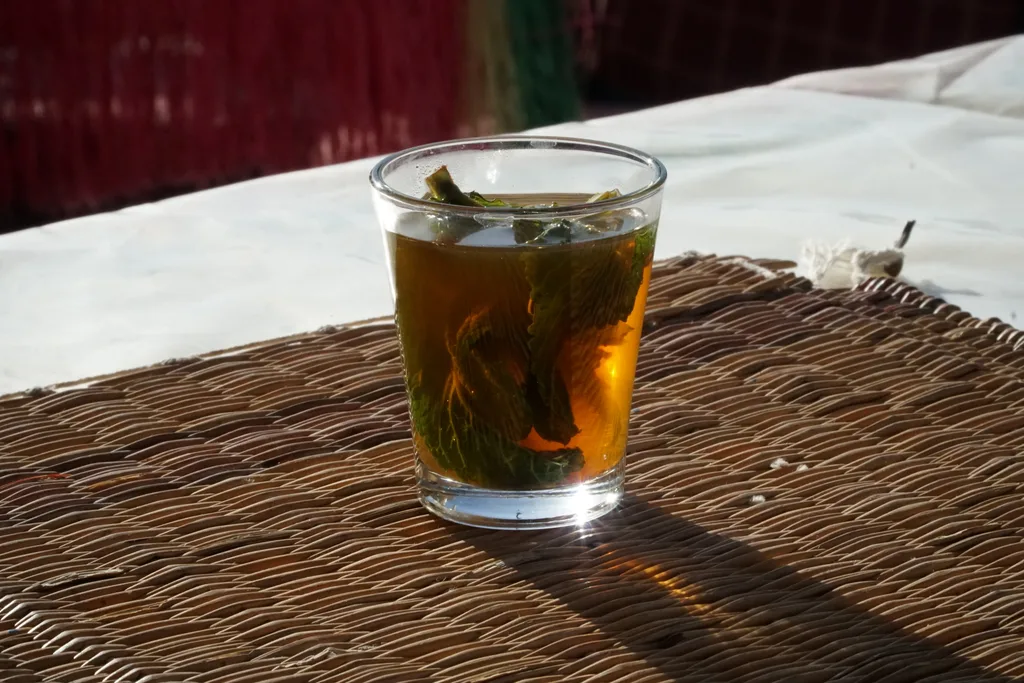
Alcohol exists in Morocco, but it lives indoors and under licence. It is sold in licensed bars, hotels and restaurants and in the alcohol sections of some supermarkets, it is almost entirely absent from medina eateries and rural establishments, and drinking it in the street or anywhere unlicensed is not just disapproved of but illegal, with arrest a real possibility, as the UK Foreign Office warns. The visitor’s pattern is therefore simple: drink, if you drink, in licensed premises; never carry an open bottle through a medina; never offer alcohol to a Moroccan unless you know them well enough to be sure; and during Ramadan, when even licensed sales tighten and public sensitivity peaks, treat availability as a bonus rather than a right. Tea is the country’s social drink, and nobody in Morocco will think less of you for running on it. Many will think more.
Conversation has its own licensed premises, so to speak. Moroccans are enthusiastic talkers and will ask you direct questions about your family, your job, your country and your impressions of Morocco that can feel personal by northern European standards; this is friendliness, not interrogation, and answering in kind, and asking the same questions back, is the correct exchange. The subjects to handle with care are the ones where the state and the faith set hard lines. Proselytising is prohibited: attempting to convert a Muslim to another faith is illegal, as is distributing evangelical literature, and the United States State Department records that citizens have been expelled for pressing religious debate. Public criticism of Islam is a criminal offence carrying heavy fines and prison, and criticism of the monarchy and the country’s position on Western Sahara are treated with similar seriousness. You do not need to police your curiosity; Moroccans debate plenty among themselves. You need only remember that a guest’s strong opinions about the host’s king, faith and borders are the conversational equivalent of putting your feet on the table.
Politics aside, the safe conversational ground is wide and delightful: family, football, food, your journey, their region, the weather in the mountains, and the eternal question of which medina is finest, on which every Moroccan holds a settled and indefensible opinion. Ask questions, accept that some answers will be performances, and perform a little yourself. In moroccan culture and etiquette, conversation is hospitality’s second course, served between the tea and the goodbye, and the guest who brings appetite for it is remembered fondly long after a quieter guest is forgotten.
Moroccan Culture and Etiquette – Questions Travellers Actually Ask
Can non-Muslims go inside mosques in Morocco? Almost never, and it is best to plan on that basis: Moroccan mosques are reserved for worship, and non-Muslim visitors are not admitted, however historic the building. The great exception is the Hassan II Mosque in Casablanca, which runs official guided tours for non-Muslim visitors outside prayer times; everywhere else, the correct visit is a slow walk around the outside, enjoying the minaret, the doors and the gardens, ideally not at the moment crowds are leaving a prayer.
Do women have to cover their hair in Morocco? No. There is no legal or general social requirement for visiting women to cover their hair, and Moroccan women themselves dress across a wide spectrum. The working rule is modesty rather than covering: shoulders and knees covered, looser rather than tighter clothes, especially in medinas, villages and near religious sites. Carry a light scarf anyway; it is useful as a shoulder cover, against mountain cold, and for the Hassan II Mosque tour, where women are asked to cover their hair inside.
Is it rude to refuse mint tea in Morocco? It is not a scandal, but it is a small missed connection, because tea is offered as hospitality rather than as a beverage, and a flat refusal can read as declining the welcome itself. The comfortable middle course is to accept and take a few sips, which satisfies the ceremony without filling you up. If you genuinely cannot drink it, decline warmly, hand over heart, with thanks, and nobody will hold it against you.
How much should I tip in Morocco? There is no honest single figure, which is why this guide prints none: tipping is a mechanism rather than a tariff, small notes and coins given often to the people who help your day along, cafe waiters, porters, guardians, hammam attendants, drivers and guides. Keep a pocket of small change, tip directly and with your right hand at the moment of service, and scale the amount to the place and the kindness rather than to a percentage you read on the internet.
Can I take photographs of people in Morocco? Yes, with permission, and the asking is the whole rule: lower the camera, smile, ask, and accept a no gracefully. Street scenes and architecture are fine; portraits need consent; children need a parent’s clear agreement. Never photograph police, soldiers, checkpoints or official buildings, where photography is illegal, and expect to tip performers in places like Jemaa el-Fna, for whom your photograph is part of their living.
What should I do differently during Ramadan? Slow down and be discreet. Avoid eating, drinking or smoking in public during daylight, eat in hotels or designated restaurants instead, expect shops and sites to run altered hours, and be patient with fasting staff in the late afternoon. Then join the other half of the month: be out after sunset, when the fast breaks with iftar and the streets fill, and accept any iftar invitation that comes your way. It is the warmest seat in Morocco.
Is haggling expected everywhere in Morocco? In souks and small medina shops, yes: the first price assumes a negotiation, and bargaining cheerfully is part of the etiquette rather than a breach of it. In fixed-price artisan ensembles, cooperatives and anywhere prices are clearly marked, no: paying the marked price is the correct courtesy there. If you are unsure which world you are in, ask with a smile; the answer will be given in the same spirit.