Turkey Itinerary 7 Days – Istanbul, Cappadocia and Ephesus Without the Rush
Seven days in Turkey is enough time to do the country justice and exactly enough time to ruin it by addition. The map invites greed: Istanbul alone could fill the week, Cappadocia asks for three days the moment you see it, and Ephesus, Pamukkale, the coast and the capital all wave from the edges of the atlas. Most one-week itineraries fail not by choosing the wrong places but by choosing one place too many, then spending the holiday inside airports and transfer vans apologising to the sights. This turkey itinerary 7 days plan makes the older, stricter choice — Istanbul, Cappadocia and Ephesus, the three stops that between them carry the Byzantine and Ottoman city, the strangest landscape in the country and the greatest Roman ruin in the eastern Mediterranean — and it spends its effort not on squeezing more in but on making those three stops work: the order, the transfers, the mornings, and the way out.
The order is the first decision and it is not arbitrary. Istanbul comes first because it is where almost every international flight lands, because its sights cluster tightly enough to forgive a jet-lagged start, and because it is the only one of the three where a rained-off morning costs you a museum rather than a once-in-a-trip dawn. Cappadocia sits in the middle so that its balloon flights get two mornings — the first full morning and a spare — because ballooning is decided by the wind on the day and a single morning is a coin toss you do not want your whole trip riding on. Ephesus comes last because it is the most forgiving of the three: a single, self-contained site that rewards one full day completely, reached by a short flight west and sitting an easy run from an international airport. Run the triangle in this order and each stop is insured against the failure of the one before it.
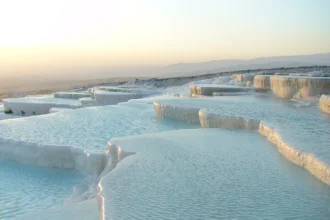
What this route deliberately leaves out matters as much as what it includes, so it is stated here rather than discovered later. Pamukkale’s white terraces are the famous omission — they sit inland from Ephesus and adding them costs either the second Cappadocia morning or half the Ephesus day, and the variations section below explains the swap honestly if the terraces outrank the ruins for you. The Mediterranean coast, Ankara and everything east of Cappadocia are also out: not judged unworthy, judged unreachable in seven days without turning the week into a transfer diary. A week that ends with you rested, having seen three great places properly, beats a week that photographs six and remembers the inside of a coach.
At a Glance – the Week on One Screen
| Day | Where | The shape of the day | Sleep |
|---|---|---|---|
| 1 | Istanbul | Arrive, settle in Sultanahmet, the Hippodrome and the old city’s first evening | Istanbul |
| 2 | Istanbul | The old city done properly — Hagia Sophia, the mosques, the palace, the bazaars | Istanbul |
| 3 | Istanbul → Cappadocia | The Bosphorus and the neighbourhoods, then an evening flight south | Göreme |
| 4 | Cappadocia | Balloon morning, then the open-air museum and the valleys | Göreme |
| 5 | Cappadocia → the Aegean | Spare balloon morning, an underground city, then fly west to İzmir | Selçuk or İzmir |
| 6 | Ephesus | The full day the site deserves — ruins at opening, terrace houses, the museum | Selçuk or İzmir |
| 7 | İzmir / departure | A slow İzmir morning, then home from İzmir — or the honest cost of leaving from Istanbul | — |
Three structural choices are doing the work in that table, and each one is worth naming because each is where rival itineraries quietly go wrong. The first is the evening flight on day 3: leaving Istanbul after a full third day of sightseeing means Cappadocia gets two complete days and, critically, two dawns, without Istanbul losing anything but a hotel night you were not using. The second is that no day in the week is a pure transfer day — every move happens at the edge of a day, early or late, so seven days of holiday contain seven days of travel in the old sense. The third is the departure: this route ends at İzmir, and the single most valuable booking decision in the whole plan is an open-jaw ticket that flies you home from there instead of dragging you back across the country to Istanbul on your last day. If your ticket home must leave from Istanbul, day 7 changes shape, and the transport section below prices that honestly rather than pretending it away.
A word on pace, because a table always lies about it. Days 2, 4 and 6 are full days — the three great set pieces, each walked for hours. Days 1, 3, 5 and 7 are deliberately lighter: orientation, a strait, an underground city and a flight, a slow morning. That alternation is not padding; it is what makes the full days land. Travellers who stack three set pieces back to back tend to remember the third one through a fog, and Ephesus, coming sixth, deserves better than fog.
Day 1 – Arrival in Istanbul and the Sultanahmet First Look
Where you sleep in Istanbul decides how day 1 feels, and for this route the answer is the old city — Sultanahmet and its edges — even if it is not where you would stay on a longer, second trip. The reasoning is arithmetic, not romance: with only three days in the city and the two heaviest sights standing a few hundred metres apart, every morning you do not spend crossing Istanbul is a morning spent inside the places you came for. The Asian side, the Bosphorus suburbs and the café districts are better neighbourhoods to live in and worse bases for a 72-hour first visit; they get their hour on day 3, as a visit, which is the honest proportion for this week.
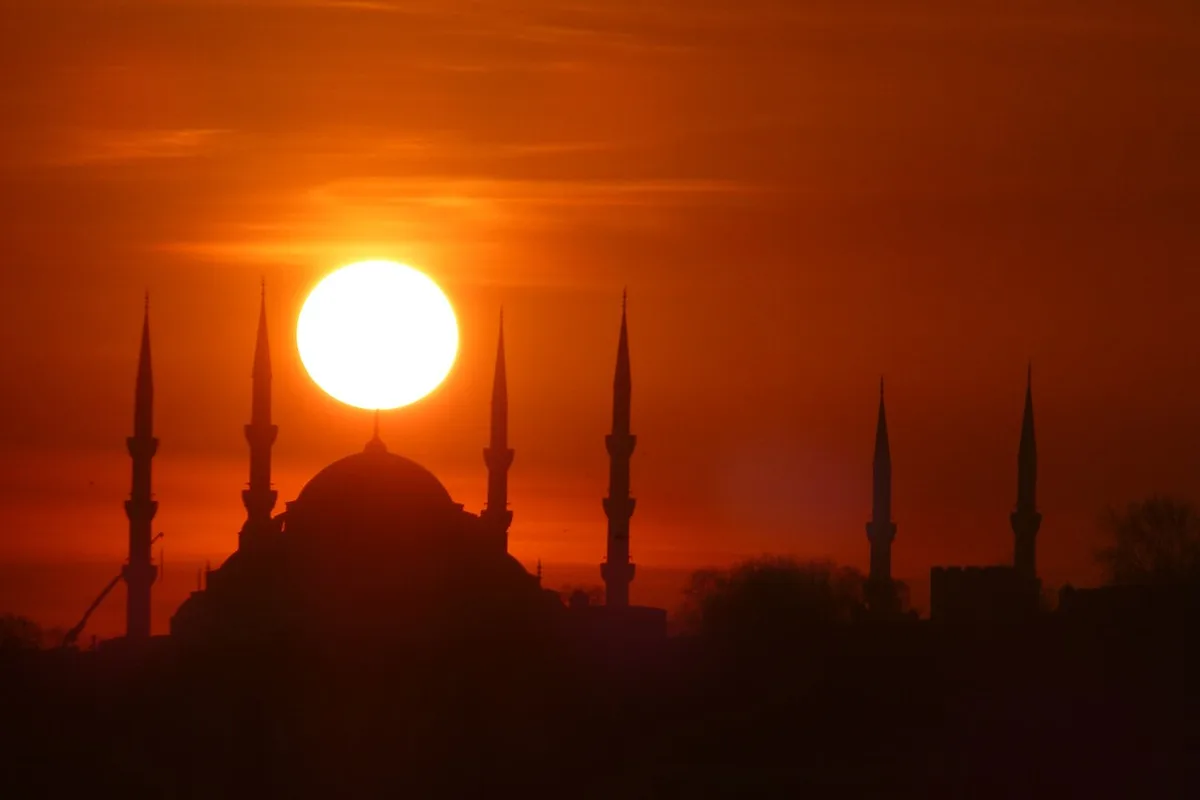
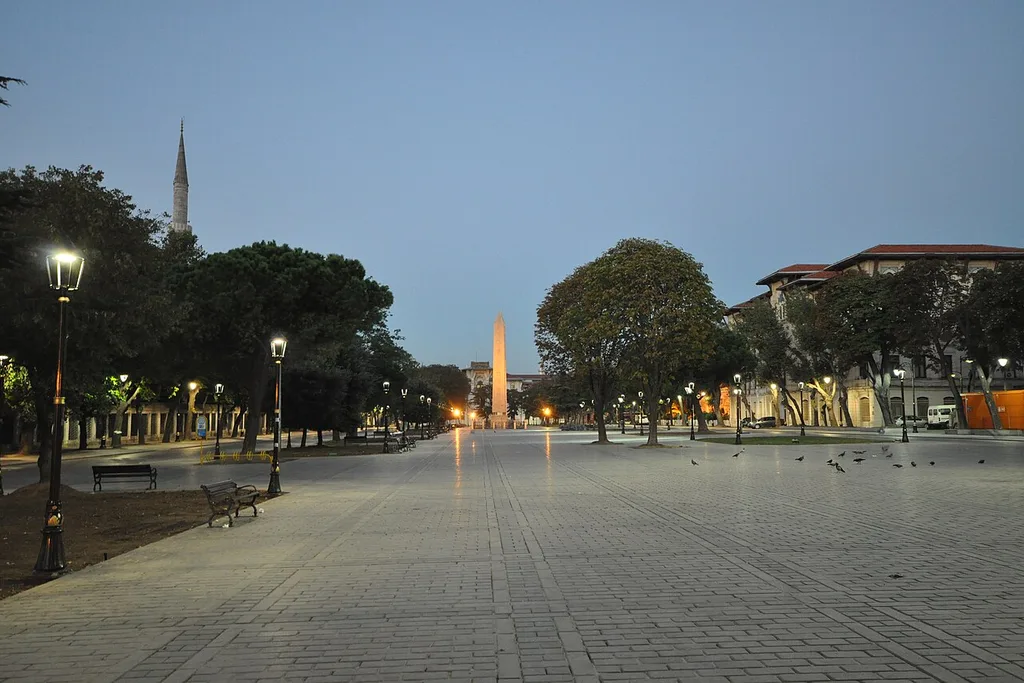
So day 1 is kept deliberately light, because arrival days lie: the flight, the airport run into the city — allow the better part of an hour and a half from the main airport on a bad-traffic day, less from the Asian-side airport — and the time-zone shift all tax the same afternoon. Spend what energy remains on orientation rather than conquest. Walk the Hippodrome, the long square that was Byzantium’s stadium and is now the old city’s front garden, past the Egyptian obelisk and the serpent column, while the light goes and the Blue Mosque’s floodlights come on. Stand between the two great domes — Hagia Sophia on one side, the Sultan Ahmed Mosque on the other, a few minutes apart — and simply register that tomorrow’s two headline buildings are this close together. Eat early, eat near the hotel, and resist the bazaar on day 1; shopping with arrival-day judgement is how travellers come home with a carpet they feel ambivalent about.
One practical habit is worth forming tonight because it pays off all week: fix tomorrow’s order before you sleep. The big Istanbul sights keep weekly closing days and prayer-time rhythms — Hagia Sophia is a working mosque, and visitor access is organised around the prayers — so the sequence of day 2 depends on which day of the week it actually is. Check the current arrangements for your dates, decide which building gets the first hour of the morning, and let the rest of the day hang off that decision. Our istanbul travel guide sequences the city’s sights in full; what this itinerary needs from you is only the discipline of choosing tomorrow’s first door tonight.
Day 2 – Istanbul’s Old City, Done Properly
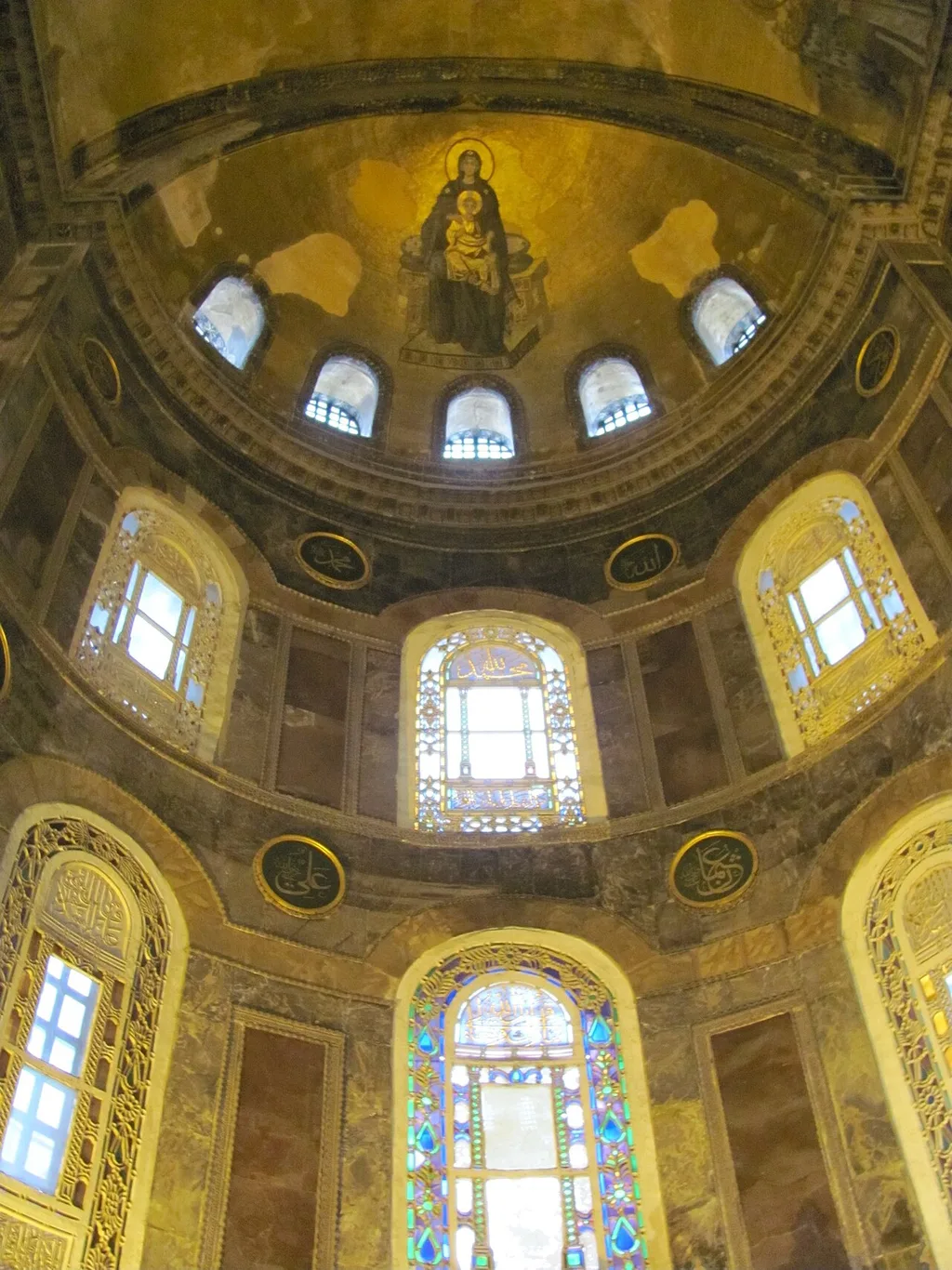
Day 2 is the week’s first set piece, and it is built around a simple truth about the old city: its four great interiors stand within a fifteen-minute walk of each other, but each deserves an unhurried hour, so the day is a chain of long visits joined by short walks rather than the rushed circuit the tour groups run. Start at whichever of Hagia Sophia or the Blue Mosque your closing-day check put first, and be there at opening. Hagia Sophia first thing is a different building from Hagia Sophia at noon — the great dome doing its apparently unsupported trick in raking light, the 9th-century apse mosaic of the Virgin and Child catching the sun through the window ring below it, and a fraction of the day’s crowd. Give it its hour; the building has been a cathedral, a mosque, a museum and a mosque again across fifteen centuries, and it reads like all of them at once if you go slowly enough to let the layers separate.
From the old city core the day unrolls downhill in both senses. Topkapi Palace, the Ottoman sultans’ walled city-within-the-city behind Hagia Sophia, is the visit most travellers under-budget: its courtyards, kitchens, treasury and harem are a half-day wearing the costume of a two-hour stop, so either give it the afternoon properly or make the conscious decision to walk its courtyards and treasury and leave the rest to a second trip — but decide, rather than discovering the harem queue at closing time. The Basilica Cistern, the great underground reservoir a street away, is the day’s palate cleanser: twenty cool, dark minutes among the columns, best taken in the heat of the afternoon. And the two bazaars close the day in the right order — the Grand Bazaar for the theatre of it, its vaulted streets a small city of gold, leather and ceramics, and the smaller Spice Bazaar down by the water for the version you will actually buy from, when the light outside is going gold over the Golden Horn.
What to skip on day 2, said plainly: the second mosque across town, the palace on the Bosphorus shore, and anything that requires a vehicle. Day 2’s discipline is geographic — everything on foot, everything inside the old city’s walls or a short walk below them — because day 3 exists to take you across the water, and a day 2 spent in traffic is a day 3 spent recovering. If energy survives the bazaars, spend it the local way: a ferry across to the Asian shore and back at dusk for the price of a city ticket, the skyline doing its silhouette on the return leg — which is also tomorrow’s subject, approached from the water, as it should be first seen.
Day 3 – The Bosphorus, the Neighbourhoods and the Evening Flight
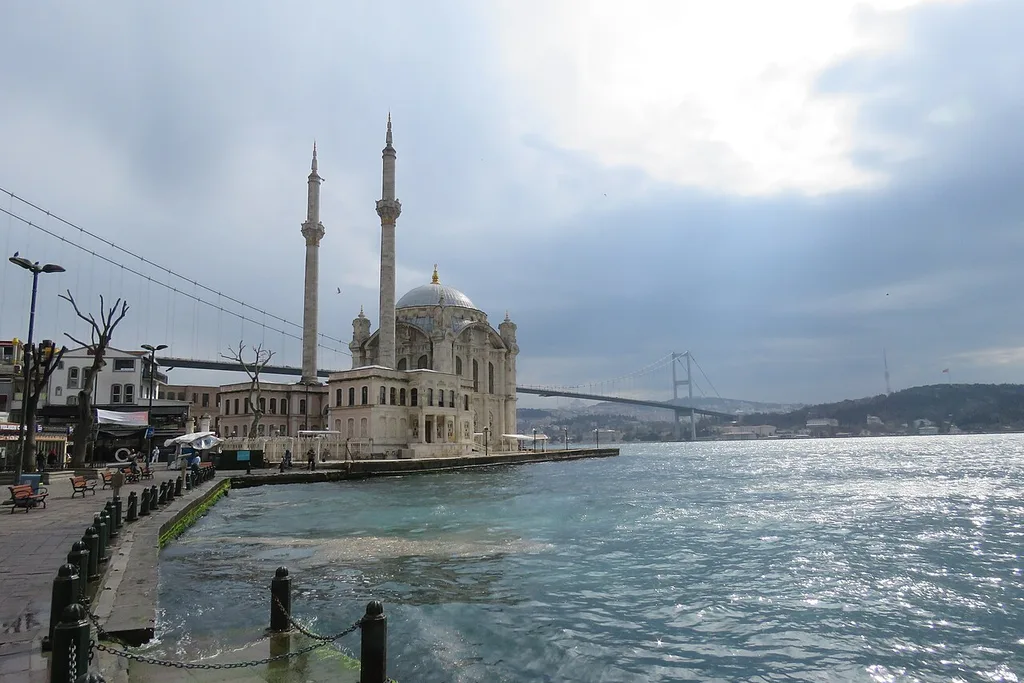
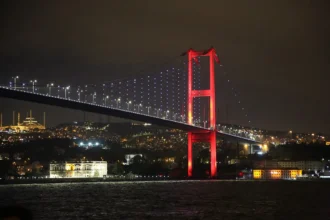
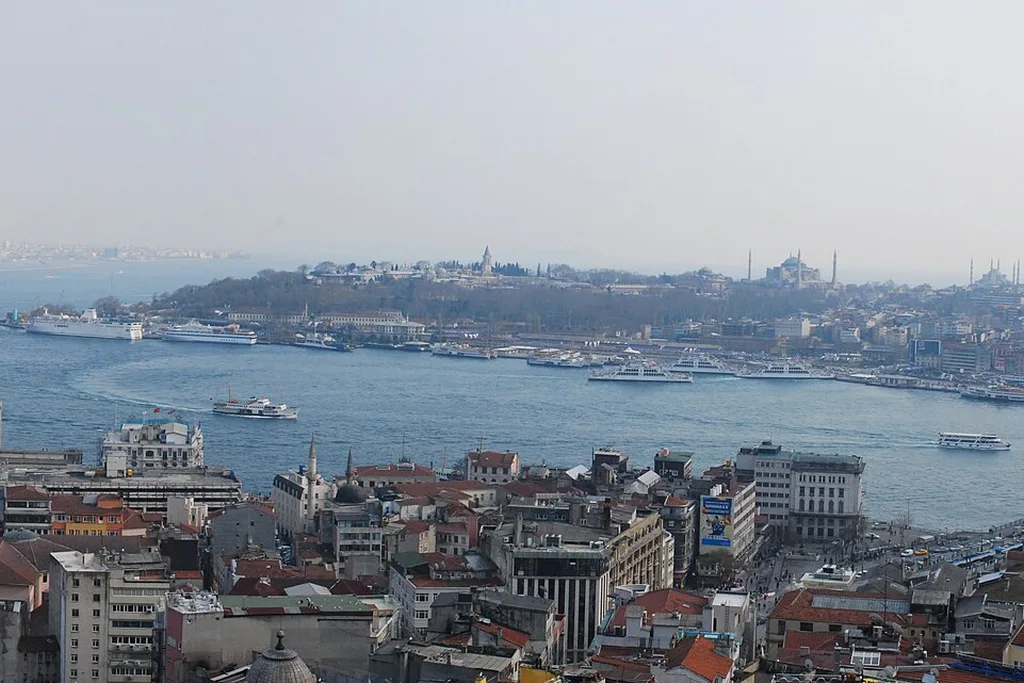
Day 3 is Istanbul at water level. The Bosphorus is not a sight in this city; it is the city’s organising fact, the strait that makes Istanbul two continents in one skyline, and a first visit that never gets on it has missed the point of the place. The honest options sort by time: a full strait cruise to the second bridge and back sells the whole coastline in a couple of hours — palace after palace, mosque after mosque, the fortresses that guarded the narrows — while the city’s public ferries do the same water in shorter, cheaper-feeling hops between the European and Asian shores. Either serves; what matters is that the day is built around the water rather than around another interior. The shore neighbourhoods fill the hours between sailings better than any museum queue: Ortaköy, where the little mosque stands in the water under the great bridge; Arnavutköy’s painted timber houses; the Asian side’s Üsküdar and Kadıköy, the latter the city’s living room of markets, cafés and bookshops, where Istanbul is being itself for its own residents rather than performing for yours.
Then, in the early evening, the route makes its first move — and the timing is the whole trick. A flight out of Istanbul in the early evening, after a full day on the strait, lands you in Cappadocia the same night: roughly an hour and a quarter in the air to Kayseri, or a little less to the smaller airport at Nevşehir, then a road transfer of around an hour and a quarter or three-quarters of an hour respectively to Göreme, where this itinerary bases you. You sleep in a cave hotel — in Cappadocia the cave room is not a gimmick but the local architecture, rooms cut into the same soft rock as everything else you have come to see — and you wake already inside the landscape, with the first balloon morning ahead of you rather than behind a travel day. The alternative, flying on the morning of day 4, costs nothing on paper and quietly costs everything: it burns the first balloon morning entirely and turns day 4 into an arrival day, leaving the balloons a single dawn on day 5. The evening flight is the best-value decision in this itinerary after the open-jaw ticket.
Keep the evening’s logistics boring, in the good sense: bags packed before the Bosphorus, the airport run planned with the same traffic respect as day 1, and nothing scheduled in Göreme that night beyond dinner and an early bed. Balloon pickups happen in the dark, hours before a holiday normally permits, and day 4 begins earlier than any day of your year so far. That is not a warning; it is the shape of the best morning of the trip arriving on time.
Day 4 – Cappadocia: the Balloon Morning and the Open-Air Valleys
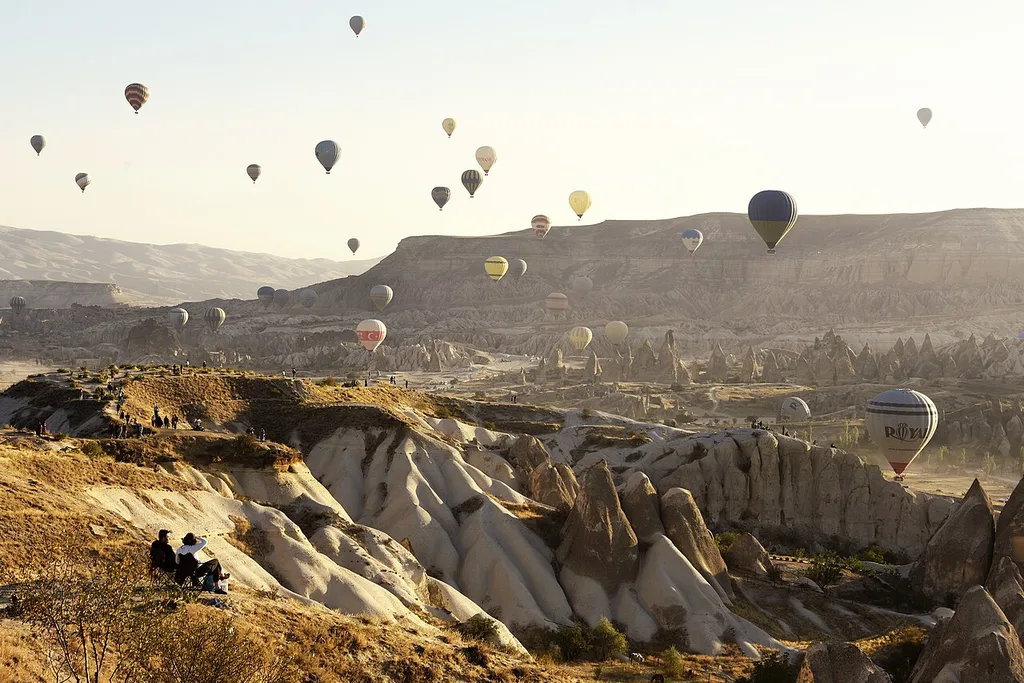
Day 4 begins in the dark, and it begins with a decision that is not yours. Cappadocia’s balloons fly at dawn, in the day’s calmest air, and whether they fly at all is settled each morning by the wind and the aviation authorities — not by your booking, your optimism or the fact that this is your only trip. This is why the route is built the way it is: you have two mornings, today and tomorrow, and the correct way to hold a balloon booking is as the first of two chances, with today simply the better seat. If the fleet is grounded, the day is not lost — it swaps, whole, with tomorrow’s ground programme, and the disappointment is real but the trip survives it. Travellers with one Cappadocia night do not have that swap available, which is the entire argument for two.
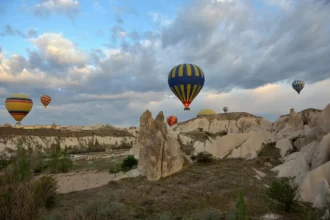
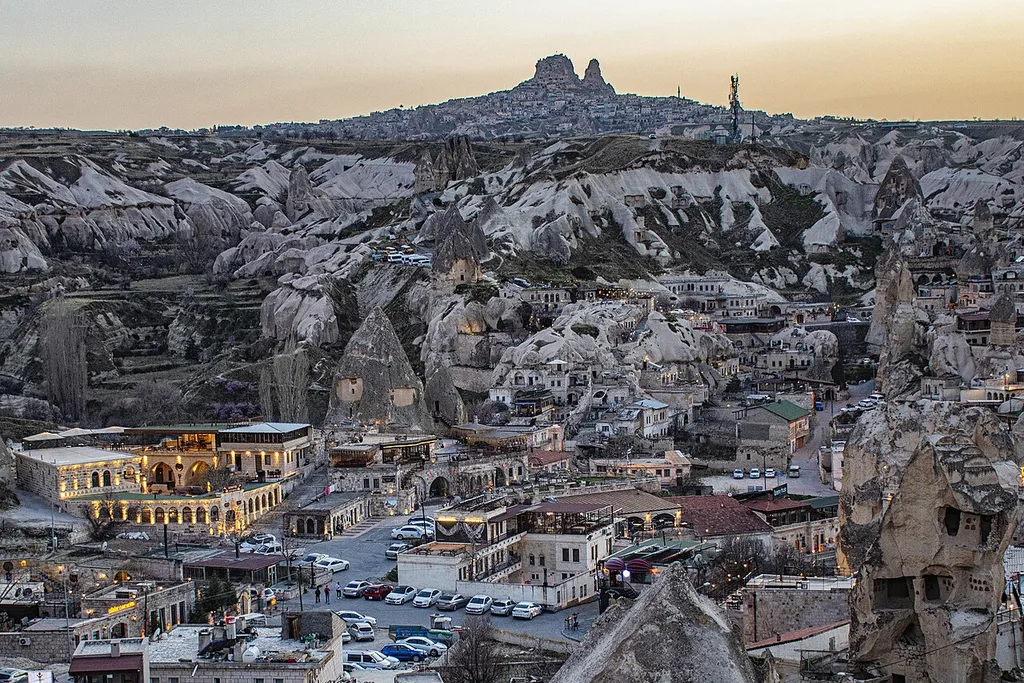
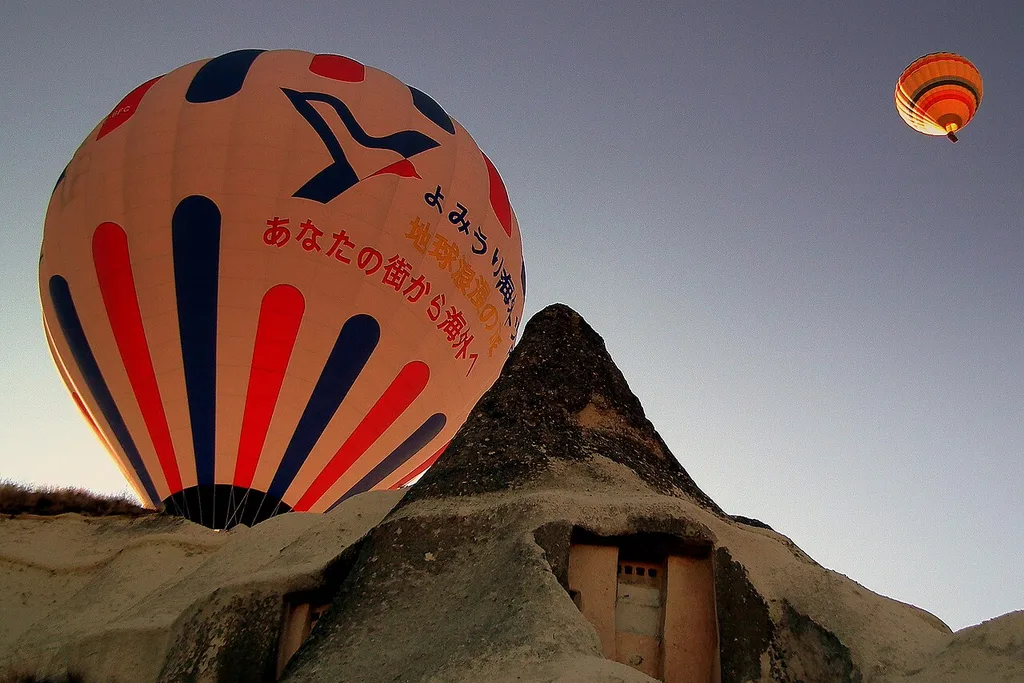
When the balloons do fly, the morning explains itself: a hundred or more envelopes rising out of the valley floor in the half-light, drifting over the fairy chimneys — the pale cones and spires of eroded rock that Cappadocia’s soft stone has been carved into by weather and then, over centuries, by hand. From the basket or from a terrace viewpoint in Göreme, the geography that the rest of the day will walk through is laid out like a model: the valleys running off the town, the castle rock of Uçhisar standing over all of it, the cave churches hidden in the cliffs you will be standing inside by mid-morning. However the flight ends, spend the rest of day 4 at ground level in the near valleys. The Göreme Open Air Museum, a short walk from town, holds the region’s essential interiors — rock-cut Byzantine churches whose painted walls survived precisely because they were cut into stone in the dark — and the valleys around it, Paşabağ’s mushroom-headed chimneys and the carved pigeon houses of Pigeon Valley on the walk towards Uçhisar, are the landscape at walking pace. Our cappadocia travel guide covers the valleys and viewpoints in full; day 4’s job is the museum and one valley walked properly, not three photographed from a van window.
Pacing matters more in Cappadocia than anywhere else on this route, because the dawn start quietly taxes the whole day. Build the afternoon loose — a long lunch in Göreme, the hotel terrace, perhaps the pottery workshops of Avanos on the river if energy allows — and let the evening end early again. Tomorrow holds the second balloon chance and the underground, and the travellers who treat day 4’s afternoon as a second morning are the ones standing in Kaymaklı’s tunnels on day 5 running on fumes.
Day 5 – Underground Cities and the Flight West
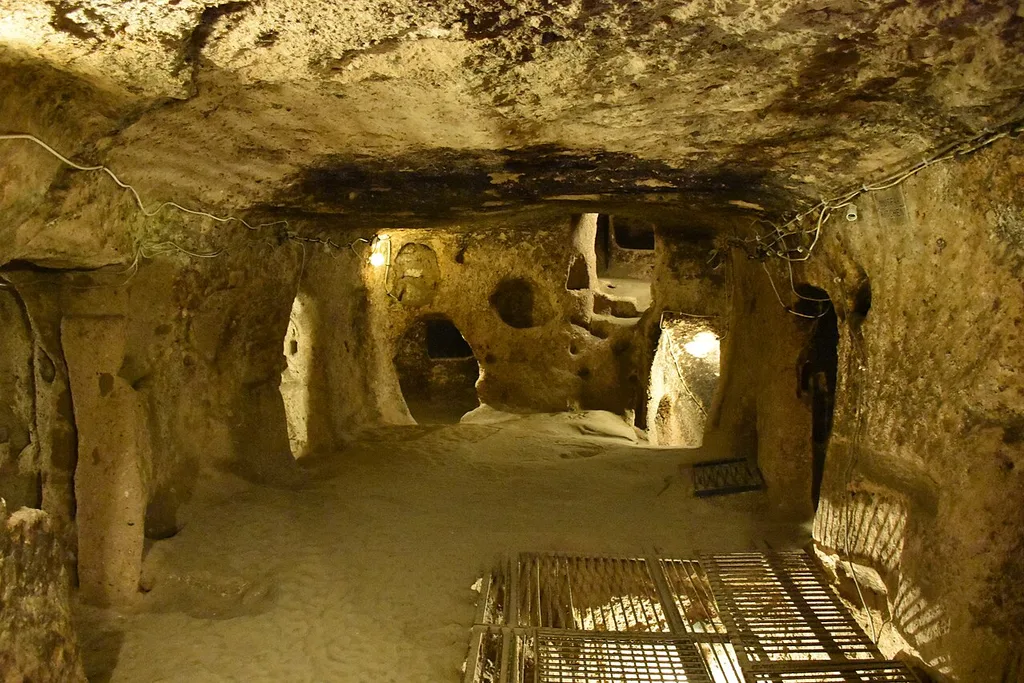
Day 5 opens with the spare dawn. If day 4 flew, this morning is yours — sleep, a slow breakfast on a terrace as the balloons go up without you, the strange luxury of watching the fleet you were part of yesterday. If day 4 was grounded, this is the morning the whole route was designed to protect, and it proceeds exactly as yesterday’s should have. Either way, by mid-morning the day turns downward, into the second Cappadocia that most one-night visitors never reach: the underground cities. Kaymaklı and Derinkuyu, the two great excavated systems south of Göreme, are entire towns inverted — stables, kitchens, wineries, chapels and ventilation shafts stacked level below level in the soft rock, built and expanded across centuries as refuge by the same communities who carved the cave churches. Kaymaklı spreads wider and reads more gently; Derinkuyu descends deeper and reads more starkly. One is enough in a day, and choosing between them is a matter of knees and claustrophobia rather than quality — the tunnels are low, the stairs are many, and this is the one sight on the route to skip without guilt if small dark spaces are not for you.
The afternoon is the hinge of the whole week: the move west. There is no honest quick way from Cappadocia to Ephesus by road — it is the width of the country — so the route flies, and here the geography needs stating plainly because it shapes the booking. Direct flights between Cappadocia’s airports and İzmir exist only on some dates and in some seasons; on most days the routing runs back through Istanbul, which sounds like a detour and is, but still lands you in İzmir the same evening in roughly the time the road would take to bore you through the first third of the journey. Take the latest sensible connection, the one that lets day 5 end in the Aegean rather than in an airport hotel: you wake on day 6 already based where Ephesus needs you to be. Sleep in Selçuk, the small town that stands at Ephesus’s gate, if you want the site at opening time with the least friction — it is the practical base, with the museum, the basilica and the station in walking distance — or in İzmir itself if a city’s restaurants matter more than a short morning; the transport section prices the difference.
There is a discipline to protect tonight: Ephesus is tomorrow, it is the week’s third set piece, and it punishes a late night and a late start more than any other day on the route, because its marble holds the day’s heat and its cruise-ship hours are famous. Early dinner, early bed, alarm set for the opening of the gates. The ruin has been waiting two thousand years; it will not wait for you past ten in the morning, when it becomes a different, hotter, louder place.
Day 6 – Ephesus, Given the Full Day It Deserves
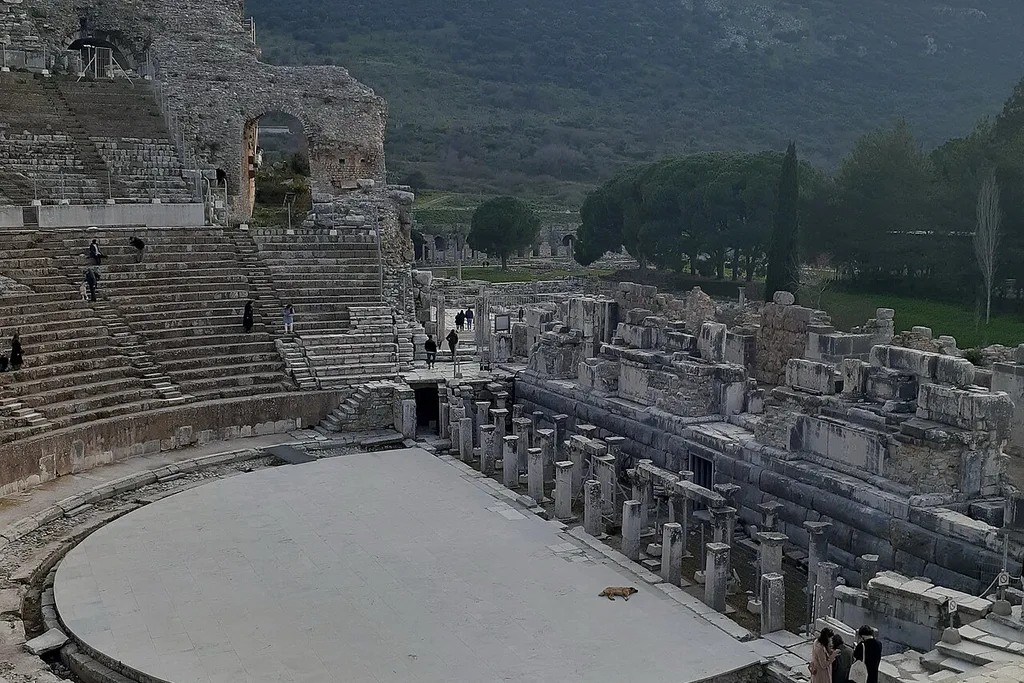
Ephesus is the reason the route ends in the west, and day 6 is built around the single most useful fact about it: the site is a whole Roman city laid along a slope, entered from two gates, and it rewards being walked in one direction — in at the upper gate in the cool of the morning, down through the city as the day warms, out at the lower gate — rather than doubled back over. Start at opening. The first hour at Ephesus is the difference between standing alone in the Library of Celsus’s marble forecourt and shuffling through it in a procession, and no other hour of the week buys as much for as little as this one’s alarm clock. Walk Curetes Street down past the Temple of Hadrian and the terraced houses — the roofed complex of wealthy Roman homes across from it, frescoes and mosaics intact under their shelter, is the site’s interior masterpiece and the direct answer to anyone who thinks ruins are all columns and dust — and let the Library arrive as the street delivers it, the way it was designed to.
The Great Theatre, the vast bowl at the street’s end that held a city’s worth of spectators and heard St Paul’s preaching answered with riots, closes the ancient city’s argument: this was one of the largest cities of the Roman world, a great port before its harbour silted and stranded it inland, and the scale only lands when you have walked its main street to reach its theatre. What surrounds the ticketed site fills the rest of the day in the right proportions. The museum in Selçuk holds the finds the hillside kept, including the great Artemis statues; the Basilica of St John stands on the hill above the town; and the one surviving column of the Temple of Artemis — among the seven wonders of the ancient world, and now a single column in a field — is the most eloquent sight of the day precisely because there is almost nothing to see. Our ephesus travel guide walks the site street by street; day 6 needs only this order — site at opening, museum and basilica after, the Artemis field last, when the light is kind to it.
Where you sleep tonight was decided on day 5, but the evening deserves its own note: Selçuk after the day groups leave is a small Aegean town being itself, and İzmir, an easy run north, is Turkey’s most relaxed big city, all waterfront kordon and bazaar quarters. Either ending is honourable. What is not on the menu is a transfer tonight — no evening flight, no night bus, no squeezing of a seventh base into a six-night trip. Day 6 ends where it is, and day 7 handles the leaving.
Day 7 – İzmir Morning and the Departure Decision
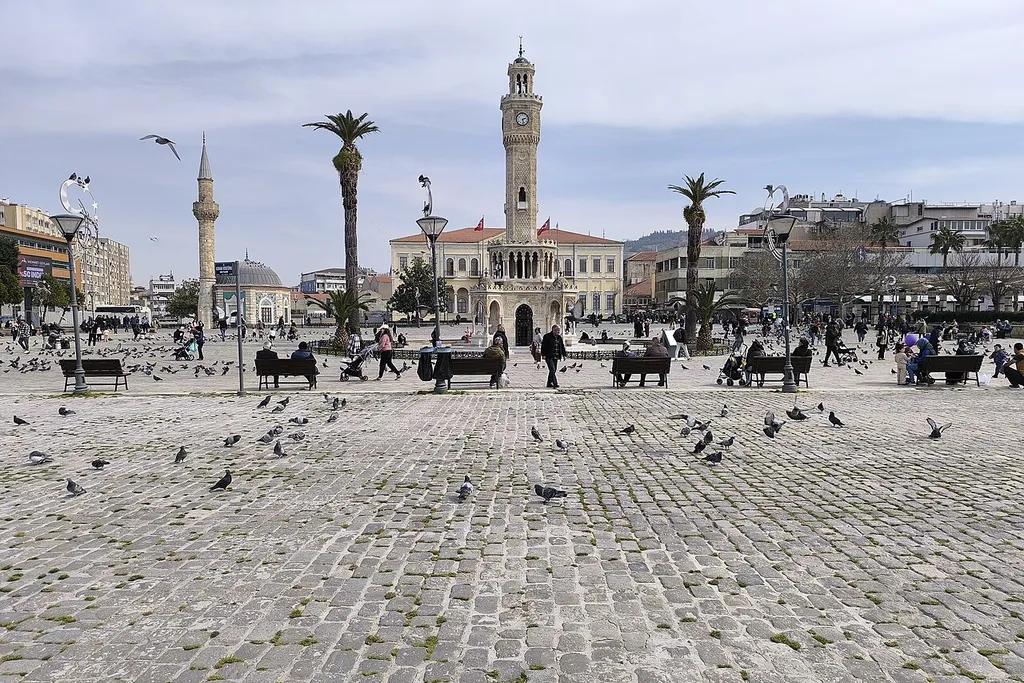
Day 7 is where this itinerary collects on its best decision or pays for its worst, and the difference was made weeks earlier, at booking. If you hold an open-jaw ticket — into Istanbul, home from İzmir — then day 7 is a gift: a slow morning in İzmir, coffee on the kordon, the clock tower in Konak Square, the Kemeraltı bazaar for the shopping you were too disciplined to do in Istanbul, and an easy run to the airport in the afternoon. You leave Turkey from its third city having seen it, however briefly, rather than from a departure lounge in a city you left four days ago. İzmir’s airport is a working international gateway in its own right, with direct flights to a spread of European cities and frequent connections through Istanbul, so for most travellers the open jaw costs nothing but the decision to ask for it.
If your home flight leaves from Istanbul, day 7 changes character and this guide will not pretend otherwise: it becomes a return day. The flight from İzmir to Istanbul is only about an hour in the air, but an international departure built on top of it means buffers stacked on buffers, and the honest shape of that day is a morning flight north, a long airport wait, and home — the İzmir morning above sacrificed to the connection. It is survivable and thousands do it; it is simply worth knowing, at booking rather than at dawn on day 7, that this is what a return-to-Istanbul ticket buys. A third option exists for those whose flights are late in the day: the morning in İzmir, an early-afternoon flight north, and a final few hours in Istanbul — but never schedule it against a tight connection, because a missed international flight is the most expensive souvenir in travel.
And if a day was lost earlier in the week — the grounded balloons, the missed connection, the rained-off morning — day 7 is also where the accounts are settled, kindly: İzmir forgives. The city is a pleasure taken briefly and does not demand a day you no longer have. What day 7 should never become is a dash inland to a sight the week dropped; the route was built so that everything essential is already behind you by this morning, and the correct emotional register for the last day of this trip is not completion but appetite — for the coast, for Pamukkale, for the east — filed under a second journey.
Moving Between Them – Flights, Night Buses and the Lost-Day Plan
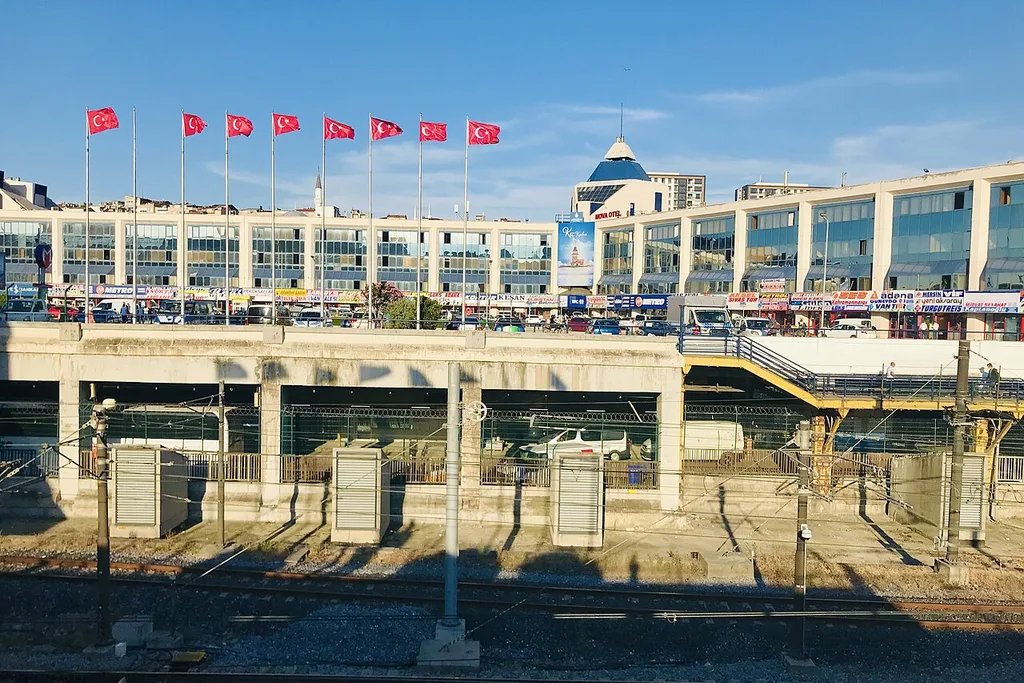
This route makes three moves, and each has a right answer and an understandable wrong one. Istanbul to Cappadocia: fly, in the evening, for roughly an hour and a quarter in the air — the road alternative is a night coach of around ten to eleven hours from Istanbul’s great terminus at Esenler, and the honest costing of that coach is not its fare but its product. Turkey’s intercity coaches are genuinely good — comfortable reclining seats, frequent departures, a stewarded drinks service that puts most of the world’s buses to shame — and a night on one saves a hotel night and delivers you to Göreme at dawn. What it does not deliver is sleep of a quality that survives the following day, and on this route the following day is a balloon morning that starts before dawn: arriving shattered at the exact moment the trip peaks is the false economy this itinerary exists to prevent. The coach’s proper role here is the fallback — the sold-out flight, the budget that will not stretch — taken knowingly, not the plan.
Cappadocia to İzmir is the move rivals get wrongest, usually by road: the drive runs to the better part of a long day across the Anatolian plateau, and spending one of seven days watching it through a windscreen is how a week quietly loses twenty percent of itself. Fly it, accepting the Istanbul connection on the days no direct flight runs, and the move costs an evening instead of a day. The third move is no move at all: Selçuk and Ephesus sit roughly an hour from İzmir’s airport by road or by the local train, a transfer so short it never needs planning beyond knowing it exists. Two further rules govern all three moves. Book the domestic flights when you book the international ones — the evening departures this route depends on are the day’s most popular, and they are the load-bearing walls of the plan. And never put a flight and a set piece on the same morning: every move in this itinerary happens after the day’s sightseeing or before it, never instead of it, which is why a delayed evening flight costs you sleep rather than a sight.
Now the lost day, because a week with three flights and a weather-dependent balloon fleet should plan for one thing going wrong — and the cut order should be decided now, in the calm, rather than at a departure board. If the balloons ground on day 4, nothing is cut: the mornings swap, as the Cappadocia section set out. If a flight is lost and a day genuinely disappears, the order of sacrifice is this. First cut day 3’s second half — the neighbourhoods shrink to the ferry ride and Ortaköy, and Istanbul survives on days 1 and 2 intact. Next, merge the Cappadocia ground programme: the Open Air Museum and one underground city can share day 5 if both balloon mornings fly, at the price of the valleys walked slowly. What is never cut is the second balloon morning to save anything else, and what is never cut at all is Ephesus’s full day — a half-day Ephesus is the one economy that turns this route into the rushed itineraries it was written against. If two days go, the trip does not compress; it chooses — Istanbul and Cappadocia, or Istanbul and Ephesus — and does one of them properly. That is not pessimism. It is the difference between a plan and a hope.
Who This Route Is Not For – and the Variations That Fix It
Honesty about a route includes naming the travellers it serves badly. This one is not for beach-first travellers: seven days that touch the Aegean at İzmir and never swim will feel, to a coast person, like a week spent walking past the point. It is not for slow travellers, for whom three bases in seven days is two bases too many and who will experience the evening flights as interruptions rather than hinges. It is not for travellers whose Turkey is the east — the Kurdish cities, Ani, Mount Nemrut, the Black Sea — because none of that geography fits inside this week by any rearrangement. And it is a poor fit for anyone travelling in the depths of winter who expects the balloons to be a certainty; the route works in winter, but as a two-city trip with Cappadocia’s snow as the reward and the balloon as a bonus, not the other way round. For everyone else — first-timers, history-first travellers, photographers, couples with one week of leave — this is the strongest seven days Turkey offers. For the four groups above, the fixes are these.
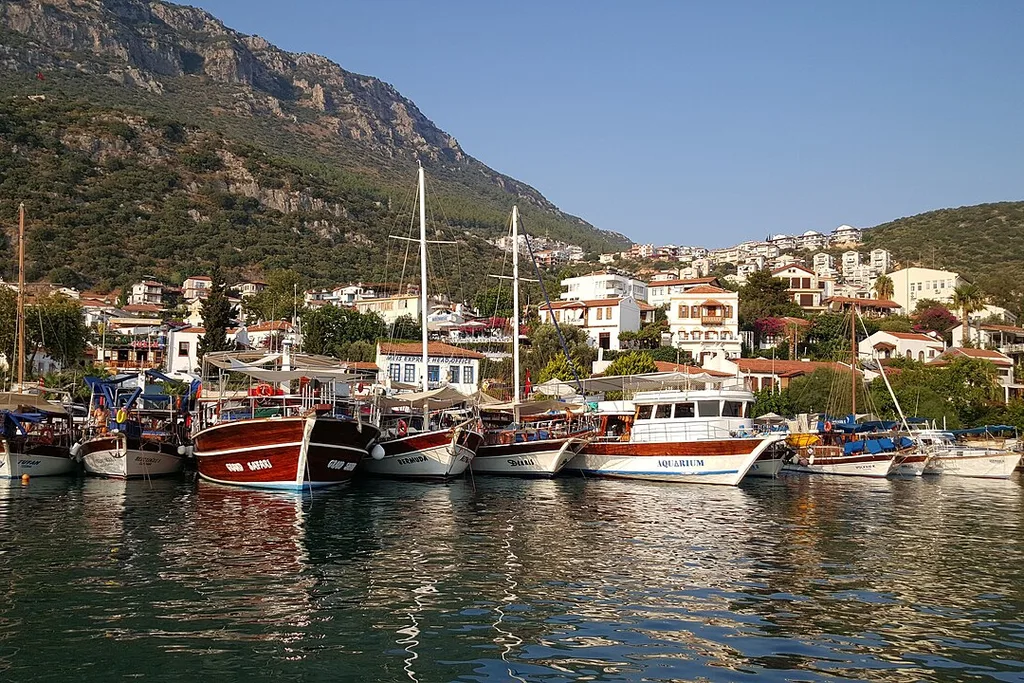
The coast variant swaps the Aegean ending: Ephesus keeps its day — it earns it against any beach — but the final base moves south to the Turquoise Coast, basing at Kaş or Fethiye for days 6 and 7 in place of the İzmir morning, reached by flying Cappadocia to Antalya or Dalaman rather than İzmir. In exchange you give the route its water: boat days among the Kekova bays, the lagoon at Ölüdeniz, harbour towns at their evening best. What you lose is the easy departure — the coast’s airports are smaller, and the open jaw home needs a connection — and what you must not do is add the coast to the unmodified route, which produces five bases and a nervous breakdown. The Pamukkale swap answers the other famous itch: the white travertine terraces and the ruins of Hierapolis sit inland, roughly three hours by road from Selçuk, and the honest way to include them is to trade, not add — Pamukkale in place of the second Cappadocia ground day, reached by a long surface leg, keeps seven days honest; our pamukkale travel guide covers the terraces and Hierapolis in full, and it says what this page will repeat: the terraces are genuinely extraordinary and genuinely out of the way, and only you can price that exchange.
The no-fly variant exists for those who will not or cannot use domestic flights, and it is a different trip wearing this one’s clothes: Istanbul keeps its three days, then a night coach delivers Cappadocia for days 5 and 6, and Ephesus leaves the route entirely — because the Cappadocia-to-Aegean leg by road is the one that breaks the week — replaced by a second full Cappadocia day and a slow return, or by Ankara, which the railway makes a natural stop between the capital-bound coach routes and Istanbul. Judged as its own trip it is a good one; judged as this route minus aeroplanes, it fails, and the distinction is worth holding. And the Istanbul-max variant, for travellers who suspect — correctly, for them — that the city is their real destination: give Istanbul days 1 to 4, Cappadocia days 5 and 6 with both balloon mornings protected, drop Ephesus, and fly home from Kayseri via Istanbul on day 7. Three of the route’s four rivals for your week are answered by subtraction. That is not a coincidence; it is what a defensible route means.
Frequently Asked Questions
Is 7 days enough for Turkey?
For the classic triangle of Istanbul, Cappadocia and Ephesus — yes, with nothing to spare and nothing wasted, provided the transfers are flown and the departure is open-jaw. Seven days is not enough for Turkey the country, which also holds a Mediterranean coast, an eastern highland and a Black Sea that each deserve their own weeks; the honest framing is that this route is a complete first trip, not a complete country. Travellers who try to add Pamukkale and the coast to the same seven days do not get a bigger trip; they get a shorter one at every stop.
How many days do you need in Istanbul on this route?
Three, arranged as this itinerary arranges them: a light arrival day, one full old-city day, and one Bosphorus day that ends at the airport. Two days can hold the old city if day 3 is sacrificed, but the Bosphorus is not an optional garnish — it is the city’s geography lesson, and Istanbul without the water is a rumour of Istanbul. Four days is the comfortable version and is what the Istanbul-max variant in the variations section is for.
Which airport is better for Cappadocia – Kayseri or Nevşehir?
Nevşehir is closer to Göreme — roughly three-quarters of an hour by road against Kayseri’s hour and a quarter or so — and Kayseri is the larger airport with the fuller schedule, including more of the evening departures this route depends on. Choose by the flight times first and the transfer second: an evening arrival into Kayseri beats a midday arrival into Nevşehir every time, because the airport run is measured in minutes and the lost balloon morning is measured in the whole point of the trip.
What happens if the balloons are cancelled?
On this route, remarkably little — which is the design. Flights are decided each dawn on the wind, you hold two mornings, and a grounded day 4 swaps its ground programme with day 5 and tries again. If both mornings ground, Cappadocia at ground level — the open-air museum, the valleys, the underground cities — is still one of the great stops in Turkey, and the correct response is to walk it properly rather than chase a third dawn that the week does not contain. Book the balloon for your first morning, always; the spare morning only exists if the first one is used first.
Should I fly home from İzmir or go back to Istanbul?
From İzmir, if your ticket allows it — the open-jaw booking is this route’s single best decision, converting day 7 from a return journey into a slow Aegean morning. Returning to Istanbul costs a short flight plus a long connection buffer and gives you nothing you have not already had. If fares or schedules force the Istanbul departure, take the earliest İzmir flight that protects the connection comfortably, and treat the day as travel, with a book, rather than as a failed sightseeing day.
Can you do this route without flying?
Not this route — the Cappadocia-to-Ephesus leg is the width of Anatolia, and by road it consumes the day the itinerary spends underground and in the valleys. The no-fly version in the variations section is a good trip of its own: Istanbul, a night coach to Cappadocia, two full days there, and Ephesus dropped or Ankara added on the rail line back. What does not exist is a seven-day, three-base, no-flight version that does all three stops justice, and any itinerary that claims otherwise is costing its travel days in secret.
The Short Version
Three bases, three flights, one rule: never spend a day travelling when an evening will do. Istanbul for days 1 to 3 — the old city given one full, foot-only day, the Bosphorus given the next, and an evening flight south before the city can spend your third night for you. Cappadocia for days 4 and 5, based in Göreme, the balloon booked for the first dawn and the second dawn held in reserve against the wind, the cave churches and the valleys at walking pace, then down into an underground city before flying west. Ephesus for day 6, entered at opening and walked in one direction, the Library and the theatre earned at the pace they were built for. İzmir for day 7 — a slow morning and a flight home from the Aegean, on the open-jaw ticket you were wise enough to book.
Everything else in this guide is the defence of that paragraph: why the order insures each stop against the last one’s weather, why the night bus is a fallback and not a plan, what to cut when a day disappears and what never to cut, and which travellers should take the coast, the terraces or the extra Istanbul day instead. Turkey rewards the traveller who chooses. The country’s official portal keeps visitor information current at goturkiye.com — use it for the arrangements that change, and use this route for the geography that does not. Seven days, three great places, no transfers wasted: that is the week.