Haridwar works for picnics because it combines three very different landscapes within a small, easily travelled area, and that variety is what makes a day out here feel complete rather than repetitive. First there is the Ganga itself, wide, fast and deeply woven into the daily life of the city, with ghats where people bathe, pray, sit and watch the river change colour through the day. Then there are the forests of Rajaji National Park, which begin almost as soon as the town thins out, bringing sal trees, grassland, elephants, deer and a completely different kind of quiet. Third, there are the ashram gardens and temple grounds around Haridwar and Kankhal, where the mood is slower, greener and more orderly, and where a family can sit in shade without the noise and rush of the main ghats. The best picnic is therefore not always the most famous place on a postcard, and it is certainly not the place with the largest crowd. It is the place that matches your group, your pace and the time of day, because a spot that is perfect for birdwatching at dawn can feel exposed and busy by midday, while a ghat that is crowded in the evening can be calm, reflective and beautiful in the early morning. Families need shade, space for children to move safely, somewhere to sit, and easy access to food and water. Birdwatchers need quiet water, open sky, and the patience to wait without disturbance. Wildlife lovers need a guide, a permitted route, and the discipline to keep a proper distance. Spiritual travellers need calm ashram grounds, modest surroundings, and time to sit without feeling hurried, and this guide tries to match each of those needs to a real place rather than listing famous names in the hope that one of them will suit everyone.
Haridwar sits on the Ganga in Uttarakhand, in the foothills where the river leaves the Himalayas and enters the plains, and it has long acted as a gateway for pilgrims, trekkers and travellers heading further into the hills. That position shapes everything about a picnic here, because many of the spots below are best treated as day trips rather than overnight bases, with a morning start, a packed lunch, and a return to the city for the evening aarti if that is part of your plan. It also means the weather, the river and the forest change with the season in ways that matter for comfort and safety, so winter and spring are generally the most pleasant times, summer afternoons can be hot and exposed, and the monsoon can make riverbanks slippery, paths muddy and some forest areas difficult or closed. Respect for temple and ashram rules is not an optional extra in Haridwar, because many of these places are living religious spaces first and picnic spots second, and that means dressing modestly, keeping voices low, not playing loud music, and following any guidance about footwear, photography and food. Carry out all litter, avoid single-use plastic where possible, never feed wildlife, and do not enter restricted water, dam or forest areas, even for a photograph, because those boundaries exist for safety as well as conservation. Finally, park, safari and ashram arrangements can change, so check the official site before visiting for current park and safari rules, and treat any timings or entry details you read elsewhere as a starting point to confirm rather than a promise, which will save you a wasted journey and keep the day relaxed.
At a Glance
| Spot | Best for | Note |
|---|---|---|
| Rajaji National Park | Wildlife, forest trails | Guided safari or walk only; check park rules |
| Har Ki Pauri | Ganga views, evening aarti | Busy at aarti time; go early for calm |
| Neel Dhara Pakshi Vihar | Birdwatching, quiet picnic | Bring binoculars, keep noise low |
| Chilla Dam | Water views, photography | Combine with Rajaji Chilla Range |
| Sapt Rishi Ashram | Spiritual calm, nature walks | Respect ashram discipline |
How to Choose a Picnic Spot
Choosing well begins with an honest answer about who is travelling, how much walking they can manage, and what kind of day they actually want, because the same river and the same forest can offer a very different experience depending on those answers. Families with young children should favour parks, dam viewpoints and ashram gardens with space, shade, flat ground and somewhere to sit, rather than steep riverbanks, crowded ghat steps or deep forest trails, and they should plan around shade and water, especially if children will be in the sun for several hours. Birdwatchers should do the opposite and favour Neel Dhara and quiet river stretches in the early morning, when birds are most active, light is soft for photography, and the chances of a calm, undisturbed sighting are highest, and they should bring binoculars, a hat, water and the patience to sit still, because the best sightings usually come to the quietest visitors. Spiritual travellers should favour ashram gardens and Kankhal, where the pace is slower, the surroundings are tended, and the experience is about sitting, walking and reflecting rather than covering as many sights as possible, and they should check ashram visiting guidance in advance so that dress, timing and behaviour match local expectations. Wildlife lovers should favour Rajaji National Park, and specifically the Chilla Range, with a guide and a permitted route, rather than an unguided forest walk, because a guide knows where animals are likely to be, how to keep a safe distance, and which areas are open on a given day. Older travellers and anyone with limited mobility should favour places with easy access, short flat walks and nearby seating, such as a dam viewpoint or an ashram garden, and should avoid uneven ghat steps or long forest paths unless they know the route is suitable, Photographers should choose morning for birds, late afternoon for dam views, and evening for the aarti.
Time of day, season and crowd are the other three choices that quietly decide whether a picnic feels peaceful or tiring, and they deserve as much thought as the destination itself. Morning is the best time for birds, forest walks and calm ghats, because the air is cooler, the light is softer, and most day visitors have not yet arrived, while midday is better spent in shade, at a dam viewpoint with a breeze, or under trees in an ashram garden, rather than on an exposed riverbank. Evening belongs to Har Ki Pauri and the Ganga Aarti, which is beautiful and deeply moving, but also crowded, loud and difficult for a quiet picnic, so it is better treated as a separate experience at the end of the day than as the picnic itself. Season matters too, because winter and spring bring comfortable temperatures, clearer skies and good bird activity, summer brings heat that makes shade and water essential, and the monsoon brings a fuller, more powerful river but also slippery paths, insects and possible closures, so a monsoon picnic needs more caution and a flexible plan. Food and packing follow from the place you choose, because a forest or bird sanctuary visit suits a packed lunch eaten in a permitted area, with reusable containers and a bag for litter, while a ghat visit suits light local food bought nearby, such as aloo puri and kachoris, eaten sitting rather than spread out as a formal picnic. Finally, think about combining places rather than forcing one place to do everything, because a quiet morning at Neel Dhara, a dam viewpoint at midday and Har Ki Pauri in the evening will often give a fuller day than spending the whole day at a single crowded spot, and that combination is the pattern behind the practical route at the end of this guide.
1. Rajaji National Park — Wildlife and Forest Trails
Rajaji National Park, spread around Haridwar, Dehradun and the neighbouring districts, is the main forest destination in this area, and it feels like a different world from the ghats within a short drive of the city. The park takes its name from C. Rajagopalachari, known as Rajaji, and it protects a large stretch of Shivalik forest, grassland and riverine habitat where elephants, spotted deer, sambar, wild boar and a wide variety of birds are regularly seen, while tigers and leopards are present but far more elusive and should never be expected on a single visit. For visitors from Haridwar, the Chilla Range, between Haridwar and Rishikesh, is the most practical part of the park, because it offers marked walking paths, viewpoints and forest tracks that can be explored with a guide, along with the chance to see wildlife from a respectful distance in the early morning or late afternoon, when animals are more active and the light is kinder for photography. A guided visit matters here for reasons beyond convenience, because a guide understands animal behaviour, knows which tracks are open, can read fresh signs such as footprints and calls, and can keep a group quiet and at a safe distance, which protects both visitors and animals. Do not picnic inside restricted forest areas, do not leave food waste that could attract animals, and do not try to approach elephants or deer for a closer photograph, because wild animals are unpredictable and a close encounter that feels exciting for a few seconds can become dangerous very quickly. Early morning or late afternoon is the best time for light and wildlife, midday is often quieter for animals and hotter for visitors, and the park’s opening seasons and safari rules can change, so check the official site before visiting for current guidance, permitted areas and booking arrangements.
A Rajaji visit works best when it is planned as a forest experience in its own right, rather than squeezed in as a quick stop between two crowded places, because the forest rewards patience, quiet and a slower pace. Arrive with water, a hat, sunscreen, insect repellent and comfortable walking shoes, wear muted colours that blend with the surroundings, and keep cameras ready but voices low, because sudden noise and bright clothing can disturb birds and animals and reduce the chances of a good sighting for everyone in the group. Children often enjoy Rajaji more when they are given a simple job, such as spotting deer, listening for bird calls or counting different trees, rather than being asked to walk silently for hours, and that kind of gentle engagement also helps them understand why the forest is protected and why rules about litter, noise and distance matter. If you are interested in spending a night outdoors rather than just visiting for the day, it is worth reading about camping places in India before you decide, because a proper campsite with permits, guides and facilities is very different from an informal stay near a forest boundary, and the distinction matters for safety, legality and comfort. After a morning in the forest, Chilla Dam makes a natural next stop, because it is nearby and offers open water, sky and a place to sit and eat a packed lunch in a permitted area, and that pairing of forest and water is one of the most satisfying combinations near Haridwar. Remember that wildlife sightings are never guaranteed, and a day without a large animal can still be a rich day if you notice birds, butterflies, tracks, trees and the changing light, because Rajaji is valuable as a living ecosystem, not as a zoo, and the best visitors leave with a sense of that ecosystem rather than only a photograph.
2. Har Ki Pauri Ghat — Riverside Calm and Ganga Views
Har Ki Pauri is Haridwar’s most famous ghat and the centre of the evening Ganga Aarti, and its name, often explained as the steps of Lord Shiva, reflects a long tradition that links this stretch of the river to pilgrimage, bathing and prayer. For a picnic-style visit, the morning is the key, because the ghat is calmer, the river light is softer, the steps are easier to walk, and there is time to sit, watch the water and take in the temples, bridges and daily life without the pressure of an evening crowd. It is important to understand what Har Ki Pauri is and is not as a picnic place, because it is not a lawn park with grass, picnic tables and space to spread out a full meal, and treating it as one will lead to disappointment and possibly to a breach of local expectations. Instead, it is a riverside sitting, walking and watching place, best enjoyed with a light approach: arrive early, walk along the ghat, sit for a while, watch pilgrims and priests, and then combine the visit with a market walk and local food such as aloo puri, kachoris and sweets from nearby shops, which is how many local families enjoy the area. The Ganga here is powerful and sacred, and visitors should respect bathing areas, keep a safe distance from deep or fast water, supervise children closely on wet steps, and avoid entering the river unless they are confident, accompanied and aware of local guidance. Photography is part of the experience for many visitors, but it should be done respectfully, without blocking steps, intruding on people who are praying or bathing, or using flash in a way that disturbs a ceremony, because the ghat is a working religious space as much as a viewpoint.
Evening at Har Ki Pauri is a different experience altogether, and it deserves to be planned separately from a daytime picnic, because the Ganga Aarti draws large crowds, fills the steps and bridges, and creates a atmosphere of lamps, chanting, flowers and music that is deeply moving but not at all quiet. If you want to attend the aarti, arrive well before it begins, choose a spot with a clear view and a safe exit, keep belongings close, stay with your group, and be prepared to stand for a while, because seating is limited and the crowd moves as the ceremony progresses. Families with small children or older travellers should think carefully about whether an evening visit suits them, and if it does, they should plan for crowds, noise and a slower walk back through busy streets, rather than expecting the calm of a morning visit. The area around Har Ki Pauri also rewards a slower exploration on foot, because the bazaars, temples, sweet shops and side lanes give a fuller sense of Haridwar than the ghat alone, and a short walk can reveal smaller temples, local crafts and everyday life that many visitors miss when they rush straight to the river and back. For a full day, Har Ki Pauri works best as the closing chapter, after a quiet morning at Neel Dhara or in Rajaji and a midday stop at Chilla Dam, because that order moves from calm nature to river spirituality, and it ends the day with the aarti as a memorable finale rather than trying to fit a picnic, a forest walk and a crowded ceremony into the same few hours. Whatever time you choose, leave the ghat as you found it, take litter with you, and remember that the river and the ghat are cared for by the people who use them every day.
3. Neel Dhara Pakshi Vihar — Birdwatching and Quiet
Neel Dhara Pakshi Vihar is a bird sanctuary and quiet picnic area near Haridwar, and it is the best choice in this guide for visitors who want birds, water and calm rather than crowds, temples or a full forest safari. The name itself points to its character, because Neel Dhara refers to a blue stream or water channel, and Pakshi Vihar means a bird abode, and together they describe a place where water, reeds, trees and open sky create habitat for resident and migratory birds through much of the year. It suits birdwatchers who are willing to arrive early, sit still and wait, and it also suits families who want a calmer alternative to the main ghats, because children can learn to watch birds without the noise and rush of a busy town, provided adults keep the group quiet and set a good example. Bring water, binoculars, a hat, sunscreen and a light snack in reusable containers, wear muted colours, and keep voices low, because birds are easily disturbed by sudden movement, loud talking and bright clothing, and a quiet group will almost always see more than a loud one. Avoid feeding birds, because human food can harm them and can change their natural behaviour, and avoid playing recorded bird calls to attract them, because that can stress birds, especially during breeding season. Morning is the best time for bird activity, when birds feed, call and move between water and trees, while midday is often quieter, and late afternoon can bring a second, softer period of activity as light fades, so a morning visit with a slow pace is the most rewarding plan for most visitors. Winter mornings can be especially rewarding, when migratory birds join resident species around the water.
A visit to Neel Dhara also works as a gentle introduction to nature for people who have never tried birdwatching, because it does not require specialist knowledge, expensive equipment or a long walk, and it rewards simple habits such as looking, listening and waiting. Start by scanning the water and the edges of reeds, then look into trees and along banks, and listen for calls before trying to spot the bird that made them, because sound often reveals a bird long before it is visible. A basic field guide or a bird identification app can help, but it should be used quietly and without disturbing other visitors, and it is better to identify a few birds well than to rush through a long list without really seeing any of them. Families should bring a mat or a light seat, sit in shade where possible, and plan a short visit rather than a whole day, because young children tire quickly in heat and quiet, and a short, enjoyable visit will leave them wanting to return, while a long, forced visit can put them off nature altogether. Combine Neel Dhara with a nearby river walk or a visit to Bhimgoda Barrage for a fuller morning, or keep it as a standalone calm start before a busier afternoon, and remember that the sanctuary is a habitat first and a picnic ground second, so food should be eaten tidily, litter must be carried out, and any area marked as restricted should be respected without exception. If you visit in winter, when migratory birds are more likely to be present, the experience can be especially rich, but even in other seasons the resident birds, the water and the quiet make Neel Dhara a valuable counterpoint to Haridwar’s busier sights, and check the official site before visiting for any current access guidance.
4. Chilla Dam — Water Views and Green Surroundings
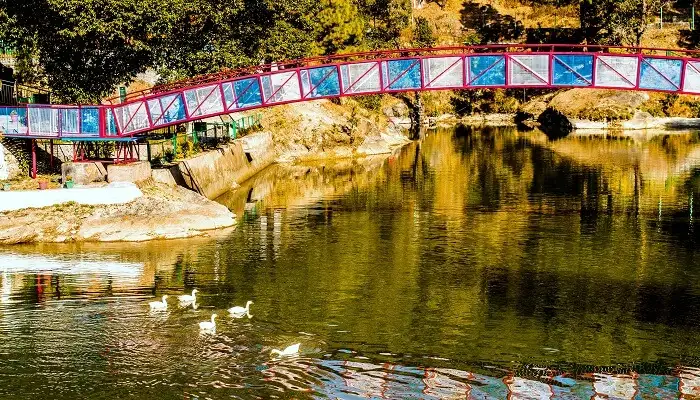
Chilla Dam, on the Ganga Canal near Rajaji National Park, is known for its turquoise water, a bridge viewpoint and sunset photography, and it offers the kind of open, breezy space that is ideal for a relaxed midday picnic stop. The water here has a distinctive colour that photographs beautifully, especially in clear light, and the combination of water, sky, green banks and the nearby forest creates a sense of space that is very different from the enclosed streets and ghats of Haridwar town. It is a good picnic stop when combined with a Rajaji safari or a Chilla Range walk, because both are nearby, and the pairing allows a morning in the forest to flow naturally into a calmer, more open lunch stop, rather than requiring a long drive back into town. It is less crowded than the main ghats, which makes it easier for families to find space, for photographers to set up without blocking others, and for groups to sit and talk without feeling hurried, but it is still a working dam and water structure, so safety signs must be respected at all times. Do not enter restricted water areas, do not climb barriers for a photograph, do not swim in canal or dam water unless a place is clearly designated and safe, and supervise children closely near water, because canal water can be deep, fast and deceptive even when it looks calm from a bridge. Bring a mat, water, hats and sunscreen, because shade can be limited at a viewpoint, and pack food in reusable containers, with a bag for litter, so that the banks and water remain clean for the next visitors and for wildlife.
Photographers will find Chilla Dam most rewarding in the late afternoon, when the light softens, shadows lengthen, and the water takes on warmer tones, while morning light is clearer and better for detail, birds and the green of the surrounding forest. A bridge viewpoint gives a wide panorama, but the best photographs often come from taking time to explore different angles, waiting for a bird or a change in light, and including foreground elements such as trees, banks or the bridge itself, rather than rushing to take a single wide shot and leaving. Families should treat Chilla Dam as a viewpoint and a sitting place rather than a full park, because there may not be lawns, playgrounds or formal picnic facilities, and the experience is better when expectations match that reality. Combine the dam with a forest visit in the morning and Har Ki Pauri in the evening for a balanced day, or pair it with Neel Dhara for a water-themed morning, and allow time to sit without a strict schedule, because the pleasure of a dam viewpoint is often in watching water, sky and light change rather than in ticking off a sight. Local visitors and travellers often pass through Chilla on the way between Haridwar and Rishikesh, which makes it a practical stop on a longer route, and for those planning a wider trip, guides to tourist places near Haridwar can help place Chilla in context with other nearby stops, though the dam itself is best enjoyed slowly rather than as part of a rushed list. As with all water places in this guide, check the official site before visiting for any current access or safety guidance, and leave no trace behind.
5. Sapt Rishi Ashram — Spiritual Serenity and Nature Walks
Sapt Rishi Ashram offers gardens, quiet paths and a spiritual atmosphere away from the main ghat crowds, and its name, which refers to the seven sages of Hindu tradition, points to a long association with learning, meditation and a life lived close to nature. It suits visitors who want a calm walk and sitting time, rather than a loud family picnic with music, games and a large spread of food, because the ashram’s value lies in its quiet, its greenery and its sense of order, and those qualities are easily lost when a group treats it like a public park. Dress modestly, keep noise low, follow ashram rules about where to walk, sit and photograph, and remember that residents and visitors may be meditating, studying or praying, so even a well-meaning conversation can feel like an intrusion if it is loud or prolonged. The gardens and paths are the main attraction for a picnic-style visit, because they offer shade, birds, flowers and a chance to walk slowly without the traffic and crowds of the town, and a short, unhurried walk can be more restorative than a long, goal-driven tour. Families should explain to children in advance that an ashram is a place of discipline and respect, and should plan for quiet activities such as walking, sitting, reading or sketching, rather than ball games or loud play, which are better suited to a park or a dam viewpoint. Spiritual travellers often value Sapt Rishi Ashram precisely because it is less famous than Har Ki Pauri, and that relative quiet allows for reflection, prayer or simply sitting by trees and water without feeling watched or hurried, which is a rare quality in a pilgrimage town.
A visit to Sapt Rishi Ashram also helps visitors understand Haridwar beyond its most famous ghat, because the city has long been a centre of ashrams, schools and spiritual communities, and each ashram has its own character, history and daily rhythm. Take time to notice the layout of the gardens, the trees, the paths and any temples or halls that are open to visitors, and follow signs about which areas are public and which are private, because ashrams are working communities, not museums, and some spaces are reserved for residents. If you are unsure about etiquette, ask politely at an entrance or office, and accept guidance gracefully, because local staff and residents are the best source of information about what is appropriate on a given day. Combine Sapt Rishi Ashram with a visit to Shantikunj or to Kankhal for a fuller ashram and temple day, or pair it with a morning at Neel Dhara for a day that moves from birds and water to gardens and quiet, and allow time to sit without a phone or a camera for part of the visit, because the ashram’s calm is easier to feel when you are not trying to capture it constantly. Food should be light, tidy and eaten only where it is permitted, litter must be carried out, and footwear, dress and photography rules should be checked on arrival, because ashram guidance can vary and it is better to ask than to assume. For visitors who want a peaceful break in the middle of a busy pilgrimage trip, Sapt Rishi Ashram is one of the most reliable choices near Haridwar, and it rewards the simple decision to slow down, walk quietly and respect the place as it is.
6. Shantikunj Ashram Gardens
Shantikunj, a well-known ashram in Haridwar, has quiet green spaces that suit a peaceful visit, and it is best understood as a spiritual and educational community with gardens, rather than as a conventional picnic park with lawns and recreational facilities. The ashram is associated with the Gayatri Pariwar movement and with a long tradition of spiritual practice, study and social service, and that background shapes the atmosphere, because the gardens are tended, the paths are orderly, and visitors are expected to behave with the same calm and respect that residents practise. It is not a place for loud games, music or a large picnic spread, but its gardens give families and spiritual travellers a calm break, a chance to walk in shade, sit quietly and step away from the noise of the bazaars and ghats for an hour or two. Check ashram visiting guidance before going, because opening times, access to different areas, dress expectations and photography rules can change, and a short check in advance will prevent an awkward arrival or a wasted journey. A short visit can still include a garden walk, a period of quiet sitting, and time to notice trees and birds, without needing to tour every building. Dress modestly, keep voices low, follow signs about public and private areas, and remember that many people at Shantikunj are there for prayer, study or service, so a visitor’s behaviour should blend in rather than stand out. The gardens themselves reward a slow pace, because trees, flowers, birds and well-kept paths create a sense of order and care that is itself part of the experience, and a short walk followed by a period of sitting can be more refreshing than a hurried tour of many buildings.
Shantikunj works best as part of a calm, ashram-focused day, rather than as a single stop squeezed between a forest safari and a crowded evening aarti, because its value is in its atmosphere and that atmosphere needs time to be felt. Combine it with Sapt Rishi Ashram for a morning of gardens and quiet walks, or pair it with a temple visit in Kankhal for a day that explores Haridwar’s spiritual communities beyond the main ghat, and allow for a simple lunch nearby rather than expecting a full picnic inside the ashram grounds. Families should prepare children for a quiet visit, with activities such as walking, observing trees and birds, or sketching, rather than active games, and should bring water, hats and sunscreen, because even a garden visit involves walking in the sun, especially in summer. Older travellers often appreciate Shantikunj because the paths are generally flat and manageable, the gardens offer seating and shade, and the pace can be set by the visitor rather than by a tour, but it is still wise to check access and seating in advance if mobility is limited. Spiritual travellers may want to learn more about the ashram’s teachings and activities, and the best way to do that is through official ashram information and polite enquiry on site, rather than through rumour or outdated guides, because programmes and guidance change over time. As with all ashrams in this guide, the key is respect: respect for residents, for rules, for quiet, and for the gardens themselves, and a visit conducted in that spirit will almost always be welcomed and remembered as a peaceful interlude in a busy Haridwar trip, so check the official site before visiting for current guidance.
7. Daksha Mahadev Temple Grounds, Kankhal
Kankhal, with Daksha Mahadev Temple, combines history, riverside views and greenery, and it is one of the best places near Haridwar for visitors who want to understand the city beyond its most famous ghat. Daksha Mahadev Temple is dedicated to Lord Shiva and is linked in tradition to Daksha, the father of Sati, and to a story in which a great sacrifice was disrupted, a story that gives the temple a mythological depth that many visitors find moving, even if they are not familiar with every detail. The temple grounds and the surrounding area in Kankhal offer a quieter, more spacious feel than Har Ki Pauri, with trees, open areas and a riverside setting that suits a half-day picnic and temple visit, especially for families who want history and nature together without the pressure of a large evening crowd. It is a good place to walk slowly, to look at temple architecture, carvings and courtyards, to sit in shade, and to notice how a temple town functions when it is not at its busiest, because local life, small shops and everyday rituals are easier to see here than at a major ghat during a festival. Dress modestly, follow temple rules about footwear, photography and offerings, keep voices low inside temple areas, and supervise children near water and steps, because the visit is a religious experience for many people and should be treated with the same respect as a visit to Har Ki Pauri. Food should be light and tidy, eaten only where it is appropriate, and litter must be carried out, because temple grounds are maintained by the community and by devotees, and a clean visit is a simple way to show respect.
A Kankhal visit also works as a bridge between Haridwar’s spiritual heart and its quieter, more rural surroundings, because it is close enough to combine with Har Ki Pauri, yet distinct enough to feel like a separate place, and that combination makes it ideal for a half-day plan. Start with a morning at Kankhal, when the temple is calmer and the light is good for photography, then move to a riverside walk or a nearby garden, and return to Haridwar town for lunch or for the evening aarti, or reverse the order and end the day in Kankhal if you prefer a quieter evening. History lovers should take time to read about the Daksha legend before visiting, because the story gives meaning to the temple’s name, its location and its importance to pilgrims, and it also helps visitors understand why Kankhal is mentioned in many accounts of Haridwar’s past. Families will find Kankhal easier than the main ghat for a relaxed visit, because there is more space to move, fewer crowds to navigate, and a better chance for children to ask questions and look at details without being rushed, but adults should still set clear expectations about behaviour in a temple, including quiet voices, modest dress and respect for people who are praying. Photographers should focus on architecture, courtyards, trees and river views, and should ask before photographing people who are worshipping, because consent and respect matter more than a striking image. For travellers exploring a wider area, guides to tourist places near Haridwar within 200 km can help place Kankhal alongside other nearby destinations, though Kankhal itself deserves to be enjoyed slowly, and check the official site before visiting for any current temple guidance.
8. Pawan Dham — Decorative Art and Nature
Pawan Dham is known for decorative glass and mirror work, set in a peaceful temple complex with gardens, and it suits a short, calm visit, especially for visitors who are interested in temple art as well as nature. The temple’s most distinctive feature is its intricate mirror and glass decoration, which covers walls and ceilings with reflective patterns, coloured glass and detailed work that catches light in a way that is very different from the stone carvings of older temples, and that visual richness makes Pawan Dham memorable even for visitors who have already seen several temples in Haridwar. It is not a large park or a forest, and it should not be planned as a full-day picnic, but its peaceful complex and gardens offer a place to walk, sit and look closely at art without the crowds of the main ghats, and that combination of art and calm is its main appeal. Dress modestly, follow temple rules about footwear and photography, keep voices low, and take time to look at details rather than rushing through, because mirror work rewards close observation, and a quick walk-through will miss much of what makes the temple special. Families with children often enjoy Pawan Dham because the reflective surfaces are visually engaging and easy to appreciate without specialist knowledge, but children should be reminded not to touch delicate work, not to run inside temple halls, and to stay with adults, because the temple is a place of worship as well as a place of art. The gardens around the complex add a natural element to the visit, with trees, paths and seating that allow for a short rest, and a visit can be combined with a nearby ghat, ashram or market walk for a fuller morning or afternoon.
A visit to Pawan Dham also shows a different side of Haridwar’s temple culture, because while many of the city’s most famous temples are ancient or deeply linked to pilgrimage legends, Pawan Dham is valued for craftsmanship, decoration and a more recent temple tradition, and that contrast helps visitors appreciate the range of religious art in the city. Photographers should be aware that mirror and glass work can be difficult to photograph well, because reflections, bright light and dark interiors create challenges, and it is better to take a few thoughtful photographs, with permission where required, than to spend the whole visit behind a camera. If photography is restricted inside, respect that rule without argument, and enjoy the art directly, because a temple visit is not complete only if it is photographed. Combine Pawan Dham with Har Ki Pauri for a day that moves from art to river, or with an ashram garden for a day focused on calm and beauty, and allow an hour or so rather than a whole day, because the temple is best enjoyed as a focused, unhurried stop. Food should be eaten outside temple halls and only where appropriate, litter must be carried out, and any guidance about dress, footwear or offerings should be followed, because those rules protect both the temple and its visitors. For travellers who like to notice details, Pawan Dham is a rewarding small stop, and it is a good reminder that a picnic day near Haridwar does not have to be only about forests and rivers, because temple art, gardens and quiet courtyards can be just as refreshing when they are visited slowly and respectfully, so check the official site before visiting for current guidance.
9. Bhimgoda Barrage and Ganga Canal Walks
Bhimgoda Barrage and the Ganga Canal walks offer clean, shaded paths with flowing water, popular with locals for morning walks, and they are one of the most accessible and least formal picnic options near Haridwar. The barrage, built across the Ganga, and the canal that carries water from it, create long, flat paths where walkers, joggers and families can enjoy moving water, trees, birds and open sky without entering a forest, paying for a safari, or navigating a crowded ghat. They are ideal for a light picnic walk, especially in winter and spring, when the air is fresh, the paths are quiet, and the morning light is soft, and they are also popular with local residents, which gives visitors a chance to see everyday Haridwar life, from morning walkers and yoga practitioners to families out for fresh air. The paths are also used for yoga and exercise, so early mornings can feel lively without feeling crowded. The walks are best enjoyed slowly, with water, hats, sunscreen and comfortable shoes, and with a light snack in reusable containers rather than a large picnic spread, because the paths are primarily for walking and the pleasure is in movement, water and air rather than in sitting for hours in one place. Keep to paths, respect any signs about restricted barrage areas, do not climb barriers or enter canal water, and supervise children near water at all times, because barrage and canal water can be deep and fast even when it looks calm from a path. Birds, trees and changing light make the walks rewarding for photographers and nature lovers, but the main benefit is simpler: fresh air, exercise and a sense of space, which is exactly what many visitors need after a busy day of temples and bazaars.
Bhimgoda and the canal walks also work well as a flexible, low-pressure part of a Haridwar day, because they do not require tickets, guides or a strict schedule, and they can be fitted into a morning before a temple visit, an afternoon between sights, or an evening stroll when the light is softer. Older travellers and families with young children often prefer these walks to longer forest trails, because the ground is flat, the route can be as short or as long as desired, and there are places to turn back, sit and rest without feeling committed to a long journey. Combine a canal walk with Neel Dhara for a morning focused on birds and water, or with Har Ki Pauri for a day that moves from quiet walking to river spirituality, and allow time to sit on a bench or a shaded bank and simply watch the water, because the canal’s steady flow has a calming quality that is easy to miss if you walk quickly past it. Local knowledge helps here, because residents know which stretches are shadiest, quietest and best maintained at different times of year, and a polite question at a hotel or shop can save a walk in the wrong direction. As with all water places, safety comes first, so avoid monsoon walks when paths are slippery or water levels are high, avoid walking alone in isolated stretches after dark, and carry a phone, water and a litter bag. Bhimgoda Barrage may not be the most famous name in this guide, but for many visitors it becomes a favourite precisely because it is simple, accessible and local, and it shows that a good picnic near Haridwar does not always need a park, a safari or a famous view, because a shaded path beside flowing water can be enough, so check the official site before visiting for any current access guidance.
10. Laldhang Village — Offbeat Picnic Near Rajaji
Laldhang, a village near Rajaji Park in Uttarakhand, is an offbeat option for travellers who want a rural, quiet picnic without a formal park, and it appeals most to visitors who have already seen Haridwar’s main sights and want to experience the countryside that surrounds the forest. The village setting offers fields, trees, village paths and a slower rhythm of life, with the forest of Rajaji nearby, and that combination of rural calm and forest edge gives a different kind of picnic, one based on open air, simple food and quiet observation rather than on facilities, viewpoints or organised activities. Go with local guidance, because a village is not a tourist attraction with signposted picnic areas, and a local guide or host can show you where it is appropriate to walk, sit and eat, where water and shade are available, and which land is private and should not be entered. Respect village land and water, do not pick crops, do not disturb livestock, do not enter fields or homes without permission, and carry out all waste, because a rural picnic that leaves litter or damage will quickly lose the welcome it depends on. Bring water, food in reusable containers, hats, sunscreen and a mat, and plan for basic facilities rather than expecting toilets, shops or restaurants at every turn, because part of the appeal of an offbeat village visit is its simplicity, but that simplicity also requires preparation. Children should be supervised, especially near water, roads and animals, and visitors should dress modestly and behave as guests, because in a village, unlike in a park, you are visibly a visitor in someone else’s home area, and that relationship deserves care.
An offbeat visit to Laldhang also rewards travellers who are interested in how people live near a national park, because villages around Rajaji have a complex relationship with the forest, balancing farming, daily life and wildlife, and a respectful visit can give a glimpse of that relationship without turning it into a spectacle. Talk to local people politely if they are willing, listen more than you speak, buy local food or crafts where that is offered, and avoid treating village life as a backdrop for photographs, because consent and dignity matter far more than a striking image. Combine Laldhang with a guided Rajaji visit for a day that moves from forest to village, or keep it as a standalone quiet morning for travellers who want to escape crowds entirely, and allow for a flexible plan, because rural roads, weather and local events can change a schedule, and a flexible attitude will make the day more enjoyable than a rigid itinerary. If you are considering a longer rural or forest stay, remember the distinction between a day visit and an overnight stay, and read about camping places in India in advance, because a proper campsite with permits and facilities is very different from an informal village stay, and planning ahead will keep you safe, legal and comfortable. Laldhang is not for everyone, and visitors who need formal facilities, easy access or a guaranteed viewpoint should choose Chilla Dam, Neel Dhara or an ashram garden instead, but for travellers who value quiet, rural landscapes and a sense of discovery, it can be a memorable and refreshing end to a Haridwar picnic list, so check the official site before visiting for any current park or access guidance.
Practical Plan: One-Day Picnic Route
| Time | Plan |
|---|---|
| Morning | Neel Dhara for birds, or Rajaji Chilla Range with a guide |
| Midday | Chilla Dam viewpoint and packed lunch in a permitted area |
| Evening | Har Ki Pauri for Ganga Aarti, then local street food |
Packing list: water, hats, sunscreen, insect repellent, a mat, reusable containers, and a bag for litter. Avoid single-use plastic where possible, and do not feed wildlife.
Conclusion
The best picnic near Haridwar is not one place, but a combination: a quiet morning at Neel Dhara or Rajaji, a dam viewpoint at midday, and Har Ki Pauri in the evening, and that combination works because it matches the rhythm of the day, the landscape and the city itself. A quiet morning gives you birds, forest and fresh air when you have the most energy and when nature is most active, and it allows you to start the day without crowds, noise or the pressure of a busy schedule. A dam viewpoint at midday gives you open water, sky and breeze when shade and space matter most, and a packed lunch eaten in a permitted area feels more relaxed than a hurried meal in a crowded street. Har Ki Pauri in the evening gives you the spiritual heart of Haridwar, with lamps, chanting and the Ganga Aarti, and it ends the day with a sense of completion that a single park or viewpoint cannot provide on its own. That mix gives nature, wildlife, spirituality and river views in a single day, without forcing one crowded ghat to do everything, and without requiring a long journey, expensive tickets or specialist equipment. It also leaves room for personal choice, because a family can swap Neel Dhara for an ashram garden, a wildlife lover can spend longer in Rajaji, and a spiritual traveller can spend longer in Kankhal or at Shantikunj, and the day will still work, because the pattern of calm morning, open midday and river evening is flexible enough to fit different interests. The key is to plan around light, crowds and respect, rather than around a list of famous names, and to accept that a picnic day is judged by how it feels, not by how many places it covers.
If you have more than one day, the same pattern can be stretched and deepened without repeating itself, because Haridwar and its surroundings offer enough variety for a second day that feels different from the first. A second morning could be spent at Sapt Rishi Ashram or Shantikunj, with gardens, quiet walks and time for reflection, while a second afternoon could be spent at Kankhal, Pawan Dham or along the Bhimgoda Canal walks, exploring temple art, history and local life at a slower pace. An offbeat morning at Laldhang could add a rural dimension, while a second visit to Rajaji, with a different range or a different time of day, could add new wildlife and forest experiences, and a return to Har Ki Pauri at a different time could reveal how the ghat changes from morning calm to evening ceremony. Whatever you choose, keep the same principles that make a single day work: arrive early for nature, seek shade at midday, respect temples, ashrams, forests and villages, carry out all litter, avoid single-use plastic where possible, and never feed wildlife or enter restricted areas. Pack water, hats, sunscreen, insect repellent, a mat, reusable containers and a litter bag, dress modestly for temples and ashrams, and check the official site before visiting for current park, safari and ashram guidance, because arrangements can change and a short check will save a wasted journey. Haridwar’s picnic spots are at their best when they are visited slowly, with curiosity and respect, and a day planned in that spirit, whether it is a single combination of Neel Dhara, Chilla Dam and Har Ki Pauri, or a longer exploration of forests, ashrams and villages, will leave you with river light, forest quiet and temple calm in a way that a rushed tour never can.
FAQs
What is the best picnic spot near Haridwar for families?
Chilla Dam viewpoints and Neel Dhara Pakshi Vihar suit families, with space, shade and calmer surroundings than the main ghats.
Can I picnic inside Rajaji National Park?
Only in permitted areas and with park guidance. Do not picnic in restricted forest zones, and follow safari and walking rules.
What is the best time for a picnic near Haridwar?
Winter and spring offer the most comfortable weather. Mornings are best for birds and forest walks; evenings are best for Har Ki Pauri.
Is Har Ki Pauri good for a picnic?
It is best for riverside sitting and Ganga Aarti, rather than a lawn picnic. Go early for calm, or in the evening for the aarti.
What should I carry for a Haridwar picnic?
Water, hats, sunscreen, a mat, reusable food containers and a litter bag. Modest clothing helps at temples and ashrams.
Can I combine Haridwar with Rishikesh in one day?
Yes, for a long day: Haridwar in the morning, Rishikesh for lunch and river views, and back to Haridwar for the evening aarti if time allows.