India is one of the oldest civilizations in the world and has a history that stretches back thousands of years. Located in South Asia, India is known for its rich culture, ancient traditions, colorful festivals, and breathtaking monuments. From the snowy Himalayan Mountains in the north to the beautiful beaches of the south, the country offers a wide variety of landscapes and experiences. Travelers from around the world visit India every year to discover its heritage, architecture, food, and spiritual traditions. The country’s monuments tell stories of kings, queens, emperors, freedom fighters, and great builders who helped shape India’s identity through different periods of history.
One of the most fascinating aspects of India is its collection of world-famous landmarks. These monuments reflect different architectural styles, religions, and historical periods. Some were built by powerful Mughal emperors, while others were constructed during British rule or modern times. Together, they showcase the diversity and cultural richness of India. These landmarks are not only beautiful to look at but also serve as important reminders of the nation’s past. Many of them have been recognized by UNESCO because of their historical and cultural importance.
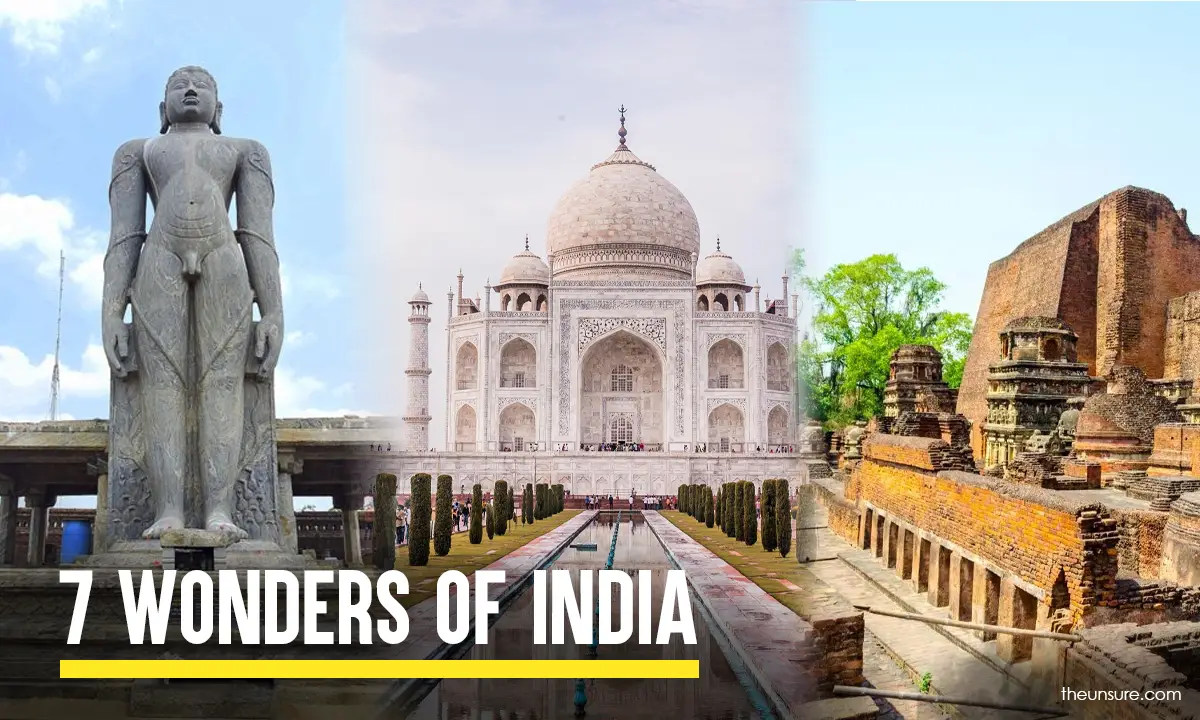
The Seven Wonders of India are among the most visited tourist attractions in the country. They include the Taj Mahal, Qutub Minar, Red Fort, Gateway of India, Lotus Temple, Mysore Palace, and India Gate. Each monument has its own unique story, architectural style, and significance. Some represent love, some symbolize power, while others stand as memorials to bravery and sacrifice. In this detailed travel guide, you will learn about the history, architecture, important facts, best visiting times, and interesting details about each of these incredible wonders.
Seven Wonders of India
The Seven Wonders of India represent some of the most remarkable examples of architecture, history, and cultural heritage found in the country. These landmarks are located in different states and cities, allowing travelers to experience India’s diversity while exploring them. Every monument tells a different story and reflects the traditions, beliefs, and achievements of the people who built it. Whether you are a history lover, architecture enthusiast, photographer, or traveler, these wonders offer unforgettable experiences.
Many of these monuments have survived wars, invasions, natural disasters, and centuries of change. Despite the passing of time, they continue to stand proudly and attract millions of visitors every year. Their beauty, historical significance, and cultural value make them important symbols of India. Students, researchers, historians, and tourists often visit these sites to gain a deeper understanding of India’s past and its architectural achievements.
Traveling to the Seven Wonders of India is like taking a journey through different chapters of Indian history. From the grandeur of Mughal architecture in Agra and Delhi to the royal elegance of Mysore Palace and the modern spiritual design of the Lotus Temple, each destination offers something unique. Exploring these wonders helps visitors appreciate the rich heritage and traditions that make India one of the most fascinating countries in the world.
1. Taj Mahal (Agra)

The Taj Mahal is located in Agra, Uttar Pradesh, and is considered one of the most beautiful buildings ever created. Construction began in 1632 and was completed around 1653 during the reign of Mughal Emperor Shah Jahan. The monument was built in memory of his beloved wife Mumtaz Mahal, who died in 1631. Historians believe that more than 20,000 artisans and workers participated in its construction. White marble was brought from Rajasthan, while precious stones came from different parts of Asia. The result was a masterpiece that continues to amaze visitors centuries later.
The architecture of the Taj Mahal is a perfect blend of Persian, Islamic, Turkish, and Indian styles. The central dome rises gracefully above the structure, while four elegant minarets stand at each corner. Beautiful calligraphy, floral carvings, and gemstone decorations cover the walls. The gardens surrounding the monument follow the traditional Mughal Charbagh design, symbolizing paradise. The reflection of the Taj Mahal in the water channels creates a magical sight, especially during sunrise and sunset.
Today, the Taj Mahal attracts millions of visitors every year and remains one of the most photographed monuments in the world. It became a UNESCO World Heritage Site in 1983. Visitors often arrive early in the morning to witness its changing colors as sunlight falls on the marble surface. The best months to visit are from October to March when the weather is pleasant. Beyond its beauty, the Taj Mahal remains a timeless symbol of love, devotion, and artistic excellence.
2. Qutub Minar (Delhi)
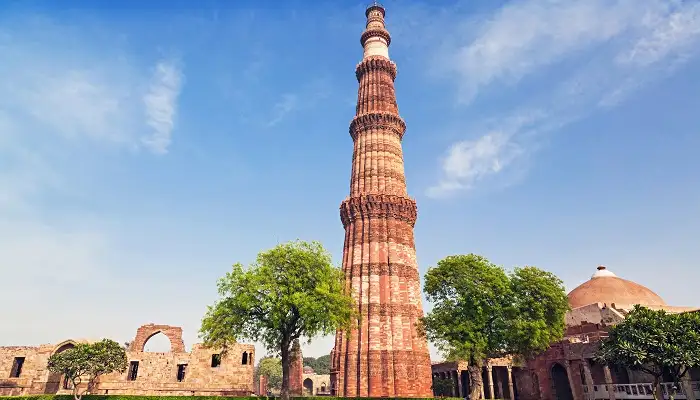
The Qutub Minar is one of Delhi’s most famous historical monuments. Construction began in 1192 under Qutb-ud-Din Aibak, the founder of the Delhi Sultanate. However, he completed only the first floor, and later rulers, including Iltutmish and Firoz Shah Tughlaq, finished the remaining sections. Standing at approximately 73 meters tall, the Qutub Minar remains one of the tallest brick minarets in the world. It reflects the beginning of Islamic rule in northern India and represents an important chapter in Indian history.
Built primarily from red sandstone and marble, the tower is decorated with beautiful carvings and Arabic inscriptions. Each level has a unique design, showing the architectural developments that occurred during different rulers’ reigns. The monument is part of the larger Qutub Complex, which includes several historical structures such as the Iron Pillar, Alai Darwaza, and Quwwat-ul-Islam Mosque. The Iron Pillar is especially famous because it has resisted rusting for more than 1,600 years.
The Qutub Minar was declared a UNESCO World Heritage Site in 1993. Tourists from around the world visit the site to admire its impressive architecture and learn about Delhi’s medieval history. The monument is particularly beautiful during the evening when it is illuminated with lights. Visitors should also spend time exploring the surrounding complex, which offers many fascinating historical insights and architectural details that make the visit even more rewarding.
3. Red Fort (Delhi)

The Red Fort, known locally as Lal Qila, is one of India’s most important historical landmarks. It was built by Emperor Shah Jahan between 1638 and 1648 when he moved the Mughal capital from Agra to Delhi. Constructed using red sandstone, the fort covers a vast area and served as the residence of Mughal emperors for nearly 200 years. Its massive walls, elegant gateways, and beautiful interiors showcase the wealth and power of the Mughal Empire during its golden age.
Inside the fort, visitors can explore several remarkable structures, including the Diwan-i-Aam, Diwan-i-Khas, Rang Mahal, and Mumtaz Mahal. These buildings were used for royal ceremonies, public meetings, and private gatherings. The famous Peacock Throne once stood inside the fort before it was taken away during invasions. Beautiful gardens, fountains, and decorative artwork further enhance the fort’s grandeur and historical significance.
The Red Fort played an important role in India’s independence movement. On August 15, 1947, India’s first Prime Minister, Jawaharlal Nehru, raised the national flag here after independence from British rule. Today, the Prime Minister continues this tradition every Independence Day. Recognized as a UNESCO World Heritage Site in 2007, the Red Fort remains a symbol of India’s rich heritage, national pride, and historical legacy.
4. Gateway of India (Mumbai)
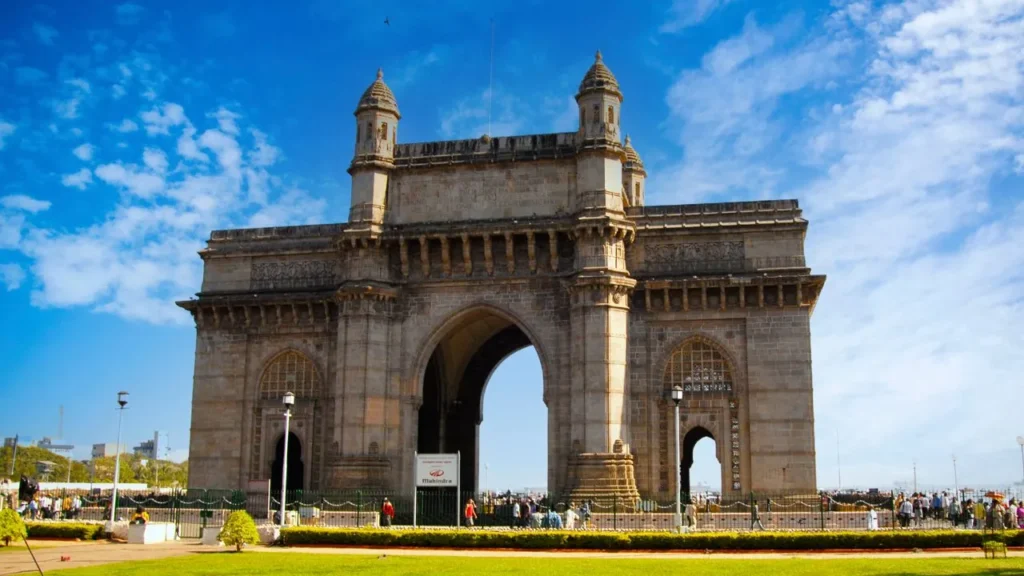
The Gateway of India stands proudly on the waterfront in Mumbai, Maharashtra. It was built to commemorate the visit of King George V and Queen Mary to India in 1911. Construction began in 1913 and was completed in 1924. Designed by architect George Wittet, the monument combines Hindu, Muslim, and European architectural styles. Standing approximately 26 meters tall, it overlooks the Arabian Sea and has become one of Mumbai’s most recognizable landmarks.
Made from yellow basalt stone and reinforced concrete, the Gateway features beautiful arches, intricate latticework, and decorative motifs. Its location near the waterfront makes it a popular gathering place for both locals and tourists. Historically, the monument also holds significance because it was through this gateway that the last British troops left India in 1948 following independence.
Today, visitors come to enjoy the sea breeze, take photographs, and explore nearby attractions. Boat rides from the Gateway provide access to the famous Elephanta Caves. The monument is especially beautiful during the evening when the lights create a stunning reflection on the water. As one of Mumbai’s most visited attractions, the Gateway of India remains a symbol of the city’s history, culture, and connection to the sea.
5. Lotus Temple (Delhi)

The Lotus Temple is one of the most unique modern landmarks in India. Located in Delhi, it was completed in 1986 and serves as a Bahá’í House of Worship. Designed by Iranian architect Fariborz Sahba, the temple was inspired by the shape of a lotus flower, which is considered a symbol of purity, peace, and spiritual awakening in Indian culture. Its innovative design has earned international recognition and numerous architectural awards.
The structure consists of 27 marble-clad petals arranged in clusters to form a blooming lotus. Surrounding pools and gardens add to its beauty and peaceful atmosphere. Unlike many religious sites, the Lotus Temple welcomes people of all religions, beliefs, and backgrounds. There are no religious symbols inside, allowing visitors to meditate, pray, or simply sit quietly regardless of their faith.
The temple has become one of the most visited buildings in the world. Millions of people come each year to experience its calm environment and admire its remarkable architecture. The best time to visit is during the cooler months between October and March. Whether visitors seek spiritual reflection or architectural inspiration, the Lotus Temple offers a unique experience that promotes unity, harmony, and peace.
6. Mysore Palace (Mysore)
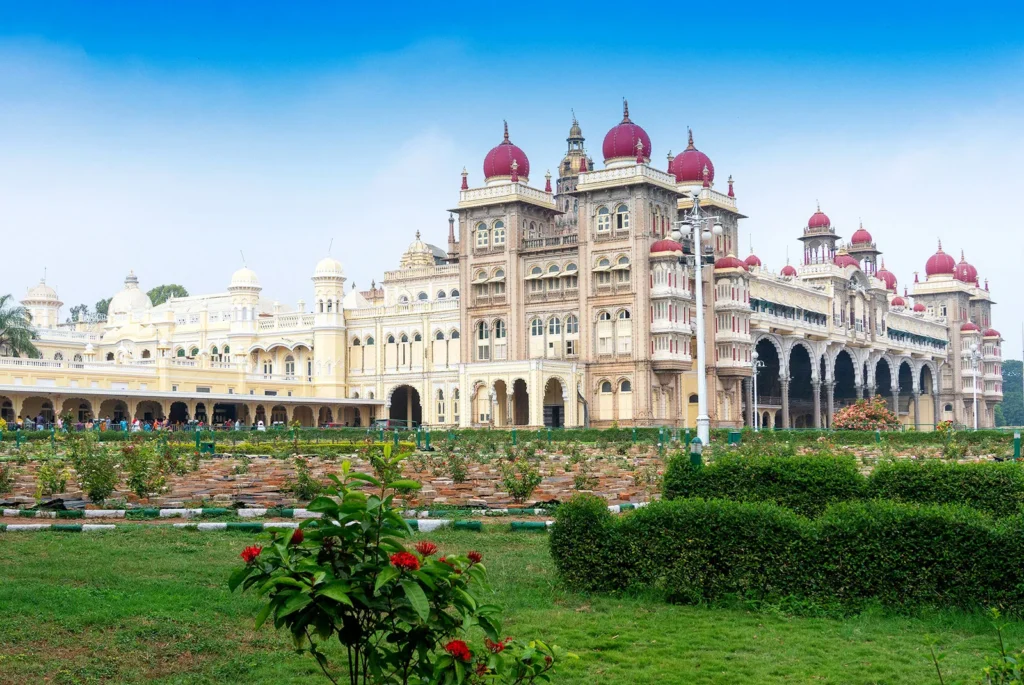
The Mysore Palace is one of the grandest royal residences in India. Located in Mysore, Karnataka, it served as the official residence of the Wadiyar dynasty. The current palace was completed in 1912 after the previous structure was destroyed by fire in 1897. Designed by British architect Henry Irwin, the palace combines Hindu, Rajput, Islamic, and Gothic architectural elements, creating a truly magnificent appearance.
Inside the palace, visitors can admire beautifully decorated halls, stained-glass ceilings, intricate carvings, royal furniture, and impressive paintings. The Durbar Hall and Kalyana Mantapa are among the most stunning sections. Every room reflects the wealth, artistic taste, and royal traditions of the Wadiyar rulers. Historical artifacts and royal collections provide valuable insights into Karnataka’s royal heritage.
The palace becomes especially magical during the annual Dussehra festival. More than 100,000 light bulbs illuminate the entire structure, creating a breathtaking spectacle. Thousands of visitors gather to witness the celebrations, cultural performances, and royal processions. Today, Mysore Palace remains one of India’s most visited monuments and an important symbol of Karnataka’s history and cultural pride.
7. India Gate (Delhi)

India Gate is one of the most important war memorials in India. Located in New Delhi, it was designed by Sir Edwin Lutyens and completed in 1931. The monument was built to honor more than 70,000 Indian soldiers who lost their lives during World War I and the Third Anglo-Afghan War. Their names are engraved on the walls, ensuring that their sacrifices are remembered for future generations.
Standing 42 meters tall, India Gate resembles the Arc de Triomphe in Paris. The monument is surrounded by wide lawns, making it a popular destination for families and tourists. In 1972, the Amar Jawan Jyoti flame was added beneath the arch to honor soldiers who died during the Indo-Pakistani War of 1971. The eternal flame became a powerful symbol of courage and national service.
Today, India Gate is one of Delhi’s most visited landmarks. During evenings, the area comes alive with visitors enjoying walks, snacks, and beautiful views of the illuminated monument. National ceremonies and tributes are often held here, reinforcing its role as a symbol of patriotism and remembrance. A visit to India Gate offers both historical significance and a chance to reflect on the sacrifices made for the nation.
Conclusion
The Seven Wonders of India showcase the country’s extraordinary history, culture, architecture, and achievements. Each monument tells a unique story that spans different centuries and reflects different influences that have shaped India over time. From the romantic beauty of the Taj Mahal to the royal grandeur of Mysore Palace and the patriotic significance of India Gate, these landmarks represent the heart of India’s heritage.
Visiting these wonders allows travelers to experience India’s diversity firsthand. Every destination offers unique architecture, fascinating historical events, local traditions, and unforgettable memories. Whether you are interested in history, photography, culture, religion, or architecture, these monuments provide valuable experiences that help you understand India’s rich past and vibrant present.
If you are planning a trip to India, adding these Seven Wonders to your itinerary is highly recommended. They are not only beautiful places to visit but also important symbols of the country’s identity. Exploring them will give you a deeper appreciation of India’s remarkable history and the incredible people who contributed to its cultural legacy.
FAQs
What are the Seven Wonders of India?
The Seven Wonders of India are the Taj Mahal, Qutub Minar, Red Fort, Gateway of India, Lotus Temple, Mysore Palace, and India Gate.
Where is the Taj Mahal located?
The Taj Mahal is located in Agra, Uttar Pradesh, and was built by Mughal Emperor Shah Jahan in memory of Mumtaz Mahal.
Why is Qutub Minar famous?
Qutub Minar is famous for being one of the tallest brick minarets in the world and for its historical importance during the Delhi Sultanate period.
What makes the Lotus Temple special?
The Lotus Temple is famous for its lotus flower-shaped design and its welcoming atmosphere for people of all religions and beliefs.
When is the best time to visit the Seven Wonders of India?
The best time to visit is between October and March when the weather is cooler and more comfortable for sightseeing.