Popular Festivals in Rajasthan: Season-by-Season Calendar
Rajasthan does not have a single festival season — it has a festival for almost every season, and the best one to plan around depends on the Rajasthan you want to see. Winter brings desert and camel culture in Jaisalmer and Bikaner, where cool mornings, clear light and crowded fairgrounds make the desert feel festive rather than forbidding, and where a camel race or a folk performance can anchor a whole day. Spring brings royal processions in Jaipur and Udaipur, with decorated images, women in traditional dress, music and streets dressed for celebration, and with lakefronts and old-city lanes turning into stages for rituals that are both devotional and public. The monsoon brings Teej in Jaipur and Bundi, when rain, green dress, swings, sweets and processions mark the welcome of the rains and the reunion of Parvati and Shiva, and when a procession through the Pink City becomes the highlight of a wet, colourful week. Autumn brings fairs, folk music and Diwali light across the state, from the Marwar Festival in Jodhpur and the Pushkar Camel Fair to illuminated markets in Jaipur, and the season rewards travellers who enjoy scale, sound and crowds. This calendar groups the most popular festivals by season, gives the usual month or months rather than invented exact dates — many dates shift each year with the lunar calendar — and tells you where each is celebrated and how to visit it well. Always confirm final dates with Rajasthan Tourism before booking flights or hotels, and check the official site before visiting for current programmes, because a festival date that was correct last year may move by days or weeks this year. That caution is not a formality; it is the difference between arriving for a procession and arriving the day after it.
That seasonal approach also helps you choose honestly, because each season asks something different of a visitor. Winter is the easiest season for most travellers: the desert is cool, the days are bright, and the big winter festivals in Bikaner, Jaisalmer and Kumbhalgarh reward early booking and a willingness to share fairgrounds with crowds, while still leaving room for quiet fort walks and unhurried market mornings between events. Spring is gentler and more ceremonial, with Gangaur and the Mewar Festival offering processions that are beautiful to watch from a planned vantage point, provided you dress modestly, keep a respectful distance from ritual moments, and ask before photographing individuals closely. Summer belongs to Mount Abu, Rajasthan’s only hill station, where the Summer Festival offers folk music and dance around Nakki Lake while the plains below are at their hottest, and where a cooler base makes a family festival visit practical rather than punishing. Monsoon festivals reward flexibility, because rain is part of the experience in Jaipur and Bundi, and a light rain cover, walkable footwear and a confirmed procession day matter more than a rigid timetable. Autumn is the season of scale: Pushkar’s fair, Jodhpur’s music and Diwali’s lights all reward early hotel booking, early mornings at livestock and market areas, and an acceptance that crowds, dust and busy lanes are part of the fairground experience. This guide treats each festival in its own right — its origin and meaning, where and how it is celebrated, and the practical visiting context that helps you judge how long to stay — so you can pick one season, one festival and one nearby fort city, and plan a richer trip than a chase across every festival in a single visit.
At a Glance

| Festival | Where | Usual period |
|---|---|---|
| Bikaner Camel Festival | Bikaner | January |
| Desert Festival | Jaisalmer | January–February |
| Gangaur Festival | Jaipur and across Rajasthan | March–April |
| Mewar Festival | Udaipur | March–April |
| Summer Festival | Mount Abu | May–June |
| Teej Festival | Jaipur | July–August |
| Kajli Teej | Bundi | July–August (regional timing varies) |
| Marwar Festival | Jodhpur | September–October |
| Pushkar Camel Fair | Pushkar | October–November |
| Kumbhalgarh Festival | Kumbhalgarh | December |
| Diwali | Statewide, especially Jaipur | October–November |
Winter: Bikaner Camel Festival
Bikaner in January is the place to start a festival year, because the Camel Festival celebrates the animal that made desert trade and travel possible, and it does so at a human scale that larger fairs cannot match. Decorated camels, camel races and folk performances form the core of the programme, with competitions, local food stalls and music giving the fairground a local, working atmosphere rather than a purely staged one. The camel is not a decorative prop here; it was the transport, the trade partner and the lifeline of desert routes, and the festival’s races, decorations and handling displays all point back to that working history, which is why watching handlers with their animals is as informative as watching the races themselves. Bikaner is a good festival town for a first winter visit because its scale is manageable: you can see camel culture up close, talk to stallholders, taste local food and still have time for the town itself, without the largest fair crowds that Pushkar or Jaisalmer draw. That smaller, more local feeling is the festival’s charm, and it suits travellers who prefer a regional event to a mega-fair, families who want a fairground day without an overwhelming crowd, and photographers who want decorated camels and folk performers without fighting for every frame. Pair the festival with Bikaner’s Junagarh Fort and its old-city lanes, where the fort’s scale and the old city’s commerce give context to the camel culture on display, and allow a full day for the combination rather than treating the festival as a quick stop. January is peak season in Rajasthan, so book accommodation early, and check the official site before visiting for the current year’s programme and venue arrangements.
Planning Bikaner well means treating the festival as a town visit, not only as a fairground event, because the best of it lies in the combination of camels, fort, lanes and food. Arrive in time for the camel events rather than only for the afternoon fairground, since races and decorated-camel displays are best in morning light and before the fairground fills, and bring sun protection even in January, because desert winter sun is strong and the fairground offers little shade. Comfortable walking shoes matter, because the route between fairground, fort and old-city lanes involves walking on uneven ground, and a light layer for cool mornings and evenings is sensible even when midday feels warm. Food stalls are part of the experience, so try local snacks where stalls look busy and freshly cooked, carry water, and keep valuables secure in a crowded fairground as you would at any large public event. For photography, the decorated camels and folk performers are generous subjects, but ask before close portraits of individuals, respect handlers who are working with animals, and avoid blocking race routes or performance areas, because a fairground works best when visitors watch from the edges rather than standing in the middle of an event. If you are combining Bikaner with other winter festivals, it pairs naturally with Jaisalmer’s Desert Festival in the same January–February window, though the two should not be rushed back to back; each deserves its own day, and the desert road between them deserves an unhurried journey. Confirm prices before booking accommodation, transport or any guided visit, because January rates in Rajasthan rise with demand, and check the official site before visiting for any change in dates or venues, since festival programmes are announced for the current year rather than fixed permanently.
Winter: Desert Festival, Jaisalmer
The Desert Festival in Jaisalmer, usually in January or February, is Rajasthan’s most theatrical desert celebration: camel races, turban-tying contests, folk music, Ghoomar dance, puppet shows and events on the dunes outside the golden fort city, all staged against sandstone and desert light that make the whole festival feel like a performance. It is organised as a showcase of desert life rather than a religious observance, so it is accessible even if you know little about the rituals behind other festivals, and that accessibility is a strength for first-time visitors who want colour, music and spectacle without needing to follow a religious calendar in detail. The setting does much of the work: Jaisalmer’s golden fort, its havelis and its dunes give the festival a backdrop that no flat fairground can match, and events that move between town and dunes let you experience both the fort city and the desert in a single visit. Folk music and Ghoomar dance are central, not background, because they carry the desert’s musical traditions — its rhythms, its costumes and its storytelling — and a performance watched in full, rather than glimpsed between stalls, gives a better sense of what desert culture sounds and looks like. Puppet shows add another layer, because they are a traditional Rajasthani art form that tells stories in a compact, visual way, and they suit families and children who may find longer performances harder to follow. Turban-tying contests and camel races add humour and competition, and they show a playful side of desert life that balances the more formal folk performances. Stay inside or near the fort for atmosphere, but expect crowds and book well ahead, because the festival’s popularity means hotels fill quickly, and a fort stay that is magical in the evening can also be noisy and busy at festival time.
A good Jaisalmer festival visit balances the staged programme with the town itself, because the fort city rewards walking, eating and shopping as much as it rewards watching events. Plan the dunes events for late afternoon, when the light softens and the desert heat of the day has passed, and plan the town events for morning and evening, when the fort lanes are lively but not yet at their busiest. Bring sun protection, water and a wind layer, because desert winter days are bright and evenings can turn cool quickly, and wear walking shoes for fort lanes, dune paths and fairground ground. Book accommodation well ahead, confirm prices before booking, and check the official site before visiting for the current year’s dates and programme, since the festival usually falls in January or February but its exact days shift each year. For a heritage contrast after the desert, see our Egypt guides — for example, our Luxor city guide — if you are planning a wider cultural trip, though Jaisalmer itself deserves a full day or two without rushing onward. Families should note that dune events involve open ground and walking, so carry water and shade for children, and keep children close in crowded fairground areas. Photography is generous here, with golden stone, colourful dress and desert light, but ask before close portraits, respect performers who are working, and avoid standing in race or performance routes. The Desert Festival works best when you allow time for both spectacle and town life, because the fort, the havelis, the lanes and the dunes together explain why this desert celebration feels so theatrical: it is not a festival imposed on a town, but a town and a desert performing themselves.
Spring: Gangaur Festival
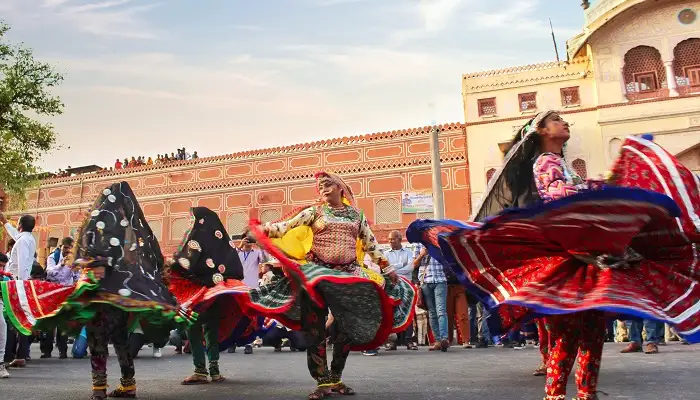
Gangaur, in March or April, is one of Rajasthan’s most important women’s festivals, honouring Gauri, a form of Parvati, and celebrating marital happiness and spring, and its importance is visible in the care with which it is prepared and performed. In Jaipur, the procession — with decorated images of Gauri, women in traditional dress, music and folk performers — moves through the old city and draws large, respectful crowds, and that procession is the highlight for visitors because it turns the Pink City’s lanes into a moving celebration. Udaipur also celebrates Gangaur with lakefront processions, where the water, the palaces and the procession combine into a setting that is distinct from Jaipur’s old-city route, and the two cities together show how a single festival takes different local forms. The festival’s meaning matters for how visitors should watch it: Gangaur is devotional as well as celebratory, honouring a goddess and the hopes attached to marriage and family life, so watching it is not only about colour and photography but about respect for a ritual that belongs to the women and families performing it. Women in traditional dress, decorated images and folk music are central to the procession, and the procession’s slow movement through the old city gives onlookers time to see its details — the images, the dress, the music, the offerings — rather than a single hurried glimpse. Spring weather in March or April is generally pleasant for watching a procession, though midday heat can build, so a morning or late-afternoon vantage point is usually more comfortable than a long midday wait in sun. Dress modestly, keep a respectful distance from ritual moments, and ask before photographing individuals closely, because a procession is a public event and a personal devotion at the same time.
Visitor planning for Gangaur should start with the procession route, because where you stand shapes what you see and how comfortably you see it. Watch the procession from a planned vantage point rather than trying to follow it through narrow lanes, where crowds, movement and heat make following difficult and where you are more likely to block the route or disturb participants. Choose a spot on the published or locally advised route, arrive early enough to secure it, bring water and sun protection, and wear comfortable shoes for standing and for the walk to and from the route. If you are in Jaipur, combine the procession with old-city sights — palaces, markets and lanes — but do not try to cover the whole old city on procession day, because crowds and closures will slow you, and a focused procession morning followed by a relaxed market afternoon works better than a packed itinerary. In Udaipur, the lakefront setting rewards an early lakeside position, and the festival pairs naturally with lake walks, palace visits and old-city markets on the following day, when the town is quieter. Confirm the procession day and route with Rajasthan Tourism or local official sources before travelling, because Gangaur falls in March or April but its exact days follow the lunar calendar and shift each year, and check the official site before visiting for the current year’s programme. Confirm prices before booking accommodation or transport, since spring festival weeks in Jaipur and Udaipur are busy, and book hotels early if you are travelling specifically for the procession. Gangaur rewards visitors who watch slowly and respectfully, because its colour is inseparable from its devotion, and a patient, well-placed morning gives a fuller picture than a hurried chase through the lanes.
Spring: Mewar Festival, Udaipur
Udaipur’s Mewar Festival, also in March or April and closely linked to Gangaur, is spring beside the lakes, and that lakeside setting is what makes it one of the most photogenic festivals in the state. Processions, cultural performances and decorated boats and streets celebrate the arrival of spring in the former Mewar capital, and the combination of water, palaces and procession gives the festival a visual richness that inland processions cannot match. The festival’s link to Gangaur matters, because it shows how spring celebrations in Rajasthan are connected: Gangaur’s devotion to Gauri and the Mewar Festival’s welcome of spring belong to the same seasonal moment, expressed in Jaipur through old-city processions and in Udaipur through lakefront ceremony and performance. Udaipur’s palaces, lake walks and old-city markets provide the context for the festival, so a visitor who spends the morning at a procession and the afternoon walking the lakefront will understand the festival better than a visitor who only photographs a single moment. Cultural performances — music, dance and folk arts — are central to the Mewar Festival, and they reward a full performance watched from a good position rather than a series of brief glimpses, because the music and dance carry the spring theme in a way that a photograph alone cannot. Decorated boats and streets add a festive layer to the town itself, turning ordinary lakefront walks into celebration, and that town-wide decoration is part of the experience: Udaipur does not host the festival in a single venue, it becomes the festival for its duration. The festival is a good choice for travellers who want festival colour without the desert heat of summer or the largest fair crowds of autumn, because spring in Udaipur is mild, the lakes are at their most attractive, and the festival programme is rich without being overwhelming.
Planning the Mewar Festival well means using Udaipur’s lakeside geography to your advantage, because the best views are often from the water’s edge rather than from the middle of a crowd. Choose a lakeside vantage point early, especially for processions and boat displays, and allow time for the town around the festival: palace visits, lake walks and old-city markets on the days before and after the main procession give a fuller picture of Mewar’s former capital. Spring weather in March or April is generally comfortable, but bring sun protection and water for lakeside waiting, wear walking shoes for old-city lanes and lakefront paths, and dress modestly for processions that are devotional as well as celebratory. Ask before close portraits, respect ritual moments, and follow any local guidance on photography at temples and procession routes. Book accommodation early for festival weeks, confirm prices before booking, and check the official site before visiting for the current year’s dates and programme, because the Mewar Festival falls in March or April but its exact days shift with the lunar calendar. If you are combining spring festivals, Gangaur in Jaipur and the Mewar Festival in Udaipur pair naturally as two expressions of the same spring season, but each deserves its own day rather than a rushed transfer between cities on procession day. Families will find Udaipur’s festival accessible, because lakeside walks, palace grounds and old-city markets offer variety between performances, and children can enjoy boats, music and decorated streets without the long fairground days that larger autumn fairs demand. The Mewar Festival works best as a slow spring visit: a procession in the morning, a lake walk in the afternoon, and an evening in the old city, with the festival’s colour woven through all three.
Summer: Summer Festival, Mount Abu
Mount Abu, Rajasthan’s only hill station, hosts its Summer Festival in May or June, when the plains are at their hottest, and that timing is the festival’s practical genius: it offers a cooler, family-friendly festival alternative precisely when the rest of Rajasthan is hardest to visit. Folk music, dance and cultural events around Nakki Lake form the core of the programme, with the lake, the hills and the cooler air giving performances a relaxed, open-air setting that suits families and first-time festival visitors. The hill setting changes the whole festival experience, because visitors can enjoy music and dance without the desert heat that shapes winter and autumn fairs, and because the lakefront provides a natural gathering place where performances, walks and boat rides can be combined in a single day. Mount Abu’s other attractions give the festival a fuller context: the Dilwara temples, with their intricate marble carving, and the sunset points, where evening light over the hills draws crowds in its own right, both pair naturally with a festival visit and turn a festival day into a hill-station stay. The festival is family-friendly in a practical sense, not only in tone: the lakefront is walkable, the programme is varied enough for different ages, and the cooler climate makes a full day outdoors feasible in a way that a May fair in the plains would not be. Summer in the plains before and after Abu will still be hot, so plan travel for early morning or evening where possible, and treat the hill station as a refuge rather than as a base for long plains day trips in peak heat. Check the official site before visiting for the current year’s programme and dates, because the Summer Festival falls in May or June but its exact days are announced for the current year.
A Mount Abu festival trip should be planned as a hill-station break with a festival at its centre, rather than as a single-event dash, because the town rewards a slower stay. Spend the festival day around Nakki Lake for music and dance, then use the following morning for the Dilwara temples, when the marble carving is best seen in softer light and before tour groups build, and an evening for a sunset point, where the hill light and the crowds both peak at day’s end. Book accommodation early for the festival period, confirm prices before booking, and check road and weather conditions before travelling, because summer travel to a hill station involves winding roads and the possibility of pre-monsoon showers. Pack a light layer for cooler hill evenings, sun protection for lakefront days, comfortable walking shoes for lake paths and temple visits, and water for hill walks, even though the climate is cooler than the plains. Families will appreciate the lakefront’s walkability and the variety of the programme, while older visitors will appreciate the cooler air and the slower pace, though hill paths and steps still require care. For photography, Nakki Lake at festival time offers music, dance, boats and hills in a single frame, but ask before close portraits and respect performers and other visitors sharing the lakefront. If you are travelling in summer specifically to escape the heat, Mount Abu is the natural Rajasthan choice, and the Summer Festival gives that escape a cultural focus that a purely scenic hill visit would lack. The festival’s value lies in that combination: cooler air, lakefront music and dance, temple carving and hill sunsets, all within a compact hill town that can be enjoyed on foot.
Monsoon: Teej Festival, Jaipur
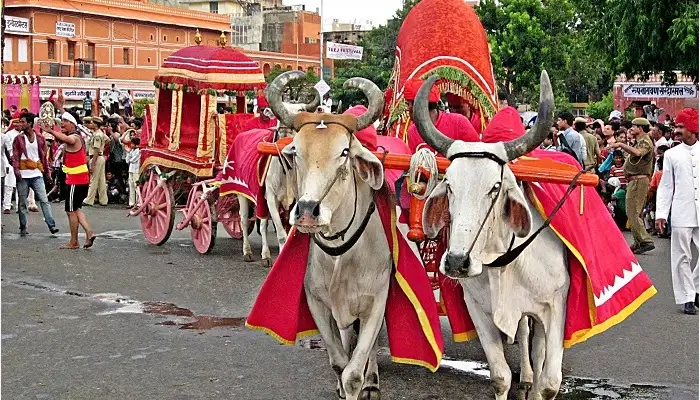
Teej, in July or August, welcomes the monsoon, and in Jaipur it does so with a combination of devotion, colour and royal ceremony that makes it one of the city’s most distinctive festivals, drawing crowds to the old city for a celebration that is at once religious, seasonal and proudly public. Women in green and traditional dress, decorated swings, sweets such as ghevar, and a royal-style procession through the old city mark a festival that is both devotional and celebratory, honouring Parvati and the reunion with Shiva, and that dual character shapes how visitors should experience it. The green dress is not incidental decoration; it signals the monsoon, the season of rain and renewal, and the decorated swings, hung for the festival, give Teej a domestic, joyful layer alongside its public procession. Ghevar, the honeycomb-like sweet associated with Teej, is part of the festival’s food culture, and tasting it in Jaipur during Teej is a small but memorable way to participate in the season, provided you buy from busy, fresh stalls. The procession route through the Pink City is the highlight for visitors, because it brings the festival’s royal-style pageantry — decorated images, music, performers and crowds — into the old city’s lanes, where pink facades, markets and temples frame the celebration. Monsoon rain is part of the experience, not an interruption, and a procession watched in light rain, with wet streets reflecting colour, can be more atmospheric than a dry one, provided you are prepared for it. The festival’s devotion to Parvati and the reunion with Shiva gives it a personal, familial dimension as well, because Teej is celebrated by women with prayers and fasting traditions that vary by family and community, and visitors should respect those private dimensions even while enjoying the public procession.
Planning Teej in Jaipur starts with the procession day and the weather, because both are variable and both shape the visit. Confirm the procession day with Rajasthan Tourism, as the exact date shifts each year with the lunar calendar, and check the official site before visiting for the current year’s programme and route, rather than relying on a previous year’s date. Carry a light rain cover, wear footwear you can walk in on wet lanes, bring water, and choose a planned vantage point on the procession route rather than trying to follow the procession through narrow, crowded lanes. Arrive early for a good position, dress modestly, and ask before photographing individuals closely, because Teej involves women in devotional dress and family ritual as well as public pageantry, and close photography without permission is intrusive. Combine the procession with old-city sights on the following day, when the town is quieter, rather than trying to cover palaces, markets and the procession in a single crowded day, and try ghevar and other Teej sweets from reputable shops while you are in the old city. Book accommodation early if you are travelling specifically for Teej, confirm prices before booking, and allow flexibility in your itinerary for rain, because monsoon showers can delay or reshape a day’s plans without cancelling the festival itself. Families will find Teej accessible, because the procession, the swings and the sweets give children visible, joyful elements to enjoy, while adults can appreciate the devotional and royal layers behind them. Teej works best as a monsoon visit that embraces rain rather than fighting it: a rain cover, walkable shoes, a confirmed procession day and a patient vantage point turn a wet festival day into one of Jaipur’s most colourful experiences.
Monsoon: Kajli Teej, Bundi
Bundi’s Kajli Teej, in July–August in regional timing (some guides place its fair atmosphere into August–September), is the smaller, more local cousin of Jaipur’s Teej, and that smaller scale is precisely its appeal for travellers who prefer a regional festival over a big-city event. Its procession and fair atmosphere in a compact heritage town — known for its palace, stepwells and painted havelis — suit visitors who want festival colour woven into a town they can walk in a day, rather than a mega-event that dominates a whole city. Bundi’s heritage gives Kajli Teej a distinctive setting: the palace, with its murals and courtyards, the stepwells, with their deep, carved geometry, and the painted havelis, with their frescoed walls, all provide a backdrop that is quieter and more intimate than Jaipur’s Pink City, and the festival’s procession moves through that heritage rather than past it. The regional timing note matters, because Kajli Teej’s fair atmosphere is described differently by different guides, with some placing it in July–August and others extending its fair feeling into August–September, so visitors should confirm the current year’s dates and programme with Rajasthan Tourism or local official sources before travelling, rather than assuming a single fixed week. That variability is normal for regional festivals tied to lunar and local calendars, and it rewards a flexible itinerary: plan Bundi as a heritage stay with a festival highlight, not as a single-day dash for a single hour. The procession itself, with music, dress and fair stalls, is best watched from a planned spot in the compact town, where crowds are smaller and vantage points are easier to find than in Jaipur, and where the fair atmosphere — food, music, local stalls — can be enjoyed at a walking pace.
Bundi rewards a slower monsoon visit, because the town’s heritage and its festival belong together and neither should be rushed for the other, especially in festival week. Spend the festival day on the procession and fair, then use the following morning for the palace, stepwells and painted havelis, when the town is quieter and the frescoes and carvings can be seen without festival crowds, and allow time for the town’s lanes, lakes and viewpoints, which give Bundi its compact, walkable character. Bundi also hosts its own heritage festival in October–November, so a return visit in autumn shows a different side of the same town, with a different programme and a different season, and that return-visit potential is worth noting for travellers who fall for Bundi’s scale and heritage. For a first monsoon visit, Kajli Teej suits travellers who have already seen Jaipur’s Teej and want a regional contrast, or travellers who prefer a smaller town to a big city and who enjoy heritage walking as much as festival watching. Pack a light rain cover and walkable footwear, as with Jaipur’s Teej, bring water and sun protection for the breaks between showers, dress modestly for processions, and ask before close portraits. Book accommodation early for festival weeks, confirm prices before booking, and check the official site before visiting for current dates, because regional timing varies and a confirmed date matters more for Bundi than for a large, widely publicised city festival. Kajli Teej’s value lies in its combination of festival and town: a procession and fair in a heritage town of palace, stepwells and painted havelis, experienced at a walking pace, with room to linger in lanes and courtyards after the procession has passed.
Autumn: Marwar Festival, Jodhpur
The Marwar Festival in Jodhpur, usually in September or October, celebrates the heroic traditions of the Marwar region through folk music, dance and ballads performed in honour of the region’s rulers and warriors, and that musical focus makes it a different kind of festival from the procession-led events of spring and monsoon. The Mehrangarh Fort backdrop makes it a powerful setting, because the fort’s massive walls, courtyards and views over the blue old city give performances a scale and a history that a flat fairground cannot match, and the music performed against that backdrop carries the region’s heroic ballads with a fitting grandeur. Folk music, dance and ballads are the point here, rather than a single procession, so the festival rewards listeners who attend full performances, follow the stories in the ballads where translation or explanation is available, and allow an evening’s programme to unfold rather than sampling a few minutes of each act. The heroic traditions celebrated — the rulers and warriors of Marwar, their courage, their loyalty and their losses — give the music a narrative depth that distinguishes it from purely entertaining folk performance, and that depth is worth attending to even if you do not understand every word, because the music’s tone, its instruments and its performance style all carry the region’s history. Jodhpur’s blue old city, fort and markets provide the context for the festival, so a visit that combines a fort morning, an old-city walk and an evening performance gives a fuller picture than a performance alone. The festival is a strong choice for music lovers, and it suits travellers who want autumn festival colour without the livestock-fair scale of Pushkar, because its focus is performance rather than trading, and its crowds, while busy, are centred on venues rather than spread across a vast fairground.
Planning the Marwar Festival well means planning around performances and the fort, because both deserve unhurried time. Attend evening performances when the fort is lit and the music carries best, arrive early for good positions, and check the official site before visiting for the current year’s programme, venues and timings, since the festival usually falls in September or October but its exact days and performance schedule are announced for the current year. Combine the festival with Jodhpur’s blue old city, fort and markets, allowing a full day for the fort and old city before an evening performance, rather than trying to cover fort, markets and performances in a single rushed day. Book ahead if your visit coincides with the wider autumn festival season, confirm prices before booking accommodation and transport, and bring a light layer for cooler autumn evenings, water, and comfortable shoes for fort steps and old-city lanes. For photography, the fort backdrop, the musicians’ dress and the evening light are generous subjects, but ask before close portraits, respect performers during performances, and avoid flash or movement that disturbs an audience. Families will find the festival accessible, because music and dance give children immediate, joyful elements, while the fort and old city offer variety between performances, though evening programmes may run late for younger children. If you are combining autumn festivals, the Marwar Festival pairs naturally with Pushkar and Diwali in the same September–November window, but each deserves its own base and its own day, because Jodhpur’s music, Pushkar’s fair and Jaipur’s Diwali lights are three very different autumn experiences. The Marwar Festival works best as a music-led autumn visit: a fort by day, an old city by afternoon, and heroic ballads against Mehrangarh’s walls by evening.
Autumn: Pushkar Camel Fair
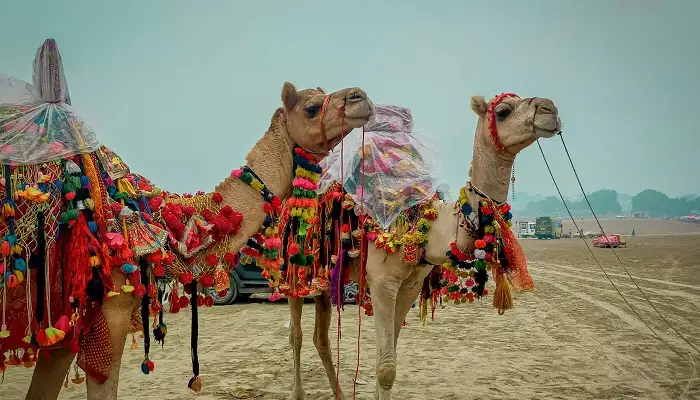
Pushkar Fair, in October or November, is the most famous fair in Rajasthan and one of the largest camel fairs in the world, and its fame is justified by scale: traders, pilgrims, musicians, competitions, ferris wheels and markets gather around Pushkar Lake and its ghats, alongside the town’s sacred bathing tradition and its rare Brahma Temple, creating a fair that is simultaneously a livestock market, a pilgrimage, a funfair and a folk festival. Traders bring camels and other livestock for trading, and the livestock areas, best visited early in the morning, show the fair’s working heart: bargaining, inspection, decoration and handling, all conducted in a dust, noise and colour that is overwhelming at first and fascinating once you find a rhythm. Pilgrims add a sacred layer, because Pushkar Lake and its ghats are a bathing place and the Brahma Temple is rare — Brahma is seldom the focus of a major temple — so the fair’s sacred and commercial sides sit side by side, with bathing, prayer and trading happening within a short walk of each other. Musicians, competitions, ferris wheels and markets add the funfair layer, giving the fair its energy and its noise, and giving visitors who are not trading or bathing plenty to watch, eat and enjoy. The fair’s scale is the experience — and the challenge: crowds, dust and busy lanes are part of it, and a visitor who expects a quiet heritage walk will be surprised, while a visitor who expects a vast, lively fair will feel at home. Stay in Pushkar or nearby Ajmer, arrive early for the livestock and trading areas, keep valuables secure, and respect the town’s vegetarian and alcohol-free customs, because Pushkar’s sacred character shapes its food, its drink and its public behaviour in ways that visitors should honour rather than test.
A good Pushkar visit is planned around timing within the fair, because the fair’s character changes across its days and across each day. If you want the fair without the peak-day crush, visit on a shoulder day of the fair period rather than its busiest weekend, when livestock trading is still active but crowds are thinner and lanes are easier to walk, and arrive early for the livestock areas, when trading is at its most authentic and the light is best for photography. Midday is best spent in markets and food stalls, with shade, water and rest, while evenings bring music, lights and fairground rides that give Pushkar its festive atmosphere after the trading day. Respect the town’s vegetarian and alcohol-free customs throughout, dress modestly for temple and ghat areas, ask before close portraits, and follow any local guidance on photography at sacred sites, because Pushkar is a pilgrimage town as well as a fair town. Book accommodation well ahead, confirm prices before booking, and confirm dates with Rajasthan Tourism before booking, because the fair usually falls in October or November but its exact dates shift each year with the lunar calendar, and do not rely on a previous year’s dates. Staying in Pushkar gives you early-morning access to livestock areas and evening access to the fairground, while staying in nearby Ajmer gives you a quieter base with a short journey to the fair, and either choice works provided you plan the journey for early morning or evening rather than midday. Pushkar rewards visitors who accept its scale, its dust and its crowds as part of the fair, because the fair’s energy — trading, pilgrimage, music and markets together — is what makes it the most famous fair in Rajasthan, and a shoulder-day visit with early mornings gives you that energy without its worst crush.
Winter: Kumbhalgarh Festival and Diwali
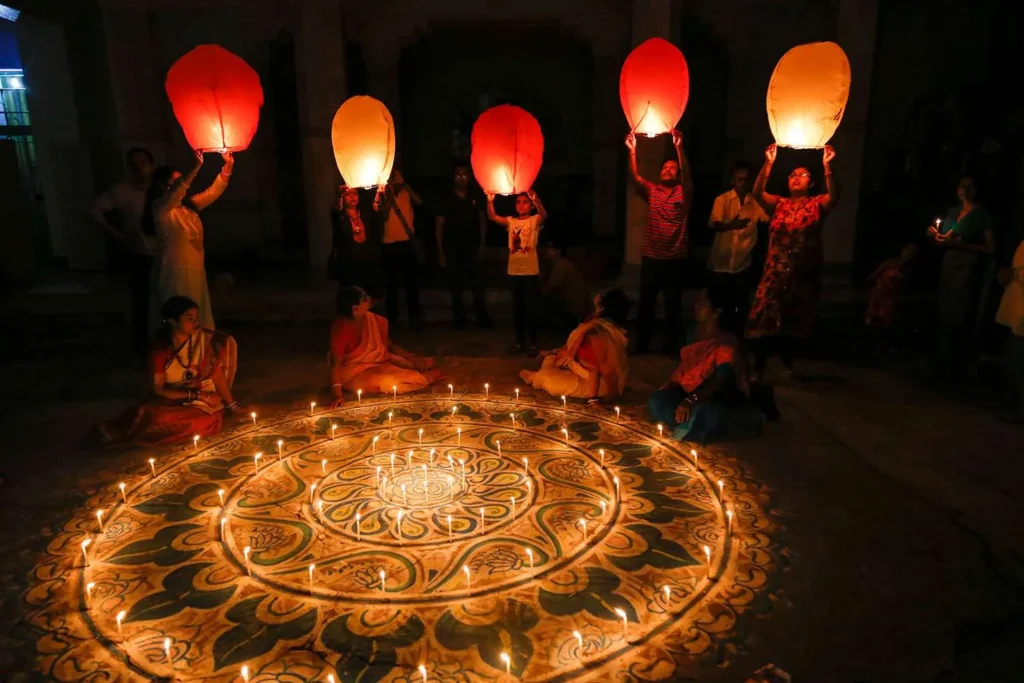
Two very different winter celebrations close the calendar, and their contrast is a useful reminder that Rajasthan’s festival year does not end with a single note. The Kumbhalgarh Festival, usually late in the year around December, stages music and dance in the dramatic setting of Kumbhalgarh Fort, whose vast walls are among the longest in the world — a fort festival for travellers who want performance with a strong sense of place, where the fort itself is as much a performer as the musicians. The walls, the courtyards and the hill setting give performances a grandeur that a town hall or a flat fairground cannot match, and the festival’s programme of music and dance, performed against that fort backdrop, rewards an evening visit when the fort is lit and the performances carry across courtyards. Diwali, in October or November, is celebrated statewide, with Jaipur’s illuminated markets and family rituals among the best-known: lights, sweets, shopping and fireworks transform old-city bazaars, and the festival’s domestic, family character gives it a warmth that large public fairs do not always have. Jaipur’s markets at Diwali are the highlight for visitors, because the bazaars are decorated, lit and crowded with shoppers buying sweets, clothes and gifts, and the old city’s pink facades under festival lights give a visual richness that is distinct from its daytime appearance. Family rituals — sweets, prayers, gifts and gatherings — happen behind the market spectacle, and visitors should respect that domestic layer even while enjoying the public markets, because Diwali is first a family festival and only second a tourist spectacle. The two celebrations together show Rajasthan’s range: a fort festival built around place and performance, and a statewide family festival built around light, markets and home.
Planning these two winter celebrations requires different tactics, because one is a fort event and the other is a statewide family season. For Kumbhalgarh, plan an evening performance at the fort, arrive in time for the fort itself in daylight, and allow a full day for the fort’s walls, courtyards and views, because Kumbhalgarh’s scale deserves more than a quick evening visit, and the festival programme is best enjoyed after a day spent understanding the fort it is staged in. Book accommodation early for the festival period, confirm prices before booking, check the official site before visiting for the current year’s dates and programme, and bring a layer for cool December evenings at fort height, comfortable shoes for fort walls and courtyards, and water for the day’s walking. For Diwali, the tip is simple — enjoy the markets in the early evening, expect crowds, and follow local guidance on fireworks and safety, because Diwali markets are at their most beautiful in early evening light, when shops are lit, shoppers are out and fireworks have not yet dominated the night. Jaipur’s markets reward an early-evening visit with time to browse sweets, clothes and decorations, but they also reward a patient, unhurried approach, because crowds build through the evening and lanes become slow. Respect family rituals, dress modestly for temple and market areas where appropriate, ask before close portraits, and follow local guidance on fireworks, which vary by place and by year. Confirm Diwali dates with official sources before booking, because Diwali falls in October or November but its exact date follows the lunar calendar and shifts each year, and check the official site before visiting for any local programme or safety guidance. Together, Kumbhalgarh and Diwali close the calendar with place and light: a fort festival and a family festival, each rewarding an evening visit planned around its own setting.
Practical Tips, How to Reach and Best Time
| Question | Practical answer |
|---|---|
| When to plan around | Choose a season first (winter desert, spring processions, monsoon Teej, autumn fairs), then confirm exact dates with Rajasthan Tourism |
| How to reach festival towns | Fly to Jaipur, Udaipur or Jodhpur; train and road links connect Pushkar (via Ajmer), Bikaner, Bundi and Jaisalmer — check schedules before booking |
| Booking | Book hotels early for Pushkar, Jaisalmer Desert Festival and Diwali in Jaipur; festival weeks sell out first |
| What to wear and carry | Modest, comfortable clothing; sun protection in winter desert towns, rain cover in monsoon, and walking shoes for procession routes |
| Photography | Ask before close portraits, respect religious processions, and follow any photography rules at temples and fairs |
Choose a season first, then confirm its dates, then book: fly to Jaipur, Udaipur or Jodhpur for the main festival cities, and use train and road links for Pushkar via Ajmer, Bikaner, Bundi and Jaisalmer, checking schedules before booking. For a church-heritage contrast on a wider Indian trip, also read our guide to places to visit in Old Goa, which covers UNESCO churches in walking order rather than duplicating anything in this festival calendar.
Conclusion
The simplest way to use this calendar is to pick the Rajasthan you want to feel: desert and camels in winter, royal processions in spring, monsoon colour in Jaipur and Bundi, or fairground energy in autumn, because any one of those seasons, planned around a single festival and a nearby fort city, gives a richer trip than trying to chase every festival in one visit, and a single well-chosen festival leaves time to enjoy its town properly. Winter gives you Bikaner and Jaisalmer at their most theatrical, with camel culture, folk music and desert light, and Kumbhalgarh’s fort festival as a December close, all in cool, bright weather that suits long fairground days. Spring gives you Gangaur and the Mewar Festival, with processions that are devotional and beautiful in equal measure, and with Jaipur’s old city and Udaipur’s lakes providing two very different stages for the same spring moment. Monsoon gives you Teej and Kajli Teej, with rain, green dress, swings, sweets and processions that welcome the rains, and with Jaipur’s big-city pageantry and Bundi’s compact heritage town offering two scales of the same celebration. Autumn gives you the Marwar Festival’s music against Mehrangarh Fort, Pushkar’s vast fair around lake and ghats, and Diwali’s lights in Jaipur’s markets, three very different autumn experiences that together show Rajasthan at its most festive. Pick one season, one festival and one fort city, and let the rest of the trip grow around that choice, rather than trying to compress winter, spring, monsoon and autumn into a single journey that leaves no time to enjoy any of them properly, because festival travel rewards depth, patience and a second morning in the same town far more than a rushed tour of many towns.
Confirm the year’s dates, book early for the big fairs, and leave room in the day for the unplanned — a folk song in a market lane, a shared sweet, a procession glimpsed from a rooftop — which is often what festival travel in Rajasthan is remembered for, because festivals are lived events, not staged shows, and their best moments are often the ones that were not on the programme. Confirm dates with Rajasthan Tourism before booking flights or hotels, because many festivals follow the lunar calendar and shift each year, and check the official site before visiting for the current year’s programme, routes and any safety guidance, rather than relying on a previous year’s information. Book hotels early for Pushkar, the Jaisalmer Desert Festival and Diwali in Jaipur, where festival weeks sell out first, and confirm prices before booking accommodation, transport or guided visits, since festival-season rates rise with demand. Dress modestly for processions and sacred areas, ask before close portraits, respect religious moments, and follow photography rules at temples and fairs, because respectful watching is part of what makes festival travel welcome in the towns that host it. Carry sun protection for desert towns, a rain cover for monsoon festivals, walking shoes for procession routes and fort walls, and water for fairground days, because practical preparation makes a festival day enjoyable rather than exhausting. Done that way, a Rajasthan festival trip is not a checklist of events but a seasonal experience: a desert in winter, a procession in spring, a monsoon in Jaipur or Bundi, or a fairground in autumn, each with its own light, music and crowds, and each remembered for the unplanned moments as much as for the programme itself.
FAQs
What is the most famous festival in Rajasthan?
The Pushkar Camel Fair in October–November is the most famous fair, while the Jaisalmer Desert Festival and Jaipur’s Gangaur and Teej are the best-known cultural festivals.
When is the Pushkar Camel Fair?
Usually in October–November. Exact dates change each year, so confirm with Rajasthan Tourism before booking; do not rely on a previous year’s dates.
Which festival is best for first-time visitors?
For a first trip, the Desert Festival in Jaisalmer or Gangaur in Jaipur gives clear, accessible spectacle. Pushkar is best if you want the largest fair atmosphere and do not mind crowds.
Are Rajasthan festival dates fixed?
No — many festivals follow the lunar calendar, so dates shift each year. This guide gives usual months or seasons; always check the official site before visiting for the current year’s programme.
What should I wear to a Rajasthan festival?
Comfortable, modest clothing, walking shoes, sun protection in desert towns and a rain cover during monsoon festivals. Bright colours are welcome but not required.
Can I photograph festivals in Rajasthan?
Generally yes in public processions and fairs, but ask before close portraits, respect religious moments, and follow any rules at temples or restricted areas.
External reading: Indian Holiday — Rajasthan festivals and Royal Rajasthan Travels — best festivals of Rajasthan.