Best Time to Visit Jordan – Spring Trails, Desert Nights and the Months to Avoid
Ask when to visit Jordan and most guides answer with two windows — March to May, September to November — as if the country were one climate with one calendar. For one particular trip, the classic run from Amman down the King’s Highway to Petra and Wadi Rum, that answer is honest enough. For almost every other trip it quietly fails, because Jordan is not one climate but a staircase. The sights are stacked at different heights: Amman and Jerash on highland plateaus around a thousand metres, Petra in mountains not much lower, Wadi Rum on a desert floor at about 950 metres, and then the ground falls away — through the Dana highlands, down to a Dead Sea shore more than 400 metres below sea level and an Aqaba coast at sea level on the Red Sea. On the same January afternoon, it can be snowing on Amman’s rooftops, raining in the Petra Siq, mild enough for a t-shirt at the Dead Sea and warm enough to swim at Aqaba. A single “best time” cannot describe a country that contains all four of those afternoons at once.
So this guide refuses the single answer and hands you the working parts instead — the regions read by elevation, then the seasons read across the map, then the trip types, because in Jordan the honest unit of planning is not the month but the match between a month and a height. The short version up front: for a first mixed trip of ruins, desert and trails, April into May and October are the most forgiving windows in most places at once, and everything below explains why, where that rule bends, and where it breaks completely. What to do in each place, once the dates are fixed, is covered in our round-up of the best places to visit in Jordan.
One promise governs every number on this page. The temperatures quoted are climate normals — long-term averages, mostly 1991–2021, for the stations named in each section — which means they describe what a month typically does, not what your week will do. You can plan on a hot, dry August afternoon in Amman and a near-freezing January night in Wadi Rum; but weather deals the actual hand, and in a country of flash floods the forecast in the week itself outranks any table, including this one. Use this guide to choose the season. Use the Jordan Meteorological Department’s forecast to pack — and, in winter, to decide which canyon you walk into.
At a Glance – Four Storeys, One Calendar
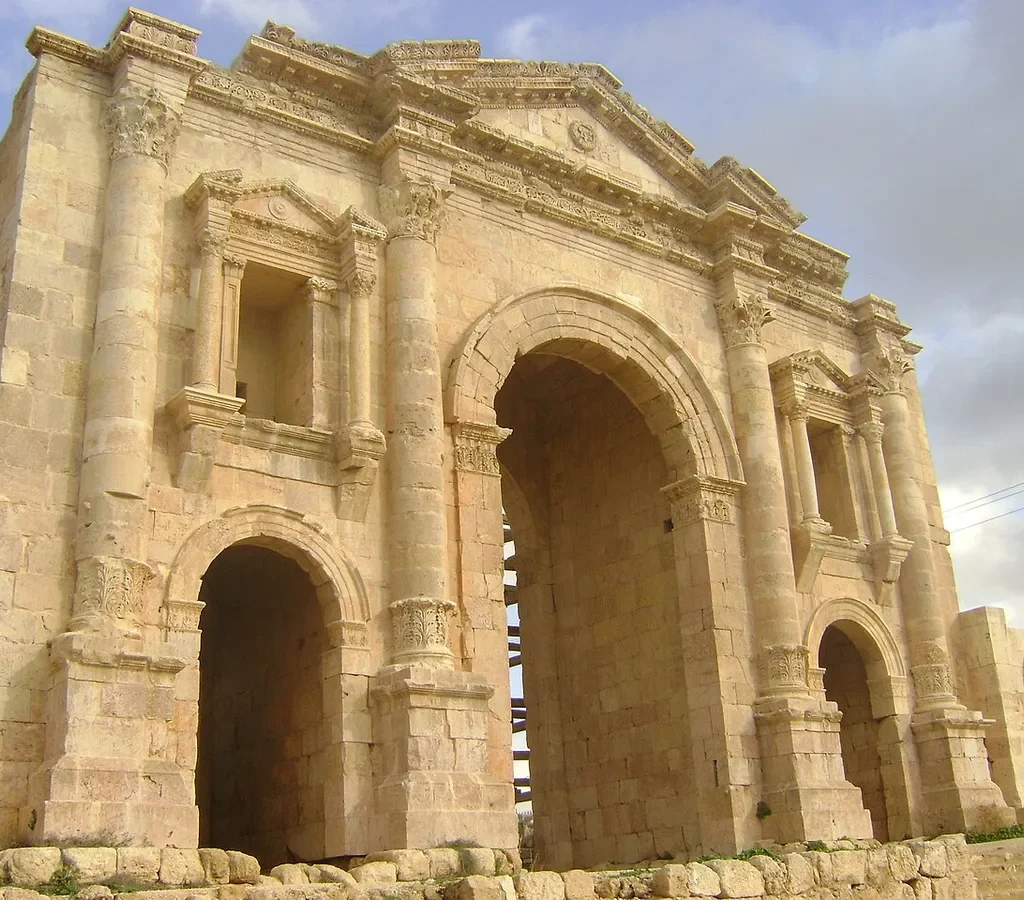
The whole argument of this guide fits in one table. Read across for a region’s year, and notice how the rows peak at different times — that mismatch is why “when should I go” has no honest one-line answer in Jordan.
| Region | Best window | Winter character | Summer character |
|---|---|---|---|
| Amman and the north | Apr–May and Sep–Oct | Cold, wet, occasionally snowy — the empty-ruins season | Warm dry days, pleasant evenings; sightseeing in comfort |
| Petra and the mountains | Mar–May and Oct–Nov | Cold and wet; the Siq can close on flood days | Hot at midday on exposed climbs; mornings carry the visit |
| Wadi Rum | Mar–Apr and Oct–Nov | Mild sunny days, nights near freezing — camp heating matters | Fierce midday heat, warm nights; tours run at the day’s edges |
| Aqaba and the Red Sea | Oct–Apr for mild air; sea swimmable all year | Jordan’s warm escape — beach weather while Amman shivers | The full heat — 37°C afternoons, a bath-warm sea |
| The Dead Sea | Oct–Apr | The warmest winter shore in the country | The hottest place in Jordan — float early or late, hide at noon |
| The hiking country (Dana) | Mar–May and Sep–Nov | Cold, wet trails; the canyon season is shut | High trails possible early; low wadis dangerous in flash floods and heat |
Two habits make the table useful rather than decorative. First, plan by your most demanding stop, not your arrival city — a trip that ends with a night in a Rum camp should be timed by Rum’s night temperatures, even if it begins in mild Amman, because the desert night is the least forgiving appointment on any Jordanian route. Second, treat the hinges as their own seasons: early March behaves like winter at Petra and like spring at Aqaba; late October is autumn in the highlands and still high summer at the Dead Sea. The travellers who get Jordan wrong are rarely wrong by a season — they are wrong by a fortnight, at the hinge, or by a thousand metres of elevation they forgot to count.
Spring – March to May
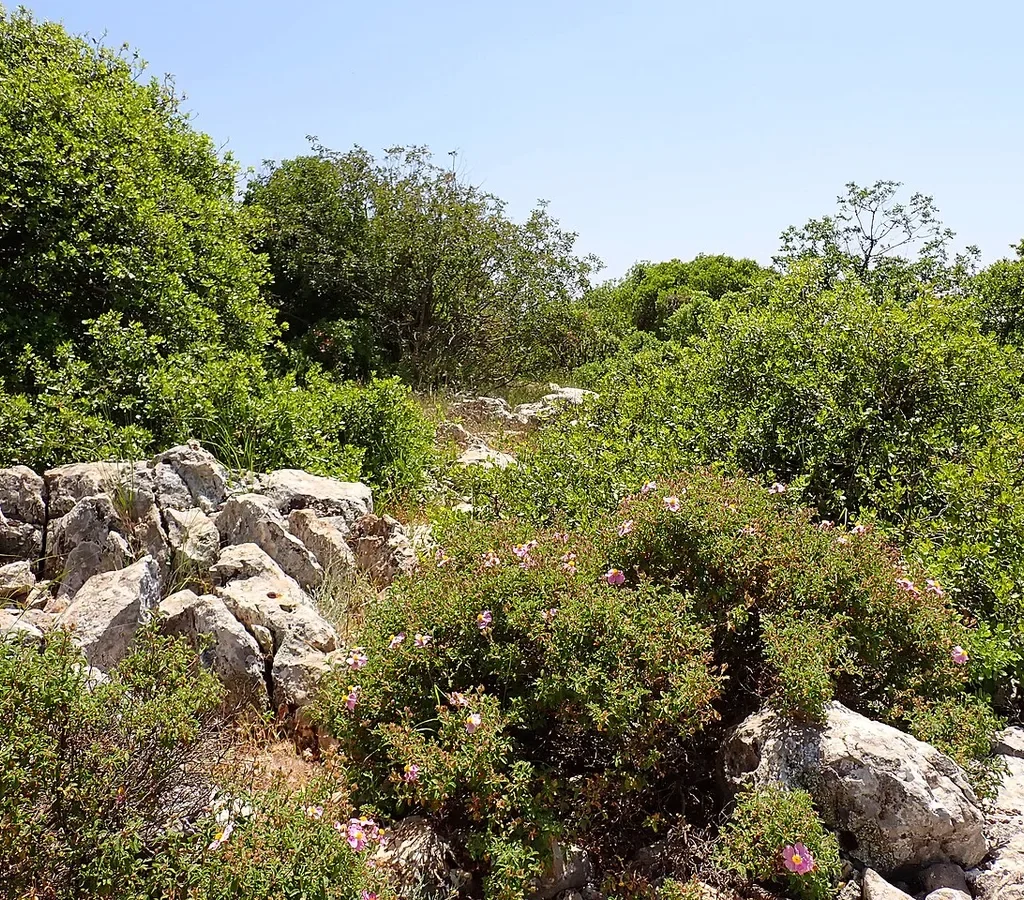
Spring is the season Jordan’s reputation is built on, and the reputation is earned in stages. March is the hinge and should be planned as one — Amman’s average March high is only around 18°C with the tail of the rains still passing, Petra is shaking off a winter whose nights ran close to freezing, and the high trails are muddy before they are glorious. By April the country has turned: Amman averages around 22 to 23°C by day, Wadi Musa — the station for Petra — around 22°C, the northern hills are at their greenest, and the wildflower season that carpets the Ajloun and Dana highlands runs at full strength, black irises — Jordan’s national flower — among them. May is the crescendo, the month in which the most regions agree at once: Amman and Petra both in the high twenties by day, the desert warm without being dangerous, and the Aqaba sea climbing through the mid-twenties.
The season’s fine print is written in wind and water rather than cold. Spring is not yet the dry season in the highlands — at Wadi Musa the rains tail off through March and April rather than stopping on a date — and the khamsin, the hot, dusty desert wind, can push a still April week into a gritty, furnace-like few days at any point in the season; it is the one spring event no calendar can schedule, and the defence is a flexible itinerary rather than a different month. Hold one caution against the brochure version: April is peak season in the full sense, and Petra’s Siq is at its most crowded in the late morning, because the famous combination — mild ruins, green hills, warm desert — is famous precisely because it works. Take spring in the order the season travels — the north in March, the whole map in April and May — and it is the finest quarter of the Jordanian year.
Summer – June to August
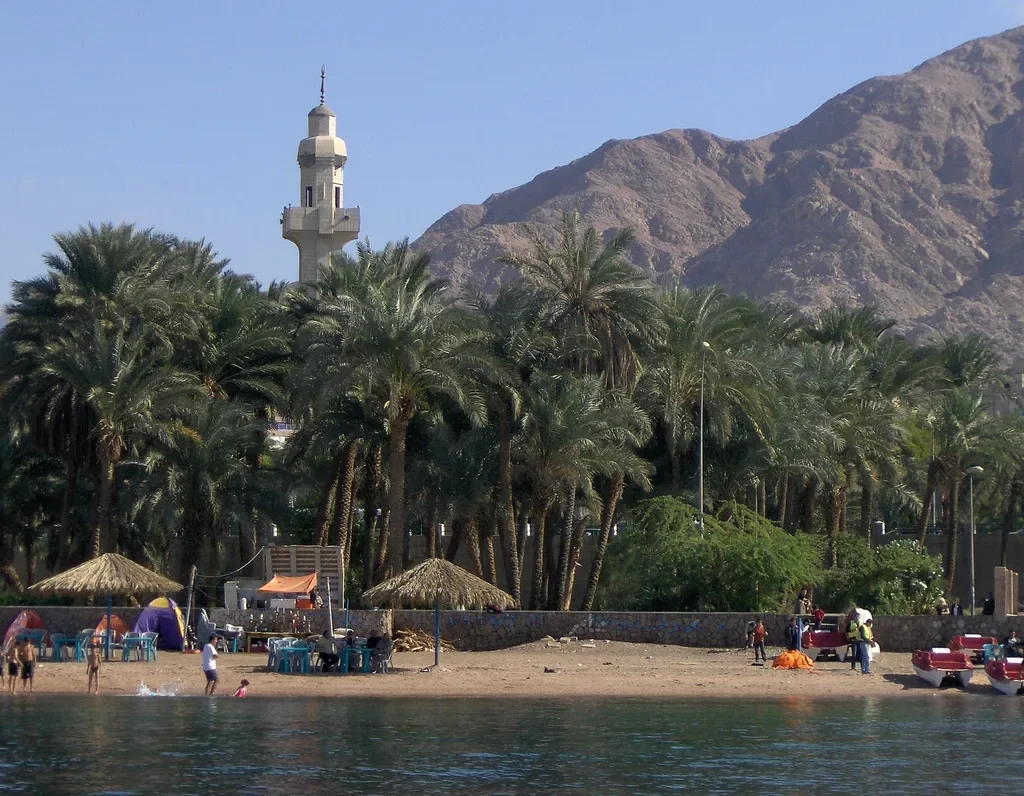
Summer splits Jordan into two countries, and you must choose which one you are visiting. The first is the coast and the water — Aqaba in its full season, when the Gulf is at its warmest, the dive boats run daily, and the town’s life moves to the beach and the evening corniche. A Red Sea trip in July is not a compromise at all: it is the trip the season was designed for, taken by Jordanians and Gulf visitors as much as by foreigners. The second summer country is everywhere above sea level at midday, and it asks respect. Amman’s average highs sit around 32 to 33°C through July and August — hot, but with low humidity and evenings that cool properly, which is why residents call their summer kind. Petra runs a little lower on the thermometer and much harsher in effect, because the site is a full day of exposed walking and climbing with little shade: a July Monastery climb at noon is a serious undertaking.
The desert is summer’s sharpest lesson, and it is a lesson about the clock rather than the calendar. Wadi Rum’s July days average around 35°C, which empties the valley floor by late morning — tours run at dawn and again towards sunset — but its nights fall back towards 20°C, and a summer night in a Rum camp, under some of the darkest skies in the region, is a genuinely good one; the Perseid meteor shower in August is the desert’s own summer festival. The Dead Sea is the extreme case: the hottest shore in the country, summer afternoons around 40°C, and a summer float belongs at the day’s edges, not its centre. Summer in Jordan is not a warning. It is a sorting exercise — water and evenings in the low places, early starts and shade discipline in the high ones.
Autumn – September to November
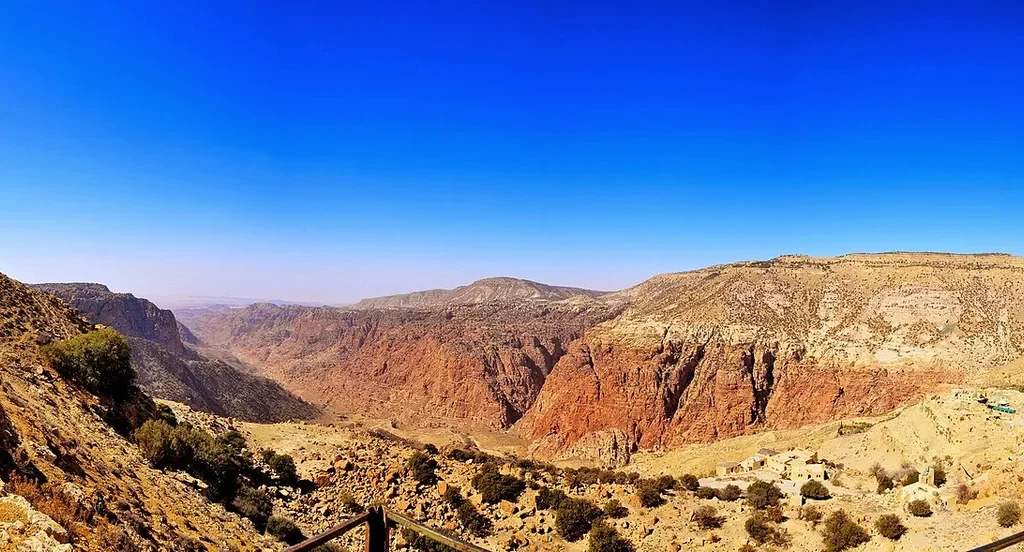
Autumn is the connoisseur’s season, and its secret is that it arrives in stages, from the top of the country down. September begins as summer’s tail — Amman still averages around 30°C by day, Aqaba around 34°C — but the character has already changed: the August crowds have gone home, the light has softened, and the seas are at their stored-heat best. Through October the whole country reaches the balance spring promised: Amman around 25 to 26°C, Petra around 24°C with its finest walking light, the desert days warm and its nights merely cool, and the Red Sea still around 28°C — the one month in which a hiker and a swimmer can share an itinerary without either conceding anything. October is the true second peak, and it fills accordingly.
The season’s working trips are its own. Autumn is the prime hiking quarter — the Dana trails and the Jordan Trail’s high sections come into their own from late September, and the canyon country is at its safest and most beautiful before the winter rains reload the flood risk. It is also harvest season in the north, olives coming in around Ajloun and Jerash, and the month-by-month traveller should note what autumn does not do: it does not cool the Dead Sea quickly. November at the shore is still warm while November in Amman, with highs back under 20°C and the first real rains, is plainly early winter.
November is the hinge, and it should be planned as one. The rains return to the highlands — at Wadi Musa, November is wetter than October and the wettest quarter of the year is opening — the days shorten, Petra’s mornings turn cold, and the first flash-flood closures of the season become possible in any wadi. None of this ruins a November trip; it reorders it. Aqaba and the Dead Sea keep a mild, swimmable tail that the highlands have already surrendered, and the month rewards the traveller who treats it as early winter in the north and late autumn in the south rather than as a single national season.
Winter – December to February
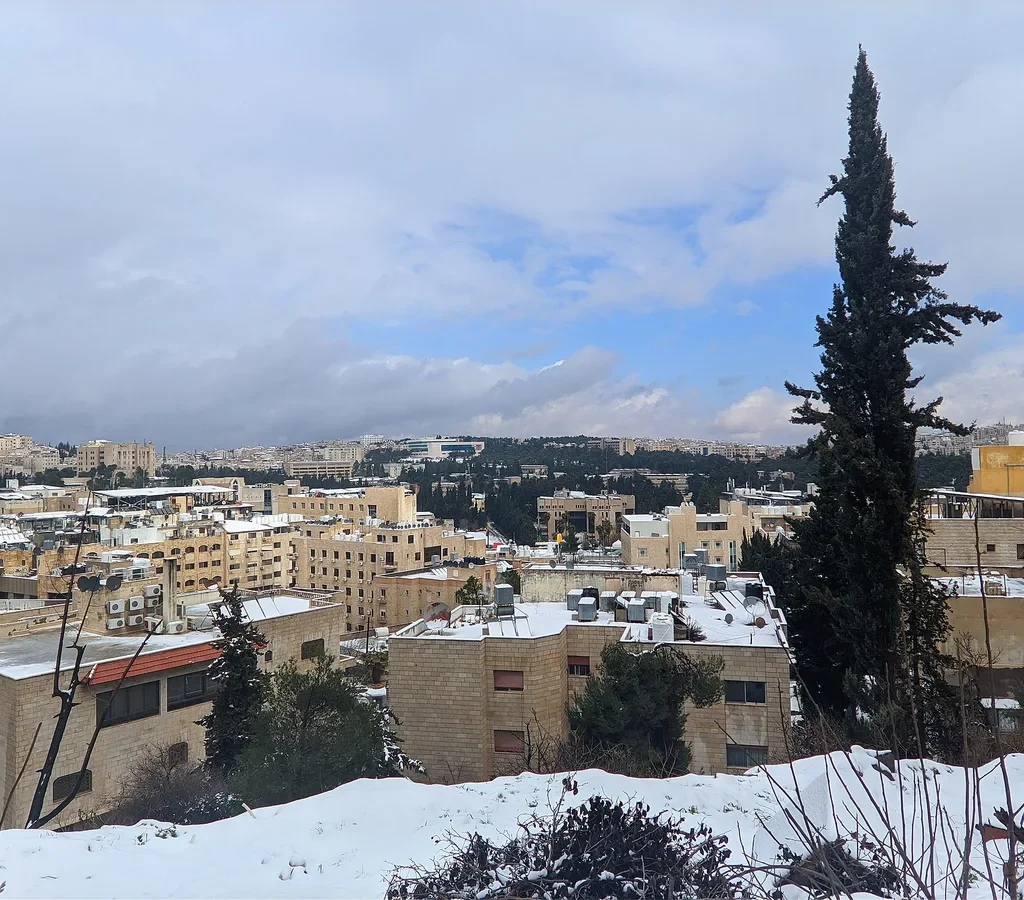
Winter is the season the other guides apologise for, and it is the season that most needs a guide at all — because winter in Jordan is three different trips wearing one name, and the difference between a good and a bad one is entirely a matter of aim. Aim high, at the classic loop, and winter gives you the coldest version of it: Amman’s average January high is around 12°C with its rainiest weeks of the year, Petra’s days run a degree or two lower with nights close to freezing, Jerash stands magnificent and nearly empty in the rain-washed light, and snow closes over the highlands a few times in a typical season. For a traveller who wants the ruins to themselves and packs like a northerner, that highland winter is a legitimate, atmospheric trip — but it is a cold one, and no table of averages should talk you out of believing it.
Aim low, and winter is Jordan’s warmest secret. The Dead Sea shore in January is the mildest address in the country, and Aqaba replays the trick at the end of the King’s Highway — average January highs around 18°C, sunshine the rule rather than the exception, and sea water warmer than the Amman air you escaped. The bargain is real: low-season rates, emptier sights, and a Red Sea that Jordanians themselves drive south to enjoy. But the season carries the one serious weather warning in this entire guide, and it applies exactly in the months when the low country tempts you.
That warning is water, and it deserves its own paragraph because it is the most consequential fact in this article. Jordan’s rain falls almost entirely between November and March, and in a dry country it does not soak in — it runs. A storm over hills you cannot see sends a wall of water down wadis that were dry at breakfast, and the slot canyons that make Jordan famous — the Siq at Petra, Wadi Mujib, the tributary canyons of Dana and Rum — are exactly the funnels it runs through. Petra’s authorities close the Siq and the whole site during heavy rain, and the closures are not theatre: in December 2022 more than a thousand visitors were evacuated as floodwater came through the gorge. Winter travel here is therefore planned with a spare day, not against the odds — check the forecast before any canyon day, obey a closed gate absolutely, and never enter a narrow wadi under a sky that is raining anywhere upstream. Get that one discipline right, and winter becomes what it should be in Jordan: the quiet season, taken on its own honest terms.
Amman and the North – The Highland Calendar
Amman is the altitude the whole country is measured from, and its calendar is the highland one — the coldest winters, the mildest summers and the sharpest seasons of any Jordanian base. The capital sits around a thousand metres across its hills, and the Amman station’s long-term averages tell the story plainly: January highs near 12°C, April around 22 to 23°C, August around 32 to 33°C with dry air and evenings that cool, October back near 25 to 26°C. The practical translation is that Amman is walkable in comfort for most of the year, brutally honest in winter — the Citadel and the Roman Theatre in a cold wind are an experience, and the city wears it well, all soup, heaters and café windows — and genuinely pleasant in midsummer evenings, when Jordanians reclaim their own streets. The one permanent condition is the hills themselves: Amman punishes the under-dressed in January and the under-planned at any time of year, because everything here involves an incline.
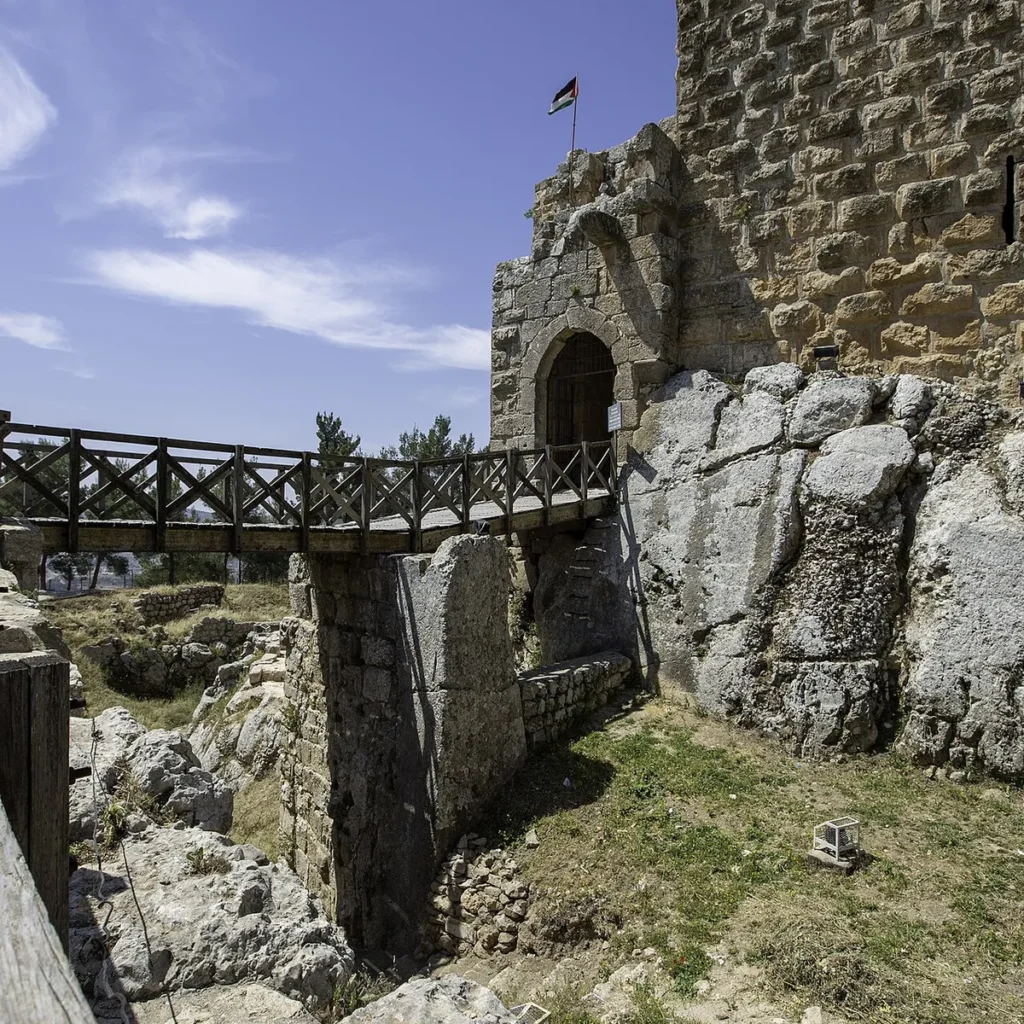
North of the capital, the calendar tilts greener. Jerash — the Roman city an hour away — is at its photographic best in the spring weeks when grass and wildflowers colonise the ruins, and at its emptiest on a winter weekday; its great summer event is the Jerash Festival of culture and arts, held in the ancient theatres in the summer season. Ajloun, higher again among the oak woods of the Forest Reserve, is the north’s spring and autumn address — its castle, built to watch the Crusader roads, stands over the greenest landscape in Jordan, at full strength from March to May and in colour again in October and November. Umm Qais, at the far northern edge above the Jordan Valley, adds altitude’s reward: the valley floor below runs several degrees warmer, and on a clear spring or autumn day the view is the finest in the north. Plan the north the way the locals time it — highlands in spring and autumn, a festival exception in summer, and Jerash in winter only for those who came specifically to have it to themselves.
Petra – Timing the Rose-Red City
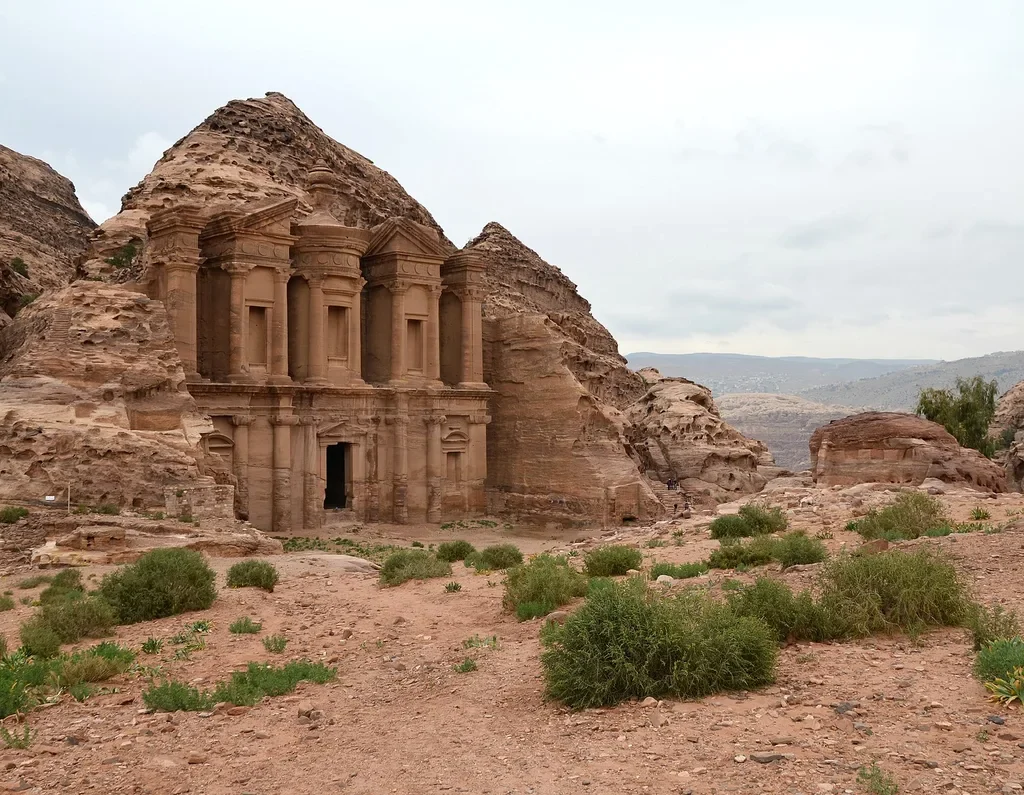
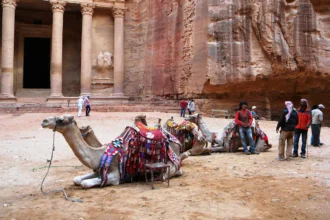
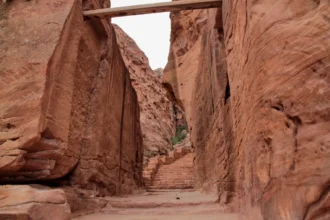
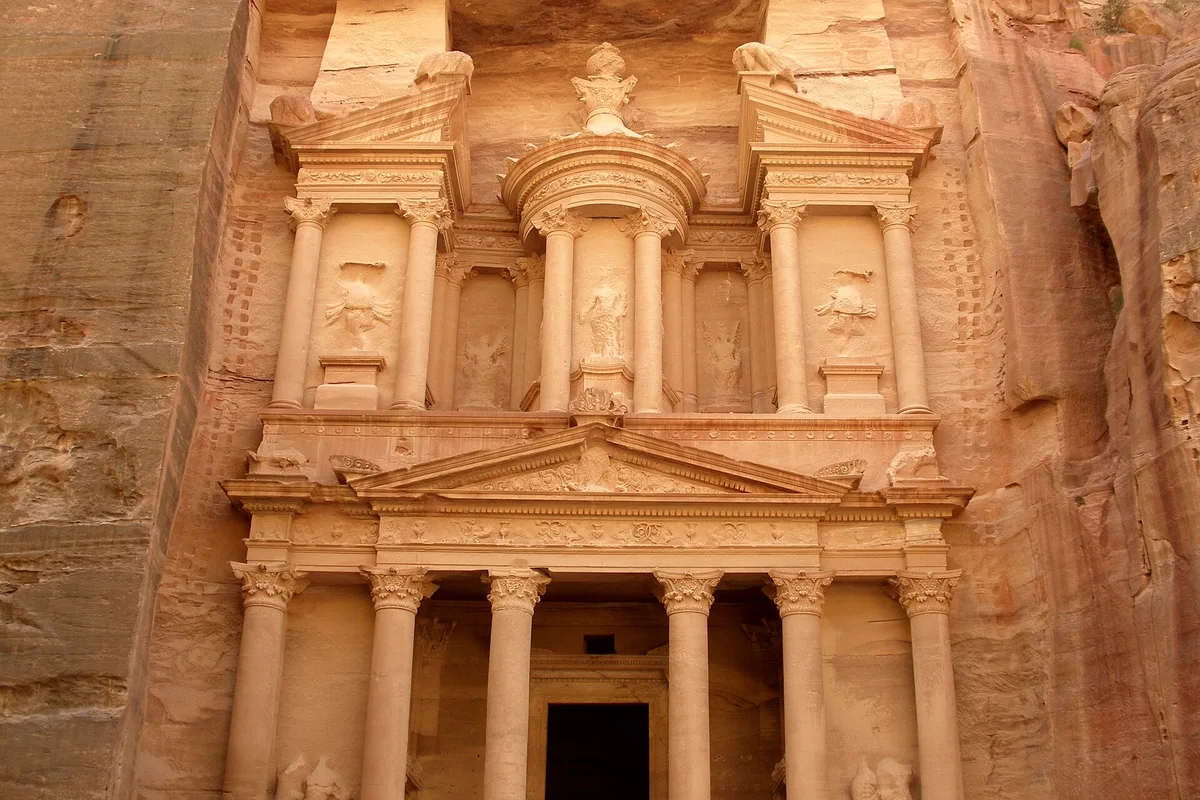
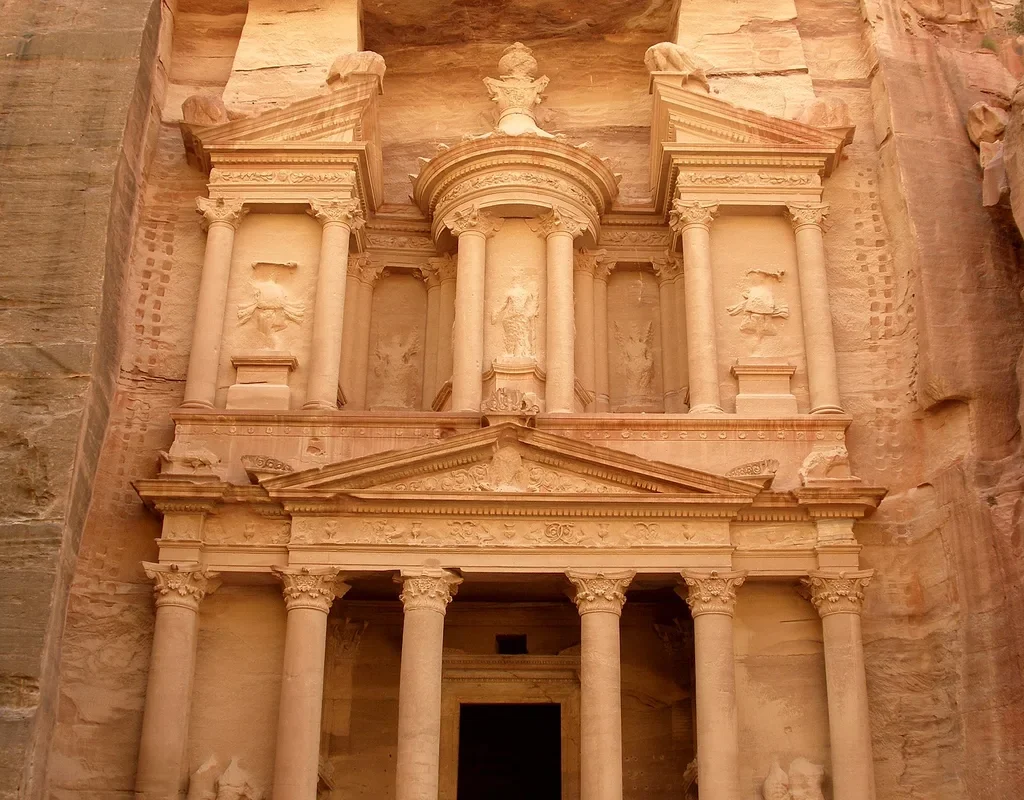
Petra is where most Jordan dates are actually decided, and its calendar is ruled by two facts: altitude and walking. Wadi Musa, the town whose station normals stand in for the site, sits in mountains around 900 metres high, so Petra’s year runs cooler than its desert image suggests — January highs around 11 to 12°C, April around 22°C, May around 26°C, July and August around 31°C, October around 24°C, with winter nights close to freezing and a short wet season concentrated from December to March. But the thermometer understates the place, because Petra is not looked at, it is walked: the Siq, the Street of Facades, the Royal Tombs and the 800-odd steps up to the Monastery make a full site day a hike of several hours, mostly without shade. Every season’s advice follows from that one fact. Spring and autumn — March to May, October into November — are the sweet spot not because the stones look better but because the walking does: April’s 22°C is precisely the temperature at which a six-hour site day stays a pleasure from gate to Monastery.
Summer at Petra is manageable only with early starts — through the Siq in the quiet before the day-trippers arrive, the Monastery climbed in the morning, the middle of the day surrendered to shade — and winter asks the opposite discipline, of layers and timing, plus the flood rule that governs everything in this guide: Petra closes in heavy rain, Siq first, because the gorge that admits you is the same one that drains the plateau, and the December 2022 evacuation is the standing proof that the rule is earned. The honest tactic for a winter or early-spring visit is a spare day in Wadi Musa, held against a closure, so that a shut gate rearranges the trip instead of amputating it. Our full Petra travel guide walks the routes, the Monastery climb and the Back Door trail in detail.
Crowds have their own calendar, and it does not perfectly follow the weather. Petra’s busiest weeks cluster in April and October and around the European school holidays, with the late-morning Siq at its most congested whenever the weather is at its best — the peace dividend and the temperature dividend pull in opposite directions, and winter or high summer buy you the emptiest site at the price of the hardest walking. Two constants hold in every month: the Treasury glows best in the morning light, and the Monastery plateau earns its sunset. Time the day by the light, the season by your legs, and the itinerary by the forecast — in that order.
Wadi Rum – Desert Days, Cold Nights
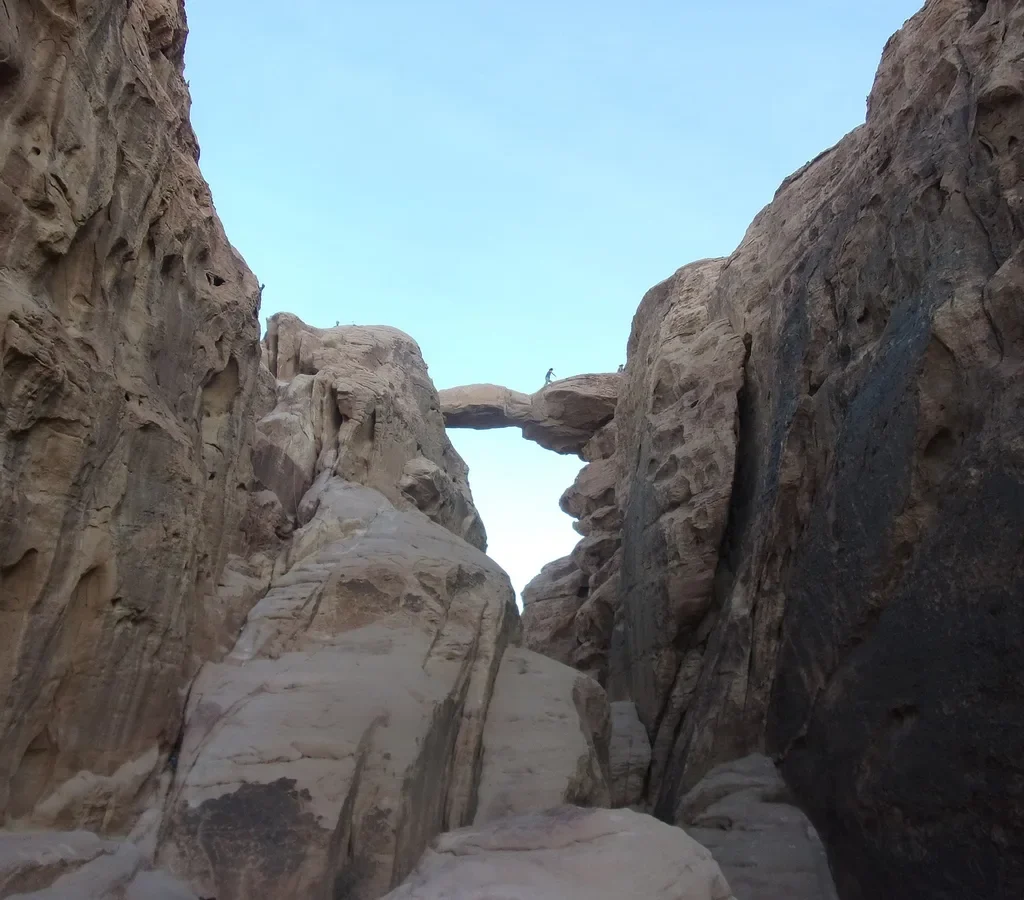
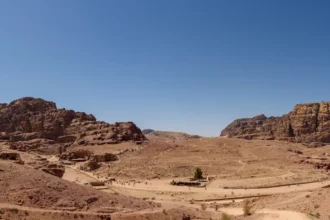
Wadi Rum inverts every other destination in this guide: the day is rarely the problem and the night is always the question. The protected area stands on a high desert floor — the village sits at roughly 950 metres — and the long-term averages published for the Rum area run January days around 14 to 15°C with nights down near 4°C, July days around 35°C with nights near 20°C, and a typical day-night swing of ten degrees or more in every season. That swing is the whole calendar. In winter, a Rum day is made for travel — clear, cool, bright, the sandstone glowing — and the question is purely whether your camp handles a night flirting with freezing: the good Bedouin camps build for it with heavy blankets and fire-heated tents, the romance of the desert night survives the temperature if the bedding does, and a January night under Rum’s stars in proper layers is one of the great cold nights of travel. In summer the equation flips: the night is warm and the stars are at their August best, and the midday floor is the hazard to be scheduled around, not braved.
Spring and autumn remain the natural Rum seasons — March to April and October to November, warm days against merely cool nights, the balance a tent was designed for — and the camp calendar has two movable adjustments worth knowing. Ramadan changes the rhythm without closing the desert: tours run, but the working day shifts towards the evening, and a camp night ending in a shared iftar after sunset is a cultural experience many travellers rate above the scenery. The flood rule applies here too, briefly: Rum’s wide floor is not a slot canyon, but the narrow tributary gorges — Khazali’s Siq among them — are, and a desert guide who declines a canyon on a winter rain day is exercising the same judgement as Petra’s gatekeepers. Judge Rum by its thermometer at 2 a.m., not 2 p.m., and you will choose the right month — and pack for the one you chose.
Aqaba and the Red Sea – The Winter Sun Coast
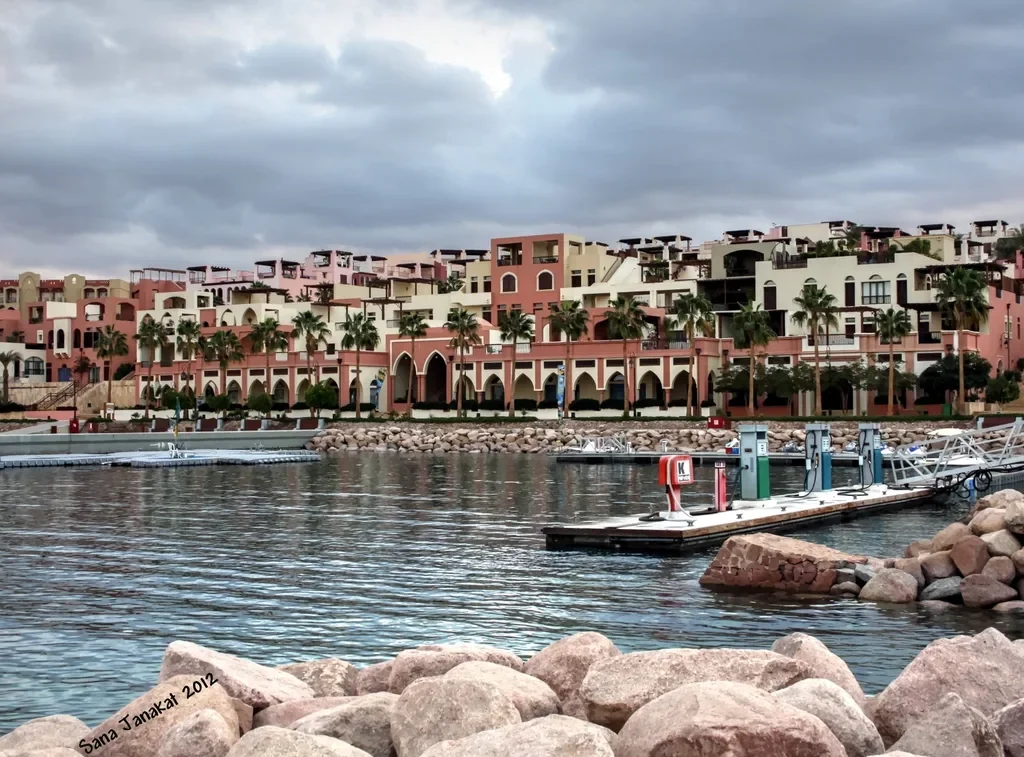
Aqaba is the exception that proves Jordan’s elevation rule, because it breaks the calendar everyone else follows. Jordan’s only seaport sits at the head of its gulf in the far south, sheltered and low, and its station averages are a different country’s: January highs around 18°C, February around 20°C, April around 29°C, July around 37°C, November still around 25°C, with roughly 30 millimetres of rain in an entire average year. Which is why Aqaba’s prime season runs in reverse to Petra’s — October to April is the coast’s sweet stretch, with February and March its mildest, emptiest weeks — and why the town fills with Jordanian families escaping the highland winter while foreign visitors are still reading guides that call January low season. For a winter-sun break on a classic loop, Aqaba is not the afterthought at the end of the road; it is where the same week redeems itself.
The water writes the second half of the story, and it is more forgiving than visitors expect. The Gulf of Aqaba is deep, sheltered and slow to cool: its long-term average water temperatures bottom out around 22 to 23°C in February and March — warmer, that is, than an Amman January afternoon — climb through 25°C in May, peak near 30°C in August, and are still around 26 to 28°C through October and November, when the autumn swimmer gets summer water with autumn air. Divers run the reefs and wrecks all year on that basis, in a wetsuit in winter and barely one in September. Summer at Aqaba is the one genuinely fierce season on the coast — 37°C afternoons are for the water and the shade, and the town’s day is rebuilt around them — and two demand spikes deserve a line: the Eid holidays send a domestic surge down the highway to Aqaba and the Dead Sea, when the coast is at its busiest regardless of the month’s place in the foreign season, and August mixes peak water with peak crowds. Take Aqaba for its winter sun and its autumn water, and it is rarely the compromise on a Jordan trip; it is often the part people rebook.
The Dead Sea – The Lowest Calendar in the Country
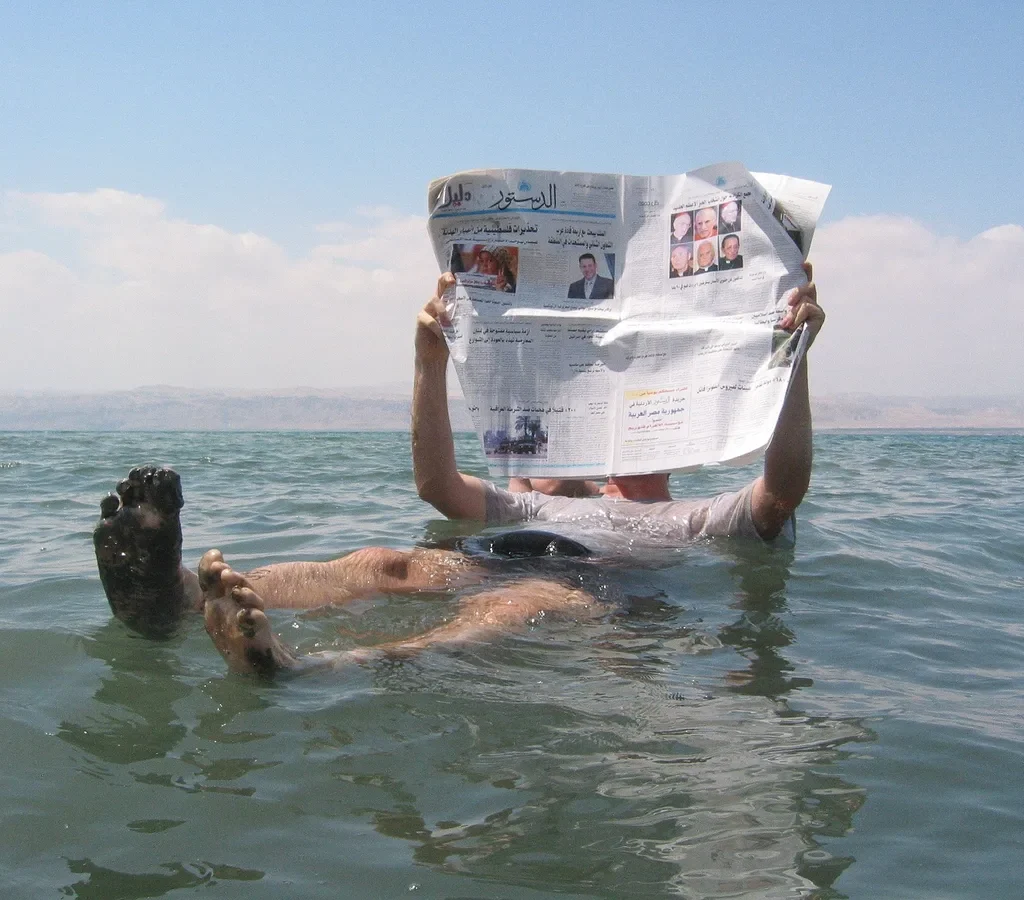
The Dead Sea shore is the lowest land on earth — more than 400 metres below sea level — and its calendar is the country’s warm extreme, running several degrees ahead of Amman on any given day and roughly ten in the depths of winter. Where the capital averages a January high near 12°C, the shore sits in the low twenties: the one address on a highland itinerary where a January float is a plan rather than a stunt, where the mud-and-salt ritual happens in a t-shirt while the hills behind you carry snow. October to April is its long prime, and its single best trick is the winter add-on — a Dead Sea night or two bolted onto a cold-season classic loop converts the trip’s character, a warm shore between the cold ruins, and resort occupancy reflects it: the shore’s busiest foreign weeks are the very ones when Amman is at its bleakest.
Summer inverts the bargain completely, and this is the one place in Jordan where the strong word is warranted: avoid the middle of the day entirely. The shore in July and August is the hottest ground in the country — afternoons around 40°C, heat radiating off salt and tarmac, a sea so dense and warm it stops pretending to cool you — and the summer float belongs to the first and last hours of light, with the middle surrendered to the pool, the spa and the shade the resorts are built around. The light is the shore’s other constant: the thick, filtered air at this depth is famously gentle, and the sunsets across to the Judaean hills are the evening event in every month. Add the shore for its season-proof warmth in winter and its edges-of-day ritual in summer — and know that Mujib’s canyon, the shore’s neighbour, follows a calendar of its own, ruled by flood rather than heat, in the hiking section below.
Hiking – Dana, the Jordan Trail and the Canyon Season
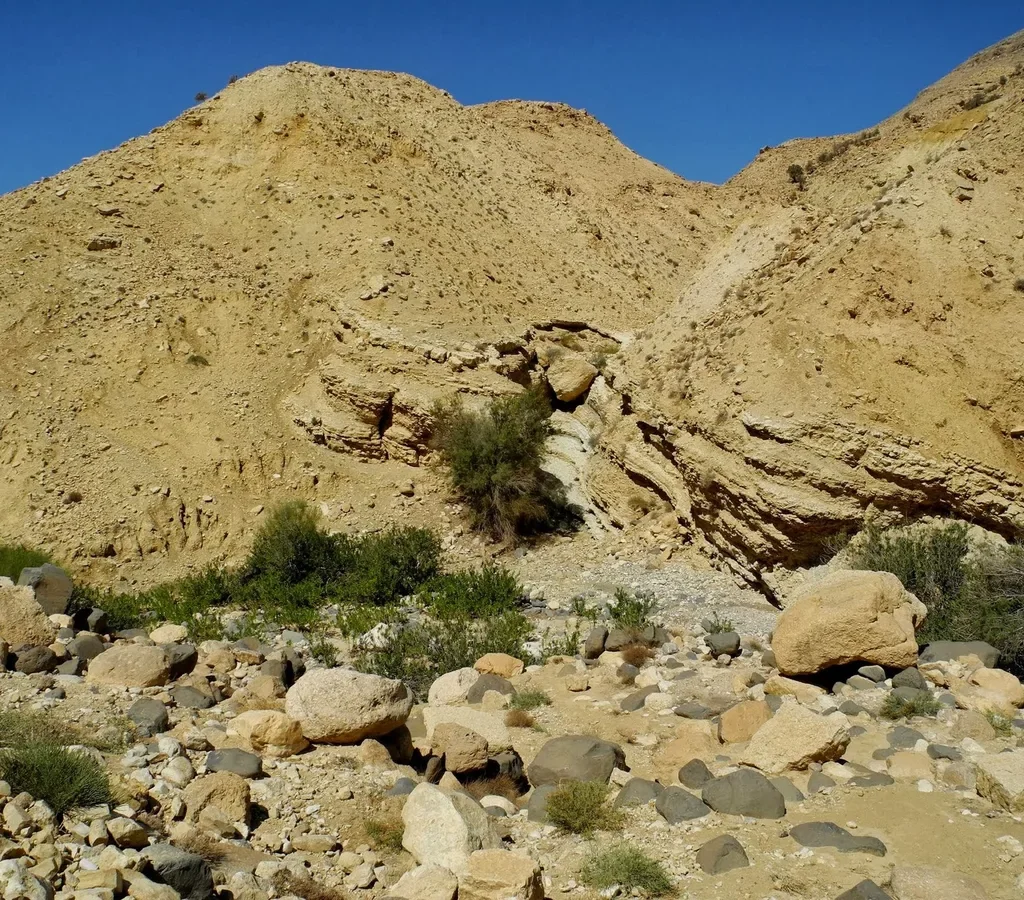
Jordan is quietly one of the Middle East’s great walking countries, and its trails keep two calendars at once, divided by the same elevation line as everything else in this guide. The high trails — the Dana highlands, where the reserve drops from cool rim villages through four climate zones to the Wadi Araba floor, and the Jordan Trail’s long stages between Dana and Petra — belong to spring and autumn: March to May for the wildflowers and running springs, late September to November for the cooling days and clearing air, with summer possible on the heights only in the early hours and winter a cold, muddy specialist’s choice. The Dana-to-Petra stage is the country’s signature trek, and its finest fortnight of the year is arguably late March into April, when the highlands are green, the canyon floors are alive with water, and the days are long without being hot.
The low trails keep the opposite book. Jordan’s slot canyons — Wadi Mujib above all, whose Siq Trail wades chest-deep up a sculpted gorge to a waterfall — are water trails, and water trails in a flood country have seasons set by the sky, not the thermometer. The RSCN, which manages Mujib, runs the Siq Trail in the warmer half of the year — in recent seasons roughly April to October — and closes it for the winter rains and whenever heavy weather threatens upstream; confirm the trail is open with Wild Jordan before building a day around it, and treat a closure as final. That single fact re-times the whole hiking map: the traveller who wants both the high trails and the canyon needs the hinge months — April into May, or October — when the two calendars overlap. Take the trails in their own seasons, carry the flood rule into every wadi in any month, and Jordan’s walking repays the planning more than any other part of the trip.
Choosing by Trip – Ruins, Water, Camps and Trails
Jordan trips are not variations of one trip; they are four trips sharing a road, and each has a month it was designed for. The ruins-led trip — Jerash, Amman, Petra, the castles — wants the walking weather: April into May first, October a close second, with March and November as the colder, emptier trades, and the discipline is hours rather than months: enter Petra early, climb before noon, and let the season worry about the rest. The desert trip — Wadi Rum at its centre, with Petra attached — is chosen by the night: March to April and October to November for tent nights that need a sweater rather than a strategy, winter for the traveller who packs for a cold night and gets the valley nearly alone, August only for the stargazer who accepts the midday furnace as the price of the Perseids.
The water trip runs backwards: Aqaba and the Dead Sea are winter and late-autumn properties, October to April, when their warmth is worth most against the highland cold, and a beach-weighted trip in January is a better idea in Jordan than the same trip in July. The hiking trip takes the hinge — late March to May, or October — the only windows when the high trails and the Mujib canyon season overlap. And the budget trip should notice what the weather does to demand: the deep highland winter and the fierce late summer are Jordan’s emptiest, cheapest-feeling weeks, and a traveller who aims a January or August trip at the low country — Aqaba’s sun, the Dead Sea’s shore, Petra taken at dawn — is not settling for less of Jordan. They are taking a different country from the one the April crowds came for, and on some days a better one.
Ramadan and the Eid Holidays
Ramadan moves, and any guide that prints its dates as a fixture of the calendar is setting a trap for next year’s reader. The holy month is set by the Islamic lunar calendar, which runs about eleven days shorter than the solar year — so Ramadan retreats by roughly eleven days annually, cycling through every season over a span of decades: a Ramadan that falls in the mild weeks of spring in one era will fall in high summer a few years later, and in midwinter eventually. The dates also cannot be fixed by arithmetic alone, since the month’s start is confirmed by the sighting of the new moon, which is why official dates are announced close to the time. The practical rule is therefore not a date but a habit: when your travelling year is chosen, check the official calendar and the Jordanian announcements for that year, and plan with the real month rather than a printed guess.
Inside Jordan, Ramadan changes the day’s rhythm more than its possibilities. Many Jordanians fast from dawn to sunset, government and business hours shorten, and outside the hotels and the most visited tourist areas many cafés and restaurants close through the day — while Petra, the sights and the tour operators keep working, and visitors who eat and drink discreetly away from those fasting draw no friction at all. The compensation is the evening: after the iftar meal at sunset the country comes vividly back to life, streets and cafés fill, Ramadan nights in Amman have a festival atmosphere of their own, and a desert camp’s shared iftar is a memory travellers keep. The two Eids that follow the fasts — Eid al-Fitr ending Ramadan, Eid al-Adha later in the lunar year — are the country’s great public holidays, several days each, when Jordanians travel, sights and transport run busy, and Aqaba and the Dead Sea fill with domestic holiday-makers: the finest cultural weeks of the year to be in Jordan, and the worst weeks of the year to expect a quiet beach. Treat the lunar calendar as weather of the human kind — forecast it for your year, never copy it from someone else’s.
Month by Month – The Quick Calendar
The twelve months in one pass — Amman and Aqaba highs are the long-term station averages that anchor the guide, and the verdict follows the most demanding thing a traveller usually does that month.
| Month | Amman average high | Aqaba average high | The month in one line |
|---|---|---|---|
| January | ~12°C | ~18°C | Cold highlands, possible snow; warm Dead Sea and Aqaba tail — the flood-caution month |
| February | ~14°C | ~20°C | Late winter softens in the south first; the north’s emptiest ruins |
| March | ~18°C | ~24°C | The hinge — wildflowers begin, tails of rain remain; plan the north now |
| April | ~22°C | ~29°C | Prime month nearly everywhere; peak crowds at Petra |
| May | ~27°C | ~33°C | Spring’s crescendo — warm desert, rising sea, trails at their best |
| June | ~30°C | ~36°C | Summer sorts the map: water and evenings low, dawn starts high |
| July | ~32°C | ~37°C | Aqaba’s full season; Petra and Rum by the clock, not the calendar |
| August | ~33°C | ~37°C | The fiercest heat, the warmest sea, the Perseids over Rum |
| September | ~30°C | ~34°C | Summer’s tail — crowds gone, seas at their warmest, heat easing from the top down |
| October | ~26°C | ~30°C | The second prime — hiker and swimmer share the month; Petra fills again |
| November | ~19°C | ~25°C | The hinge back — first rains in the north, a swimmable tail in the south |
| December | ~14°C | ~20°C | Winter’s shape is set: cold ruins, warm shore, canyon discipline |
Read the table the way the guide has taught you to read the country — by rows of elevation, not columns of months. The Aqaba column never drops to a temperature that stops a beach day; the Amman column never promises a January that behaves like spring; and the two months the whole table keeps circling — April and October — earn their fame honestly, as the moments when the staircase of climates briefly agrees with itself.
Frequently Asked Questions
What is the absolute best month to visit Jordan?
For the classic mixed trip — Amman, Jerash, Petra, Wadi Rum — April and October tie at the top, and the tie is genuine: April brings the green north, the wildflowers and the warmer desert nights, October brings the stored summer heat in the sea and the finest hiking light. If a trip leans on Aqaba or the Dead Sea, shade the answer towards October and the winter side; if it leans on the northern hills and the trails, towards April. Everything else is a trade between crowd, cost and the version of Jordan you would rather meet.
Is Jordan too hot in summer?
It depends entirely on altitude, which is this guide’s whole argument. Aqaba and the Dead Sea in July and August are fiercely hot — afternoons in the high thirties and around 40°C respectively — and are planned around water and shade. Amman, at around 32 to 33°C with dry air and cooling evenings, is more manageable than its latitude suggests, and Petra and Wadi Rum are workable with dawn starts, midday shade and evenings in charge of the day. Summer Jordan is not impossible; it is scheduled.
Can you visit Petra in winter?
Yes, and many travellers prefer it — the site is emptier, the light is dramatic, and the Treasury in a cold clear morning is unforgettable. The costs are real: days around 11 to 12°C, nights near freezing, and the flood rule, under which the site and the Siq close during heavy rain; December 2022’s evacuation of more than a thousand visitors is the standing example. Build a spare day into a winter Petra stay, dress for a mountain town, and a closure becomes a rearrangement rather than a ruined trip.
When is the rainy season in Jordan, and does it matter?
Jordan’s rain is concentrated between November and March, and it matters less for the rain itself than for what it does in a dry landscape: water runs off rather than soaking in, and flash floods are the real winter hazard in wadis and slot canyons. Follow the forecast, treat closures as final, never enter a narrow canyon while rain is falling anywhere upstream, and the wet season becomes the quiet, green-tinged backdrop to a low-season trip rather than a reason to avoid one.
What is the sea temperature at Aqaba, and can you swim in winter?
The Gulf of Aqaba is one of the most forgiving seas in the region: its long-term averages bottom out around 22 to 23°C in February and March, sit near 30°C in August and hold 26 to 28°C through October and November. Divers and swimmers use it all year — in mid-winter the sea is warmer than the air in Amman — so the winter-swimming question answers itself: yes, at Aqaba, in the same week that Petra is wearing a coat.
Does Ramadan close Jordan to visitors?
No. The sights stay open, tours run, and hotels operate as normal, with arrangements for their guests; outside the tourist circuit many restaurants close during fasting hours, public hours shorten, and a little discretion about eating and drinking in public is appreciated. What Ramadan adds is its evenings — the iftar hour, the lit streets, the late cafés — and what the traveller must add is a check of the official calendar for their year, because the month moves about eleven days earlier annually and no printed date ages well.
The Short Version
April and October, if your dates are free — that is the honest core of it, and everything in this guide exists to explain why it is true, where it bends and who it does not apply to. Those are the months when Jordan’s staircase of climates briefly agrees: Petra’s walking weather, Amman’s mild hills, a desert whose nights merely ask for a layer, a sea that has kept its warmth, and trails open from the Dana rim to the Mujib waterline. Take them if you can, book Petra’s days early if you do, and spend the saved planning effort on choosing the good version of whichever month you actually get.
Because Jordan’s real lesson is that the second-best months are somebody’s best. The January traveller who skips the snows of Amman for a Dead Sea float and an Aqaba swim, the August traveller who trades midday Petra for the dawn Siq and a midnight sky in Rum, the November hiker who walks Dana as the first rains green the hills — none of them is on a consolation trip. Choose the season, then choose the height, then check the week itself with the Jordan Meteorological Department and the official Visit Jordan site before you set a canyon day in stone. And when the dates are fixed, plan the sights with our Petra travel guide — Jordan rewards the traveller who plans by elevation.