Coronado Beach, California: Island, Village & Beach Guide
Coronado Beach, California, is the rare Southern California beach that feels both grand and unhurried: a wide, mica-flecked stretch of sand in front of a red-roofed Victorian hotel, a flat village you can cross by bike, and a bay side that is completely different from the ocean side. It is not technically an island — it is a tied island, joined to the mainland by the Silver Strand — but the ferry ride, the bridge, and the car-free village rhythm make it feel like one. That island feeling is not just a marketing phrase; it shapes how a day here actually works. You arrive by bridge or by boat, you slow down because the village is flat and compact, and you spend the day moving between three distinct settings that are all within easy reach: the wide ocean beach on the west, the historic hotel and village in the middle, and the calm bay shore on the east. Few Southern California beaches offer that combination without a long drive or a complicated plan, and Coronado’s appeal is precisely that it does not ask you to choose between them. Families can spend the morning on open sand, walk to lunch on Orange Avenue, ride a bike along the bay in the afternoon, and finish with a ferry ride and a skyline view, all without getting back into a car. This guide covers the beach itself first, then the hotel, the village, biking, water activities, and family tips, so a day trip from San Diego and a longer stay both work. It keeps practical details that change by season — parking, ferry times, and hotel public-area access — as checks rather than fixed promises, so check the official site before visiting and confirm prices before booking.
What makes Coronado different from other San Diego beaches is the balance between its resort history and its everyday village life, and understanding that balance helps you plan a better day. The beach is the main event, but it is framed by the Hotel del Coronado, one of the great Victorian seaside hotels in the United States, and by a village that is genuinely lived in, with shops, cafes, a theatre, and a park that residents use every day. At the northern end, Naval Air Station North Island adds a working military presence, a reminder that Coronado has never been only a resort. The result is a place that feels polished without feeling like a theme park: the hotel is historic rather than newly built to look historic, the village streets are walkable rather than car-dominated, and the beach itself is wide enough that even on a busy day you can walk a little further for space. That width matters, because it changes the whole beach experience. You are not squeezed onto a narrow strip between a road and the surf; you have room to spread out, to walk for a mile or more, to play, and to watch the light change over the ocean. This guide therefore treats each part of Coronado in its own right — beach, hotel, village, biking, water, and family planning — with what it is, what to look for, and how to fit it into a day, so you can shape a visit that suits a family, a couple, a cycling group, or a solo walker, rather than following a single fixed route, and it leaves room for weather, crowds, and the simple pleasure of lingering on the sand or in the village.
At a Glance
| Plan this first | What to know |
|---|---|
| Best for | Families, walkers, cyclists, and anyone who wants a classic beach without a long drive from San Diego |
| How long | Half a day for beach and village; a full day if you add biking, the bay side, and a hotel visit |
| Getting there | Coronado Bridge from San Diego, passenger ferry to Coronado Ferry Landing, or bus Route 901 — check the official site before visiting for current times |
| Getting around | Walk or bike; the village is flat and compact, and the Silver Strand Bikeway runs south toward Imperial Beach |
| Check before you go | Parking, ferry times, and hotel public-area access change by season — check the official site before visiting |
A Short History: From Resort Gamble to the Crown City
Coronado was purchased by investors in 1885 with the intention of creating a resort community, and its crown jewel followed almost immediately. The Hotel del Coronado was built in 1888 by Elisha Babcock and H. L. Story, who dreamed of a seaside resort that would be “the talk of the Western world.” That ambition explains the hotel’s grand scale: a wooden Victorian structure, red roofs, and towers visible from beach and bay. It is now a National Historic Landmark, famous as a host to presidents, royalty, and film stars, and as a filming location for Some Like It Hot, and that fame is part of the visit: you are not just looking at a handsome old hotel, you are looking at a building that helped define what an American seaside resort could be. Around it grew the Village: Orange Avenue shops and cafes, Spreckels Park, and handsome homes within a few flat blocks of beach and bay. That growth was deliberate, because a resort needs more than a hotel; it needs streets to stroll, places to eat, and public spaces where visitors and residents mix. Later, the Coronado Bridge, opened in 1969, and the ferry made the “island” far easier to reach, while Naval Air Station North Island at the northern end kept a working military presence alongside the resort town. That mix — resort history, village life, and naval history — is still what makes Coronado feel distinct from other San Diego beaches, and it is worth keeping in mind as you walk, because the hotel, the village, and the naval base are not separate attractions but layers of the same place. See Compass’s Coronado neighbourhood guide and Luxury Travel Magazine’s Hotel del Coronado profile for more on that history, and use them to deepen, rather than replace, what you see on the ground.
The nickname “Crown City” fits Coronado because the town was planned as a resort from the start, rather than growing up by accident around a harbour or a railway station, and that planned origin still shows in its layout. The streets are flat and walkable, the village centre sits within easy reach of both beach and bay, and the hotel anchors the ocean side in a way that gives the whole town a centre of gravity. That is different from many beach towns where the beach is the only centre and everything else is scattered along a highway. In Coronado, the historic core, the village, and the beach work together, so a visitor can move between them on foot or by bike without needing to drive, and that ease of movement is itself part of the town’s character. The naval presence adds another layer that is easy to miss if you only visit the beach: North Island has been a working naval air station for more than a century, and its aircraft, history, and personnel are part of daily life here, not a museum exhibit. That coexistence — a grand Victorian hotel, a quiet village, and a working military base on the same narrow peninsula — is unusual, and it gives Coronado a depth that a purely resort town would lack. When you visit, look for that mix rather than only photographing the hotel: notice the village houses and their architecture, the park where residents gather, the ferry landing where commuters and visitors cross the bay together, and the way the town feels lived in even in peak season. The Coronado Museum of History and Art, covered in the hotel section below, is the best place to put those layers together, because it tells the town’s story as a whole, from resort gamble to Crown City, rather than as a single hotel anecdote.
Coronado Beach: The Sand, the Surf, and the Best Spots
Coronado Beach runs along the ocean side of the peninsula, wide and gently sloping, with sand that sparkles with mica in the sun. That sparkle is one of the first things visitors notice, and it is a good clue to the beach’s character: the sand is fine, pale, and glittering, and the beach itself is broad enough that the tide line, the walking line, and the sitting line are not fighting for the same narrow strip. The stretch in front of Hotel del Coronado is the most iconic and the busiest, ideal for a first visit and for photographs of the hotel from the sand, because the red roofs and towers rise directly behind the beach and give every photograph a landmark. Walk north for more space, or south toward the quieter Silver Strand side if you want a longer, emptier walk, and that simple choice — hotel-front for atmosphere, north or south for space — is the main beach decision most visitors need to make. The surf is generally gentler than at many San Diego ocean beaches, which helps families, but conditions still vary by swell and tide, so check lifeguard and official information on the day rather than assuming yesterday’s conditions still apply. That caution matters even on a beach known for gentler surf, because ocean conditions change with swell, wind, and tide, and a calm morning can become a rougher afternoon. Bring shade, water, and a wind layer: the ocean breeze can be cool even when inland San Diego is hot, and the sun is strong on open sand, so a beach day here needs both sun protection and a layer for the breeze. The best beach days at Coronado are unhurried ones, where you arrive early, claim a spot with room around it, and let the day unfold between sand, surf, and village, rather than rushing between viewpoints.
Choosing where to settle on Coronado Beach depends on what kind of day you want, and the beach rewards visitors who think about that choice for a minute before spreading out a towel. The hotel-front stretch suits first-time visitors, photographers, and anyone who wants facilities and a classic view close at hand, because the hotel, its beachfront dining, and the village are all nearby, and the atmosphere is lively without being chaotic. The northern stretch suits walkers and families who want more space to play, because the sand widens and the crowds thin, and a longer walk north gives you a sense of the peninsula’s scale that the hotel-front alone cannot. The southern stretch, toward the Silver Strand, suits visitors who want a longer, quieter walk and a feeling of openness, because the beach continues south with fewer buildings and a more natural shoreline. Whichever stretch you choose, the practical rules are the same: arrive early on summer weekends for parking and a good spot, bring more water than you think you need, use shade because natural shade is limited on open sand, and keep an eye on children near the water even where the surf looks gentle. Lifeguarded areas, where available, are the safest choice for swimming, especially for children and weaker swimmers, and rip currents can occur on higher-swell days, so follow lifeguard guidance on the day. A good Coronado beach day also leaves time for the walk itself, because walking the sand from the hotel toward the north or south, with the ocean on one side and the peninsula on the other, is one of the simplest and most satisfying experiences here, and it costs nothing beyond the walk.
Hotel del Coronado: History You Can Walk Through
You do not need to stay at Hotel del Coronado — often called “the Del” — to appreciate it, and that is one of the best things about visiting Coronado. Walk around the Victorian building, look at its wooden exterior and red roofs from the beach and from Orange Avenue, and step into the public areas, shops, and beachfront dining where access allows. The hotel’s scale is best understood from the sand, where its towers and roofs rise above the beach and give you a sense of why it was meant to be “the talk of the Western world,” and it is equally rewarding from Orange Avenue, where its street frontage sits within the village rather than apart from it. Inside, where public access allows, the hotel’s history is not hidden behind a museum rope but woven into the building itself: the wooden architecture, the courtyards, and the public rooms all carry the story of a grand seaside resort that has hosted presidents, royalty, and film stars. The hotel’s three original elevators are still in service, including the birdcage Otis elevator, and that detail is worth seeking out, because it shows how a working historic hotel preserves its past through use rather than through display alone. Its history as a celebrity and presidential retreat is part of the visit rather than a separate museum trip, and its role as a filming location for Some Like It Hot adds a layer of film history that many visitors discover only when they are standing in front of the building. Check the official site before visiting for public-area hours, dining reservations, and tour availability, because access, dining, and tours change by season and are not fixed year-round, and confirm prices before booking any dining or tour.
If you want a deeper story than a walk around the hotel can give, the Coronado Museum of History and Art on Orange Avenue covers the town’s art, history, and architecture, and offers walking tours that put the hotel in its wider town context. That museum visit is worth planning deliberately, because it answers the questions a beach walk raises: who built this town, why here, how did a resort gamble become a Crown City, and how did the hotel, the village, and the naval base grow together. Walking tours, where available, are particularly useful in Coronado, because the town’s history is spread across streets, houses, and public spaces rather than concentrated in one building, and a guide can point out architectural details and stories that are easy to miss on your own. Even without a tour, a slow walk from the hotel to Orange Avenue, looking at the village houses and their styles, gives you a sense of the town’s development from a resort plan to a lived-in community. The hotel itself should be visited at different times of day if you can, because its red roofs look different in morning light, in the bright midday sun, and at sunset from the beach, and each view gives a different photograph and a different feeling. For visitors who are not staying at the hotel, the public areas and beachfront dining, where access allows, are the natural way in, and they give you a taste of the hotel’s atmosphere without requiring a room booking. Remember that the hotel is a working hotel as well as a historic landmark, so public access can vary, and a respectful, unhurried visit — checking access before you go, rather than assuming every area is open — will be more rewarding than a rushed attempt to see everything at once.
Coronado Village and Orange Avenue
Orange Avenue is Coronado’s main street and its village heart: cafes, boutiques, ice-cream shops, the Village Theatre, and Spreckels Park within easy walking distance of the beach. It is at its best as a slow stroll rather than a shopping mission — coffee, a browse, a park bench, and then back to the sand — and that slow pace is the point. Orange Avenue works because it is compact and flat, so you can walk from the beach to a cafe, to a shop, to the park, and back to the beach without planning transport, and because its mix of businesses serves residents as well as visitors, so it feels like a real main street rather than a tourist strip. The Village Theatre adds a touch of old Coronado to the street, and Spreckels Park, a few blocks away, gives the village a green centre where residents gather, children play, and visitors can sit under trees after a morning on open sand. The Village, the Shores near the hotel, and the Cays further south are three distinct communities, but visitors will spend almost all their time in the Village, and that focus is a strength rather than a limitation, because it means the village’s cafes, shops, and park are all within a short walk of each other and of the beach. For a quieter village moment, come on a weekday morning, when residents outnumber visitors and the pace is noticeably slower, and you will see Coronado as its residents do: a small, walkable town where the beach, the bay, and the main street are all part of daily life. See Wikivoyage’s Coronado guide for village and transport basics, and use it alongside this guide when planning your village time.
A good village visit in Coronado is less about ticking off shops and more about using Orange Avenue as the link between beach, bay, and hotel, and letting the street’s rhythm shape your day. Start with coffee in the morning, when the street is quiet and the light is soft, then walk to the beach for the main part of the day, then return to Orange Avenue for lunch, when cafes are lively and the village feels at its most sociable. That pattern — village, beach, village, bay — works better than trying to do everything in one block, because it matches how Coronado itself is laid out, with the village sitting between ocean and bay and within easy reach of both. Spreckels Park deserves a deliberate stop, not just a pass-through, because it is the village’s gathering place and a contrast to the open beach: shaded, green, and quiet, with benches and paths that invite a pause. The park also gives families a break from sand and sun, and children a place to play away from the surf. For visitors staying longer, the village’s cafes and shops reward repeat visits across a few days, because you begin to recognise favourite spots and to understand the town’s daily rhythm, from weekday mornings to weekend afternoons. Practical village tips are simple: wear comfortable walking shoes because the village is best explored on foot, carry a light layer for the ocean breeze even on a warm day, and check the official site before visiting for any seasonal changes to shop, cafe, or theatre hours. Orange Avenue is not a place to rush, and the best village memories from Coronado are usually small ones — a coffee, a park bench, an ice cream on the way back to the beach — rather than a long list of purchases.
Biking Coronado and the Silver Strand Bikeway
Biking is Coronado’s natural way to get around: the town is flat, bike paths and quiet streets make cycling easy, and rentals are widely available. That flatness is the key fact, because it means cycling here is accessible to casual riders, families with children, and visitors who would not normally choose a bike holiday, and it turns transport into an activity in itself rather than a chore. A short village loop — Ferry Landing to Orange Avenue to the beach and back — suits families and casual riders, because it covers the town’s main sights in a gentle circuit, with stops for coffee, for the beach, and for a bay-side view, and it can be done at a relaxed pace without needing to be fit or experienced. For a longer ride, the Silver Strand Bikeway runs about 8.5 miles south from Coronado toward Imperial Beach, largely away from car traffic, with bay views on one side and ocean on the other. That longer ride is a different experience from the village loop: it is open, scenic, and peaceful, with the narrow Silver Strand between bay and ocean giving you water on both sides for much of the way. Ride in the morning for calmer wind, carry water, wear a helmet, and give pedestrians space on shared paths, because the bikeway is shared and its popularity means you will meet walkers, runners, and other cyclists, especially on weekends. If you are not cycling, the small MTS circulator Route 904 runs from the ferry landing past Hotel del Coronado, though it does not run very often — check the official site before visiting for current times, because a circulator that runs infrequently needs planning rather than assumption.
Planning a Coronado bike ride well means matching the ride to your group and to the day’s wind, because the same flat town can feel very different in a calm morning and in a windy afternoon. Families should start with the village loop, where distances are short, stops are frequent, and a child seat or trailer turns the ride into a family outing rather than a test of endurance. More confident riders can extend south on the Silver Strand Bikeway, but should treat it as a proper ride rather than a casual spin: carry water, sun protection, and a wind layer, because the Strand is exposed and the breeze can be strong, and allow time for the return ride, which can feel longer into the wind. Rentals are widely available near the village and Ferry Landing; choose one close to your start point. Safety on shared paths matters as much as route choice: keep to the correct side, signal before passing, give pedestrians plenty of space, and slow down near the Ferry Landing and the village, where foot traffic is heaviest. Helmets are essential, especially for children, and a lock is useful if you plan to stop for lunch or for a beach visit during the ride. For visitors who do not cycle, walking the village and taking the ferry or the circulator still gives you most of Coronado’s charm, so biking should be treated as an enhancement rather than a requirement. Check the official site before visiting for rental operators, circulator times, and any path closures, and confirm prices before booking rentals, because operators and prices change by season. A morning bike ride, followed by lunch on Orange Avenue and an afternoon on the beach, is one of the best full-day patterns in Coronado, because it uses the town’s flatness, its bay and ocean sides, and its village in a single, unhurried circuit.
Water Activities: Surfing, Paddling, Sailing, and the Bay Side
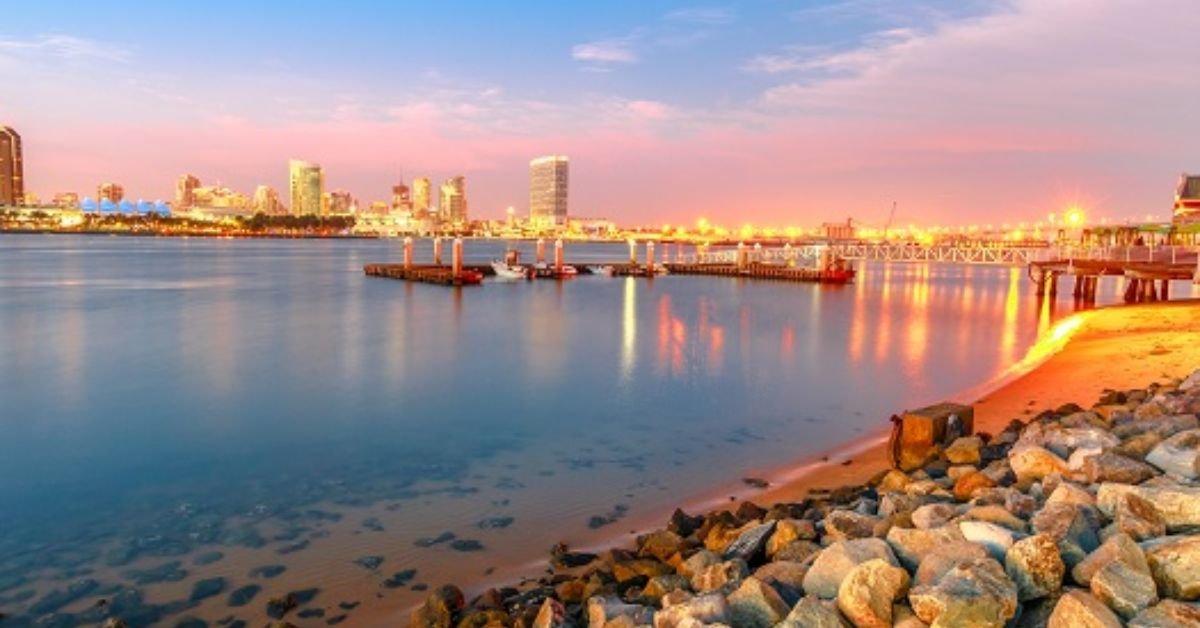
Coronado gives you two waters in one trip, and that duality is one of its greatest strengths as a waterside destination. On the ocean side, try surfing lessons, bodyboarding, or a simple swim, with lifeguarded areas in season, and enjoy the wide beach, the surf, and the open Pacific horizon that make Coronado feel like a classic California beach. On the bay side, around Glorietta Bay and the Ferry Landing, the water is calmer and better for paddleboarding, kayaking, and sailing lessons, because the bay is sheltered from ocean swell and gives beginners a gentler place to learn. Boating, including sailing from the bay, is a classic Coronado activity, and a ferry ride across San Diego Bay is itself a sightseeing trip, with skyline views in both directions, so even visitors who do not sail or paddle can enjoy the bay from the water. That contrast — ocean surf on one side, calm bay on the other — means Coronado can suit both thrill-seekers and cautious first-timers on the same day, and families can split their water time between a lively ocean swim and a calm bay paddle without travelling to a different town. Book lessons and rentals in advance in summer, and check the official site before visiting for current operators, ages, and safety rules — this guide does not fix prices or times that change by season, and confirm prices before booking any lesson or rental. The bay side also rewards a slower pace: a paddle around Glorietta Bay, a walk along the Ferry Landing, and a skyline view at sunset give you a different Coronado from the ocean beach, quieter and more reflective, and many visitors find that the bay side becomes their favourite part of the day.
Choosing between ocean and bay water activities depends on experience, conditions, and who is in your group, and Coronado’s two sides make that choice easy rather than difficult. Ocean surfing and bodyboarding suit visitors who want waves and who are comfortable in surf, and lessons are the sensible starting point for beginners, because a lesson teaches not just technique but also how to read surf, currents, and lifeguard guidance on the day. Bay paddling and kayaking suit beginners, families, and visitors who want a calm, scenic outing, because Glorietta Bay and the Ferry Landing area offer sheltered water, skyline views, and a shorter, more manageable outing than an ocean paddle. Sailing from the bay suits visitors who want a classic Coronado experience with a skipper or a lesson, and it gives you a view of the town, the bridge, and the San Diego skyline that you cannot get from land. Safety rules apply on both sides: swim and surf only where lifeguards advise, watch for rip currents on higher-swell ocean days, wear a life jacket when paddling, and follow operator guidance on ages, conditions, and return times. Children should stay within lifeguarded areas where available on the ocean side, and within calm bay areas for paddling, with adult supervision and appropriate safety equipment. The ferry ride itself deserves to be treated as an activity, not just as transport, because crossing San Diego Bay gives you skyline views, a sense of the bay’s scale, and a moment of calm between village and city. Check the official site before visiting for ferry times, lesson operators, and safety rules, and confirm prices before booking, because summer demand means popular lessons and rentals sell out, and early booking is more reliable than a walk-up plan.
Family Tips for Coronado Beach
Coronado is one of San Diego’s easiest family beaches, but a few choices make it smoother for families, and those choices are worth making before you arrive rather than improvising on the sand. Choose the hotel-front beach for facilities and a classic first visit, or walk a little further for space to play without crowds, and that choice depends on your children’s ages and on how much space you need: younger children often do better near facilities and lifeguarded areas, while older children enjoy the freedom of a quieter stretch where they can run, build, and play without bumping into neighbouring groups. Bring a shade tent or umbrella, as natural shade is limited on the open sand, and pack snacks and water — village cafes are close, but a beach day with children runs on supplies, and a hungry or thirsty child will end a beach day faster than any wave. The flat village is stroller-friendly, and a bike with a child seat or trailer turns transport into an activity in itself, so families can move between beach, village, and bay without needing a car or a complicated plan. Keep children within lifeguarded areas where available, watch for rip currents on higher-swell days, and plan a bay-side stop at the Ferry Landing for an ice cream and a skyline view to end the day, because that bay-side finish gives children a calm, rewarding end to a busy beach day. The key family principle at Coronado is simplicity: one beach, one village, one bike ride, and one ferry or bay stop are enough for a full, happy day, and trying to add too many extra activities will tire children and parents alike.
Family planning at Coronado also benefits from thinking about timing, shade, and the village as a whole, rather than only about the beach itself. Arrive early on summer weekends for parking and a good beach spot, because the hotel-front beach and its parking fill first, and a later arrival can mean a longer walk with children and gear. Pack for sun and breeze together, because Coronado’s open sand is sunny and its ocean breeze can be cool, so sunscreen, hats, shade, water, and a wind layer are all needed on the same day. The flat, stroller-friendly village means you can push a stroller from beach to cafe to park without steps or steep hills, and that ease of movement is a real advantage for families with toddlers, who can nap in a stroller on Orange Avenue while parents enjoy a coffee. For older children, a bike ride on the village loop or a paddle on the calm bay side gives them independence within safe limits, while a visit to Spreckels Park gives them a green space to play away from sand and surf. End the day on the bay side, at the Ferry Landing, where an ice cream, a skyline view, and a ferry ride or a walk along the bay give children a memorable finish that is calmer than the ocean beach. Safety remains the foundation: lifeguarded areas where available, rip-current awareness on higher-swell days, life jackets for paddling, and adult supervision near water at all times. With those basics covered, Coronado’s wide sand, flat village, and two waters — ocean and bay — make it one of the most forgiving family beach destinations in Southern California, and a day here can be as simple or as full as your family wants it to be.
How to Reach Coronado, Best Time, and a One-Day Plan
| Topic | Practical advice |
|---|---|
| By car | Cross the Coronado Bridge from downtown San Diego; allow extra time for bridge traffic and beach parking at weekends |
| By ferry | Take the passenger ferry from downtown San Diego to Coronado Ferry Landing, then walk, bike, or take the circulator — check the official site before visiting for times |
| By bus | MTS Route 901 connects Coronado with downtown San Diego and Imperial Beach via the Silver Strand |
| Best time | Year-round Mediterranean weather; summer is busiest and warmest, while spring and fall offer mild days with fewer crowds |
| One-day plan | Morning beach walk and Hotel del Coronado, lunch on Orange Avenue, afternoon bike ride, bay-side sunset at Ferry Landing |
For a mountain-lake contrast to this beach day, also read our guide to things to do in Lake Tahoe, and for a city, lake, and ski combination, our guide to things to do in Salt Lake City. A practical one-day plan is: morning beach walk and Hotel del Coronado, lunch on Orange Avenue, afternoon bike ride, and a bay-side sunset at Ferry Landing — and check the official site before visiting for ferry times, parking, and hotel access, and confirm prices before booking.
Conclusion
Coronado Beach works because it does not ask you to choose between a beach, a historic hotel, and a village — it gives you all three within walking and cycling distance. Start on the wide sand, look back at the Del’s red roofs, wander Orange Avenue, ride the bay path, and finish on the ferry or the bridge with San Diego’s skyline ahead of you. That combination is rare in Southern California, where many beaches offer sand but not a historic hotel, or a village but not a wide, gentle beach, or a bay side but not an ocean side, and Coronado’s strength is that it offers all of them in a single, flat, walkable place. The beach itself is the foundation: wide, mica-flecked, gently sloping, and long enough for both a busy hotel-front day and a quiet walk north or south. The hotel gives that beach a landmark and a history, from its 1888 founding as a resort gamble to its present status as a National Historic Landmark, and the village gives it daily life, with cafes, shops, a theatre, and a park that make Coronado feel lived in rather than staged. Check the official site before visiting for ferry times, parking, and hotel access, pack for sun and breeze, and let the day stay unhurried. That slower pace is, after all, the point of the Crown City, and it is what visitors remember long after the photographs fade: not a checklist of sights, but a day spent moving slowly between sand, hotel, village, and bay. Give each part of the town its own unhurried time, and the day will feel complete, memorable, and relaxed rather than rushed, crowded, or hurried.
The best way to leave Coronado is with a plan to return, because a single day, however well spent, can only give you a first taste of a place that rewards repeat visits in different seasons. Summer gives you warm water, busy beaches, and lively village evenings, while spring and fall give you mild days, fewer crowds, and a quieter village pace that many regulars prefer. A return visit might focus on a different part of the town: a longer Silver Strand bike ride, a deeper museum and walking-tour day, a bay-side sailing outing, or simply a longer, slower beach walk with more time for the hotel and the village. That variety within a small place is Coronado’s quiet advantage, and it means the town does not wear out after one visit. For a first visit, keep the plan simple — beach in the morning, hotel and village at midday, bike ride in the afternoon, bay-side sunset to finish — and let the town’s flatness, its two waters, and its historic core do the work. For a longer stay, add a second beach day, a museum visit, and a ferry crossing on a different day, so each part of Coronado gets its own time rather than being squeezed into a single afternoon. However long you stay, remember the practical basics: check ferry times, parking, and hotel access before you go, bring shade and water for the open sand, wear a helmet for biking, follow lifeguard guidance near the water, and confirm prices before booking. Done that way, Coronado Beach is not just a beach day from San Diego, but a complete, unhurried island-style escape, and the Crown City earns its name.
FAQs
Is Coronado Beach good for families?
Yes — the sand is wide and gently sloping, the village is flat and walkable, and the bay side offers calmer water for paddling. Choose lifeguarded areas where available and bring shade, as open sand has little natural cover.
Is Coronado really an island?
Not technically — it is a tied island, joined to the mainland by the Silver Strand. It feels island-like because most visitors arrive by bridge or ferry, and daily life centres on the beach, bay, and village.
When was Hotel del Coronado built?
Hotel del Coronado was built in 1888 and is a National Historic Landmark. It was founded by Elisha Babcock and H. L. Story as a grand seaside resort.
How do I get to Coronado Beach from San Diego without a car?
Take the passenger ferry to Coronado Ferry Landing, or MTS bus Route 901 across the bridge. Once there, walking and biking cover most of the village and beach.
Can you bike around Coronado?
Yes — Coronado is flat and bike-friendly, with rentals widely available. The Silver Strand Bikeway offers a longer, largely traffic-free ride south toward Imperial Beach.
What is the best time to visit Coronado Beach?
Coronado has mild weather year-round. Summer is warmest and busiest; spring and fall are excellent for a quieter beach and village visit with comfortable temperatures.