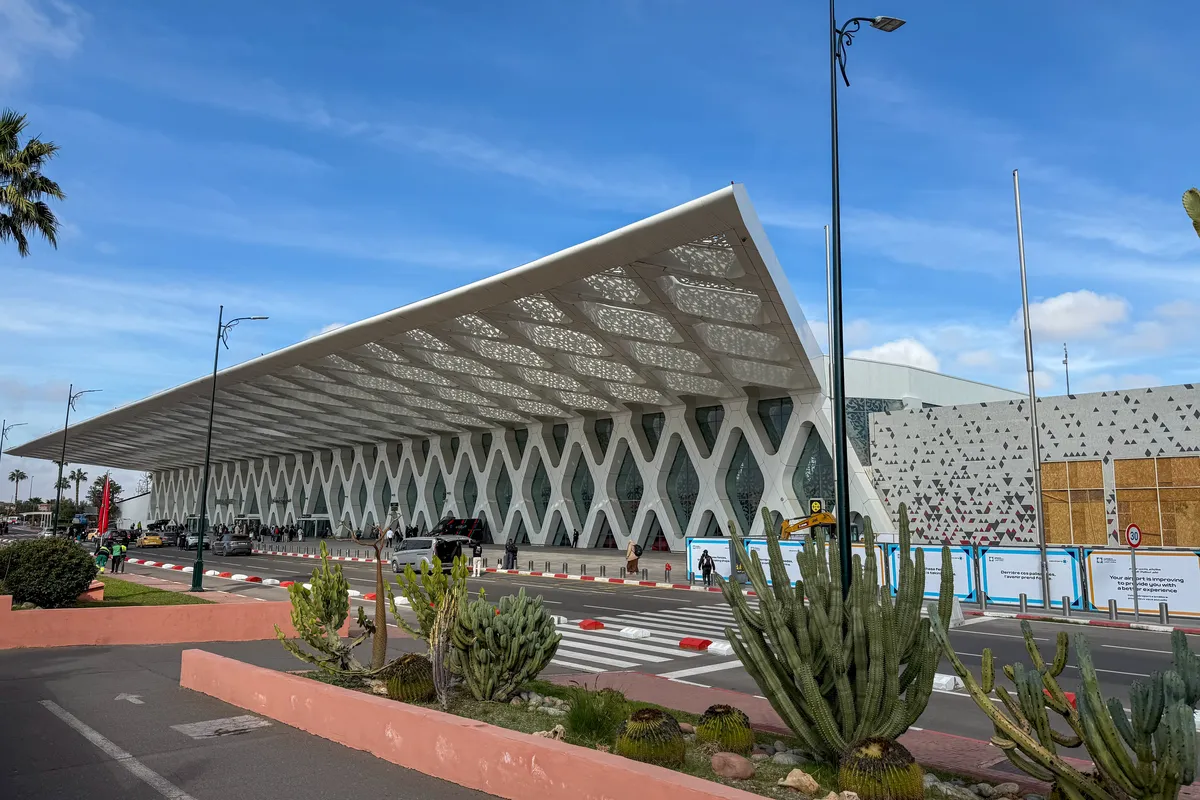
Morocco Visa Guide – Who Needs One, Visa-Free Entry and the eVisa Explained
Most visa guides open with a confident one-line answer, and on this topic the one-line answer is exactly the problem. Whether you need a visa for Morocco depends on which passport you hold, where you legally live, what other visas sit inside that passport, and what you are travelling for — and Morocco has changed its own lists repeatedly in the last few years, adding exemptions, widening the eVisa and switching a travel authorisation on and off around a football tournament. A page that prints a tidy table of nationalities is printing a snapshot, and snapshots of this system expire. So this morocco visa guide does something less tidy and more useful. It explains the three routes into Morocco, shows you the official checker that settles your own case in about a minute, quotes the eVisa’s rules from the government’s own conditions document, and dates every check it makes — sources consulted on 30 October 2026, and flagged again wherever a claim rests on reporting rather than an official page.
What this page will not do is certify your nationality. It names the routes, the documents and the mechanics that are stable, and it is explicit about the one worked example it verified on a government source today — the British passport position, read on the UK Foreign Office’s Morocco page — because one verified example teaches the shape of the system better than seventy unverified ones. If your trip is already taking shape, the Morocco itinerary for 7 days shows what the days look like once the paperwork is settled; this page is only about the paperwork, and its closing advice is the sentence to carry away — run the official check for your own passport, twice, once before you book and once before you fly.
At a Glance
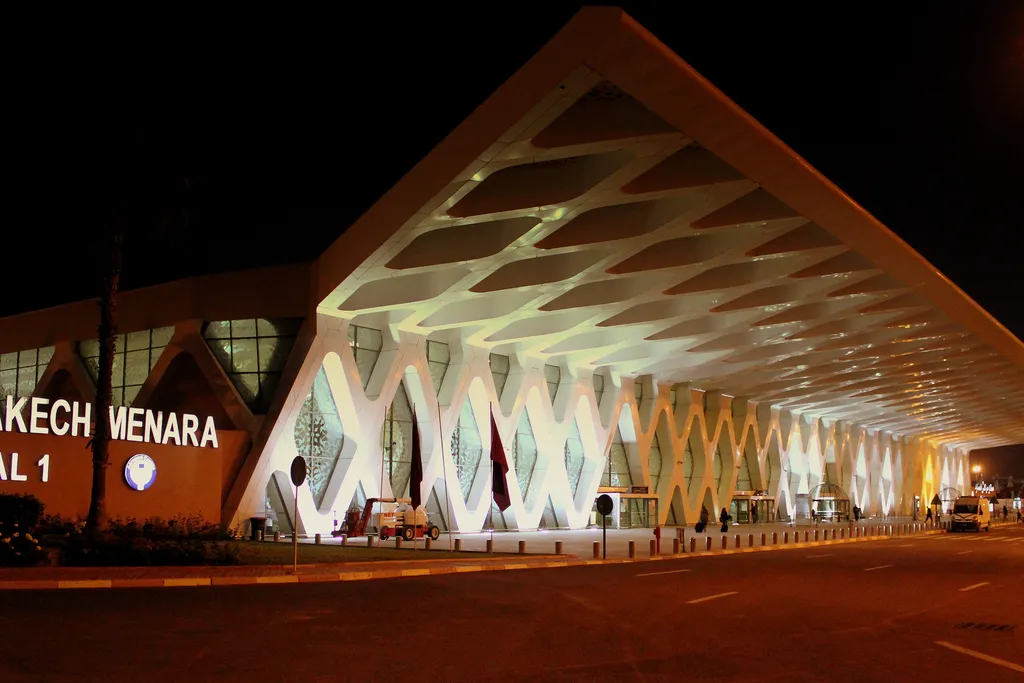
Morocco runs three entry routes for ordinary travellers, plus one authorisation that sits across the first of them. Everything in this guide hangs off the table below, and the single most important column is the last one — where the answer for your passport is confirmed. Notice that none of the confirming sources is a blog, an agency or this website. The routes are stable; the lists of who qualifies for each one are maintained by the Moroccan state and change under it, which is why the confirmation always happens on an official channel.
| Route | Who it is for | Where it is confirmed |
|---|---|---|
| Visa-free entry | Citizens of countries on Morocco’s visa-exempt list, travelling for tourism | The Accès Maroc eligibility checker at acces-maroc.ma, and the Ministry of Foreign Affairs list via consulat.ma |
| AEVM electronic travel authorisation | Certain visa-exempt nationals who must pre-register online before travelling — not a visa, an authorisation layered on exemption | The same Accès Maroc portal, which issues the AEVM alongside the eVisa |
| eVisa | Visa-required travellers who fall in the portal’s eligibility categories — by nationality, by residence, or by holding a qualifying visa | The Accès Maroc portal, whose conditions document sets the categories and the rules |
| Consular visa | Everyone else — visa-required travellers outside the eVisa categories, and holders of non-ordinary travel documents | A Moroccan embassy or consulate general, found via consulat.ma |
Two consequences follow from that table, and both shape the rest of this article. First, the question is never simply “do I need a visa” — it is “which of these four boxes does my passport fall into today”, and the boxes are checked in order, exemption first. Second, the purpose of travel matters as much as the passport. The exemption and the eVisa are built for tourism and short business; the UK Foreign Office states plainly that anyone travelling to Morocco for reasons other than tourism should check requirements with the Moroccan consulate, and that advice generalises — work, study and residence are consular matters from the first step, whatever your nationality.
Step 1 – Check Your Passport’s Status Officially

Begin at acces-maroc.ma, the Moroccan government’s own portal — Accès Maroc — which is the single official front door for both the eVisa and the AEVM. When this guide opened the portal on 30 October 2026, its eligibility checker asked for six things, and those six fields are worth reading slowly, because together they are a map of how Morocco thinks about entry. It asks your nationality. It asks your country of residence — separately, because the two can point to different routes. It asks your passport type, because the online system accepts ordinary passports only. It asks whether you are travelling to take part in an event in Morocco. It asks your purpose of travel. And it asks whether you hold another valid visa. Answer those six honestly and the portal tells you which formality applies to you — exemption, authorisation, eVisa or consulate. That answer, from that checker, on the day you run it, outranks every table on the internet, including any table this site could print.
The second official source is the consular network. Morocco’s Ministry of Foreign Affairs, African Cooperation and Moroccan Expatriates maintains the list of countries whose citizens are exempt from the entry visa, and its consular portal at consulat.ma is the door to that list and to the embassies and consulates general that issue paper visas. An honest note about this guide’s own research belongs here — when this programme tried to read consulat.ma and the ministry’s diplomatie.ma on 30 October 2026, both sites rejected the reader with a technical notice, so the full exempt list could not be verified line by line today. Rather than reproduce the list from secondary sites, this article leaves it out and points you to the two places it lives — the portal checker above, which applies the list to your passport directly, and the consular site itself, which your own browser will very likely open without difficulty.
Make the check a habit with a rhythm, not a single event. Run it before you book anything non-refundable, because the answer decides whether you are applying for something with a processing time attached. Run it again in the week you travel, because Morocco has adjusted these lists inside a single season before now — exemptions have been added and a temporary authorisation scheme was switched on for the Africa Cup of Nations period and then switched off again in January 2026, as secondary reporting on the portal records. And keep the result with your travel documents, because the person whose answer matters at the airport is not a search engine. It is the airline check-in agent deciding whether to board you, and the border officer deciding whether to stamp you in — both of them working from the official position, which is why your check should come from there too.
Visa-Free Entry – How It Works
For a large share of the world’s tourists, Morocco asks for nothing in advance at all. Citizens of the countries on Morocco’s exempt list enter with a passport, a border interview measured in moments, and an entry stamp — no application, no fee, no approval letter. The exemption covers tourism, and the permitted stay printed by most official summaries is up to 90 days for most exempt nationalities, with shorter allowances for a minority — which is precisely the kind of detail this guide refuses to table nationality by nationality, because the list and its allowances are the items that change. The worked example verified on a government source for this guide makes the shape concrete. The UK Foreign Office’s Morocco entry page, read on 30 October 2026, states that holders of a full British citizen passport can visit Morocco without a visa for up to 90 days for tourism. Morocco’s embassy in Washington is reported in current guides as stating the same 90-day position for United States citizens, and the European Union, Canada, Australia and New Zealand are consistently carried on the exempt list across every current source — but “consistently carried” is a reporting standard, not a verification one, so if your passport is any of those, spend the minute the portal checker asks of you and hold the official answer rather than this paragraph.
Layered across exemption sits the AEVM, the Autorisation Électronique de Voyage au Maroc — an electronic travel authorisation that certain visa-exempt nationals must obtain online before travelling, even though they need no visa. It is the easiest element of the whole system to miss, because “visa-free” sounds like “nothing to do”, and for the nationalities concerned it is not. Current reporting drawn from the portal in October 2026 names the Republic of the Congo, Ecuador, Ghana and Guinea as the standing AEVM group, with Mali flagged for the same requirement on the Foreign Ministry’s list — this guide could not read an official AEVM list page directly today, so treat those names as a prompt, not a verdict. The checker at acces-maroc.ma is where an AEVM traveller’s case is settled, the authorisation is applied for on the same portal as the eVisa, and the practical rule is simple — if the checker tells you an authorisation stands between you and the plane, it does, however visa-free your passport is described elsewhere.
The exemption, where it applies, is also narrower than its reputation in two ways worth knowing before you plan around it. It is a tourism and short-visit exemption, granted at the border for a stated stay — it is not a right to live, work or study in Morocco, and arriving with a plan that needs residence is a consular conversation, not a border one. And it is granted per entry, in person, by an officer who can ask what you are doing and where you are staying. Travellers who treat the stamp as a formality are almost always right; travellers who treat it as a guarantee have misunderstood what a border is. Carry your onward plan and your first address in your head and on your phone, and the formality stays one.
The eVisa Route
The eVisa is Morocco’s online visa, launched on 10 July 2022 and issued through the same Accès Maroc portal as everything else in this system. What follows is taken from the portal’s own published conditions document, read on acces-maroc.ma on 30 October 2026 — the document opens by warning that its terms “can be subject to regular updates”, which is the government’s own version of this article’s refrain, and the categories below should be re-read on the portal when you apply rather than treated as permanent. The document defines the eVisa as a one-person authorisation allowing access and a limited, uninterrupted stay, issued online to certain categories of foreign citizens who are subject to the visa formality — and it sets out exactly three categories. Category A is eligibility by nationality — citizens of a defined list of visa-required countries, which in the published conditions includes Azerbaijan, Benin, Brunei Darussalam, Cambodia, Guatemala, India, Jordan, Laos, Israel, Thailand and Vietnam, holding an ordinary passport valid for at least 90 days from the application date. Category B is eligibility by residence — visa-required nationals living in a defined list of countries (the European Union, the United States, Australia, Canada, the United Kingdom, Japan, Norway, New Zealand, the United Arab Emirates and Switzerland) with a residence card or permit valid for at least 180 days on the application date. Category C is eligibility by visa — holders of a multiple-entry, non-electronic visa from a defined list (Schengen, the United States, Australia, the United Kingdom, Ireland, Japan, Canada, Norway and New Zealand), that visa itself valid for at least 90 days from the application date. If none of the three categories describes you, the eVisa is not your route, and the consular section below is.
The conditions fix the shape of the visa itself, and these figures are the document’s own. The eVisa’s maximum validity is 180 days from the date of issue, for a single entry and a stay not exceeding 30 days — a shorter stay than the visa-free 90, which surprises travellers who assume the paid route buys more time. The stated issuing deadlines are 24 hours for the express visa and 72 hours for the standard visa, in Moroccan working days, and the document adds that the deadline does not apply to incomplete applications or applications containing false information — apply early anyway, because a file the portal parks as incomplete is a flight risk, not a processing statistic. The visa is issued for tourism or business purposes only, its holder may not under any circumstances apply for residency in Morocco on it, several eVisas cannot be stacked to cumulate stays, a minor under 18 holding an eVisa may enter only with a parent or legal representative, and — in the document’s most practical sentence — a validated and paid application can under no circumstances be cancelled or refunded. Type your passport details exactly as printed; the money does not come back for a typo.
The application itself is a document exercise, and the conditions list what to attach — a colour photograph, 35 by 45 millimetres, recent and to international passport-photo standards; a clear colour copy of your ordinary passport’s identity and validity pages; and, for categories B and C, a colour copy of the residence card (both sides) or of the qualifying visa. Files are uploaded as jpg, jpeg or pdf at no more than 1 MB each, families and groups are invited to file together so the applications are processed as a group, and progress is tracked through your portal account, where a file shows as in process, waiting to be completed, or refused. What the portal expects at the border matters as much as the application — its advice section tells the holder to present the eVisa at boarding, on arrival and if controlled during the stay, and to be ready to show the residence card or visa the application rested on, a return ticket, proof of means (an international bank card, or cash equivalent to more than 70 euros per person per day of the stay) and hospital and repatriation insurance covering the trip. This article prints no eVisa fee, deliberately — the fee the portal will charge you is the one displayed inside your own application, and figures quoted by third-party sites for this system have a short shelf life.
One boundary in the conditions deserves its own emphasis, because it decides real journeys. Only ordinary passports are accepted for an eVisa. Holders of diplomatic, service, special or other travel documents — and refugees’ and stateless persons’ travel documents — are directed by the document itself away from the portal and towards a Moroccan embassy or consulate general. And the document closes the loop that every visa traveller should understand — holding an eVisa does not confer an irrevocable right of entry, and the border authority may refuse entry to anyone who does not meet the conditions or produce the required evidence. The eVisa is permission to travel to the border with your case pre-approved on paper. The border is still the border.
The Consular Visa Route
The oldest route is the one that remains when the portal says no — a visa applied for in person, on paper, through Morocco’s diplomatic network. This is the route for visa-required travellers who fall outside all three eVisa categories, for holders of the non-ordinary travel documents the portal will not accept, for anyone travelling to work, study or reside, and for anyone whose case has a wrinkle — a complicated travel history, a document the online form has no box for, a purpose that needs a human to assess it. Applications go to the Moroccan embassy or consulate general responsible for where you live, and the network is indexed through the consular portal at consulat.ma. Because this guide could not read that portal today (see Step 1), it will not pretend to reproduce the network’s addresses, appointment systems or local document lists — those are set mission by mission, and the mission handling your file is the only authority on what it wants in the envelope.
What can be said at guide level, because it is true of consular visas generally and confirmed by the structure of Morocco’s own system, is how to approach the route well. Expect the file to be built from the classic consular materials — an application form, your passport, photographs, evidence of the trip’s purpose and shape, evidence of accommodation and of means — and expect the mission’s published list for your nationality and visa type to override any generic list, including this sentence. Expect timing to be measured in weeks rather than the portal’s days, and plan backwards from your departure with slack for a follow-up request; consulates ask for one more document more often than they refuse outright, and the travellers who miss flights to consular visas are usually the ones who filed at the last responsible moment and then met a perfectly ordinary delay. Fees, where charged, are the mission’s to set and are paid as the mission directs — another figure this article will not print from secondhand sources.
Two habits protect consular applicants in particular. First, apply in the country where you legally live, unless the mission itself directs otherwise — consulates are organised by residence, and a file presented to the wrong mission is usually a file politely returned, with the clock restarted. Second, keep copies of everything you submit and a note of when and how you submitted it, because a consular file may be queried at the border as well as at the counter — the visa in your passport is the summary of that file, and being able to speak to its contents calmly is part of travelling on it. And if your situation is genuinely unusual — a passport near expiry, a prior refusal anywhere, a name that appears in two spellings across your documents — say so in the application rather than hoping the file will not notice. Consular officers deal in explanations; what they cannot work with is a surprise.
Passport Validity and Entry Day Practicalities
Passport validity is the point where official sources for Morocco visibly disagree, so this section states each position with its owner rather than blending them into a false average. The UK Foreign Office, on its Morocco entry page read on 30 October 2026, states that to enter Morocco a British passport must have an expiry date at least three months after the date of arrival — and warns that the Moroccan authorities have denied entry to some travellers with damaged passports. Other governments are reported to advise six months of validity for Morocco, and airlines are free to be stricter than either at check-in, since it is the airline that carries the cost of a refused passenger. Inside the eVisa system the official conditions set their own floor — an ordinary passport valid for at least 90 days from the application date for all three categories. The working rule that reconciles all of this without inventing a regulation is simple — travel on a passport with six months or more beyond your return date and none of these thresholds can bite you; travel on anything less and you are relying on one source out-arguing another at a check-in desk.
Entry day itself runs on a short, predictable script at Morocco’s airports and ferry ports. You present your passport — and your eVisa or AEVM confirmation if your route required one — at the border desk; you may be asked the purpose of the visit, where you are staying and how long for, and travellers have historically been asked to complete a paper entry form, so keep your first address and your onward or return plan where you can reach them without signal or battery. The officer stamps the passport, and that stamp is not a souvenir. The UK Foreign Office records that border officials should stamp your passport when you enter, and that some travellers have had difficulties leaving Morocco because their passport did not have an entry stamp. Build the ten-second habit — before you walk away from the desk, open the passport, find the stamp, and check it is there and legible. If it is missing, say so at the desk, in the airport, where fixing it costs a conversation. Discovered at departure, the same gap costs an interview.
The rest of entry day is ordinary border craft, stated plainly because visa anxiety makes travellers forget it applies to them. Keep the documents your route rested on — return ticket, insurance, the residence card or visa behind an eVisa — reachable in your hand luggage rather than buried in a checked bag, because the check, if it comes, comes before baggage reclaim. Answer questions about purpose and duration consistently with the visa or exemption you are travelling on; tourism on a tourist entry is a short conversation, tourism that sounds like employment is a long one. And note the exit half of the system now, while it is free to learn — departure is a border process too, your entry stamp will be looked for, and your permitted stay is counted from it. The travellers who have a calm departure day are almost always the ones who treated arrival day as paperwork rather than as the holiday’s starting gun.
Extending or Fixing a Stay
Trips change, and Morocco’s system has a front door for that — inside the country, at a police station, before your time runs out. The UK Foreign Office states the mechanism for the visa-free case directly, on the page read for this guide — to stay longer than 90 days, you must request an extension at a Moroccan police station. Canadian government advice, as summarised in current guides, adds the timing discipline of going well before the deadline rather than on it — a fortnight of margin is the commonly repeated figure, offered here as reported good practice rather than an official Moroccan rule. What an extension involves in your city, in your case — the office, the documents, the period granted — is for the police prefecture handling it to tell you, and asking early has a second benefit beyond politeness. If the answer is no, you learn it while leaving on time is still a choice rather than a scramble.
The eVisa case is tighter, and its own conditions draw the line. An eVisa authorises a stay not exceeding 30 days, consecutive eVisas cannot be used to cumulate stays — the conditions state the holder must leave Moroccan territory at the end of the stay granted by the first visa before benefiting from a new one — and an eVisa holder may not apply for residency. So the “leave and come back on a fresh eVisa” manoeuvre is not a loophole the system forgot to close; it is a pattern the conditions describe and exclude. Travellers whose plans genuinely outgrow a 30-day eVisa need the consular conversation, ideally before travelling at all, because the route for a long stay is a different visa, not a sequence of short ones.
Overstaying is the failure mode to avoid rather than to budget for. This article prints no fine amounts and no penalty tables, because none was verified on an official Moroccan source today and because the figures circulating online vary too much to carry anyone’s decision. What can be said honestly is the shape of it — an overstay is an irregularity that has to be regularised with the Moroccan authorities, typically surfacing at departure if it was never addressed, where it can cost time, official process and money in proportions the traveller does not control. The calm version of every scenario in this section is the same sentence — raise the problem with the authorities while you are still legal, at a police station, with your passport and your entry stamp in hand. Systems forgive early honesty far more readily than late discovery, and Morocco’s is no exception.
Frequently Asked Questions
Do British or American citizens need a visa for Morocco?
British citizens do not — the UK Foreign Office states that a full British citizen passport gives visa-free visits of up to 90 days for tourism, verified on the Foreign Office’s Morocco page on 30 October 2026. United States citizens are stated to hold the same 90-day visa-free position by Morocco’s embassy in Washington, as reported in current guides — but run your own passport through the checker at acces-maroc.ma regardless, because the portal’s answer is the one your airline will honour.
What is the AEVM, and is it a visa?
No — the AEVM, the Autorisation Électronique de Voyage au Maroc, is an electronic travel authorisation layered on top of visa exemption, not a visa. It applies to certain visa-exempt nationals, who must obtain it online before travelling even though they need no visa; current reporting from the portal names the Republic of the Congo, Ecuador, Ghana and Guinea, with Mali also flagged. This guide could not read an official AEVM list today, so the only safe test is the eligibility checker at acces-maroc.ma, which will tell an affected traveller directly.
How long does the Morocco eVisa take, and how long can I stay on it?
Per the portal’s official conditions document, read on 30 October 2026 — the issuing deadline is 24 hours for the express eVisa and 72 hours for the standard, in Moroccan working days, and those deadlines do not apply to incomplete or inaccurate applications. The visa is valid for 180 days from issue, allows a single entry, and permits a stay of up to 30 days. Apply well beyond the deadline anyway — a paid eVisa application cannot be cancelled or refunded, and an error in it is yours to live with.
How much validity does my passport need for Morocco?
It depends whose statement you read, which is why this guide gives you all of them. The UK Foreign Office requires a British passport to be valid for at least three months after arrival. The eVisa’s official conditions require an ordinary passport valid at least 90 days from the application date. Other governments are reported to advise six months, and airlines may enforce their own standard. Six months beyond your return date satisfies every version — anything less is a judgement call you should make knowingly, not by accident.
Can I just extend my stay or leave and come back?
Extensions are requested inside Morocco at a police station, before your permitted stay expires — the mechanism the UK Foreign Office states for stays beyond 90 days. Leaving and returning is not a universal reset — eVisa stays expressly cannot be cumulated under the portal’s conditions, an eVisa holder must leave at the end of the granted stay before a new one, and an eVisa can never be converted into residence. If your plans need more time than your route grants, the consular route is the honest place to arrange it.
The Short Version
Morocco’s entry system is three routes and a checker. If your passport is on the exempt list, you arrive and are stamped in — most exempt tourists for up to 90 days, a small set of exempt nationals needing the AEVM authorisation online first. If your passport needs a visa, the Accès Maroc portal may still spare you the consulate, through an eVisa whose three categories turn on nationality, residence or a qualifying visa you already hold — 180 days of validity, one entry, 30 days of stay, and a document list at the border that the portal’s own conditions spell out. If neither fits, the consulate is not a failure but the third route, built for exactly your case. Threaded through all three — a passport with validity to spare, an entry stamp you check before you leave the desk, and an extension conversation at a police station that happens before your days run out, not after.
None of that, however, answers the only question you actually brought to this page — what does my passport need? — and that is deliberate, because on 30 October 2026 the honest state of the evidence is this. The portal checker works and was read today. The eVisa’s conditions were read today, on the government’s own site. One nationality’s exemption was verified on a government page today. The ministry’s full exempt list could not be read today, the AEVM list could not be read today, and a system that changes its lists several times a year is not one any guide should freeze into a table and call settled. So — check at acces-maroc.ma before you book, check again before you fly, and let the 7-day Morocco itinerary worry about the part of the trip that is supposed to be fun. More routes and country planning live across Traveling Advisior — start with the itinerary linked here, and treat every visa page on the internet, this one included, as a signpost to the official checker rather than a substitute for it.