Getting Around Jordan – Rental Cars, JETT Buses, Drivers, Taxis and One Small Flight
Jordan looks small on the map, and that is the first thing about getting around it that misleads people. The country is one long north-south spine — Amman near the top, Aqaba at the bottom, and almost everything a first-time visitor wants (Petra, Wadi Rum, the Dead Sea, Jerash, the King’s Highway) strung along that spine or just off it. The distances are not huge. What decides your trip is not distance but fit: which transport matches which leg, because Jordan’s options are oddly uneven. One leg of the classic route has a bookable coach and three others have none. One road south is a fast dual carriageway and the other is a winding mountain road that takes twice as long and is worth every minute. The desert everyone dreams about has no public transport inside it at all, by design.
This guide compares the realistic options honestly — renting a car, JETT coaches, local buses and minibuses, private drivers, taxis and ride-hailing in the cities, and the country’s single domestic flight — and then walks the classic routes leg by leg, saying which option genuinely suits each one. It prints no fares and no timetables, and that is a deliberate choice, not a gap. Transport prices and schedules in Jordan change, rival pages are full of figures copied from older rival pages, and a fare printed here would be a small lie by the time you travel. Instead, every section tells you how the system works and exactly where the current number lives — usually one official page — so the figure you travel on is the figure that is true that week.
One more honest framing before the detail. There is no passenger rail network for visitors in Jordan; the old Hejaz Railway survives as heritage, not transport. Almost everything in this guide is road, plus one short flight. That sounds limiting until you understand the roads: Jordan’s highway network is genuinely good, its coach company is bookable online like a European one, its informal bus system is cheap and constant if you can read its unwritten rules, and its drivers-for-hire culture is so developed that “hire a driver” is not a luxury fallback here but a mainstream way the country itself moves visitors around. Choose well per leg, and Jordan is easy. Choose one option for every leg, and at least two legs of your trip will fight you.
Getting Around Jordan at a Glance
Here is the whole comparison on one screen. The sections after this table take each row in turn, and the route-by-route sections near the end apply the table to the journeys people actually make. Read the “watch out for” column as seriously as the “best for” column — in Jordan, the catch is usually not cost or comfort but availability: the option that is perfect on paper may simply not run on the leg you need, at the hour you need it, and that is the thing rival comparison tables rarely admit.
| Option | Best for | Watch out for |
|---|---|---|
| Rental car | Multi-stop trips, the King’s Highway, travelling as a pair or group on your own clock | Amman traffic, unmarked speed bumps, tired driving on long desert legs, no driving inside Wadi Rum’s protected area |
| JETT coach | Amman to Petra and Amman to Aqaba on a budget, solo travellers, anyone who hates driving | A thin timetable on the Petra route, fixed departure points in Amman, seats that fill in high season |
| Local buses and minibuses | Short hops, the north, travellers with time and patience | No published timetable — vehicles leave when full, Arabic destination boards, indirect routings |
| Private driver | One-day multi-site loops, groups, travellers who want the King’s Highway without driving it | Price is negotiated per trip, quality varies, the arrangement lives or dies on a clear written agreement |
| Taxis and ride-hailing | Inside Amman and Aqaba, airport runs, short city hops | Intercity taxi fares are negotiated, app coverage thins outside the cities |
| Domestic flight | Saving a day between Amman and Aqaba, trips based in the far south | Only one route exists — Amman to Aqaba — and the airport sits well south of Amman, which eats some of the saving |
The pattern underneath the table is the real lesson. Jordan rewards mixing: a coach for the long straight leg it serves well, a driver for the winding day, a rental car for the flexible middle of the trip, the flight only when the far south is the whole point. Travellers who pick one row and force it onto every leg tend to have one miserable day — the bus that does not exist to Wadi Rum, the rental car sitting unused outside a camp, the driver hired for a leg a cheap coach covers perfectly. The rest of this guide is about making the mix deliberate instead of accidental.
Renting a Car – the Freedom Option, With Homework
Renting a car is how most independent travellers see Jordan, and on the classic route it earns that popularity. A car turns the country into a string of your own decisions: leave Amman when you like, stop at the canyon viewpoint because it is there, spend the extra hour at Kerak, reach Wadi Musa in time to rest before Petra rather than after dark. For two or more people travelling together, it also tends to be the transport that spreads its cost across the group on the legs where the alternatives are per-person. Jordan drives on the right, road signs carry English alongside Arabic, and the main highways are paved, lit in stretches near towns and genuinely easy to follow. The international rental brands and a crowd of local companies all operate at Queen Alia Airport and in Amman, with smaller desks in Aqaba, so one-way rentals that end in the south are a normal thing to arrange rather than a special request.
The homework is in the paperwork and the small print, and it is worth doing before you are standing at a desk with a queue behind you. Bring your home driving licence and, strongly advised, an International Driving Permit to carry with it — the permit is the document that ends arguments at checkpoints and rental desks alike, and some companies ask for it outright. Expect to leave a credit-card deposit, and read the three numbers that actually matter in the contract: the insurance excess you would pay after a scrape, any daily mileage cap, and the one-way drop fee if you are finishing in Aqaba. Photograph the car slowly at pick-up, including the wheels, the windscreen and the underside of the bumpers, because desert roads flick stones and the argument at drop-off is won by whoever has pictures. None of this is Jordan-specific suspicion; it is how renting works everywhere, applied to a country whose roads add stone chips and speed-bump scrapes to the usual risks.
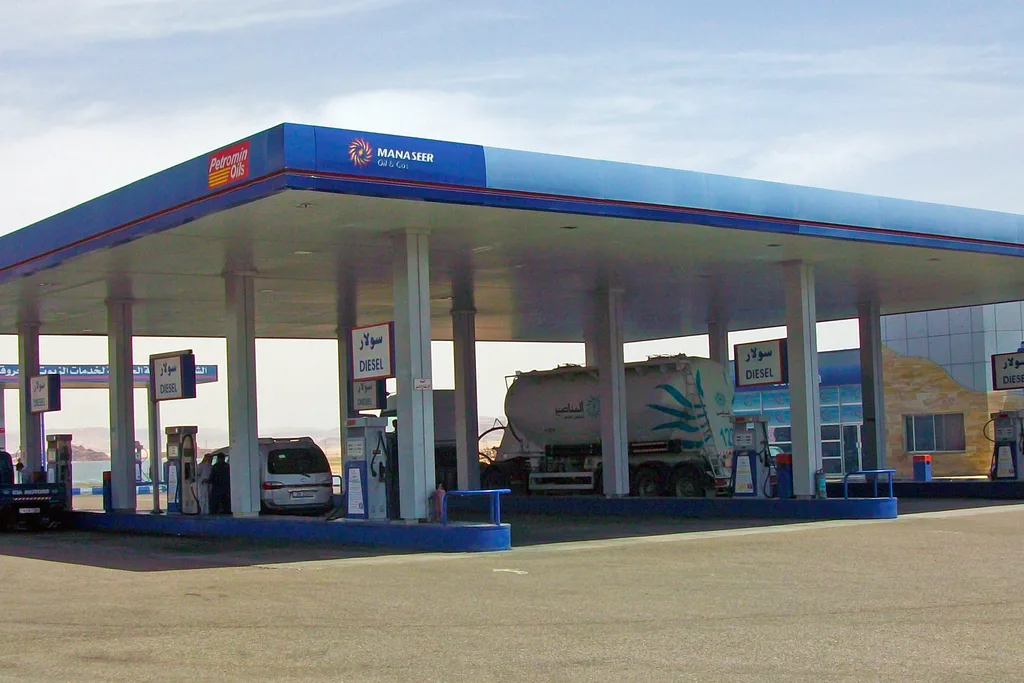
Fuel and range need one thought before long legs. Petrol stations are plentiful on the Desert Highway and in towns, thinner on the King’s Highway and in the stretches between southern towns, so the working rule is simple — fill up in a town before a long empty leg rather than trusting the map to provide a station mid-desert. The car itself can be a normal saloon for everything in this guide: no classic-route destination requires four-wheel drive on the public road, including the drive to the Wadi Rum visitor centre. The one place a rental car cannot go is inside Wadi Rum’s protected area, where only authorised local vehicles run — your car waits at the visitor centre car park, which is the correct and normal arrangement, covered in the Wadi Rum section below.
King’s Highway or Desert Highway – the Choice That Shapes a Jordan Road Trip
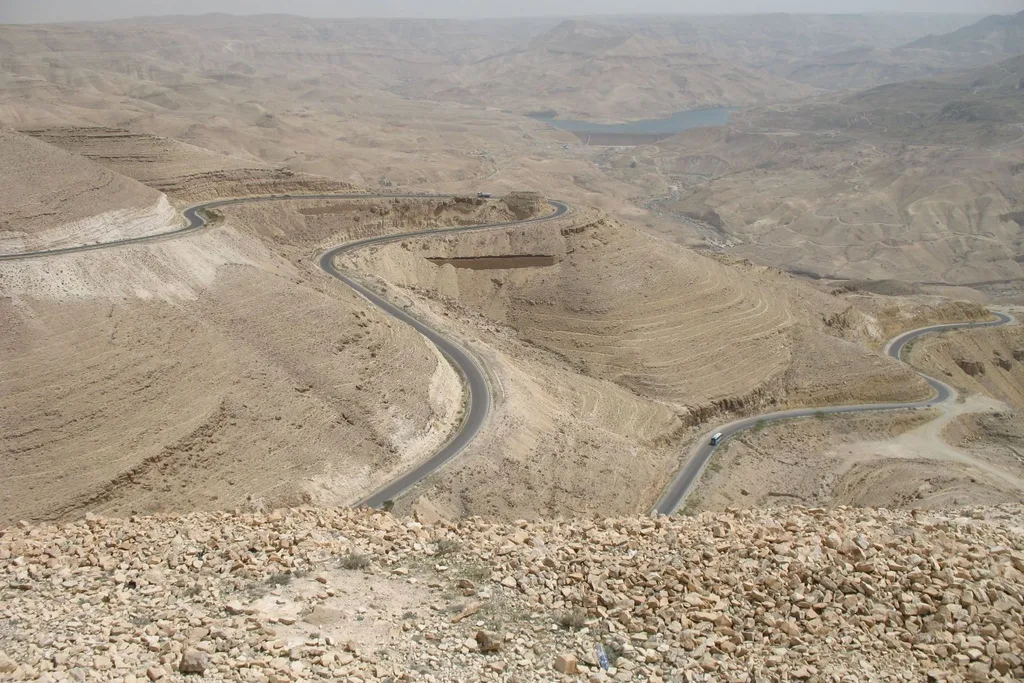
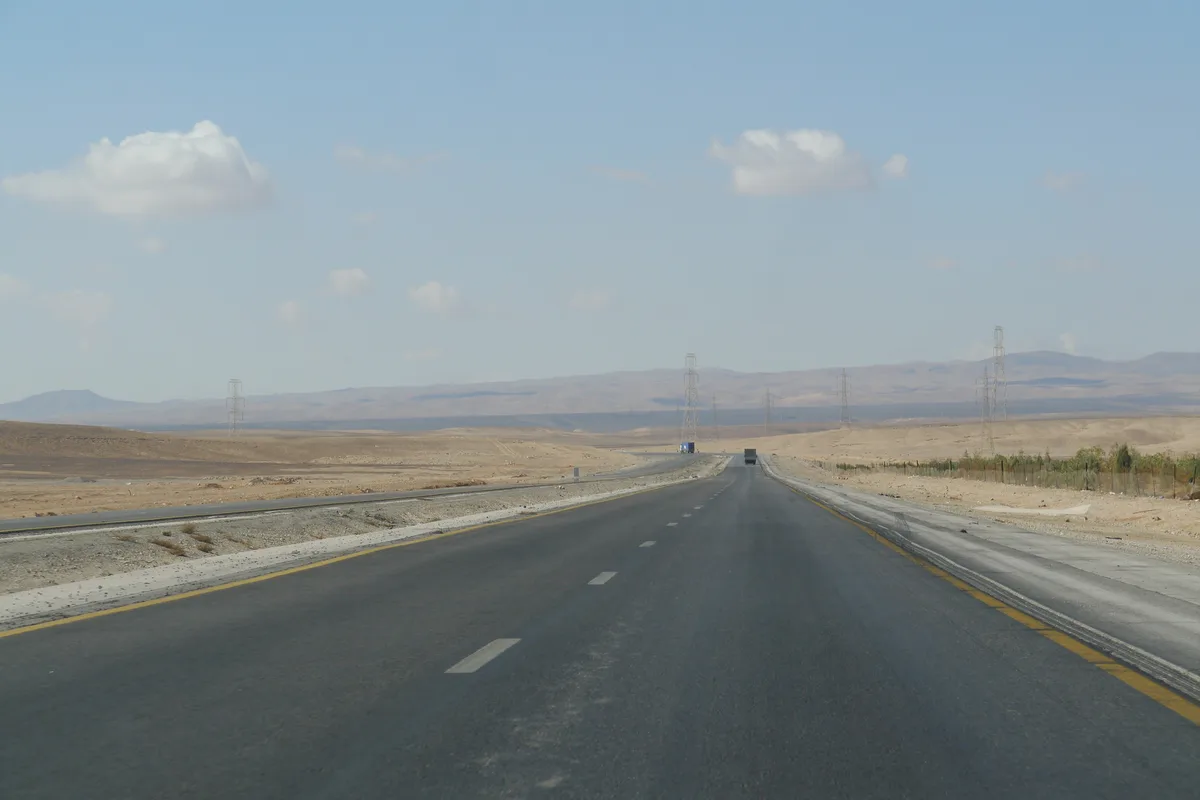
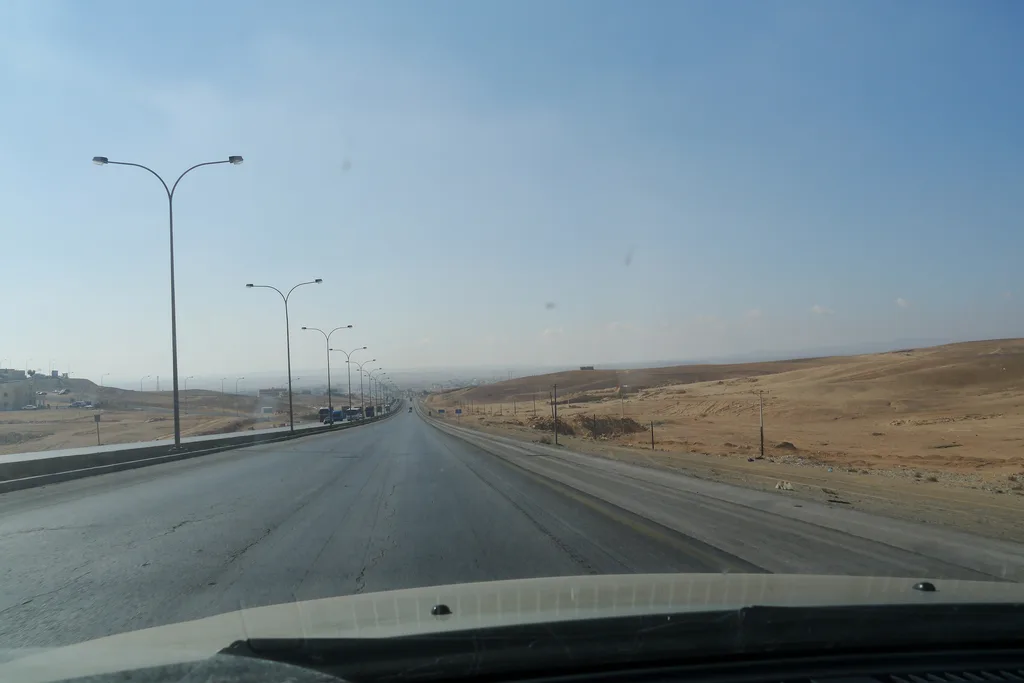
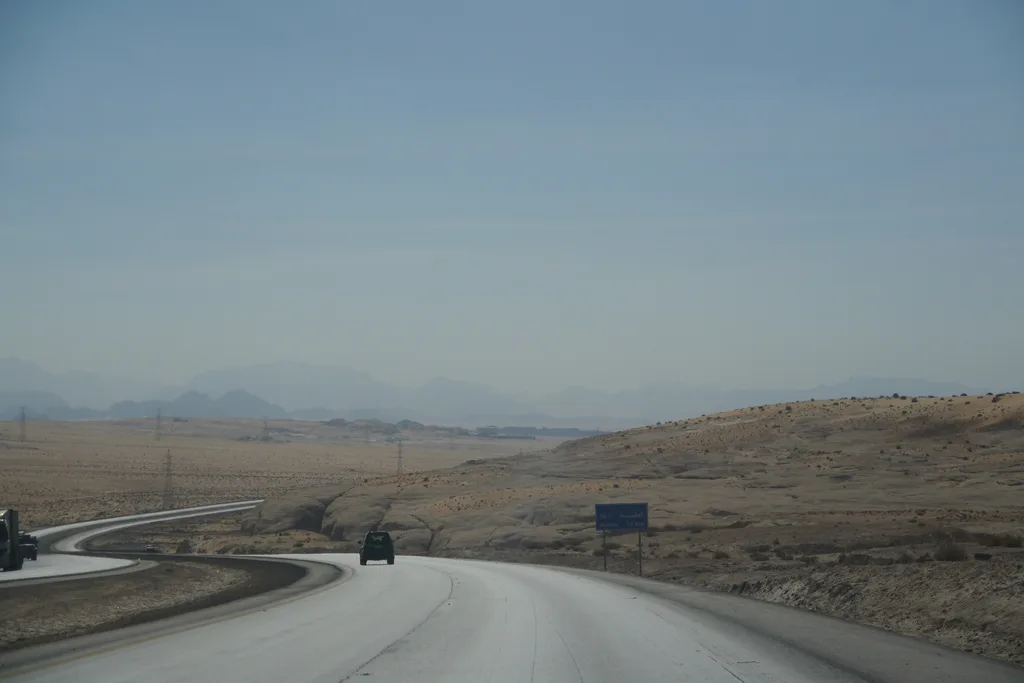
Almost every journey south in Jordan begins with the same decision, and it is a decision about what kind of day you want, not just which road you take. The Desert Highway — Route 15, the dual carriageway that runs from Amman past the airport and straight down the country’s eastern side to Aqaba — is the fast option: broad, direct, heavy with trucks, and honest about being a corridor rather than an experience. Amman to Petra by this road is roughly three hours of driving, and Amman to Aqaba roughly four, in the ordinary run of traffic. The King’s Highway — Route 35, one of the oldest continuously used roads in the world — is the other Jordan: a single carriageway that winds south through Madaba, past Mount Nebo and the mosaic towns, down into the vast Wadi Mujib canyon and up the other side, through Kerak’s Crusader castle town, past the Dana reserve and Shobak castle, arriving at Petra from the hills rather than the highway. The same Amman-to-Petra journey on this road is well over four hours of pure driving before a single stop, and nobody should drive it without stops, because the stops are the point.
So the choice is not fast-versus-slow; it is corridor-versus-chapter. Take the Desert Highway when the day has a fixed point at the end of it — a flight, a camp check-in, a Petra start at opening time — or when you have already seen the King’s Highway and are simply repositioning. Take the King’s Highway when the journey itself is one of your sightseeing days, and give it the whole day: Madaba’s mosaics in the morning, the Mujib canyon viewpoints without a clock running, Kerak for lunch, the descent toward Petra in the late light. Trying to do the King’s Highway as a fast transfer is the single most common routing mistake in Jordan — it produces a tired driver, a rushed castle, and an arrival after dark on a mountain road, which the next section will tell you to avoid. Many of the best itineraries use both: King’s Highway southbound as a touring day, Desert Highway northbound as a clean transfer, and that pairing is worth copying.
Two practical notes belong to this choice. The King’s Highway passes through towns and villages constantly, which means fuel, food and coffee are never far away but progress is measured in roundabouts and speed bumps as much as in kilometres. The Desert Highway is the opposite — long empty stretches where the services are at marked rest stops and junctions, and where the driving is easy enough that the real risk is monotony and the speed of the truck traffic around you. Neither road is difficult in good weather and daylight. Both deserve respect in winter rain, when the King’s Highway’s canyon descents and the Desert Highway’s standing water each ask for slower driving than the posted limit suggests.
Driving in Jordan – the Honest Briefing
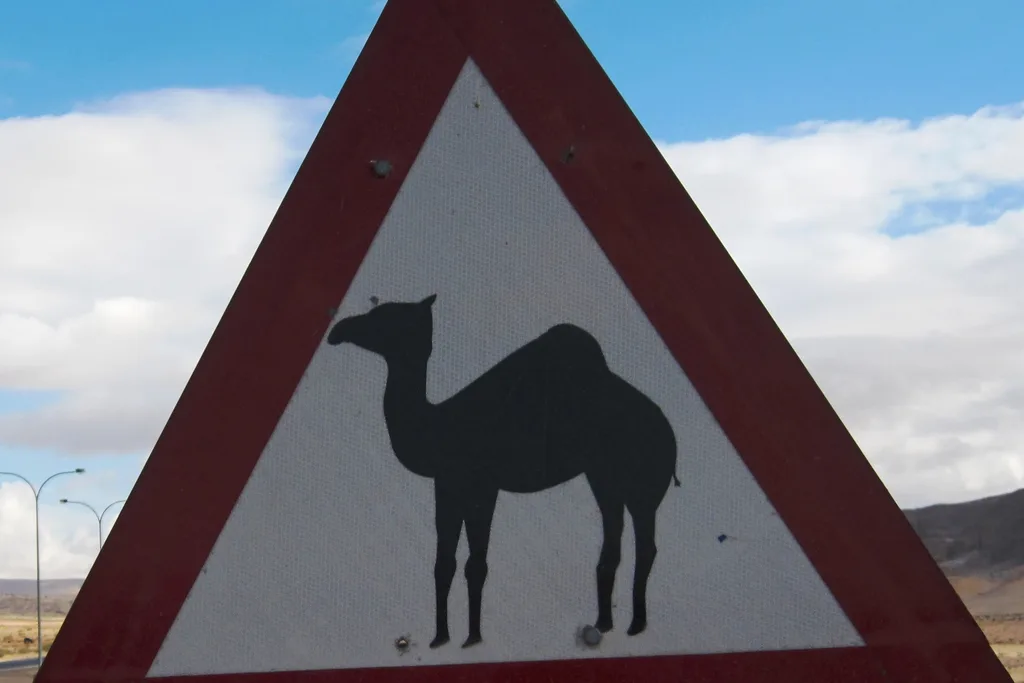
Jordanian driving has a reputation that is half true, and the honest version is more useful than either the horror stories or the reassurance. The highways between cities are mostly calm, well-built and straightforward. The friction lives in specific, predictable places: Amman’s hills and roundabouts, where the driving is assertive and lane discipline is a local interpretation; village main streets, where the road is also the market, the pavement and the social centre; and the famous speed bump, which appears at the edge of almost every settlement, is frequently unmarked, and will punish speed more reliably than any camera. Slow down on the approach to any town, any junction and any place where the road narrows, and most of what surprises foreign drivers in Jordan simply stops surprising you.
Police checkpoints are a normal feature of the main highways, and they are routine rather than alarming. Slow down, be ready to stop, and have your passport, licence, permit and rental papers reachable rather than buried in the boot. Most tourist cars are waved through with a smile after a glance; if you are stopped and asked questions, it is the standard process applied to everyone, and politeness plus documents closes it in a minute or two. Speed enforcement also exists on the highways, including cameras, so the posted limits are worth treating as real — a fine attached to a rental contract has a way of arriving weeks later, deducted from the card you left at the desk.
After dark is where the honest briefing matters most. Long intercity drives at night are the one thing this guide flatly advises against, whoever is driving. Rural roads are largely unlit, speed bumps do not become more visible, livestock and pedestrians share the road in the south, and not every vehicle on a desert highway is as lit as yours. This is not a claim that night driving is impossible — Jordanians do it constantly — it is the observation that almost every routing problem in this guide disappears if you simply arrange to arrive before dark, and most tight itineraries fail exactly there. Build the day so the wheels stop at dusk, and Jordan’s roads will feel as manageable as they mostly are.
JETT Coaches – the Bookable Bus Network
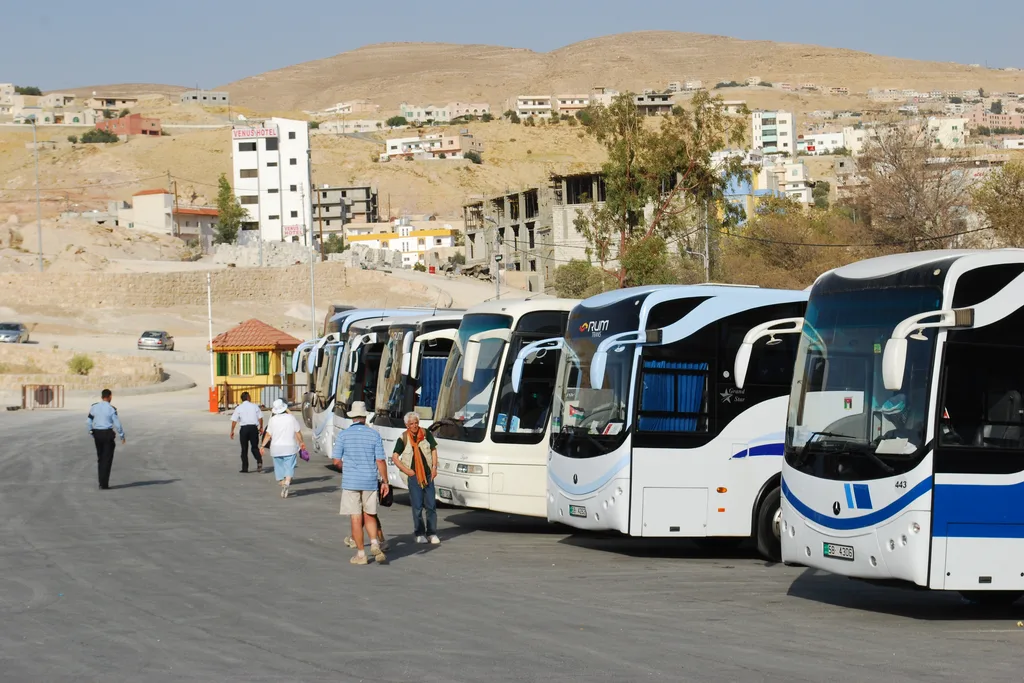
JETT — the Jordan Express Tourist Transport company — is the closest thing Jordan has to a national coach network, and for visitors it is the one bus system that behaves the way you expect a bus system to behave. It runs air-conditioned coaches on set routes at set times, sells tickets online through its official site as well as at its offices, and connects the places visitors actually go: from Amman to Petra, from Amman to Aqaba, from Aqaba up to Wadi Rum and Petra, and to northern and Dead Sea destinations such as Jerash and Ajloun on its wider network. If your trip is basically Amman, Petra and Aqaba in a line, JETT can carry the long legs of it for less effort than any other option, and for a solo traveller it is usually the simplest sensible answer on those two corridors.
The mechanics are straightforward. In Amman, JETT’s departures use its own offices rather than the public bus stations — the Abdali office and the 7th Circle office are the two names to know, and a booking tells you which one your coach leaves from. The Amman-to-Petra run has, on recent published schedules, been a once-a-day early-morning departure with a return from Wadi Musa the same afternoon — a pattern built for day-trippers that also works for anyone relocating south, provided your day can start at its hour rather than yours. Amman-to-Aqaba has historically had several departures a day, giving it a flexibility the Petra route lacks. Both patterns change, which is why this guide does not print them as promise: check the current schedule and fare on JETT’s official site the week you travel, and book ahead in high season, because a once-a-day coach that fills is a plan with no second act.
The honest limits matter as much as the praise. JETT is a network of corridors, not a web: it will not take you down the King’s Highway, it will not wait while you look at a castle, and its Petra timing either fits your itinerary or it does not. Its Aqaba-to-Wadi-Rum link is genuinely useful for reaching the desert without a car, but onward travel inside the protected area is a separate arrangement entirely. And a coach seat is per person, so the arithmetic that makes it obvious for one traveller gets less obvious for four. Treat JETT as the spine service it is — superb on its two main corridors, a component rather than a complete answer everywhere else.
Local Buses and Minibuses – Cheap, Frequent and Unscheduled
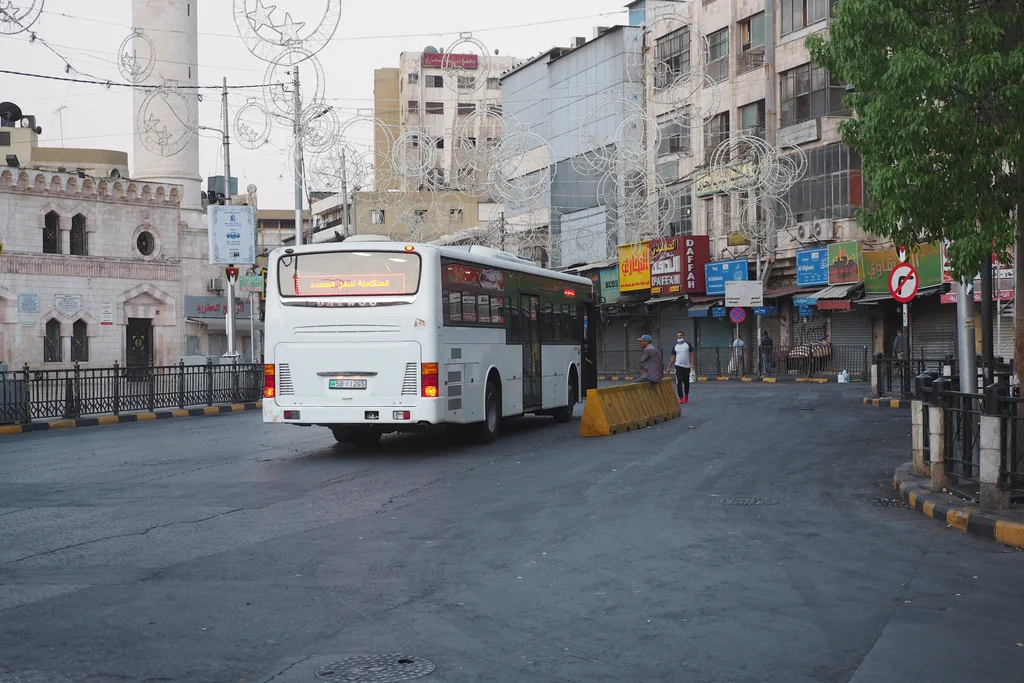
Underneath JETT sits the system Jordanians themselves use: a dense, informal layer of minibuses, mid-size coasters and larger local buses running between the country’s towns and inside its cities. It is the cheapest way to move in Jordan by a wide margin, it reaches places no coach network touches, and it operates on a principle that takes a day to get used to — most of these vehicles have no timetable at all. They leave when they are full. On busy routes that can mean a wait of minutes; on quiet ones, the better part of an hour, sitting in a slowly filling minibus while the driver drinks coffee and the conductor calls the destination at passers-by. If your day has slack in it, this costs you nothing but time. If it does not, this system is not a saving; it is a gamble.
The geography of it is learnable. Amman’s departures are organised by direction from its bus stations — Abdali, in the city, serves many northern and central routes, while the South Station at Wahdat is the traditional departure point for the south, including coaches and minibuses toward Wadi Musa and Aqaba. Destination boards are in Arabic, vehicles are called by their destination, and the working method for a visitor is unglamorous but reliable: ask at your hotel or hostel which station and which vehicle for your town, write the destination in Arabic script on your phone to show around, and confirm the vehicle is going all the way rather than to the junction for your town — a real distinction on southern routes, where being set down at a highway turn-off is a known misunderstanding, not a scam. Inside Amman, the same layer includes the white service taxis, called servees, which run fixed routes along the main streets for a set small fare per seat, and the city’s newer bus network on its main corridors; both are best used with a local’s ten-second explanation rather than a map studied in advance.
Where does this system genuinely fit a visitor’s trip? Short, busy hops where full-and-go works in your favour: Amman to Jerash, Amman to Madaba, town-to-town moves in the populated north, and the southern run to Wadi Musa for a traveller with a free day and a light bag. Where does it not fit? Anywhere with a hard deadline, anywhere involving the King’s Highway as sightseeing (these vehicles pass the views; they do not stop for them), and as a way into Wadi Rum, which has no through public service into the protected area at all. Used where it is strong, the local bus layer is one of the pleasures of Jordan — cheap, social and constant. Used where it is weak, it is how people lose a day of a six-day trip.
Private Drivers – Local Knowledge With Your Name on the Day
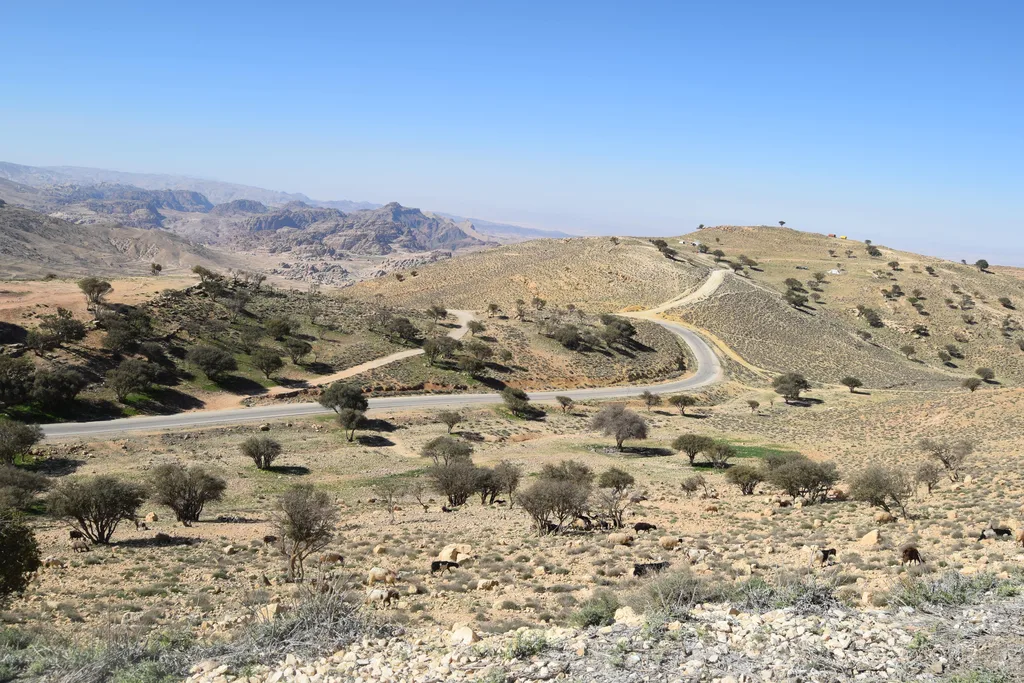
Hiring a car with a driver is not the luxury option in Jordan; it is one of the standard ones, woven into how the country expects visitors to travel. Drivers are arranged through hotels, guesthouses, camps, tour companies and direct recommendation, and what you are buying is a day that behaves like your own car without you driving it: your route, your stops, your pace, with a local handling Amman’s traffic, the checkpoint wave-throughs, the parking, and the local knowledge of which viewpoint is worth the detour and which rest stop has the good coffee. For the King’s Highway done properly — Madaba, Nebo, the Mujib canyon, Kerak, the long descent to Petra with stops that are sights in themselves — a good driver is arguably the best transport in this entire guide, because the road’s whole value is in stopping, and stopping is the one thing buses cannot do and the thing a driver does without being asked twice.
The arrangement is a negotiation, and it should be treated as one, in writing, before the day begins. Agree the total price, the route and the named stops, whether waiting time at sites is included (the normal pattern is that the driver waits while you visit — confirm it), what happens about fuel, tolls and the driver’s meals, and the start and finish times and places. A message thread that states all of this protects both sides and takes two minutes. What you should not do is agree a vague day at a vague price and discover at Kerak that the castle was an extra. Prices vary with route, season, vehicle and how the booking reached the driver, which is exactly why this guide prints none: get two or three quotes for your actual itinerary, compare what each includes rather than the headline number, and treat the cheapest quote with the same suspicion you would anywhere.
Know the limits too. A private driver is a driver, not a licensed tour guide, and at major sites like Petra the guiding inside the site is a separate profession — many drivers will happily explain Jordan from the front seat, which is part of the pleasure, but the arrangement to expect is transport and local knowledge, not an archaeology lecture at the Treasury. The economics also invert the coach maths: a driver is priced per car, so the same day that looks extravagant for one person can be the sensible option for three or four, especially against four coach or transfer fares. And for the awkward legs — Petra to Wadi Rum, Wadi Rum to Aqaba, anything involving a camp’s timing — a driver or a camp-arranged transfer is often simply the only door-to-door option that exists, which the route sections below take up in detail.
Taxis and Ride-Hailing in Amman
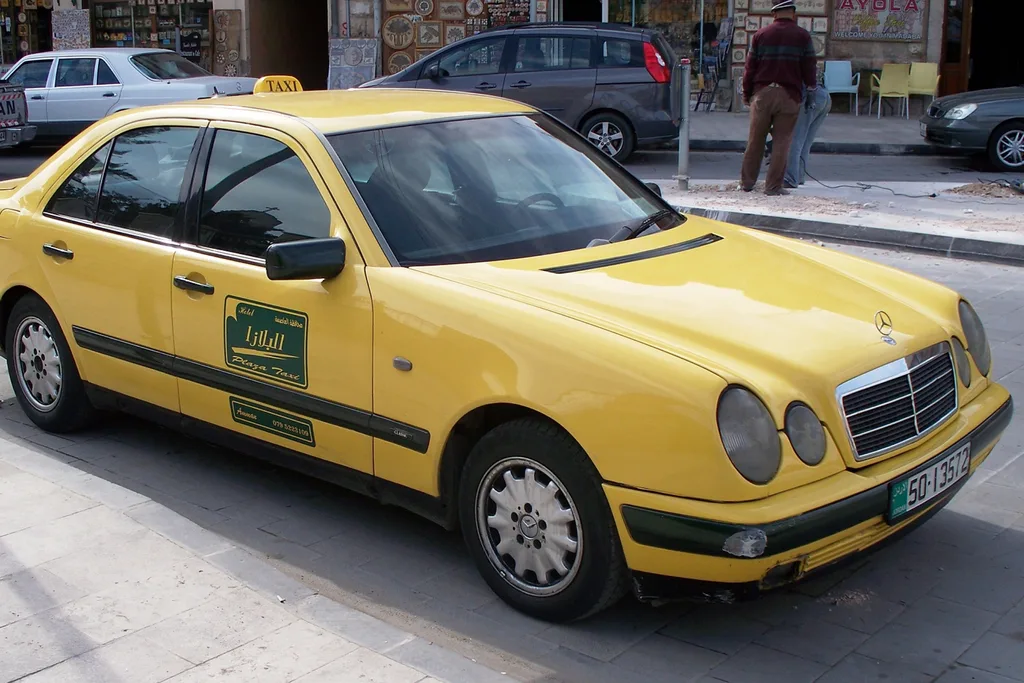
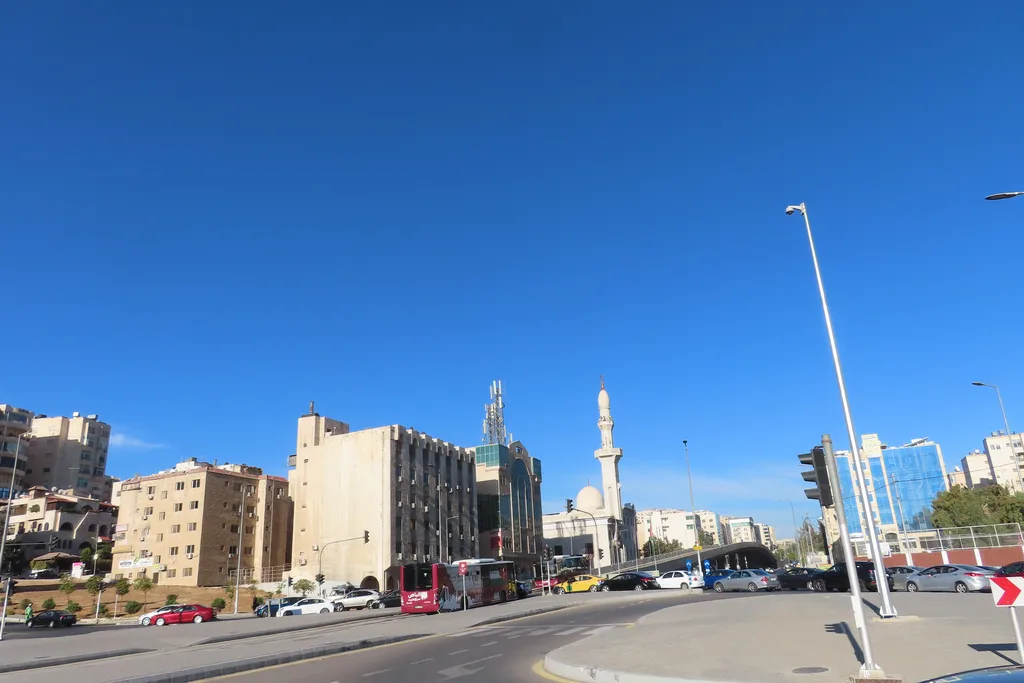
Inside Jordan’s cities, and above all in Amman, the taxi is the default unit of movement. The yellow taxis are everywhere, hail-able on any main street, and fine for the short hops that Amman’s hills make necessary — this is a city built across ridges and valleys, where a distance that looks walkable on a map can involve a serious climb. Taxis here carry meters, and the honest visitor protocol is simple: either see the meter running, or agree the fare before the car moves, calmly and with a smile. Most rides are unremarkable either way, but the agreed-fare habit removes the one argument tourists in Amman ever report, and it costs ten seconds. For the airport run and other longer city journeys, a fare agreed at the desk or by phone in advance is the standard local method, covered in the airport part of the route section below.
Ride-hailing has layered itself over the top of this and is, for most visitors, the easiest city option of all. Uber and Careem both operate in Amman, with the apps giving you the price before the ride, the route on a map, and no cash or negotiation at the kerb — three small mercies that matter most exactly when you are tired, new in town, or moving after dark. Coverage is a city phenomenon: strong in Amman, present in Aqaba, and not something to build a plan on in Wadi Musa or the smaller towns, where the local answer is a taxi arranged through your hotel. The pattern most visitors settle into is apps inside the capital, hotel-arranged taxis everywhere else, and that pattern is worth adopting on day one rather than discovering by day four.
What taxis are not, in Jordan, is an intercity plan — with one exception. An intercity taxi is a private hire wearing a taxi’s clothes: it can certainly take you from Amman to Petra or from Aqaba to Wadi Rum, and drivers quote for these runs all the time, but the price is a negotiation for the whole car, agreed before departure, and at that point you are really hiring a driver through a different doorway. Compare it with the driver quotes above and choose on what is included, not on the colour of the car. The exception is the genuinely local long hop — Aqaba to the Wadi Rum visitor centre is the classic — where taxis are the standing public answer and the run is short enough that the arrangement stays simple.
The Flight to Aqaba – Jordan’s Only Domestic Route
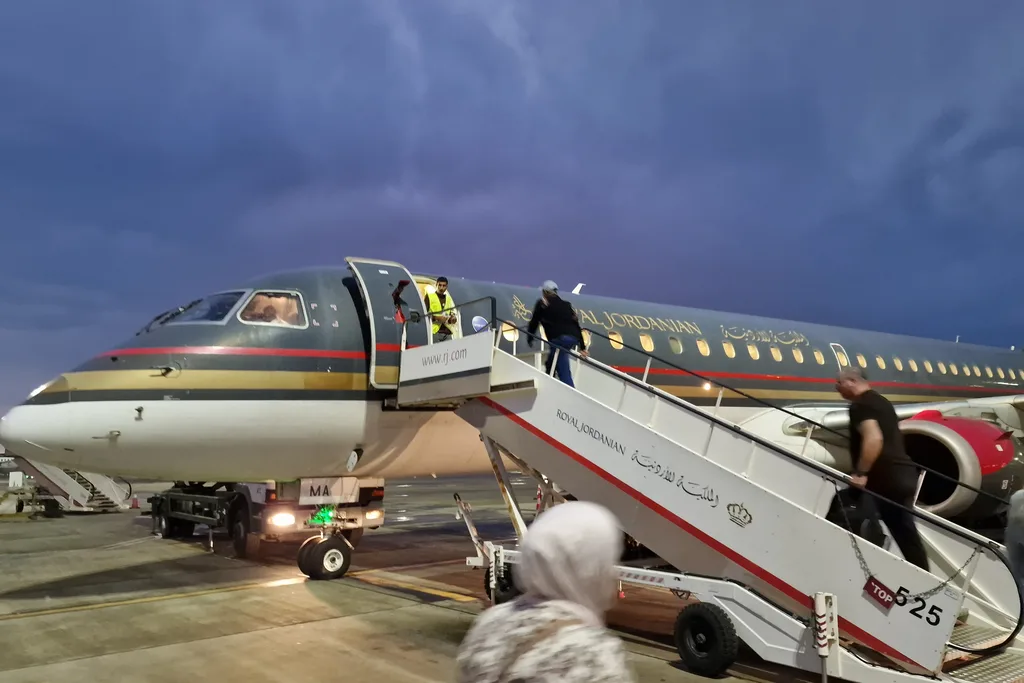
Jordan has exactly one scheduled domestic air route, and understanding why explains when to use it. Royal Jordanian flies between Amman’s Queen Alia International Airport and Aqaba’s King Hussein International Airport, a hop of roughly an hour in the air over the length of the country. There are no flights to Petra, Jerash or anywhere else — every other destination in this guide is road-only — so the flight is not a network to build a trip around. It is a single tool for a single job: collapsing the Amman-to-Aqaba leg, the longest transfer in the country, when the far south is where your trip is heading. Current frequencies and fares live on Royal Jordanian’s own site, and they vary by season and by how far ahead you book, so check there rather than trusting any guide’s snapshot, this one included.
The honest arithmetic has to count the whole journey, not the hour in the air. Queen Alia Airport sits well south of Amman — roughly half an hour to forty-five minutes by road from the city in normal traffic — so a traveller starting in central Amman spends that time reaching the airport, plus check-in and security, plus the short transfer from Aqaba’s airport, which sits just north of the town and is mercifully quick. Door to door, the flight still beats the roughly four-hour road journey comfortably, and it beats it by more the heavier the traffic and the tighter the day. But it beats a one-way rental drop or a coach by less than the timetable suggests, and for a traveller already holding a rental car, flying down usually means restructuring the whole trip around returning or abandoning the car — which is sometimes exactly right and sometimes an expensive way to save two hours.
Where the flight genuinely shines is at the ends of trips. Fly down at the start and you can work northwards by road — Aqaba, Wadi Rum, Petra, then the King’s Highway or the Desert Highway back to Amman — driving every road once, in daylight, with no backtracking, and flying home from where you started. Fly back at the end and the Dead Sea or Amman nights sit at the top of the trip where they belong, with a one-hour hop replacing the long drive north on the day you least want it. Used like that, as a hinge rather than a habit, the little flight is one of the smartest tools Jordan offers. Used mid-trip as a shortcut between road days, it mostly adds airports to a journey the roads were already handling well.
Route by Route – the Southern Spine
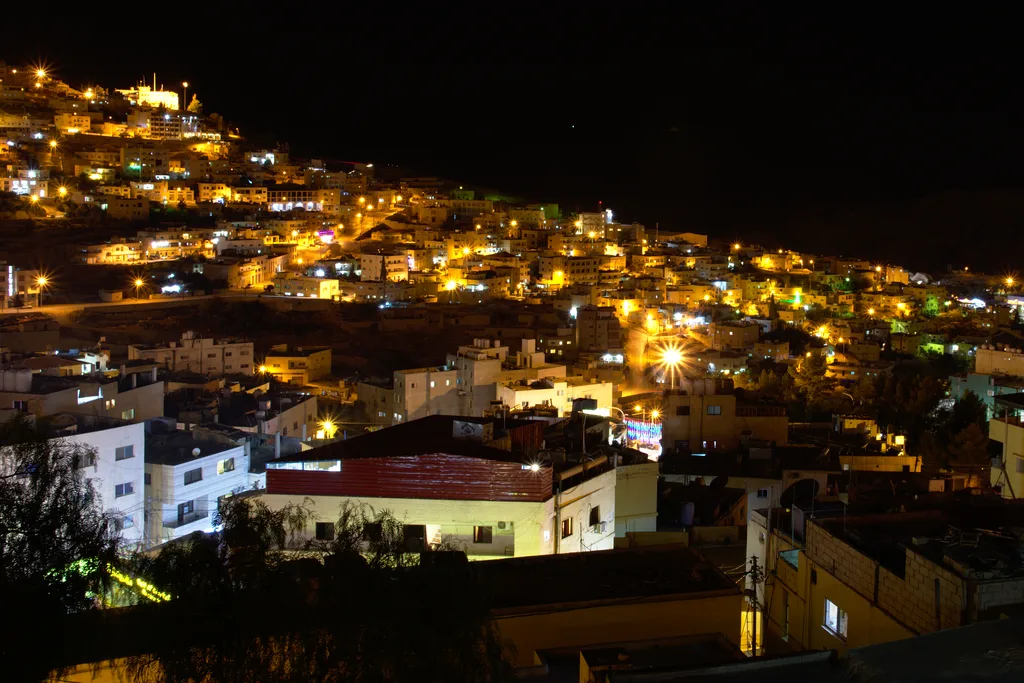
Everything above was about vehicles. This section is about journeys — the specific legs the classic Jordan trip is made of, and which option actually fits each one. The southern spine first: the Amman–Petra–Wadi Rum–Aqaba chain that almost every first trip follows in some order.
Amman to Petra
The most travelled leg in Jordan is also the best served. By road it is roughly three hours on the Desert Highway, and every option in this guide can do it: a rental car on your own clock, a hired driver, the JETT coach on its early departure arriving at the coach park by the visitor centre, or local buses from the South Station for the traveller with a day to spare. The King’s Highway turns the same leg into a full sightseeing day, as its own section described. Two pieces of honest advice govern the choice. First, Petra rewards an early start more than almost any site on earth, so the transport question is really “what gets me to the visitor centre rested, at the hour I want” — for many people that argues for travelling down the afternoon before and sleeping in Wadi Musa, rather than any same-day dash. Second, our Petra travel guide covers the site itself; this leg only has to deliver you to its gate in good shape, and the option that does that within your budget is the right one, whichever it is.
Petra to Wadi Rum
This is the leg where the transport map goes quiet, and knowing that in advance is the whole trick. Wadi Musa to the Wadi Rum visitor centre is roughly an hour and a half to two hours by road, south on the highway and then east on the desert road to the protected area — but there is no regular, bookable public service that a visitor can build a day around, and the informal options come and go with season and demand. In practice, almost everyone does this leg by car: their own rental, a taxi or driver arranged in Wadi Musa or through their Rum camp, or a camp-arranged transfer that meets them and handles the last mile too. The routing inside our 7-day Jordan itinerary assumes exactly that, and it is worth copying the assumption: sort this leg out the day before, through your hotel or camp, rather than arriving at a kerb in Wadi Musa hoping the desert has organised itself. It has not, and that is part of its charm — see the next section for what happens at the visitor centre.
Amman to Aqaba
The country’s long leg: roughly four hours by road on the Desert Highway, several JETT departures on a normal day, a one-hour flight, or a rental car you either return north or drop in Aqaba for a one-way fee. The choice turns on what Aqaba is in your trip. If it is the final beach chapter before flying home from its own airport or crossing a border, the coach or the flight down and no car at all is clean and cheap in effort. If it is the start of a northbound road trip, fly down and rent from Aqaba, or drive down and keep the car — the one-way drop makes the second work. What rarely makes sense is driving down and back in a short trip: eight-plus hours of desert highway for a day or two of sea is a poor trade against the flight, and Aqaba’s pleasures survive the loss of the drive entirely.
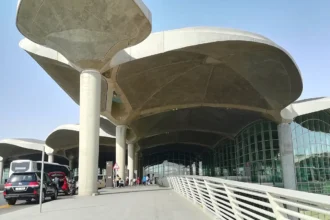
Arriving at Queen Alia Airport
Almost every Jordan trip starts with the same forty minutes, so it deserves its own short treatment. Queen Alia International Airport stands south of Amman on the Desert Highway, and the transfer into the city offers the full menu in miniature. The airport’s own taxis work on fixed rates to city destinations, with the rates displayed at the taxi area outside arrivals — you confirm your destination and its set fare before riding, which removes negotiation from the exact moment you are least equipped for it. The Sariyah airport express bus links the airport with the city on a stopping run that ends at the North Bus Station at Tabarbour, passing the main circles on the way; it is the budget answer, and the airport’s official site carries its current times and fare. Ride-hailing pickups also operate at the airport for app users. And if you are renting, the desks are in the arrivals area and the highway into your trip starts at the door — just remember the earlier briefing, and do not make your first Jordanian drive a night arrival’s long run south. Sleep in Amman, or take the transfer, and start the roads in daylight.
The Wadi Rum Last Mile – Where Normal Transport Ends
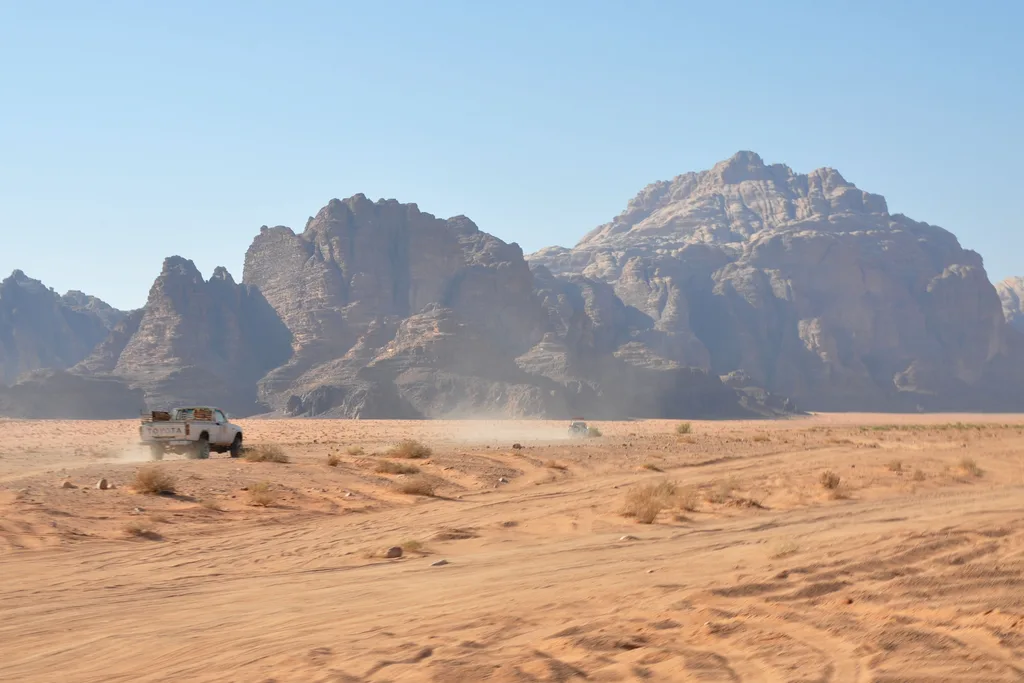
Wadi Rum is the one place in Jordan where the transport question has a single answer, and it is worth understanding why before you arrive, because visitors regularly turn up expecting to drive themselves around the desert. Rum is a protected area, and movement inside it belongs to the local Bedouin community: visitors enter through the visitor centre, continue to Rum village, and from there travel in the authorised local 4x4s — open-backed pickups with bench seating that are simultaneously the desert’s taxis, tour vehicles and supply line — or on foot, by camel or on a climbing rope. Your rental car, your hired driver and the JETT coach all stop at the edge of this system, by design rather than by failure. The protection rules and the community’s livelihood are the reason, and the result is that the last mile of every Rum journey is arranged with the people who will host you in it.
In practice this makes the Rum leg simpler than it looks, provided one arrangement is made in advance: your camp is your transport coordinator. Camps collect guests from the visitor centre or the village, run the jeep tours that are the substance of a Rum stay, and can arrange onward transfers to Aqaba or Petra through the same local network. The correct sequence is to book the camp, agree where and roughly when you will arrive at the visitor centre, and let the handover happen — the 4×4 that meets you is not a taxi you have hired but the beginning of the stay itself. Travellers who try to keep their own car in play, or who arrive at the visitor centre with no camp expecting to improvise, are fighting a system that works perfectly well once you step inside it. Step inside it.
One timing note closes the section. The desert road from the highway to the visitor centre is a good paved road, and Aqaba to the visitor centre is roughly an hour — but the onward sand tracks to the camps are not a journey to begin in the dark if it can be helped, both for the driving and because arriving at a Rum camp at sunset is one of the great entrances in travel and arriving at midnight is a transaction. Build the day so the last mile happens in the light, like everything else in Jordan.
Route by Route – the Dead Sea and the North
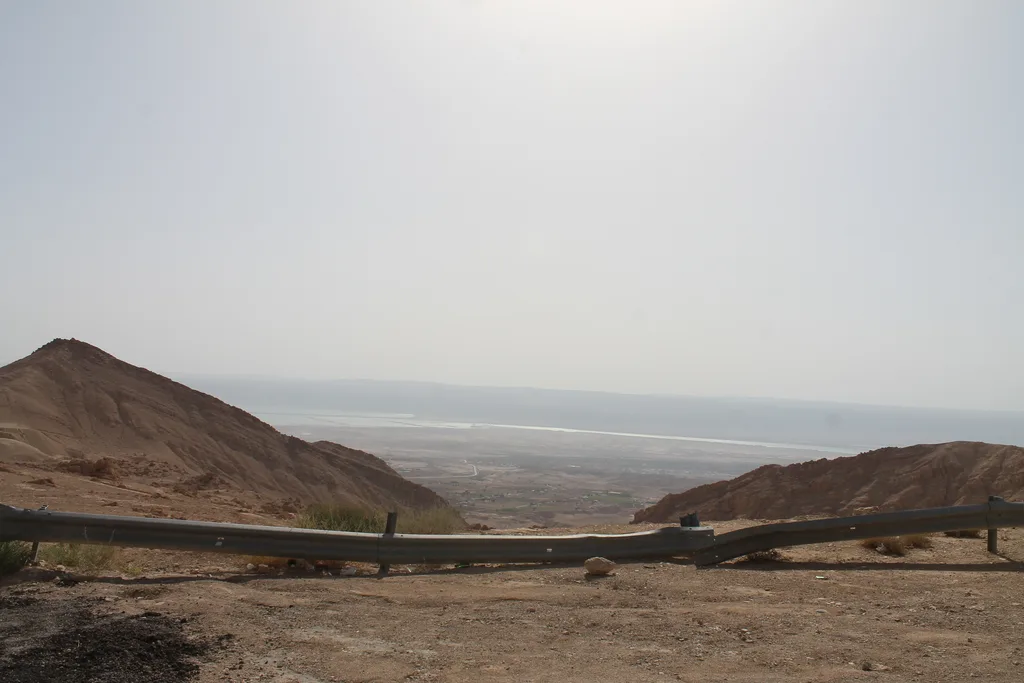
Two more classic legs complete the map, and they share a theme: both are short journeys that public transport serves badly, which is exactly why they catch people out. The Dead Sea shore is roughly an hour from Amman by road, down the long descent from the plateau to the lowest land on earth, along a modern highway that runs past the resort strip and the public beaches. The JETT network has historically run Dead Sea trips, and hotel and tour desks sell the run constantly — but the scheduled public options are thin and changeable, so the honest summary is that most visitors reach the Dead Sea by rental car, by hired driver, or on an organised day trip, and that a driver for the day pairs naturally with Madaba and Mount Nebo on the way down or back. If the Dead Sea is a half-day float in a longer Amman stay, that driver day is usually the cleanest transport purchase of the trip.
The north is the mirror image: close, green and bus-friendly. Jerash, the great Roman city, is roughly an hour north of Amman, and the Amman–Jerash corridor is one of the busiest local routes in the country — minibuses run it in the leave-when-full rhythm that actually works when departures are constant, and JETT’s network has served it too. Ajloun’s castle and forest sit a short hop beyond Jerash and combine into the classic northern day: out by bus or car in the morning, Jerash’s colonnades, Ajloun’s hilltop in the afternoon, back in Amman for dinner. A rental car makes this day effortless; a driver makes it luxurious; the buses make it cheap and entirely possible. The transport that does not suit the north is the one people sometimes force on it — the intercity taxi at intercity prices, for a leg the local system covers every few minutes.
Put the two legs together and the pattern of the whole guide completes itself. Jordan’s transport is not a ladder from worst to best; it is a set of tools with territories. Coaches own the two southern corridors. Local buses own the busy north and the short hops. Cars and drivers own the King’s Highway, the Dead Sea and every itinerary built from stops. The flight owns one leg only, and owns it well. Wadi Rum owns itself. The traveller who matches tool to territory spends their money and attention on the country; the one who does not spends both on the gaps between systems.
Frequently Asked Questions
Do I need to rent a car to see Jordan properly? No — but you need a plan for the legs a car would have covered. The coach corridors, a hired driver for the King’s Highway or the Dead Sea day, and camp-arranged transfers into Wadi Rum can carry a whole classic trip without you driving a kilometre. What you cannot do is assume public transport will improvise the gaps; the gaps are real, and each one needs its specific answer chosen in advance.
Is driving in Jordan safe for a foreign visitor? In the ordinary sense, yes — the highways are good, the routes are signed in English, and thousands of visitors self-drive the classic route every season. The honest cautions are specific rather than general: slow down for the unmarked speed bumps at settlement edges, treat checkpoints as routine paperwork, leave Amman’s traffic to a taxi if it does not appeal, and do not drive long intercity legs after dark. Drive defensively and in daylight, and Jordan is a manageable, even enjoyable, driving country.
How do I get from Amman to Petra without a car? The JETT coach is the straightforward answer — bookable online, leaving Amman in the early morning from its Abdali or 7th Circle office and ending at the coach park beside the Petra visitor centre in Wadi Musa, roughly three hours later. The same company runs the return the same afternoon. Local buses from Amman’s South Station are the cheaper, slower, unscheduled alternative, and a hired driver is the flexible one. Current JETT times and fares are on its official site; check them the week you travel rather than trusting any guide’s figures.
Can I visit Wadi Rum as a day trip, or do I have to stay overnight? You can, and people do — Aqaba to the visitor centre is roughly an hour, and a jeep tour of a few hours shows you the famous valley floor. But the desert’s best hours are its edges, sunset and the hour after dawn, and both belong to the people sleeping in it. Transport-wise an overnight costs you nothing extra and buys the whole point of the place, so if your itinerary can hold a Rum night, hold it.
Is the flight to Aqaba worth it? When the far south is the destination, yes; as a general shortcut, it depends. Count the whole journey — the road out to Queen Alia Airport, check-in, the hop itself, the short transfer in Aqaba — and it still beats the roughly four-hour drive by a useful margin, most of all at the start or end of a one-way trip. For a traveller already committed to a rental car and a loop, it usually restructures more than it saves. Royal Jordanian publishes the current schedule and fares; that is where the decision should be made.
What is the cheapest way to travel around Jordan? The local buses and minibuses, by a wide margin — with the JETT coaches as the cheap option that still runs to a timetable. The price of the minibus layer is paid in time and certainty rather than money: vehicles leave when full, routes are learned by asking, and a missed connection costs an hour, not a fortune. Travellers with more time than money have crossed Jordan this way for decades; travellers with six days and a list should buy back the certainty on the legs that matter and save on the ones that do not.
Do I need an International Driving Permit to rent a car in Jordan? Carry one. Requirements vary by company and by the official reading your documents on the day, and the combination of your home licence plus an International Driving Permit is the pairing that no rental desk or checkpoint argues with. Arrange it before you leave home — it is not something that can be issued on arrival — and keep it with the licence it translates, not in a different bag.
The Short Version
Getting around Jordan is a matching exercise, not a hierarchy. Rent a car if your trip is built from stops; take the JETT coach for the Amman–Petra and Amman–Aqaba corridors it serves so well; hire a driver for the King’s Highway day and the Dead Sea; let local buses carry the busy north; use the little flight to Aqaba as a hinge at the start or end of a one-way trip; and let Wadi Rum’s own people drive you inside their desert. Print no fares from any guide, this one included — check the current figure where it lives, at the official source, the week you travel. Do those things, arrive before dark, and Jordan’s transport stops being a problem to solve and becomes what it should be: the part of the trip you barely have to think about, running quietly underneath the part you came for.