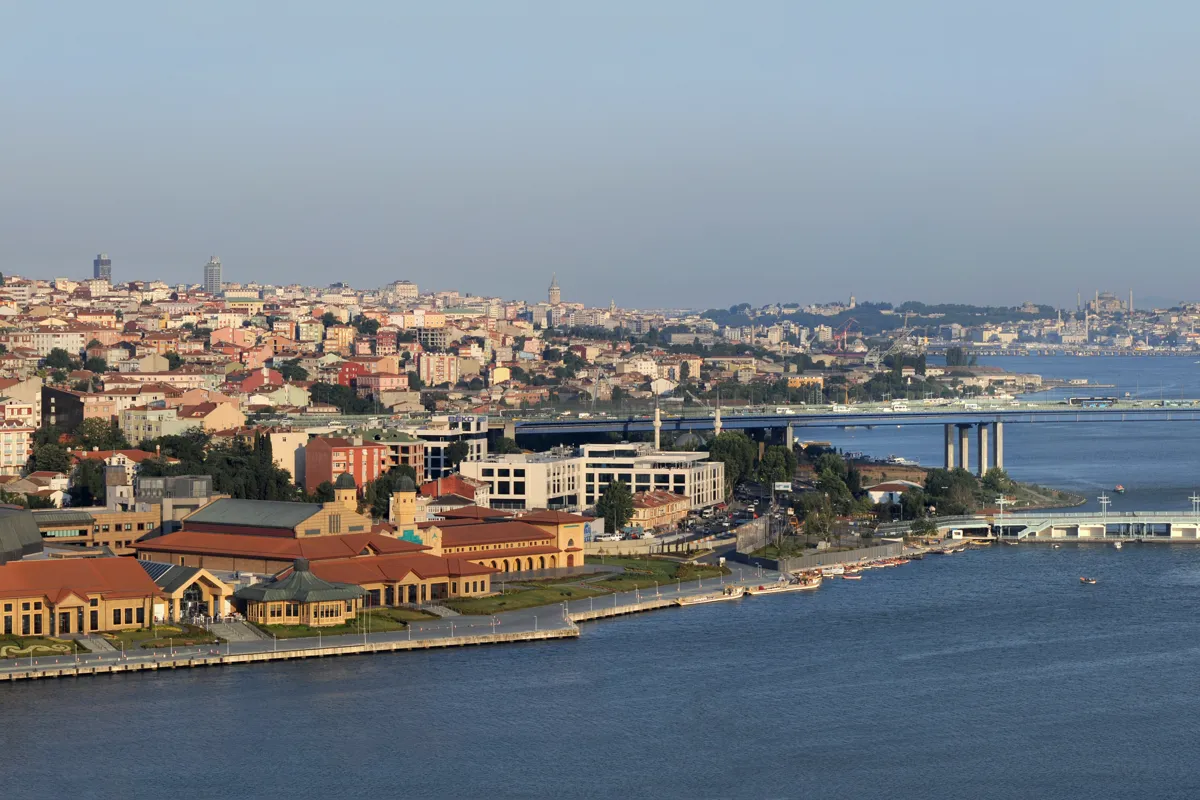
History of Turkey – From Göbekli Tepe to the Republic, the Story Behind the Stones
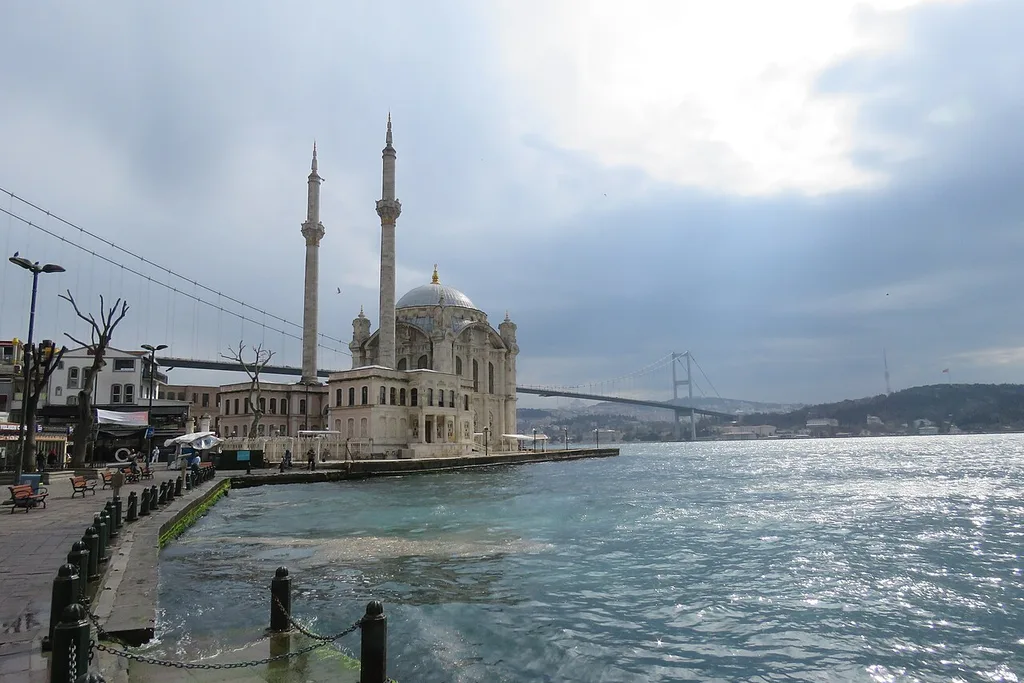
Turkey is the wrong country to visit with a single picture in your head, because it has never been a single thing for long. Stand in Istanbul and you are standing in a Greek colony, a Roman capital, a Byzantine capital and an Ottoman capital at the same time, and the buildings do not politely take turns. A mosque by Sinan rises over a cistern built by a Byzantine emperor, which sits over streets laid out by Romans, on a peninsula first settled by Greeks from Megara. Drive inland and the layering changes but never stops. A Seljuk caravanserai guards a road the Romans paved, past a Hittite capital that was already ancient when Rome was founded, in a landscape where people were raising carved stone pillars before they had invented farming villages.
That layering is the whole point of this page. It is not a textbook, and it does not try to settle the arguments scholars are still having. Where the evidence is debated — and for the earliest chapters it genuinely is — it says so, plainly. What it does is tell Turkey’s past in the order a traveller meets it, as one continuous story with seven great acts: the first farmers and the stone circles of Göbekli Tepe, the Hittite empire, the Greek and Persian centuries, Rome, the thousand years of Byzantium, the Seljuk Turks, the Ottoman centuries, and the Republic that replaced them. Each act ends, in effect, with an address — the place where that era is still standing in stone, so that the history stops being background and starts being something you can walk into.
One honest note on dates before the story starts. The deep chronology of Anatolia is built from archaeology, inscriptions and king-lists, and for the earliest periods the dates are approximate and sometimes contested — Göbekli Tepe’s exact purpose is the famous example, hedged properly in its section below. The dates this article leans on hardest are the fixed points no serious account disputes: the refounding of Constantinople in 330, the Ottoman conquest of that city in 1453, the Battle of Manzikert in 1071, the Treaty of Lausanne in 1923 and the proclamation of the Republic on 29 October 1923. Everything between those anchors is given in the broad shape the evidence supports, and no precision is claimed that the evidence cannot carry.
Timeline at a Glance
Here is the whole story on one screen before it is told properly. Nine eras, each with a place where it still stands. If you only remember one thing from this page, remember the order — stone circles first, Hittites second, and the Turks arriving in Anatolia far later than most visitors assume, roughly a thousand years ago rather than at the beginning of the story.
| Era | Dates | Where you see it today |
|---|---|---|
| First farmers and stone circles | From around 9600 BCE | Göbekli Tepe, Çatalhöyük |
| The Hittites | Around 1650 to 1200 BCE | Hattusa, Yazılıkaya |
| Greeks, Persians and Alexander | 8th century BCE to the 1st century BCE | Troy, Miletus, Sardis |
| Rome | 133 BCE onwards | Ephesus, Aphrodisias, Pergamon |
| Byzantium | 330 to 1453 | Istanbul, Cappadocia’s rock churches |
| The Seljuks | 1071 to the 14th century | Konya, Sultanhanı caravanserai |
| The Ottomans | Around 1299 to 1922 | Bursa, Edirne, Istanbul |
| War of Independence and the Republic | 1919 to 1923 and after | Samsun, Ankara, Anıtkabir |
| Modern Turkey | 1923 to today | Ankara, Istanbul’s new skyline |
Read the table downwards and you are reading Turkey roughly west to east and back again, because the eras are not spread evenly across the map. The oldest story is in the south-east, at Göbekli Tepe near Şanlıurfa, and in the central plateau at Çatalhöyük. The Greek and Roman story belongs to the Aegean west. The Seljuk story belongs to the central plateau around Konya. The Ottoman story starts in the north-west at Bursa and ends in Istanbul, and the Republic’s story gathers in Ankara, a city chosen precisely because it was not Istanbul. A single trip that follows the table in order is a long one, but even a short trip that crosses two or three rows — Istanbul plus Ephesus, say, or Cappadocia plus Konya — will start to show the layering, and that is the real reward of travelling here with the history in hand.
Before Farming – Göbekli Tepe and the First Towns
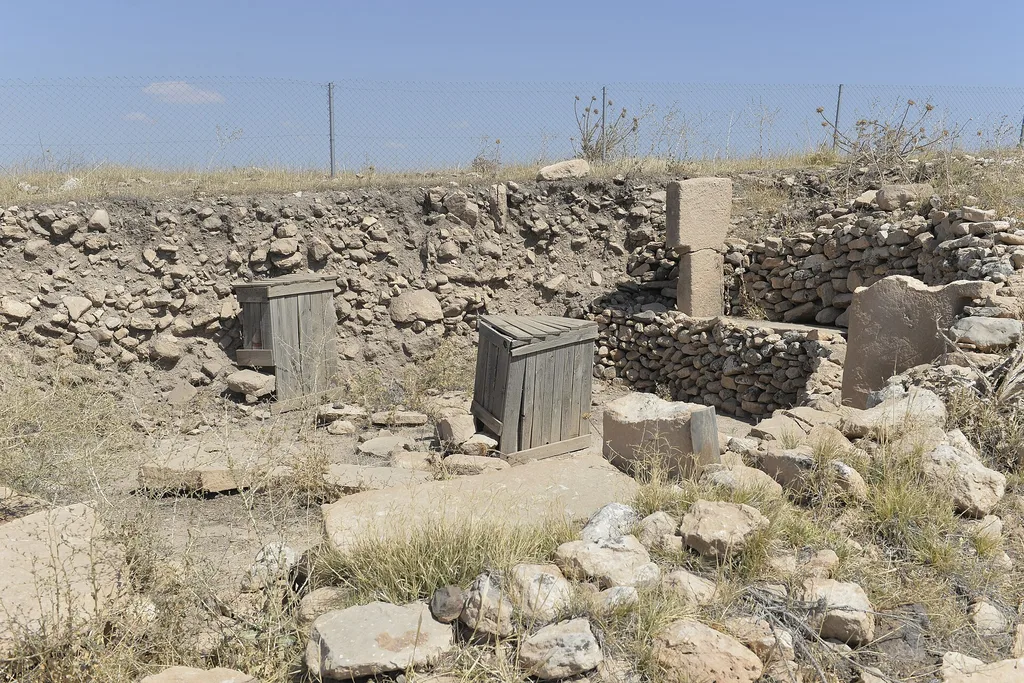
The story of Turkey begins with a fact that still unsettles archaeologists, which is a good reason to start here rather than with anything tidier. On a limestone ridge near modern Şanlıurfa, in the south-east of the country, people raised circles of enormous T-shaped stone pillars, some carved with foxes, boars, vultures and abstract signs, from around 9600 BCE — thousands of years before anyone in the region was living in a farming village, and thousands of years before Stonehenge. The site is called Göbekli Tepe, and it is a UNESCO World Heritage site, and the honest thing to say about it is that nobody knows exactly what it was for. The older explanation, that it was a temple built by hunter-gatherers who gathered seasonally for ritual, has been questioned by more recent work suggesting the enclosures may have had a more domestic or mixed character than first thought. What is not in doubt is the sequence it overturned: monumental building did not wait for farming, cities and kings. In Anatolia, it came first.
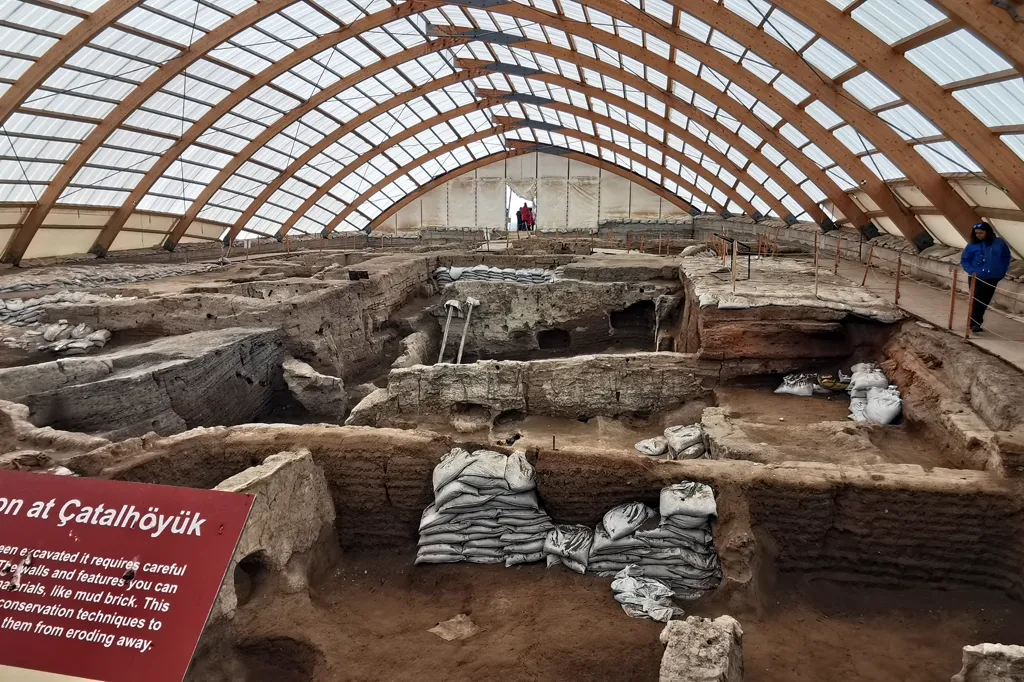
That reversal matters because Anatolia is where farming itself was taking shape. A few centuries after Göbekli Tepe, and far to the west on the Konya plain, people were living year-round at Çatalhöyük, a dense settlement of mudbrick houses entered through the roof, lived in for well over a thousand years, and famous today for its wall paintings, plastered bulls’ heads and small figurines. Çatalhöyük was not a city in the later sense — it had no streets, no palaces and, as far as anyone can tell, no kings — but it was a town of a size and complexity that would have been unimaginable a few thousand years earlier, and it shows the second half of the Neolithic bargain. People settled, stored grain, buried their dead under their floors, and began the long accumulation of neighbours, surplus and social difference that every later chapter of this story grows out of.
For the traveller, these two sites set the scale of everything that follows, and they correct a common misunderstanding before it forms. Turkey’s history does not begin with the Greeks, or the Romans, or the Turks. It begins in deep time, with people who left stone and mudbrick rather than writing, and the country has been continuously inhabited, argued over and rebuilt ever since. When you later stand in a Roman theatre or an Ottoman mosque, you are standing on the latest layer of a settlement history that is roughly twelve thousand years old, and the sites of the south-east and the Konya plain are where that depth is easiest to feel, because there is nothing later built on top of them to distract you.
The Hittites – Anatolia’s First Great Empire
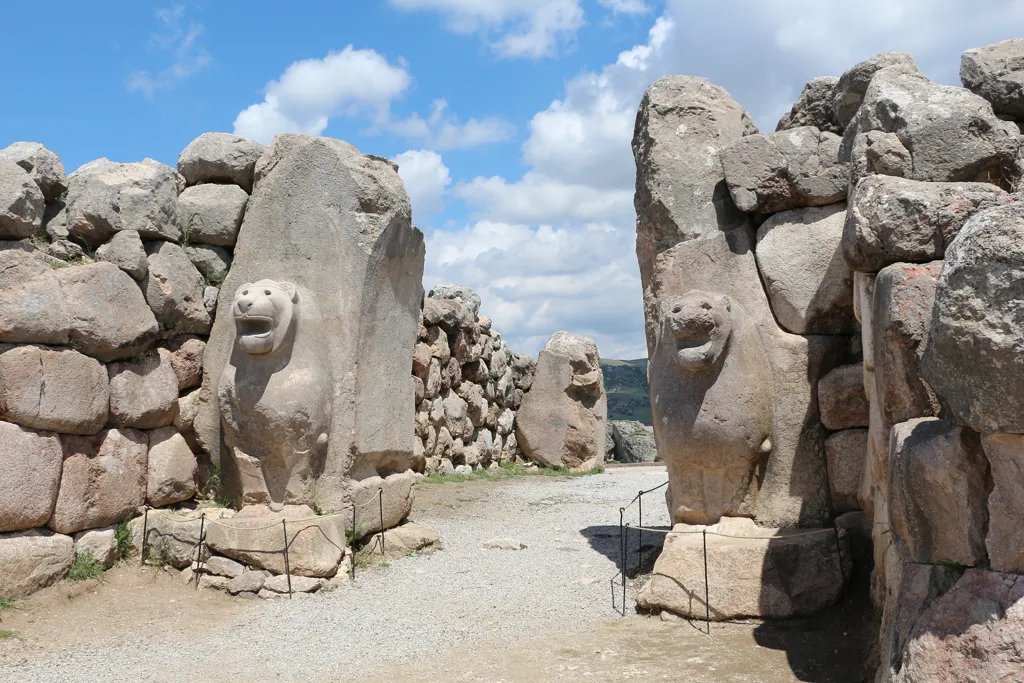
By the second millennium BCE, Anatolia had something it had never had before: an empire run from its own interior. The Hittites, an Indo-European-speaking people whose capital was Hattusa, in the hills north-east of modern Ankara near Boğazkale, built a kingdom from around 1650 BCE that at its height reached from central Anatolia into Syria, traded and fought with Egypt and Mesopotamia as an equal, and left archives of clay tablets that let historians reconstruct its kings, laws, treaties and anxieties in unusual detail. Hattusa itself was a serious city — walled, with great gates guarded by carved lions and a sphinx, temples, a citadel and a rock sanctuary at Yazılıkaya where the gods of the Hittite pantheon process in stone along a natural gorge. It is a UNESCO World Heritage site, and it is also, for most visitors, a surprise: the first great empire of Anatolia was not coastal, not Greek and not Roman, but inland, Anatolian and older than all of them.
The Hittites are best remembered for two things, and both are worth knowing before you visit. The first is iron. The Hittites were among the early masters of ironworking, and their control of the craft and the trade in it was a real source of power in a Bronze Age world, though the popular picture of a Hittite iron monopoly is overdrawn and modern scholarship treats it with more caution than the textbooks used to. The second is diplomacy. After the Battle of Kadesh, fought against Egypt around 1274 BCE in what is now Syria and claimed as a victory by both sides, the Hittites and Egyptians concluded a peace treaty that survives in both versions — the earliest surviving peace treaty between great powers anywhere, and a document that still reads, across three thousand years, like statecraft rather than poetry.
The empire did not end in a single catastrophe. Around 1200 BCE, in the wider crisis that historians call the Late Bronze Age collapse, Hattusa was abandoned and burned, its empire fragmented, and the causes — invasion, famine, internal breakdown, or some combination that varied by region — remain genuinely debated. The Hittites did not vanish entirely; smaller Neo-Hittite states carried their art and their gods on in the south-east for centuries, and their language and their treaties survived in archives. But as a power, they were finished, and the centuries after them belong to smaller kingdoms and to newcomers from the sea and the west. For the traveller, Hattusa rewards the detour precisely because it is not a ruin of a familiar empire. Its lions and its tablets belong to a world that most visitors have never pictured, and picturing it changes the rest of the trip: Anatolia had a great civilisation of its own before anyone from Greece or Rome arrived.
Greeks, Persians and Alexander – The Aegean Centuries
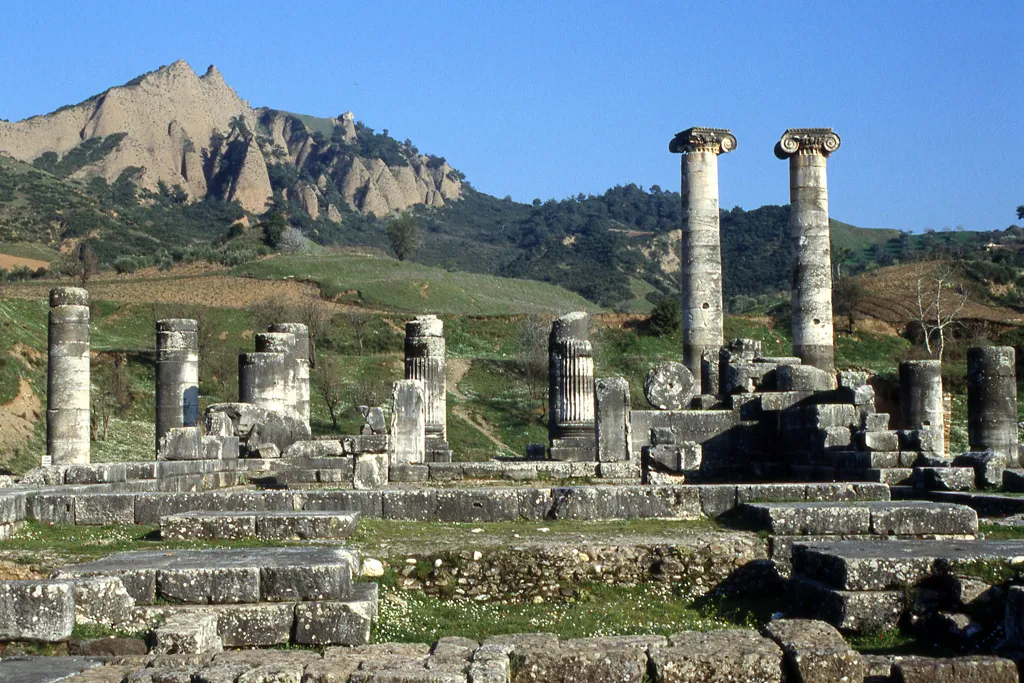
After the Hittites, the western edge of Anatolia became Greek, and it stayed Greek in language and culture for a very long time. From around the eighth century BCE, Greek cities lined the Aegean coast — Miletus, Ephesus, Smyrna (modern İzmir), Halicarnassus (modern Bodrum) among them — founded by settlers from across the sea, trading across the Mediterranean, and producing philosophers, historians and architects whose names are still taught: Thales of Miletus, Herodotus of Halicarnassus, Hippodamus of Miletus, who planned cities on a grid. Inland, the Lydian kingdom grew rich around its capital Sardis, and its king Croesus became proverbial for wealth — a reputation built on the region’s gold, and on the Lydian habit, widely credited to them, of minting standardised coinage. The famous story of Croesus consulting the oracle at Delphi before attacking Persia, and misreading its answer, is legend rather than documented history, but the kingdom itself, and its fall, are not.
The fall came to Persia. In 546 BCE the Achaemenid king Cyrus the Great took Sardis, and Anatolia passed into the Persian Empire, organised into satrapies and taxed and governed from a distance. The Greek cities of the coast chafed under Persian rule, revolted in the Ionian Revolt at the start of the fifth century BCE, and were put down — an episode that helped set off the wider Greco-Persian wars across the Aegean. Then, in 334 BCE, Alexander of Macedon crossed the Hellespont into Asia Minor, defeated the Persian satraps at the Granicus, and in a campaign of extraordinary speed took the whole peninsula, before moving on to Egypt and the east. Alexander died young in 323 BCE, and his empire broke apart among his generals, the Hellenistic kingdoms that followed — Pergamon prominent among them in western Anatolia — blending Greek and Anatolian traditions for another two centuries.
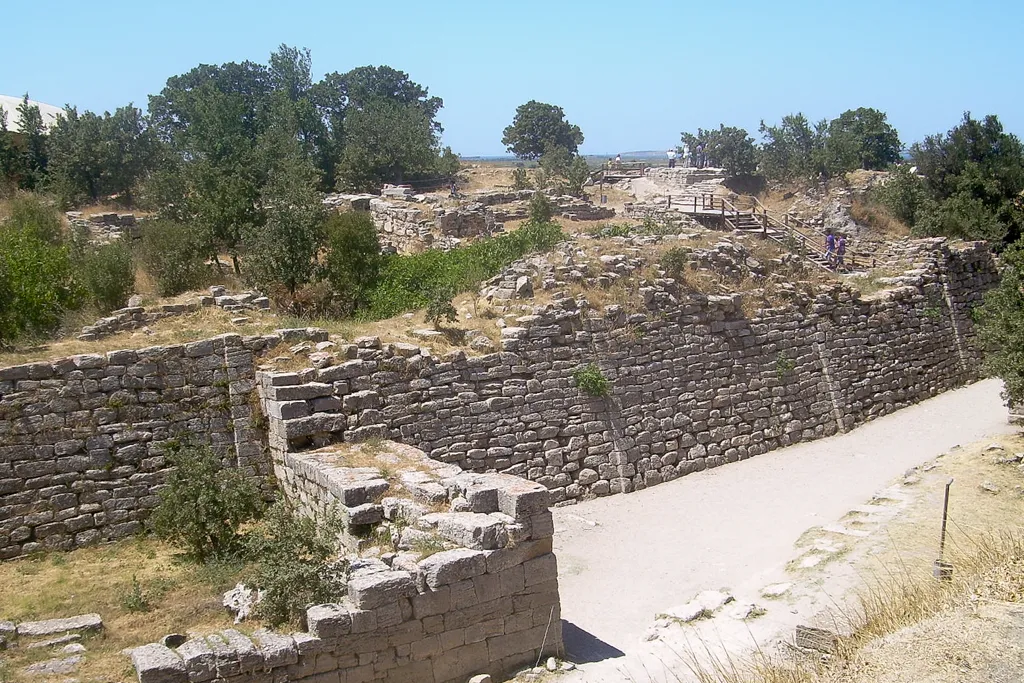
Two cautions belong in this chapter, because both are places where travel writing routinely overstates. The first is Troy. The mound at Hisarlık, near the Dardanelles, holds layer upon layer of a real Bronze Age settlement, excavated since the nineteenth century, and it is very likely the place behind the Homeric tradition — but the Iliad is a poem, not a chronicle, and no layer of Troy can be tied to a historical Trojan War with the certainty that guidebooks sometimes imply. The second is the idea of a clean Greek age followed by a clean Roman age. In Anatolia the two blur. Greek cities kept their language, their theatres and their councils under Rome, and much of what visitors call Roman Anatolia is Greek Anatolia rebuilt, enlarged and re-paved by Roman money. When you stand in a theatre at Miletus or Aphrodisias, you are standing in a building with a Greek plan and a Roman afterlife, and the layering, once again, is the story.
Rome – Roads, Cities and a New Capital in Waiting
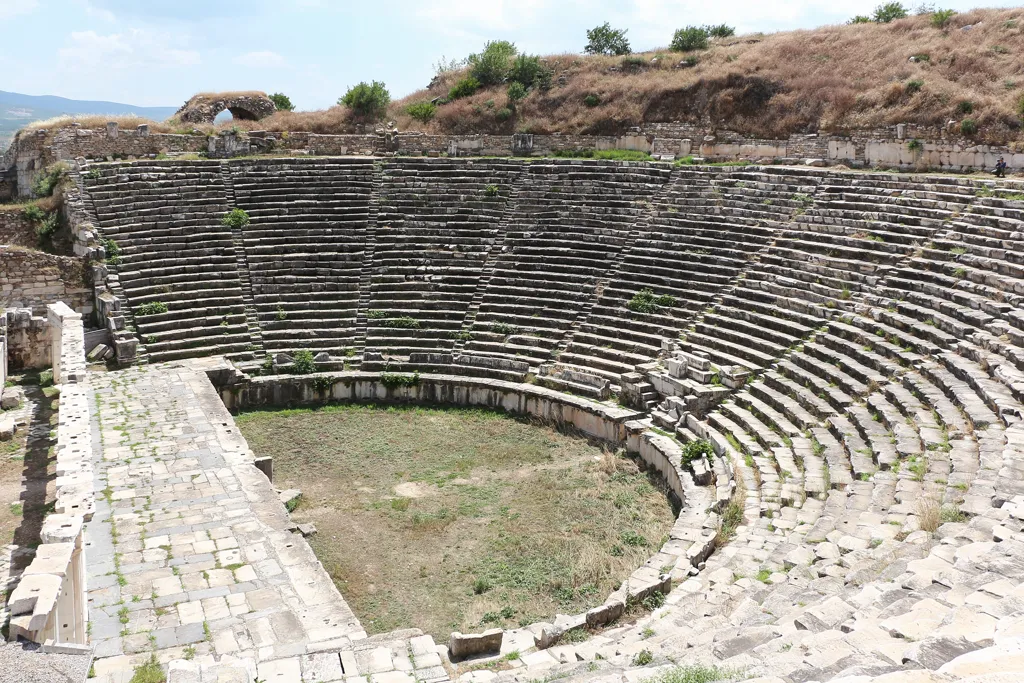
Rome came to Anatolia gradually and then all at once. The hinge year is 133 BCE, when Attalus III, the last king of Pergamon, died and bequeathed his kingdom to Rome, which organised it as the province of Asia. Over the following century, by war, alliance and inheritance, the rest of the peninsula followed, until the whole of what is now Turkey lay inside the empire. Rome built as it always built: roads paved and mile-marked across the plateau, aqueducts carrying water to cities that grew to a scale the region had never supported, baths, libraries, theatres and colonnaded streets in a recognisable Roman language of stone. Ephesus, the province’s great port and capital, became one of the largest cities of the Roman world, its Library of Celsus and its great theatre still the first things most visitors picture when they think of Roman Turkey — and Pergamon, Hierapolis above the white terraces of Pamukkale, and Aphrodisias with its stadium and its school of sculpture all belong to the same building age.
What is easy to miss, standing in those ruins, is how Roman Anatolia worked as a society rather than as a set of monuments. It was, for most of its centuries, a prosperous and largely peaceful interior, not a frontier. Its cities were Greek-speaking, governed by local councils of wealthy citizens under Roman oversight, and its wealth came from farming, trade and the workshops that supplied an empire. Christianity spread through these same cities in the first centuries CE — Ephesus is prominent in the New Testament letters and in the early church’s history — and by the fourth century the religion that had begun as a minority movement inside the empire was becoming the empire’s own. That transformation is the bridge to the next chapter, and it happened, more than anywhere else, in Anatolia’s cities.
The other Roman legacy is a city that Rome built almost by accident into the next thousand years of history. Byzantium, a modest Greek colony on the strait between Europe and Asia, was refounded by the emperor Constantine in 330 as Constantinople, the capital of the eastern empire. Constantine chose it for strategy — a peninsula city commanding the crossing between continents and the passage between the Mediterranean and the Black Sea — and the choice outlived him by more than a millennium. When the western empire fell in the fifth century, the eastern empire did not fall with it. It continued, Greek-speaking and Christian, with its capital at Constantinople, and historians call that continuation the Byzantine Empire, though its own people called themselves Romans to the end. The Roman chapter of Turkey’s story, in other words, does not end with Rome. It changes address, and it runs for another thousand years.
Byzantium – A Thousand Years With Its Capital in Istanbul
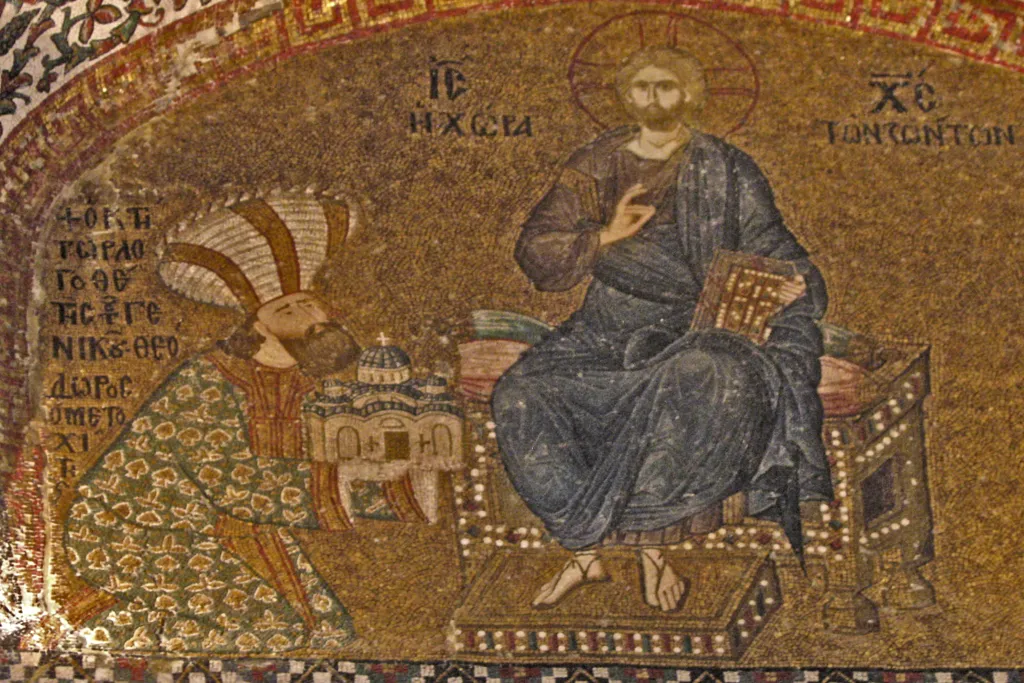
For a thousand years, the history of Anatolia is largely the history of the empire ruled from Constantinople, and the scale of that fact is hard to overstate. From 330 to 1453, the city on the Bosphorus was the capital of a state that at different times held the Balkans, much of the eastern Mediterranean and most of Anatolia, and that preserved Roman law, Greek learning and Christian theology while western Europe was rebuilding from much smaller pieces. Its great church, Hagia Sophia, rebuilt under the emperor Justinian and dedicated in 537, was for centuries the largest cathedral in Christendom, its dome a feat that still stops visitors in their tracks. Its mosaics — gold-backed, hieratic, theological in a way that takes some learning to read — survive most famously at Chora, the church in Istanbul’s old walls where the donor who restored the building had himself painted, in mosaic, offering a model of his church to Christ. That image, a man handing over his life’s work, is a good emblem for the whole civilisation: learned, devout, and convinced that the world could be pictured whole and ordered.
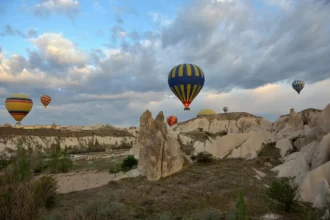
Byzantium’s Anatolian story is not only a capital’s story. In Cappadocia, in the centre of the peninsula, Christian communities cut churches and monasteries into the soft volcanic rock, painting their walls with biblical scenes across centuries of Byzantine rule, and the painted caves of Göreme and its valleys are a UNESCO World Heritage site. Along the coasts and the plateau, Byzantine towns, fortresses and churches layered themselves over Roman foundations, and the empire’s long, uneven contest with the Arab caliphates from the seventh century onwards, and then with the Seljuk Turks from the eleventh, was fought across Anatolia’s roads and passes. In 1204, during the Fourth Crusade, western Crusaders sacked Constantinople itself, a catastrophe from which the empire never fully recovered, and which still colours how the sack is remembered in both east and west. The empire that emerged from that blow was smaller, poorer and more embattled, and its final two centuries were a long retreat towards the capital.
The end, when it came, is one of the most famous dates in European history. On 29 May 1453, after a siege of under two months, the Ottoman sultan Mehmed II took Constantinople, and the Byzantine Empire ended. The city’s last emperor, Constantine XI, died in the fighting — the manner of his death is told in several versions, and the honest histories say so rather than choosing one. What followed was not a wiping-clean. Mehmed made the city his own capital, Hagia Sophia became a mosque, and many Byzantine institutions, families and artistic traditions continued inside the new empire, sometimes in the same buildings. A traveller who knows the Byzantine chapter reads Istanbul differently from one who does not: the city walls are not scenery but the fortifications of a thousand-year capital, the cisterns are not curiosities but the water system of a great city, and the mosaics that survive in Hagia Sophia and Chora are the last witnesses of a civilisation that considered this city the centre of the Christian world. Our Istanbul travel guide walks the city in the order its layers were laid down, and it reads differently once this chapter is in place.
The Seljuks – How Anatolia Became Turkish
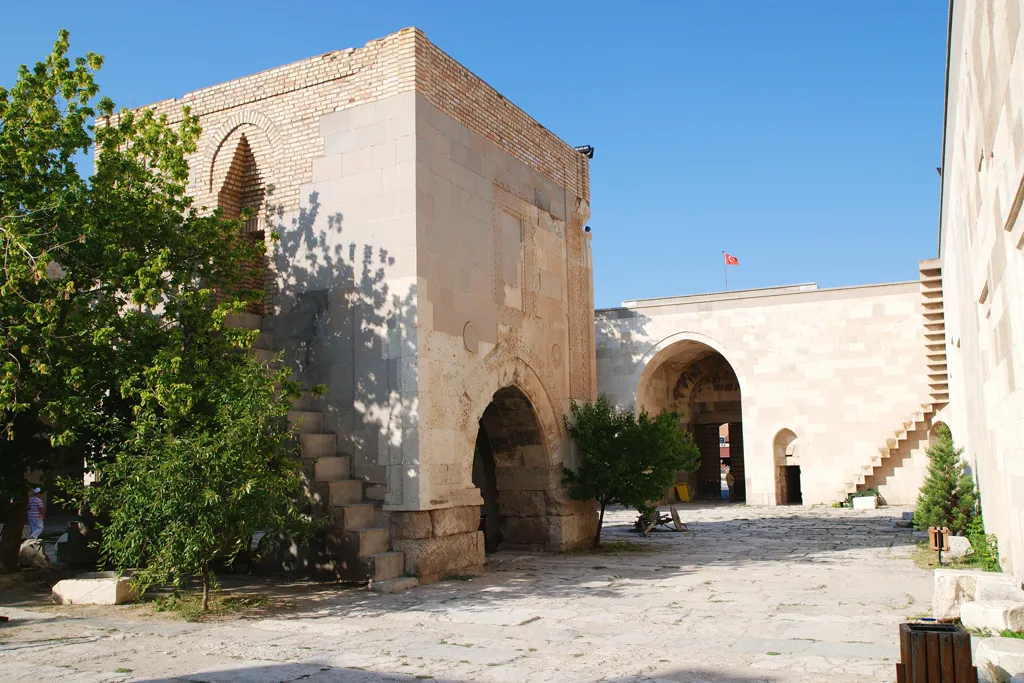
The Turks arrived in Anatolia late in this story, and that lateness is the single most useful correction a traveller can carry. The Seljuks were a Turkic people from Central Asia who had converted to Islam and built an empire across Persia and the Near East, and in 1071, at Manzikert in eastern Anatolia, their sultan Alp Arslan defeated a Byzantine army under the emperor Romanos IV. The battle did not hand Anatolia to the Seljuks in a day — the peninsula was settled, fought over and reorganised across generations, and the Byzantine loss of the interior was a slow process rather than a single collapse — but Manzikert is rightly treated as the turning point, because after it, Turkish settlement in Anatolia accelerated and never reversed. Within a few decades a Seljuk sultanate, the Sultanate of Rum — Rum meaning Rome, the land of the Romans they had taken — was established with its capital at Konya, on the central plateau.
The Seljuk centuries, roughly the twelfth and thirteenth, gave Anatolia a new architectural language and a new infrastructure, and both are still easy to see. The sultans and their viziers built mosques and theological schools, the madrasas, in a stone-carving style that mixed Persian, Armenian and local traditions — the İnce Minareli Medrese in Konya and the Great Mosque at Divriği, a UNESCO World Heritage site, are the showpieces. More distinctively, they built caravanserais: fortified inns spaced along the trade roads, offering shelter, water, stables and security to merchants travelling between Konya, Kayseri, Sivas and the ports. Sultanhanı, on the road from Konya towards Aksaray, is the largest and most complete of them, and standing in its courtyard explains the Seljuk achievement better than any chronicle. This was a state that understood that power in Anatolia meant safe roads, and that safe roads meant trade, taxes and towns.
The Seljuk sultanate did not survive the Mongols. Defeated at Köse Dağ in 1243, it became a vassal of the Mongol Ilkhanate and fragmented, and Anatolia dissolved into smaller Turkish principalities, the beyliks, each with its own court, its own ambitions and its own building style. One of those beyliks, small and north-western, based around the town of Söğüt near the Byzantine frontier, was the Ottoman beylik, and its rise is the next chapter. But the Seljuk legacy outlasted the sultanate in a subtler way. The Turkish language, the Islamic institutions, the road network and the towns of the interior were Seljuk work, and the poet and mystic Rumi, who lived and taught in thirteenth-century Konya and whose tomb, the Mevlâna Museum, is still the city’s spiritual centre, belongs to this age. When the Ottomans later built an empire, they built it on a peninsula that the Seljuks had already made Turkish in language, faith and roads.
The Ottomans – From a Frontier Beylik to a Three-Continent Empire
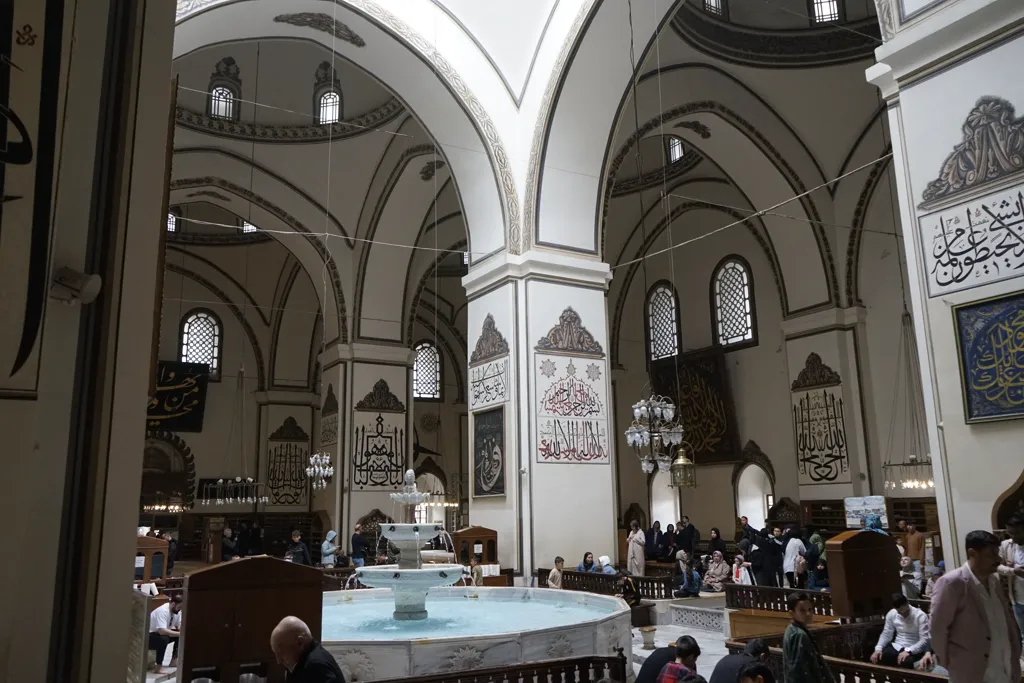
The Ottoman story is conventionally dated from around 1299, the traditional date for the founding of Osman I’s beylik, and the honest histories add that the early chronology is reconstructed from later sources and is not precise. What is certain is the shape of the rise. From a small frontier principality, the Ottomans took Bursa in 1326 and made it their first real capital, then Edirne in the 1360s, then, in 1453, Constantinople, which they renamed Istanbul and made the capital of an empire that would eventually stretch across south-east Europe, the Near East and North Africa. The early sultans were conquerors and administrators in equal measure: they absorbed rival beyliks, built a standing army around the Janissaries, and developed the institutions — the court, the tax system, the religious establishment — that let a dynasty rule a multi-religious, multi-lingual empire for six centuries.
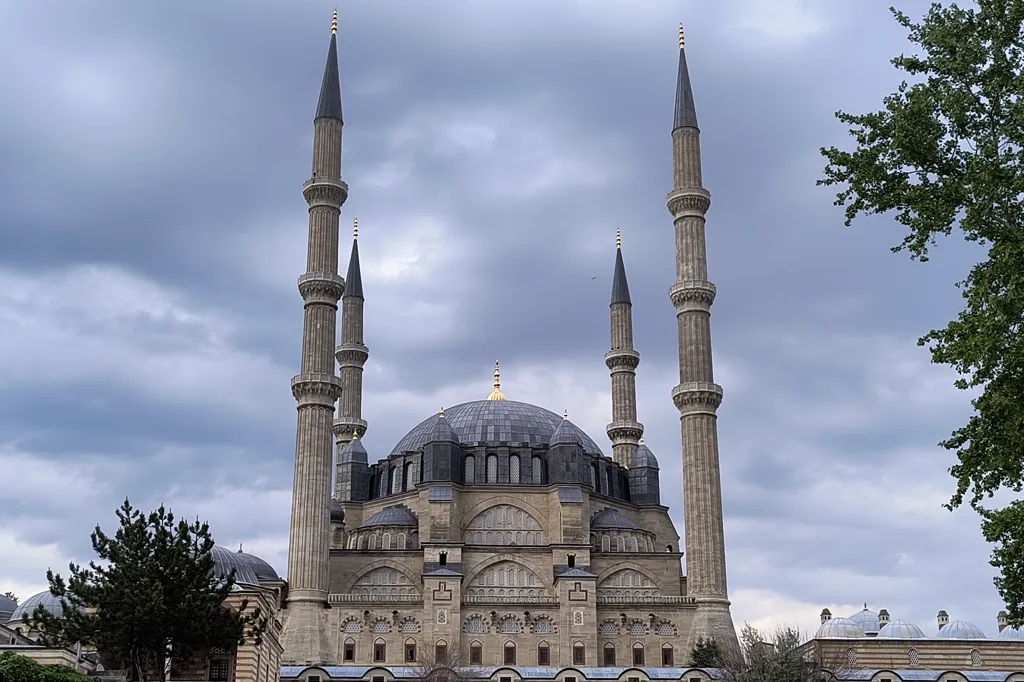
The empire’s classical age, the sixteenth century under Süleyman the Magnificent, who reigned from 1520 to 1566, is the age most visitors meet in Istanbul. Süleyman’s court architect, Sinan, built the Süleymaniye Mosque in Istanbul and, late in his life, the Selimiye Mosque in Edirne, which he considered his masterpiece — a dome carried on eight piers, four slender minarets at its corners, and an interior of a lightness that still surprises people who expect Ottoman building to be heavy. Topkapı Palace, the sultans’ residence on the point between the Golden Horn and the Bosphorus, shows the other side of the classical age: not a single palace building but a sequence of courtyards, each more private than the last, where the business of empire was done behind gates and protocol. The empire at its height was a Mediterranean power, a patron of art and architecture, and a state whose subjects included Muslims, Christians and Jews living under different legal arrangements — a pluralism that worked, after a fashion, for a long time, and that later generations have argued over ever since.
The long Ottoman decline is harder to tell fairly in a paragraph, and this article will not pretend otherwise. From the late seventeenth century onwards the empire lost territory, fell behind its European rivals in military and industrial power, and struggled with debt, reform and nationalist movements among its peoples, while also producing serious reformers — the Tanzimat reforms of the nineteenth century, which reorganised administration, law and education, were a genuine attempt to remake the state, and they left their mark on everything from schools to land law. The empire entered the First World War in 1914 on the side of the Central Powers, fought hard and at great cost — the Gallipoli campaign of 1915, remembered in Turkey as the Çanakkale victory and in Britain, Australia and New Zealand as Gallipoli, was fought on its soil — and emerged defeated and partitioned by the victors. By 1922 the sultanate was abolished, and in 1923 the empire’s Anatolian core became something new. The Ottoman centuries left Turkey its greatest buildings, its cuisine, its administrative habits and many of its arguments with itself, and a traveller who has seen Bursa, Edirne and Istanbul in that order has seen the empire grow up: a frontier town’s tombs, a conquering capital’s mosque, and a world capital’s palace.
War of Independence and the Republic – A Country Remade in Four Years
The Republic of Turkey was not inherited. It was fought for, in a war that ran from 1919 to 1923, and understanding that war is the key to understanding the modern country. After the First World War, the victorious Allies occupied Istanbul and parts of Anatolia, and the Treaty of Sèvres in 1920 proposed to partition what remained of the Ottoman lands among the victors and their allies. The response was organised from Ankara by Mustafa Kemal, an Ottoman general who had distinguished himself at Gallipoli, who landed at Samsun on 19 May 1919 — a date still commemorated in Turkey — and built a national movement around the Grand National Assembly, opened in Ankara on 23 April 1920. The war that followed was fought against Greek forces in the west, and against the terms of Sèvres in general, and it ended with the Turkish victory that forced a renegotiation. The Treaty of Lausanne, signed on 24 July 1923, recognised the sovereignty of the new Turkish state within borders close to those the country keeps today, and it superseded Sèvres entirely.
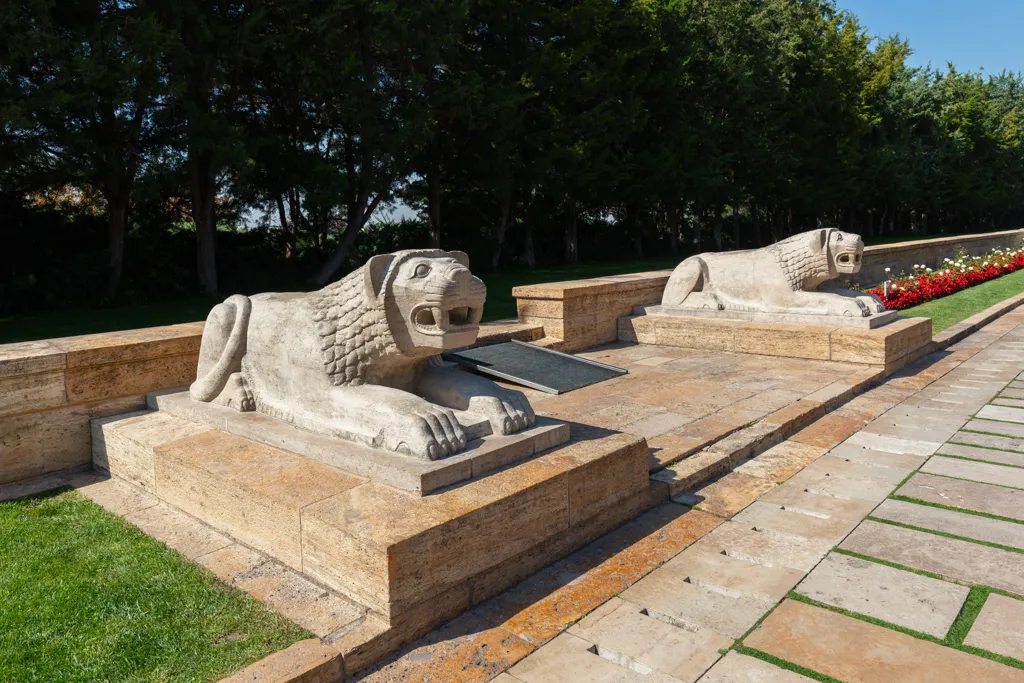
The political settlement followed fast. The sultanate had been abolished on 1 November 1922, Ankara had been designated the capital by law on 13 October 1923, and on 29 October 1923 the Grand National Assembly proclaimed the Republic of Turkey, with Mustafa Kemal — later given the surname Atatürk, meaning father of the Turks — as its first president. The choice of Ankara as capital was deliberate and symbolic: a new state, run from an Anatolian town rather than from the old imperial palace city, announcing that it was not the empire continued but something different. The reforms that followed in the 1920s and 1930s were sweeping and, to many Turks, the point of the whole project: the caliphate was abolished in 1924, the Latin alphabet replaced the Arabic script for writing Turkish in 1928, the legal system was recast on European models, education was secularised, and women gained the vote in municipal elections in 1930 and in parliamentary elections in 1934. Atatürk died on 10 November 1938 and was succeeded by İsmet İnönü, his companion from the war years, and his mausoleum, Anıtkabir in Ankara, is today one of the most visited monuments in the country — not a palace, but a statement in stone about the founder and the state he built.
It is worth saying plainly, because travel writing often smooths it over, that the founding of the Republic involved loss and violence as well as nation-building, and that the twentieth century’s population movements — the exchange of populations with Greece agreed at Lausanne, the departure and expulsion of communities that had lived in Anatolia for centuries, and the Armenian catastrophe of 1915, which remains a subject of intense historical and political dispute — are part of this story too. This article does not adjudicate those disputes, which historians continue to argue over with real passion and real evidence, but a history that omitted them would be dishonest, and a traveller who visits the old Greek villages of the Aegean coast, or the Armenian churches of the east, will meet their traces whether or not any guide mentions them. The Republic’s own story, as its founders told it, was one of sovereignty, secularism and national unity won against partition. The fuller story is more complicated, and the complications are visible in the landscape for anyone who looks.
Modern Turkey – A Republic Grown Large
The Turkey of the last hundred years is, in demographic terms, a different country from the one founded in 1923, and the change is visible before any politics is discussed. A largely rural, war-damaged state became an urban, industrial one: Ankara grew from a small Anatolian town into a capital of millions, Istanbul grew from the old imperial city into a metropolis straddling two continents, and cities across the interior — Konya, Kayseri, Gaziantep among them — grew on manufacturing, trade and agriculture into substantial centres in their own right. The political story across those decades included the move to multi-party politics, with the first genuinely competitive elections in 1950, membership of NATO in 1952, periods of military intervention in 1960, 1971 and 1980, the 1974 Cyprus intervention and the island’s subsequent division, which remains unresolved, and candidacy for membership of the European Union, granted in 1999 and pursued, with long pauses, ever since. None of those sentences is neutral in Turkey, and none is told here as though it were. The point for a traveller is simpler: the modern state has been argued over, interrupted and remade several times, and it has kept going, and kept growing, through all of it.
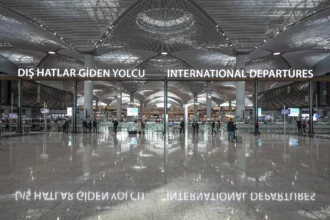
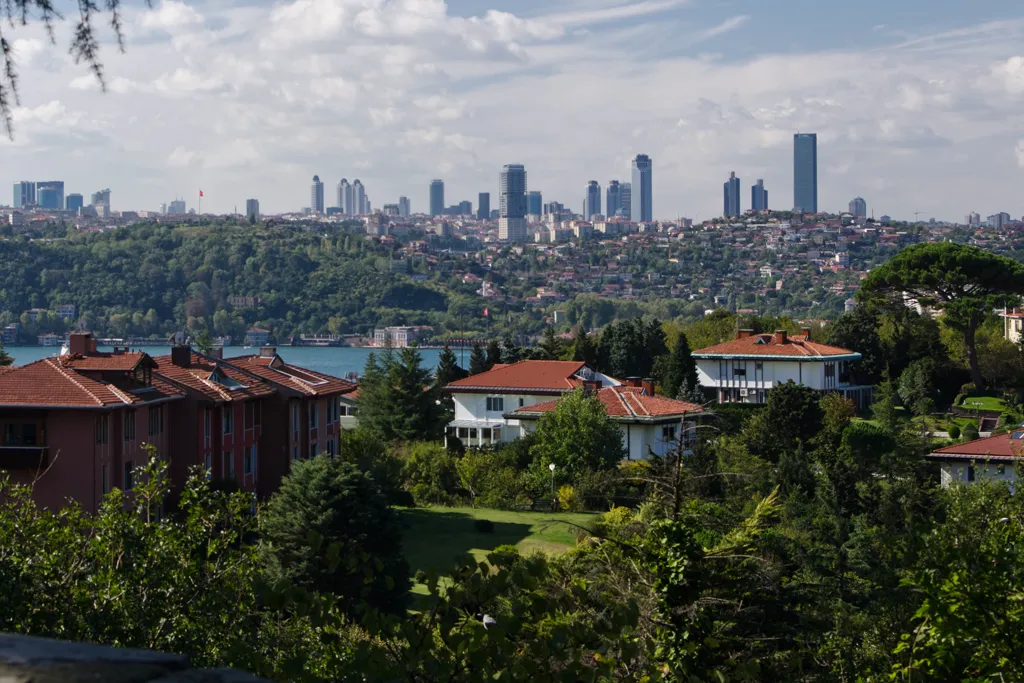
The last few decades have added their own layers, and a traveller meets them in the same streets as the older ones. Istanbul’s new towers in Levent and Maslak rise across the Bosphorus from the old city, and the city’s third Bosphorus bridge and its new airport, both opened in the last decade, are the latest in a very long line of attempts to master the strait that made the city. The south-east of the country was devastated by earthquakes in February 2023, a disaster whose rebuilding is still under way and whose scale is part of the region’s present story. The country officially styles itself Türkiye in international usage, a change adopted in recent years, though Turkey remains the familiar English name and both are understood. And tourism itself has become one of the country’s great industries, which is why the ancient sites in this article are maintained, signed, guarded and, in the high season, crowded — a modern fact about old places that shapes any visit more than most travellers expect.
What has not changed is the geography that made all of this history. Turkey still sits where it always sat, between Europe and Asia, between the Black Sea and the Mediterranean, on the roads and the straits that armies, merchants and pilgrims have used for millennia. Its modern story is best understood as the latest chapter of that geography rather than as a break from it: a republic, secular and nationalist in its founding design, governing a peninsula whose peoples, faiths and languages have always been mixed, and doing so in cities that carry every earlier chapter in their walls. A traveller who has read the earlier sections will recognise the modern city for what it is — not a place that replaced its history, but a place that grew on top of it, floor by floor, and is still growing.
Reading the Sites With This Story – Five Places, Five Eras
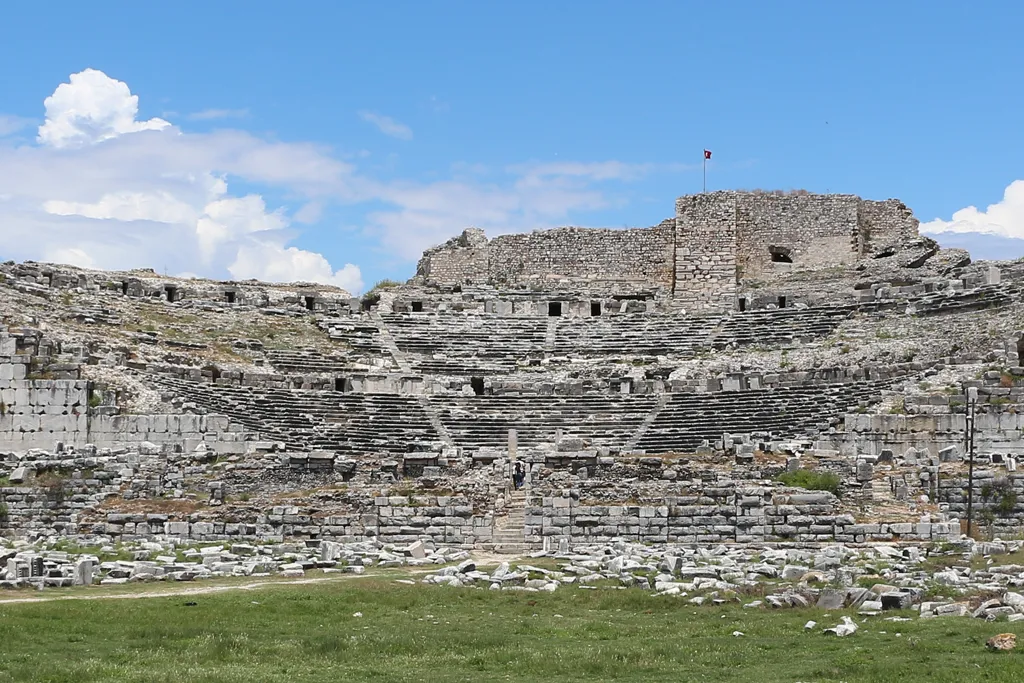
History earns its place in a trip when it changes what your eyes do at a site, so here is the whole story translated back into five places most travellers will actually stand in. At Göbekli Tepe, read the pillars before you read any label about temples. They are older than farming, older than pottery in the region, and they mean that the people who raised them were not yet villagers — which makes the circles stranger and more impressive, not less. At Hattusa, read the walls and the lions as a capital’s statement: an inland empire, confident enough to carve its gods into a gorge at Yazılıkaya and to write treaties with Egypt as an equal. At Miletus and Ephesus, read the theatres as civic buildings, not scenery — places where a Greek city governed itself, argued, worshipped and entertained, and where Rome later enlarged the same plan rather than replacing it. The harbour at Miletus has silted up over centuries, which is itself a lesson: the plain you walk across was once sea, and the city’s decline was geography as much as politics.
In Istanbul, read the city in layers, deliberately, in a single walk if you can. Start at the land walls, the Theodosian fortifications that held off sieges for a thousand years. Move to Hagia Sophia and Chora for the Byzantine interior, gold mosaics and dome. Then cross to the Ottoman city — Süleymaniye, Topkapı, the Grand Bazaar’s covered streets — and notice how the Ottoman capital did not erase the Byzantine one but built over and around it, converting, reusing and sometimes simply living next door. Our Istanbul travel guide is written to be walked in exactly that order, and the history in this article is its companion: that guide for the stops, this page for the story that joins them. Finally, in Ankara, read Anıtkabir and the old citadel together. The citadel’s walls carry Roman, Byzantine and Seljuk stonework in a single circuit, and a short walk away the mausoleum of the Republic’s founder declares, in the architectural language of the 1940s and 1950s, that the new state intended to last. Oldest and newest, in one afternoon, in one city.
If your route runs further, the same reading works everywhere else in this article’s map. In Cappadocia, the rock churches are Byzantine painting in a landscape the Hittites and the Romans also used. In Konya, the Mevlâna Museum and the Seljuk madrasas are the thirteenth century in a living city, not a museum piece. On the Konya road, Sultanhanı is the Seljuk road system in a single courtyard. In Bursa and Edirne, the early Ottoman tombs and mosques are the empire before it became imperial, modest by Istanbul’s standards and more moving for it. Pull the five places together and the pattern of the whole article stands in one itinerary: stone circles in the south-east, an inland empire in the centre, Greek and Roman cities in the west, a thousand-year capital on the strait, and a republic’s capital on the plateau. That is Turkey’s history as a trip, and it is a trip worth taking slowly.
Questions Travellers Ask About Turkey’s Past
When did Turkey become Turkish? Later than most visitors expect. Anatolia was Hittite, Greek, Persian and Roman for thousands of years before any Turkic people settled it in large numbers. The turning point is the Seljuk victory at Manzikert in 1071 and the settlement that followed, and the process took generations — the Sultanate of Rum, the beyliks, and then the Ottomans. So the land is ancient and the Turkish chapter, at roughly a thousand years, is the most recent long chapter, not the first.
Is Troy real? The mound at Hisarlık is real, and it holds layer upon layer of a genuine Bronze Age settlement, excavated since the nineteenth century. The Iliad’s Troy — Helen, Achilles, the wooden horse — is a poem built, very likely, around memories of that place and its wars, but no layer can be tied to the poem’s events with certainty, and the wooden horse in the modern town is a film prop, not an artefact. Visit Troy for the layers and the landscape, not for proof of Homer.
Why does Istanbul have so many layers? Because it was the capital of three empires in succession — Roman, Byzantine and Ottoman — on a site too strategic for any of them to abandon. Each empire built on the last one’s foundations, converted its buildings, reused its stones and added its own. That is why a single walk can pass a Roman cistern, a Byzantine church and an Ottoman mosque without leaving one neighbourhood.
What is the difference between Seljuks and Ottomans? The Seljuks were the first great Turkic Muslim power in Anatolia, from the eleventh century, with their capital at Konya and their roadside caravanserais. The Ottomans began as one small beylik after the Seljuk sultanate fragmented, and grew, from around 1299, into the empire that took Constantinople in 1453 and ruled for six centuries. Think of the Seljuks as the makers of Turkish Anatolia, and the Ottomans as its imperial heirs.
If I only have time for the history, where should I concentrate? Istanbul for the layered capital, Ephesus for the Greek and Roman west, Cappadocia for the Byzantine rock churches, Konya and Sultanhanı for the Seljuks, and Ankara — citadel and Anıtkabir together — for the whole stack from antiquity to the Republic in a single city. That set covers every era in this article except the deep past, and Göbekli Tepe adds that, for travellers willing to go south-east.
The Story in One Walk
The shortest true summary of Turkey’s past is that it is not one past at all, but a stack of them, and the stack is the destination. Farmers who raised stone circles before they had villages. An inland empire that treated with Egypt as an equal. Greek cities that thought, traded and built on the Aegean shore. Romans who paved and enlarged what the Greeks began. A thousand-year capital that called itself Roman to the end. Seljuk sultans who made the interior Turkish and built inns along its roads. Ottoman sultans who made a frontier beylik into an empire across three continents. And a republic, proclaimed in Ankara in 1923, that remade the state in a generation and is still arguing, building and growing a century later. No single chapter explains the country, and that is the point. The country is the chapters, piled up, in stone, in one peninsula.
So read the sites in their order when you go. Start, if you can, with a T-shaped pillar in the south-east, and end, if your route allows, on a mausoleum hill in Ankara, where the newest chapter declares itself in stone. Stand in a theatre at Aphrodisias knowing the city was Greek before it was Roman, and stand in Hagia Sophia knowing the building has been a church, a mosque and a museum in its long life, and is a mosque again today. A country that can be understood on one trip is a rare thing, and Turkey, for all the millennia stacked inside it, can be — because its history is not a confusion but a sequence, and the sequence, now, is yours.